
ENTOMOLOGY 101 Fall 2016 Instructor Brian Kelly Entomology
ENTOMOLOGY 101 Fall 2016 Instructor: Brian Kelly
Entomology Overview • Topics • • What is Entomology Importance of insects Biodiversity Naming / Classification Insects in popular culture Insects as food Conservation
What is ‘Entomology’? • • Entomology is: the study of insects Entomon = insects (or segmented), Logia = study of
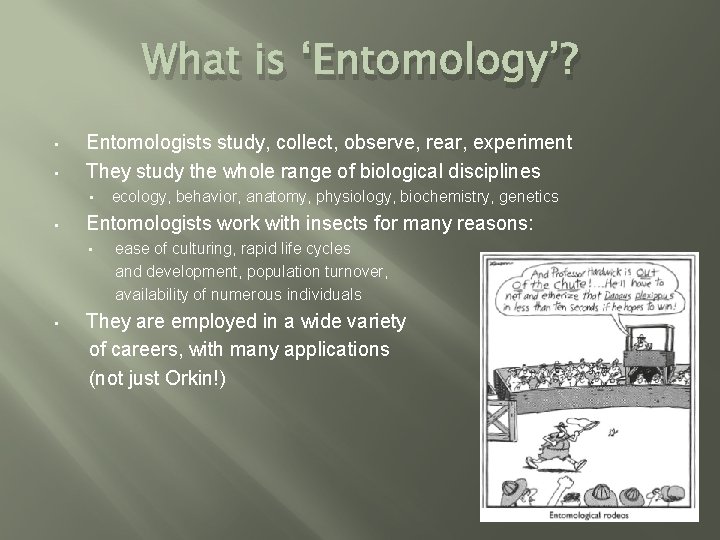
What is ‘Entomology’? • • Entomologists study, collect, observe, rear, experiment They study the whole range of biological disciplines • • Entomologists work with insects for many reasons: • • ecology, behavior, anatomy, physiology, biochemistry, genetics ease of culturing, rapid life cycles and development, population turnover, availability of numerous individuals They are employed in a wide variety of careers, with many applications (not just Orkin!)
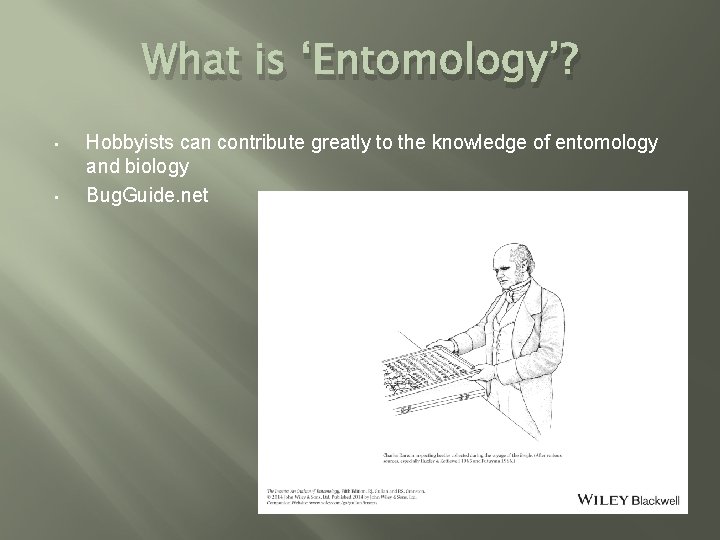
What is ‘Entomology’? • • Hobbyists can contribute greatly to the knowledge of entomology and biology Bug. Guide. net
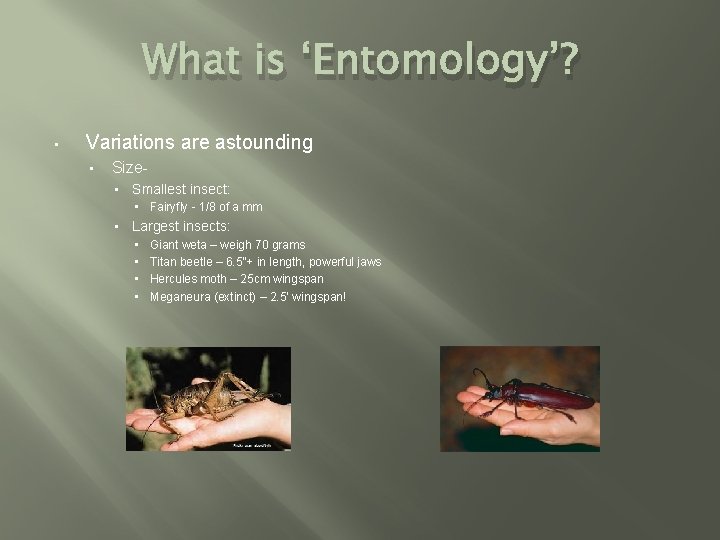
What is ‘Entomology’? • Variations are astounding • Size • Smallest insect: • Fairyfly - 1/8 of a mm • Largest insects: • • Giant weta – weigh 70 grams Titan beetle – 6. 5”+ in length, powerful jaws Hercules moth – 25 cm wingspan Meganeura (extinct) – 2. 5’ wingspan!
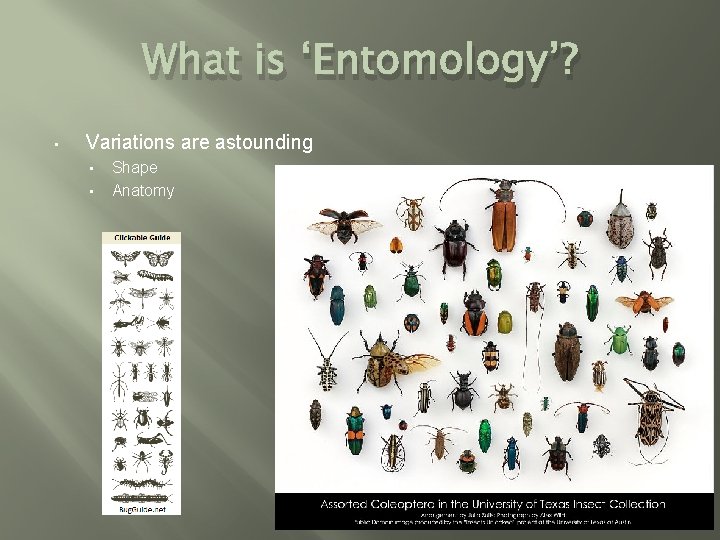
What is ‘Entomology’? • Variations are astounding • • Shape Anatomy
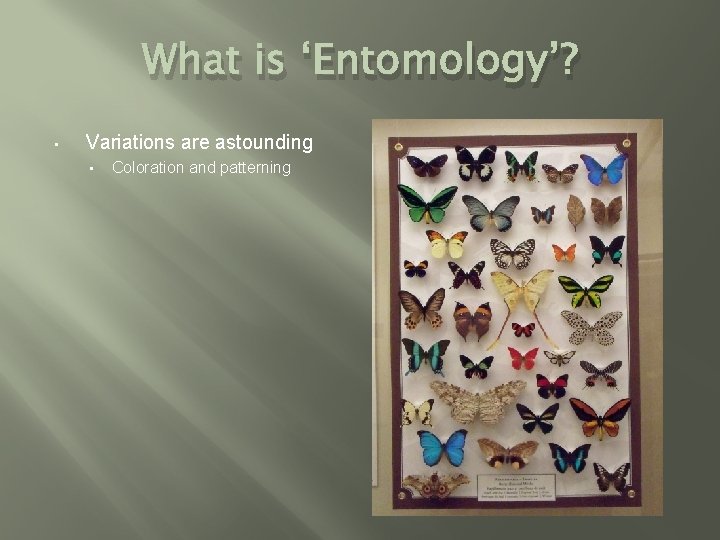
What is ‘Entomology’? • Variations are astounding • Coloration and patterning
The Importance of Insects • Insect feeding groups are diverse and include: • • Inhabit all sorts of habitats: • • Solitary, gregarious, subsocial, highly social Found in various climates: • • Land, water, plants, animals, crude oil! Exhibit different lifestyles: • • Ingestion of detritus, rotting materials, living and dead wood, fungus, aquatic particles, herbivory, sap feeding, predation, and parasitism; non-feeding Hot, cold, wet, dry, windy, everything in between Insects can be found everywhere
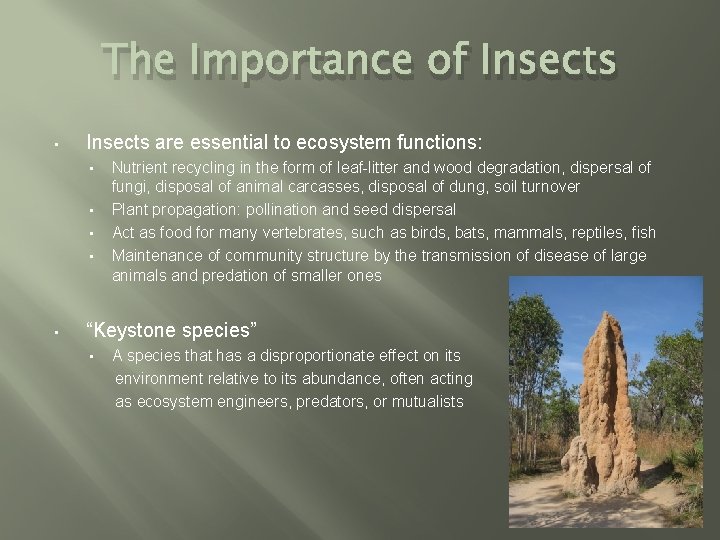
The Importance of Insects • Insects are essential to ecosystem functions: • • • Nutrient recycling in the form of leaf-litter and wood degradation, dispersal of fungi, disposal of animal carcasses, disposal of dung, soil turnover Plant propagation: pollination and seed dispersal Act as food for many vertebrates, such as birds, bats, mammals, reptiles, fish Maintenance of community structure by the transmission of disease of large animals and predation of smaller ones “Keystone species” • A species that has a disproportionate effect on its environment relative to its abundance, often acting as ecosystem engineers, predators, or mutualists
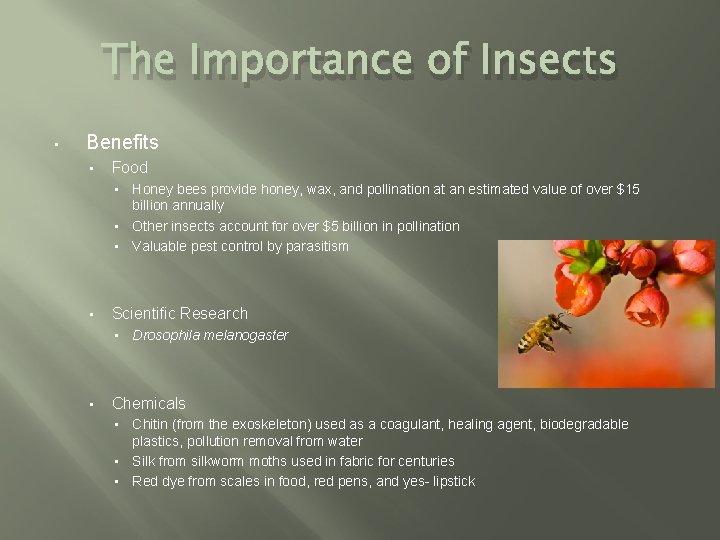
The Importance of Insects • Benefits • Food • Honey bees provide honey, wax, and pollination at an estimated value of over $15 billion annually • Other insects account for over $5 billion in pollination • Valuable pest control by parasitism • Scientific Research • Drosophila melanogaster • Chemicals • Chitin (from the exoskeleton) used as a coagulant, healing agent, biodegradable plastics, pollution removal from water • Silk from silkworm moths used in fabric for centuries • Red dye from scales in food, red pens, and yes- lipstick
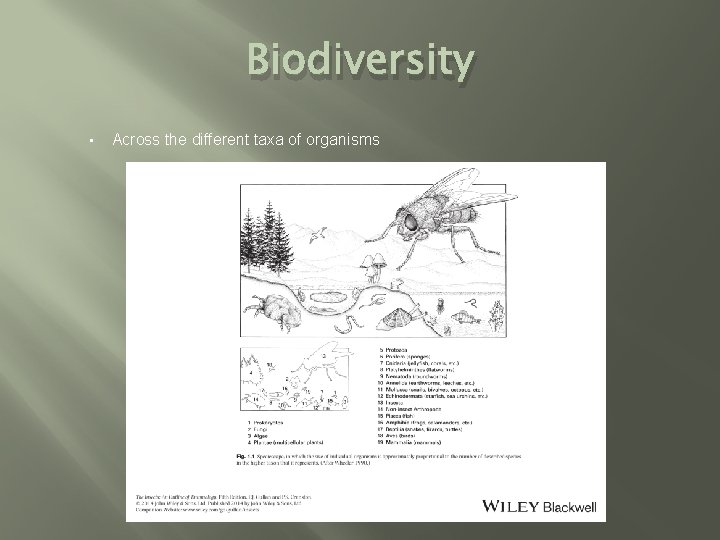
Biodiversity • Across the different taxa of organisms
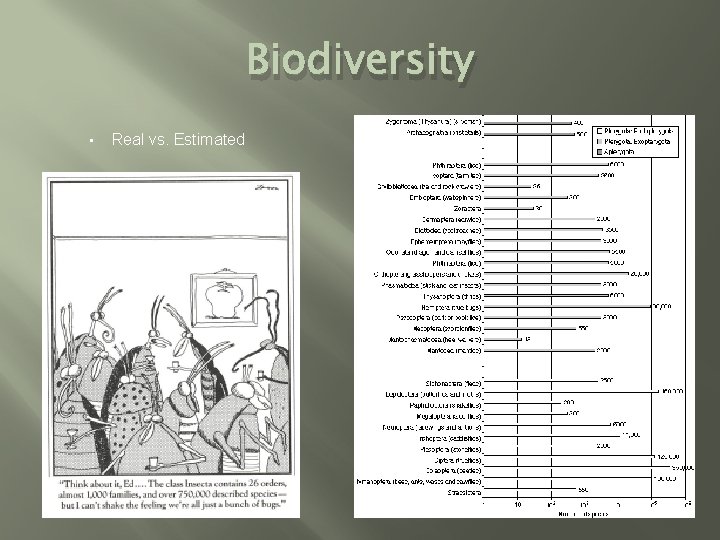
Biodiversity • Real vs. Estimated
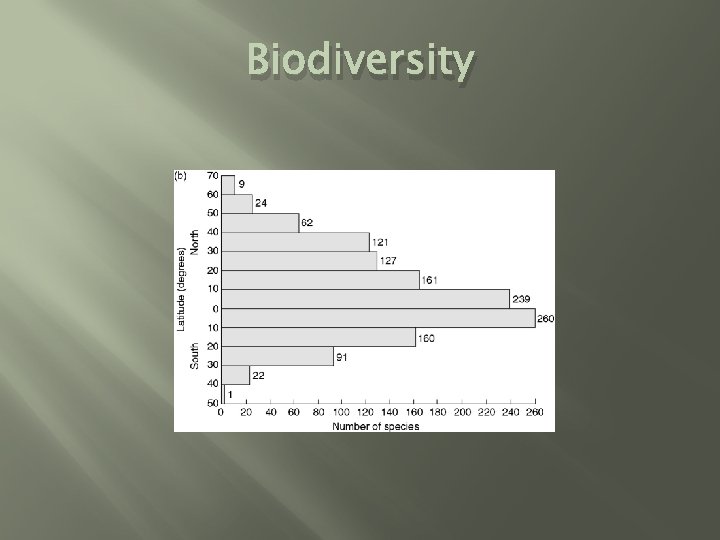
Biodiversity
Biodiversity • Why so many? • • Small size- exploit and occupy more niches; many utilize same resource Genetic change between generations Sexual selection Why so small? • • • Tracheal system limitations Appearance of birds Falling levels of O 2
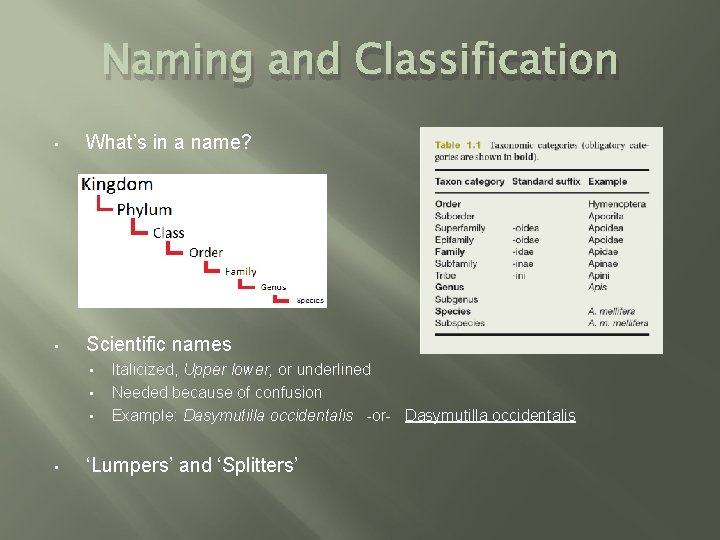
Naming and Classification • What’s in a name? • Scientific names • • Italicized, Upper lower, or underlined Needed because of confusion Example: Dasymutilla occidentalis -or- Dasymutilla occidentalis ‘Lumpers’ and ‘Splitters’
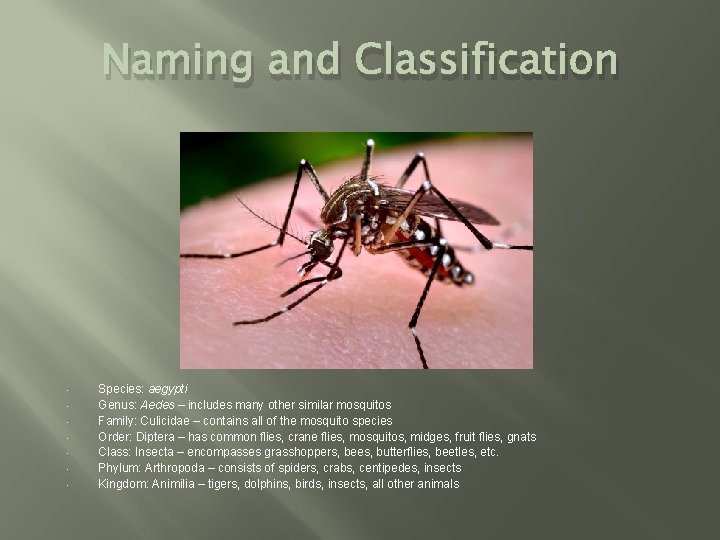
Naming and Classification • • Species: aegypti Genus: Aedes – includes many other similar mosquitos Family: Culicidae – contains all of the mosquito species Order: Diptera – has common flies, crane flies, mosquitos, midges, fruit flies, gnats Class: Insecta – encompasses grasshoppers, bees, butterflies, beetles, etc. Phylum: Arthropoda – consists of spiders, crabs, centipedes, insects Kingdom: Animilia – tigers, dolphins, birds, insects, all other animals
Insects in Popular Culture
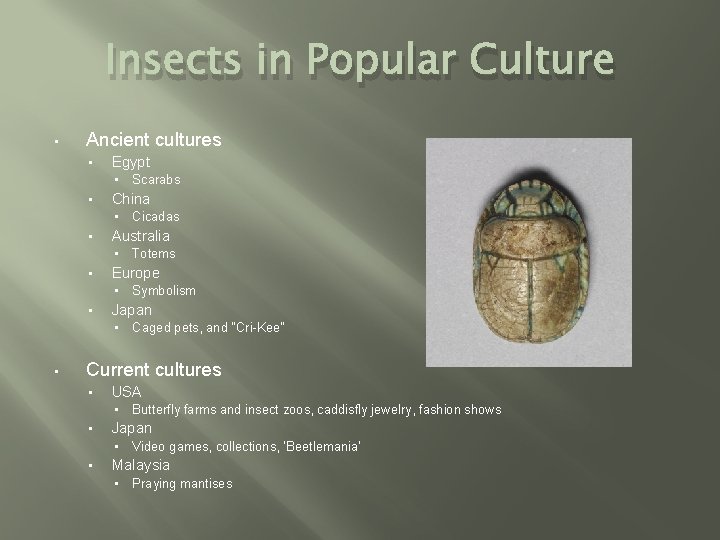
Insects in Popular Culture • Ancient cultures • Egypt • • China • • Symbolism Japan • • Totems Europe • • Cicadas Australia • • Scarabs Caged pets, and “Cri-Kee” Current cultures • USA • • Japan • • Butterfly farms and insect zoos, caddisfly jewelry, fashion shows Video games, collections, ‘Beetlemania’ Malaysia • Praying mantises
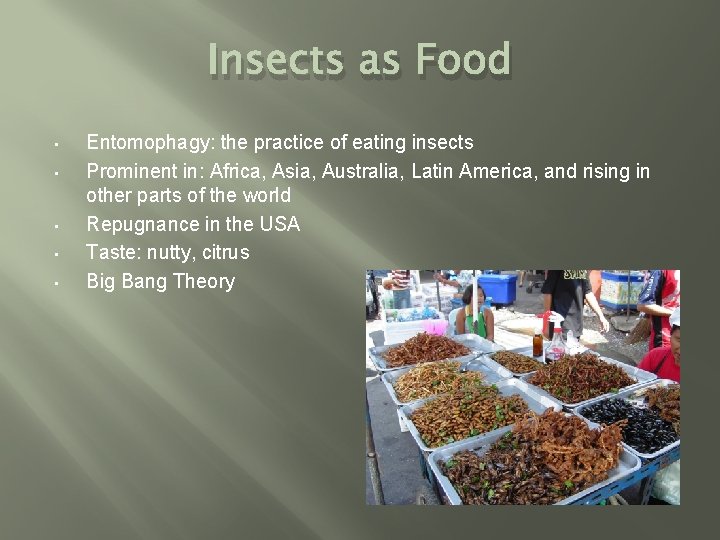
Insects as Food • • • Entomophagy: the practice of eating insects Prominent in: Africa, Asia, Australia, Latin America, and rising in other parts of the world Repugnance in the USA Taste: nutty, citrus Big Bang Theory
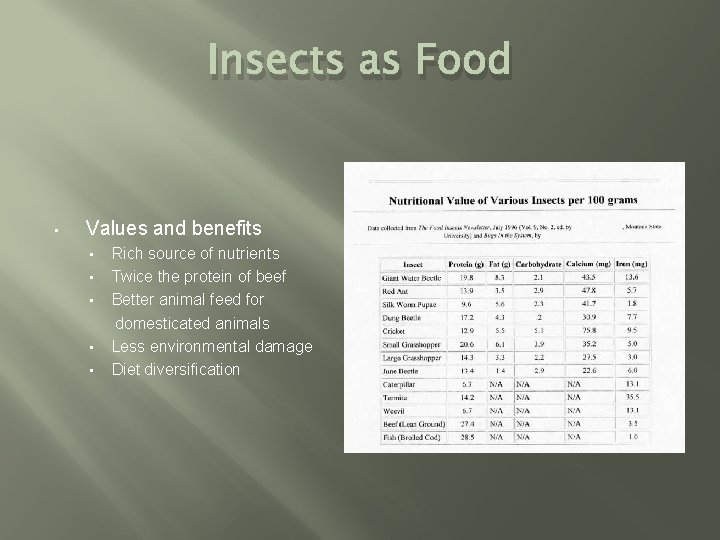
Insects as Food • Values and benefits • • • Rich source of nutrients Twice the protein of beef Better animal feed for domesticated animals Less environmental damage Diet diversification
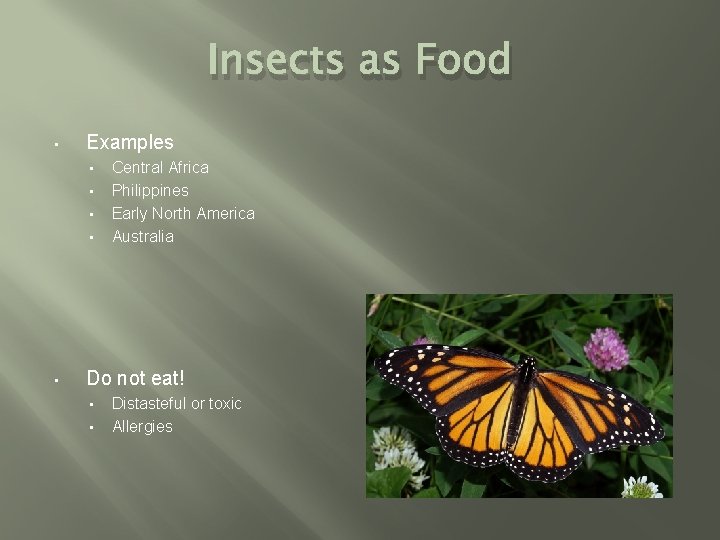
Insects as Food • Examples • • • Central Africa Philippines Early North America Australia Do not eat! • • Distasteful or toxic Allergies
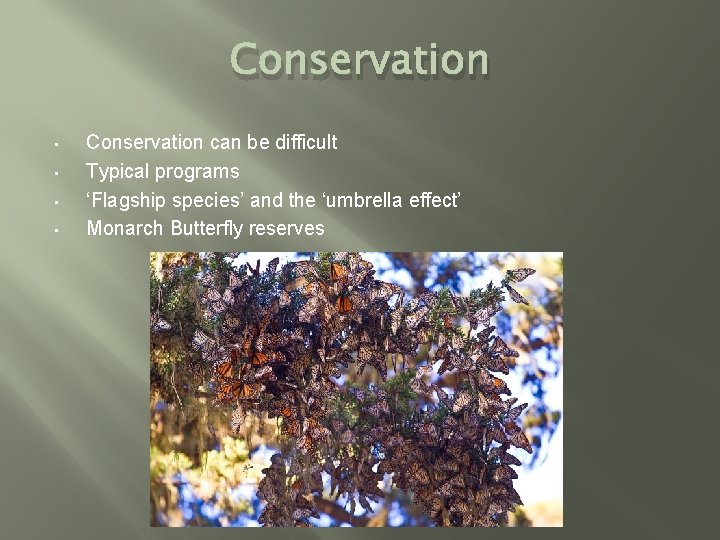
Conservation • • Conservation can be difficult Typical programs ‘Flagship species’ and the ‘umbrella effect’ Monarch Butterfly reserves
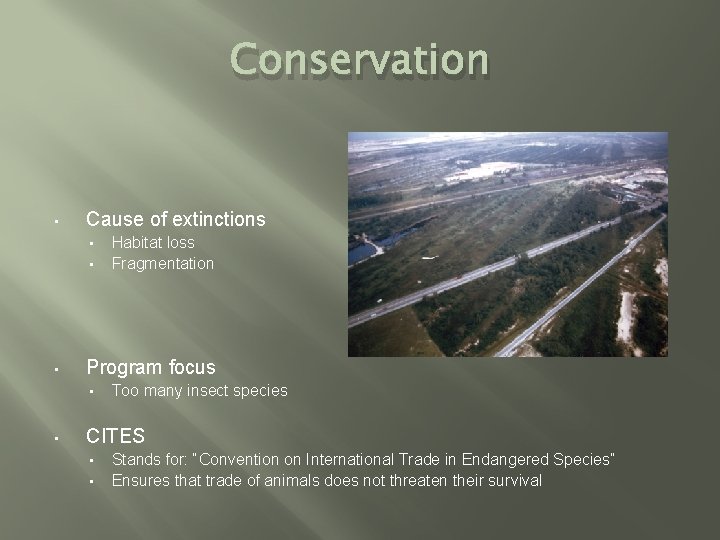
Conservation • Cause of extinctions • • • Program focus • • Habitat loss Fragmentation Too many insect species CITES • • Stands for: “Convention on International Trade in Endangered Species” Ensures that trade of animals does not threaten their survival
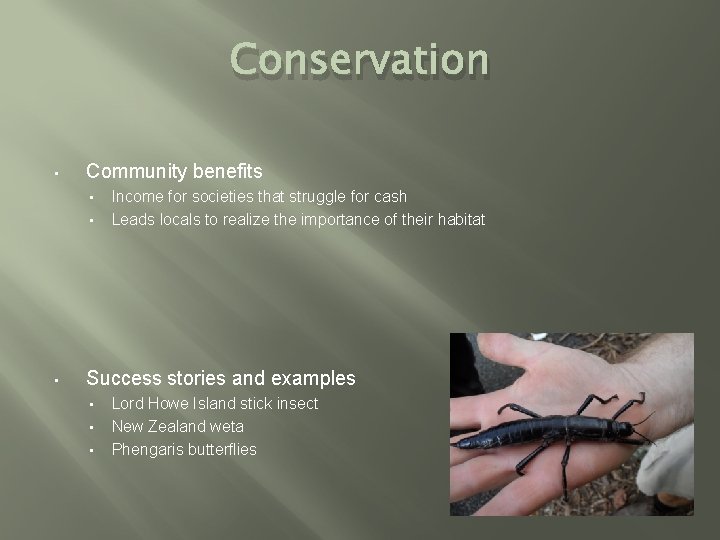
Conservation • Community benefits • • • Income for societies that struggle for cash Leads locals to realize the importance of their habitat Success stories and examples • • • Lord Howe Island stick insect New Zealand weta Phengaris butterflies
Pictures by Slide no modifications were made to any pictures on any of the slides 1. 2. 3. 4. 5. 6. 7. 8. 9. 10. 11. 12. 13. 14. 15. 16. 17. 18. 19. 20. 21. 22. 23. 24. 25. (no picture) The Far Side Gallery 5 by Gary Larson, 1995, page 107 Wiley Blackwell: The Insects: An Outline of Entomology, 4 th edition – Charles Darwin inspecting beetles, page 1 Weta and Titan Beetle • Flickr user: abodftyh: https: //www. flickr. com/photos/117032936@N 08/12796109234 • https: //commons. wikimedia. org/wiki/File: Titan_beetle_%28 Titanus_giganteus%29_found_by_Jean_NICOLAS_%2810331669783%29. jpg Diversity: • https: //commons. wikimedia. org/wiki/File: Assorted_Coleoptera_in_the_University_of_Texas_Insect_Collection. jpg • Bug. Guide. net “Clickable Guide” (permission granted) https: //commons. wikimedia. org/wiki/File: A_butterfly_collection. jpg (no pictures) https: //commons. wikimedia. org/wiki/File: Cathedral_Termite_Mound_-_brewbooks. jpg https: //commons. wikimedia. org/wiki/File: Pollinationn. jpg Wiley Blackwell: The Insects: An Outline of Entomology, 4 th edition – Figure 1. 1 Biodiversity 1. The Far Side Gallery 3 by Gary Larson, 1988, page 123 2. Wiley Blackwell: The Ecology of Insects: Concepts and Applications, 2 nd edition – Figure 1. 5 Wiley Blackwell: The Ecology of Insects: Concepts and Applications, 2 nd edition – Figure 9. 8 b https: //commons. wikimedia. org/wiki/File: Tarantula_1955. jpg Naming: • (my drawing) • Wiley Blackwell: The Insects: An Outline of Entomology, 4 th edition – Table 1. 1 http: //www. freestockphotos. biz/stockphoto/16744 https: //en. wikipedia. org/wiki/File: Comic-Con_Ant-Man_Poster. jpg https: //commons. wikimedia. org/wiki/File: Egyptian_-_Scarab_of_Hatshepsut_-_Walters_4260_-_Top. jpg https: //commons. wikimedia. org/wiki/File: Insect_food_stall. JPG ***The Food Insects Newsletter, July 1996 (Vol. 9, No. 2, ed. by University) and Bugs in the System https: //commons. wikimedia. org/wiki/File: Monarch_In_May. jpg https: //commons. wikimedia. org/wiki/File: Monarch-butterflies-pacific-grove. jpg https: //commons. wikimedia. org/wiki/File: Indiana_Dunes_Habitat_Fragmentation. jpg https: //commons. wikimedia. org/wiki/File: Lord_Howe_Island_stick_insect_Dryococelus_australis_10 June 2011_Palm. Nursery. jpg

Questions?
Permission
- Slides: 28