
ENTITY RELATIONSHIP DIAGRAM DATABASE ARCHITECTURE External level concerned
ENTITY RELATIONSHIP DIAGRAM
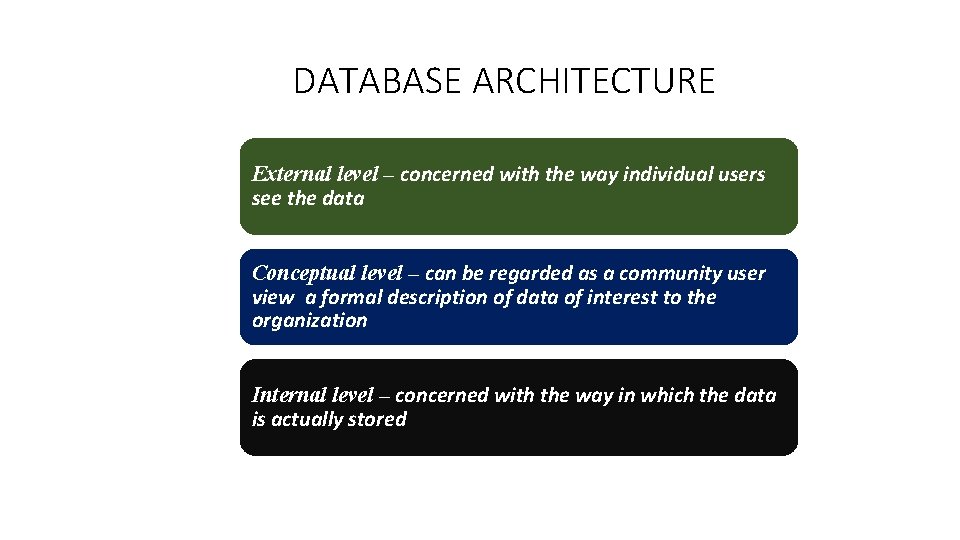
DATABASE ARCHITECTURE External level – concerned with the way individual users see the data Conceptual level – can be regarded as a community user view a formal description of data of interest to the organization Internal level – concerned with the way in which the data is actually stored
ER • In 1967 Peter Chen developed the ER Model. • It is a high level data model used for developing the conceptual design of the database. • ER diagram helps designers understand specify the desired components of database and the relationship among them. • It must be flexible enough so that it can be used and understood in practically any environment where information is modelled
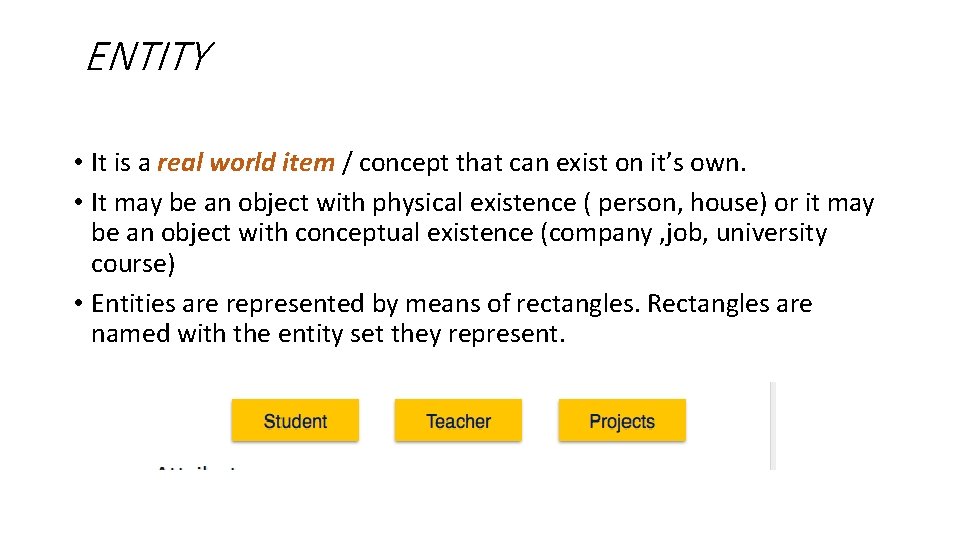
ENTITY • It is a real world item / concept that can exist on it’s own. • It may be an object with physical existence ( person, house) or it may be an object with conceptual existence (company , job, university course) • Entities are represented by means of rectangles. Rectangles are named with the entity set they represent.
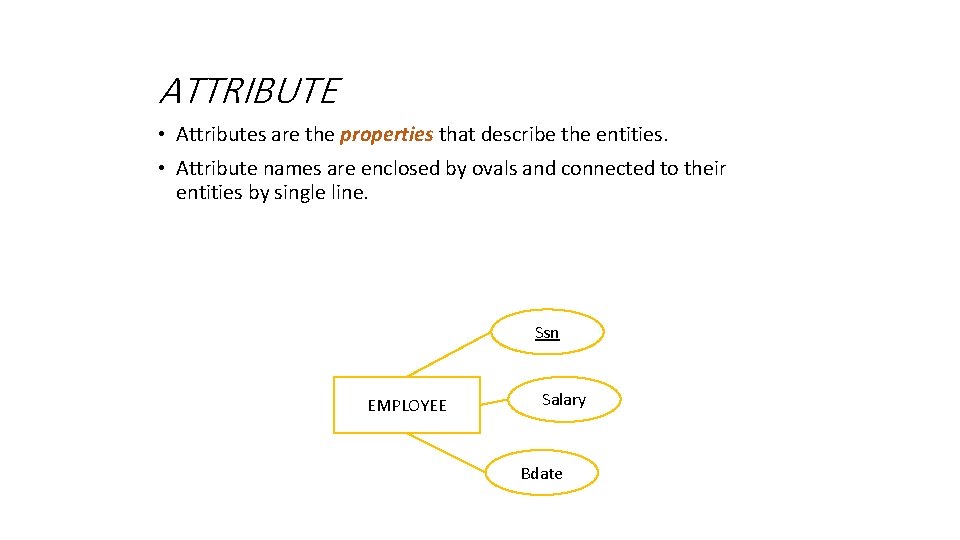
ATTRIBUTE • Attributes are the properties that describe the entities. • Attribute names are enclosed by ovals and connected to their entities by single line. Ssn EMPLOYEE Salary Bdate
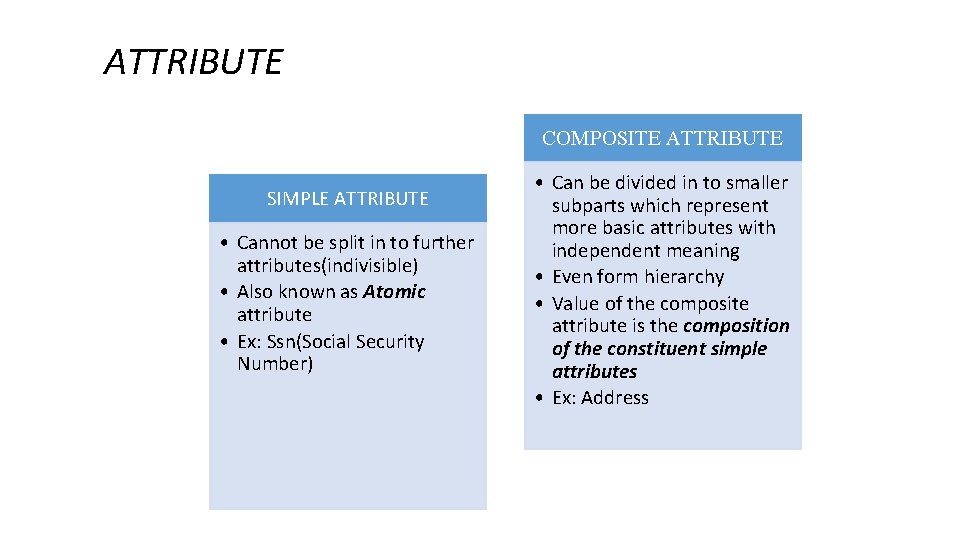
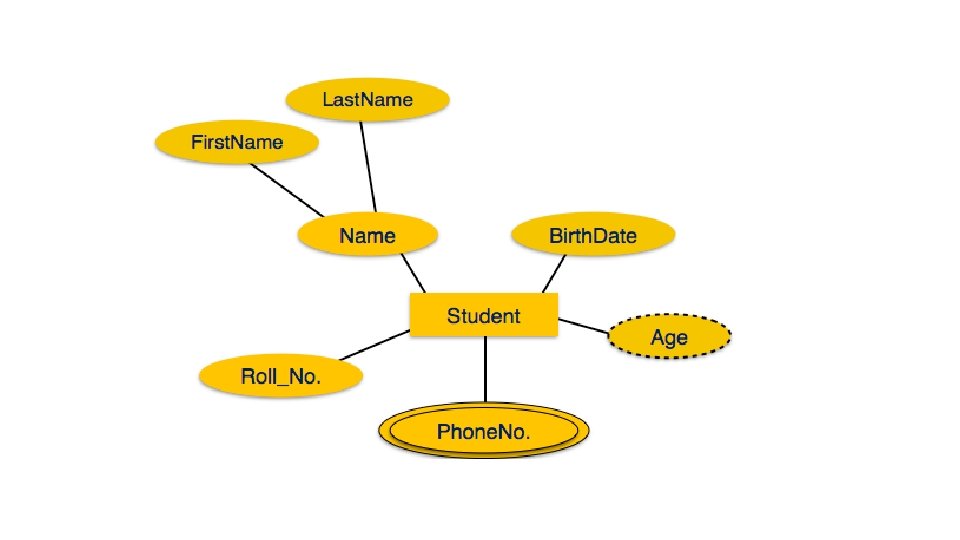
ATTRIBUTE COMPOSITE ATTRIBUTE SIMPLE ATTRIBUTE • Cannot be split in to further attributes(indivisible) • Also known as Atomic attribute • Ex: Ssn(Social Security Number) • Can be divided in to smaller subparts which represent more basic attributes with independent meaning • Even form hierarchy • Value of the composite attribute is the composition of the constituent simple attributes • Ex: Address
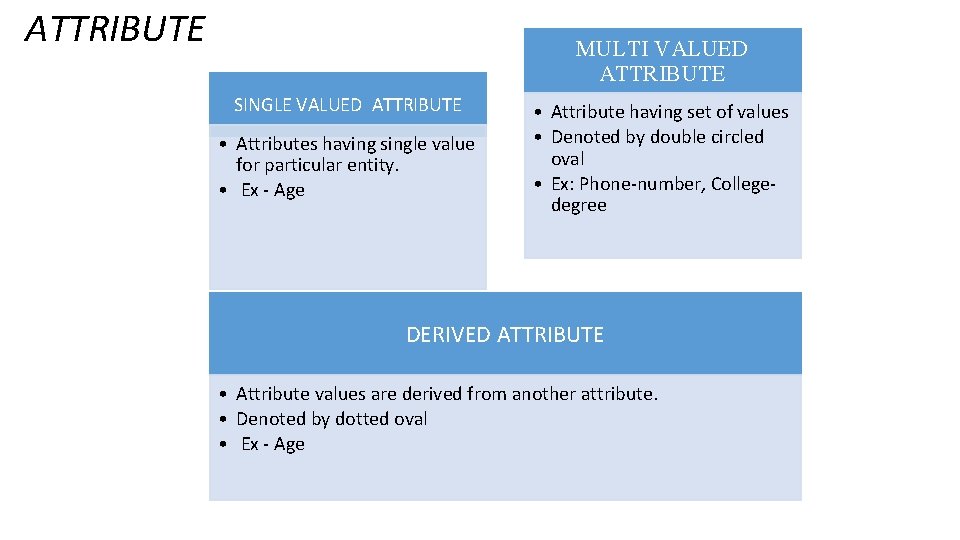
ATTRIBUTE MULTI VALUED ATTRIBUTE SINGLE VALUED ATTRIBUTE • Attributes having single value for particular entity. • Ex - Age • Attribute having set of values • Denoted by double circled oval • Ex: Phone-number, Collegedegree DERIVED ATTRIBUTE • Attribute values are derived from another attribute. • Denoted by dotted oval • Ex - Age
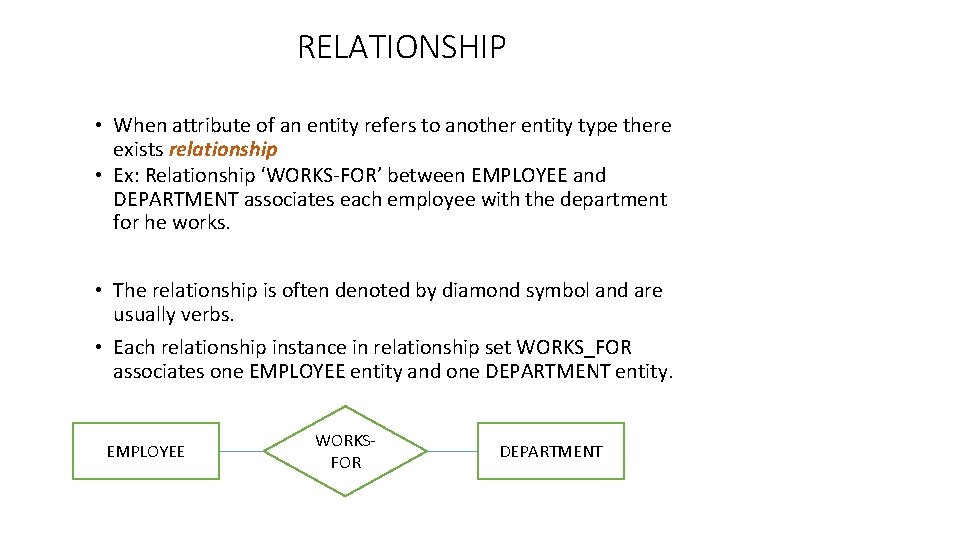
RELATIONSHIP • When attribute of an entity refers to another entity type there exists relationship • Ex: Relationship ‘WORKS-FOR’ between EMPLOYEE and DEPARTMENT associates each employee with the department for he works. • The relationship is often denoted by diamond symbol and are usually verbs. • Each relationship instance in relationship set WORKS_FOR associates one EMPLOYEE entity and one DEPARTMENT entity. EMPLOYEE WORKSFOR DEPARTMENT
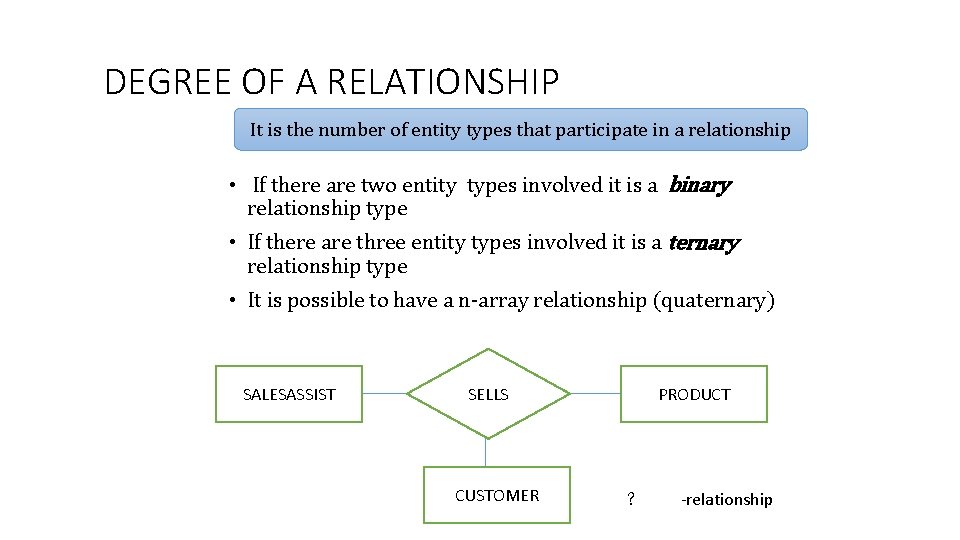
DEGREE OF A RELATIONSHIP It is the number of entity types that participate in a relationship • If there are two entity types involved it is a binary relationship type • If there are three entity types involved it is a ternary relationship type • It is possible to have a n-array relationship (quaternary) SALESASSIST SELLS CUSTOMER PRODUCT ? -relationship
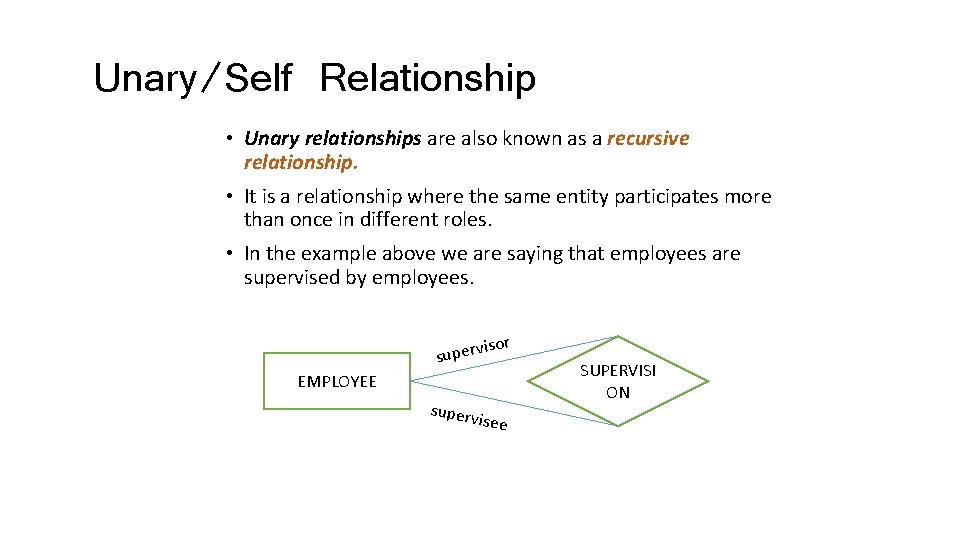
Unary/Self Relationship • Unary relationships are also known as a recursive relationship. • It is a relationship where the same entity participates more than once in different roles. • In the example above we are saying that employees are supervised by employees. or is superv EMPLOYEE superv isee SUPERVISI ON
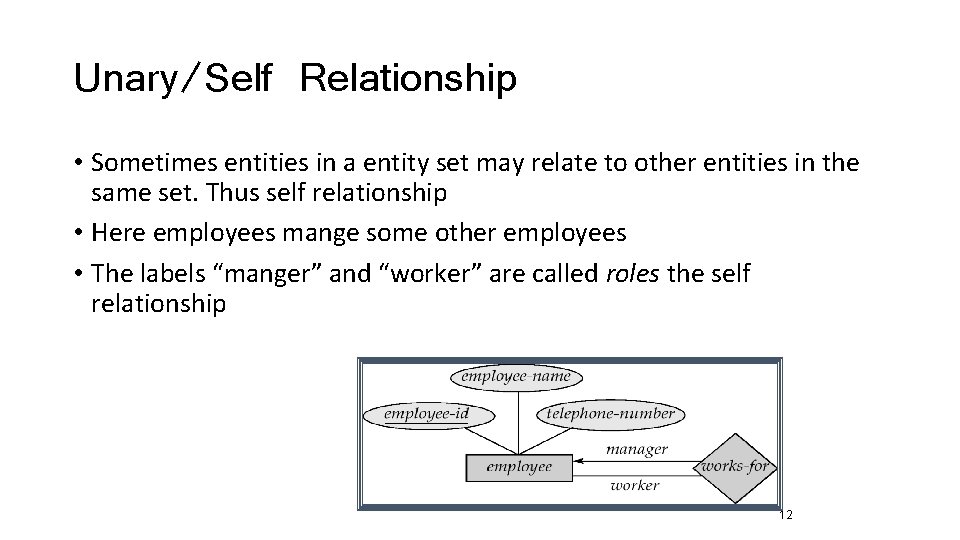
Unary/Self Relationship • Sometimes entities in a entity set may relate to other entities in the same set. Thus self relationship • Here employees mange some other employees • The labels “manger” and “worker” are called roles the self relationship 12
More examples on self-relationship • People to people • Parent – children • Manager – employee • Husband – wife • Word to word • Root – synonym 13
CARDINALITY CONSTRAINTS The number of instances of one entity that can or must be associated with each instance of another entity. • If we have two entity types A and B, the cardinality constraint specifies the number of instances of entity B that can (or must) be associated with entity A. • Four possible categories are One to one (1: 1) relationship One to many (1: m) relationship Many to one (m: 1) relationship Many to many (m: n) relationship
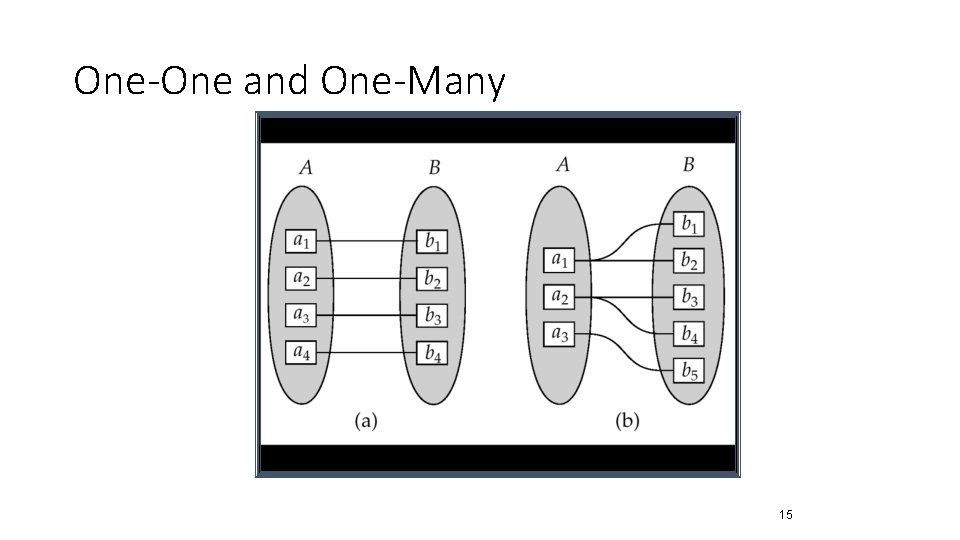
One-One and One-Many 15
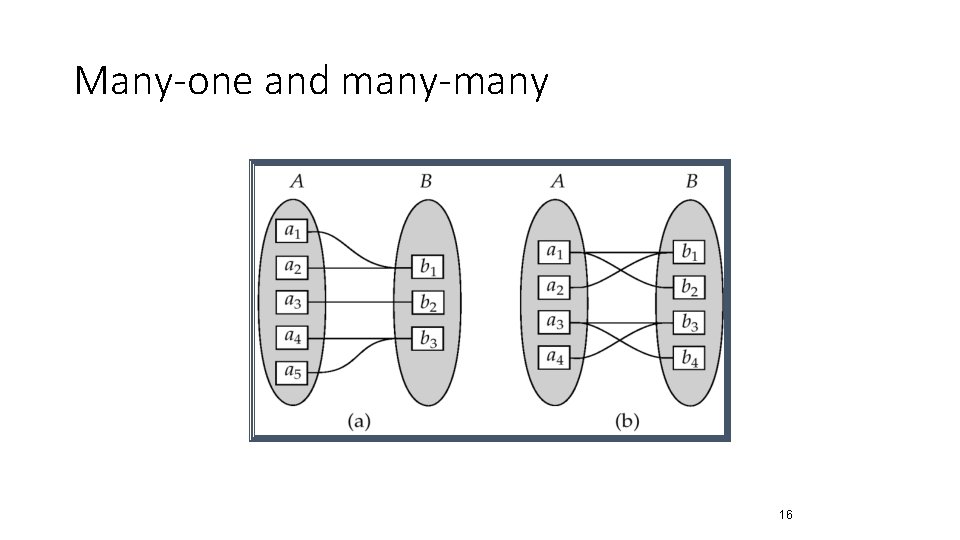
Many-one and many-many 16
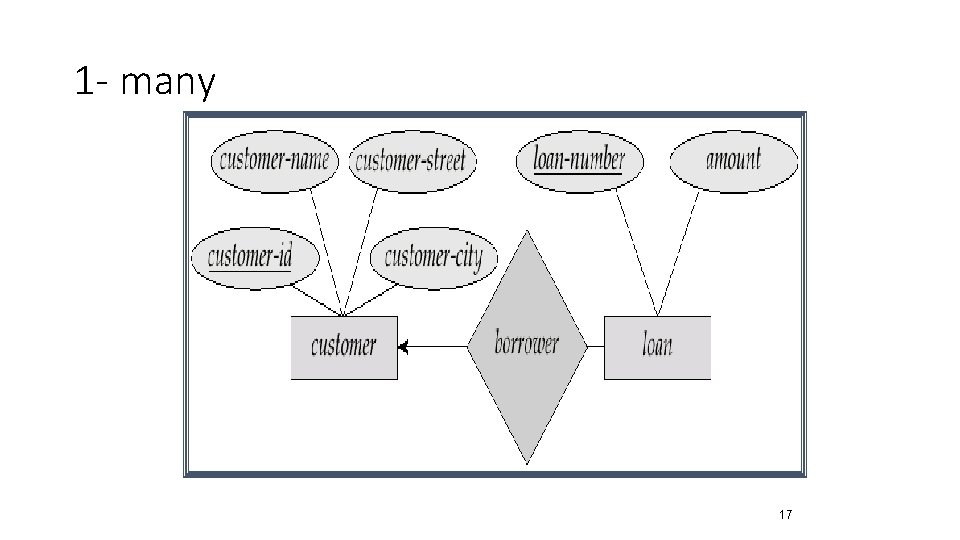
1 - many 17
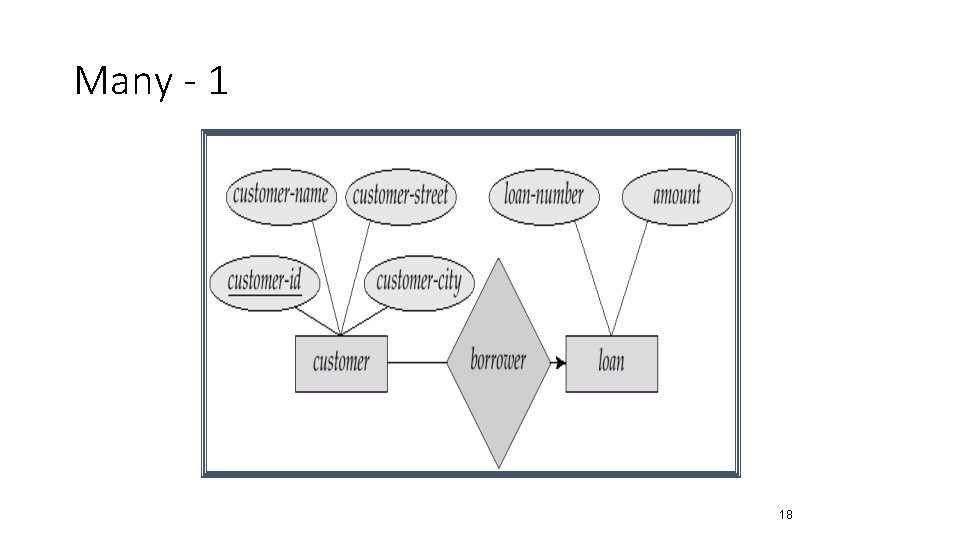
Many - 1 18
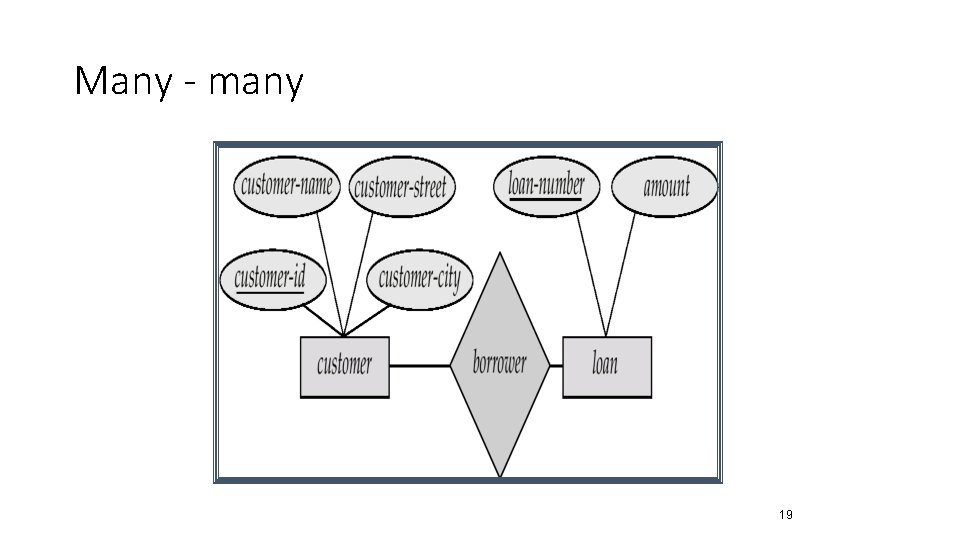
Many - many 19
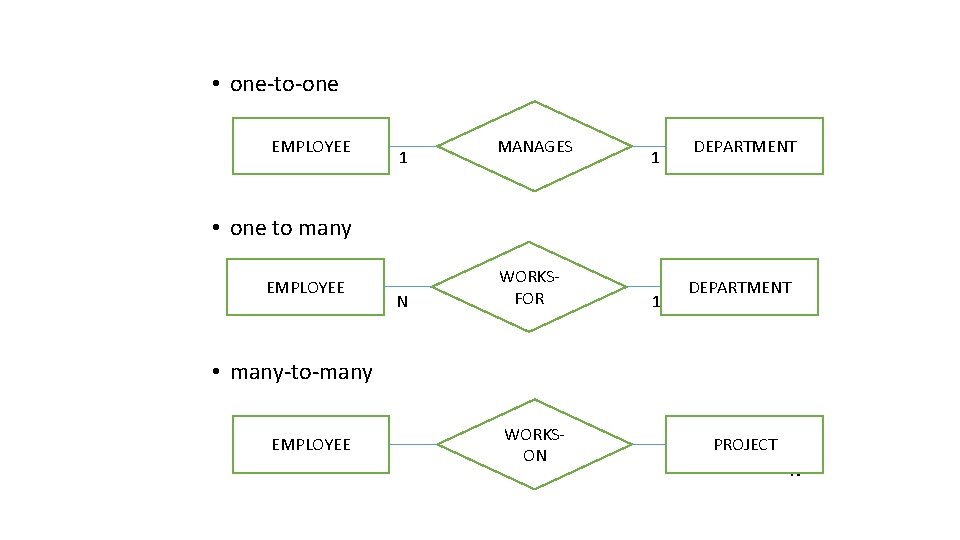
• one-to-one EMPLOYEE 1 MANAGES 1 1 DEPARTMENT • one to many EMPLOYEE N WORKSFOR 1 DEPARTMENT • many-to-many EMPLOYEE WORKSON • M PROJECT N
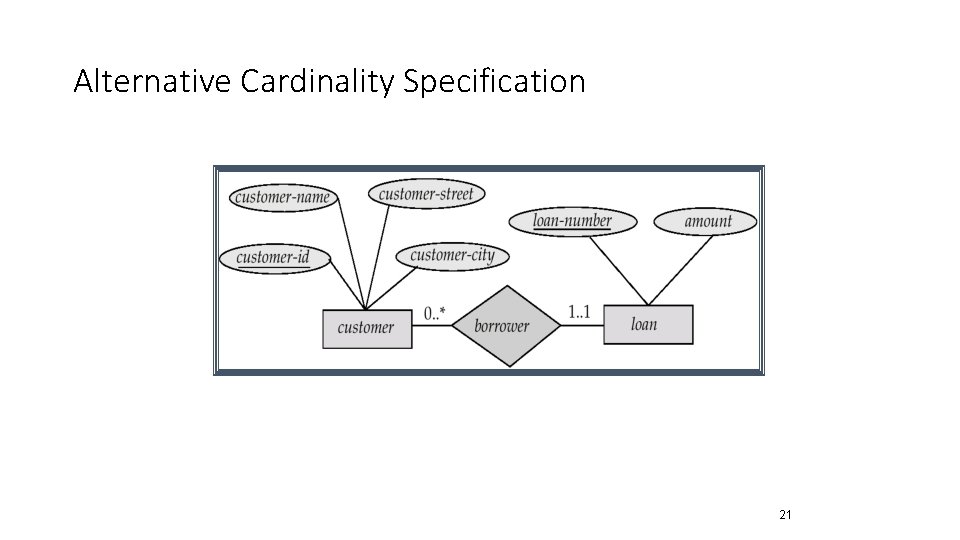
Alternative Cardinality Specification 21
ROLE NAME • Some entities participate more than once in a relationship type in different roles. Role name represents role that a participating entity from the entity type plays in the relationship. • Ex: Employee plays the role of supervisor as well as supervisee. • If the participating entity types are distinct then there is no need for role name else role name is a must.
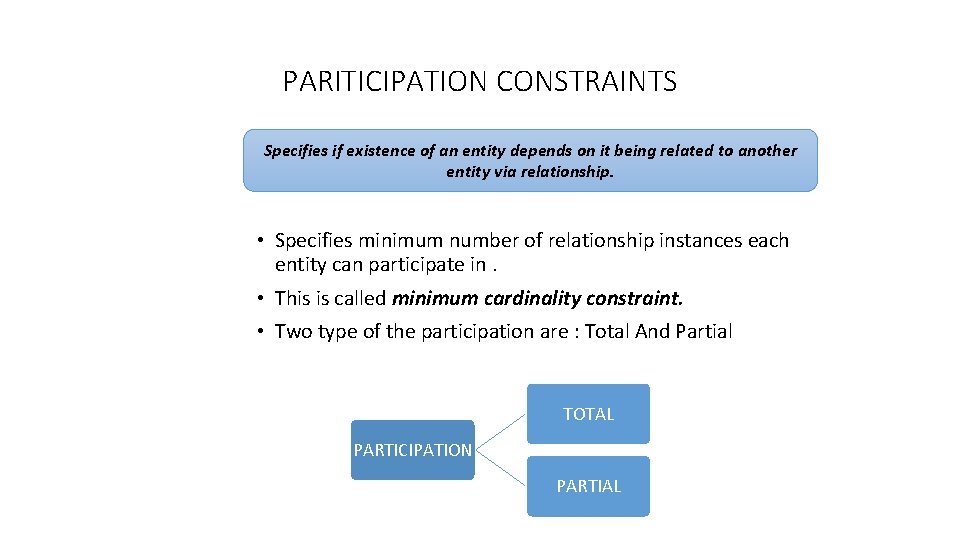
PARITICIPATION CONSTRAINTS Specifies if existence of an entity depends on it being related to another entity via relationship. • Specifies minimum number of relationship instances each entity can participate in. • This is called minimum cardinality constraint. • Two type of the participation are : Total And Partial TOTAL PARTICIPATION PARTIAL
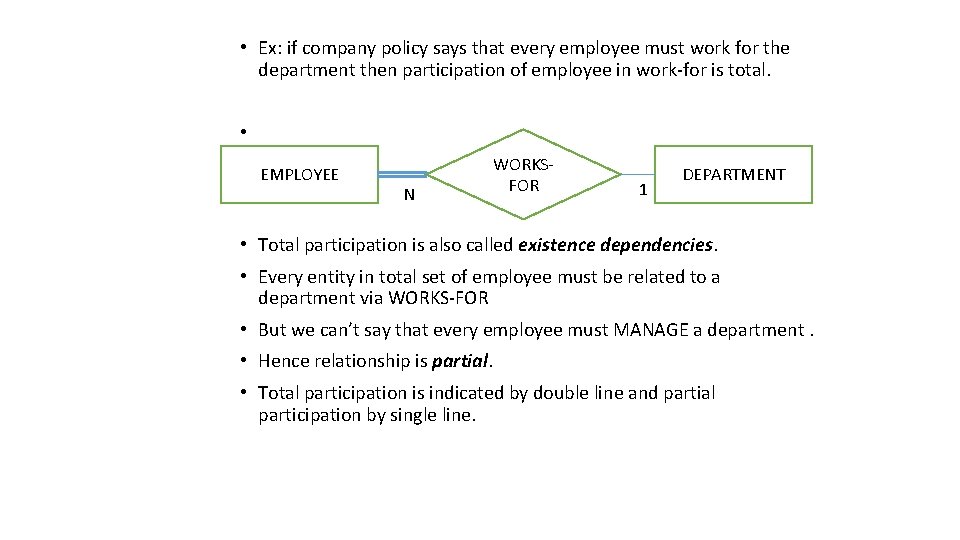
• Ex: if company policy says that every employee must work for the department then participation of employee in work-for is total. • EMPLOYEE N WORKSFOR 1 DEPARTMENT • Total participation is also called existence dependencies. • Every entity in total set of employee must be related to a department via WORKS-FOR • But we can’t say that every employee must MANAGE a department. • Hence relationship is partial. • Total participation is indicated by double line and partial participation by single line.
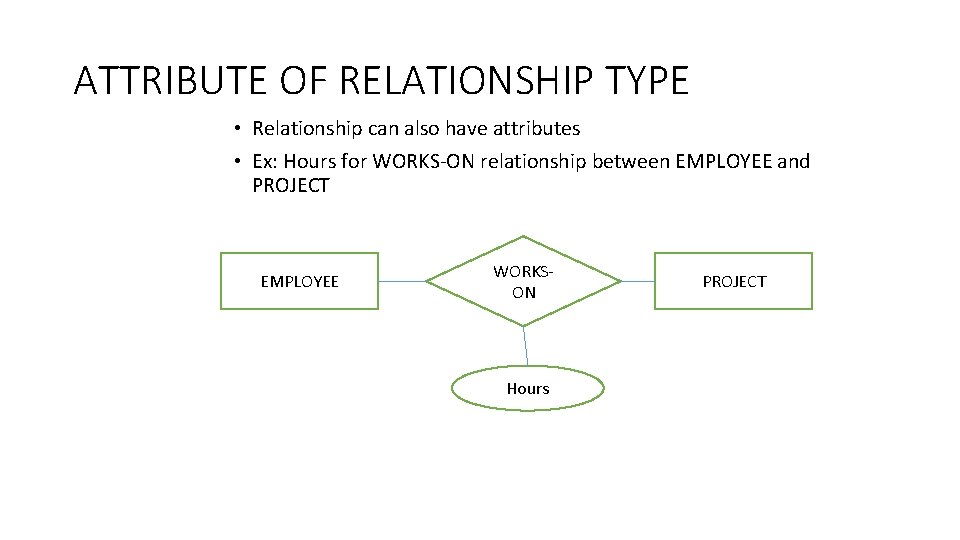
ATTRIBUTE OF RELATIONSHIP TYPE • Relationship can also have attributes • Ex: Hours for WORKS-ON relationship between EMPLOYEE and PROJECT EMPLOYEE WORKSON Hours PROJECT
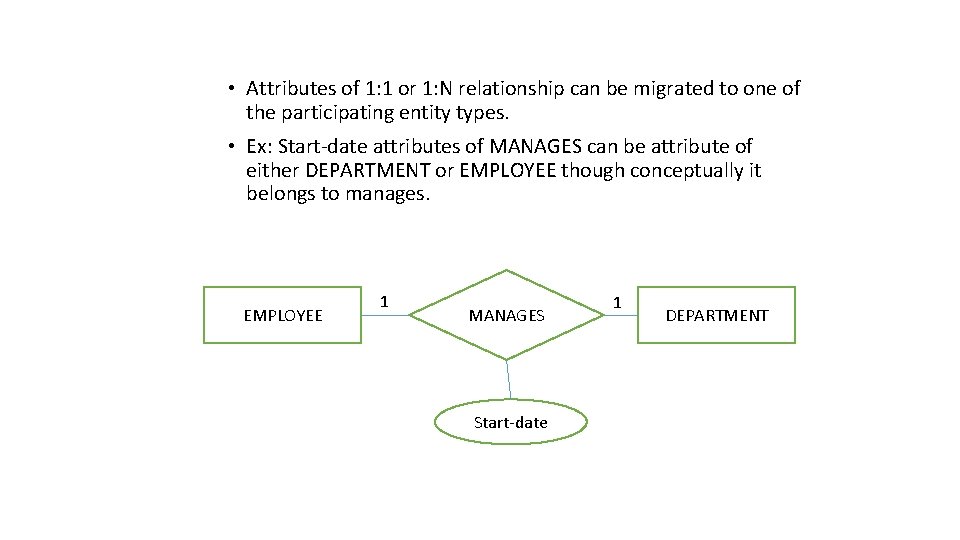
• Attributes of 1: 1 or 1: N relationship can be migrated to one of the participating entity types. • Ex: Start-date attributes of MANAGES can be attribute of either DEPARTMENT or EMPLOYEE though conceptually it belongs to manages. EMPLOYEE 1 MANAGES Start-date 1 DEPARTMENT
• Because each EMPLOYEE MANAGES is a 1: 1 relationship. • So every DEPARTMENT /EMPLOYEE entity participate in atmost one relationship instance. • So value of the Start-date can be determined separately either by participating DEPARTMENT entity or participating EMPLOYEE entity.
Keys • A super key of an entity set is a set of one or more attributes whose values uniquely determine each entity. • A candidate key of an entity set is a minimal super key • Although several candidate keys may exist, one of the candidate keys is selected to be the primary key. 28
WEAK ENTITY AND STRONG ENTITY Entity type that doesn’t have a key attribute on it’s own is called weak entity and the Regular entity types that have key value is called strong entities. • Entity belonging to weak entity type is identified by being related to specific entities from another entity type in combination with one of their attribute value. • We call this entity type as identifying or owner entity type (Parent/Dominanat Entity type) • The relationship that connects owner entity type to weak entity is called Identifying relationship. • The weak entities are also called as child entity type or subordinate entity type
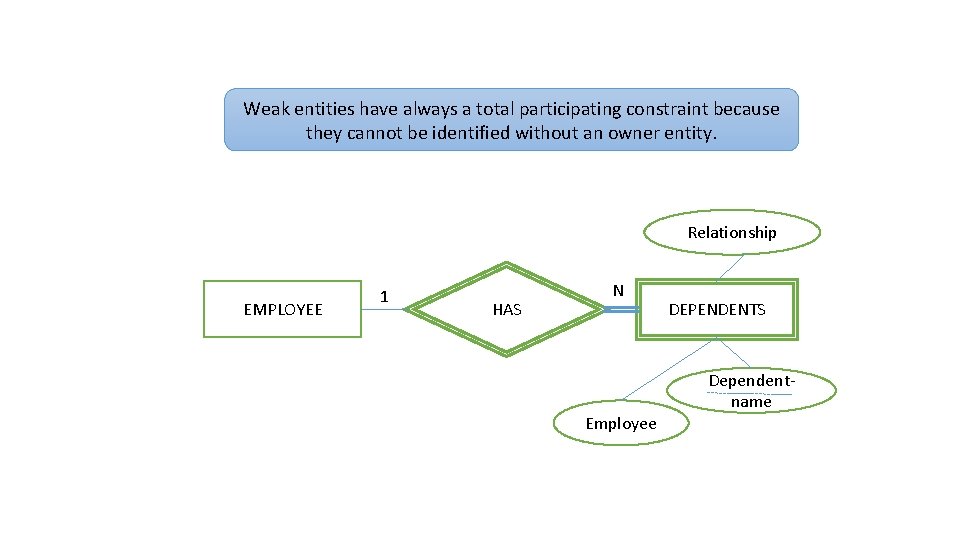
Weak entities have always a total participating constraint because they cannot be identified without an owner entity. Relationship EMPLOYEE 1 HAS N Employee DEPENDENTS Dependentname
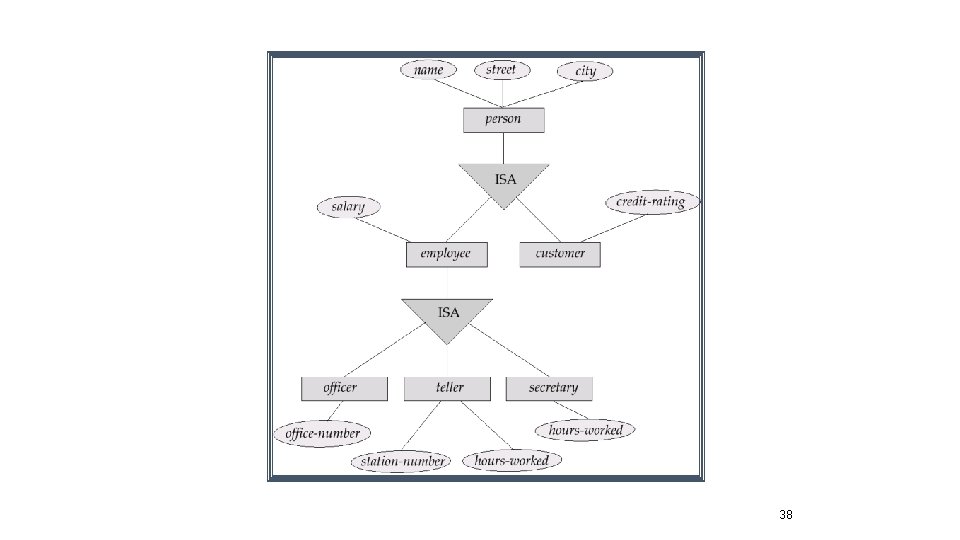
SPECIALIZATION Specialization is a process of defining set of subclasses of an entity type. • This entity type is called superclass of the specialization. • Set of subclasses that form specialization is defined based on some distinguishing characters of entities in the superclass. • Ex: Job type , method-of-pay
• The subclass that defines a specialization are attached by line to circle to represent the specialisation, which is connected to superclass. • The subset symbol on each line connecting a subclass to the circle indicates direction of the superclass/subclass relationship. • Attributes that apply only to entities of particular entity types – specific/local attributes. • Subclass also participates in specific relationships.
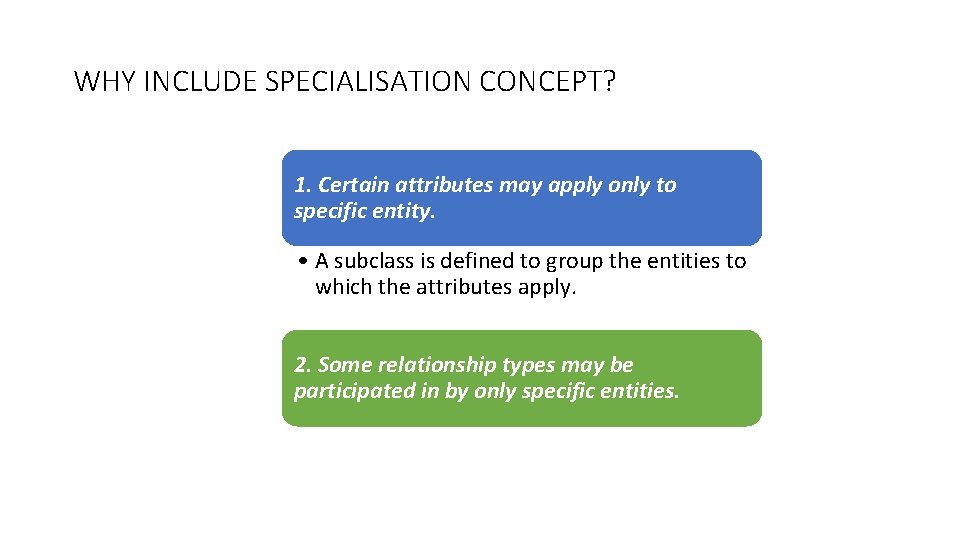
WHY INCLUDE SPECIALISATION CONCEPT? 1. Certain attributes may apply only to specific entity. • A subclass is defined to group the entities to which the attributes apply. 2. Some relationship types may be participated in by only specific entities.
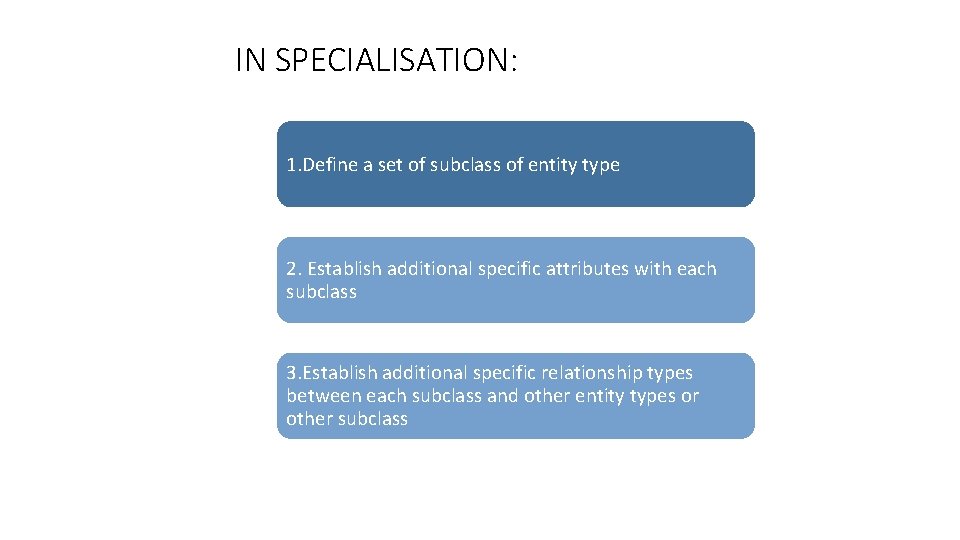
IN SPECIALISATION: 1. Define a set of subclass of entity type 2. Establish additional specific attributes with each subclass 3. Establish additional specific relationship types between each subclass and other entity types or other subclass
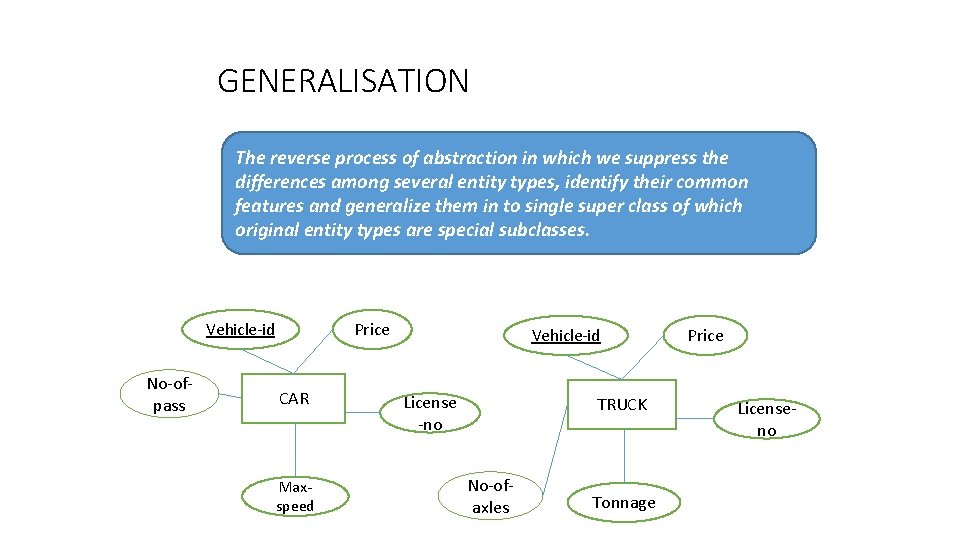
GENERALISATION The reverse process of abstraction in which we suppress the differences among several entity types, identify their common features and generalize them in to single super class of which original entity types are special subclasses. Price Vehicle-id No-ofpass CAR Maxspeed Vehicle-id License -no TRUCK No-ofaxles Tonnage Price Licenseno
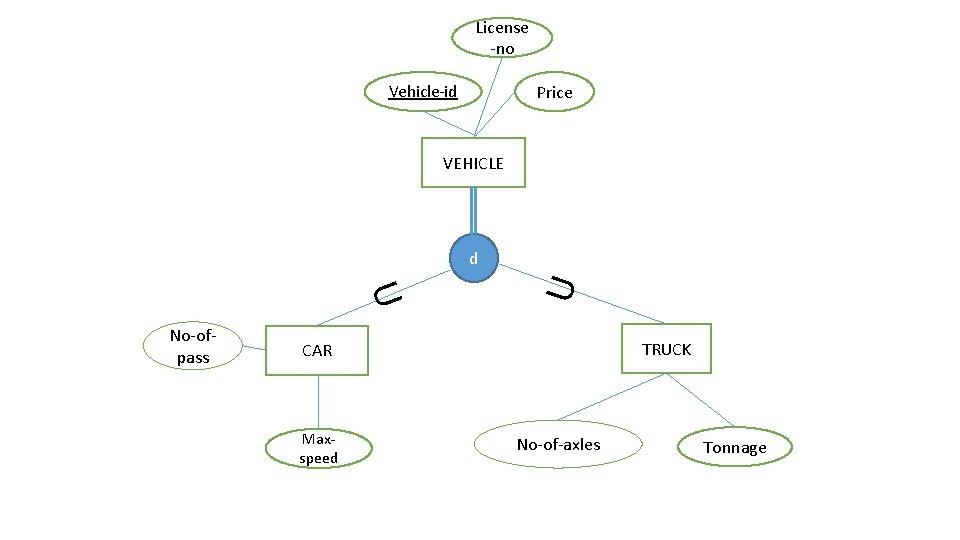
License -no Price Vehicle-id VEHICLE U No-ofpass U d TRUCK CAR Maxspeed No-of-axles Tonnage
Specialization • A lower-level entity set inherits all the attributes and relationship participation of the higher-level entity set to which it is linked. • A lower-level entity set may have additional attributes and participate in additional relationships 37
38
Practice • Employee works in Department. Each department can have many employees but each employee can work under one department at a time. In Each Organization there are two types of employees. One is permanent type and another is temporary type employees. Permanent Employees take salary per month and temporary employees take wages per day. Each Employee has name, Employee id , city and phone numbers. Department has Department id to uniquely identify.
- Slides: 39