
Enterprise Economics definitions surrouding of company typology of
- Slides: 27
Enterprise Economics definitions, surrouding of company, typology of companies
Goals of an entreprise Goals: • • increasing of the market share maximazing of the profit satisfaction of the costumers etc. But usually… a company traces a profit any way.
1. Business, Businessman, Enterprise Business is a systematic activity runs • • by businessman under his own name on his own responsibility for profit 3
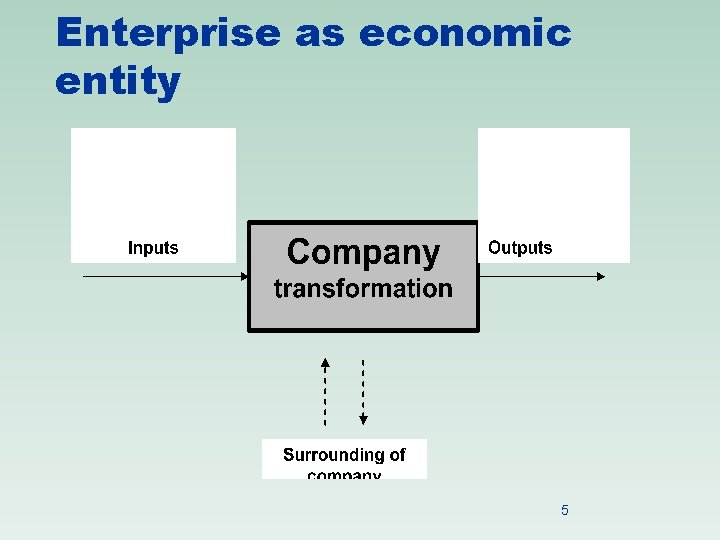
Enterprise is a collection of tangible and intangible components of business (including personal component) Enterprise = economic entity, which is doing business 4
Enterprise as economic entity 5
Businessman is qa person registered in the commercial register qperson who has business or other authorization q. Real, living person 6
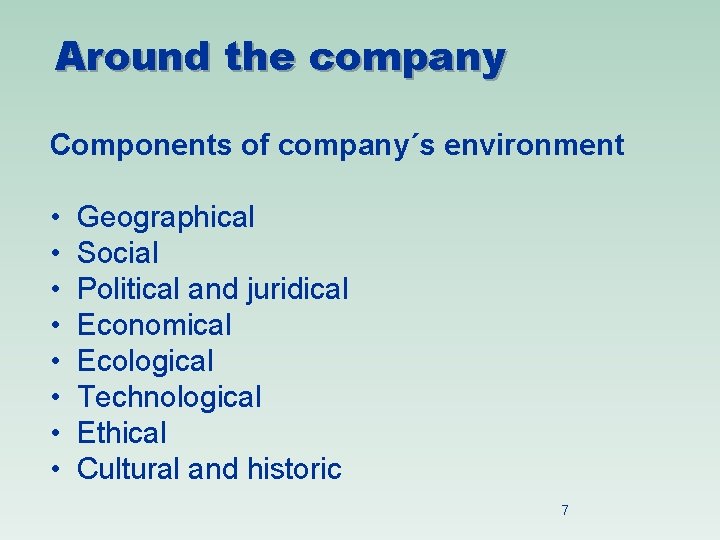
Around the company Components of company´s environment • • Geographical Social Political and juridical Economical Ecological Technological Ethical Cultural and historic 7
BUSINESS OBJECTIVES The traditional concept of business is • objective of long-term growth of the market value of the enterprise • the medium-term corporate objective of achieving a reasonable profit • in the short term to ensure the solvency of company 8
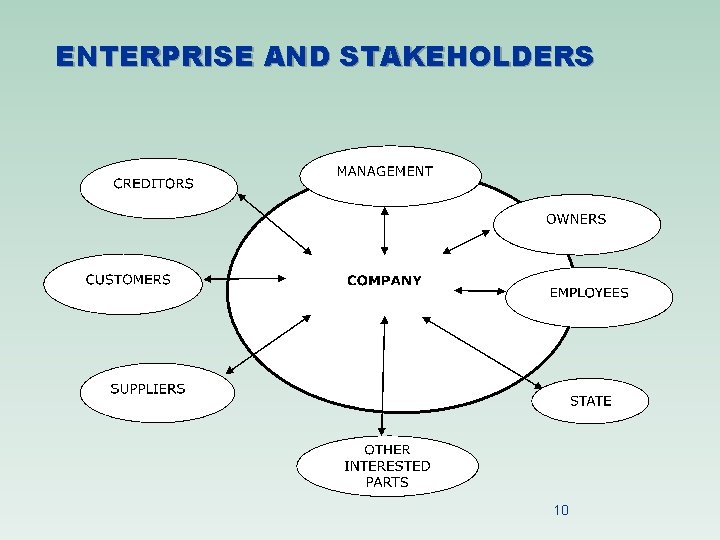
BUSINESS OBJECTIVES • Company = coalition of interested parties (the stakeholders). • Stakeholder = a person, group, organization, or system who affects or can be affected by an organization's actions 9
ENTERPRISE AND STAKEHOLDERS 10
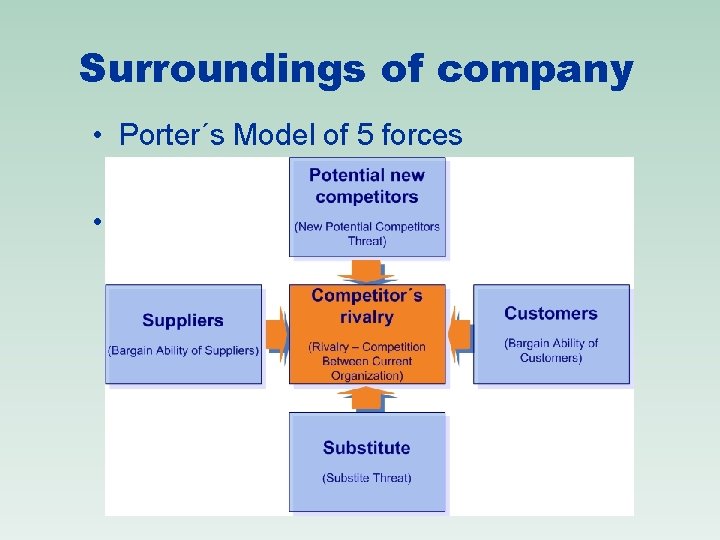
Surroundings of company • Porter´s Model of 5 forces • stakeholders: Supplier, clients, substitutions, possibility of new threat, shareholders
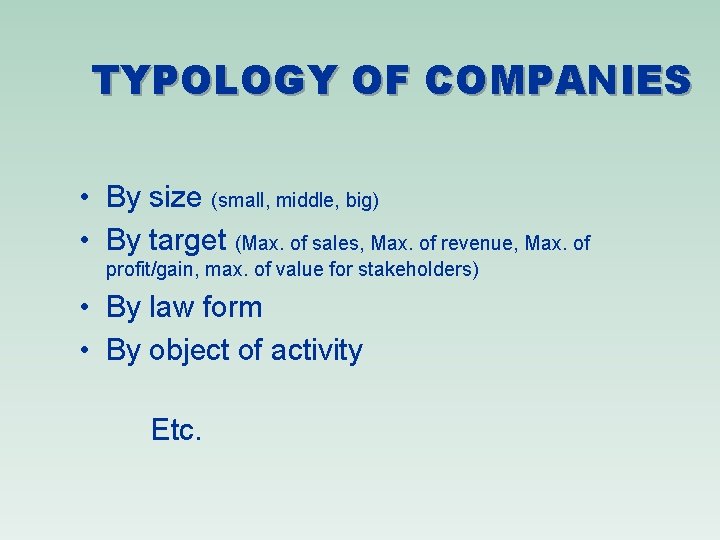
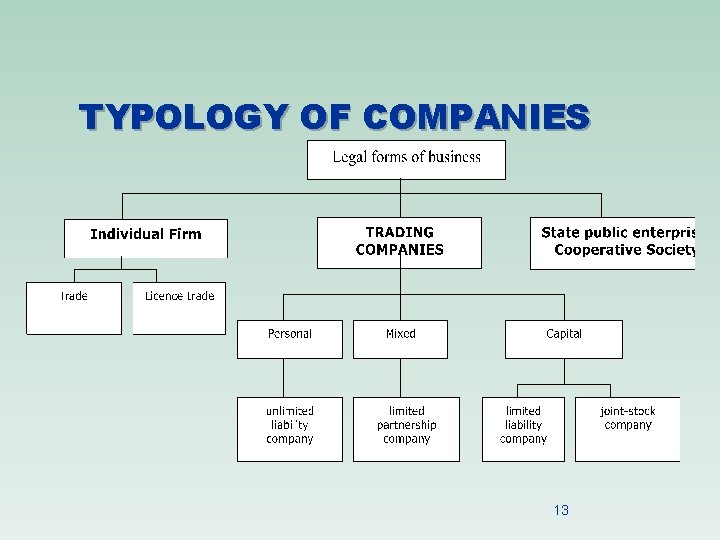
TYPOLOGY OF COMPANIES • By size (small, middle, big) • By target (Max. of sales, Max. of revenue, Max. of profit/gain, max. of value for stakeholders) • By law form • By object of activity Etc.
TYPOLOGY OF COMPANIES 13
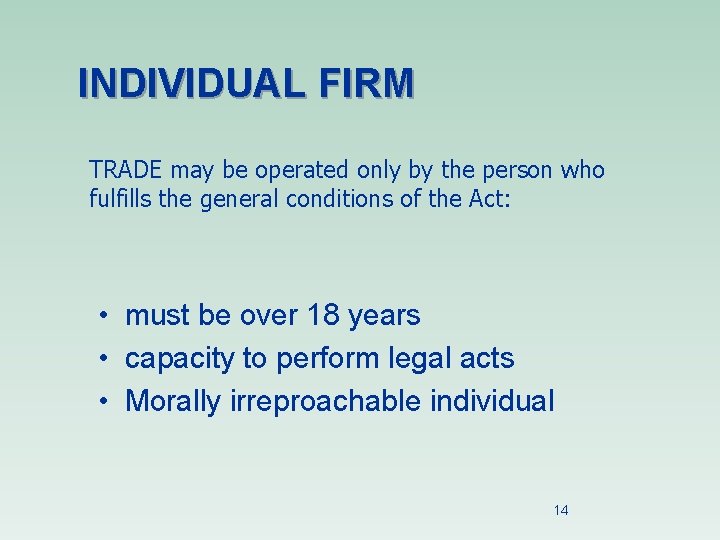
INDIVIDUAL FIRM TRADE may be operated only by the person who fulfills the general conditions of the Act: • must be over 18 years • capacity to perform legal acts • Morally irreproachable individual 14
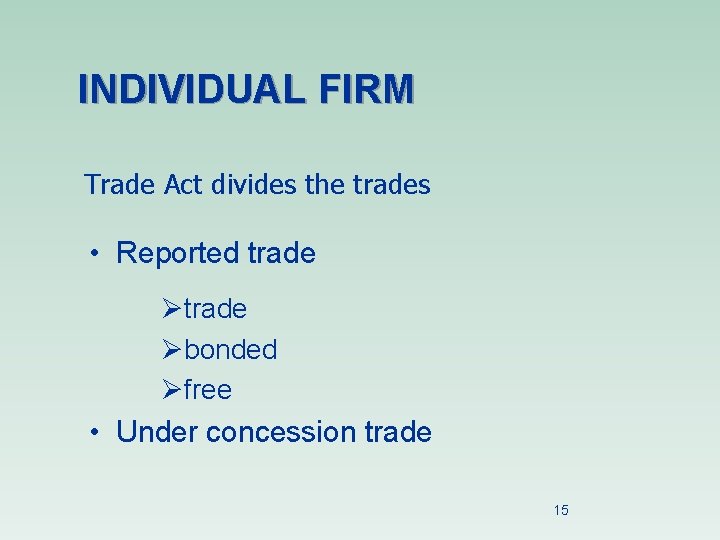
INDIVIDUAL FIRM Trade Act divides the trades • Reported trade Øbonded Øfree • Under concession trade 15
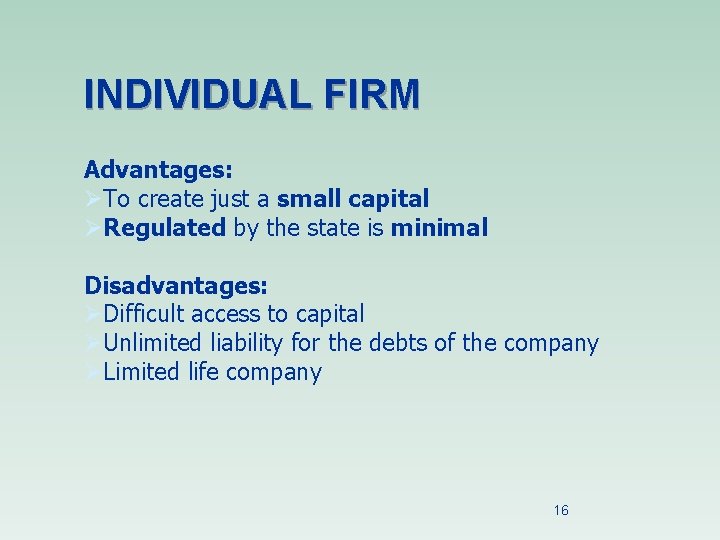
INDIVIDUAL FIRM Advantages: ØTo create just a small capital ØRegulated by the state is minimal Disadvantages: ØDifficult access to capital ØUnlimited liability for the debts of the company ØLimited life company 16
CAPITAL COMPANIES • LIMITED LIABILITY COMPANY (S. R. O. ) • JOINT-STOCK COMPANY (A. S. ) 17
Limited Liability Company Ltd • The capital consists of contributions of members • The minimum amount of capital = 200 000 CZK • Partners jointly and severally liable for the obligations of up to a summary of the outstanding deposits of all parts of the members. After repayment of all deposits guarantee members lapses. • The highest authority: General Meeting • Statutory authority: executive (executives) 18
Join Stock Company PLC • Capital is distributed to a number of shares of a nominal value • The minimum amount of capital = 2 milion CZK (without a public offer), or 20 million (with a public offer) • A shareholder is not liable for the obligations • The highest authority: General Meeting • Executive authority: the Board • Inspection body: the Supervisory Board 19
Join Stock Company PLC Shares (Stocks) is security (commercial paper), which are associated with the rights of shareholders to participate in the • Governance (control) • Profit (dividend) • Liquidation balance 20
Join Stock Company PLC • Shares/stock in the name - is entered in the register of shareholders (share register), it is converted by indosament • Shares/stock of the owner - is immediately marketable, it is converted by the delivery to the new owner 21
MIXED COMPANIES • Commandite company (k. s. ) • It is a combination of personal and capital companies. • Commandite company has two types of members (called limited partner and unlimited partner). 22
STATE COMPANIES • Companies that provide some important services (such as rail transport, road management, postal services, radio, television). • Some community activities are usually provided by the so-called non-profit organizations. 23
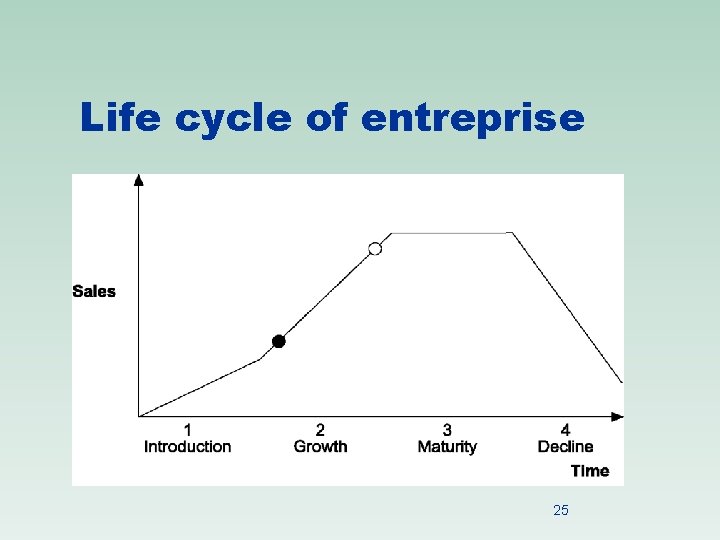
LIFE CYCLE OF ENTERPRISE • • • Establishment of company Introduction of company The growth of the enterprise The maturity of the company Decline - The crisis and possibly of sanitation • End of company 24
Life cycle of entreprise 25
END of COMPANY General reasons for liquidation are: • the period for which it was based • to fulfill the objective for which it was based • voluntary decision, mutual agreement of the members • judicial decision • decisions on merger 26
ASSOCIATION FUSION = voluntary merger of two or more companies into one. Interconnection can be: • horizontal, linking the same companies of business branches • vertical, linking the different companies of business branches • conglomerates merging firms with different focus 27