
Enterprise Architecture A Citywide Service Delivery Strategy Aligning
- Slides: 16
Enterprise Architecture – A Citywide Service Delivery Strategy Aligning Information Technology Services to the Citizen Needs of the City…
Enterprise Architecture Purpose and Value Ø Identify important business needs using a data-driven, decision-making framework Ø Align information technology services to produce maximum citizen value Ø Deliver "horizontally" integrated enterprise solutions while recognizing innovative strategies Ø Identify risk early to mitigate decisions and solutions
Capability Understanding Drives Successful Solutions Ø Capability: People, process and technology delivering value for a specific purpose. The quality of being capable; to have the capacity or ability to do something, achieve specific outcomes, effects or declared goals and objectives Ø Understanding enterprise-wide capabilities…
The Question What technology investments best improve citizen services (i. e. , business capabilities) delivered by city departments?
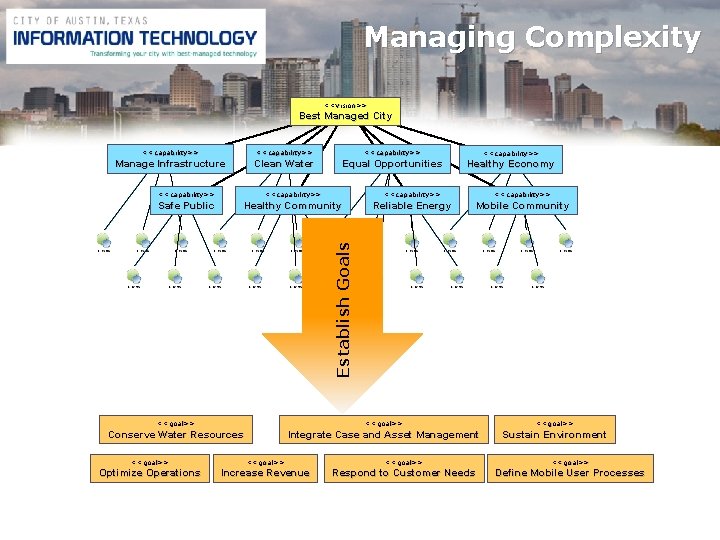
Managing Complexity <<vision>> Best Managed City <<capability>> Manage Infrastructure Clean Water Equal Opportunities Healthy Economy <<capability>> Healthy Community Reliable Energy Mobile Community Establish Goals <<capability>> Safe Public <<goal>> Conserve Water Resources Integrate Case and Asset Management Sustain Environment <<goal>> Optimize Operations Increase Revenue Respond to Customer Needs Define Mobile User Processes
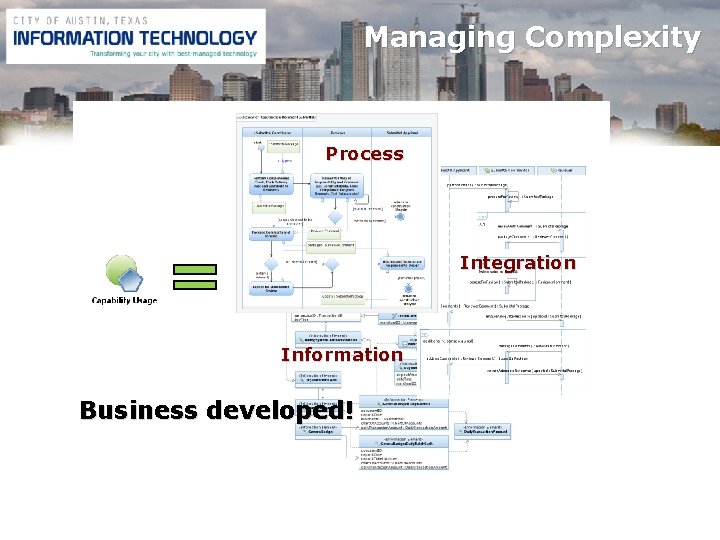
Managing Complexity Process Integration Information Business developed!
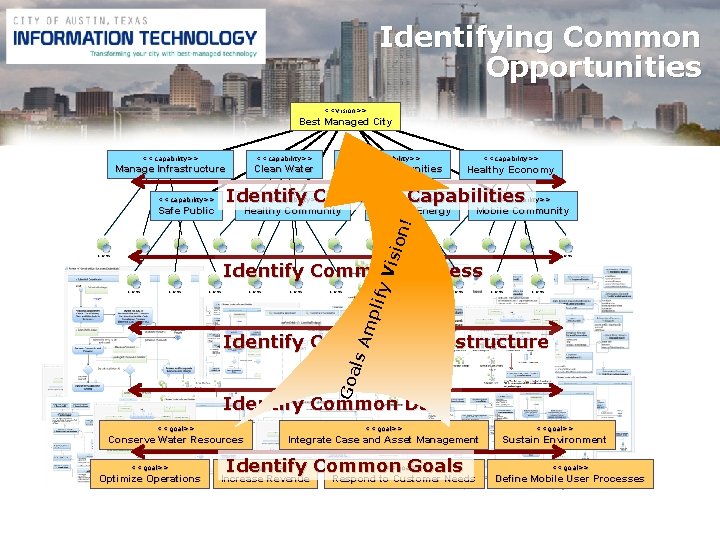
Identifying Common Opportunities <<vision>> Best Managed City <<capability>> Manage Infrastructure Clean Water Equal Opportunities Healthy Economy <<capability>> Identify Common Capabilities <<capability>> Healthy Community Reliable Energy Mobile Community ls A mp lify Vis ion ! Safe Public Identify Common Process Goa Identify Common Infrastructure Identify Common Data <<goal>> Conserve Water Resources Integrate Case and Asset Management Sustain Environment <<goal>> Optimize Operations Identify Common Goals <<goal>> Increase Revenue Respond to Customer Needs Define Mobile User Processes
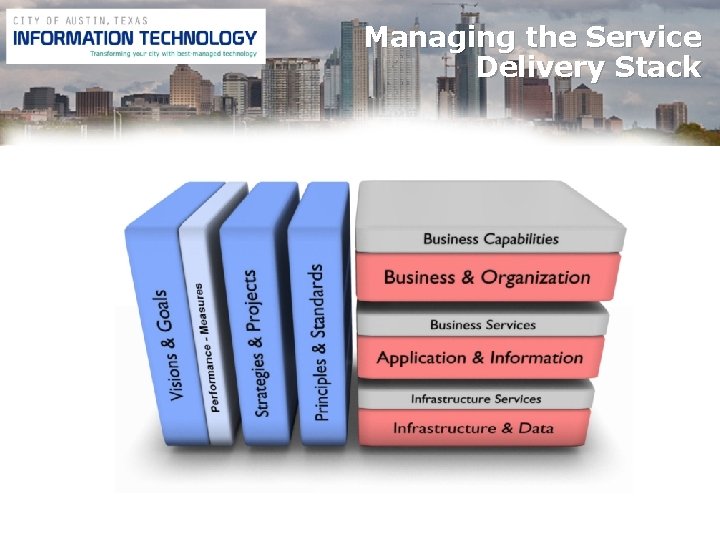
Managing the Service Delivery Stack
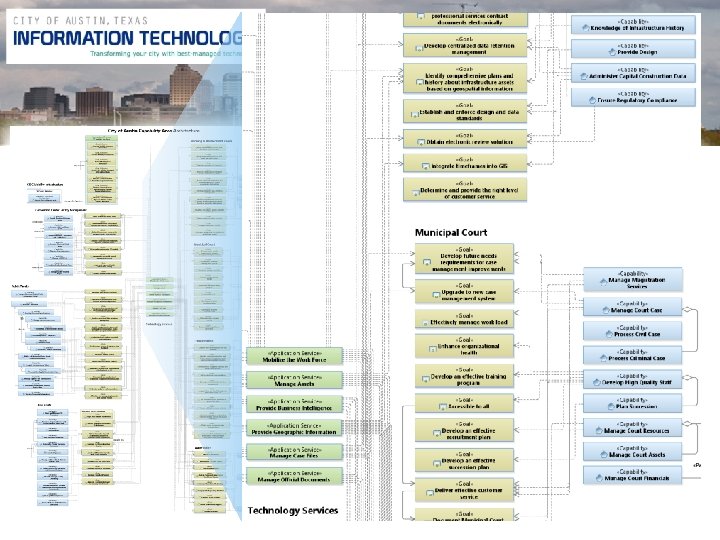
Capability Model
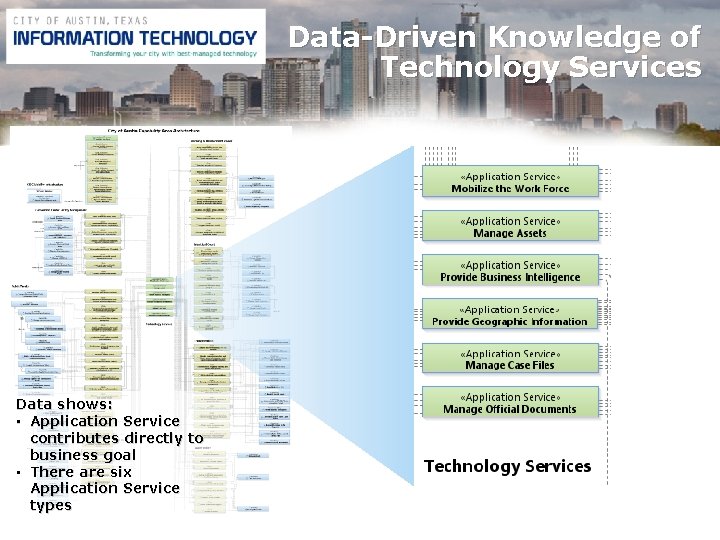
Data-Driven Knowledge of Technology Services Data shows: • Application Service contributes directly to business goal • There are six Application Service types
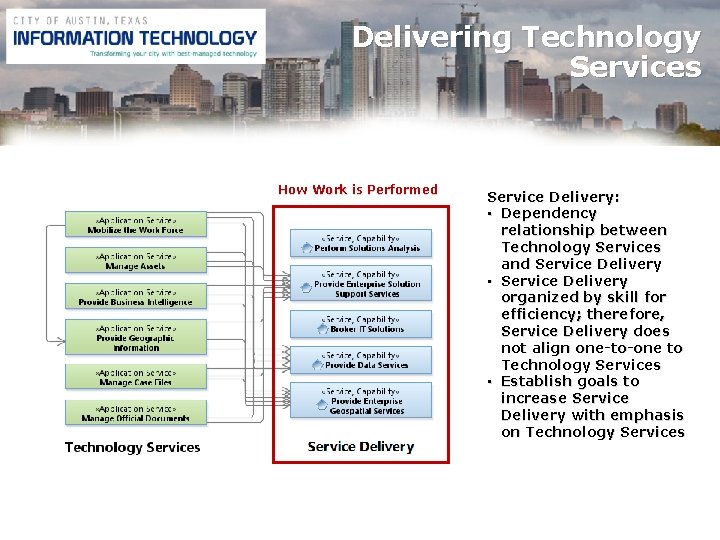
Delivering Technology Services How Work is Performed Service Delivery: • Dependency relationship between Technology Services and Service Delivery • Service Delivery organized by skill for efficiency; therefore, Service Delivery does not align one-to-one to Technology Services • Establish goals to increase Service Delivery with emphasis on Technology Services
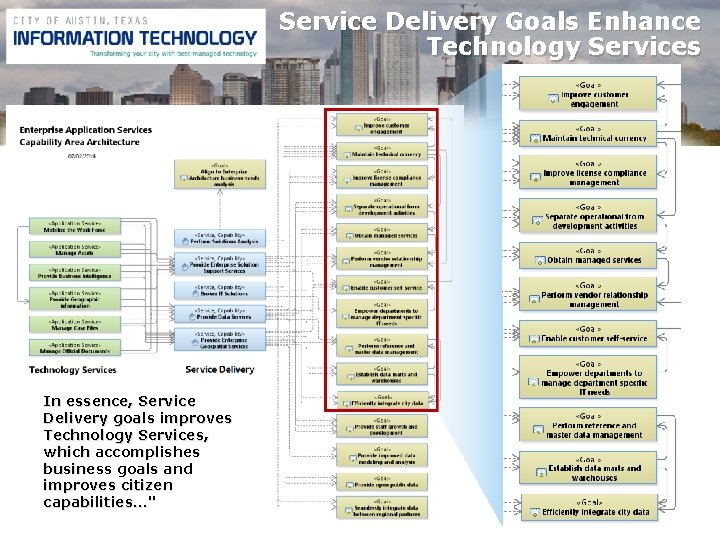
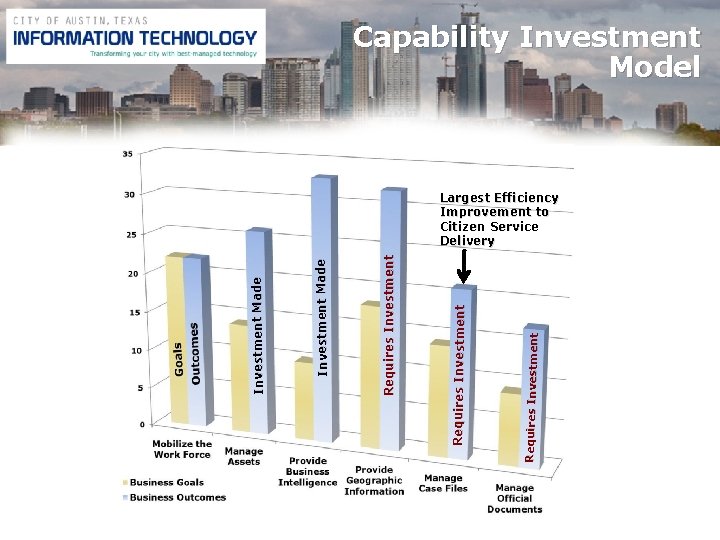
Service Delivery Goals Enhance Technology Services In essence, Service Delivery goals improves Technology Services, which accomplishes business goals and improves citizen capabilities…"
Requires Investment Made Investment Made Capability Investment Model Largest Efficiency Improvement to Citizen Service Delivery
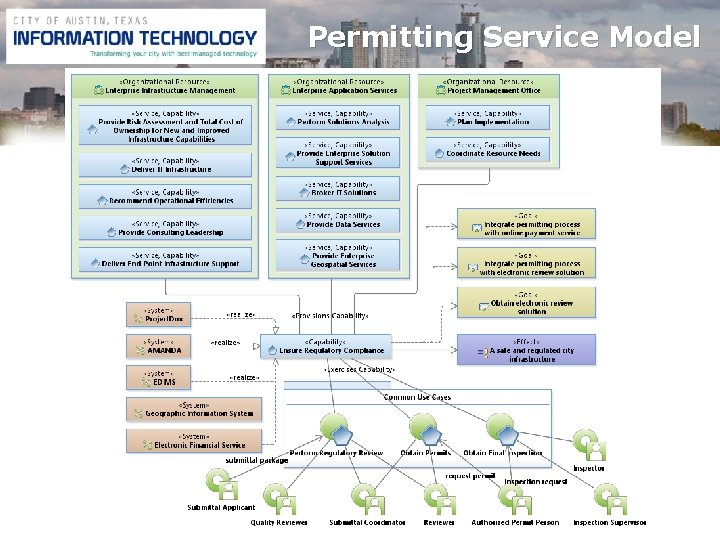
Permitting Service Model
Cloud Computing – Innovation? Cloud computing, also known as on-demand computing, is a kind of internet-based computing, where shared resources and information are provided to computers and other devices ondemand. It is a model for enabling ubiquitous, on-demand access to a shared pool of configurable computing resources. Cloud computing and storage solutions provide users and enterprises with various capabilities to store and process their data in third-party data centers. It relies on sharing of resources to achieve coherence and economies of scale, similar to a utility (like the electricity grid) over a network. At the foundation of cloud computing is the broader concept of converged infrastructure and shared services. ~Source: http: //Wikipedia. org
Summary… Ø Research and pilot case and work flow management cloud technologies § Enable business self-sustainment § Don't fear failure – learn from pilot activities § Encourage enterprise-wide cloud strategies such as Office 365 § Expand managed services for developmental activities – train the workforce Ø Invest in enterprise architecture § Delivers well-thought through investment strategy focused on citizen desired outcomes § Reduces solution / implementation risk § Enterprise framework looks beyond department silos