
Enteropathic Arthropathy IBD n INTESTINAL BYPASS ARTHRITIS n
Enteropathic Arthropathy IBD n INTESTINAL BYPASS ARTHRITIS n WHIPPLE'S DISEASE n Celiac disease n
Inflammatory bowel disease n Ulcerative colitis n Crohn’s disease
Inflammatory bowel disease n Intestinal involvement n Extraintestinal involvement
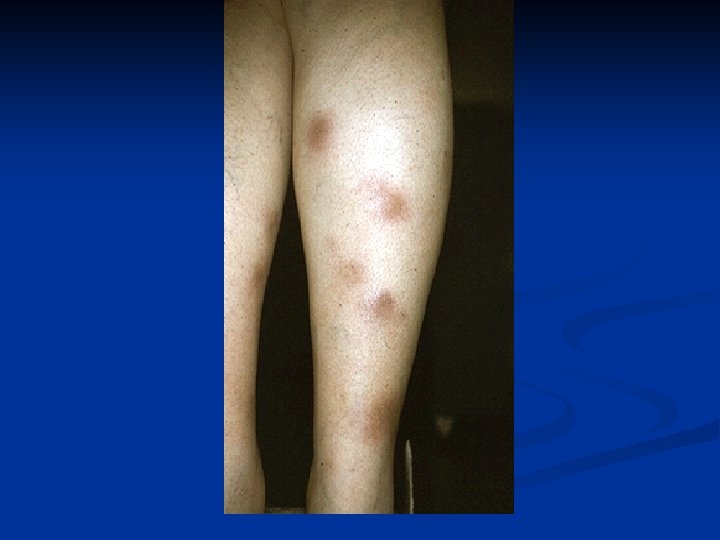
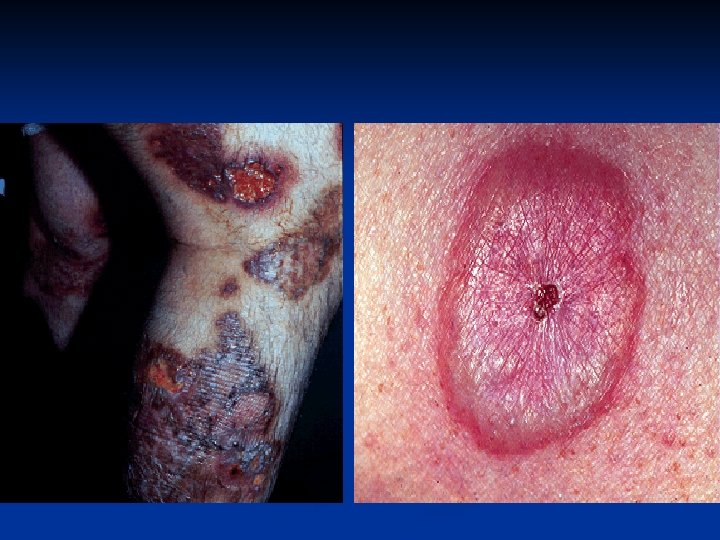
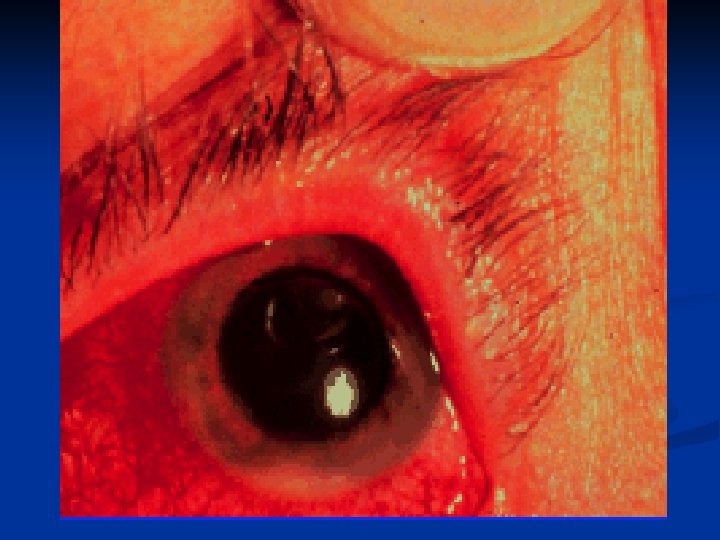
Extraintestinal involvement Arthritis n Aphthous stomatitis n Erythema nodosum n Anterior uveitis n Pyoderma gangrenosum n
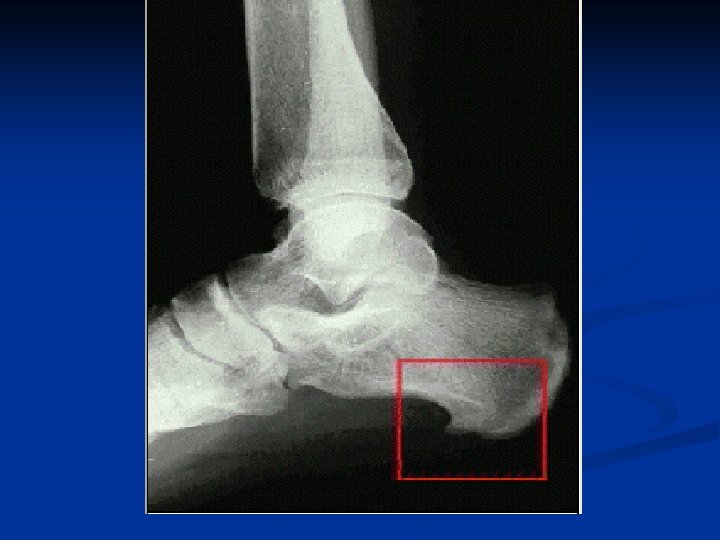
Other rheumatic problems Achilles tendinitis n Clubbing n Hypertrophic osteoarthropathy n Osteoporosis n Vasculitis n Amyloidosis n
Musculoskeletal n Peripheral arthritis n Axial arthritis n Both of them
Peripheral Arthritis Peripheral arthritis : 9 – 30% n More likely in patients with large-bowel disease and in those patients with complications n Male=female n Arthritis may precede symptms of GI especially in children n
Peripheral Arthritis n n n Acute arthritis Symmetric, migratory polyarthritis affecting primarily large joints of the lower Associated with a flare-up of the bowel disease Occurs early Is self-limiting Without destruction
Peripheral Arthritis Lab test: RF – HLA-BW 62 Synovial fluids have 5000 to 12, 000 white blood cells n

Radiology n Soft tissue swelling and effusions without erosions or destruction

Course Is self-limiting (90% of cases resolve within 6 months( n Responds to successful treatment of the bowel disease n
Spondylitis Frequency : 1. 1 to 43% n Spondylitis often precedes IBD n M>F n The activity of spondylitis dose not correlate with activity of IBD n

Clinical features n n Pain and stiffness in the back and/or buttocks in the morning or after rest Stiffness and pain are often relieved by exercise Physical examination reveals limitation of spinal flexion and reduced chest expansion Some patients may have peripheral arthritis
Lab. test n HLA-B 27 : 53 to 75%
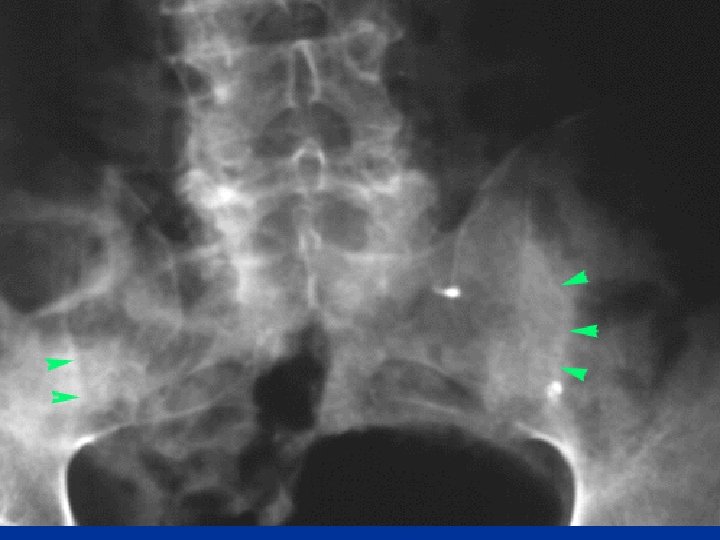
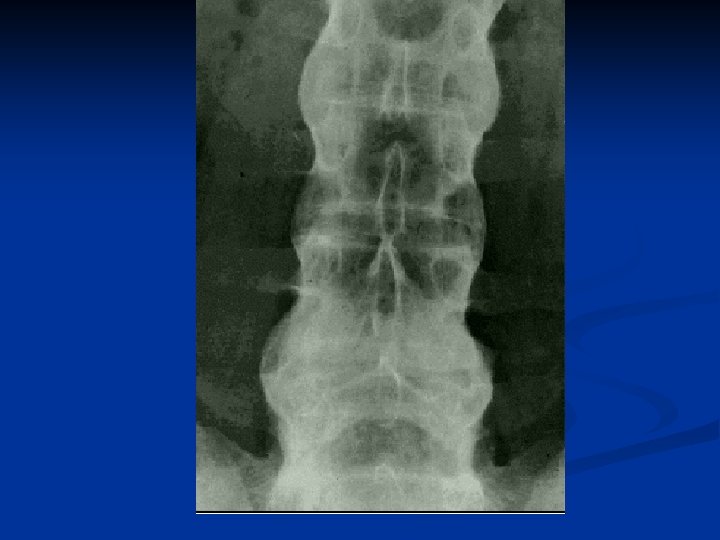
Radiology n Typical findings of ankylosing spondylitis and bilateral sacroiliitis
Treatment Glucocorticoids n Anti-tumor necrosis factor n Sulfasalazine n Colectomy (for ulcerative colitis( n
UNDIFFERENTIATED Spndyloarthropathy n n n Have some features of one or more of the spondyloarthropathies but there are not enough evidences to meet criteria for differentiated spondyloarthropathies Are not uncommon usually young adults
UNDIFFERENTIATED Spndyloarthropathy n Approximately half the patients with undifferentiated spondyloarthropathy are HLAB 27 positive, and thus the absence of B 27 is not useful in establishing or excluding the diagnosis.
Clinical presentations n inflammatory synovitis of one knee, Achilles tendinitis, and dactylitis of one digit ("sausage digit"), or sacroiliitis in the absence of other criteria for AS
Course n Some cases, the patient subsequently develops IBD or psoriasis or the process eventually meets criteria for ankylosing spondylitis.
juvenile-onset spondyloarthropathy n n n Age : 7 -16 M>f Asymmetric, predominantly lower extremity oligoarthritis and enthesitis without extraarticular features is the typical mode of presentation
juvenile-onset spondyloarthropathy (seronegative, enthesopathy, arthropathy) n SEA syndrome
juvenile-onset spondyloarthropathy n n Prevalence of B 27: 80% Many, but not all, of these patients go on to develop typical ankylosing spondylitis in late adolescence or adulthood.
- Slides: 29