
Enterobacteria Grods facultative anaerobe O body H flagellate
Enterobacteria G-rods, facultative anaerobe, O (body), H (flagellate), K (fimbrial) antigens, many are comensals in intestine but some are potential pathogens Factors of virulence: Endotoxin, fimbrias, exotoxins Lab. detection: cultivation on BA/Endo, chromogennous media, biochemistry (enterotest), antigennous analysis, in addition to intestinal infections we also do ATB susceptibility testing Transport: often fecal-oral Therapy: cefalosporins, fluoroquinolons, aminopenicillins, Therapy: carbapenems etc.
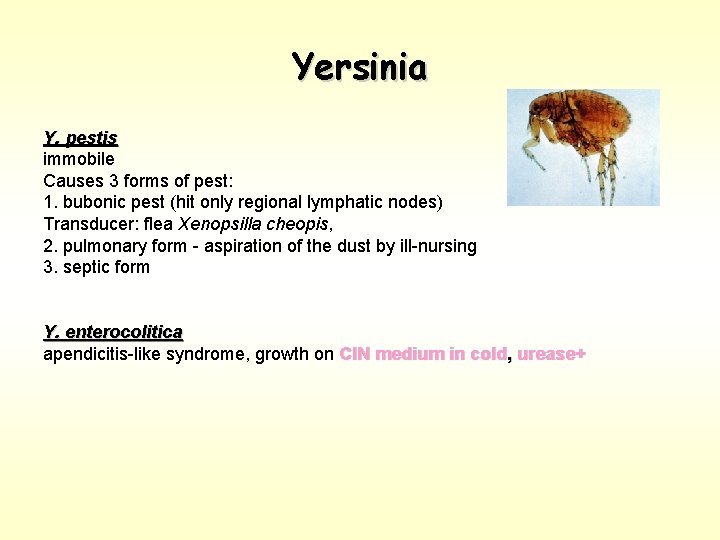
Yersinia Y. pestis immobile Causes 3 forms of pest: 1. bubonic pest (hit only regional lymphatic nodes) Transducer: flea Xenopsilla cheopis, 2. pulmonary form - aspiration of the dust by ill-nursing 3. septic form Y. enterocolitica apendicitis-like syndrome, growth on CIN medium in cold, urease+
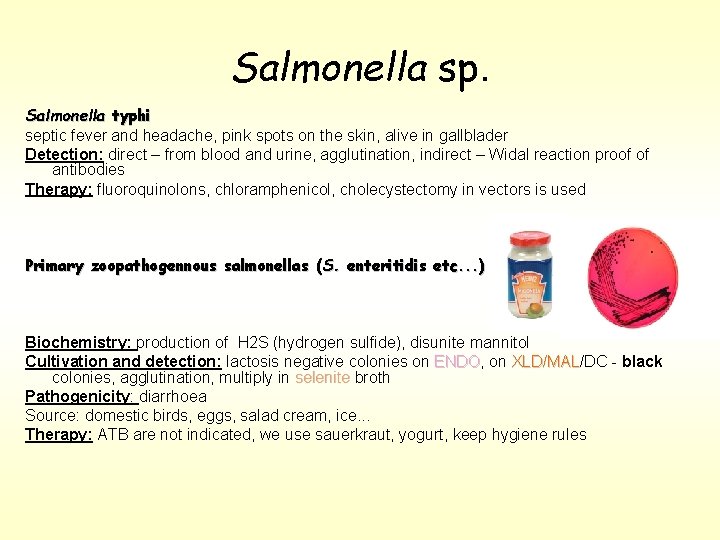
Salmonella sp. Salmonella typhi septic fever and headache, pink spots on the skin, alive in gallblader Detection: direct – from blood and urine, agglutination, indirect – Widal reaction proof of antibodies Therapy: fluoroquinolons, chloramphenicol, cholecystectomy in vectors is used Primary zoopathogennous salmonellas (S. enteritidis etc. . . ) Biochemistry: production of H 2 S (hydrogen sulfide), disunite mannitol Cultivation and detection: lactosis negative colonies on ENDO, on XLD/MAL/DC - black XLD/MAL colonies, agglutination, multiply in selenite broth selenite Pathogenicity: diarrhoea Source: domestic birds, eggs, salad cream, ice. . . Therapy: ATB are not indicated, we use sauerkraut, yogurt, keep hygiene rules
Genus Shigella (Sh. flexneri, sonnei, boydii, dysenteriae) immobile, causes watery diarrhoea with tenesm, blood in stool Epidemies from water sources – camps, social care institutes Therapy: fluids Escherichia coli Saprophyte in intestine, patogennous are only these, with specific factors of virulence, these are divided into groups: EPEC (enteropatogennous) - diarrhoea in children do 2 let, serotypes like O 55, O 126 // known as Pharaoh revenge ETEC (enterotoxigennous) – cause travel diarrhoea EIEC (enteroinvazive) – bloody diarrhoea VTEC/EHEC (verotoxigennous, enterohemoragic) – intestinal bleeding, hemolyticaluremic syndrom. Most common serotype O 157 Out of intestine can cause urinary tract infections, wound infections etc. Diagnostic: growth on ENDO -typical metal shine, lactose positive, form indol, pyr test pyr negative, agglutination is needed in special cases Therapy: susceptible to many antibiotics including ampicillin
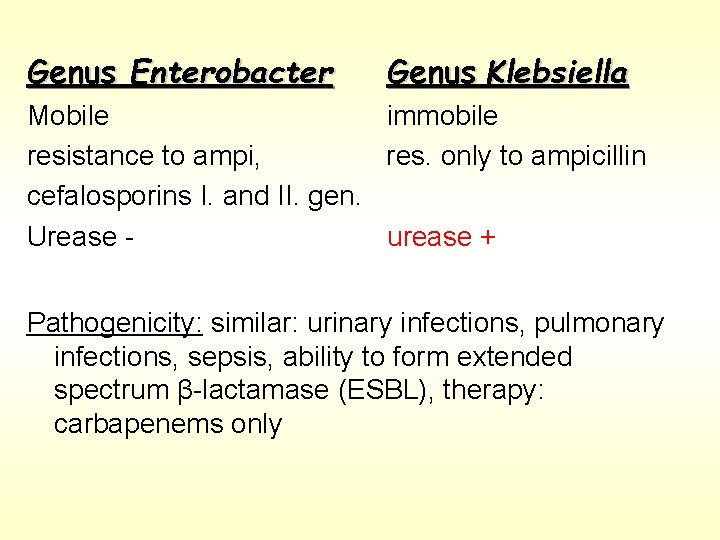
Genus Enterobacter Genus Klebsiella Mobile immobile resistance to ampi, res. only to ampicillin cefalosporins I. and II. gen. Urease urease + Pathogenicity: similar: urinary infections, pulmonary infections, sepsis, ability to form extended spectrum β-lactamase (ESBL), therapy: carbapenems only
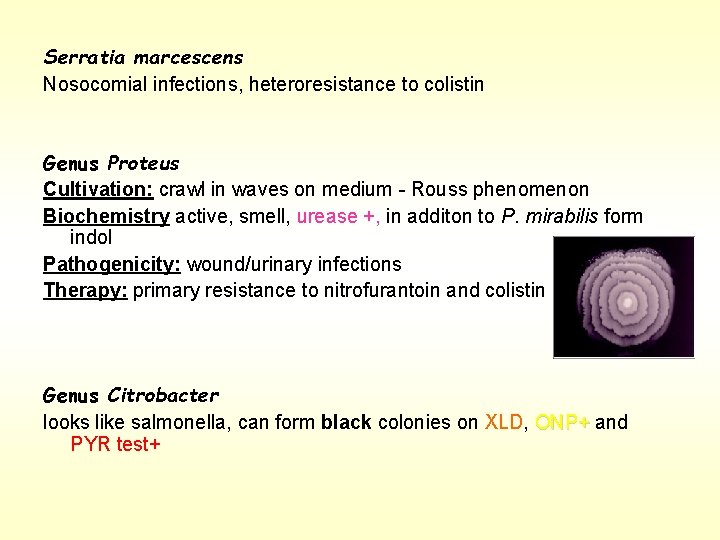
Serratia marcescens Nosocomial infections, heteroresistance to colistin Genus Proteus Cultivation: crawl in waves on medium - Rouss phenomenon Biochemistry active, smell, urease +, in additon to P. mirabilis form indol Pathogenicity: wound/urinary infections Therapy: primary resistance to nitrofurantoin and colistin Genus Citrobacter looks like salmonella, can form black colonies on XLD, ONP+ and ONP+ PYR test+
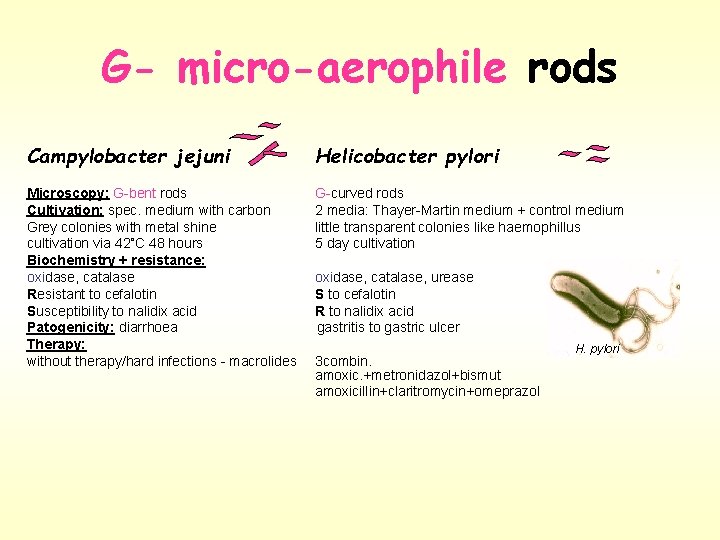
G- micro-aerophile rods Campylobacter jejuni Helicobacter pylori Microscopy: G-bent rods G-curved rods Cultivation: spec. medium with carbon 2 media: Thayer-Martin medium + control medium Grey colonies with metal shine little transparent colonies like haemophillus cultivation via 42˚C 48 hours 5 day cultivation Biochemistry + resistance: oxidase, catalase, urease Resistant to cefalotin Susceptibility to nalidix acid R to nalidix acid Patogenicity: diarrhoea gastritis to gastric ulcer Therapy: H. pylori without therapy/hard infections - macrolides 3 combin. amoxic. +metronidazol+bismut amoxicillin+claritromycin+omeprazol
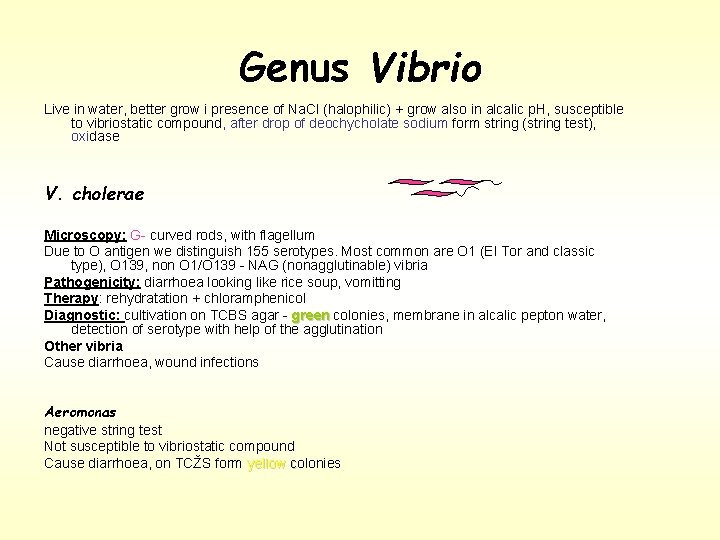
Genus Vibrio Live in water, better grow i presence of Na. Cl (halophilic) + grow also in alcalic p. H, susceptible to vibriostatic compound, after drop of deochycholate sodium form string (string test), oxidase V. cholerae Microscopy: G- curved rods, with flagellum Due to O antigen we distinguish 155 serotypes. Most common are O 1 (El Tor and classic type), O 139, non O 1/O 139 - NAG (nonagglutinable) vibria Pathogenicity: diarrhoea looking like rice soup, vomitting Therapy: rehydratation + chloramphenicol Diagnostic: cultivation on TCBS agar - green colonies, membrane in alcalic pepton water, green detection of serotype with help of the agglutination Other vibria Cause diarrhoea, wound infections Aeromonas negative string test Not susceptible to vibriostatic compound Cause diarrhoea, on TCŽS form yellow colonies c
- Slides: 8