
Entering the Dialog Responding to Current and Campus
- Slides: 38
Entering the Dialog: Responding to Current and Campus Events Raina Bloom Carrie Kruse College Library, University of Wisconsin-Madison
Entering the Dialog: Our Goals Today Telling the story (what happened and our response) What we were able to learn…. . . because of our library culture and practices How all of this might be useful to you
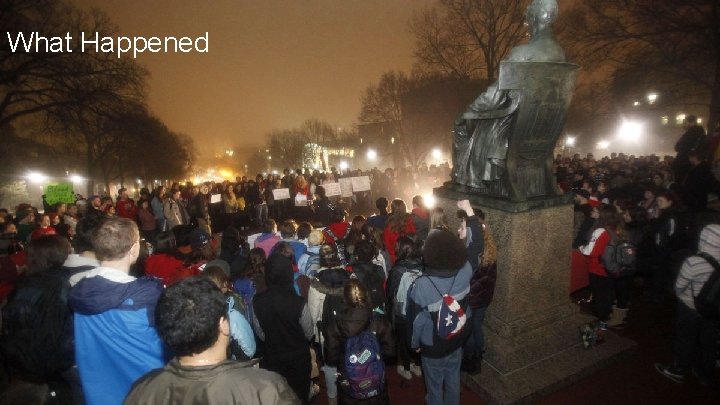
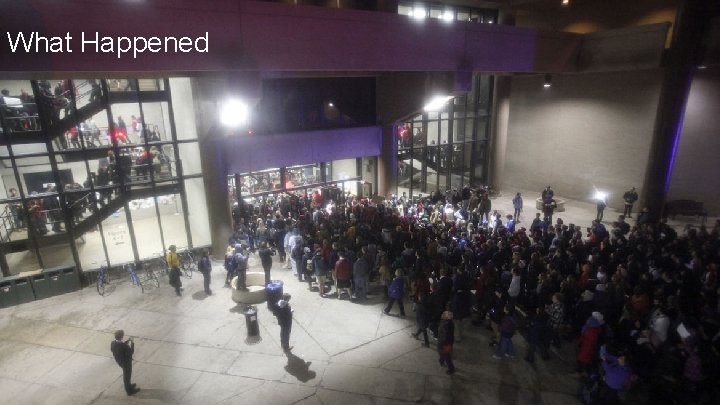
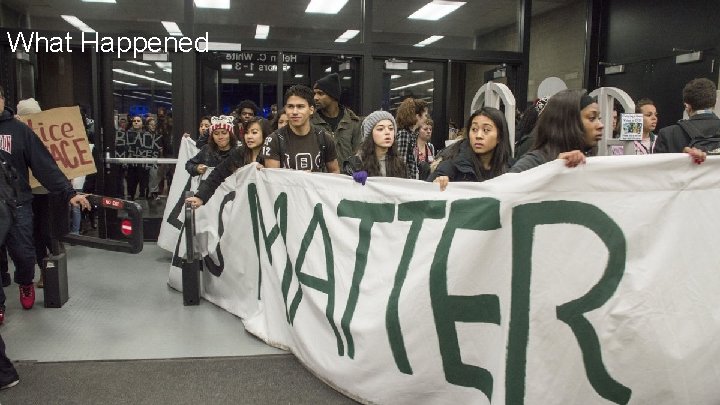
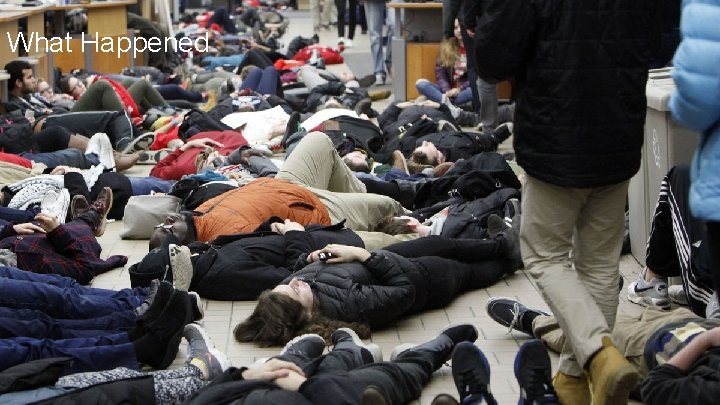
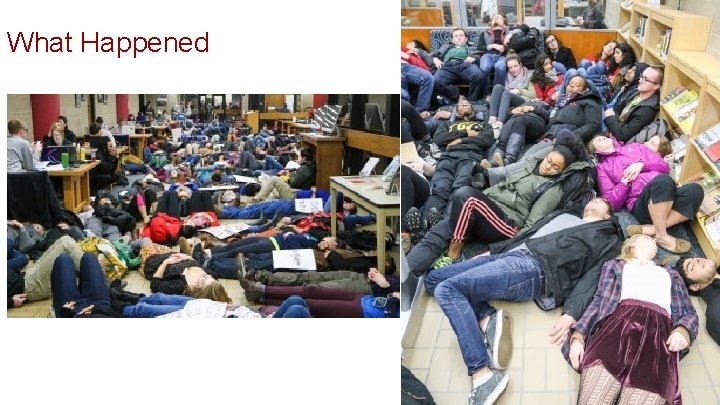
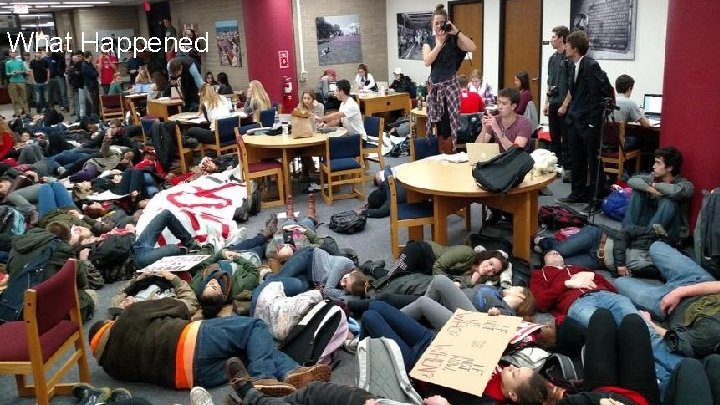
What Happened The stress of finals has swept campus, libraries are packed with hard working students, professors’ inboxes are filling with questions, and for many, these are the primary worries, but life is not normal. We are not living in a time where finals, or college itself, is the primary worry for so many. Students of color on this campus stress about much more. Let us remind the campus that the days do not feel normal and why, that we cannot pretend like the state of affairs is fine, that a blind eye turned toward injustice feels like a trigger pull to a colored heart. Join us as we march to the academic heart of campus, College Library, to demonstrate that black lives matter, that we belong, and that we cannot be ignored. - Facebook Event Page
What Happened
What Happened
What Happened
What Happened
What Happened
What Happened
What We Knew The public Facebook event Interactions with campus administration and UW Police
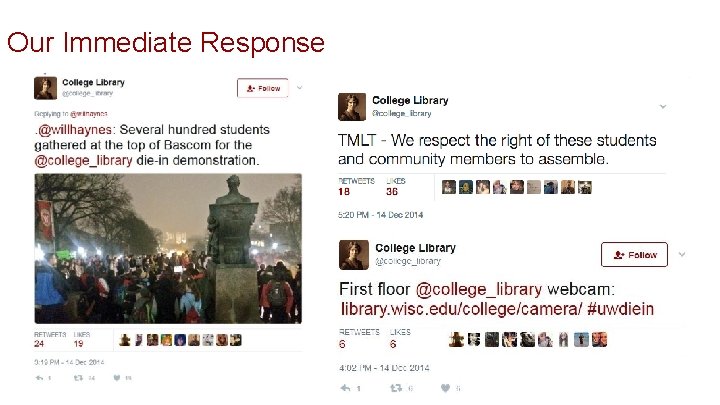
Our Immediate Response
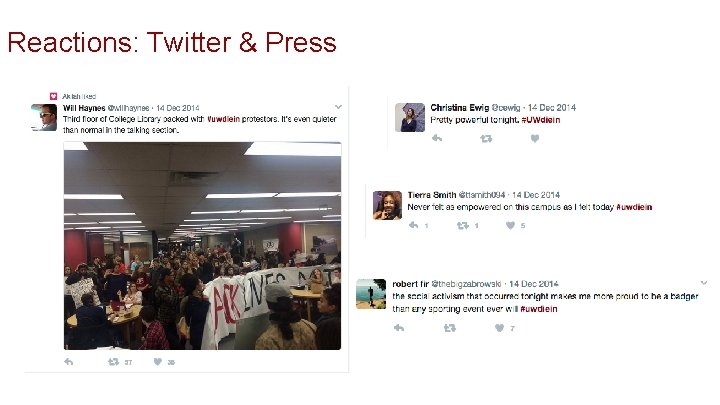
Reactions: Twitter & Press
Reactions: Twitter & Press https: //twitter. com/Badger. Herald/status/544520896279764993 https: //twitter. com/UWMadison/status/544292618491138048
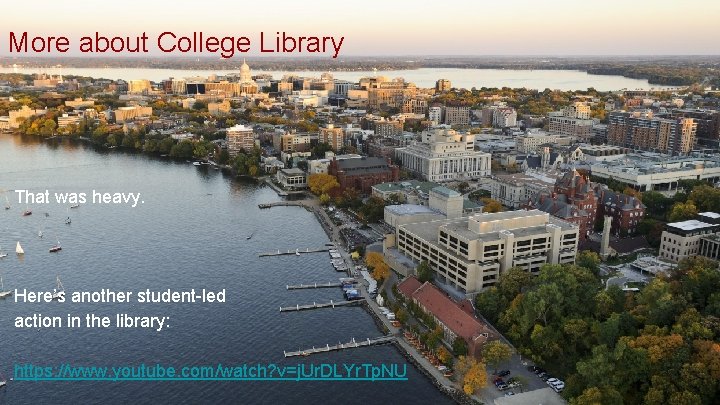
More about College Library That was heavy. Here’s another student-led action in the library: https: //www. youtube. com/watch? v=j. Ur. DLYr. Tp. NU
Why Did This Work: Underlying Assumptions ● ● Existing library culture Frequent, long, well-structured meetings Reflective practice Our role in campus library culture
Where We Were Diversity and inclusion efforts already underway College Library diversity/inclusion efforts Example: LGBT Campus Center training Part one (Information Resources/Services for LGBTQ community): everybody Part two (Allyship): voluntary - can’t mandate being an ally Also: Allyship can’t be neutral UW-Madison efforts - Diversity Framework UW-Madison General Library System efforts - Diversity Task Force
How the Moment Affected Our Work Shift in urgency Entering the dialog (not starting the dialog) Listening to students
Starting the Shift Away From Neutrality Diversity/inclusion as a professional value But how do we practice it? What does “serving everyone” look like? https: //twitter. com/i/moments/753604378699890688 http: //libraries 4 blacklives. org/neutrality-myth/
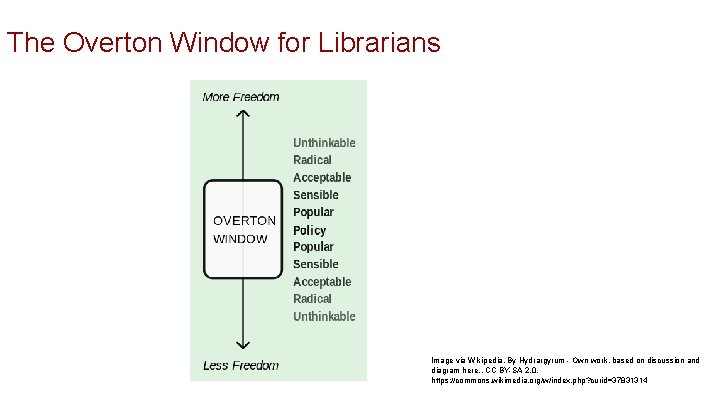
The Overton Window for Librarians Image via Wikipedia, By Hydrargyrum - Own work, based on discussion and diagram here. , CC BY-SA 2. 0, https: //commons. wikimedia. org/w/index. php? curid=37831314
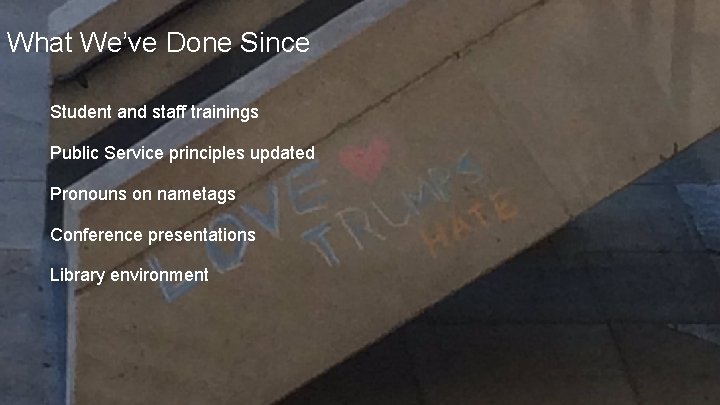
What We’ve Done Since Student and staff trainings Public Service principles updated Pronouns on nametags Conference presentations Library environment
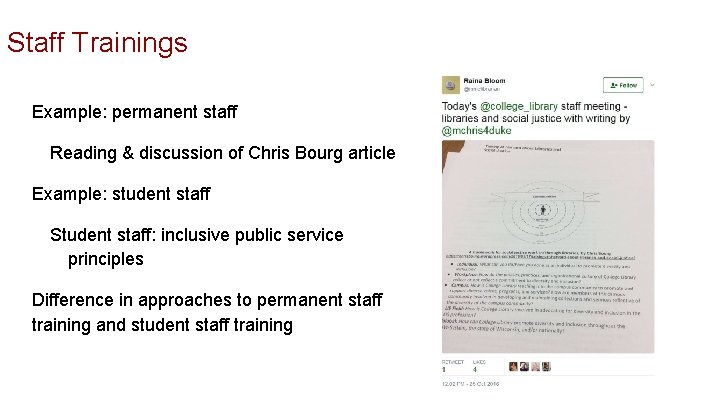
Staff Trainings Example: permanent staff Reading & discussion of Chris Bourg article Example: student staff Student staff: inclusive public service principles Difference in approaches to permanent staff training and student staff training
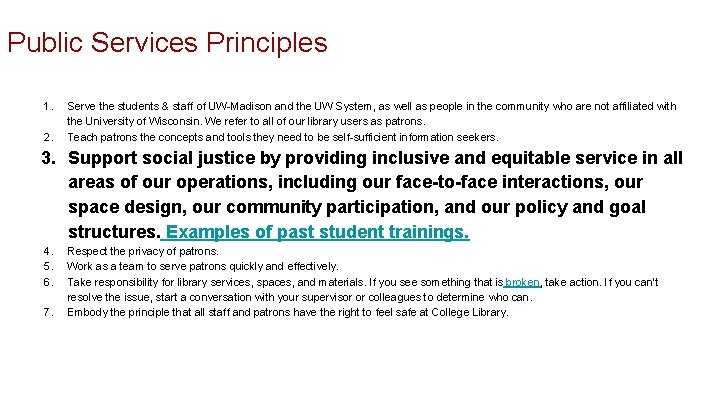
Public Services Principles 1. 2. Serve the students & staff of UW-Madison and the UW System, as well as people in the community who are not affiliated with the University of Wisconsin. We refer to all of our library users as patrons. Teach patrons the concepts and tools they need to be self-sufficient information seekers. 3. Support social justice by providing inclusive and equitable service in all areas of our operations, including our face-to-face interactions, our space design, our community participation, and our policy and goal structures. Examples of past student trainings. 4. 5. 6. 7. Respect the privacy of patrons. Work as a team to serve patrons quickly and effectively. Take responsibility for library services, spaces, and materials. If you see something that is broken, take action. If you can’t resolve the issue, start a conversation with your supervisor or colleagues to determine who can. Embody the principle that all staff and patrons have the right to feel safe at College Library.
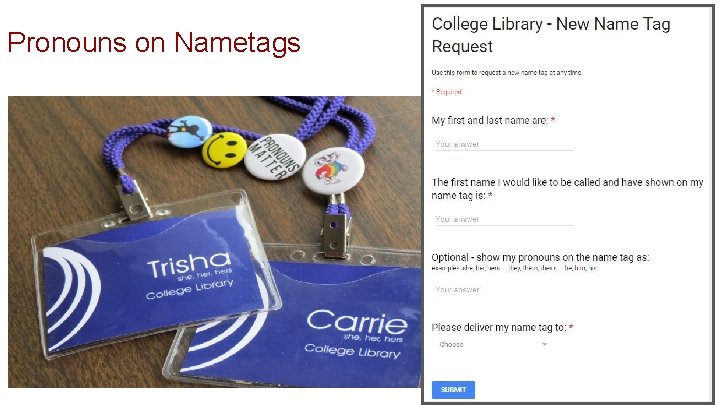
Pronouns on Nametags
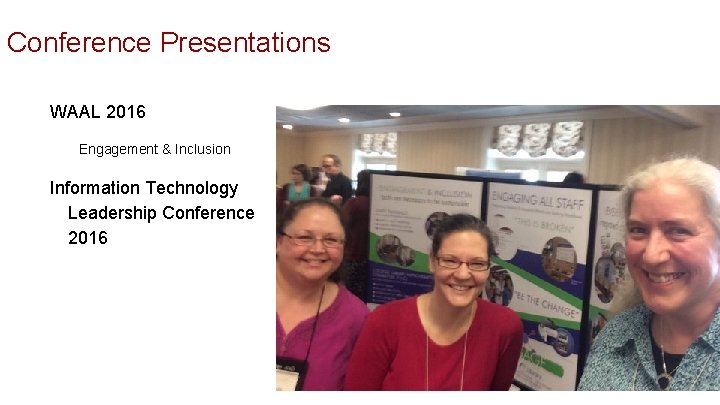
Conference Presentations WAAL 2016 Engagement & Inclusion Information Technology Leadership Conference 2016
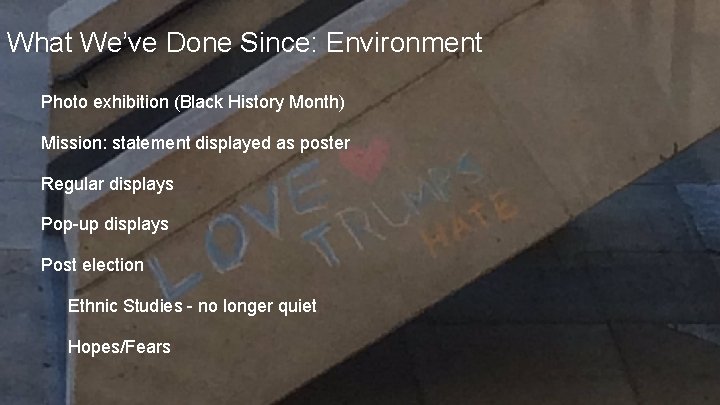
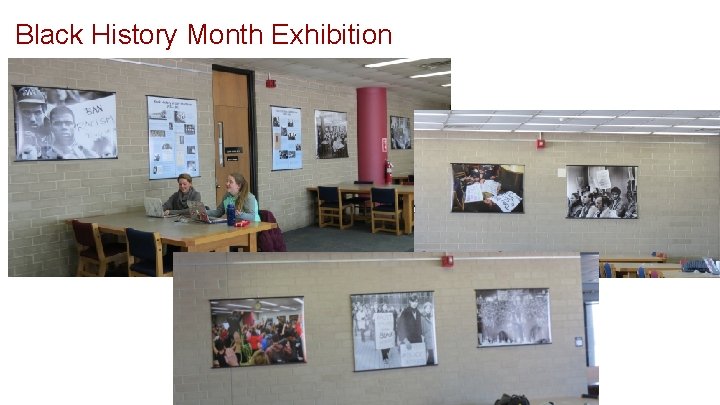
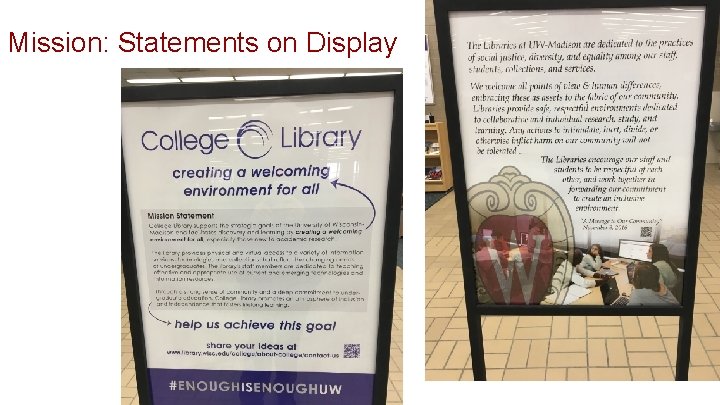
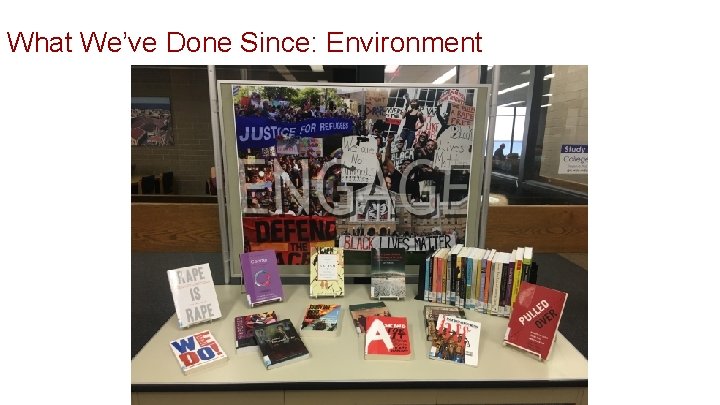
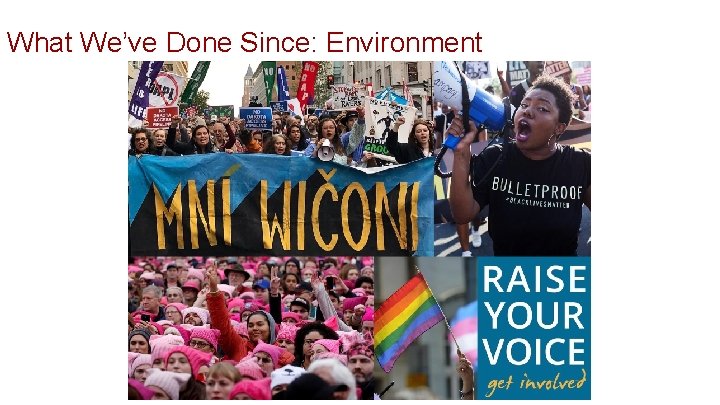
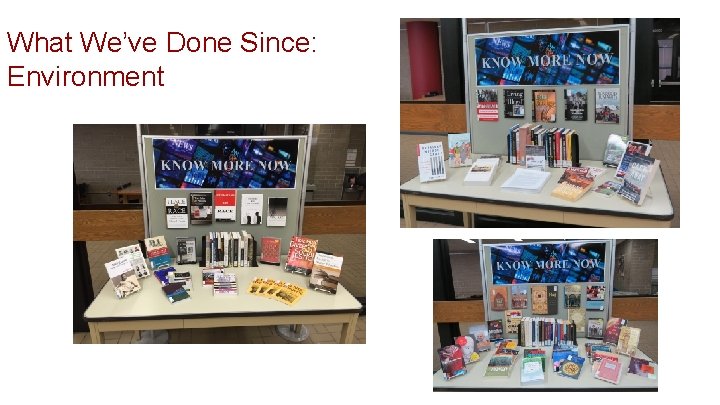
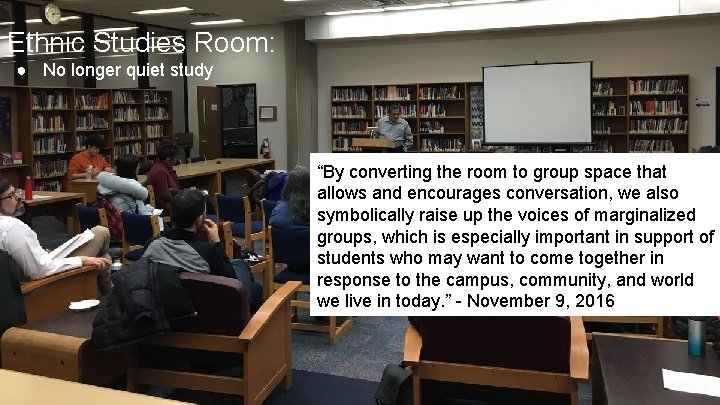
What We’ve Done Since: Environment Photo exhibition (Black History Month) Mission: statement displayed as poster Regular displays Pop-up displays Post election Ethnic Studies - no longer quiet Hopes/Fears
Black History Month Exhibition
Mission: Statements on Display
What We’ve Done Since: Environment
What We’ve Done Since: Environment
What We’ve Done Since: Environment
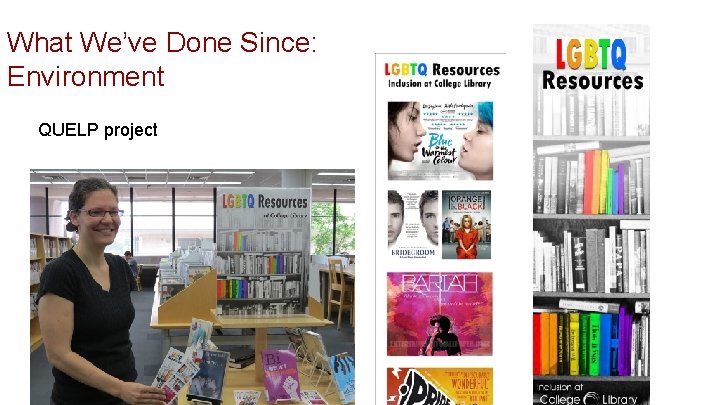
What We’ve Done Since: Environment QUELP project
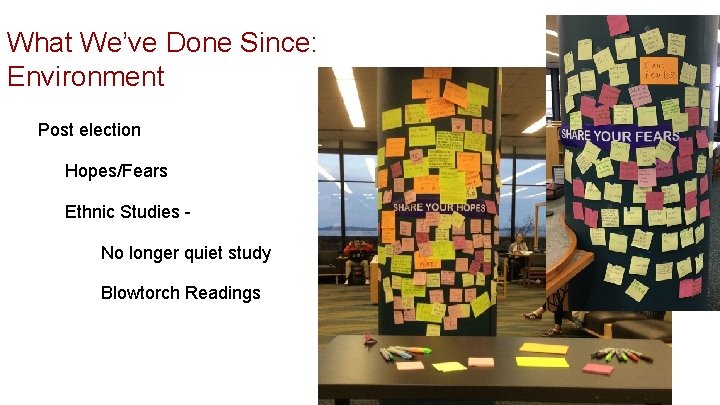
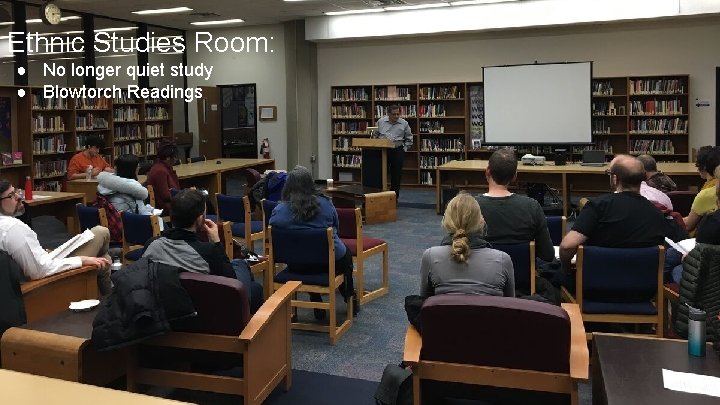
What We’ve Done Since: Environment Post election Hopes/Fears Ethnic Studies No longer quiet study Blowtorch Readings
Ethnic Studies Room: we’ve done since ● What No longer quiet study “By converting the room to group space that allows and encourages conversation, we also symbolically raise up the voices of marginalized groups, which is especially important in support of students who may want to come together in response to the campus, community, and world we live in today. ” - November 9, 2016
Ethnic Studies Room: we’ve done since ● What No longer quiet study ● Blowtorch Readings
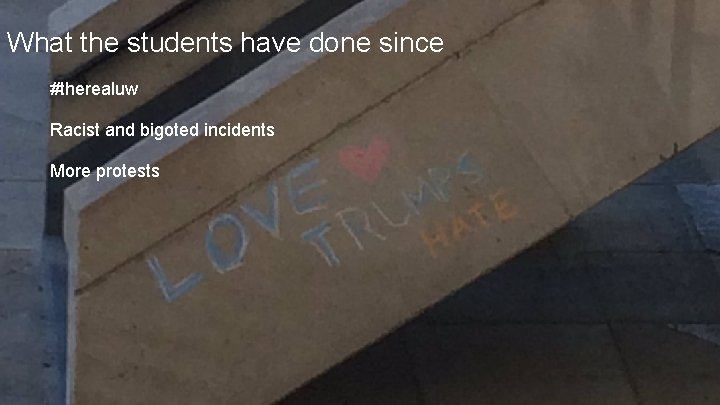
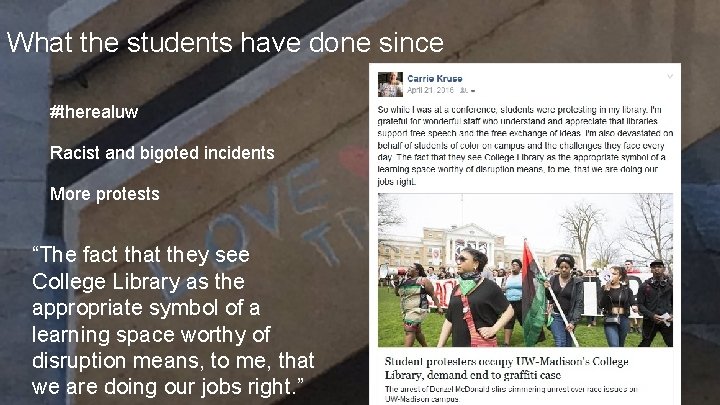
What the students have done since #therealuw Racist and bigoted incidents More protests
What the students have done since #therealuw Racist and bigoted incidents More protests “The fact that they see College Library as the appropriate symbol of a learning space worthy of disruption means, to me, that we are doing our jobs right. ”
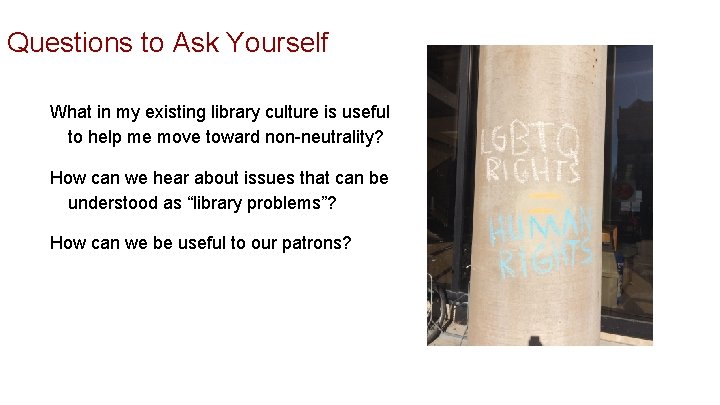
Questions to Ask Yourself What in my existing library culture is useful to help me move toward non-neutrality? How can we hear about issues that can be understood as “library problems”? How can we be useful to our patrons?
Questions?