
Enteric Bacteria Prof Dr Asem Shehabi Faculty of
Enteric Bacteria Prof. Dr. Asem Shehabi Faculty of Medicine University of Jordan
Enteric Bacteria • General Characteristics: Gram-ve Bacilli, Facultative Anaerobes, Oxidase-negative. . Part Intestinal Normal Flora. . Humans, Animals, Birds. . Common Waste water, Natural Water, Soil, Vegetation. • Opportunistic Pathogens/Obligate Pathogens. . Enterotoxins, Endotoxins, Capsules, Flagella, Pili • Coliform Group: 1. Escherichia coli: Urinary Tract Infect (40 -70%). . Single Organism, Septicemia, Neonatal Meningitis, Wounds. Diarrheagenic E coli strains: - Enteropathogenic: Infants. . mild-chronic diarrhea, Enterotoxigenic. . Heat-Labile/Stable Enterotoxin, Watery diarrhea. . More Children than Adults. . Travelers diarrhea. . Contamination Water/Vegetables / Fresh food
Coli-form group-2 dairy products. . Mostly Self-limited. . No need for Antibiotics treatment. - Enterohaemorrhagic. . Common in intestinal Cattels, verotoxins. . Contamination Ground meat/Hamburger, Dairy products. . Bloody diarrhea. . Haemolytic-ureamic syndrome, pertonitis, Kidney failure. . Outbreaks of infections. • E. coli is used as indicator for detection of water & Food fecal contamination. 2. Klebsiella-Enterobacter –Serratia species: UTI, Septicemia, Wounds. . Rare Meningitis. . Common Hospitalized patients. • K. pneumoniae. . Large polysaccharide. . capsule. . Nosocomial Pneumonia.
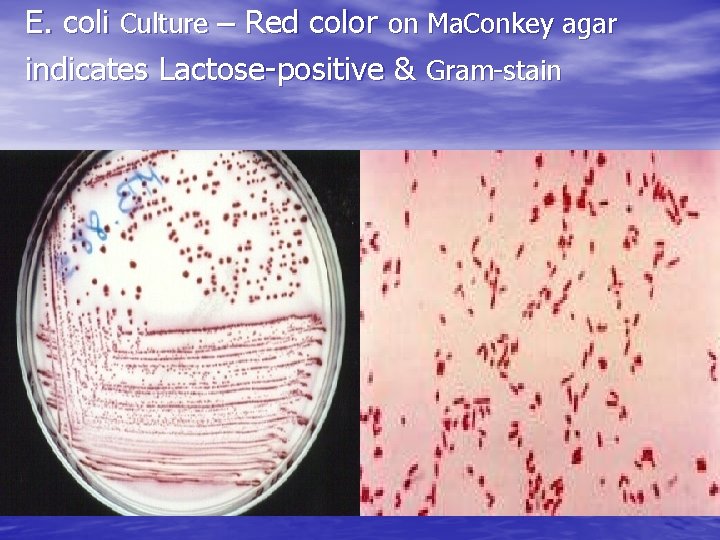
E. coli Culture – Red color on Ma. Conkey agar indicates Lactose-positive & Gram-stain
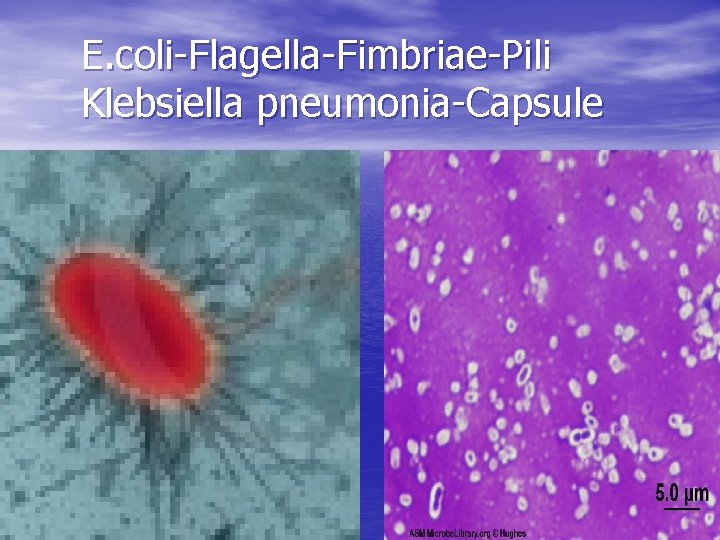
E. coli-Flagella-Fimbriae-Pili Klebsiella pneumonia-Capsule

Coliform group-3 • E. coli, Klebsiella-Enterobacter –Serratia spp. . Lactose+ve , urease-ve & oxidase-negative. . • Klebsilla spp. often encapsulated. . Non-motile • 3. Proteus-Providencia-Morganella species: Lactose-ve & urease positive. . cause UTI, Septicemia, Wounds. . Commonly in Hospitalized patients. • Lab Diagnosis: All Enteric bacteria grow on Mac. Cokeny-, Blood-, CLED-agar. Full identification done using Biochemical Tests. . Antibiotic Susceptibility must be done.
4. Pseudomonas group • Gram-ve bacilli, Oxidase-positive, Single polar • flagellum, Fimbriae, obligate aerobe, widely distributed in human intestine, animal, plants, environment & water. Survive in disinfection solutions. . 70% Alcohol. . contaminate Hospital sinks & equipments. P. aeruginosa: Most common causes of human & animal infections. . Produce several hemolytic-protolytic enzymes, toxins, fluorescent pigments-pyocyanin / Burn-Blue Green Pus. . can overcome host defenses. . Wounds, , External Otitis Media, Septicemia, Pneumonia, UTI, Nosocomial Infection, Mutlidrug Resistance. . Intrinsic-R to many antibiotics. . Common Nosocomial/ opportunistic Pathogen.
5 -Salmonella group • Gram-ve bacilli. . Lactose-ve, urease-ve, Motile, • • Facultative Anaerobes. . Endotoxin/LPS, Cytotoxin. . common in Nature. . Humans, most domestic & wild Animals, Birds, Reptiles. . Develop of specific antibodies during invasive infection against their O/H- Antigens. . Salmonellosis: 1 -Gastroenteritis/ Food-poisoning Salmonella: S. enterica/ enteritidis. . Numerous Serotypes. . Common Farm Chickens, Pets. . Contamination Chicken Meat. Eggs, Water. . Fecal-Oral Infection. . Incub. 8 -24 h. . Mild-Severe Diarrhea, Vomiting, Fever. . Mostly Self. Limited in Adults. More severe infection in children. . Septicemia-Meningitis in Immuno-compromised Pat.
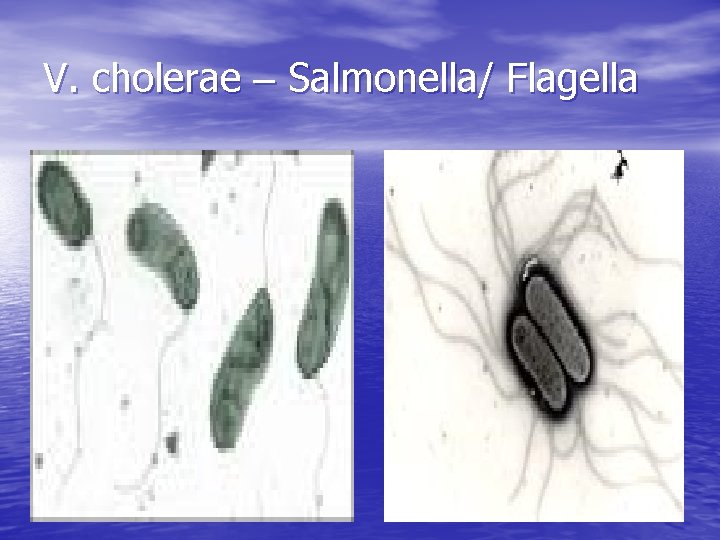
V. cholerae – Salmonella/ Flagella
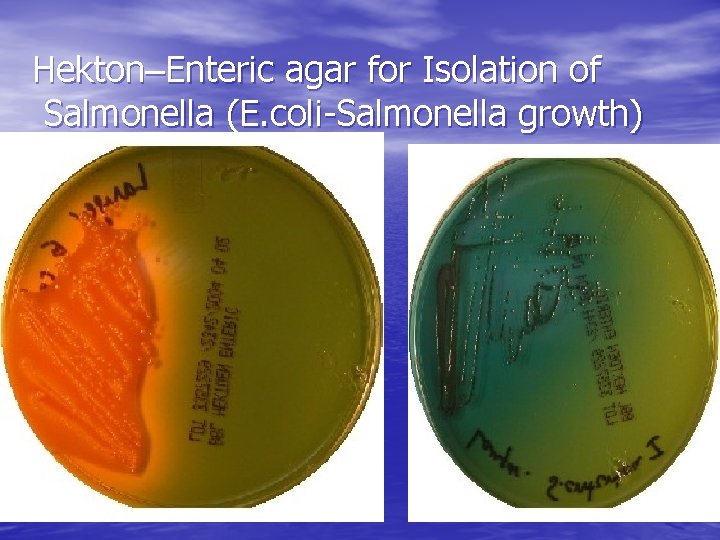
Hekton–Enteric agar for Isolation of Salmonella (E. coli-Salmonella growth)
Typhoidal Salmonella 2 - Typhoidal Salmonella: Human Enteric Fever. . Salmonella enterica /subtype Typhi & Paratyhi A, B, C. , Fecal-Oral route, Fecal water contamination or drinks/ Fresh Food. . Intestine. . Blood, Meningis, Urinary tract. . Incubation Period 1 -3 Weeks, high Fever up to 42, Diarrhea, constipation, Septicemia, Meningitis, Hepatospenomegaly, Intestinal Perforation. . Healthy Carriers. . Mostly females in Gallbladder. . Less Intestine. . Repeat chronic infection. . Stool Excretion. . single cases and community water outbreaks. • Lab Diagnosis: Culture Feces, blood, Urine, CSF, Selective Media. . Serological Widel Test for detection of specific antibodies against O & H antigens ( Titer > 160 ). . Antibiotic, Human vaccine available.
6 -Shigella group • Shigella species. . Gram-ve bacilli, cause Only human • • disease. . Endo/Enterotoxins. . Susceptible to Dryness, Acid, Low-High Tempt. Fecal-Oral infection. . Water, fresh Vegetations, Common serotypes, S. Sonnei, Sh. boydii Sh. flexneri Purulent-Bloody. Diarrhea. . Fever abdominal pain. . Recovery 2 -4 days with treatment. . No chronic healthy Carriers. S. dysenteriae. . Enterotoxin (Neurocytotoxin), Severe Necrosis, high Fever, Severe Purulent-Bloody-Diarrhea & Abdominal Cramps, CNS affection. . Rare Septicemia. Lab Diagnosis: Feces Culture. . S-S Agar, Hecton – Enteric Agar. . Recommended Antibiotic Treatment, Control Sanitation & hygiene. . water, fresh Food.
7 -Vibrio cholerae • Gram-ve Vibrios. . Oxidase-positive & Motile, Aerobic • • • Alkaline Medium (p. H >8 -9). . Killed in low acidity. . Survive in saline water for long time. . Endemic In India/Bangladish. . Highly infectious. . Epidemic Human Outbreaks. . Water, Fresh Green leaves & Food V. cholera-01: Type V. cholera El-Tor. . Only Human. . Fecal-Oral Infection, multiply small intestine. . release Cholera-toxin. . Heat-labile enterotoxin, Incub. 8 -48 h. . Severe Watery Diarrhea, Dehydration, Shock. . Death. Within 24 hrs. . No invasive infection. Lab Diagnosis: Feces Culture. . Selective TCBS agar. Treatment: Replacement Fluids & Electrolytes. . Antibiotic. . Public Heath Measurements. . Human Vaccine recommended for Refuges & Army.
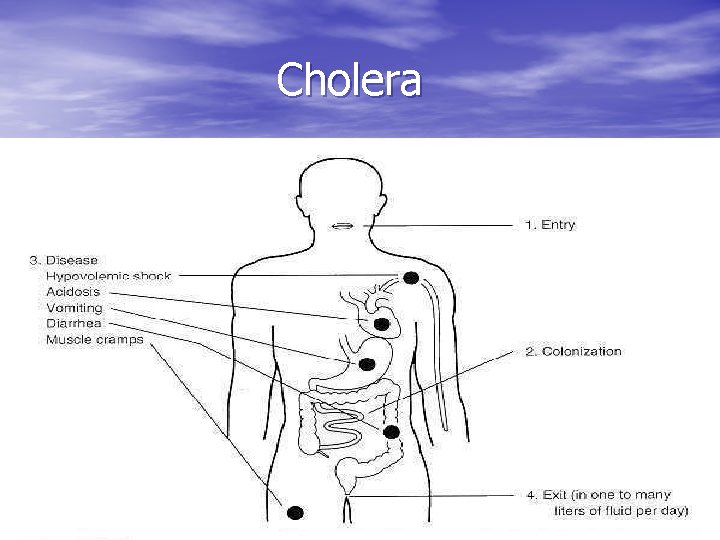
Cholera
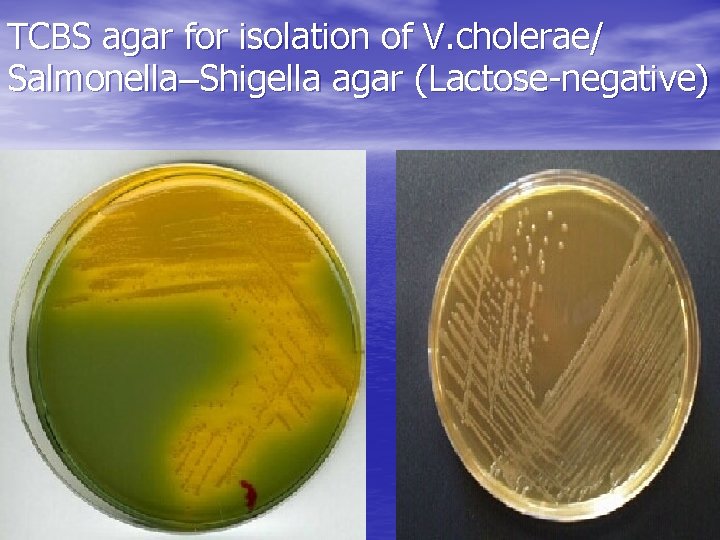
TCBS agar for isolation of V. cholerae/ Salmonella–Shigella agar (Lactose-negative)
8 -Brucella species • Brucellosis/Malta Fever. . Gram-ve coccobacilli. . Non- motile, Intracellular, Endotoxins. . Primarily a Pathogens of Animals (Zoonosis), Localized Infection in reproductive Organs. . Sepsis, Abortions. • Br. abortus (Cattel), Br. melitensis (Goats/Sheep). • Human Brucellosis/Malt Fever : Mostly Br. melitensis. . Rare Other species in Jordan. • Transmitted to Humans. . Unpasteurized Milk/Milk Products. . Cheese, Direct Animal Contact. . Few Cells Enter Through GI, Skin Abrasions, Eye, Inhalation/Droplets. . Intracellular. . Lymphatic System. . Septicemia, Meningitis, Chronic disease
Brucella-2 • Clinical Features: Incub. 1 -6 Weeks. . Intermittent • • fever, headaches, fatigue, joint and bone pain, GI Symptoms, Sweats, Back Pains, Acute- Subacute. Chronic Infections. Common Complications: Arthritis, Meningitis-CNS, Osteomylitis, Localized Lesions in any body part. Lab Diagnosis: Culture Blood, CSF, Bone marrow (Chronic Infection). . Brucella agglutination Test. . Specific Antibodies Treatment: 6 -8 Weeks with Antimicrobial drugs Prevention: Control Brucella in Animals by slaughtering infected animals. . Animal Vaccination, Pasteurization Milk/ Milk Products
9 -Campylobacter Species • Campylobacter jejuni , is Gram-negative slender, • • curved, motile by one/ two polar Flagellium, Spiral form, Grow Microaerophilic at 37 -42. . Normal Intestines flora all Birds, Animal. . dogs, cats. . contaminated often Chicken Meat, Milk, food, water. It is primarily an animal pathogen causing abortion and enteritis in sheep and cattle. Common cause of food-poisoning, important enteric pathogen since 1976. . In Western Countries. C. jejuni. . Incubation 2 -5 days. . release Cytotoxins. . Intestinal inflammation. . causes mild-moderate bloodywater diarrhea, Children. . , Other symptoms often present are fever, abdominal pain, nausea, headache and muscle pain. . Rare Sepsis & complication Arthritis, Diagnosis: Stool culture. . Selective culture Media
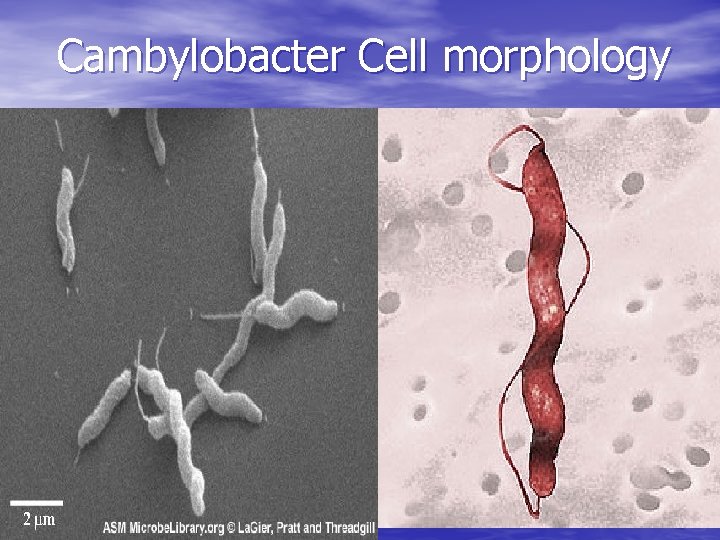
Cambylobacter Cell morphology
10 -Helicobacter Species • Helicobacter pylori is a spiral shaped • • bacterium. . One polar flagella. . Colonize only mucus lining cover mucosa of Gastric Antrim. . and duodenum. . Produce extensive Urease. . Split urea to Ammonia. . release Cytotoxin. . Mild-sever ulceration The stomach is protected from its own gastric juice by a thick layer of mucus that covers the stomach lining. Helicobacter colonize and infect only humans worldwide, where up to 10% of children & 80% of adults can have evidence of an H. pylori infection usually without having any clinical signs or symptoms.
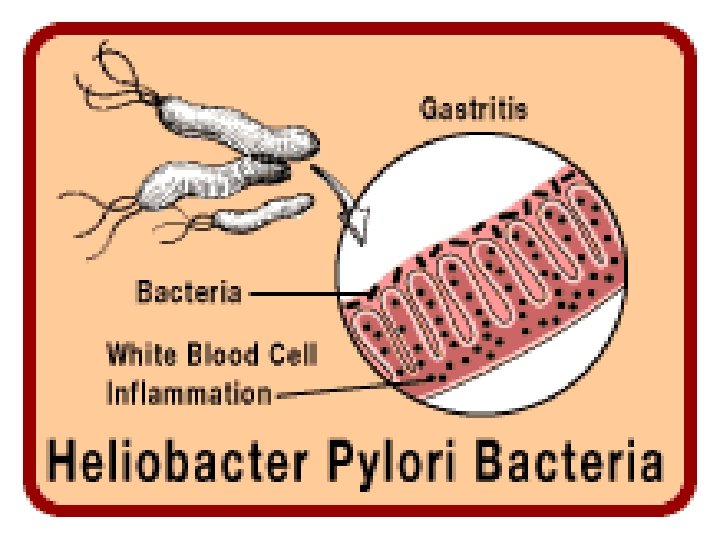
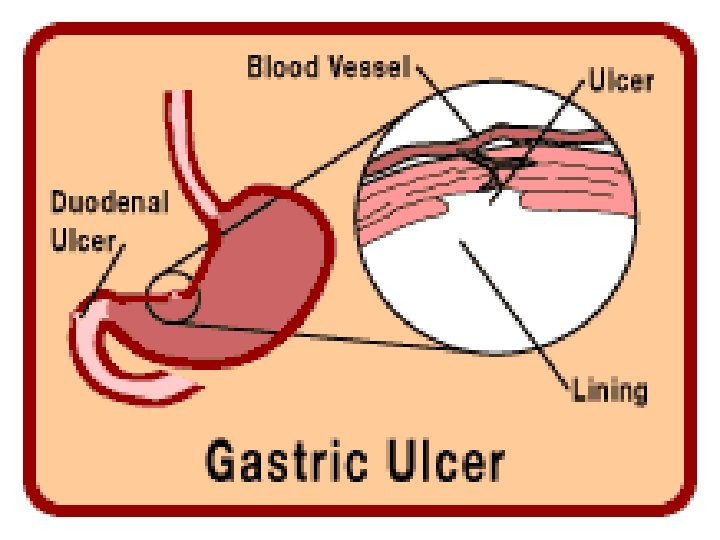
Helicobacter
Helicobacter Species-2 • Common symptoms: gastritis or peptic ulcer /Stomach. . • • duodenal ulcers. . burning, Abdomen Pain, Nausea, Vomiting. Persistence of ulcers. . Development of Stomach Cancer and Lymphoma. . 1 -3% H. pylori can be successfully eradicated using a combination of certain antibiotics and medicines that suppress stomach acid production. Common Reoccurrence of infection & disease Diagnosis: Urea Breath Test, Culture Stomach Biopsy. . Culture on Selective Medium. . 42 C. . Serological test for specific antibodies is not significant
- Slides: 23