Enteral Nutrition for Adults Administration Issues including material














- Slides: 56
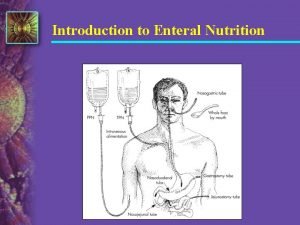
Enteral Nutrition for Adults: Administration Issues including material from Ampon jeangwirichaikull
Outline • Nutrition assessment • Nutrition management • Enteral nutrition • Parenteral nutrition • Complication of EN &PN • Nutrition Monitoring
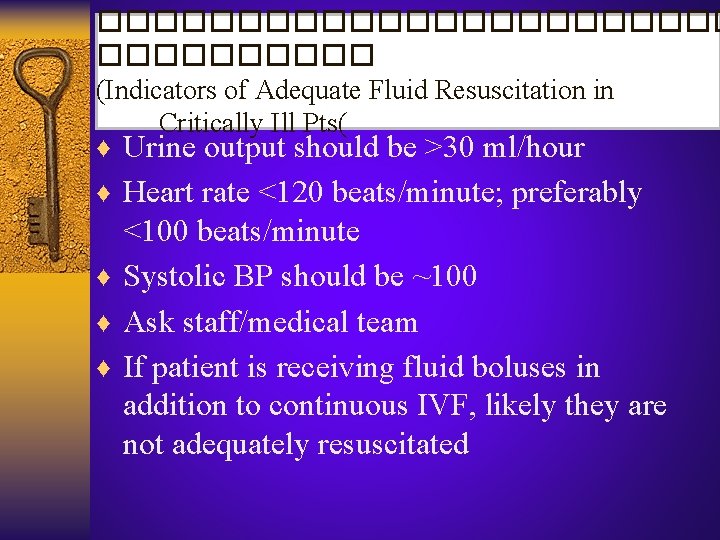
������������ (Indicators of Adequate Fluid Resuscitation in Critically Ill Pts( ♦ Urine output should be >30 ml/hour ♦ Heart rate <120 beats/minute; preferably <100 beats/minute ♦ Systolic BP should be ~100 ♦ Ask staff/medical team ♦ If patient is receiving fluid boluses in addition to continuous IVF, likely they are not adequately resuscitated
Nasogastric Tubes
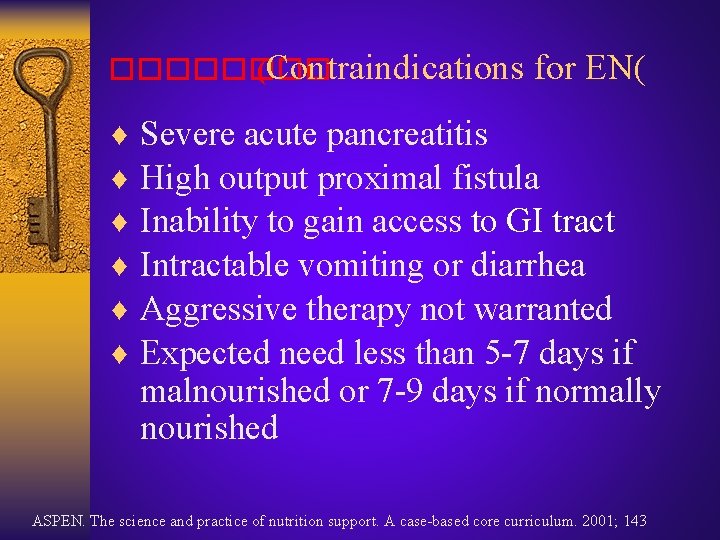
���� (Contraindications ♦ ♦ ♦ for EN( Severe acute pancreatitis High output proximal fistula Inability to gain access to GI tract Intractable vomiting or diarrhea Aggressive therapy not warranted Expected need less than 5 -7 days if malnourished or 7 -9 days if normally nourished ASPEN. The science and practice of nutrition support. A case-based core curriculum. 2001; 143
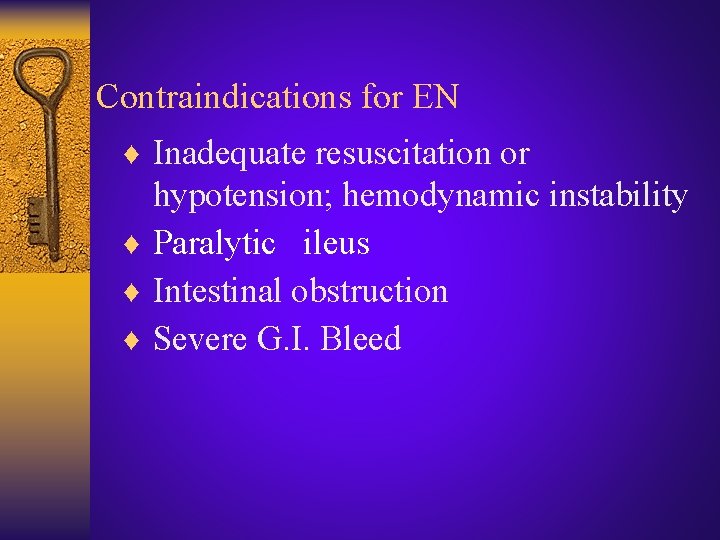
Contraindications for EN ♦ Inadequate resuscitation or hypotension; hemodynamic instability ♦ Paralytic ileus ♦ Intestinal obstruction ♦ Severe G. I. Bleed
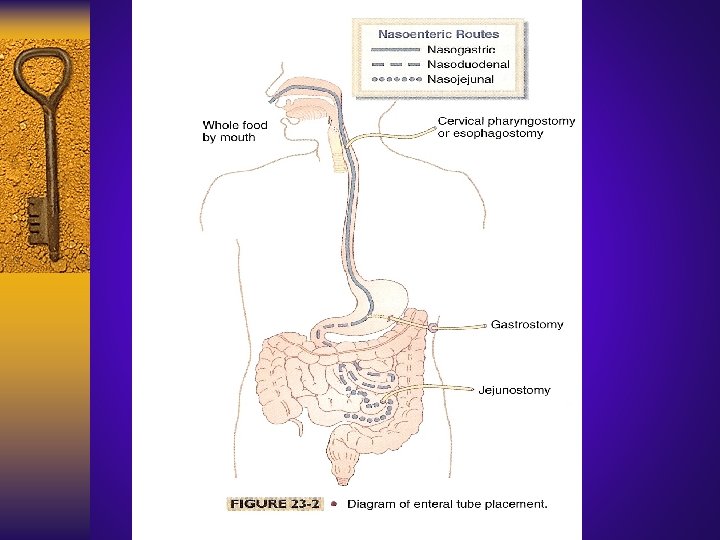
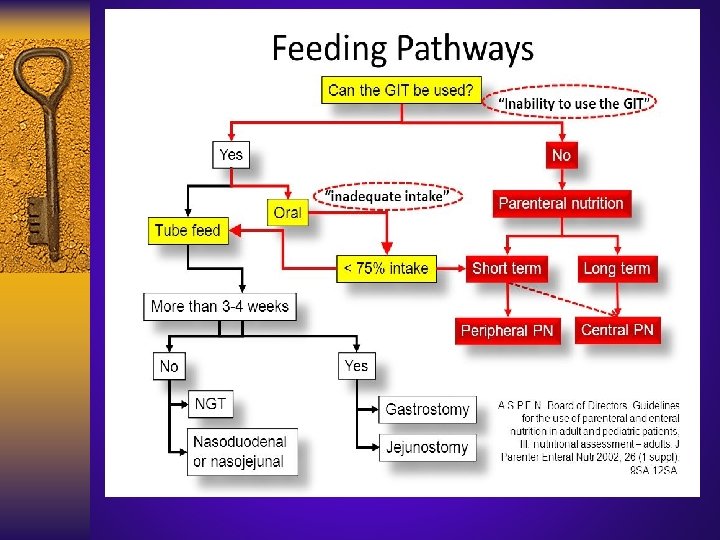
������������ ������ q Orogastric Tubes q Nasoduodenal/Jejunal q Gastrostomy tube q Jejunostomy tube
Nasogastric Tubes Definition ♦ A tube inserted through the nasal passage into the stomach ����� (Indications( ♦ Short term feedings required ♦ Intact gag reflex ♦ Gastric function not compromised ♦ Low risk for aspiration
Nasogastric Tubes ����� (Advantages( ♦ Ease of tube placement ♦ Surgery not required ♦ Easy to check gastric residuals ♦ Accommodates various administration techniques
Nasoduodenal/Jejunal Definition ♦ A tube inserted through the nasal passage through the stomach into the duodenum or jejunum Indications: ♦ High risk of aspiration ♦ Gastric function compromised
Nasoduodenal/Jejunal ����� (Advantages(: ♦ Allows for initiation of early enteral feeding ♦ May decrease risk of aspiration ♦ Surgery not required
Nasoduodenal/Jejunal ������� (Disadvantages( ♦ Transpyloric tube placement may be difficult ♦ Limited to continuous infusion ♦ May promote nasal necrosis and esophagitis ♦ Impacts patient quality of life
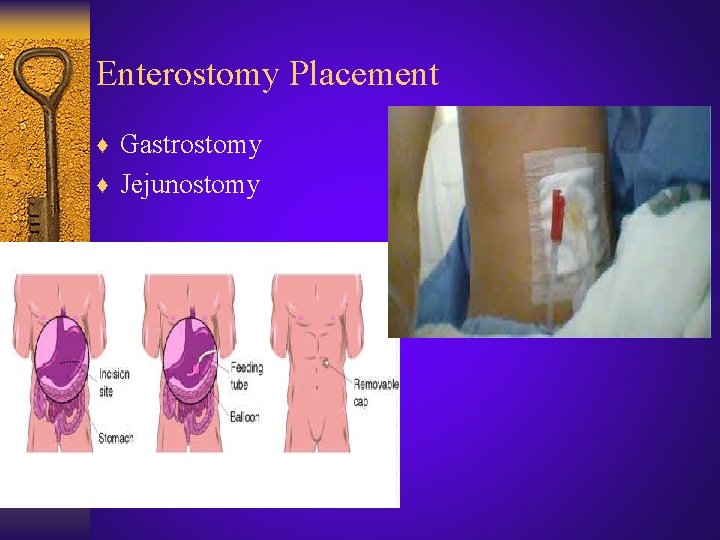
Enterostomy Placement ♦ Gastrostomy ♦ Jejunostomy
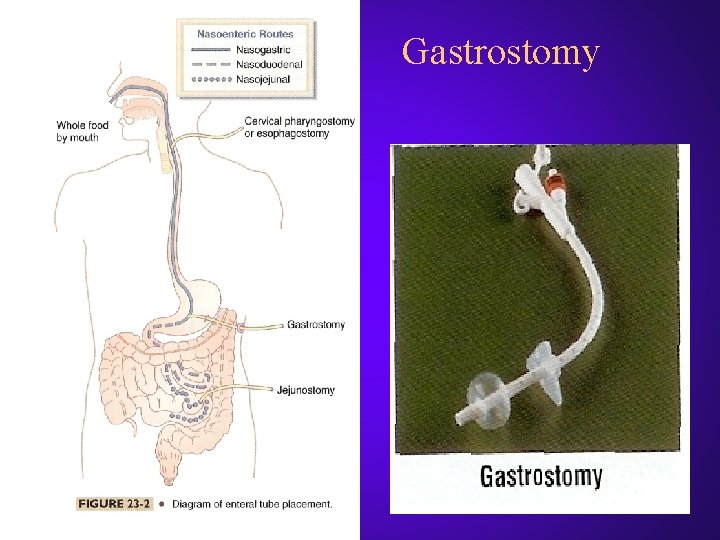
Gastrostomy Definition ♦ A feeding tube that passes into the stomach through the abdominal wall. May be placed surgically or endoscopically Indications: ♦ Long-term support planned ♦ Gastric function not compromised ♦ Intact gag reflex present
Gastrostomy ������� (Disadvantages(: ♦ May require surgery ♦ Stoma care required ♦ Potential problems for leakage or tube dislodgment
Gastrostomy
Jejunostomy Definition ♦ A feeding tube that passes into the jejunum through the abdominal wall. May be placed endoscopically or surgically Indications: ♦ Long-term feeding option for patients at high risk for aspiration or with compromised gastric function
Jejunostomy Advantages: ♦ Post-op feedings may be initiated immediately ♦ Decreased risk of aspiration ♦ Suitable option for patients with compromised gastric function ♦ Stable patients can tolerate intermittent feedings
Jejunostomy ������� (Disadvantage(s: ♦ Requires stoma care ♦ Potential problems related to leakage or tube dislodgement/clogging may arise ♦ May restrict ambulation ♦ Bolus feedings inappropriate (stable patients may tolerate intermittent feedings)
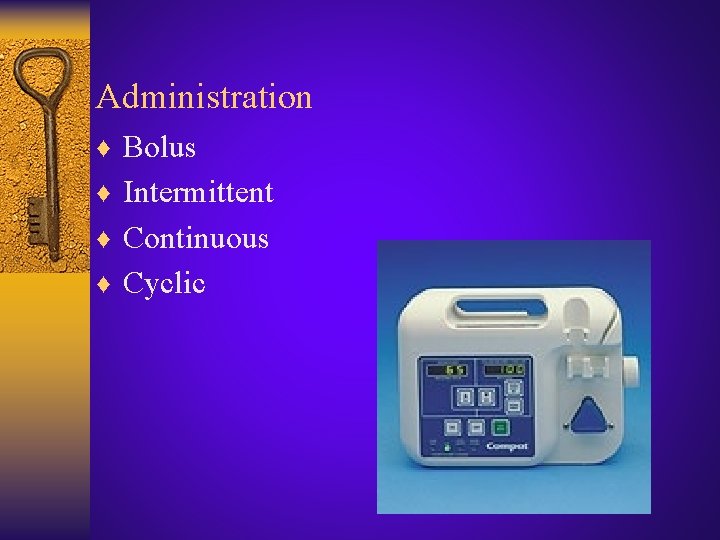
Administration ♦ Bolus ♦ Intermittent ♦ Continuous ♦ Cyclic
Bolus Feedings Definition ♦ Infusion of up to 500 ml of enteral formula into the stomach over 5 to 20 minutes, usually by gravity or with a large-bore syringe Indications: ♦ Recommended for gastric feedings ♦ Requires intact gag reflex ♦ Normal gastric function
Bolus Feeding
Continuous Feedings Definition ♦ Enteral formula administration into the gastrointestinal tract via pump or gravity, usually over 8 to 24 hours per day ����� (Advantages(: ♦ May improve tolerance ♦ May reduce risk of aspiration ♦ Increased time for nutrient absorption
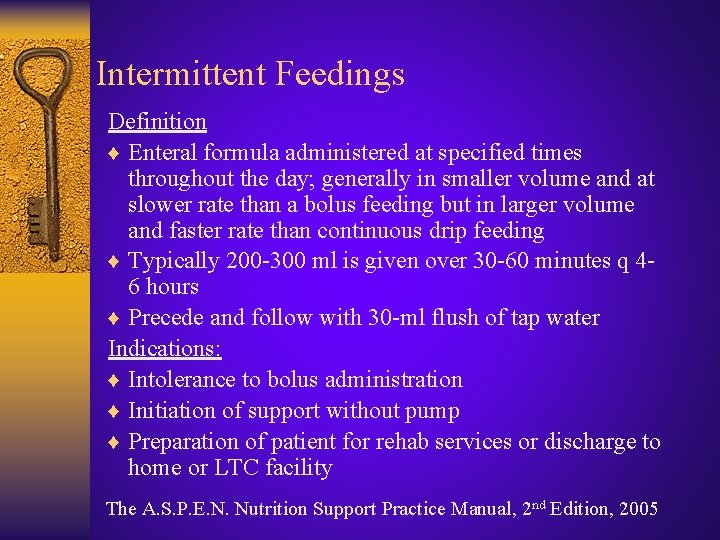
Intermittent Feedings Definition ♦ Enteral formula administered at specified times throughout the day; generally in smaller volume and at slower rate than a bolus feeding but in larger volume and faster rate than continuous drip feeding ♦ Typically 200 -300 ml is given over 30 -60 minutes q 46 hours ♦ Precede and follow with 30 -ml flush of tap water Indications: ♦ Intolerance to bolus administration ♦ Initiation of support without pump ♦ Preparation of patient for rehab services or discharge to home or LTC facility The A. S. P. E. N. Nutrition Support Practice Manual, 2 nd Edition, 2005
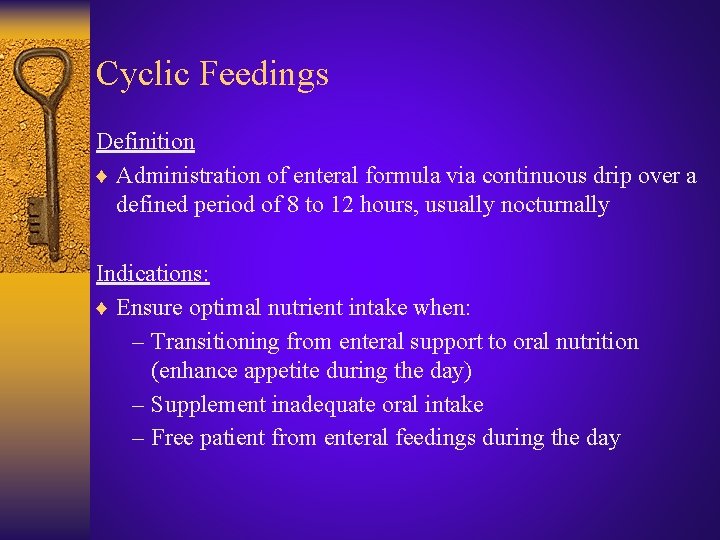
Cyclic Feedings Definition ♦ Administration of enteral formula via continuous drip over a defined period of 8 to 12 hours, usually nocturnally Indications: ♦ Ensure optimal nutrient intake when: – Transitioning from enteral support to oral nutrition (enhance appetite during the day) – Supplement inadequate oral intake – Free patient from enteral feedings during the day
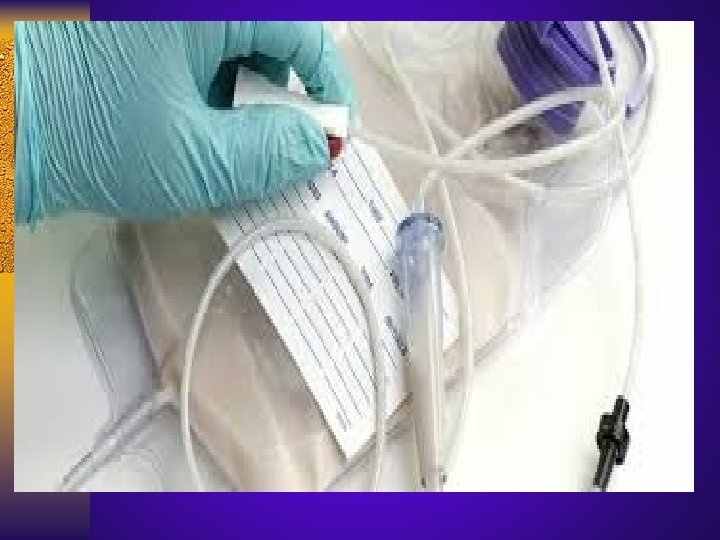
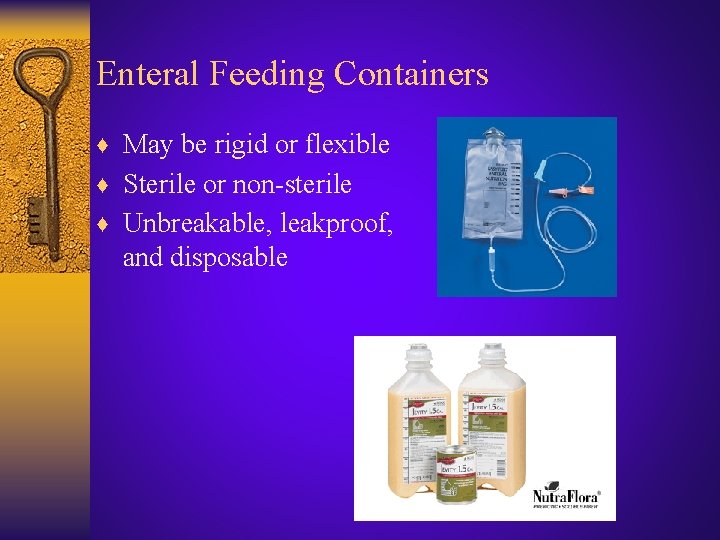
Enteral Feeding Containers ♦ May be rigid or flexible ♦ Sterile or non-sterile ♦ Unbreakable, leakproof, and disposable
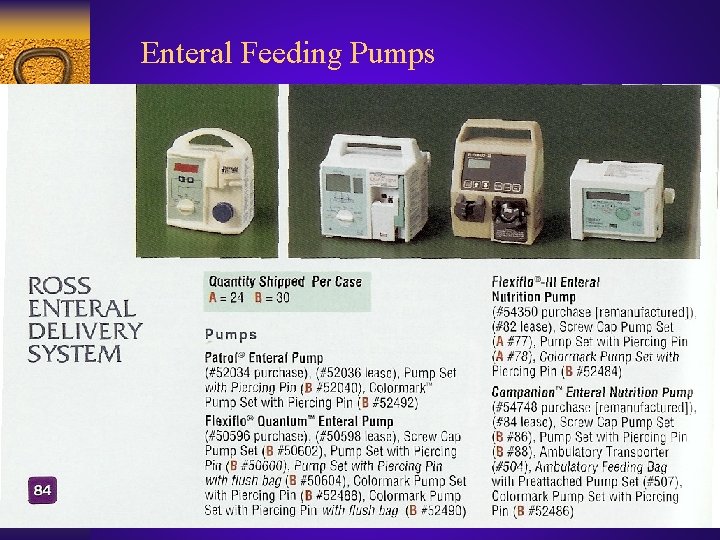
Enteral Feeding Pumps
Aspiration ♦ Reported incidence of aspiration in tubefed patients varies from. 8% to 95%. Clinically significant aspiration 5% gastric-fed pts ♦ Many aspiration events are “silent” and often involve oropharyngeal secretions ♦ Symptoms include dyspnea, tachycardia, wheezing, rales, anxiety, agitation, cyanosis ♦ May lead to aspiration pneumonia
Aspiration Prevention ♦ Keep head of bed elevated 30 -45 degrees ♦ ♦ during and 30 -40 minutes after feedings Feed post-pylorically (research mixed on this) Small, frequent feedings or continuous drip Use of promotility agents Monitoring of gastric residuals may be helpful in identifying delayed gastric emptying and increased risk of aspiration The A. S. P. E. N. Nutrition Support Practice Manual, 2 nd Edition, 2005
Gastrointestinal Complications ♦ Diarrhea ♦ Constipation ♦ Gastric distention/bloating ♦ Gastric residuals/delayed gastric emptying ♦ Nausea/vomiting
Monitoring of Patients on EN ♦ ♦ ♦ ♦ ♦ Electrolytes BUN/Cr Albumin/prealbumin Ca++, PO 4, Mg++ Weight Input/output Vital signs Stool frequency/consistency Abdominal examination