
Entamoeba histolytica Entamoeba cell biology disease and treatment
Entamoeba histolytica Entamoeba: cell biology, disease, and treatment Why do some amoebae cause disease and others not? Small RNAs & regulation of gene expression again?
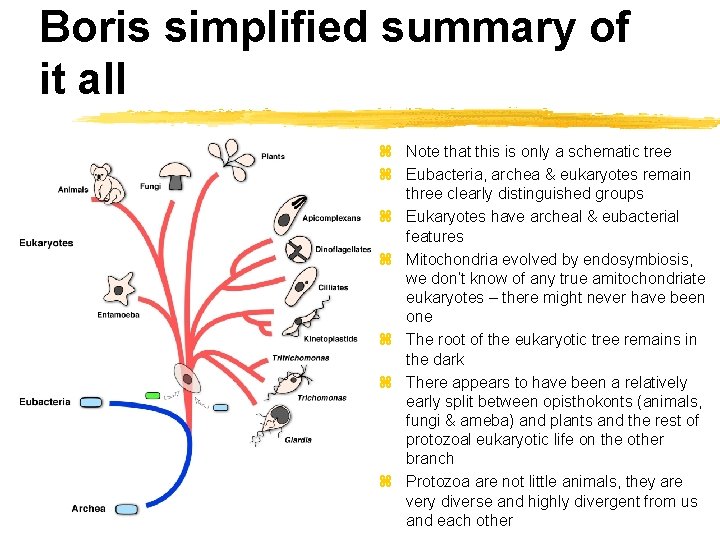
Boris simplified summary of it all z Note that this is only a schematic tree z Eubacteria, archea & eukaryotes remain three clearly distinguished groups z Eukaryotes have archeal & eubacterial features z Mitochondria evolved by endosymbiosis, we don’t know of any true amitochondriate eukaryotes – there might never have been one z The root of the eukaryotic tree remains in the dark z There appears to have been a relatively early split between opisthokonts (animals, fungi & ameba) and plants and the rest of protozoal eukaryotic life on the other branch z Protozoa are not little animals, they are very diverse and highly divergent from us and each other
what is amoeboid about amoebae?
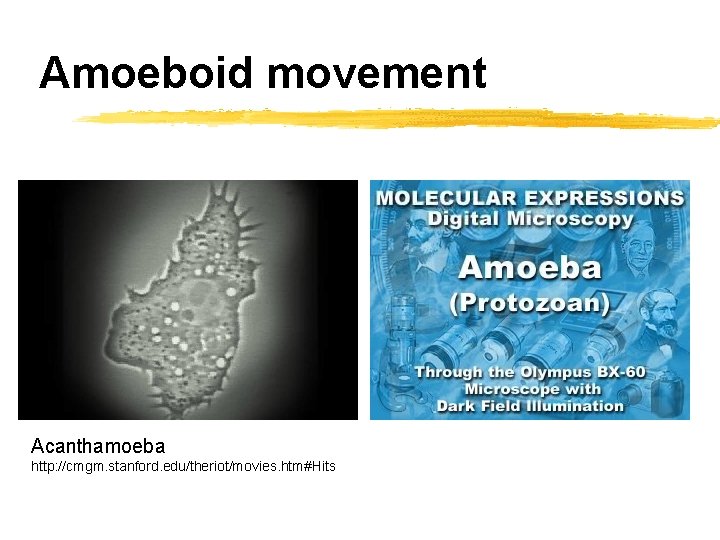
Amoeboid movement Acanthamoeba http: //cmgm. stanford. edu/theriot/movies. htm#Hits
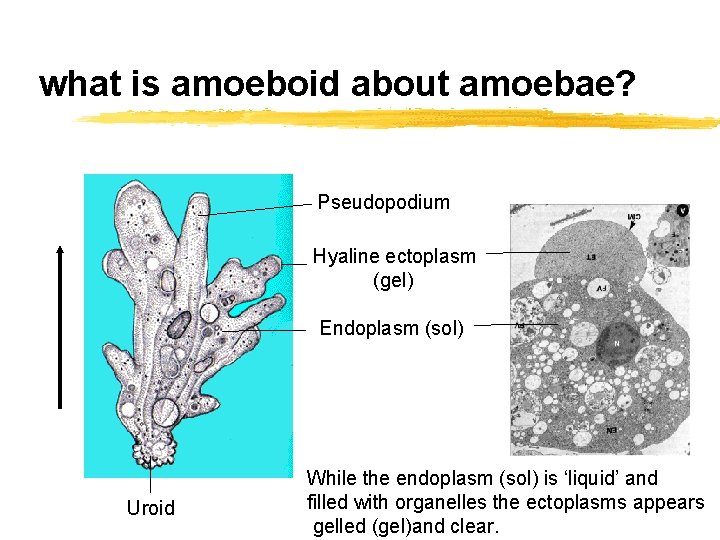
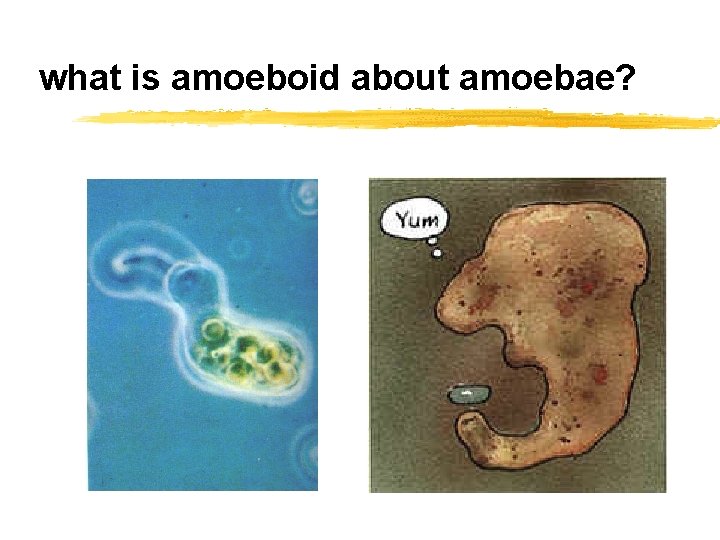
what is amoeboid about amoebae? Pseudopodium Hyaline ectoplasm (gel) Endoplasm (sol) Uroid While the endoplasm (sol) is ‘liquid’ and filled with organelles the ectoplasms appears gelled (gel)and clear.
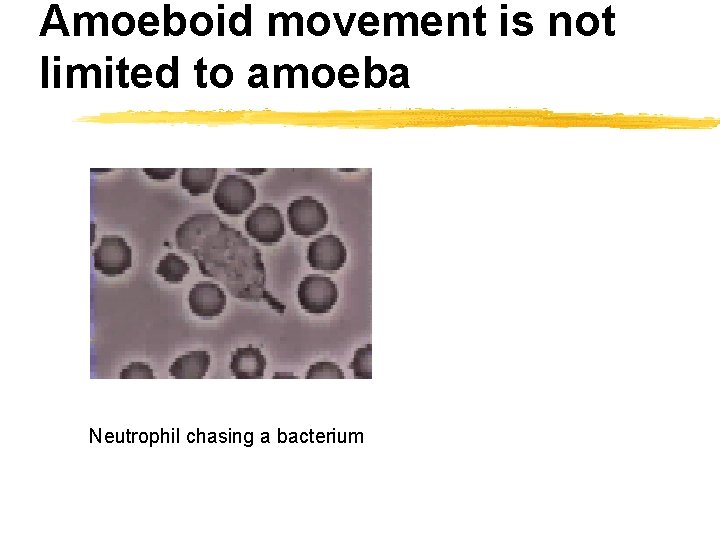
Amoeboid movement is not limited to amoeba Neutrophil chasing a bacterium
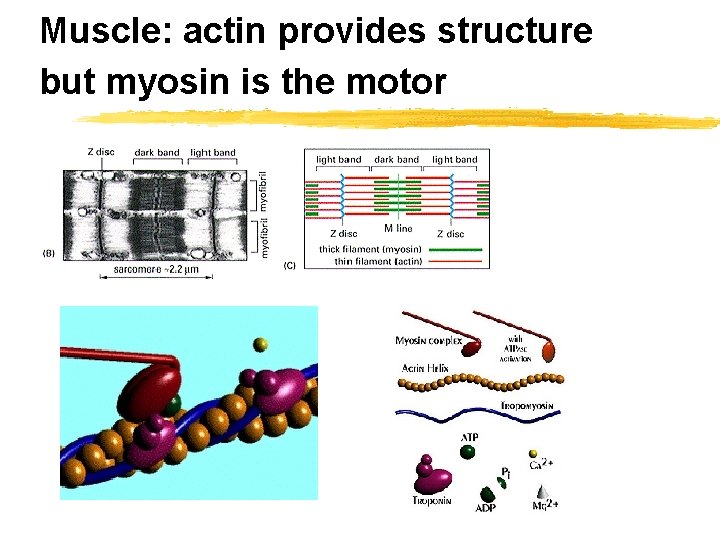
Muscle: actin provides structure but myosin is the motor
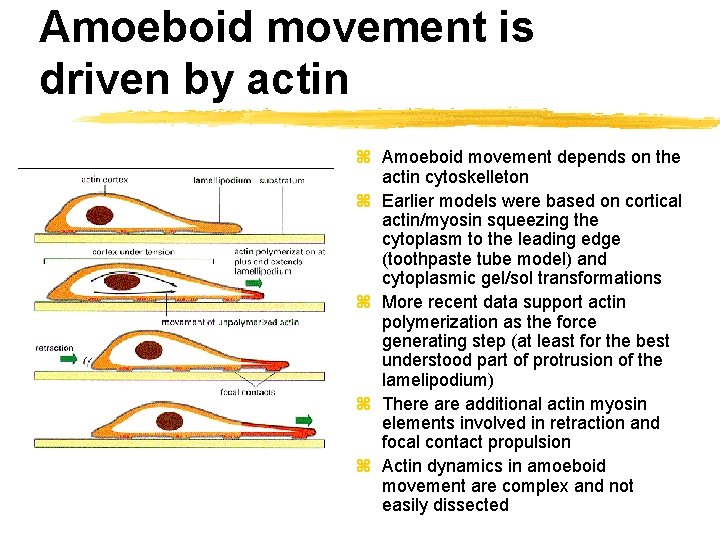
Amoeboid movement is driven by actin z Amoeboid movement depends on the actin cytoskelleton z Earlier models were based on cortical actin/myosin squeezing the cytoplasm to the leading edge (toothpaste tube model) and cytoplasmic gel/sol transformations z More recent data support actin polymerization as the force generating step (at least for the best understood part of protrusion of the lamelipodium) z There additional actin myosin elements involved in retraction and focal contact propulsion z Actin dynamics in amoeboid movement are complex and not easily dissected
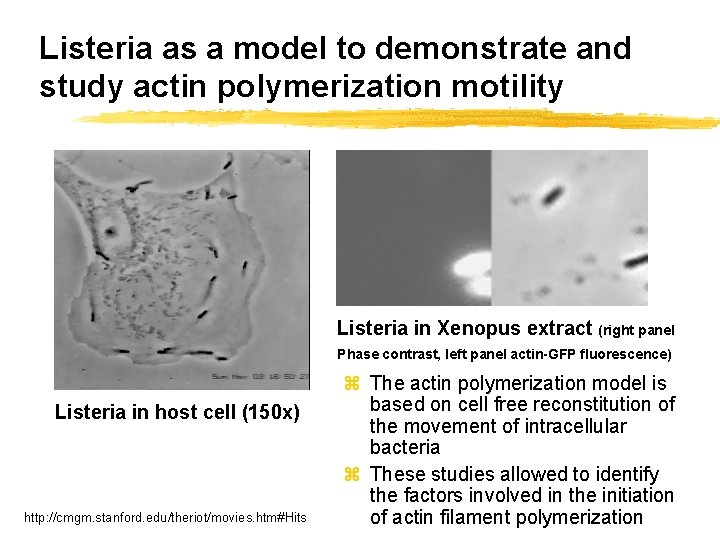
Listeria as a model to demonstrate and study actin polymerization motility Listeria in Xenopus extract (right panel Phase contrast, left panel actin-GFP fluorescence) Listeria in host cell (150 x) http: //cmgm. stanford. edu/theriot/movies. htm#Hits z The actin polymerization model is based on cell free reconstitution of the movement of intracellular bacteria z These studies allowed to identify the factors involved in the initiation of actin filament polymerization
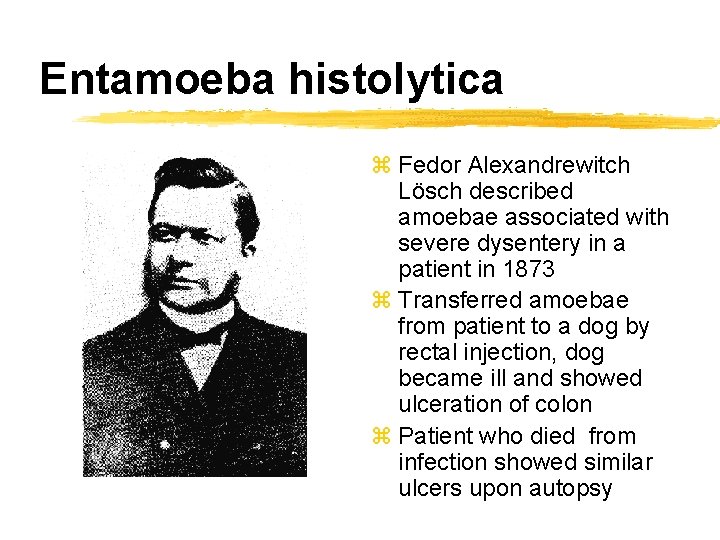
Entamoeba histolytica z Fedor Alexandrewitch Lösch described amoebae associated with severe dysentery in a patient in 1873 z Transferred amoebae from patient to a dog by rectal injection, dog became ill and showed ulceration of colon z Patient who died from infection showed similar ulcers upon autopsy
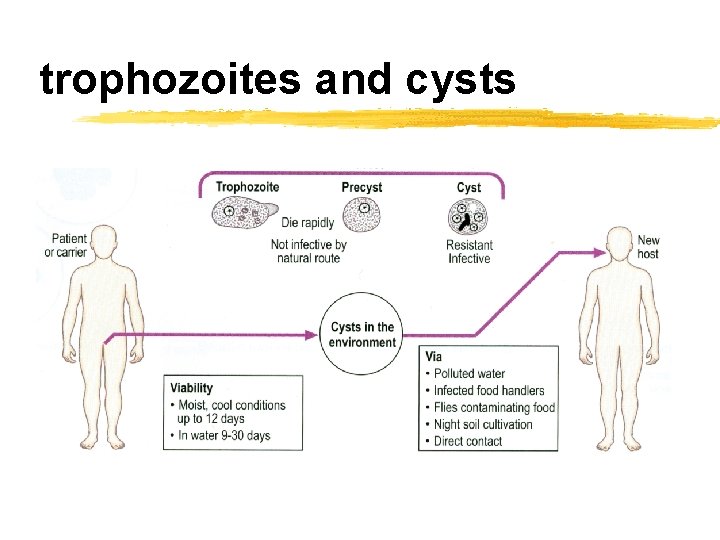
trophozoites and cysts
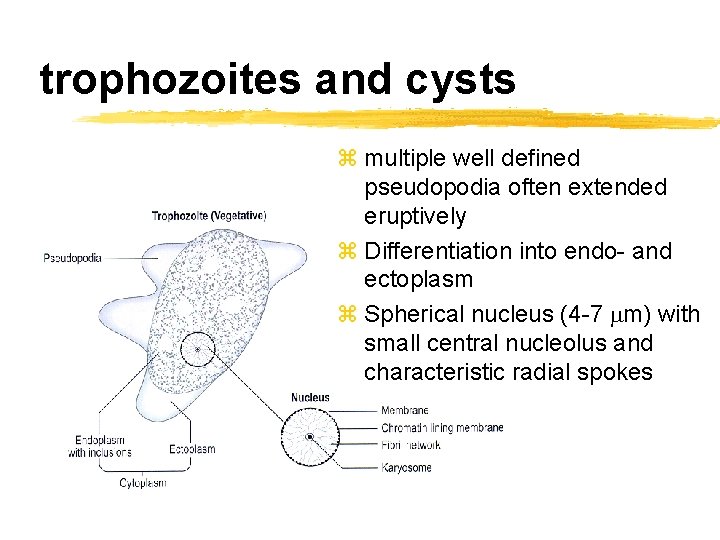
trophozoites and cysts z multiple well defined pseudopodia often extended eruptively z Differentiation into endo- and ectoplasm z Spherical nucleus (4 -7 mm) with small central nucleolus and characteristic radial spokes
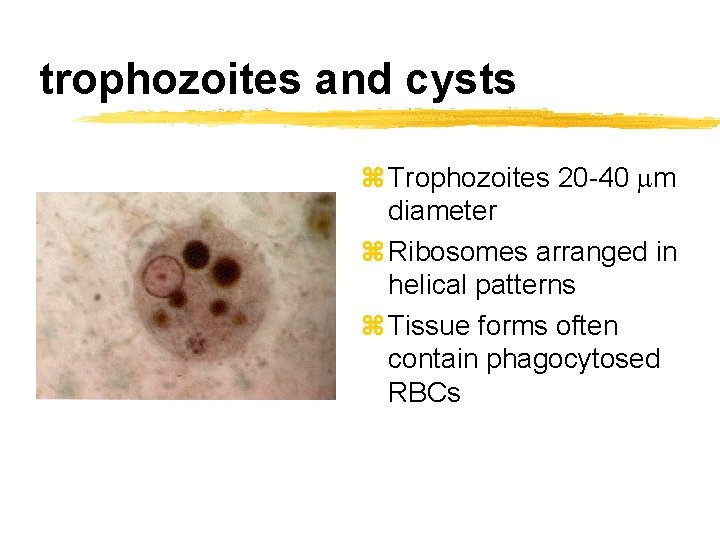
trophozoites and cysts z Trophozoites 20 -40 mm diameter z Ribosomes arranged in helical patterns z Tissue forms often contain phagocytosed RBCs
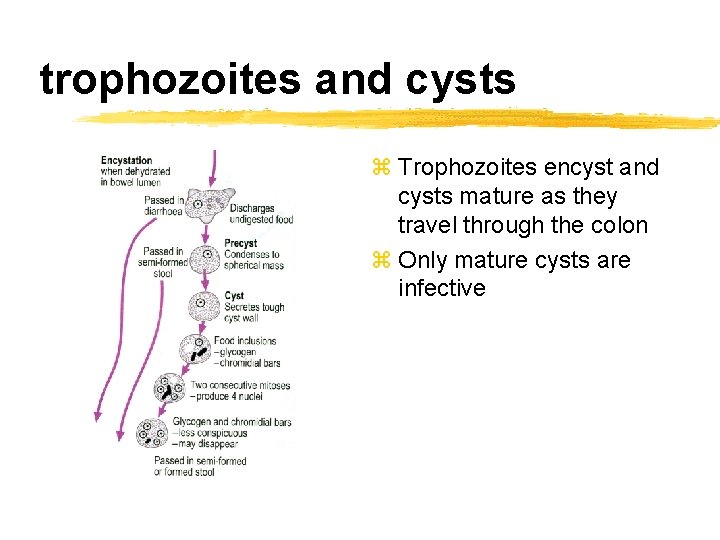
trophozoites and cysts z Trophozoites encyst and cysts mature as they travel through the colon z Only mature cysts are infective
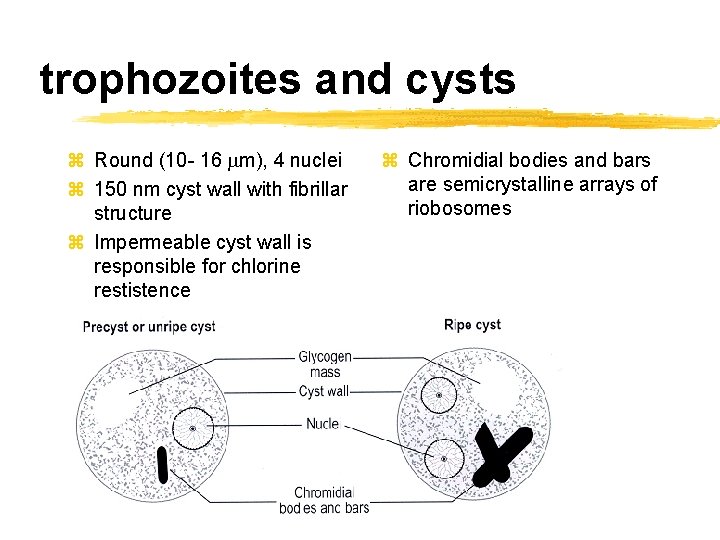
trophozoites and cysts z Round (10 - 16 mm), 4 nuclei z 150 nm cyst wall with fibrillar structure z Impermeable cyst wall is responsible for chlorine restistence z Chromidial bodies and bars are semicrystalline arrays of riobosomes
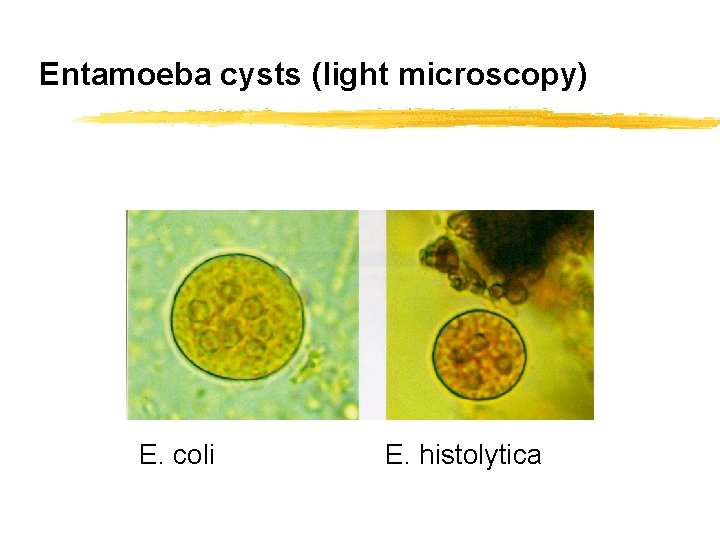
Entamoeba cysts (light microscopy) E. coli E. histolytica
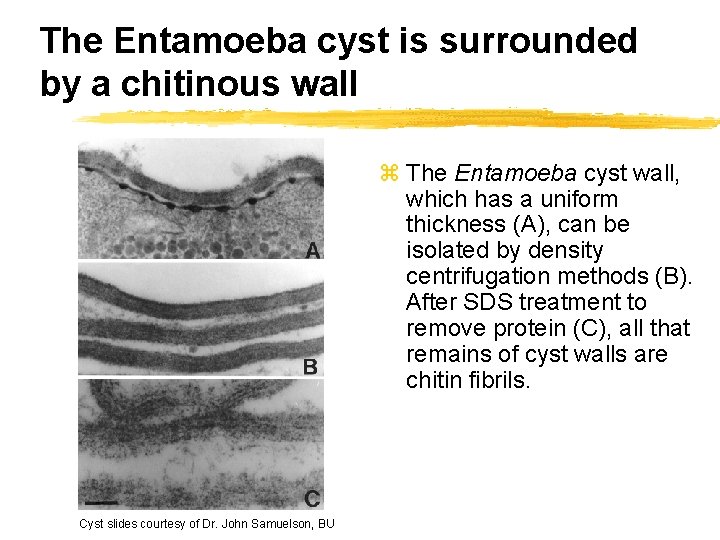
The Entamoeba cyst is surrounded by a chitinous wall z The Entamoeba cyst wall, which has a uniform thickness (A), can be isolated by density centrifugation methods (B). After SDS treatment to remove protein (C), all that remains of cyst walls are chitin fibrils. Cyst slides courtesy of Dr. John Samuelson, BU
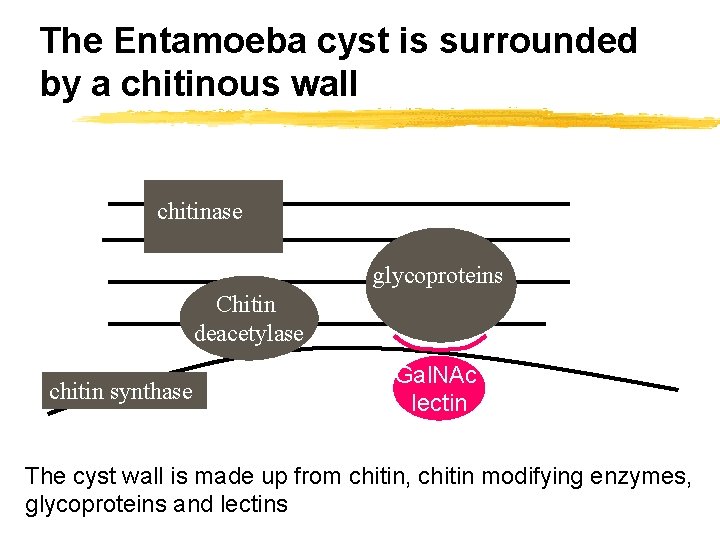
The Entamoeba cyst is surrounded by a chitinous wall chitinase glycoproteins Chitin deacetylase chitin synthase Gal. NAc lectin The cyst wall is made up from chitin, chitin modifying enzymes, glycoproteins and lectins
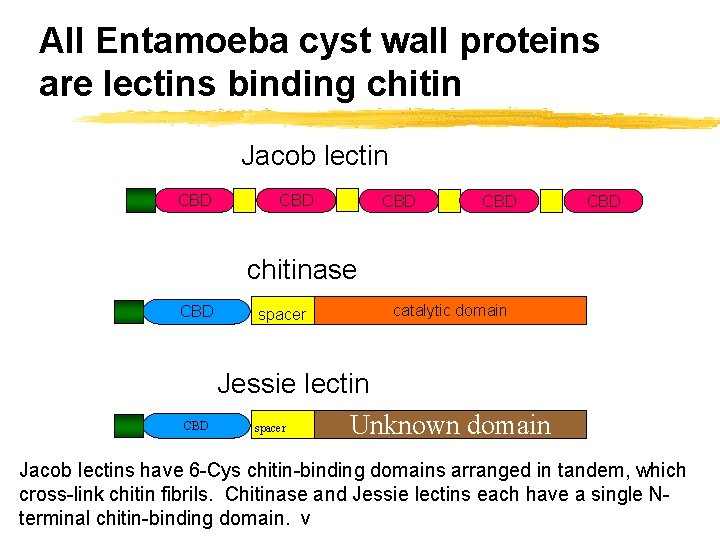
All Entamoeba cyst wall proteins are lectins binding chitin Jacob lectin CBD CBD CBD chitinase CBD spacer catalytic domain Jessie lectin spacer Unknown domain Jacob lectins have 6 -Cys chitin-binding domains arranged in tandem, which cross-link chitin fibrils. Chitinase and Jessie lectins each have a single Nterminal chitin-binding domain. v
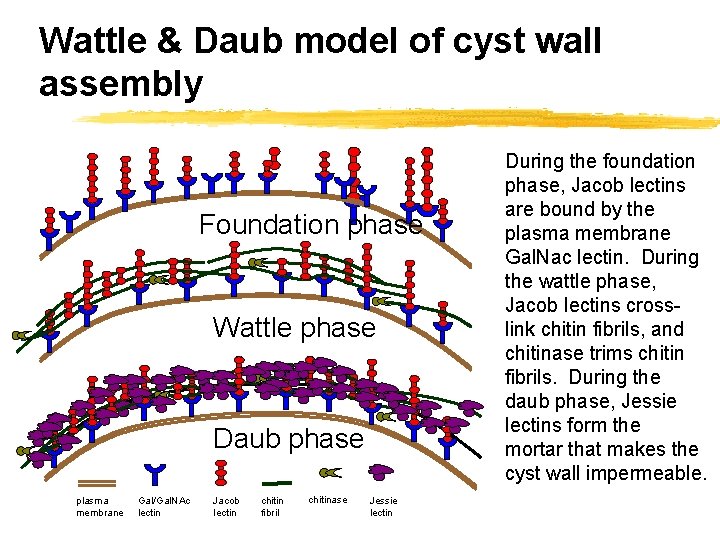
Wattle & Daub model of cyst wall assembly Foundation phase Wattle phase Daub phase plasma membrane Gal/Gal. NAc lectin Jacob lectin chitin fibril chitinase Jessie lectin During the foundation phase, Jacob lectins are bound by the plasma membrane Gal. Nac lectin. During the wattle phase, Jacob lectins crosslink chitin fibrils, and chitinase trims chitin fibrils. During the daub phase, Jessie lectins form the mortar that makes the cyst wall impermeable.
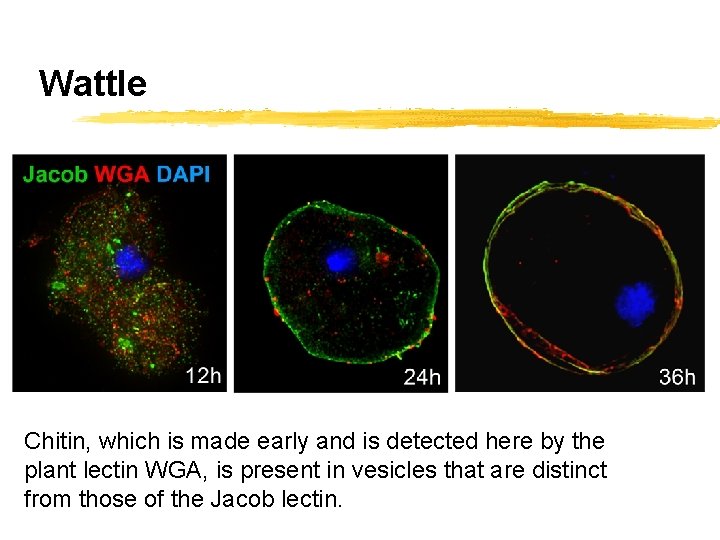
Wattle Chitin, which is made early and is detected here by the plant lectin WGA, is present in vesicles that are distinct from those of the Jacob lectin.
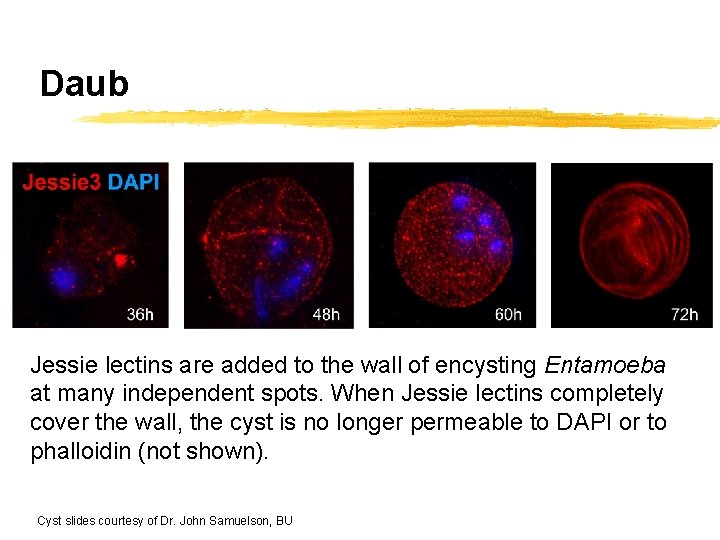
Daub Jessie lectins are added to the wall of encysting Entamoeba at many independent spots. When Jessie lectins completely cover the wall, the cyst is no longer permeable to DAPI or to phalloidin (not shown). Cyst slides courtesy of Dr. John Samuelson, BU
Entamoebiasis can develop into diseases of increasing severity z Asymptomatic carries z Collitis & ulcer formation z Extra-intestinal infection
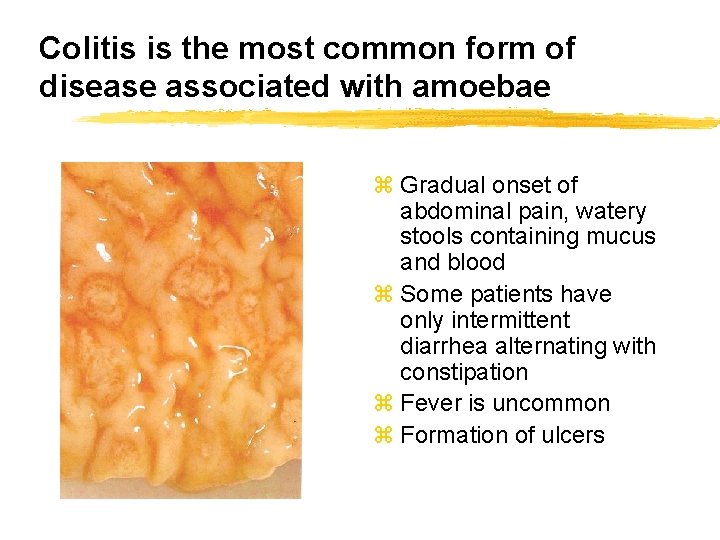
Colitis is the most common form of disease associated with amoebae z Gradual onset of abdominal pain, watery stools containing mucus and blood z Some patients have only intermittent diarrhea alternating with constipation z Fever is uncommon z Formation of ulcers
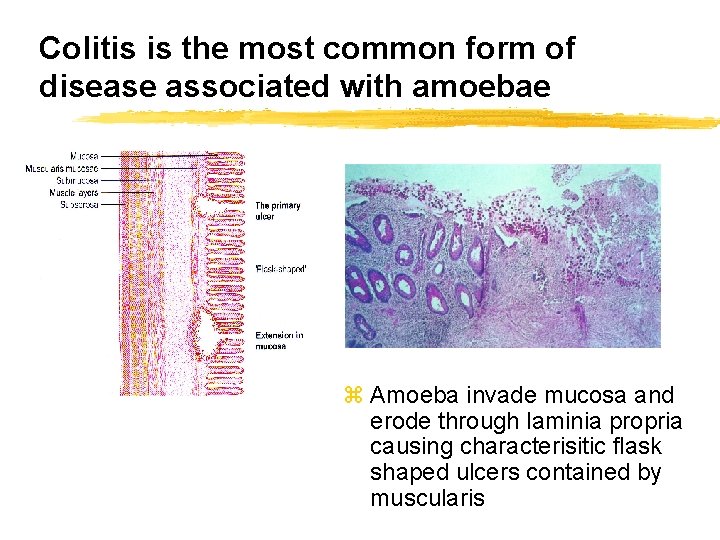
Colitis is the most common form of disease associated with amoebae z Amoeba invade mucosa and erode through laminia propria causing characterisitic flask shaped ulcers contained by muscularis
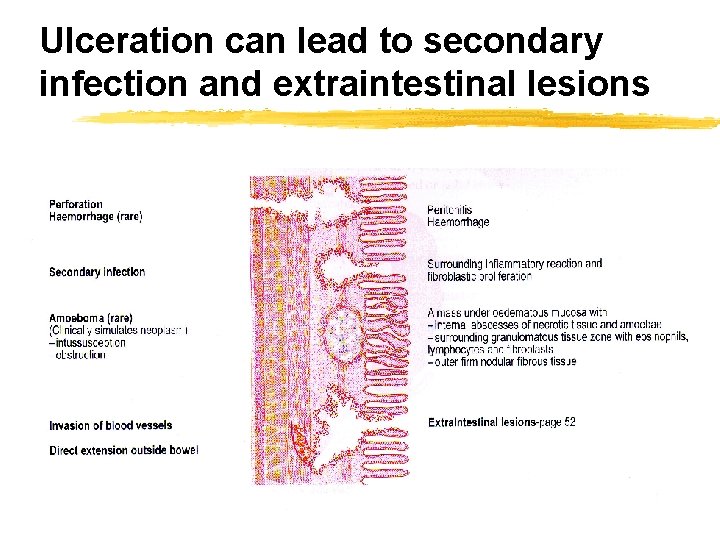
Ulceration can lead to secondary infection and extraintestinal lesions
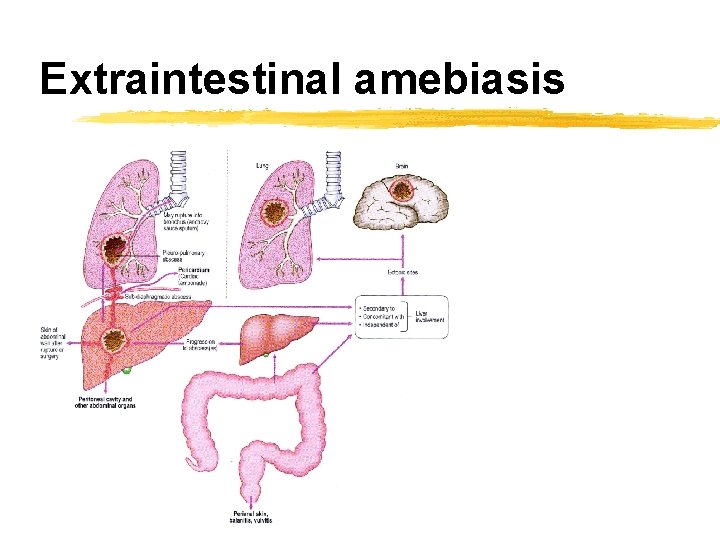
Extraintestinal amebiasis
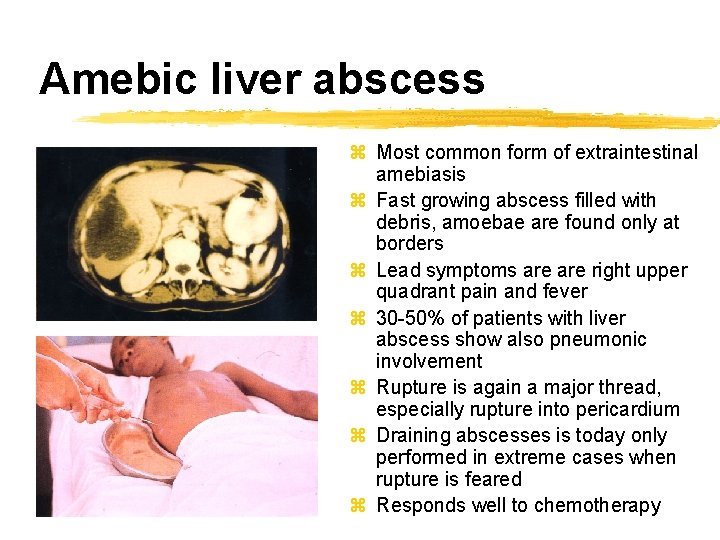
Amebic liver abscess z Most common form of extraintestinal amebiasis z Fast growing abscess filled with debris, amoebae are found only at borders z Lead symptoms are right upper quadrant pain and fever z 30 -50% of patients with liver abscess show also pneumonic involvement z Rupture is again a major thread, especially rupture into pericardium z Draining abscesses is today only performed in extreme cases when rupture is feared z Responds well to chemotherapy
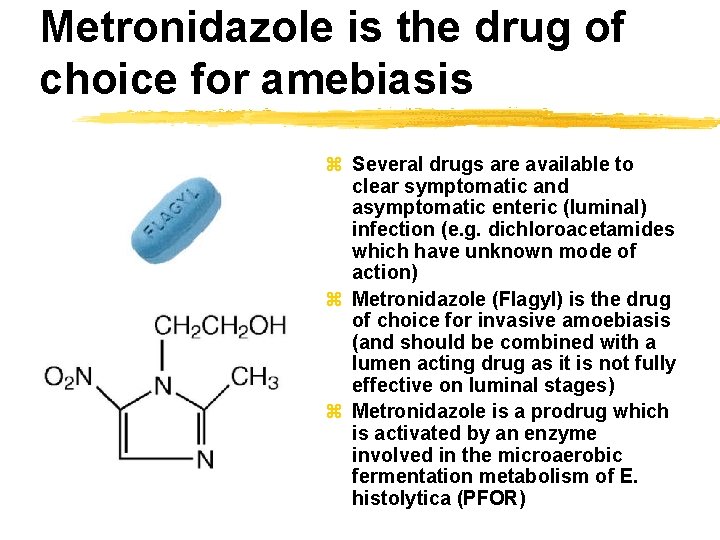
Metronidazole is the drug of choice for amebiasis z Several drugs are available to clear symptomatic and asymptomatic enteric (luminal) infection (e. g. dichloroacetamides which have unknown mode of action) z Metronidazole (Flagyl) is the drug of choice for invasive amoebiasis (and should be combined with a lumen acting drug as it is not fully effective on luminal stages) z Metronidazole is a prodrug which is activated by an enzyme involved in the microaerobic fermentation metabolism of E. histolytica (PFOR)
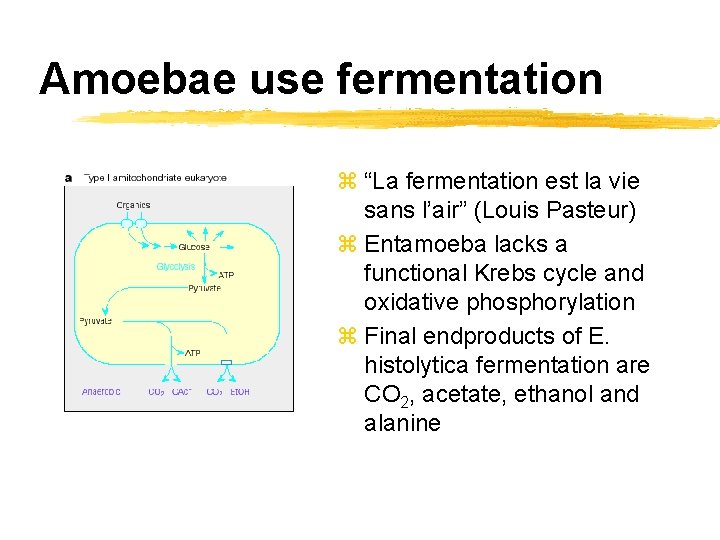
Amoebae use fermentation z “La fermentation est la vie sans l’air” (Louis Pasteur) z Entamoeba lacks a functional Krebs cycle and oxidative phosphorylation z Final endproducts of E. histolytica fermentation are CO 2, acetate, ethanol and alanine
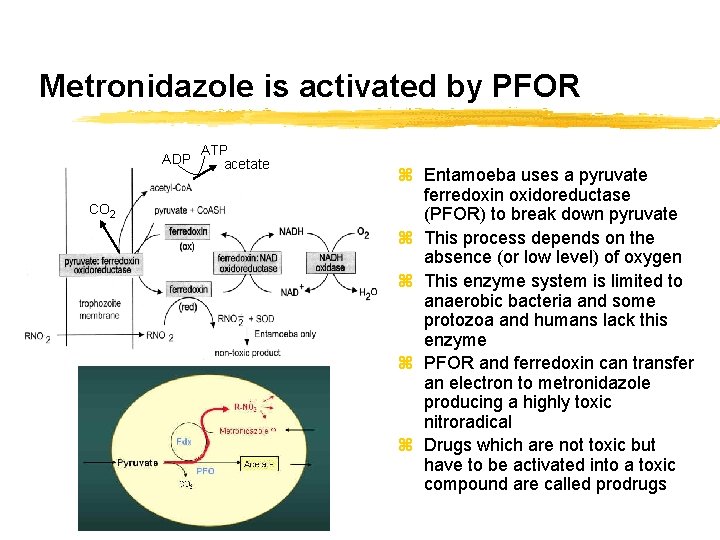
Metronidazole is activated by PFOR ADP CO 2 ATP acetate z Entamoeba uses a pyruvate ferredoxin oxidoreductase (PFOR) to break down pyruvate z This process depends on the absence (or low level) of oxygen z This enzyme system is limited to anaerobic bacteria and some protozoa and humans lack this enzyme z PFOR and ferredoxin can transfer an electron to metronidazole producing a highly toxic nitroradical z Drugs which are not toxic but have to be activated into a toxic compound are called prodrugs
Epidemiology of Entamoeba z 480, 000 people harbor Entamoeba z 36, 000 develop clinical symptoms z 40, 000 - 100, 000 deaths per year (Walsh, 1986, Rev. Infect. Dis. , based on 1981 data, no significant change since then) Less than 10% of the people infected show disease. Several hypotheses have been put forward to explain this differential pathogenesis.
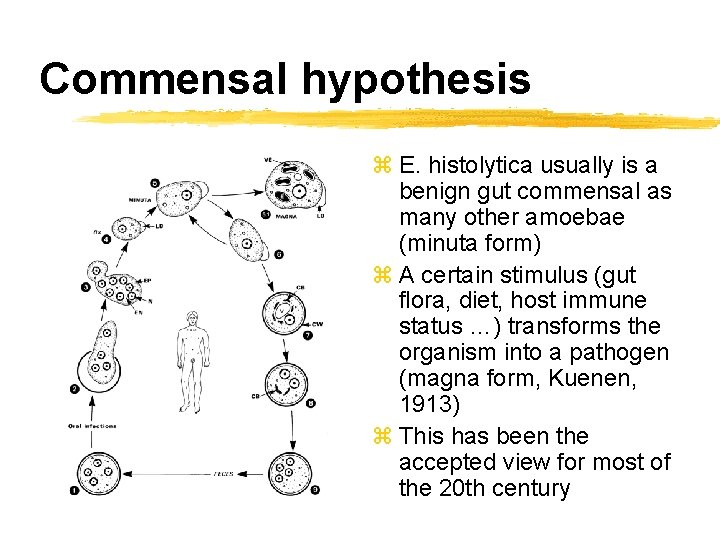
Commensal hypothesis z E. histolytica usually is a benign gut commensal as many other amoebae (minuta form) z A certain stimulus (gut flora, diet, host immune status …) transforms the organism into a pathogen (magna form, Kuenen, 1913) z This has been the accepted view for most of the 20 th century
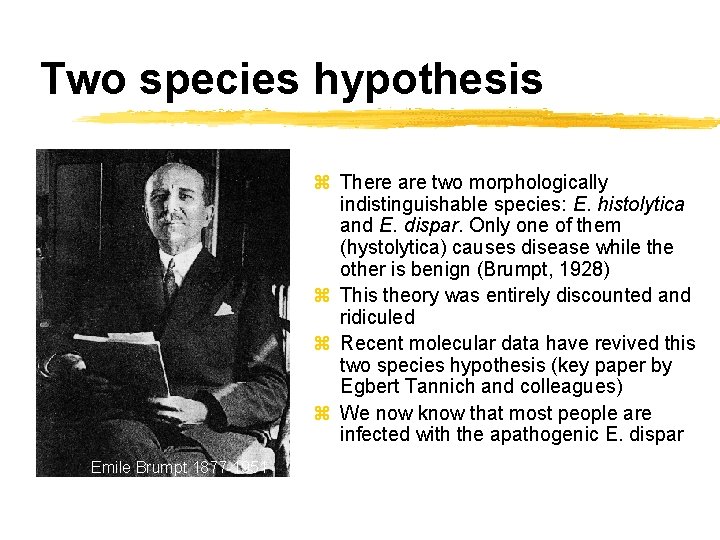
Two species hypothesis z There are two morphologically indistinguishable species: E. histolytica and E. dispar. Only one of them (hystolytica) causes disease while the other is benign (Brumpt, 1928) z This theory was entirely discounted and ridiculed z Recent molecular data have revived this two species hypothesis (key paper by Egbert Tannich and colleagues) z We now know that most people are infected with the apathogenic E. dispar Emile Brumpt 1877 -1951
Genetic evidence for two species z Species specific isoenzyme patterns z Multiple antibodies specific for either the pathogenic or apathogenic species z Numerous genes sequenced which show clear differences z Repetitive DNA elements are different z Genomic organization of conserved gene loci like actin is different z Ribosomal RNA (2. 2% difference) z Genome sequencing
However, … z There are differences in the pathogenesis even among E. histolytica isolates z This has let researchers to search for ‘pathogenicity or virulence factors’
Pathogenicity factors what could they be? z This has been studied in much greater depth in bacterial pathogens z Can you come up with examples? z Have you heard about Stan Falkow’s postulates?
Pathogenicity factors in bacteria z Toxins z Adhesion z Invasion z Nutrient (iron) acquisition z Immune evasion z Delivery of factors by specialized secretion systems z Regulation of these factors
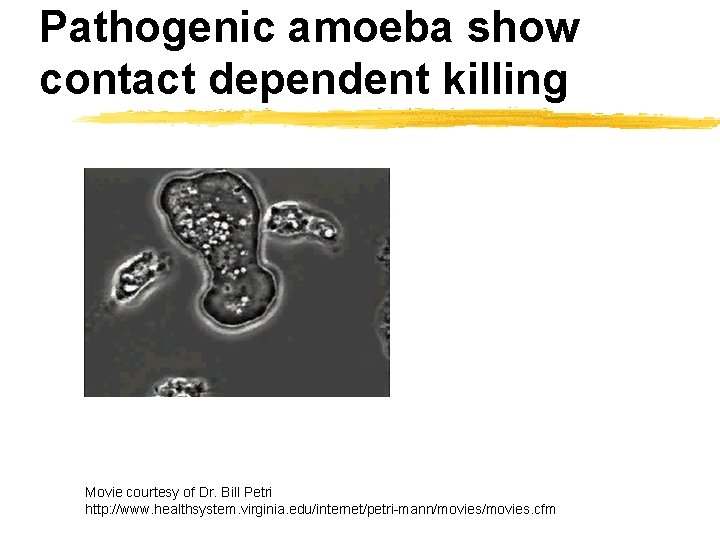
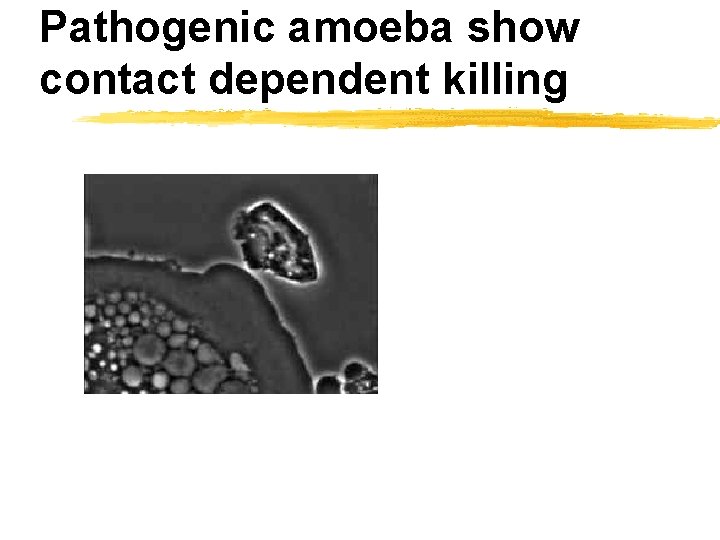
Pathogenic amoeba show contact dependent killing Movie courtesy of Dr. Bill Petri http: //www. healthsystem. virginia. edu/internet/petri-mann/movies. cfm
Pathogenic amoeba show contact dependent killing
Three protein families are currently discussed as pathogenicity factors z. Cysteine proteases z. Gal/Gal. NAc lectin z. Amoebapore z. None of these completely fulfill Stan Falkow’s molecular postulates for pathogenicity factors at the moment
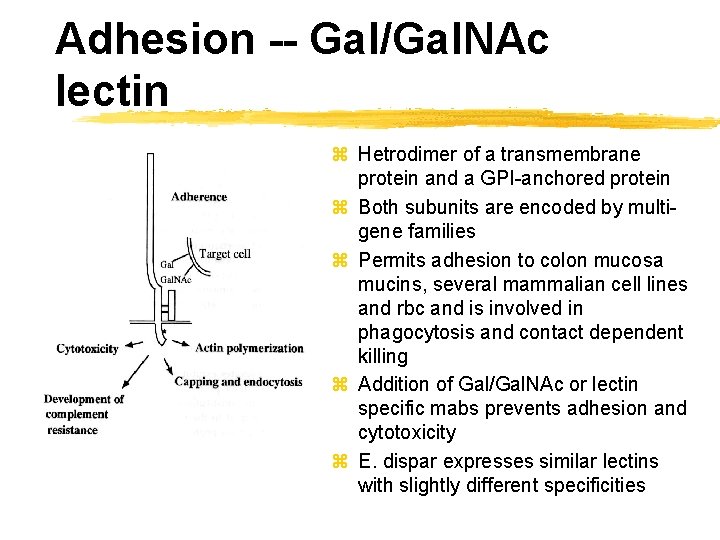
Adhesion -- Gal/Gal. NAc lectin z Hetrodimer of a transmembrane protein and a GPI-anchored protein z Both subunits are encoded by multigene families z Permits adhesion to colon mucosa mucins, several mammalian cell lines and rbc and is involved in phagocytosis and contact dependent killing z Addition of Gal/Gal. NAc or lectin specific mabs prevents adhesion and cytotoxicity z E. dispar expresses similar lectins with slightly different specificities
Cystein proteases might act as pathogenicity factors z. Amoeba contain wide variety of cysteine proteases (multi-gene family) z. Antisense data suggest that CPs are not important for cytopathic or haemolytic activity but required for phagocytosis z. AS data also point to critical role using an in vivo liver abscess model
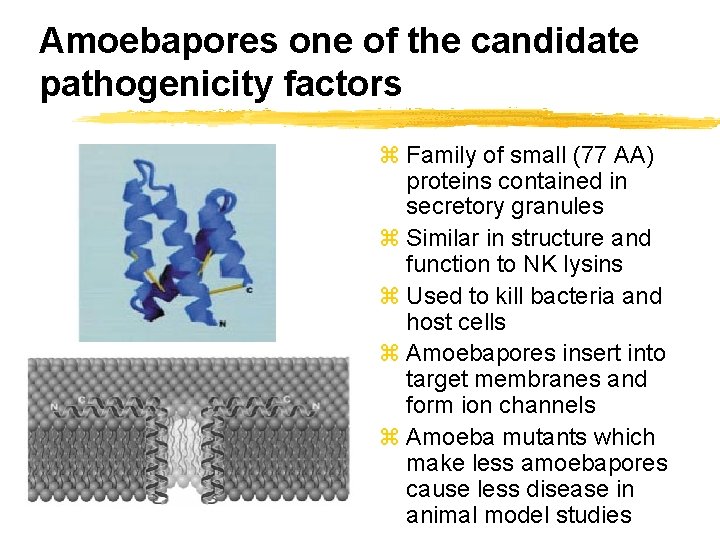
Amoebapores one of the candidate pathogenicity factors z Family of small (77 AA) proteins contained in secretory granules z Similar in structure and function to NK lysins z Used to kill bacteria and host cells z Amoebapores insert into target membranes and form ion channels z Amoeba mutants which make less amoebapores cause less disease in animal model studies
- Slides: 44