
Ensuring a Safety Environment 2 1 Safety Awareness


- Slides: 20
Ensuring a Safety Environment 2
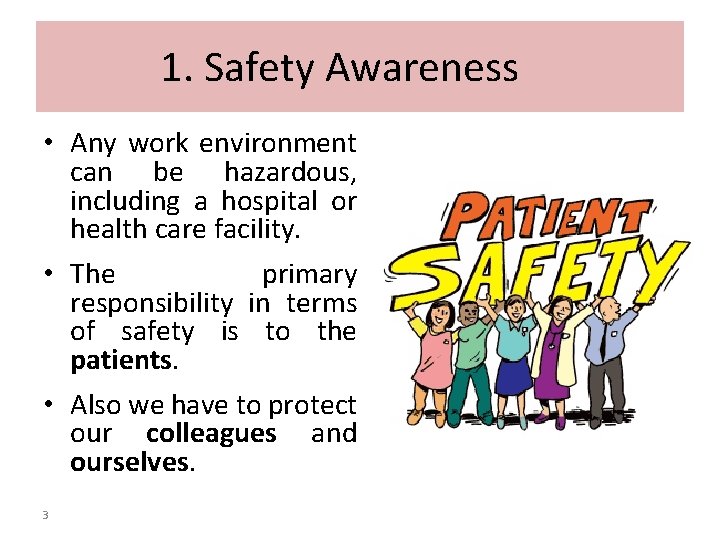
1. Safety Awareness • Any work environment can be hazardous, including a hospital or health care facility. • The primary responsibility in terms of safety is to the patients. • Also we have to protect our colleagues and ourselves. 3
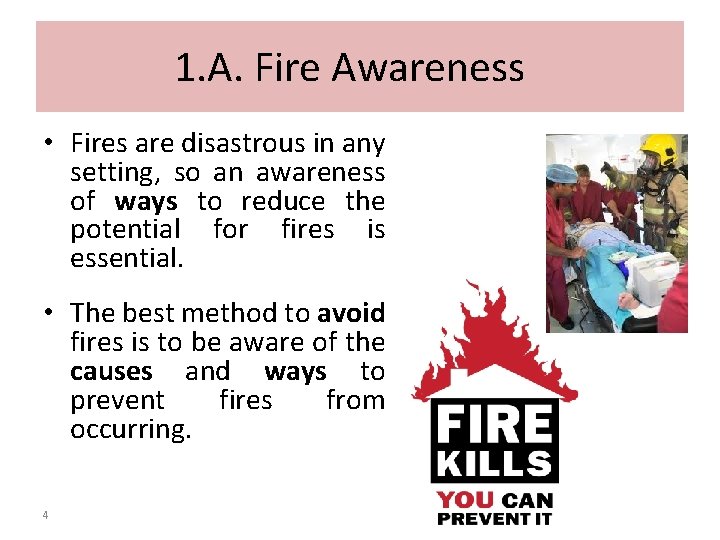
1. A. Fire Awareness • Fires are disastrous in any setting, so an awareness of ways to reduce the potential for fires is essential. • The best method to avoid fires is to be aware of the causes and ways to prevent fires from occurring. 4
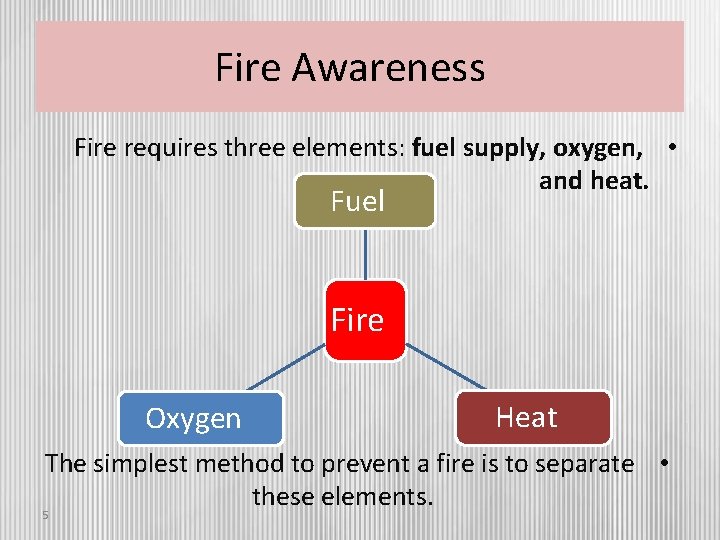
Fire Awareness Fire requires three elements: fuel supply, oxygen, • and heat. Fuel Fire Oxygen Heat The simplest method to prevent a fire is to separate • these elements. 5
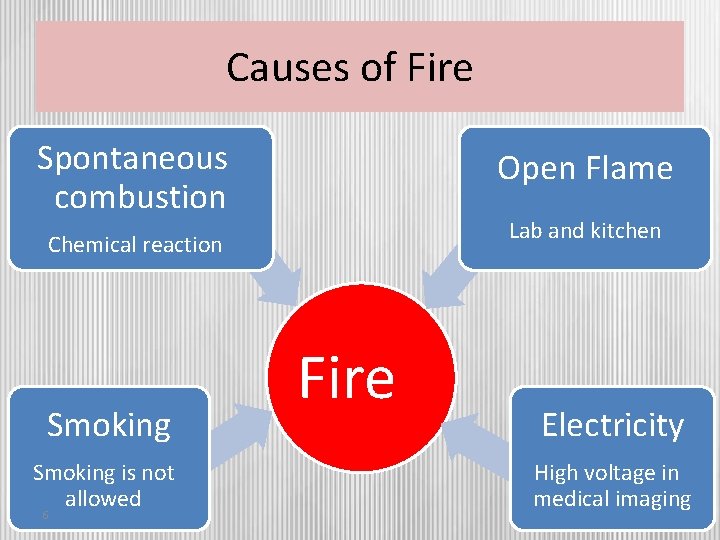
Causes of Fire Spontaneous combustion Open Flame Lab and kitchen Chemical reaction Smoking is not allowed 6 Fire Electricity High voltage in medical imaging
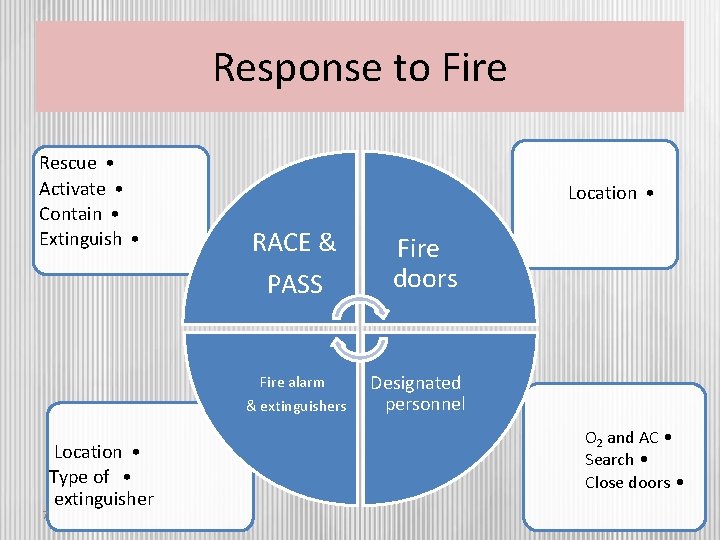
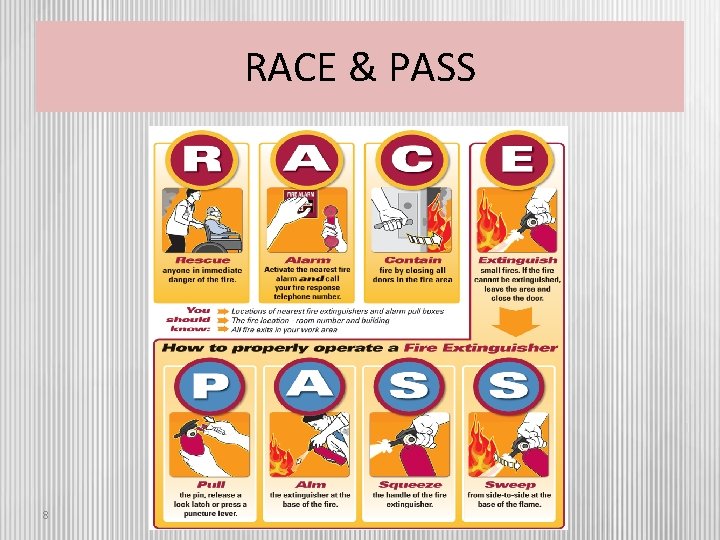
Response to Fire Rescue • Activate • Contain • Extinguish • Location • RACE & PASS Fire alarm & extinguishers Location • Type of • extinguisher 7 Fire doors Designated personnel O 2 and AC • Search • Close doors •
RACE & PASS 8
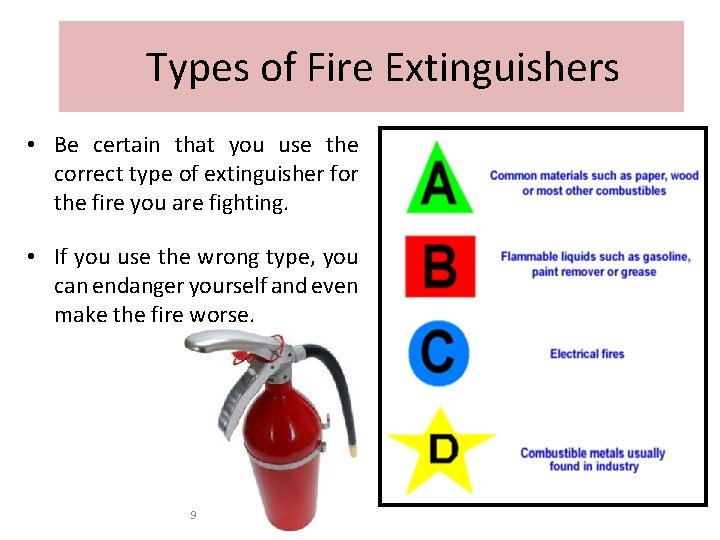
Types of Fire Extinguishers • Be certain that you use the correct type of extinguisher for the fire you are fighting. • If you use the wrong type, you can endanger yourself and even make the fire worse. 9
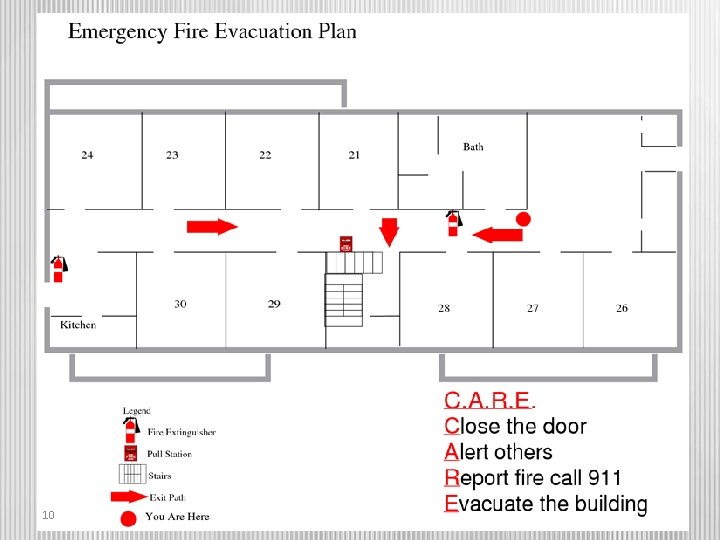
10
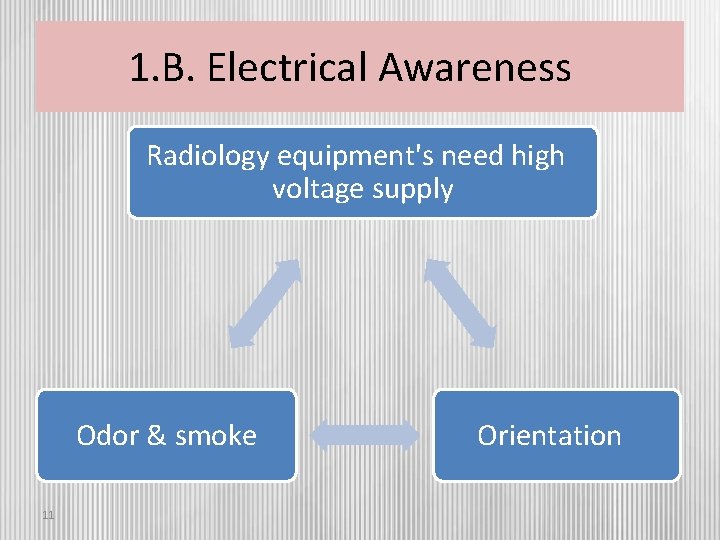
1. B. Electrical Awareness Radiology equipment's need high voltage supply Odor & smoke 11 Orientation
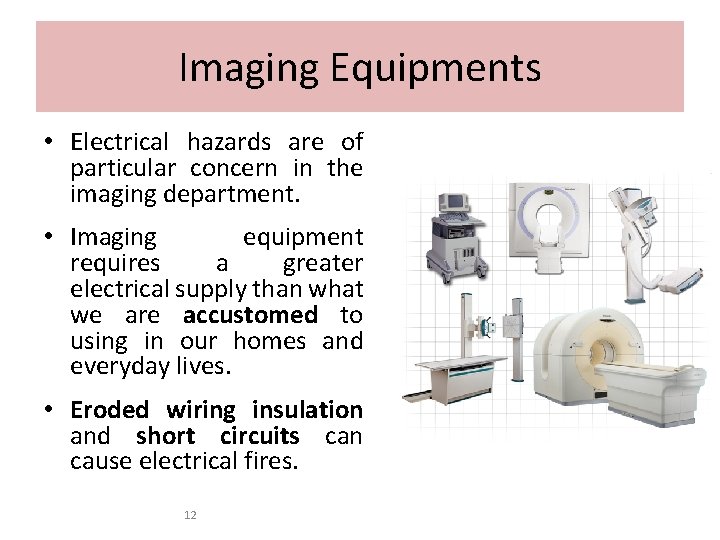
Imaging Equipments • Electrical hazards are of particular concern in the imaging department. • Imaging equipment requires a greater electrical supply than what we are accustomed to using in our homes and everyday lives. • Eroded wiring insulation and short circuits can cause electrical fires. 12
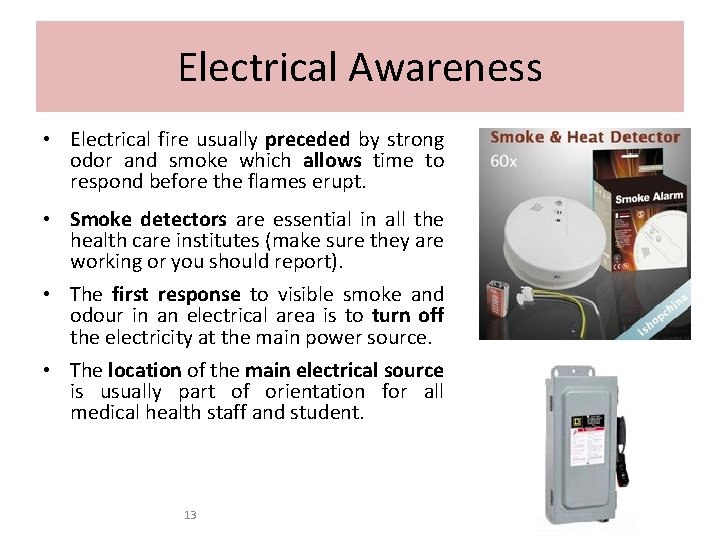
Electrical Awareness • Electrical fire usually preceded by strong odor and smoke which allows time to respond before the flames erupt. • Smoke detectors are essential in all the health care institutes (make sure they are working or you should report). • The first response to visible smoke and odour in an electrical area is to turn off the electricity at the main power source. • The location of the main electrical source is usually part of orientation for all medical health staff and student. 13
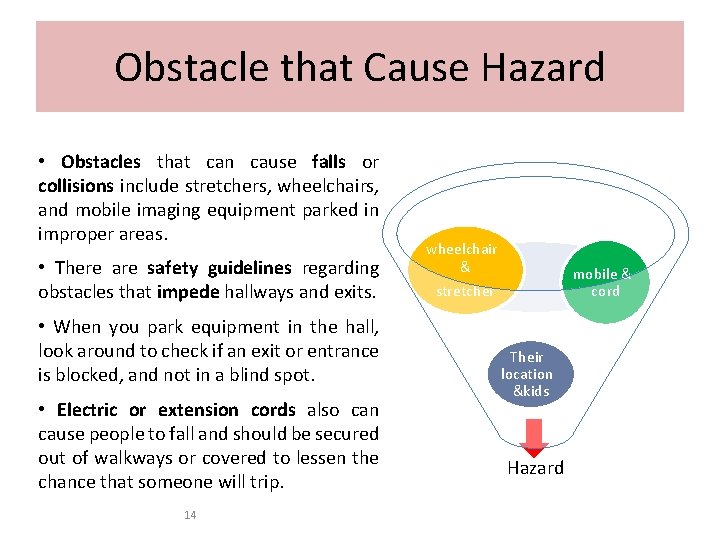
Obstacle that Cause Hazard • Obstacles that can cause falls or collisions include stretchers, wheelchairs, and mobile imaging equipment parked in improper areas. • There are safety guidelines regarding obstacles that impede hallways and exits. • When you park equipment in the hall, look around to check if an exit or entrance is blocked, and not in a blind spot. • Electric or extension cords also can cause people to fall and should be secured out of walkways or covered to lessen the chance that someone will trip. 14 wheelchair & mobile & cord stretcher Their location &kids Hazard
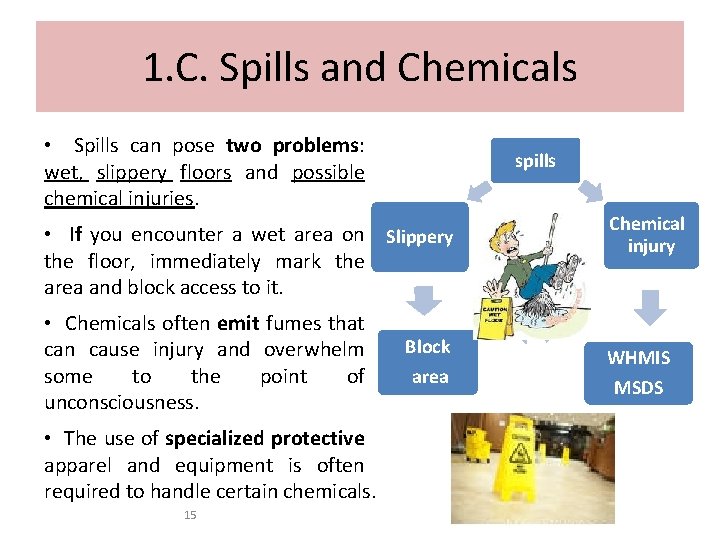
1. C. Spills and Chemicals • Spills can pose two problems: wet, slippery floors and possible chemical injuries. spills • If you encounter a wet area on Slippery the floor, immediately mark the area and block access to it. • Chemicals often emit fumes that can cause injury and overwhelm some to the point of unconsciousness. • The use of specialized protective apparel and equipment is often required to handle certain chemicals. 15 Block area Chemical injury WHMIS MSDS
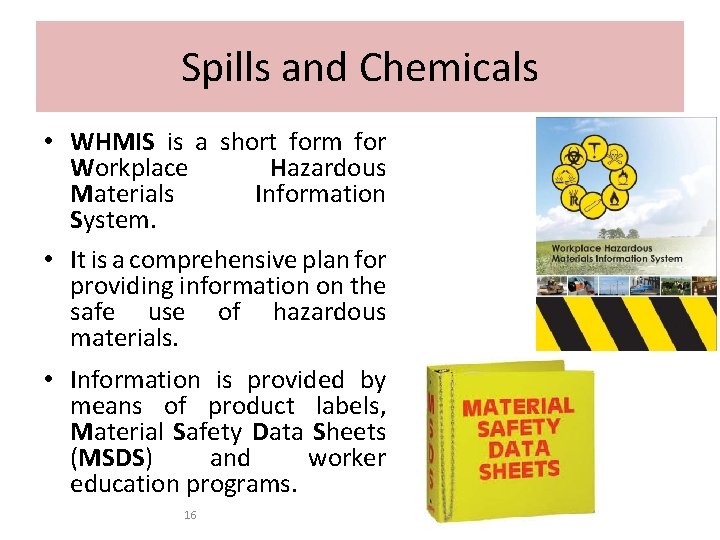
Spills and Chemicals • WHMIS is a short form for Workplace Hazardous Materials Information System. • It is a comprehensive plan for providing information on the safe use of hazardous materials. • Information is provided by means of product labels, Material Safety Data Sheets (MSDS) and worker education programs. 16
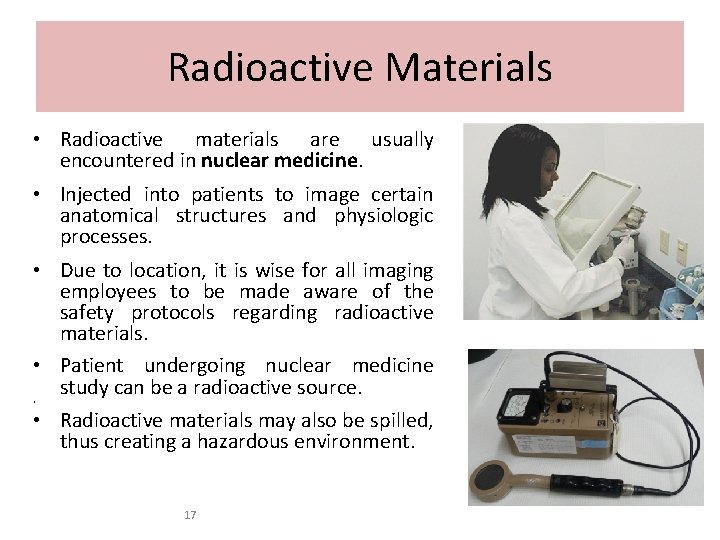
Radioactive Materials • Radioactive materials are usually encountered in nuclear medicine. • Injected into patients to image certain anatomical structures and physiologic processes. • Due to location, it is wise for all imaging employees to be made aware of the safety protocols regarding radioactive materials. • Patient undergoing nuclear medicine study can be a radioactive source. • Radioactive materials may also be spilled, thus creating a hazardous environment. • 17
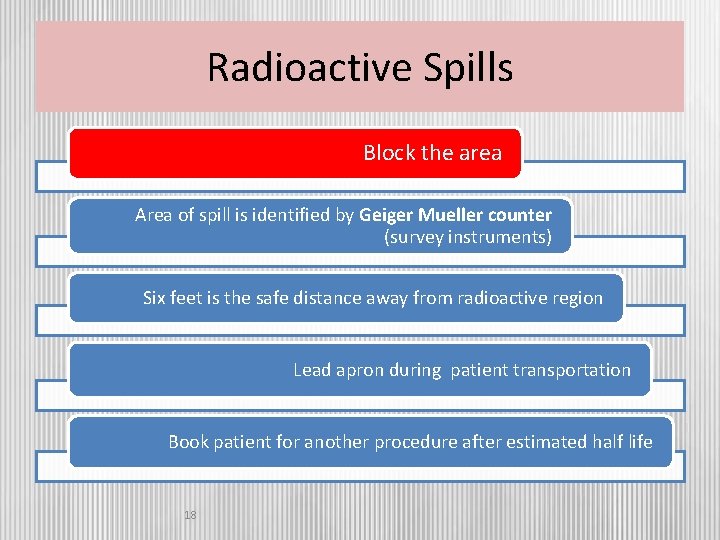
Radioactive Spills Block the area Area of spill is identified by Geiger Mueller counter (survey instruments) Six feet is the safe distance away from radioactive region Lead apron during patient transportation Book patient for another procedure after estimated half life 18
Questions !! Any Questions ? 19
20