
ENSOBasic State Interactions JinYi Yu Department of Earth
ENSO-Basic State Interactions Jin-Yi Yu Department of Earth System Science University of California, Irvine
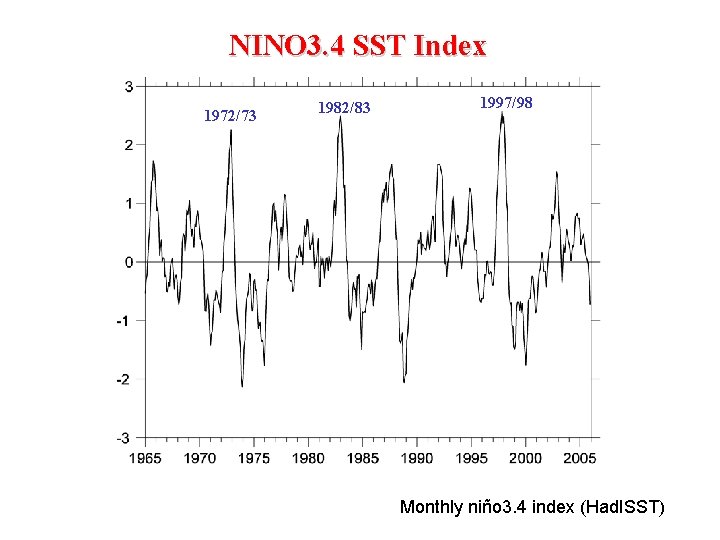
NINO 3. 4 SST Index 1972/73 1982/83 1997/98 Monthly niño 3. 4 index (Had. ISST)
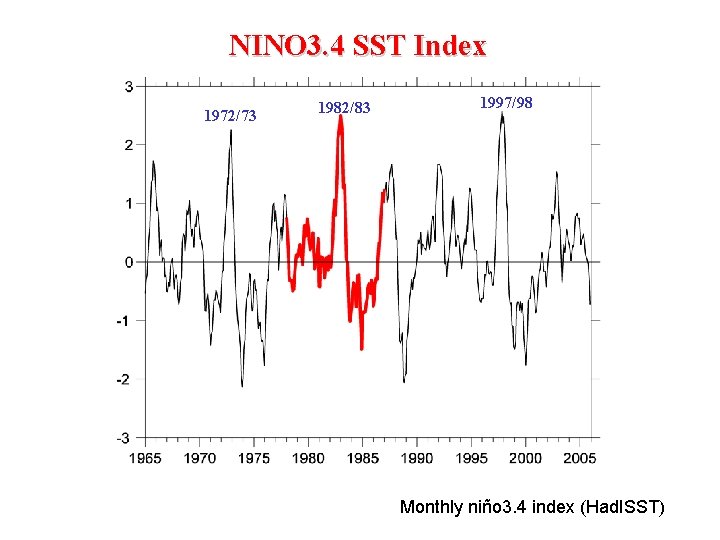
NINO 3. 4 SST Index 1972/73 1982/83 1997/98 Monthly niño 3. 4 index (Had. ISST)
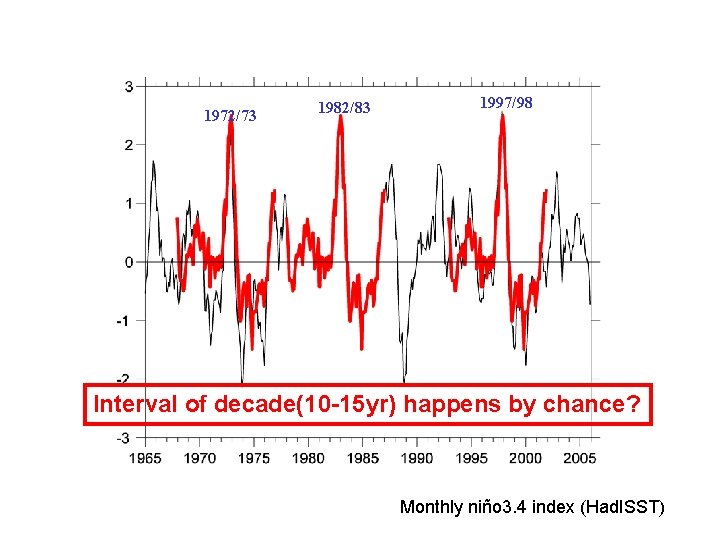
1972/73 1982/83 1997/98 Interval of decade(10 -15 yr) happens by chance? Monthly niño 3. 4 index (Had. ISST)
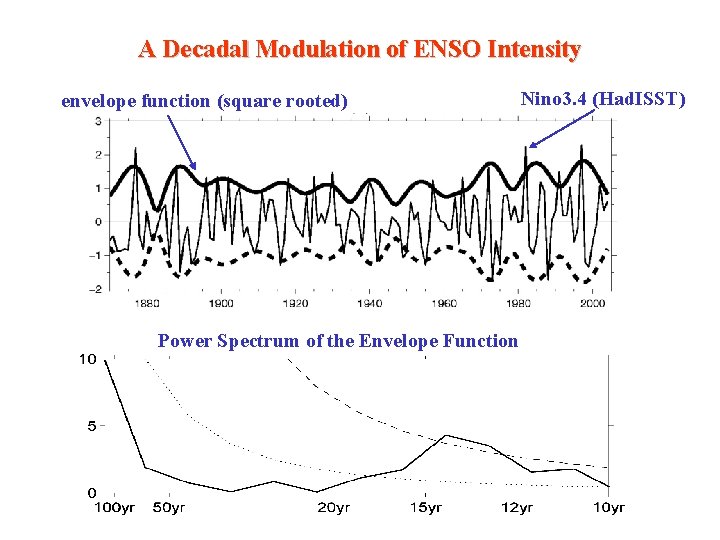
A Decadal Modulation of ENSO Intensity envelope function (square rooted) Power Spectrum of the Envelope Function Nino 3. 4 (Had. ISST)
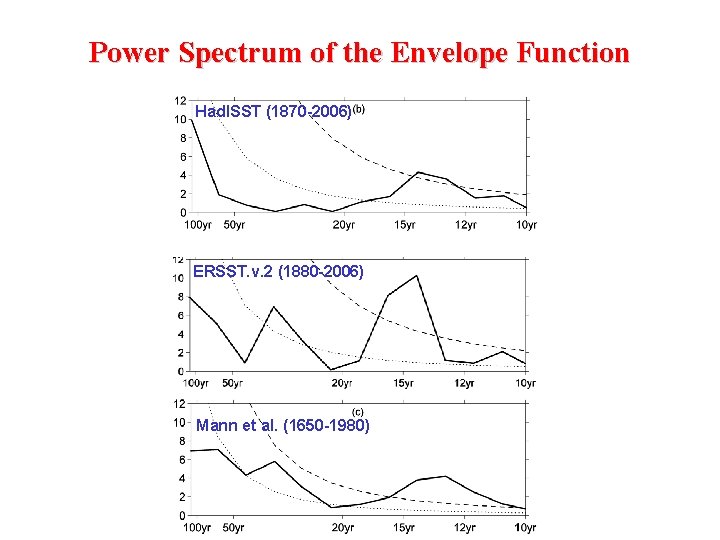
Power Spectrum of the Envelope Function Had. ISST (1870 -2006) ERSST. v. 2 (1880 -2006) Mann et al. (1650 -1980)
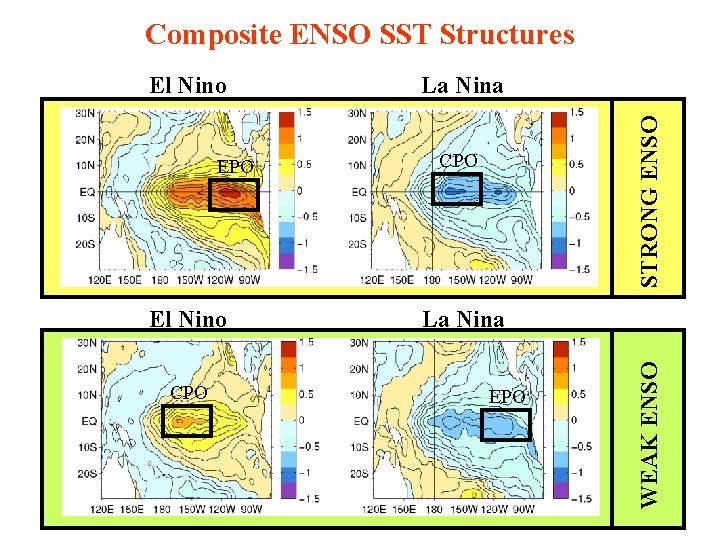
Composite ENSO SST Structures El Nino CPO STRONG ENSO EPO La Nina CPO La Nina EPO WEAK ENSO El Nino
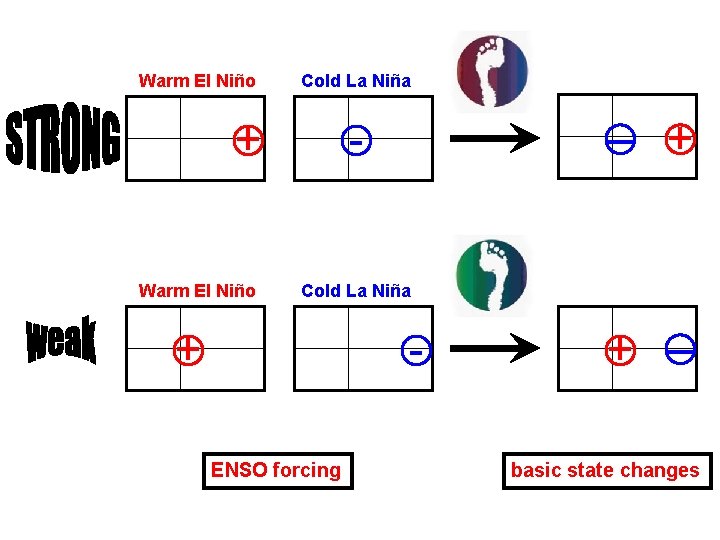
Warm El Niño Cold La Niña + Warm El Niño - Cold La Niña + ENSO forcing _ + basic state changes
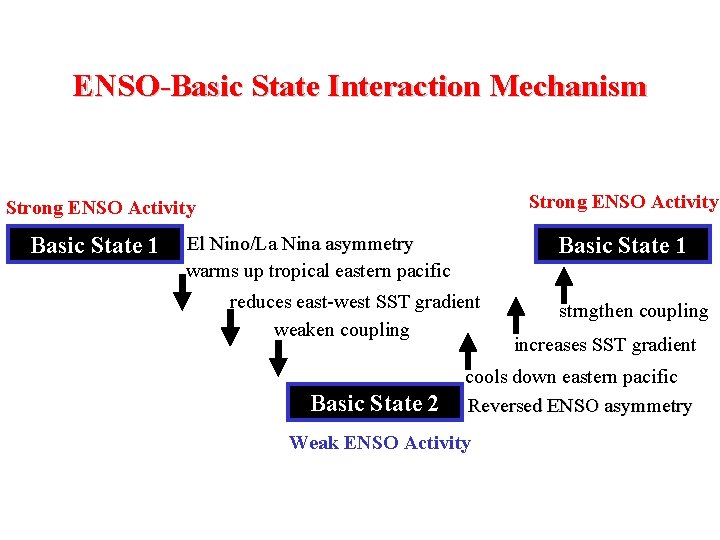
ENSO-Basic State Interaction Mechanism El Nino Strong ENSO Activity El Nino Basic State 1 El Nino/La Nina asymmetry warms up tropical eastern pacific reduces east-west SST gradient weaken coupling strngthen coupling increases SST gradient El Nino cools down eastern pacific Basic State 2 Reversed ENSO asymmetry Weak ENSO Activity
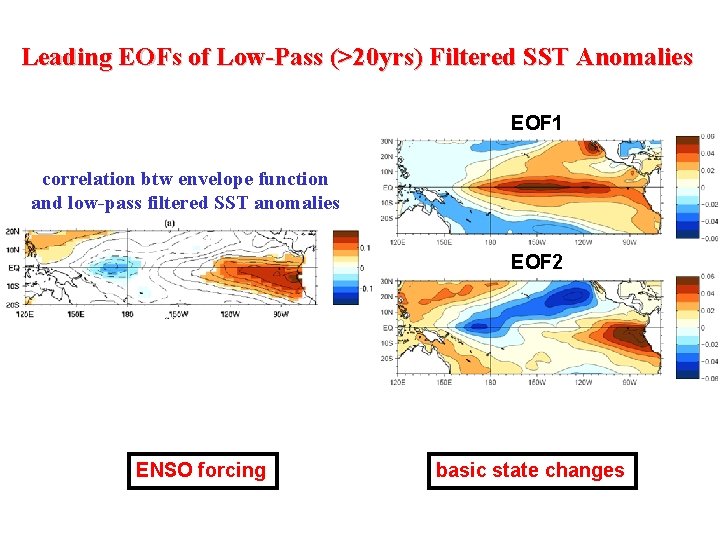
Leading EOFs of Low-Pass (>20 yrs) Filtered SST Anomalies EOF 1 correlation btw envelope function and low-pass filtered SST anomalies EOF 2 ENSO forcing basic state changes
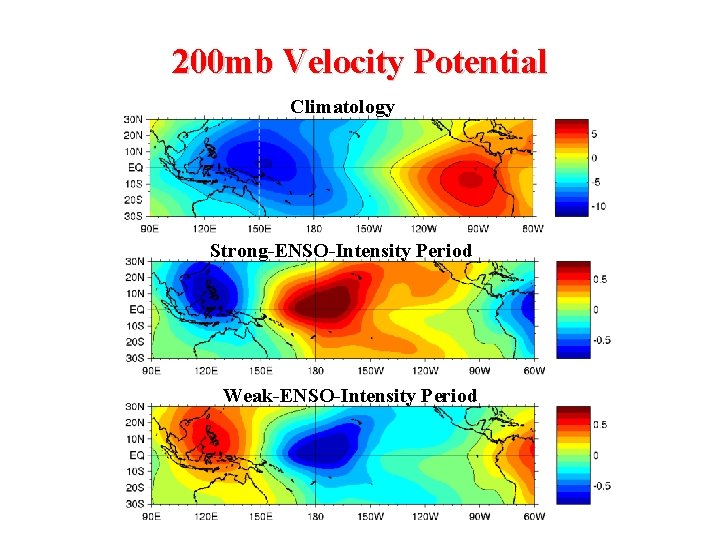
200 mb Velocity Potential Climatology Strong-ENSO-Intensity Period Weak-ENSO-Intensity Period
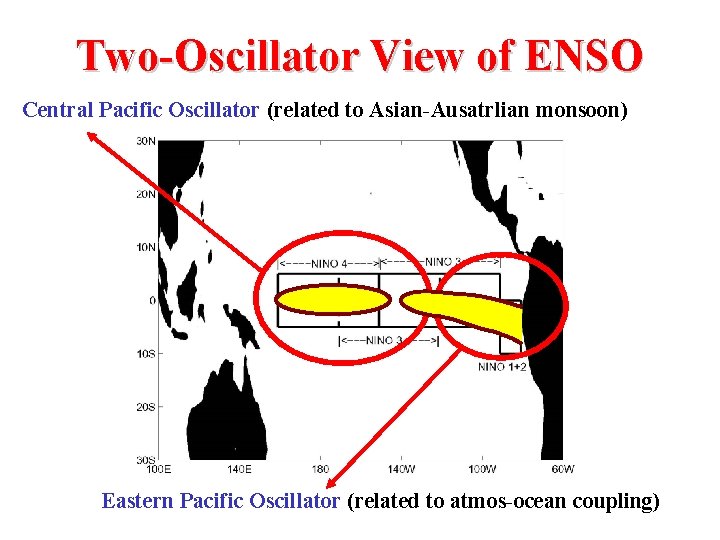
Two-Oscillator View of ENSO Central Pacific Oscillator (related to Asian-Ausatrlian monsoon) Eastern Pacific Oscillator (related to atmos-ocean coupling)
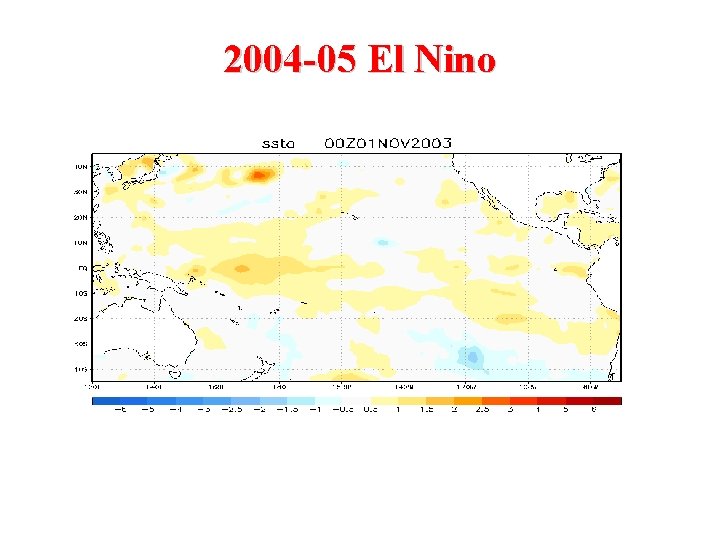
2004 -05 El Nino
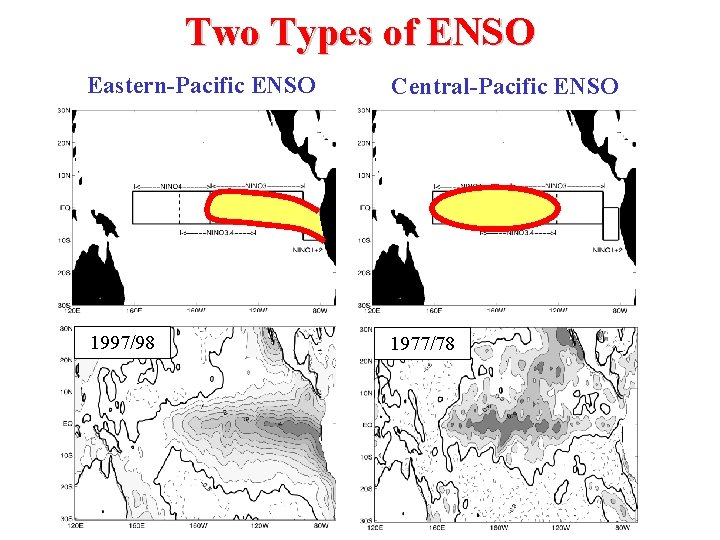
Two Types of ENSO Eastern-Pacific ENSO Central-Pacific ENSO 1997/98 1977/78
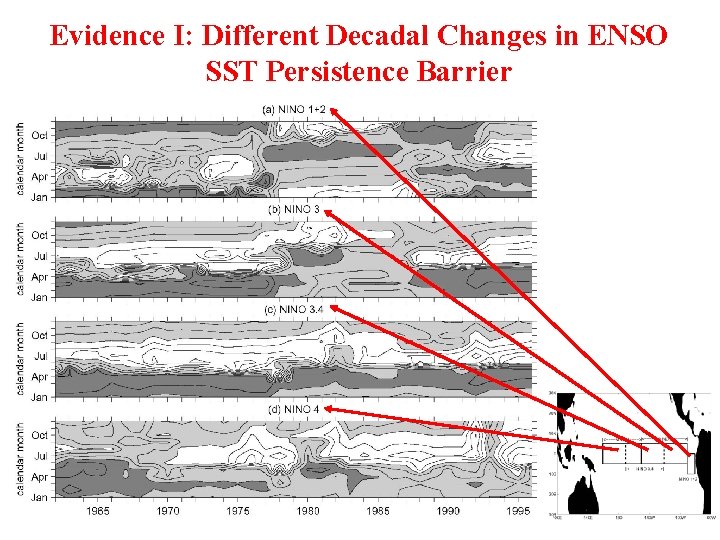
Evidence I: Different Decadal Changes in ENSO SST Persistence Barrier
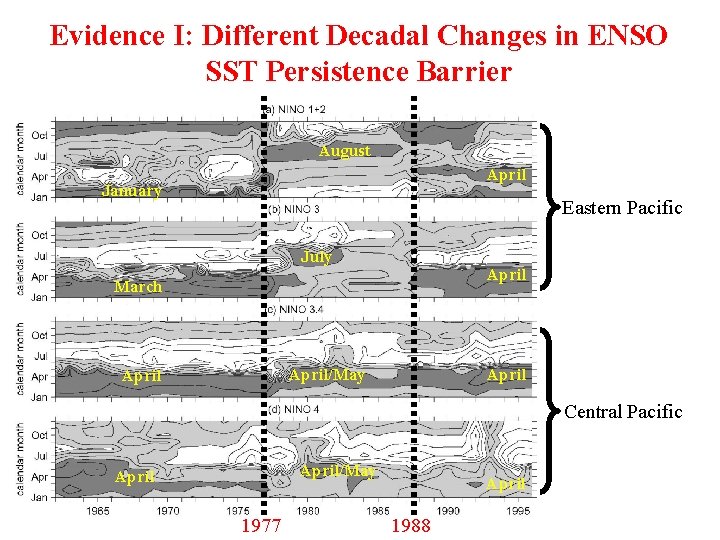
Evidence I: Different Decadal Changes in ENSO SST Persistence Barrier August April January Eastern Pacific July April March April/May April Central Pacific April/May April 1977 April 1988
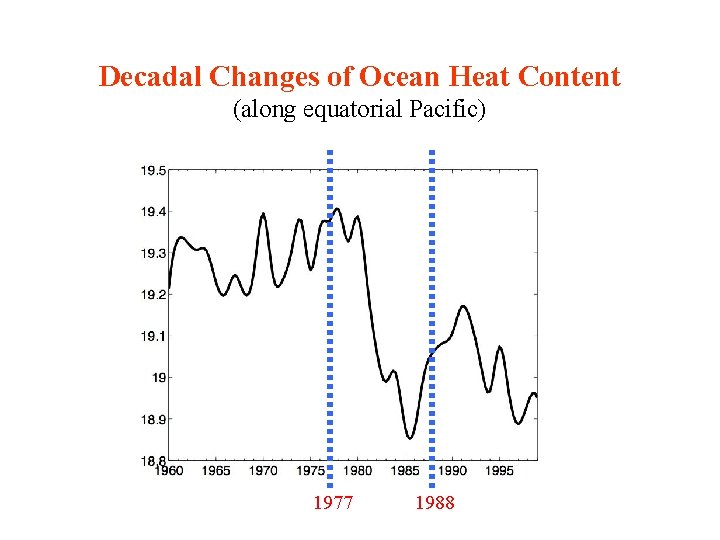
Decadal Changes of Ocean Heat Content (along equatorial Pacific) 1977 1988
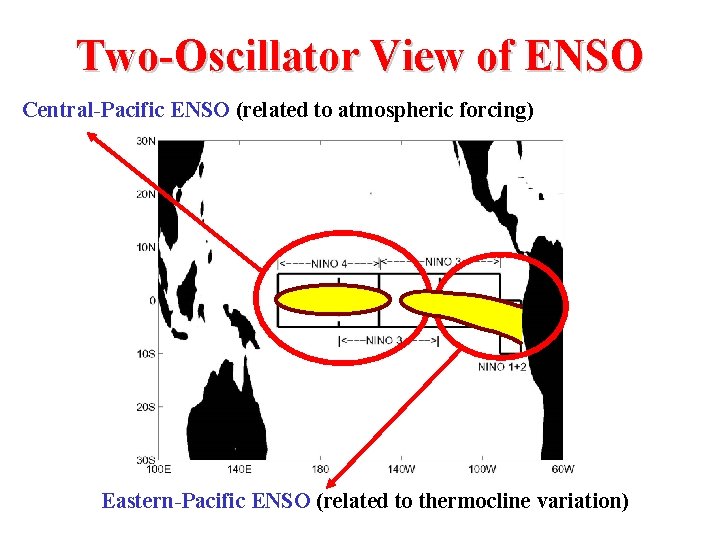
Two-Oscillator View of ENSO Central-Pacific ENSO (related to atmospheric forcing) Eastern-Pacific ENSO (related to thermocline variation)
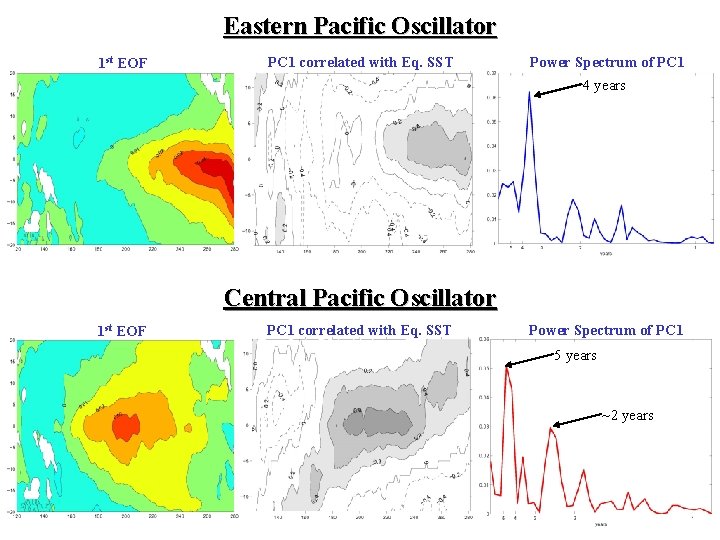
Eastern Pacific Oscillator 1 st EOF PC 1 correlated with Eq. SST Power Spectrum of PC 1 4 years Central Pacific Oscillator 1 st EOF PC 1 correlated with Eq. SST Power Spectrum of PC 1 5 years ~2 years
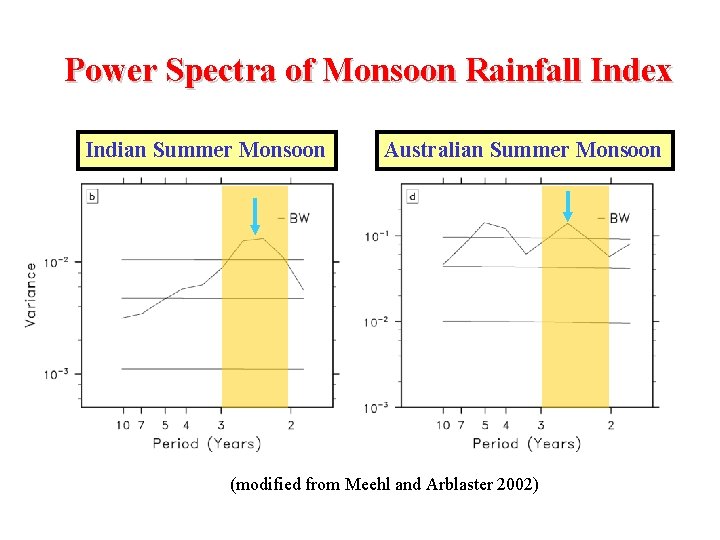
Power Spectra of Monsoon Rainfall Index Indian Summer Monsoon Australian Summer Monsoon (modified from Meehl and Arblaster 2002)
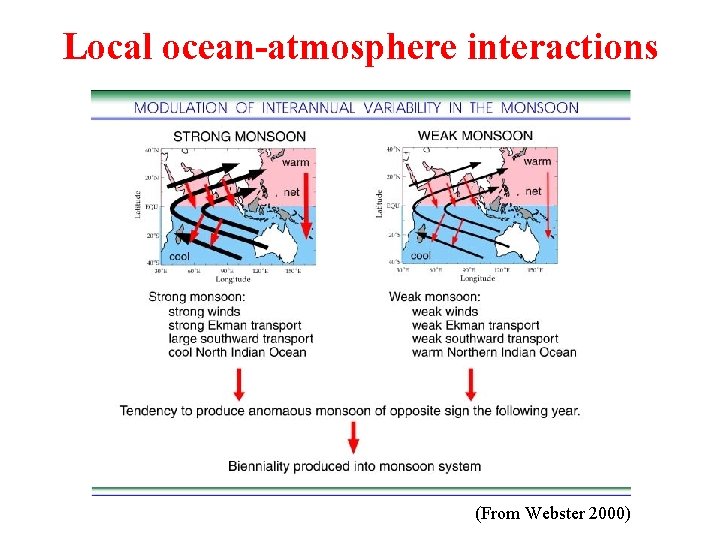
Local ocean-atmosphere interactions (From Webster 2000)
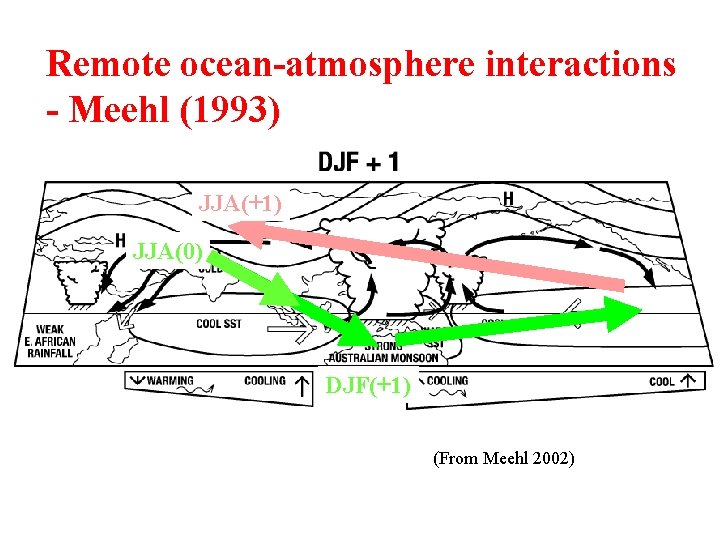
Remote ocean-atmosphere interactions - Meehl (1993) JJA(+1) JJA(0) DJF(+1) (From Meehl 2002)
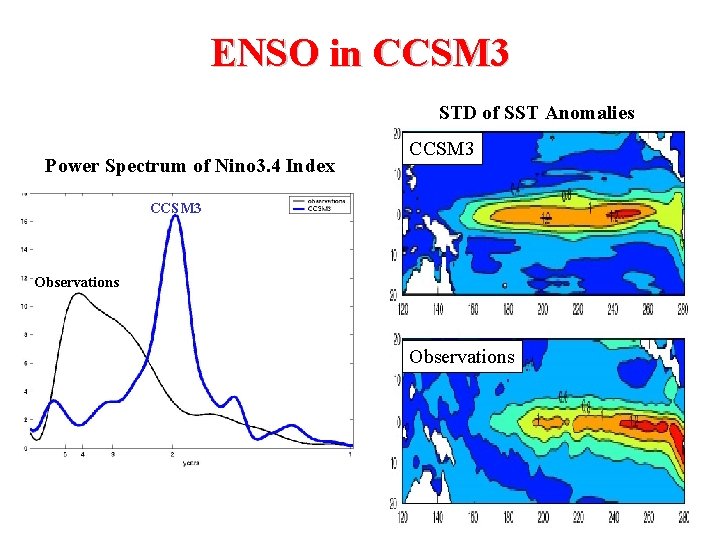
ENSO in CCSM 3 STD of SST Anomalies Power Spectrum of Nino 3. 4 Index CCSM 3 Observations
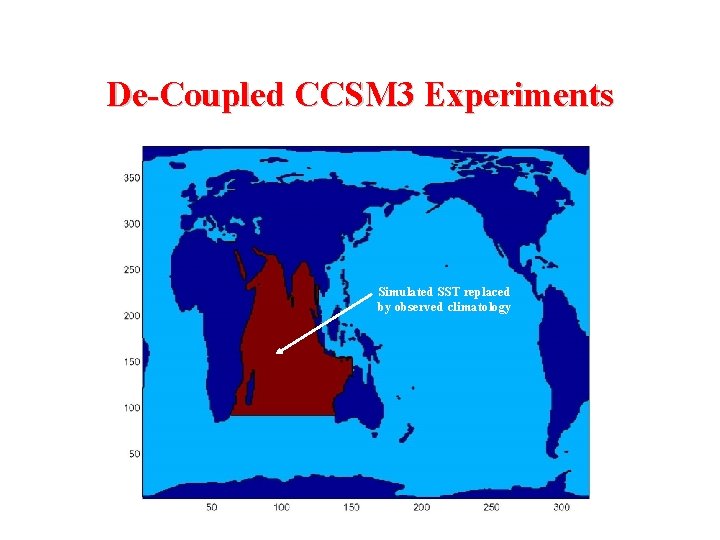
De-Coupled CCSM 3 Experiments Simulated SST replaced by observed climatology
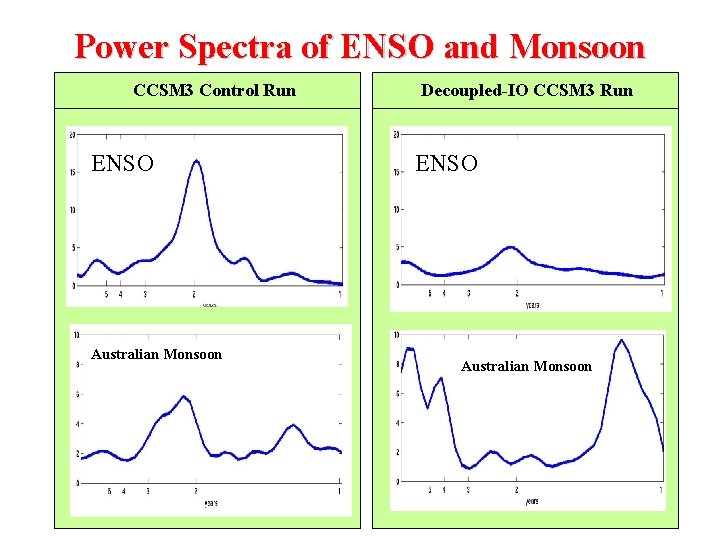
Power Spectra of ENSO and Monsoon CCSM 3 Control Run ENSO Australian Monsoon Decoupled-IO CCSM 3 Run ENSO Australian Monsoon
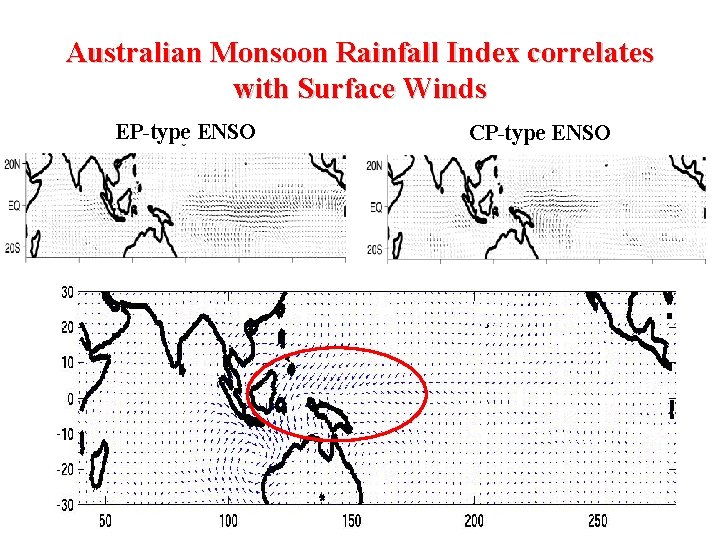
Australian Monsoon Rainfall Index correlates with Surface Winds EP-type ENSO CCSM 3 Control Run
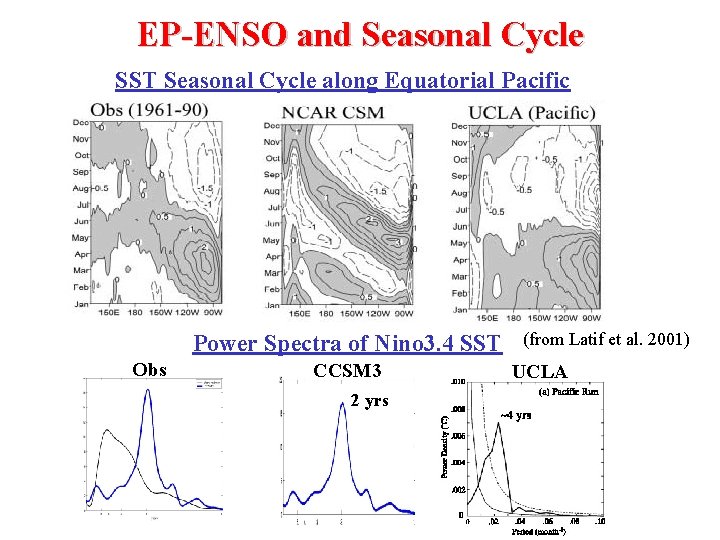
EP-ENSO and Seasonal Cycle SST Seasonal Cycle along Equatorial Pacific Power Spectra of Nino 3. 4 SST Obs CCSM 3 2 yrs (from Latif et al. 2001) UCLA
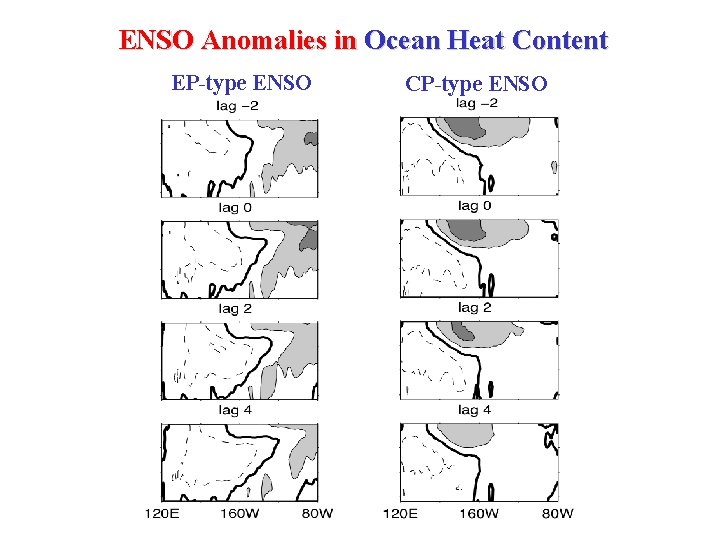
ENSO Anomalies in Ocean Heat Content EP-type ENSO CP-type ENSO
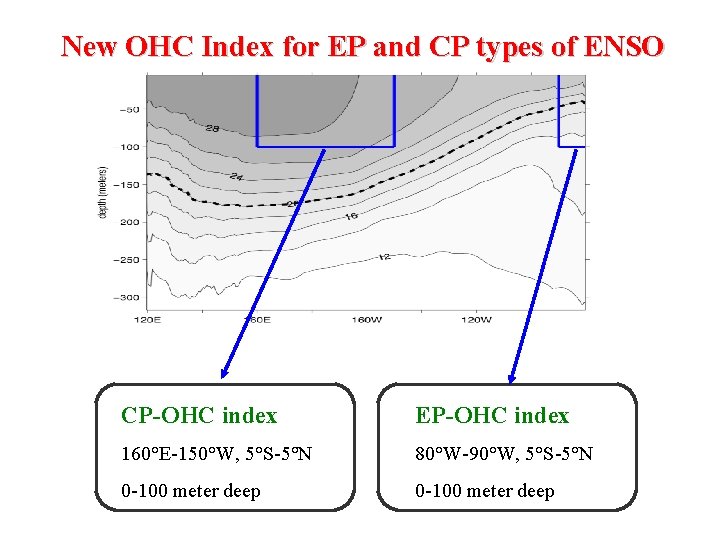
New OHC Index for EP and CP types of ENSO CP-OHC index EP-OHC index 160°E-150°W, 5°S-5°N 80°W-90°W, 5°S-5°N 0 -100 meter deep
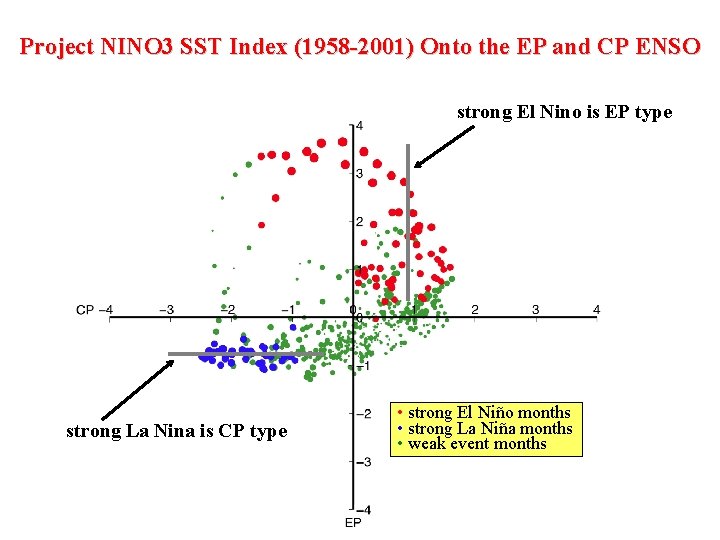
Project NINO 3 SST Index (1958 -2001) Onto the EP and CP ENSO strong El Nino is EP type strong La Nina is CP type • strong El Niño months • strong La Niña months • weak event months
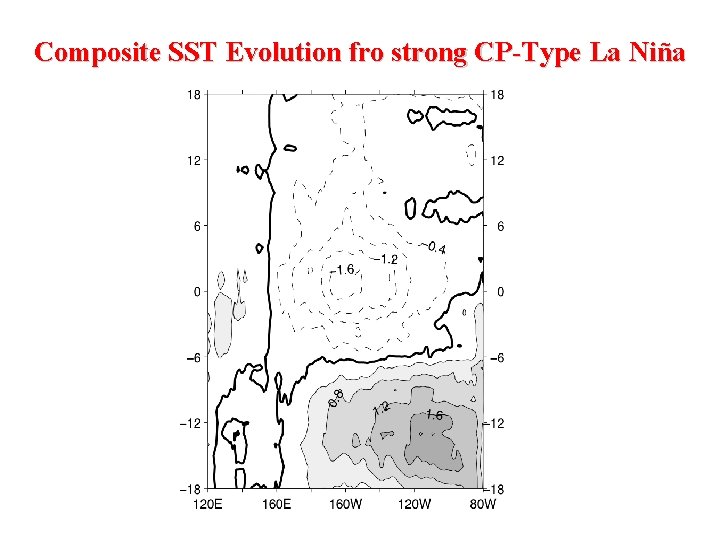
Composite SST Evolution fro strong CP-Type La Niña
Summary • ENSO can be considered as consisting two oscillators: an Eastern Pacific Oscillator that is driven by air-sea coupling and a Central Pacific Oscillator that is driven by A-A monsoon. • The alternations of ENSO between these two oscillators allow the ENSO to interact the Pacific basic state and to give rise to a 10 -15 year modulation cycle. • In CGCMs, the excessive biennial ENSO activity (too strong CPO) and the lack of a 4 -year ENSO (too weak EPO) may be two separate issues.
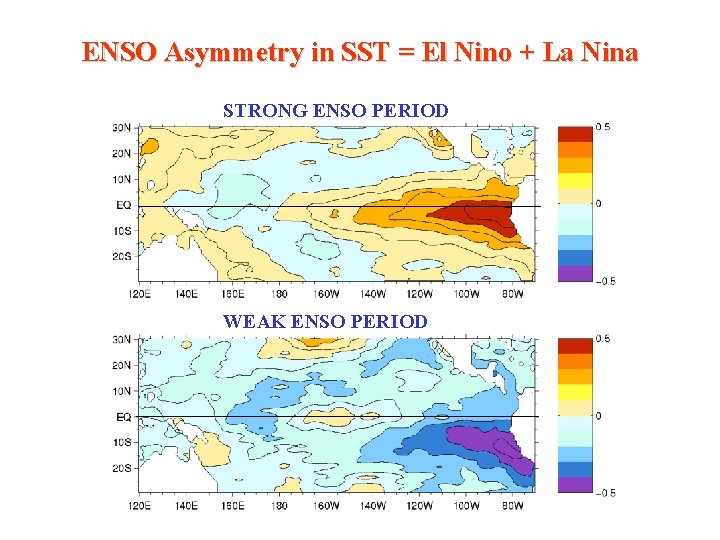
ENSO Asymmetry in SST = El Nino + La Nina STRONG ENSO PERIOD WEAK ENSO PERIOD
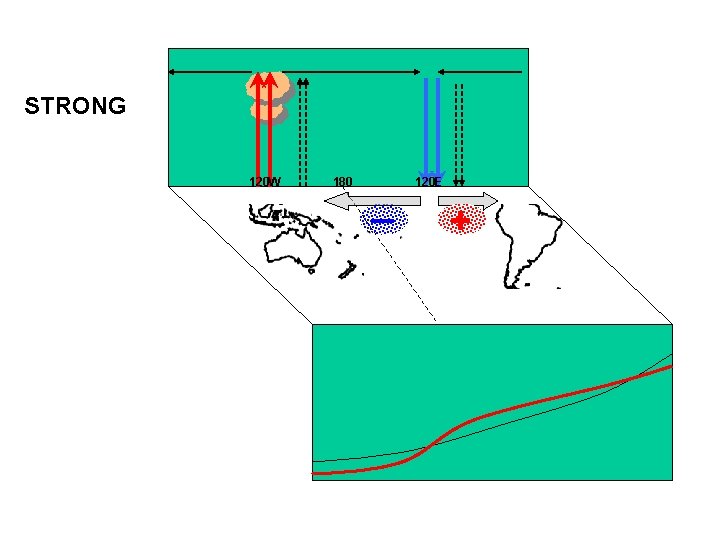
STRONG 120 W 180 _ 120 E +
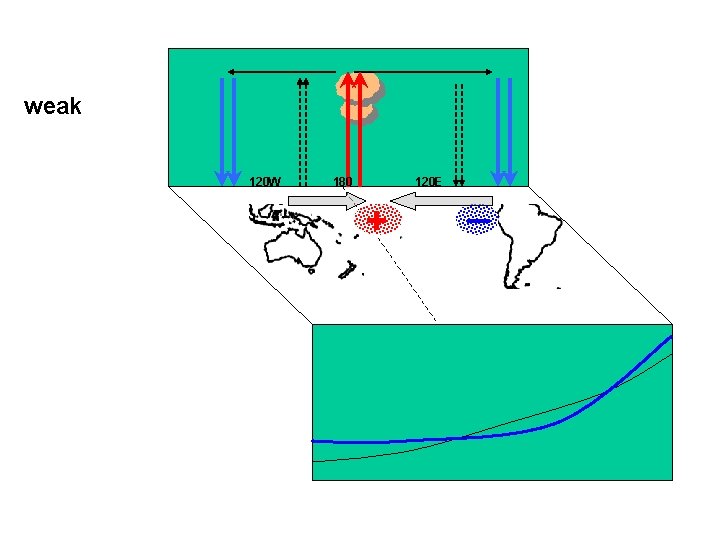
weak 120 W 180 120 E + _
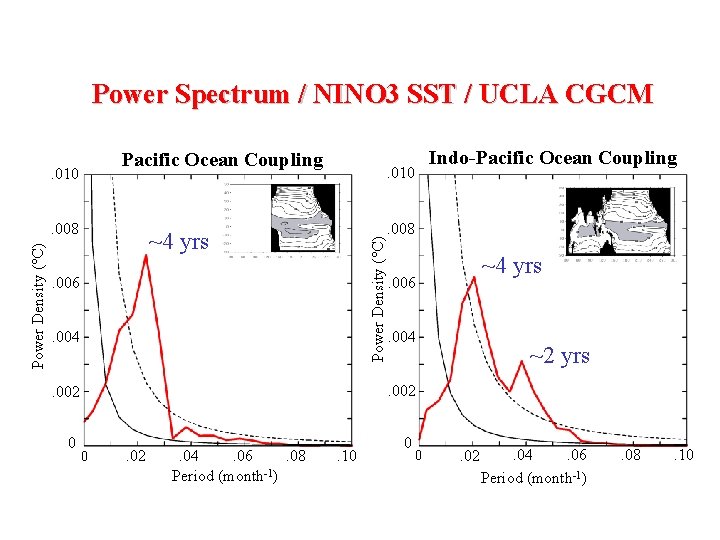
Power Spectrum / NINO 3 SST / UCLA CGCM Pacific Ocean Coupling . 010 ~4 yrs Power Density (°C) . 008 Indo-Pacific Ocean Coupling . 010 . 006. 004 . 008 . 004 . 002 0 0 0 . 02 . 04. 06. 08 Period (month-1) . 10 ~4 yrs . 006 0 ~2 yrs . 02 . 04. 06 Period (month-1) . 08 . 10
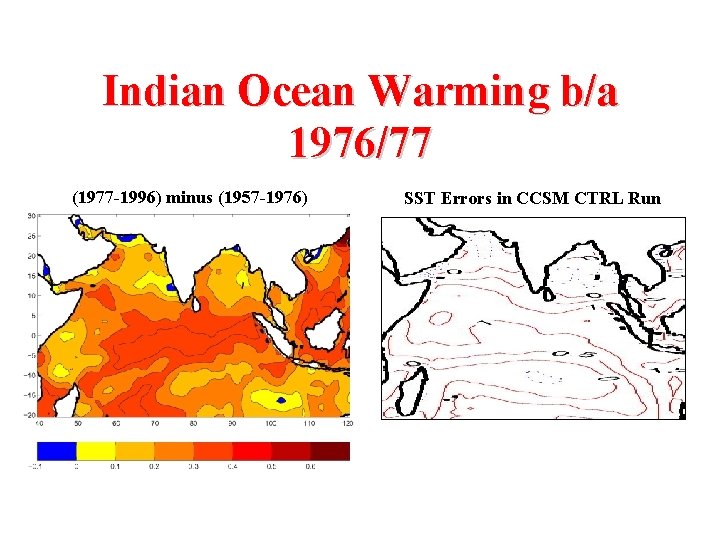
Indian Ocean Warming b/a 1976/77 (1977 -1996) minus (1957 -1976) SST Errors in CCSM CTRL Run
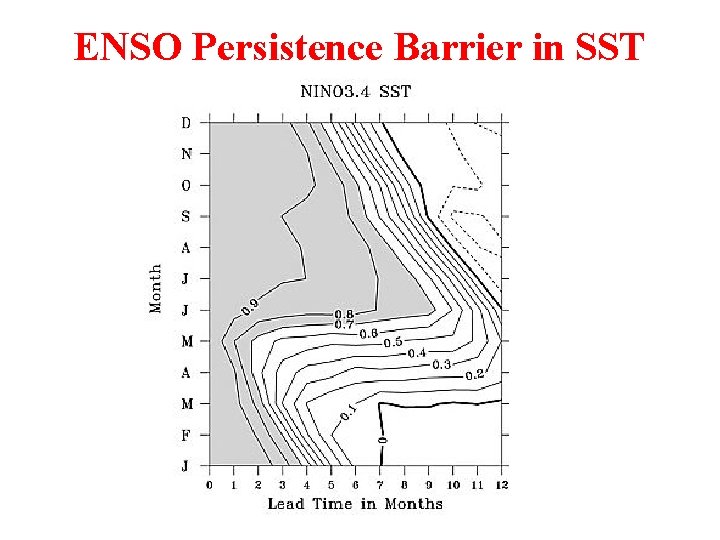
ENSO Persistence Barrier in SST
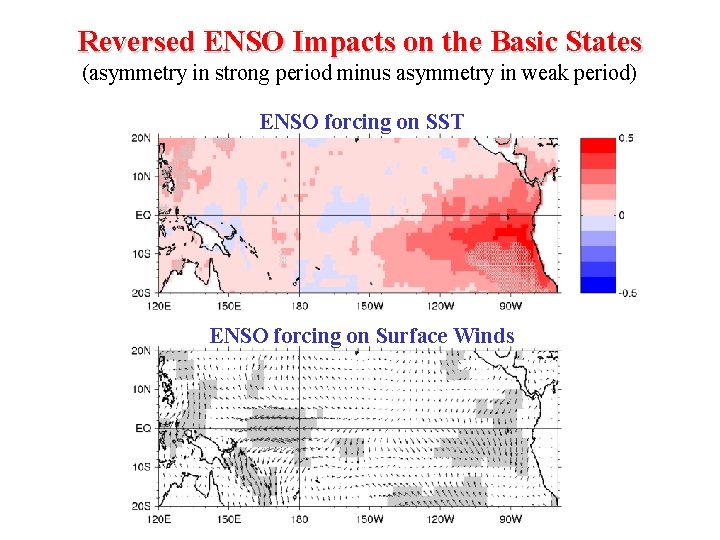
Reversed ENSO Impacts on the Basic States (asymmetry in strong period minus asymmetry in weak period) ENSO forcing on SST ENSO forcing on Surface Winds
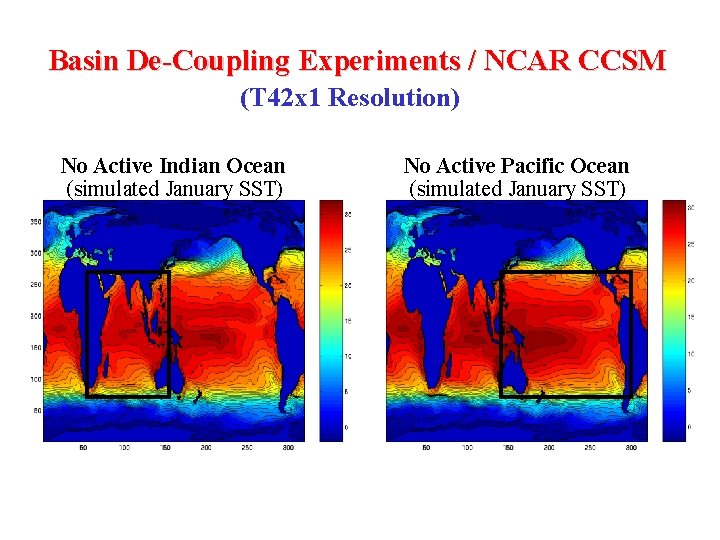
Basin De-Coupling Experiments / NCAR CCSM (T 42 x 1 Resolution) No Active Indian Ocean (simulated January SST) No Active Pacific Ocean (simulated January SST)
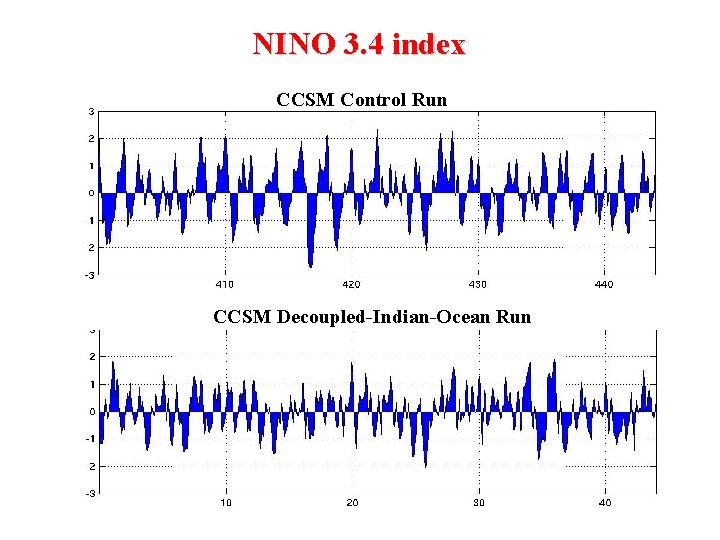
NINO 3. 4 index CCSM Control Run CCSM Decoupled-Indian-Ocean Run
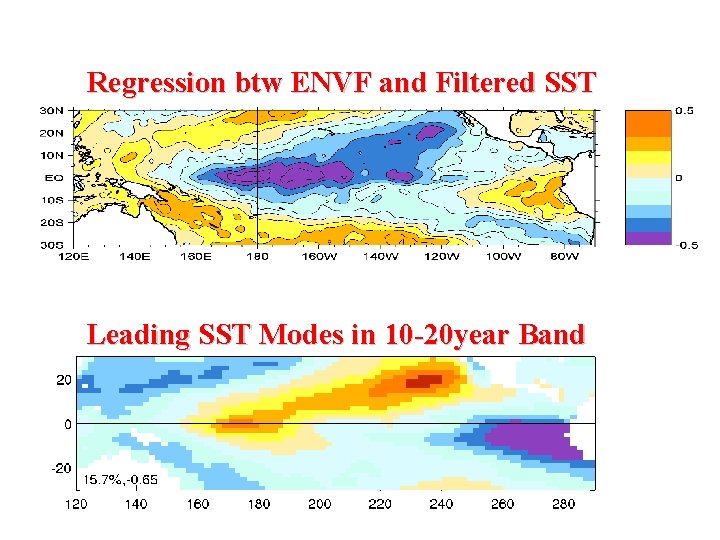
Regression btw ENVF and Filtered SST Leading SST Modes in 10 -20 year Band
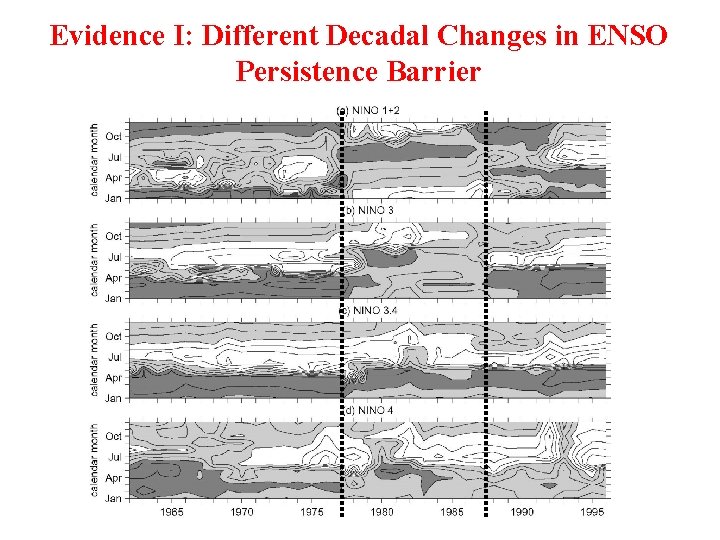
Evidence I: Different Decadal Changes in ENSO Persistence Barrier
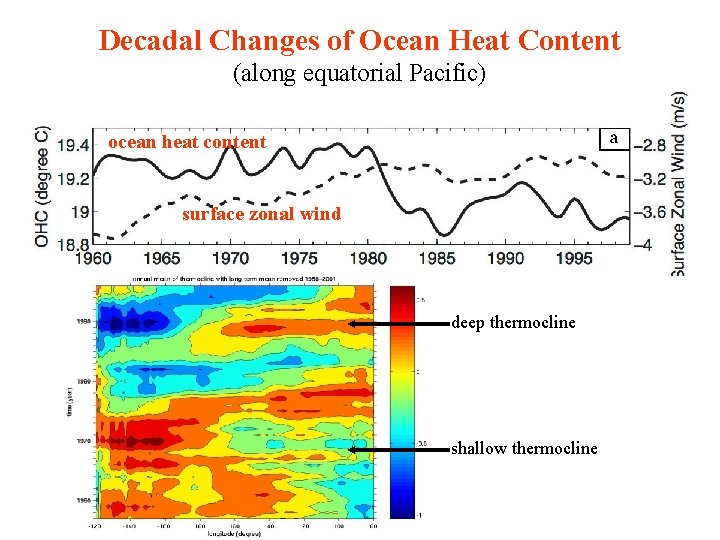
Decadal Changes of Ocean Heat Content (along equatorial Pacific) ocean heat content surface zonal wind deep thermocline shallow thermocline
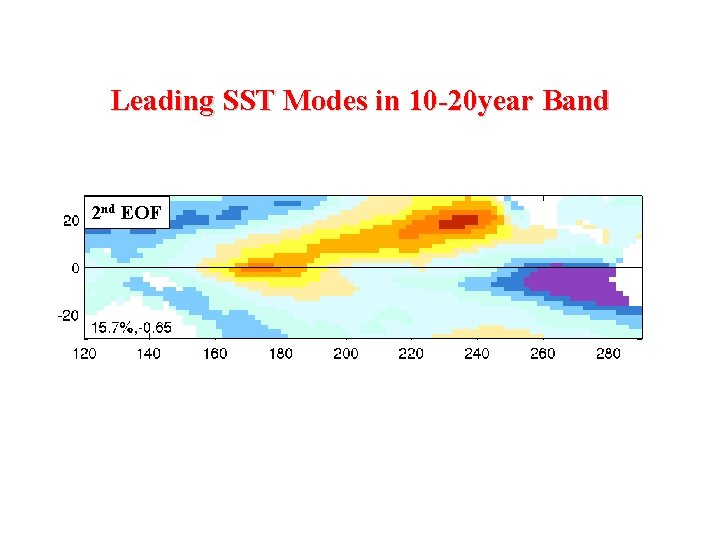
Leading SST Modes in 10 -20 year Band 2 nd EOF
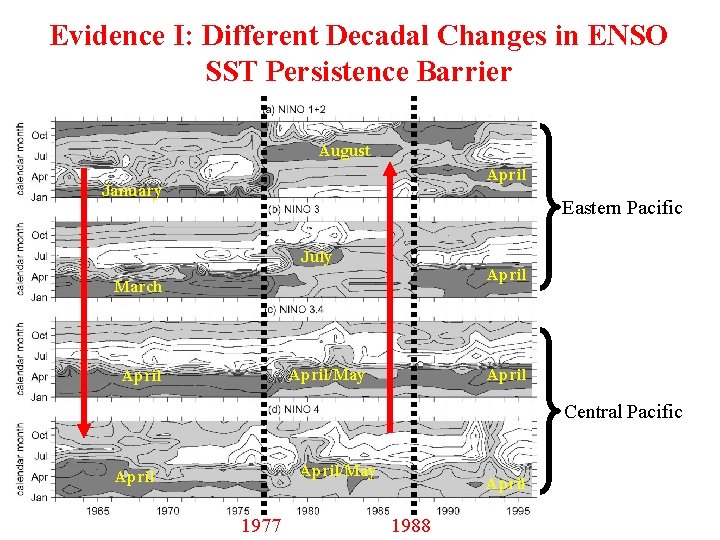
Evidence I: Different Decadal Changes in ENSO SST Persistence Barrier August April January Eastern Pacific July April March April/May April Central Pacific April/May April 1977 April 1988
- Slides: 46