
Enrollment Eligibility From Insurance to Discounted Fee Schedule

Enrollment & Eligibility: From Insurance to Discounted Fee Schedule to Caps on Charges Latasha Jones, MPH & Jana Collins, MS University of Kentucky Bluegrass Care Clinic
Learning Objectives • Identify the steps in client management: enrollment and eligibility, sliding fee scale and discount schedule, and cap on out of pocket charges • Describe the Ryan White HIV/AIDs Program (RWHAP) legislative requirements and program expectations as it relates to enrollment and eligibility, sliding fee scale and discount schedule, and cap on out of pocket charges • Create educational tools that can be provided to patients to assist in managing the sliding fee scale and cap on out of pocket charges
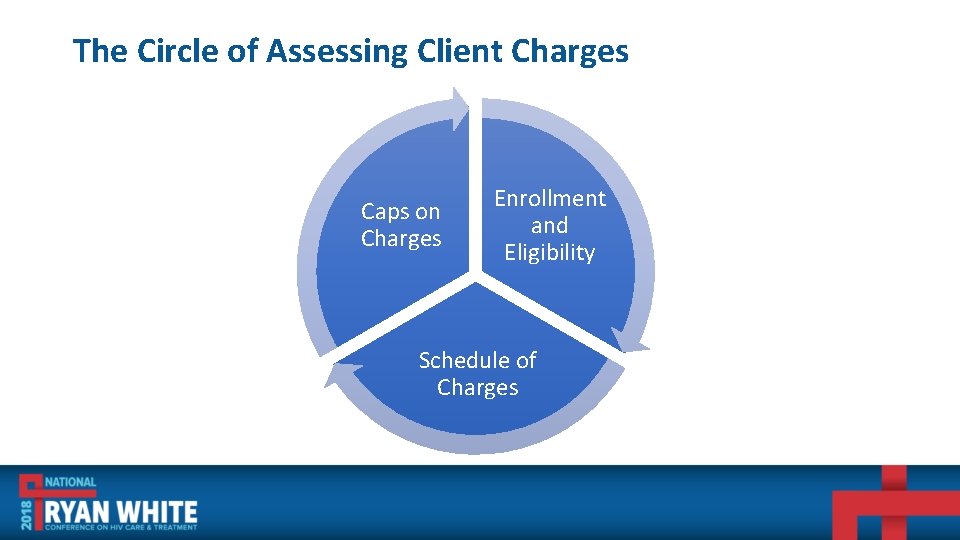
The Circle of Assessing Client Charges Caps on Charges Enrollment and Eligibility Schedule of Charges
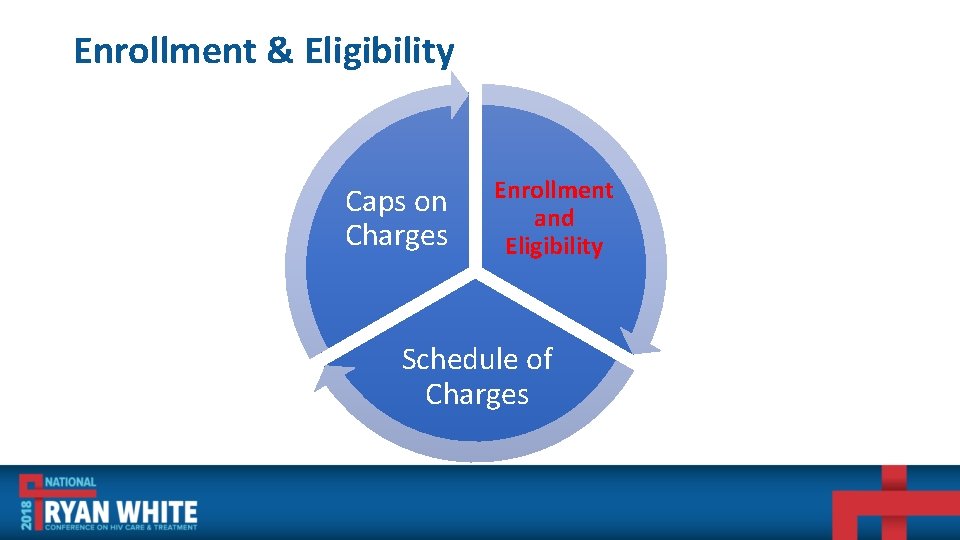
Enrollment & Eligibility Caps on Charges Enrollment and Eligibility Schedule of Charges
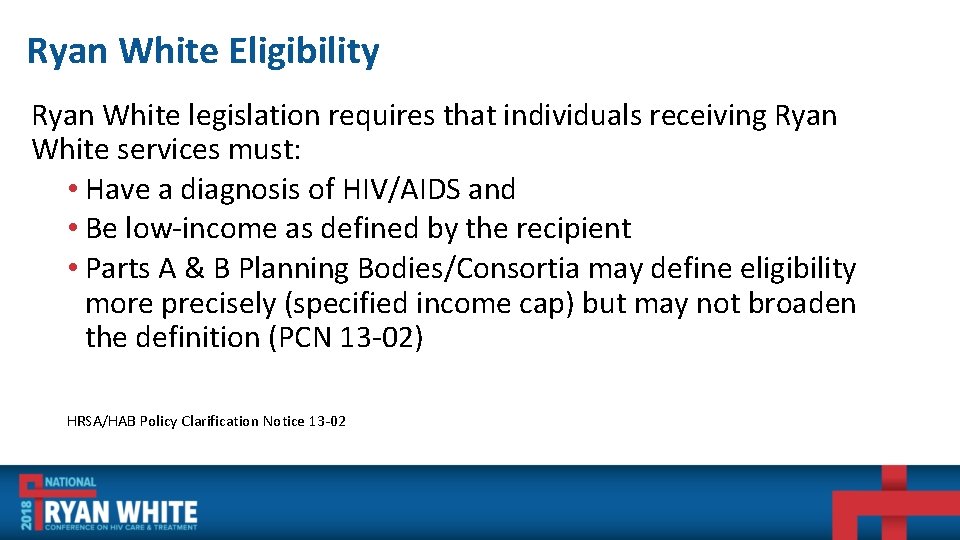
Ryan White Eligibility Ryan White legislation requires that individuals receiving Ryan White services must: • Have a diagnosis of HIV/AIDS and • Be low-income as defined by the recipient • Parts A & B Planning Bodies/Consortia may define eligibility more precisely (specified income cap) but may not broaden the definition (PCN 13 -02) HRSA/HAB Policy Clarification Notice 13 -02
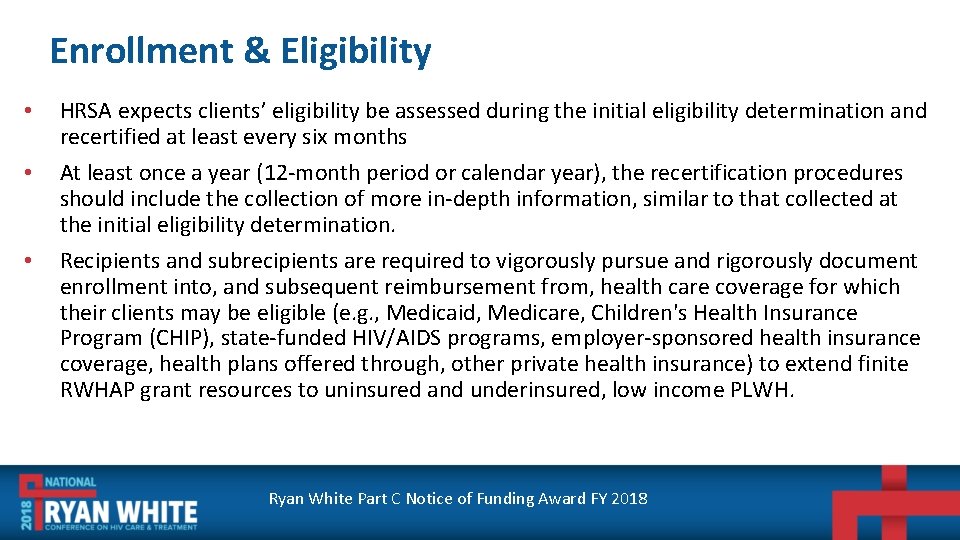
Enrollment & Eligibility • • • HRSA expects clients’ eligibility be assessed during the initial eligibility determination and recertified at least every six months At least once a year (12 -month period or calendar year), the recertification procedures should include the collection of more in-depth information, similar to that collected at the initial eligibility determination. Recipients and subrecipients are required to vigorously pursue and rigorously document enrollment into, and subsequent reimbursement from, health care coverage for which their clients may be eligible (e. g. , Medicaid, Medicare, Children's Health Insurance Program (CHIP), state-funded HIV/AIDS programs, employer-sponsored health insurance coverage, health plans offered through, other private health insurance) to extend finite RWHAP grant resources to uninsured and underinsured, low income PLWH. Ryan White Part C Notice of Funding Award FY 2018
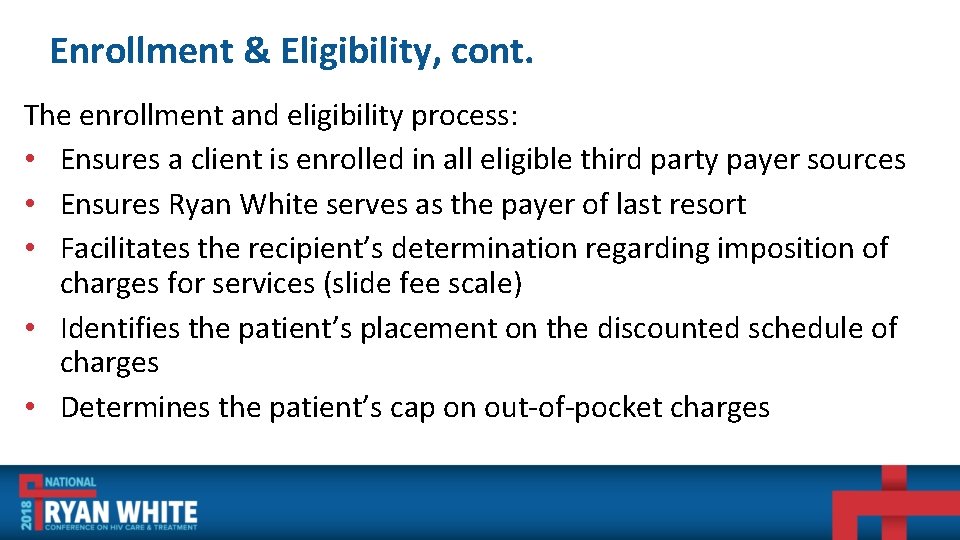
Enrollment & Eligibility, cont. The enrollment and eligibility process: • Ensures a client is enrolled in all eligible third party payer sources • Ensures Ryan White serves as the payer of last resort • Facilitates the recipient’s determination regarding imposition of charges for services (slide fee scale) • Identifies the patient’s placement on the discounted schedule of charges • Determines the patient’s cap on out-of-pocket charges
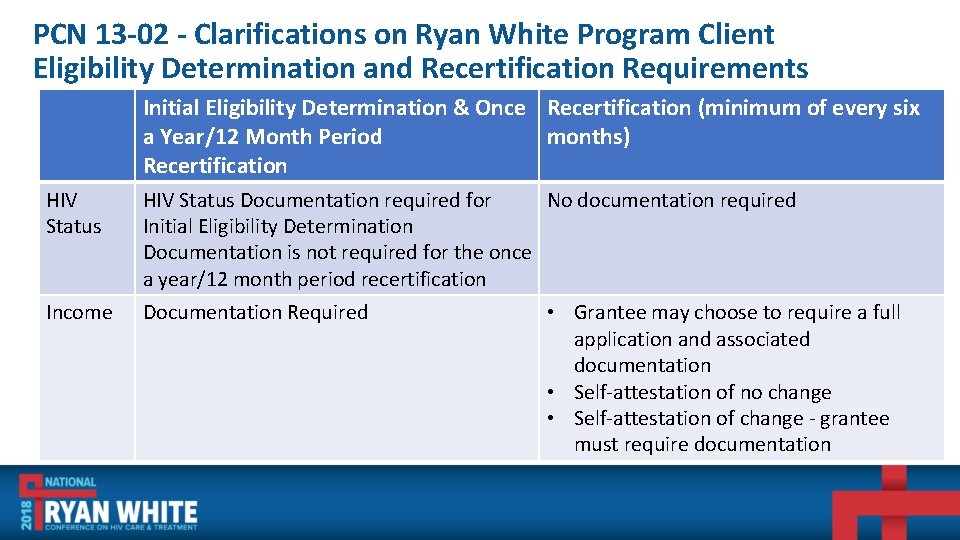
PCN 13 -02 - Clarifications on Ryan White Program Client Eligibility Determination and Recertification Requirements Initial Eligibility Determination & Once Recertification (minimum of every six a Year/12 Month Period months) Recertification HIV Status Documentation required for No documentation required Initial Eligibility Determination Documentation is not required for the once a year/12 month period recertification Income Documentation Required • Grantee may choose to require a full application and associated documentation • Self-attestation of no change • Self-attestation of change - grantee must require documentation
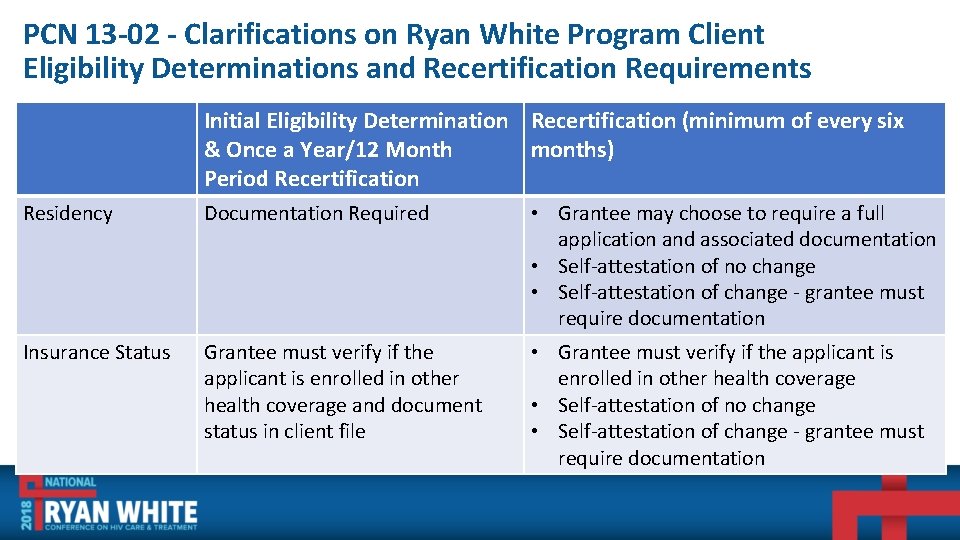
PCN 13 -02 - Clarifications on Ryan White Program Client Eligibility Determinations and Recertification Requirements Initial Eligibility Determination Recertification (minimum of every six & Once a Year/12 Month months) Period Recertification Residency Documentation Required Insurance Status Grantee must verify if the applicant is enrolled in other health coverage and document status in client file • Grantee may choose to require a full application and associated documentation • Self-attestation of no change • Self-attestation of change - grantee must require documentation • Grantee must verify if the applicant is enrolled in other health coverage • Self-attestation of no change • Self-attestation of change - grantee must require documentation
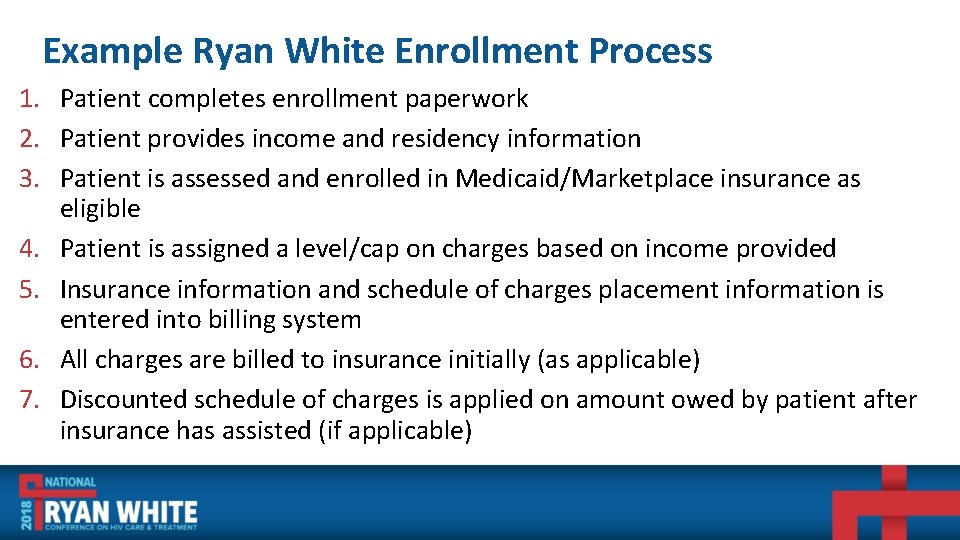
Example Ryan White Enrollment Process 1. Patient completes enrollment paperwork 2. Patient provides income and residency information 3. Patient is assessed and enrolled in Medicaid/Marketplace insurance as eligible 4. Patient is assigned a level/cap on charges based on income provided 5. Insurance information and schedule of charges placement information is entered into billing system 6. All charges are billed to insurance initially (as applicable) 7. Discounted schedule of charges is applied on amount owed by patient after insurance has assisted (if applicable)
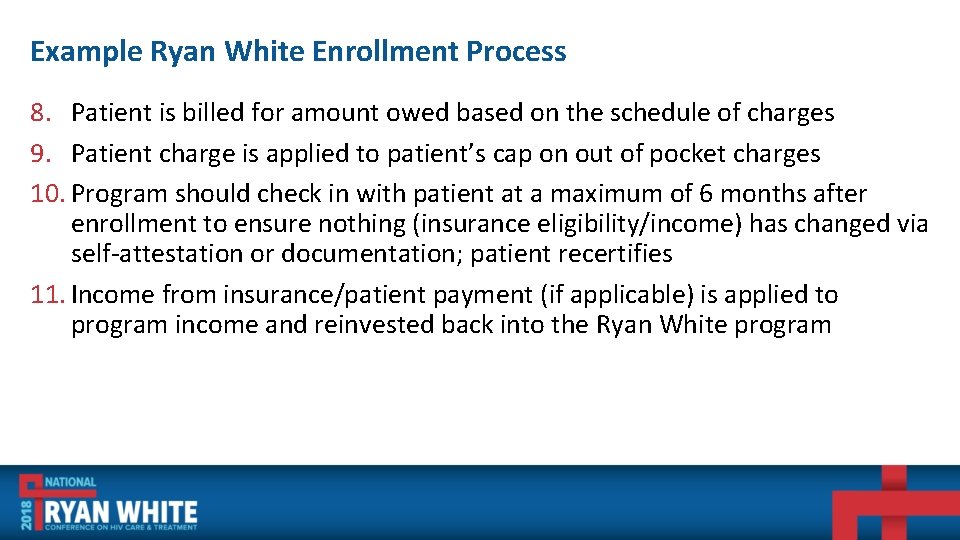
Example Ryan White Enrollment Process 8. Patient is billed for amount owed based on the schedule of charges 9. Patient charge is applied to patient’s cap on out of pocket charges 10. Program should check in with patient at a maximum of 6 months after enrollment to ensure nothing (insurance eligibility/income) has changed via self-attestation or documentation; patient recertifies 11. Income from insurance/patient payment (if applicable) is applied to program income and reinvested back into the Ryan White program
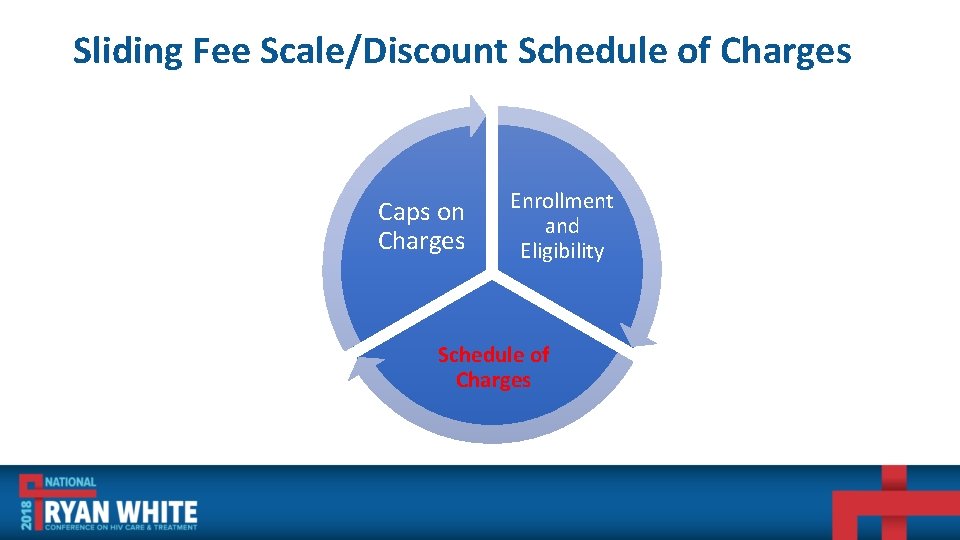
Sliding Fee Scale/Discount Schedule of Charges Caps on Charges Enrollment and Eligibility Schedule of Charges
Important Definitions Schedule of fees: complete listing of Ryan White billable services and their associated fees Schedule of charges: a listing of reduced fees for services based on ability to pay. A schedule of charges may take the form of a sliding fee scale, discount on charges or a nominal fee Nominal fee: a type of charge that is a fixed/flat fee greater than zero for the provision of a Ryan White service Discount on charges: a type of charge that is a percentage of the full fee per the schedule
RWHAP Expectations: Schedule of Charges • Each program is responsible for creating its own schedule of charges in accordance with Ryan White statutory requirements • Federal Poverty Guidelines are updated each year in late winter and are available on the HHS website https: //aspe. hhs. gov/poverty-guidelines
Income Calculations Ryan White eligibility and schedule of charges both require proof of income; however • Ryan White program eligibility can be based on household income • Schedule of charges and cap on charges is based in individual income
Ryan White Legislation: Patient Charges for Services Ryan White legislation mandates that the provider: • Will not impose a charge on individuals with incomes at or below 100% of the federal poverty level (FPL) for the provision of Ryan White services • Will impose a charge on individuals with incomes above 100% FPL for the provision of Ryan White services according to a schedule of charges that is made available to the public Public Health Service Act Sec. 2605(e)
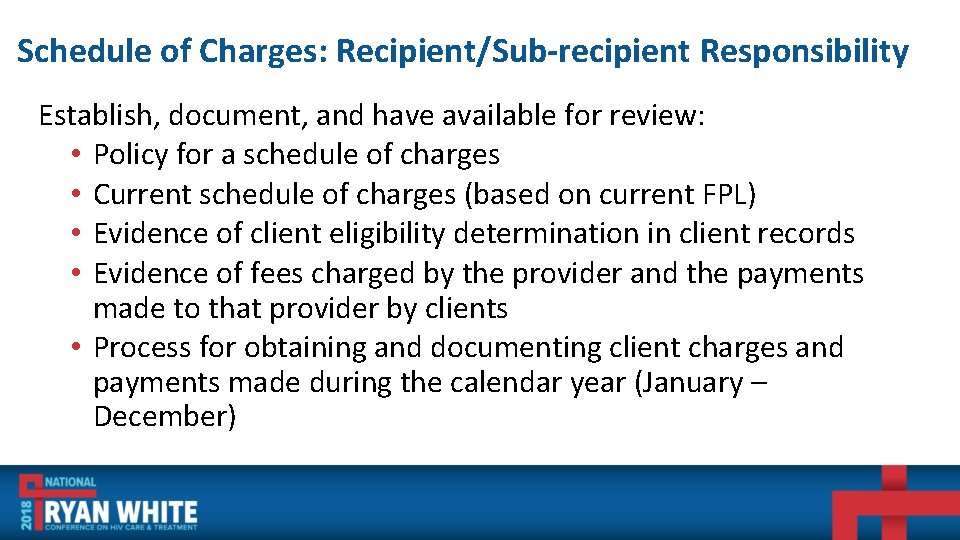
Schedule of Charges: Recipient/Sub-recipient Responsibility Establish, document, and have available for review: • Policy for a schedule of charges • Current schedule of charges (based on current FPL) • Evidence of client eligibility determination in client records • Evidence of fees charged by the provider and the payments made to that provider by clients • Process for obtaining and documenting client charges and payments made during the calendar year (January – December)
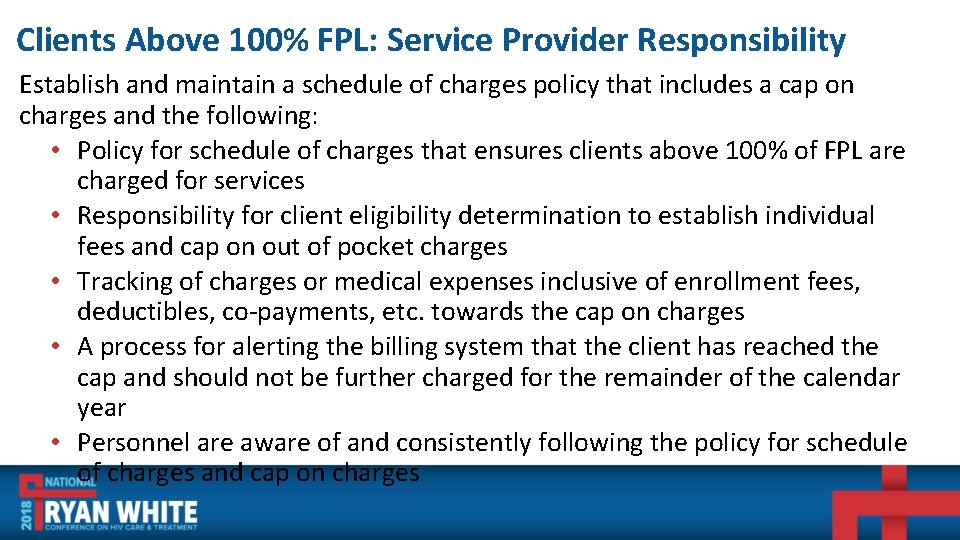
Clients Above 100% FPL: Service Provider Responsibility Establish and maintain a schedule of charges policy that includes a cap on charges and the following: • Policy for schedule of charges that ensures clients above 100% of FPL are charged for services • Responsibility for client eligibility determination to establish individual fees and cap on out of pocket charges • Tracking of charges or medical expenses inclusive of enrollment fees, deductibles, co-payments, etc. towards the cap on charges • A process for alerting the billing system that the client has reached the cap and should not be further charged for the remainder of the calendar year • Personnel are aware of and consistently following the policy for schedule of charges and cap on charges
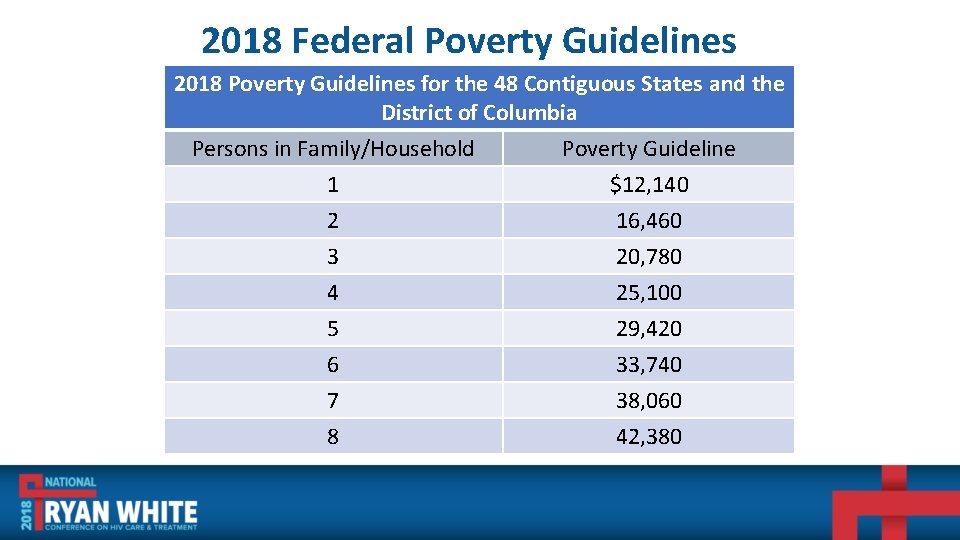
2018 Federal Poverty Guidelines 2018 Poverty Guidelines for the 48 Contiguous States and the District of Columbia Persons in Family/Household Poverty Guideline 1 $12, 140 2 3 4 5 6 7 8 16, 460 20, 780 25, 100 29, 420 33, 740 38, 060 42, 380
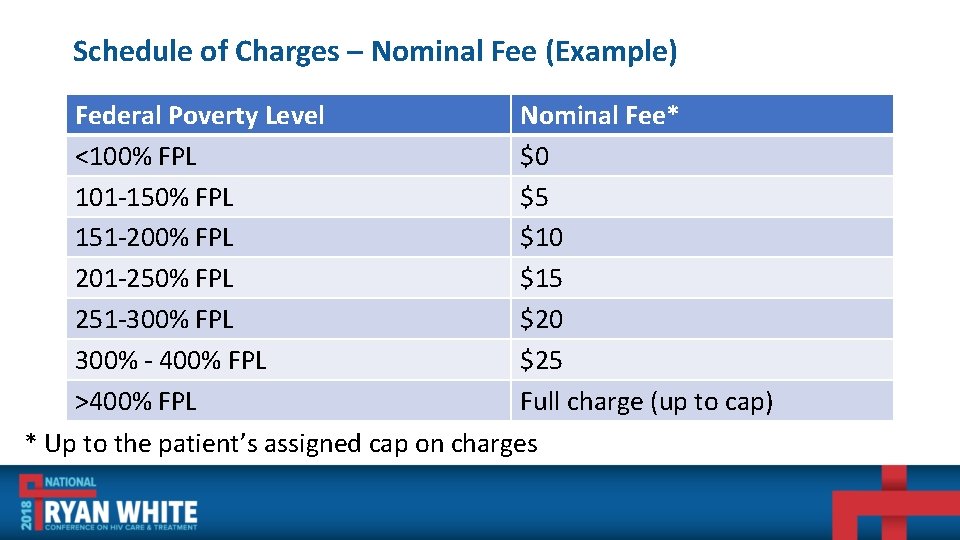
Schedule of Charges – Nominal Fee (Example) Federal Poverty Level <100% FPL 101 -150% FPL 151 -200% FPL 201 -250% FPL 251 -300% FPL 300% - 400% FPL >400% FPL Nominal Fee* $0 $5 $10 $15 $20 $25 Full charge (up to cap) * Up to the patient’s assigned cap on charges
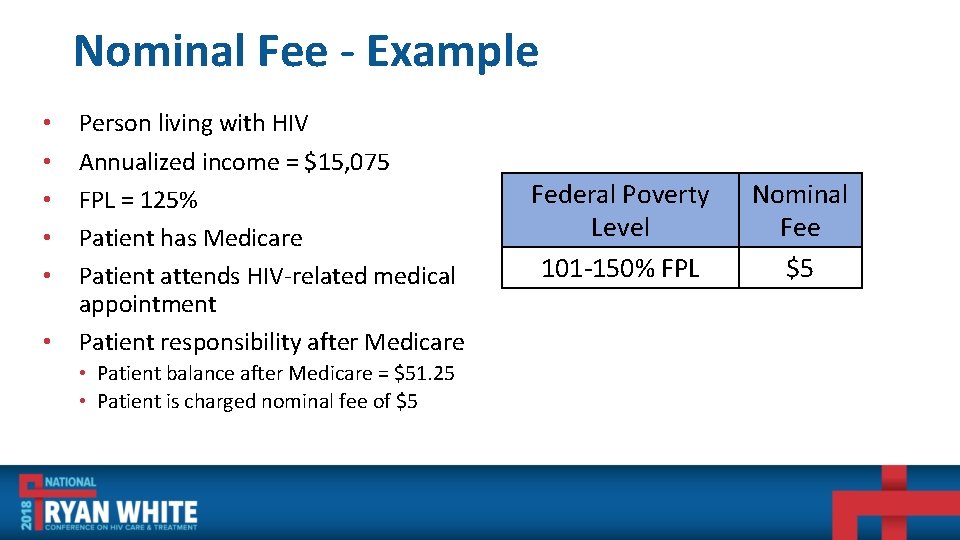
Nominal Fee - Example • • • Person living with HIV Annualized income = $15, 075 FPL = 125% Patient has Medicare Patient attends HIV-related medical appointment Patient responsibility after Medicare • Patient balance after Medicare = $51. 25 • Patient is charged nominal fee of $5 Federal Poverty Level 101 -150% FPL Nominal Fee $5
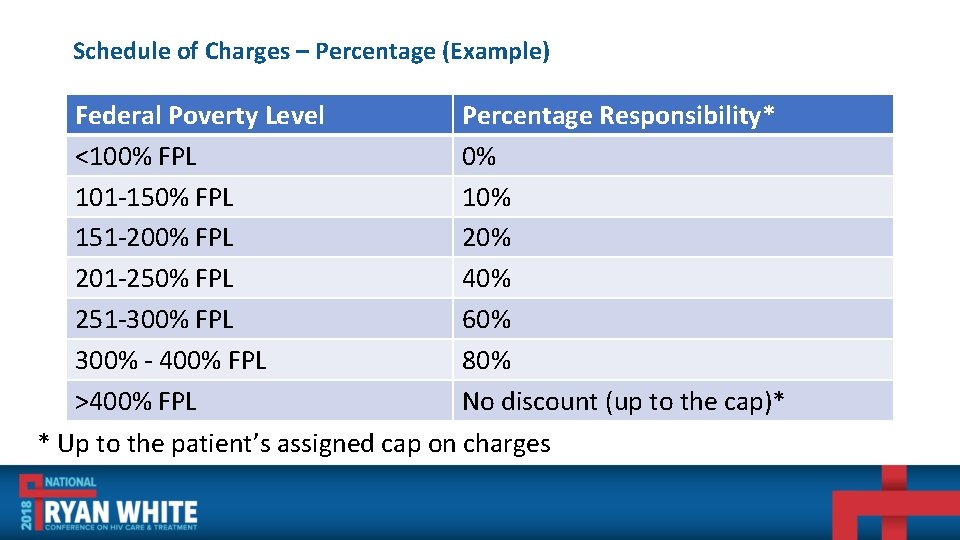
Schedule of Charges – Percentage (Example) Federal Poverty Level <100% FPL 101 -150% FPL 151 -200% FPL 201 -250% FPL 251 -300% FPL 300% - 400% FPL >400% FPL Percentage Responsibility* 0% 10% 20% 40% 60% 80% No discount (up to the cap)* * Up to the patient’s assigned cap on charges
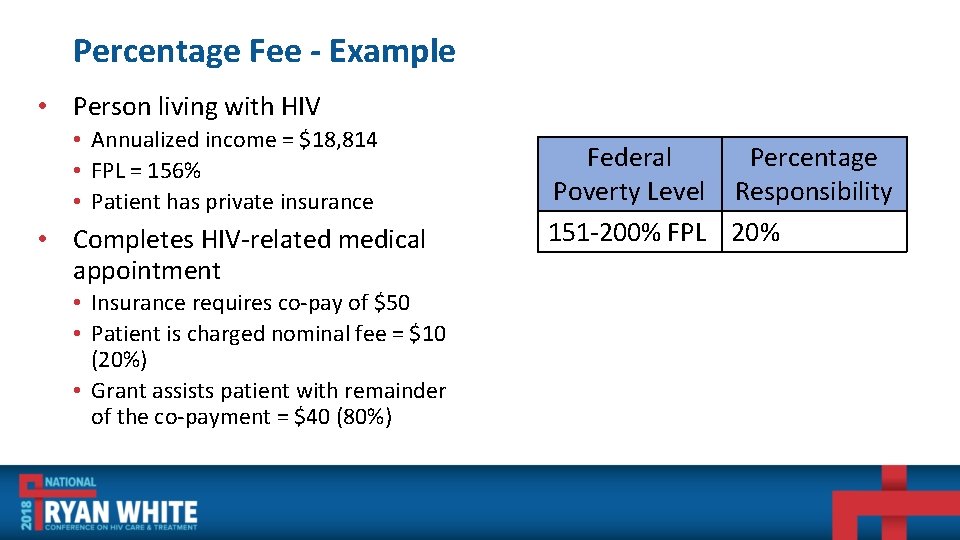
Percentage Fee - Example • Person living with HIV • Annualized income = $18, 814 • FPL = 156% • Patient has private insurance • Completes HIV-related medical appointment • Insurance requires co-pay of $50 • Patient is charged nominal fee = $10 (20%) • Grant assists patient with remainder of the co-payment = $40 (80%) Federal Percentage Poverty Level Responsibility 151 -200% FPL 20%
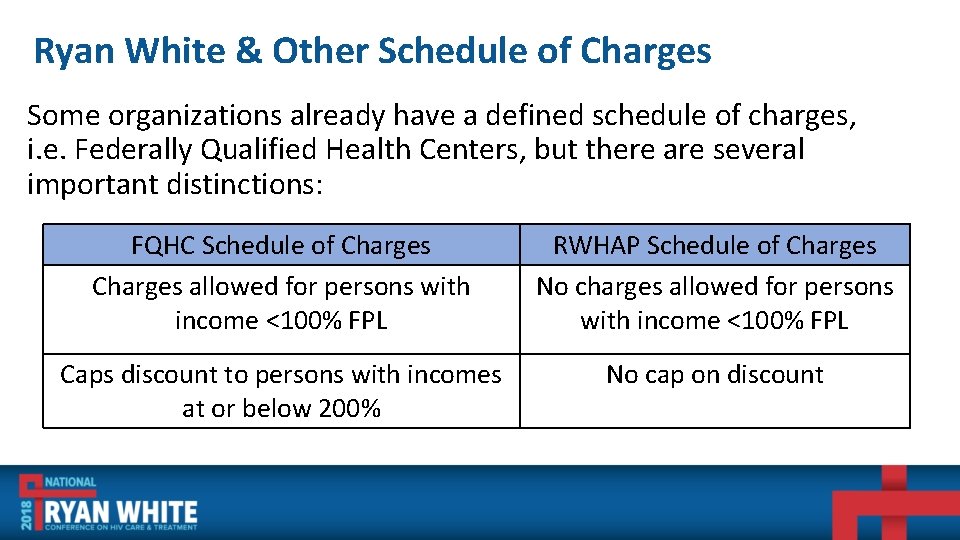
Ryan White & Other Schedule of Charges Some organizations already have a defined schedule of charges, i. e. Federally Qualified Health Centers, but there are several important distinctions: FQHC Schedule of Charges allowed for persons with income <100% FPL RWHAP Schedule of Charges No charges allowed for persons with income <100% FPL Caps discount to persons with incomes at or below 200% No cap on discount
Ryan White & Other Schedule of Charges • If the organization’s existing schedule of charges is in line with Ryan White legislation and program requirements then recipients can utilize the existing schedule of charges • However, if the schedule of charges is not in compliance then the recipient will need to adopt a schedule of charges specific to the Ryan White program • E. g. persons with incomes <100% of FPL cannot be charged for services
Caps on Charges Enrollment and Eligibility Schedule of Charges
Ryan White Legislation: Patient Cap on Charges • Each Ryan White program must have a system in place to ensure that defined annual (calendar year) caps on charges to patients are not exceeded • Organization must track the patient’s annual gross income and charges imposed (cap on charges) • The patient tracks charges imposed across programs Public Health Service Act Section 2605 e
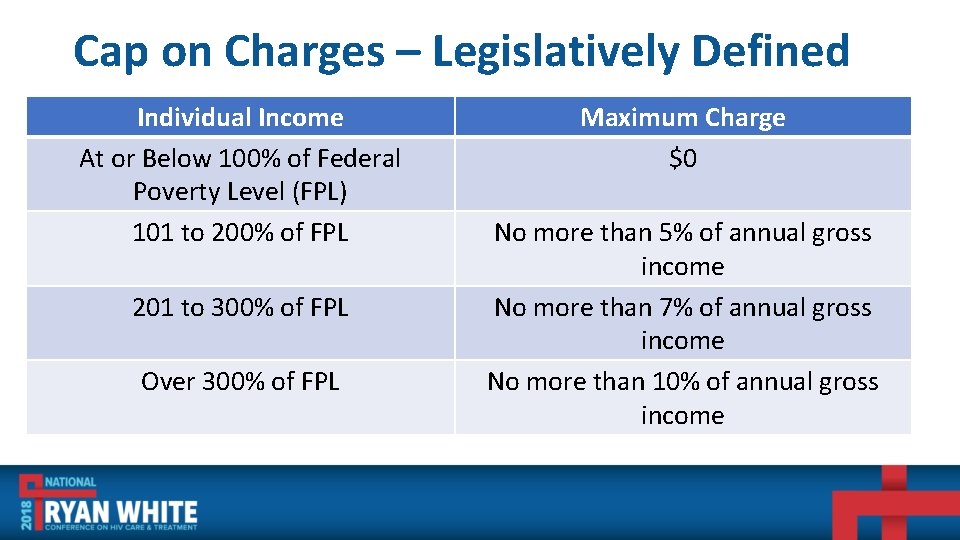
Cap on Charges – Legislatively Defined Individual Income At or Below 100% of Federal Poverty Level (FPL) 101 to 200% of FPL 201 to 300% of FPL Over 300% of FPL Maximum Charge $0 No more than 5% of annual gross income No more than 7% of annual gross income No more than 10% of annual gross income
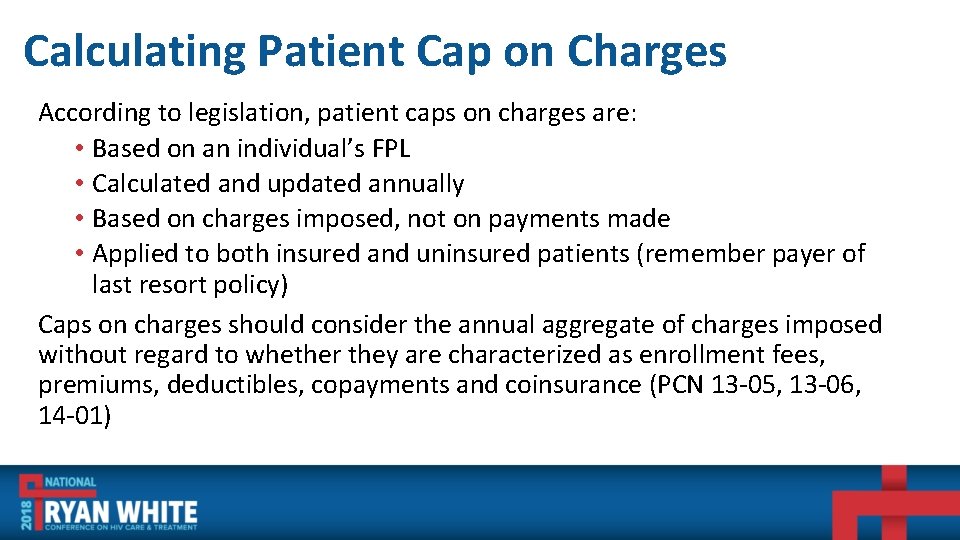
Calculating Patient Cap on Charges According to legislation, patient caps on charges are: • Based on an individual’s FPL • Calculated and updated annually • Based on charges imposed, not on payments made • Applied to both insured and uninsured patients (remember payer of last resort policy) Caps on charges should consider the annual aggregate of charges imposed without regard to whether they are characterized as enrollment fees, premiums, deductibles, copayments and coinsurance (PCN 13 -05, 13 -06, 14 -01)
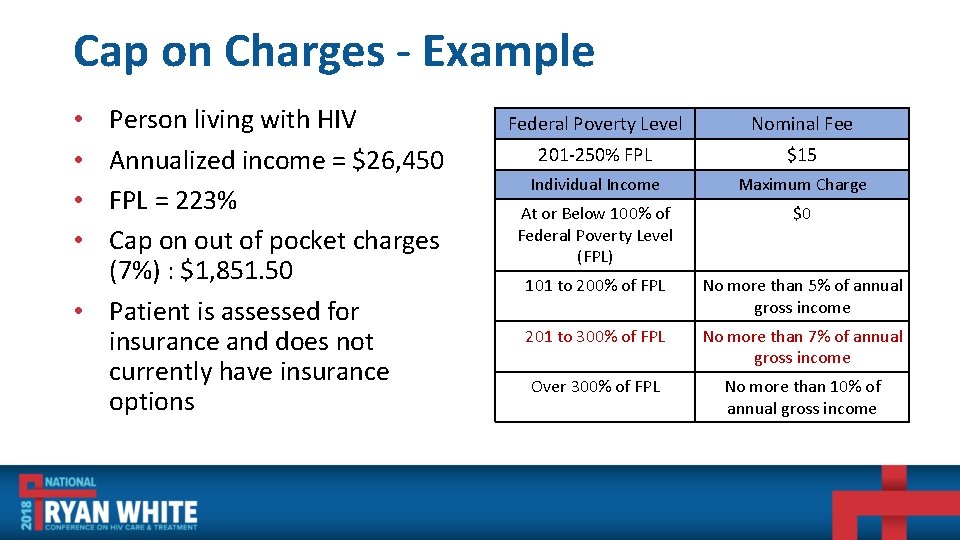
Cap on Charges - Example Person living with HIV Annualized income = $26, 450 FPL = 223% Cap on out of pocket charges (7%) : $1, 851. 50 • Patient is assessed for insurance and does not currently have insurance options • • Federal Poverty Level Nominal Fee 201 -250% FPL $15 Individual Income Maximum Charge At or Below 100% of Federal Poverty Level (FPL) $0 101 to 200% of FPL No more than 5% of annual gross income 201 to 300% of FPL No more than 7% of annual gross income Over 300% of FPL No more than 10% of annual gross income
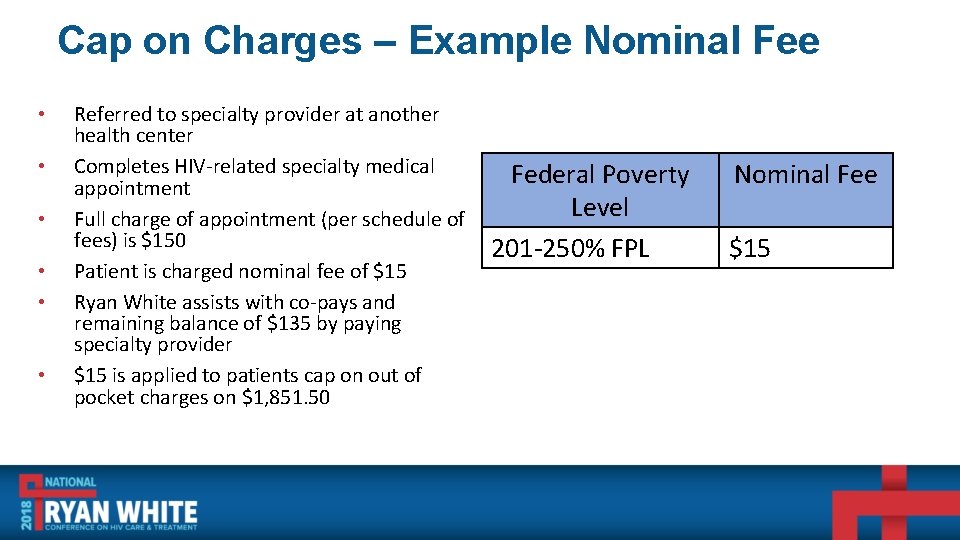
Cap on Charges – Example Nominal Fee • • • Referred to specialty provider at another health center Completes HIV-related specialty medical appointment Full charge of appointment (per schedule of fees) is $150 Patient is charged nominal fee of $15 Ryan White assists with co-pays and remaining balance of $135 by paying specialty provider $15 is applied to patients cap on out of pocket charges on $1, 851. 50 Federal Poverty Level 201 -250% FPL Nominal Fee $15
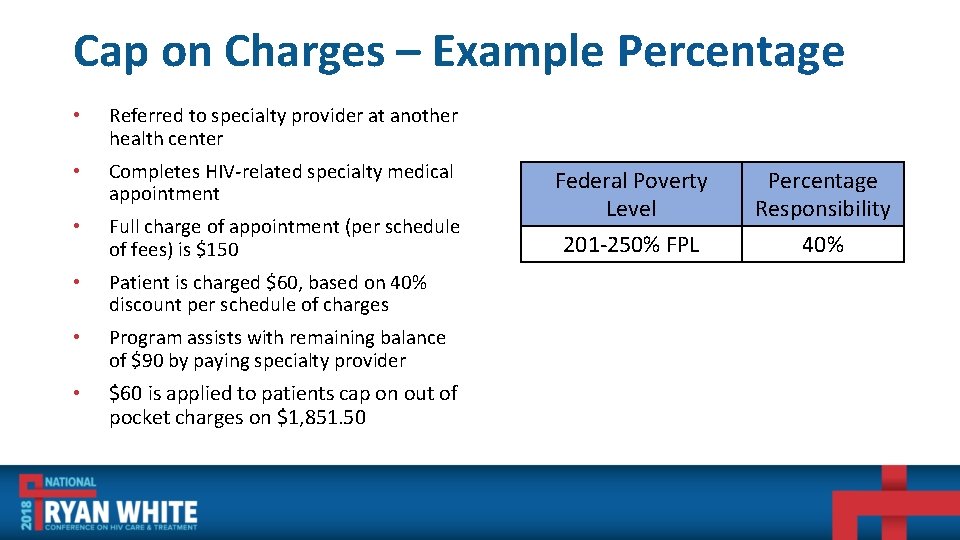
Cap on Charges – Example Percentage • Referred to specialty provider at another health center • Completes HIV-related specialty medical appointment • Full charge of appointment (per schedule of fees) is $150 • Patient is charged $60, based on 40% discount per schedule of charges • Program assists with remaining balance of $90 by paying specialty provider • $60 is applied to patients cap on out of pocket charges on $1, 851. 50 Federal Poverty Level Percentage Responsibility 201 -250% FPL 40%
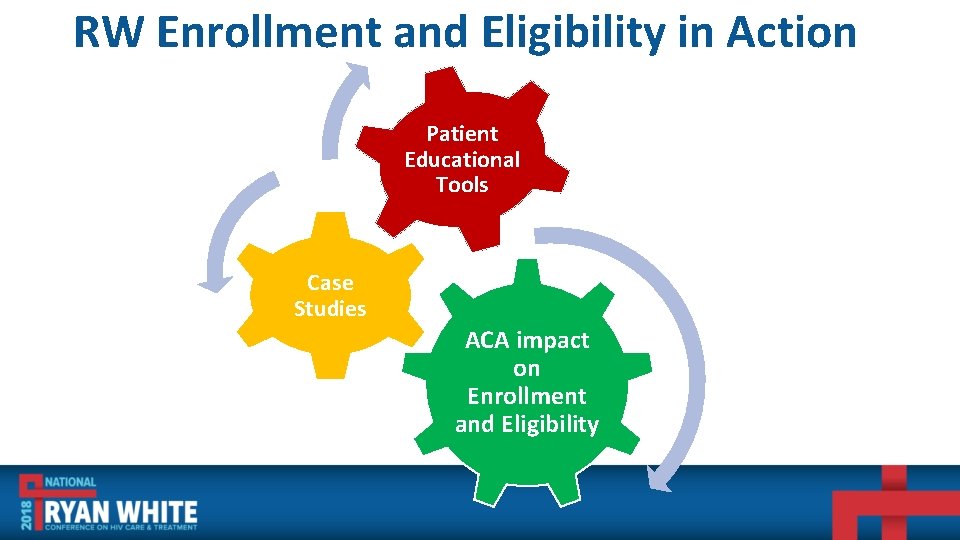
RW Enrollment and Eligibility in Action Patient Educational Tools Case Studies ACA impact on Enrollment and Eligibility
Background Info for Case Studies
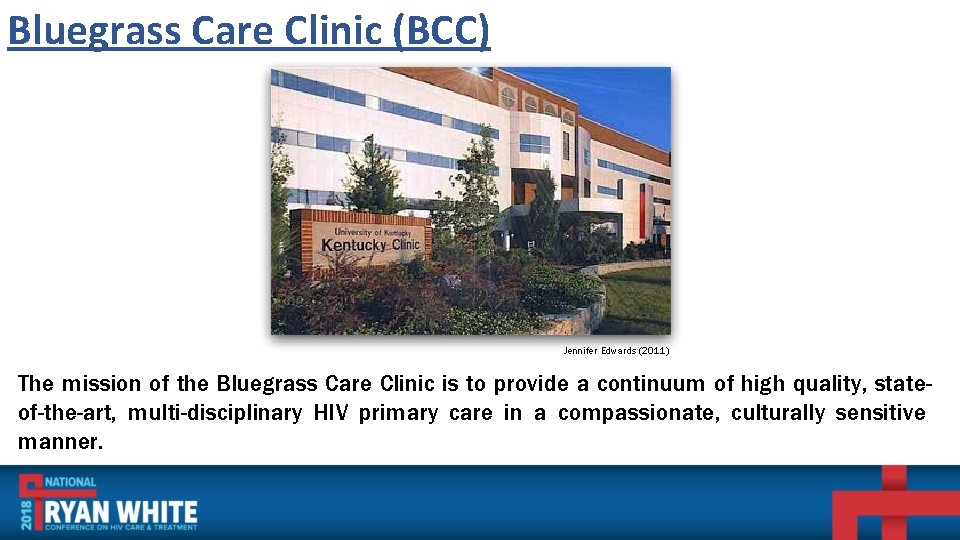
Bluegrass Care Clinic (BCC) Jennifer Edwards (2011) The mission of the Bluegrass Care Clinic is to provide a continuum of high quality, stateof-the-art, multi-disciplinary HIV primary care in a compassionate, culturally sensitive manner.
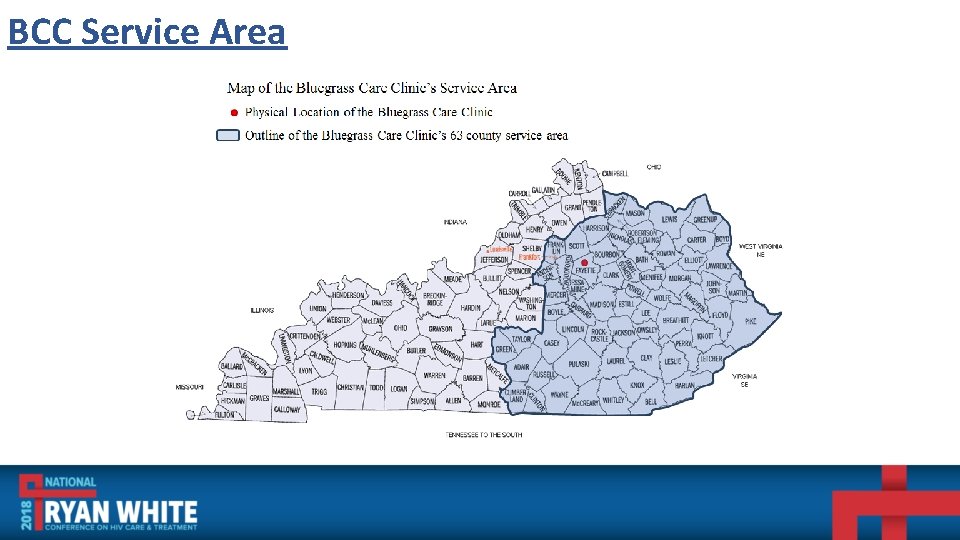
BCC Service Area
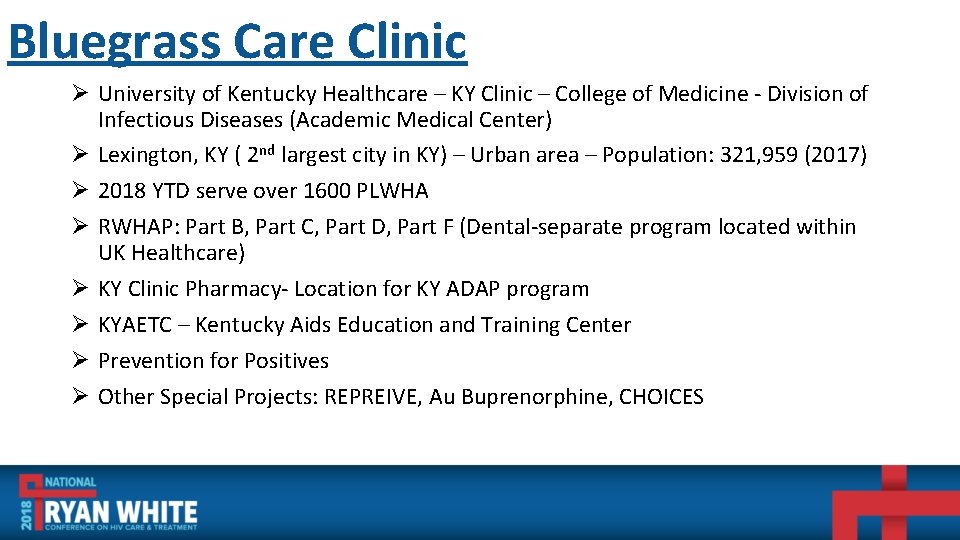
Bluegrass Care Clinic Ø University of Kentucky Healthcare – KY Clinic – College of Medicine - Division of Infectious Diseases (Academic Medical Center) Ø Lexington, KY ( 2 nd largest city in KY) – Urban area – Population: 321, 959 (2017) Ø 2018 YTD serve over 1600 PLWHA Ø RWHAP: Part B, Part C, Part D, Part F (Dental-separate program located within UK Healthcare) Ø KY Clinic Pharmacy- Location for KY ADAP program Ø KYAETC – Kentucky Aids Education and Training Center Ø Prevention for Positives Ø Other Special Projects: REPREIVE, Au Buprenorphine, CHOICES
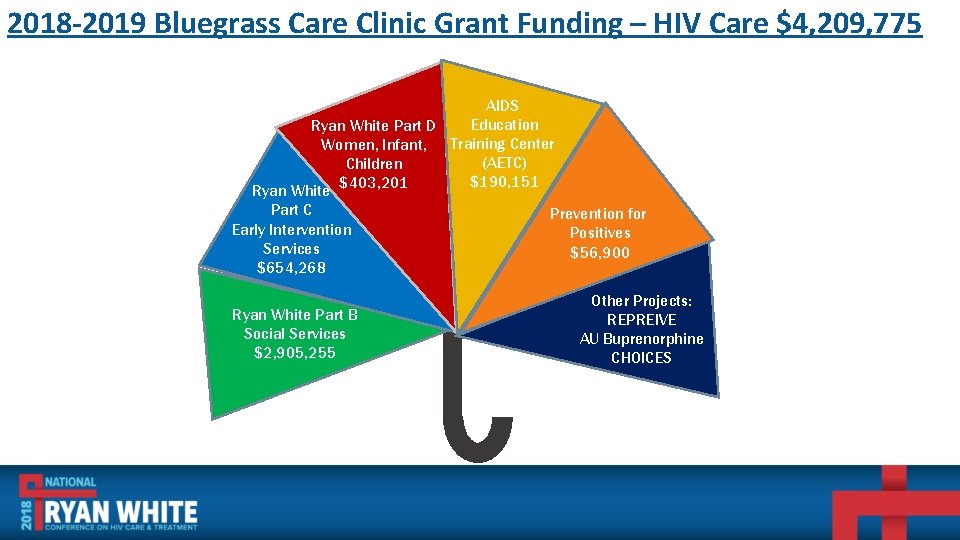
2018 -2019 Bluegrass Care Clinic Grant Funding – HIV Care $4, 209, 775 AIDS Education Ryan White Part D Women, Infant, Training Center (AETC) Children $190, 151 Ryan White $403, 201 Part C Prevention for Early Intervention Positives Services $56, 900 $654, 268 Ryan White Part B Social Services $2, 905, 255 Other Projects: REPREIVE AU Buprenorphine CHOICES
ACA Impact on Ryan White Program Enrollment and Eligibility - The U. S. Patient Protection and Affordable Care Act (ACA)- expands healthcare access and provides protection for people living with HIV/AIDS (PLWHA) - Ryan White Programs are last resort payers and its important to vigorously pursue clients in obtaining access to affordable health insurance when applicable. - Assist in providing seamless support for access to affordable private health insurance and expansion of Medicaid enrollment and eligibility - Important for Ryan White programs to train staff and educate patients on access to affordable health insurance and how it can improve their health outcomes
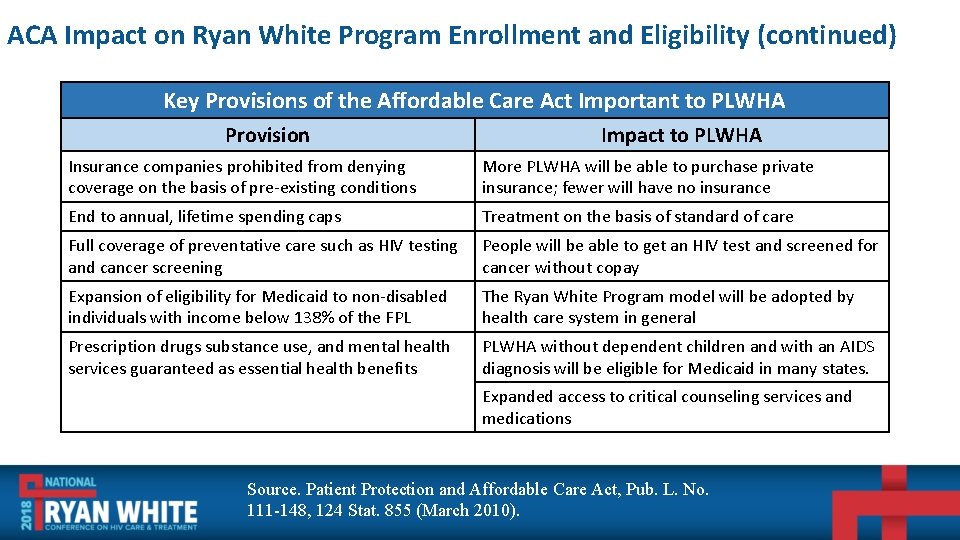
ACA Impact on Ryan White Program Enrollment and Eligibility (continued) Key Provisions of the Affordable Care Act Important to PLWHA Provision Impact to PLWHA Insurance companies prohibited from denying coverage on the basis of pre-existing conditions More PLWHA will be able to purchase private insurance; fewer will have no insurance End to annual, lifetime spending caps Treatment on the basis of standard of care Full coverage of preventative care such as HIV testing and cancer screening People will be able to get an HIV test and screened for cancer without copay Expansion of eligibility for Medicaid to non-disabled individuals with income below 138% of the FPL The Ryan White Program model will be adopted by health care system in general Prescription drugs substance use, and mental health services guaranteed as essential health benefits PLWHA without dependent children and with an AIDS diagnosis will be eligible for Medicaid in many states. Expanded access to critical counseling services and medications Source. Patient Protection and Affordable Care Act, Pub. L. No. 111 -148, 124 Stat. 855 (March 2010).
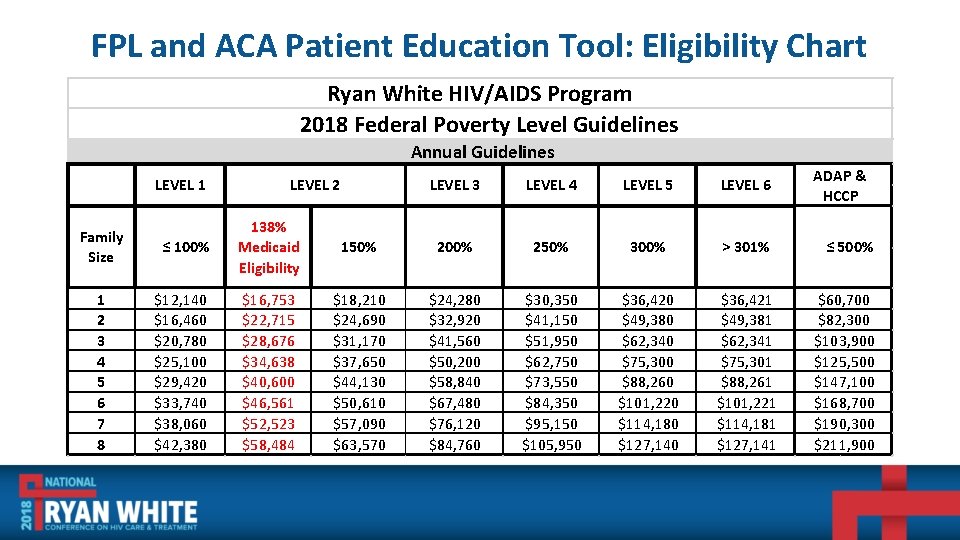
FPL and ACA Patient Education Tool: Eligibility Chart Ryan White HIV/AIDS Program 2018 Federal Poverty Level Guidelines Annual Guidelines LEVEL 1 Family Size 1 2 3 4 5 6 7 8 LEVEL 2 LEVEL 3 LEVEL 4 LEVEL 5 LEVEL 6 ADAP & HCCP ≤ 100% 138% Medicaid Eligibility 150% 200% 250% 300% > 301% ≤ 500% $12, 140 $16, 460 $20, 780 $25, 100 $29, 420 $33, 740 $38, 060 $42, 380 $16, 753 $22, 715 $28, 676 $34, 638 $40, 600 $46, 561 $52, 523 $58, 484 $18, 210 $24, 690 $31, 170 $37, 650 $44, 130 $50, 610 $57, 090 $63, 570 $24, 280 $32, 920 $41, 560 $50, 200 $58, 840 $67, 480 $76, 120 $84, 760 $30, 350 $41, 150 $51, 950 $62, 750 $73, 550 $84, 350 $95, 150 $105, 950 $36, 420 $49, 380 $62, 340 $75, 300 $88, 260 $101, 220 $114, 180 $127, 140 $36, 421 $49, 381 $62, 341 $75, 301 $88, 261 $101, 221 $114, 181 $127, 141 $60, 700 $82, 300 $103, 900 $125, 500 $147, 100 $168, 700 $190, 300 $211, 900
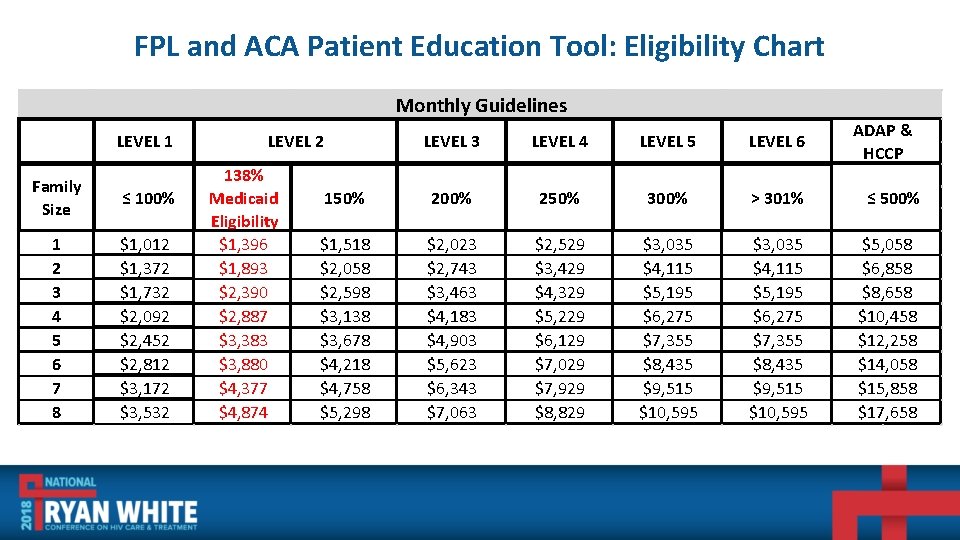
FPL and ACA Patient Education Tool: Eligibility Chart Monthly Guidelines LEVEL 1 Family Size ≤ 100% 1 2 3 4 5 6 7 8 $1, 012 $1, 372 $1, 732 $2, 092 $2, 452 $2, 812 $3, 172 $3, 532 LEVEL 2 138% Medicaid Eligibility $1, 396 $1, 893 $2, 390 $2, 887 $3, 383 $3, 880 $4, 377 $4, 874 ADAP & HCCP LEVEL 3 LEVEL 4 LEVEL 5 LEVEL 6 150% 200% 250% 300% > 301% ≤ 500% $1, 518 $2, 058 $2, 598 $3, 138 $3, 678 $4, 218 $4, 758 $5, 298 $2, 023 $2, 743 $3, 463 $4, 183 $4, 903 $5, 623 $6, 343 $7, 063 $2, 529 $3, 429 $4, 329 $5, 229 $6, 129 $7, 029 $7, 929 $8, 829 $3, 035 $4, 115 $5, 195 $6, 275 $7, 355 $8, 435 $9, 515 $10, 595 $5, 058 $6, 858 $8, 658 $10, 458 $12, 258 $14, 058 $15, 858 $17, 658
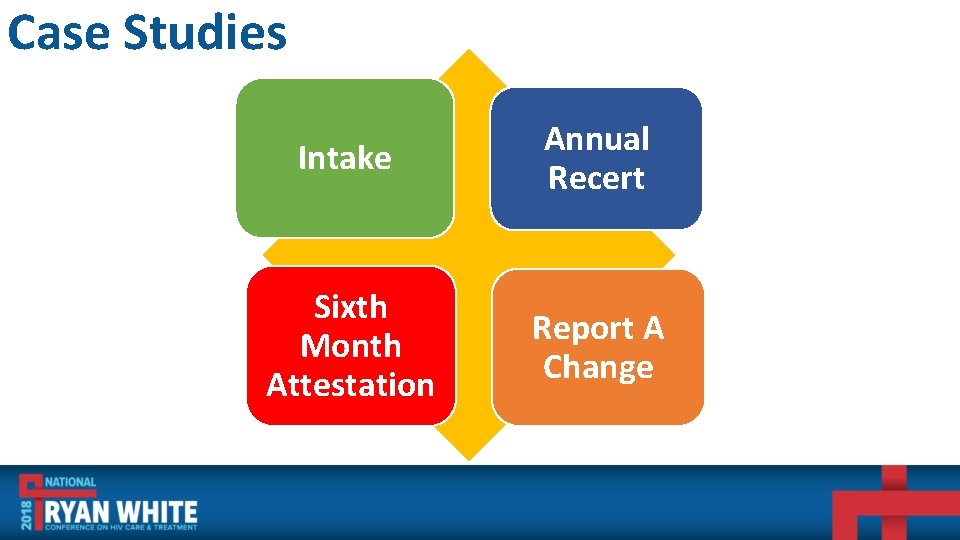
Case Studies Intake Annual Recert Sixth Month Attestation Report A Change
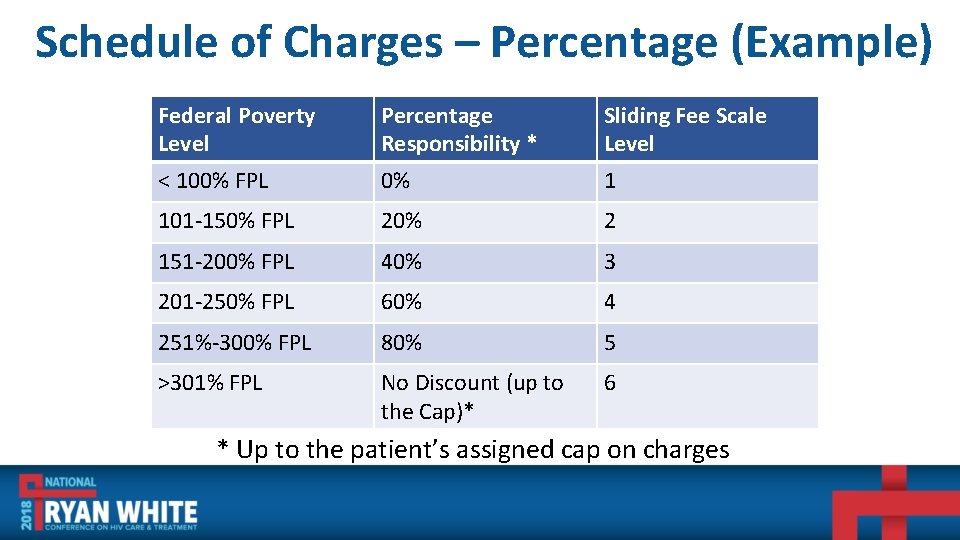
Schedule of Charges – Percentage (Example) Federal Poverty Level Percentage Responsibility * Sliding Fee Scale Level < 100% FPL 0% 1 101 -150% FPL 20% 2 151 -200% FPL 40% 3 201 -250% FPL 60% 4 251%-300% FPL 80% 5 >301% FPL No Discount (up to the Cap)* 6 * Up to the patient’s assigned cap on charges
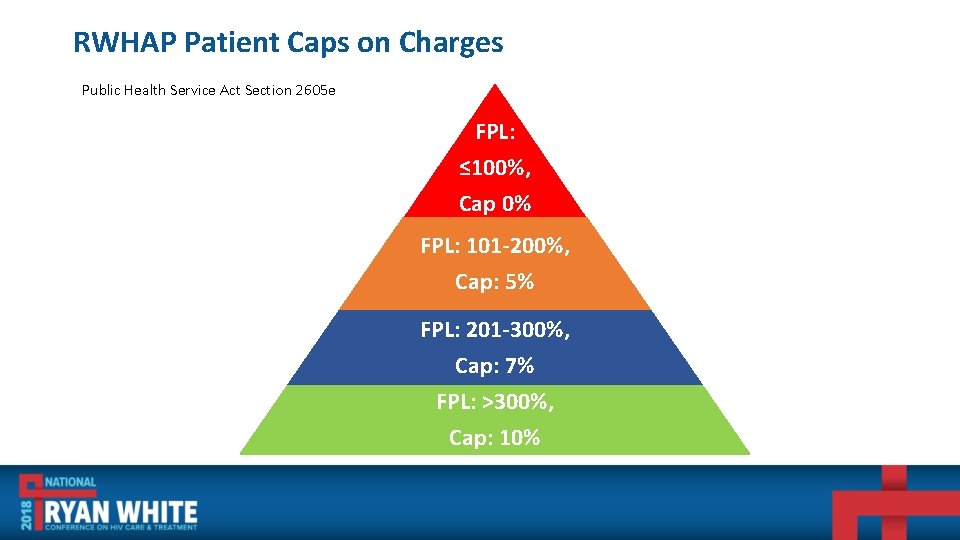
RWHAP Patient Caps on Charges Public Health Service Act Section 2605 e FPL: ≤ 100%, Cap 0% FPL: 101 -200%, Cap: 5% FPL: 201 -300%, Cap: 7% FPL: >300%, Cap: 10%
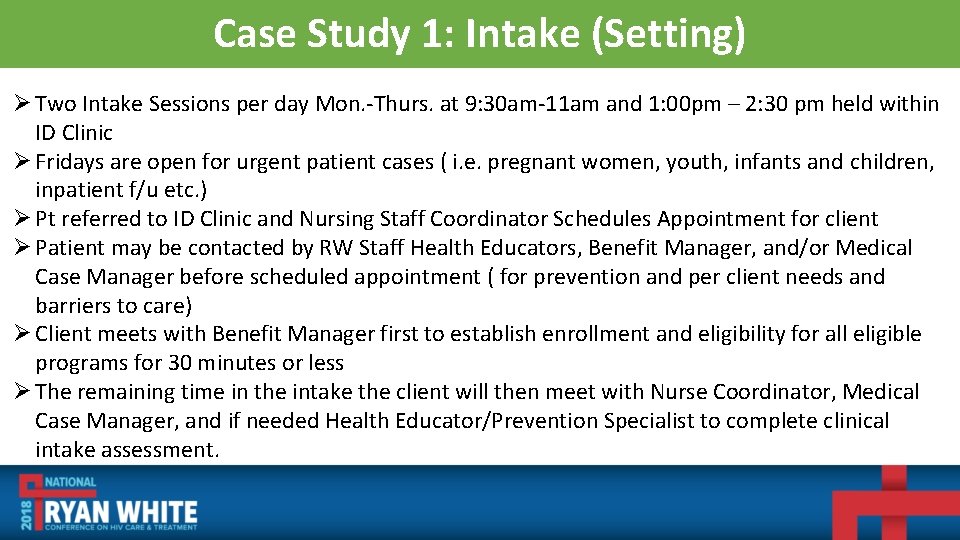
Case Study 1: Intake (Setting) Ø Two Intake Sessions per day Mon. -Thurs. at 9: 30 am-11 am and 1: 00 pm – 2: 30 pm held within ID Clinic Ø Fridays are open for urgent patient cases ( i. e. pregnant women, youth, infants and children, inpatient f/u etc. ) Ø Pt referred to ID Clinic and Nursing Staff Coordinator Schedules Appointment for client Ø Patient may be contacted by RW Staff Health Educators, Benefit Manager, and/or Medical Case Manager before scheduled appointment ( for prevention and per client needs and barriers to care) Ø Client meets with Benefit Manager first to establish enrollment and eligibility for all eligible programs for 30 minutes or less Ø The remaining time in the intake the client will then meet with Nurse Coordinator, Medical Case Manager, and if needed Health Educator/Prevention Specialist to complete clinical intake assessment.
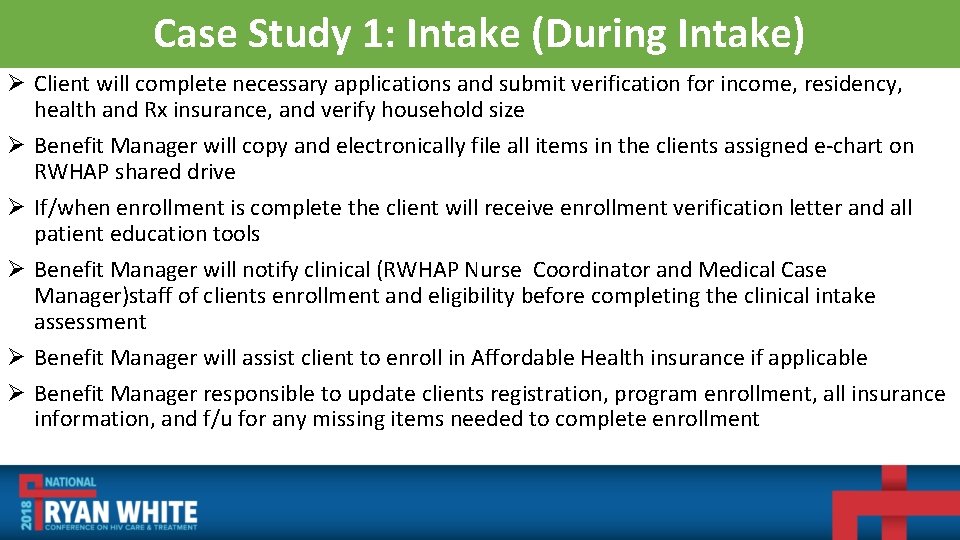
Case Study 1: Intake (During Intake) Ø Client will complete necessary applications and submit verification for income, residency, health and Rx insurance, and verify household size Ø Benefit Manager will copy and electronically file all items in the clients assigned e-chart on RWHAP shared drive Ø If/when enrollment is complete the client will receive enrollment verification letter and all patient education tools Ø Benefit Manager will notify clinical (RWHAP Nurse Coordinator and Medical Case Manager)staff of clients enrollment and eligibility before completing the clinical intake assessment Ø Benefit Manager will assist client to enroll in Affordable Health insurance if applicable Ø Benefit Manager responsible to update clients registration, program enrollment, all insurance information, and f/u for any missing items needed to complete enrollment
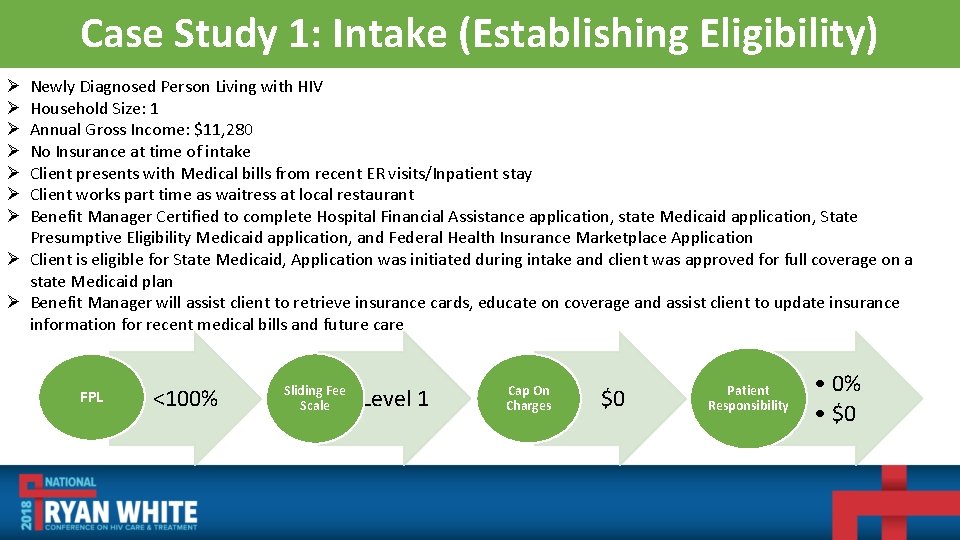
Case Study 1: Intake (Establishing Eligibility) Newly Diagnosed Person Living with HIV Household Size: 1 Annual Gross Income: $11, 280 No Insurance at time of intake Client presents with Medical bills from recent ER visits/Inpatient stay Client works part time as waitress at local restaurant Benefit Manager Certified to complete Hospital Financial Assistance application, state Medicaid application, State Presumptive Eligibility Medicaid application, and Federal Health Insurance Marketplace Application Ø Client is eligible for State Medicaid, Application was initiated during intake and client was approved for full coverage on a state Medicaid plan Ø Benefit Manager will assist client to retrieve insurance cards, educate on coverage and assist client to update insurance information for recent medical bills and future care Ø Ø Ø Ø FPL <100% Sliding Fee Scale Level 1 Cap On Charges $0 Patient Responsibility • 0% • $0
Case Study 1: After Intake ØPatient meets with RWHAP Benefit Manager at first ID appointment to address any changes or issues with enrollment and eligibility or client billings concerns and advocates for the patient ØCompletes Annual RWHAP recertification- during birth month ØCompletes 6 -month Attestation - six months after intake or birth month which ever is sooner ØBenefit manager updates facility registration, RWHAP master enrollment tracking spreadsheet and program files for clients enrollment ØBenefit manager will notify clients assigned Medical Case Manager of any changes to report and documents clients has submitted and vice versa
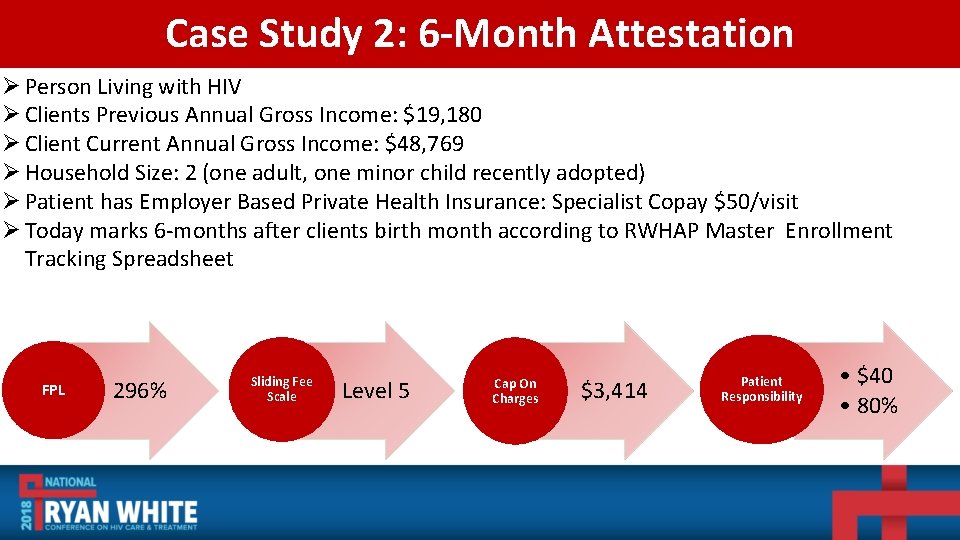
Case Study 2: 6 -Month Attestation Ø Person Living with HIV Ø Clients Previous Annual Gross Income: $19, 180 Ø Client Current Annual Gross Income: $48, 769 Ø Household Size: 2 (one adult, one minor child recently adopted) Ø Patient has Employer Based Private Health Insurance: Specialist Copay $50/visit Ø Today marks 6 -months after clients birth month according to RWHAP Master Enrollment Tracking Spreadsheet FPL 296% Sliding Fee Scale Level 5 Cap On Charges $3, 414 Patient Responsibility • $40 • 80%
Case Study 2: 6 -Month Attestation Ø Completed HIV-related medical appointment Ø Benefit Manager screened client for update today and met with client in clinic after ID Physician appointment to complete 6 -month attestation and retrieve verification for changes Ø Benefit Manager educated client on enrollment changes, new level, and cap on charges Ø Benefit Manger completed with client updated Cap on Charges Tracking Sheet and gave patient a copy along with self addressed and stamped envelope for client to return any necessary paperwork or additional items to add towards their cap on charges Ø Benefit Manager e-filed all documents and updated program enrollment files and notified Medical Case Manager of changes Ø Client given new Enrollment Verification Letter with updated enrollment, cap on charges, and sliding fee scale.
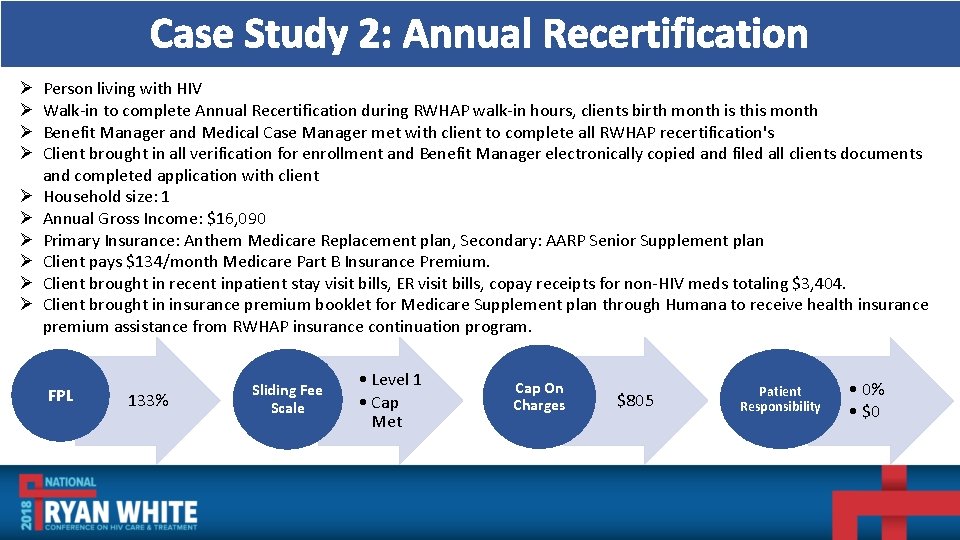
Case Study 2: Annual Recertification Ø Ø Ø Ø Ø Person living with HIV Walk-in to complete Annual Recertification during RWHAP walk-in hours, clients birth month is this month Benefit Manager and Medical Case Manager met with client to complete all RWHAP recertification's Client brought in all verification for enrollment and Benefit Manager electronically copied and filed all clients documents and completed application with client Household size: 1 Annual Gross Income: $16, 090 Primary Insurance: Anthem Medicare Replacement plan, Secondary: AARP Senior Supplement plan Client pays $134/month Medicare Part B Insurance Premium. Client brought in recent inpatient stay visit bills, ER visit bills, copay receipts for non-HIV meds totaling $3, 404. Client brought in insurance premium booklet for Medicare Supplement plan through Humana to receive health insurance premium assistance from RWHAP insurance continuation program. FPL 133% Sliding Fee Scale • Level 1 • Cap Met Cap On Charges $805 Patient Responsibility • 0% • $0
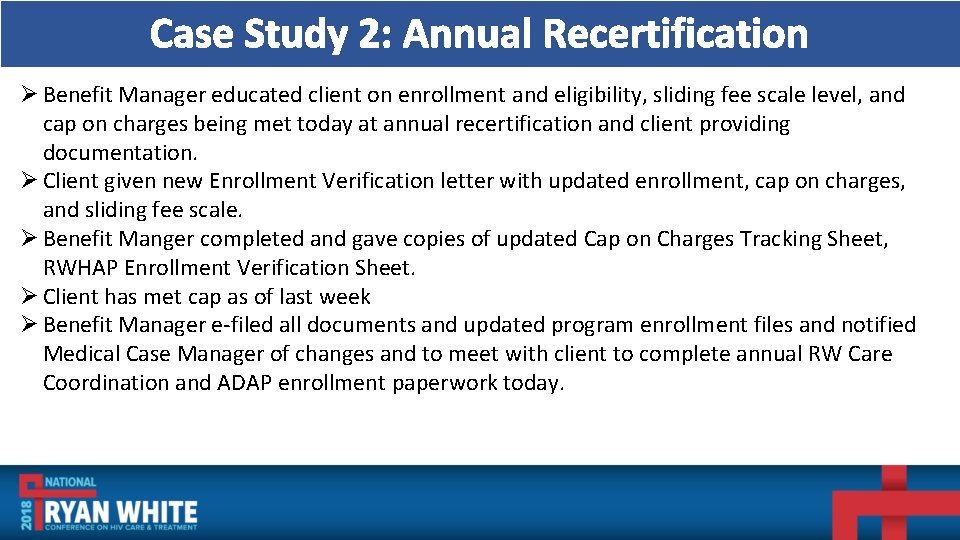
Case Study 2: Annual Recertification Ø Benefit Manager educated client on enrollment and eligibility, sliding fee scale level, and cap on charges being met today at annual recertification and client providing documentation. Ø Client given new Enrollment Verification letter with updated enrollment, cap on charges, and sliding fee scale. Ø Benefit Manger completed and gave copies of updated Cap on Charges Tracking Sheet, RWHAP Enrollment Verification Sheet. Ø Client has met cap as of last week Ø Benefit Manager e-filed all documents and updated program enrollment files and notified Medical Case Manager of changes and to meet with client to complete annual RW Care Coordination and ADAP enrollment paperwork today.
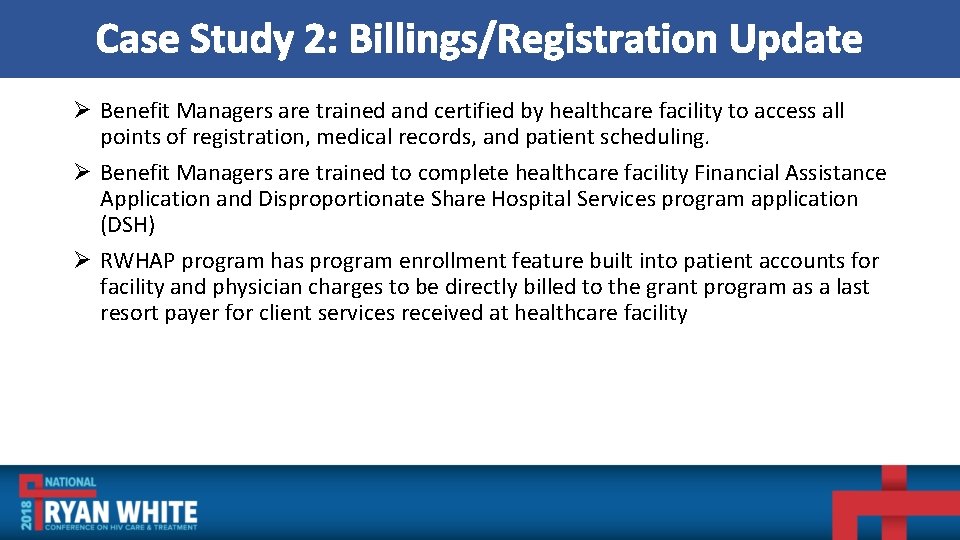
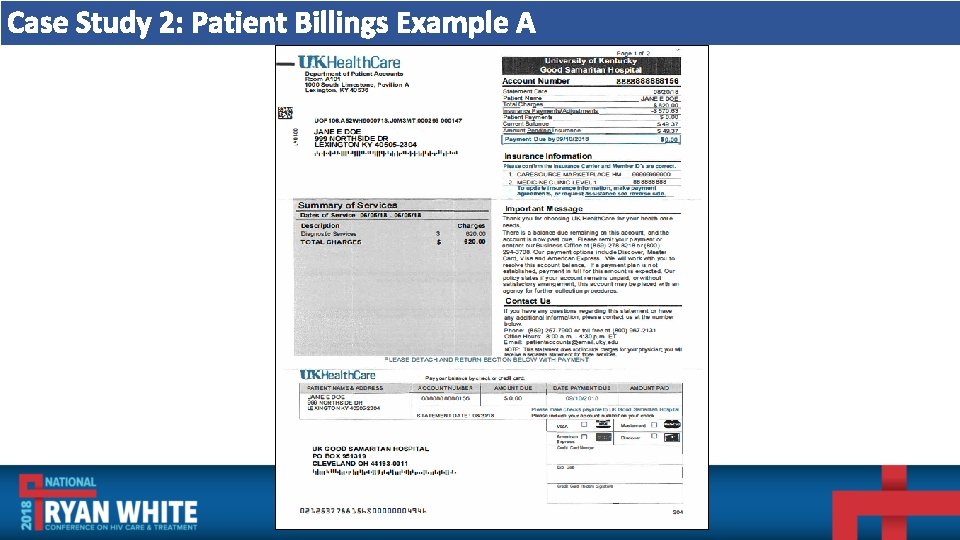
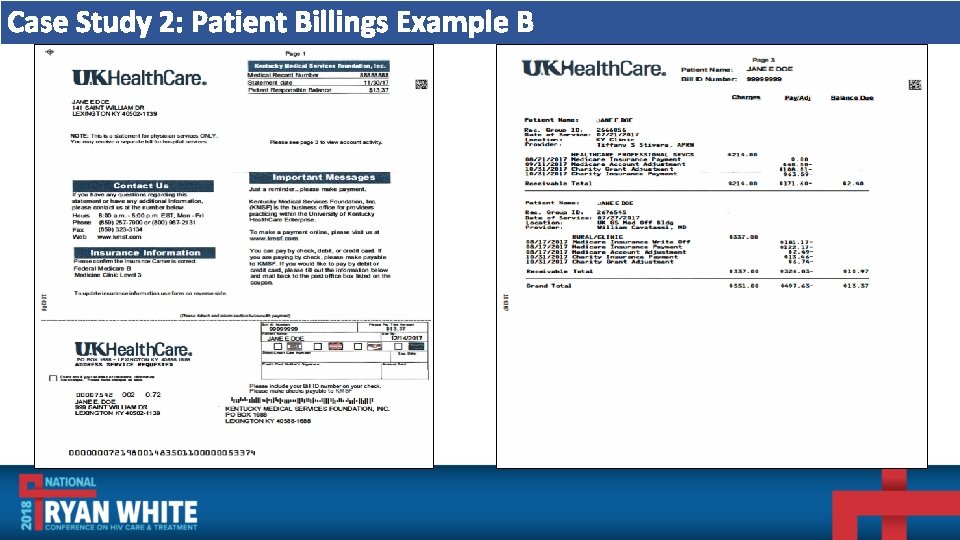
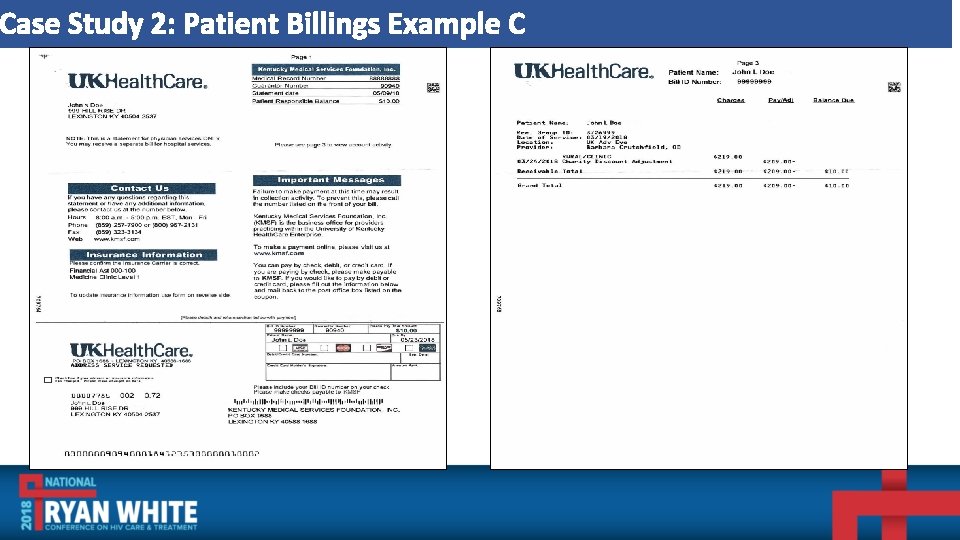
Case Study 2: Billings/Registration Update Ø Benefit Managers are trained and certified by healthcare facility to access all points of registration, medical records, and patient scheduling. Ø Benefit Managers are trained to complete healthcare facility Financial Assistance Application and Disproportionate Share Hospital Services program application (DSH) Ø RWHAP program has program enrollment feature built into patient accounts for facility and physician charges to be directly billed to the grant program as a last resort payer for client services received at healthcare facility
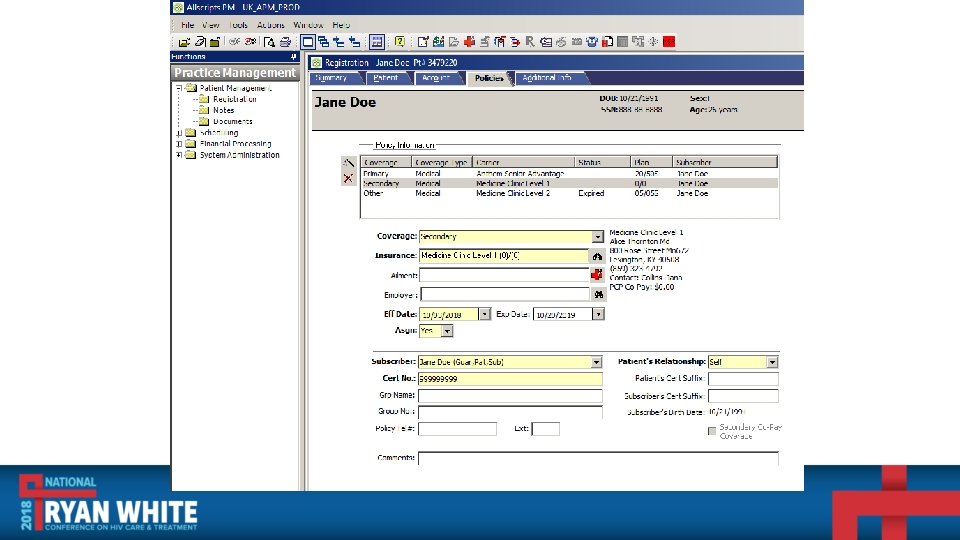
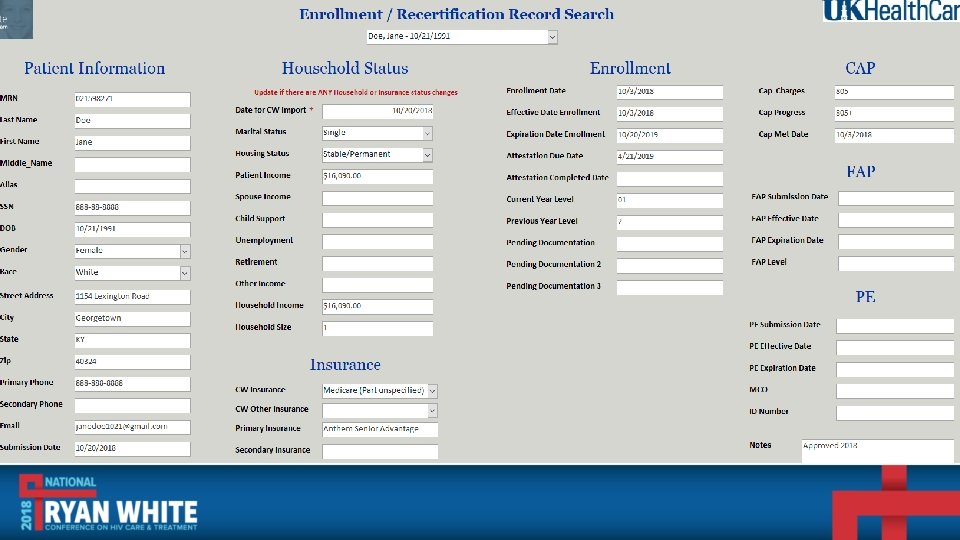
Case Study 2: Patient Billings Example A
Case Study 2: Patient Billings Example B
Case Study 2: Patient Billings Example C
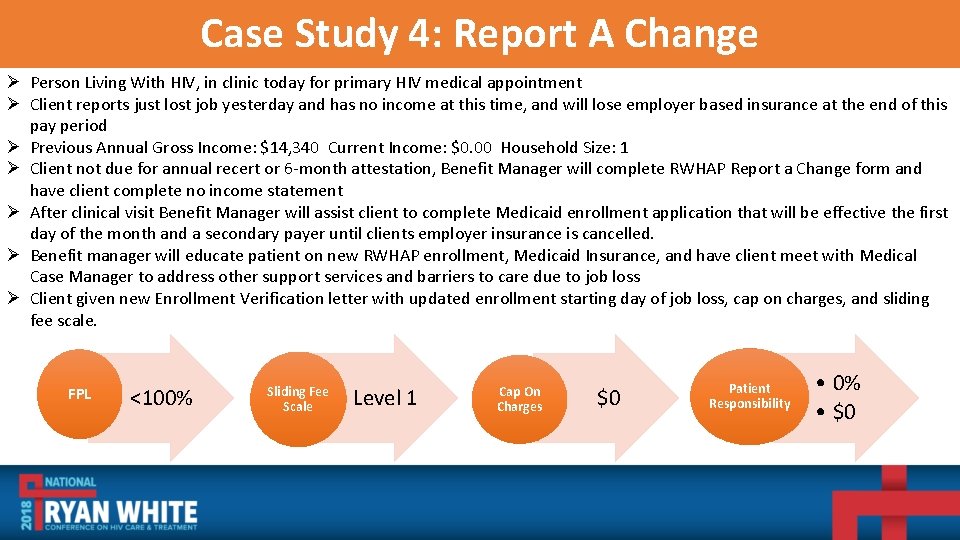
Case Study 4: Report A Change Ø Person Living With HIV, in clinic today for primary HIV medical appointment Ø Client reports just lost job yesterday and has no income at this time, and will lose employer based insurance at the end of this pay period Ø Previous Annual Gross Income: $14, 340 Current Income: $0. 00 Household Size: 1 Ø Client not due for annual recert or 6 -month attestation, Benefit Manager will complete RWHAP Report a Change form and have client complete no income statement Ø After clinical visit Benefit Manager will assist client to complete Medicaid enrollment application that will be effective the first day of the month and a secondary payer until clients employer insurance is cancelled. Ø Benefit manager will educate patient on new RWHAP enrollment, Medicaid Insurance, and have client meet with Medical Case Manager to address other support services and barriers to care due to job loss Ø Client given new Enrollment Verification letter with updated enrollment starting day of job loss, cap on charges, and sliding fee scale. FPL <100% Sliding Fee Scale Level 1 Cap On Charges $0 Patient Responsibility • 0% • $0
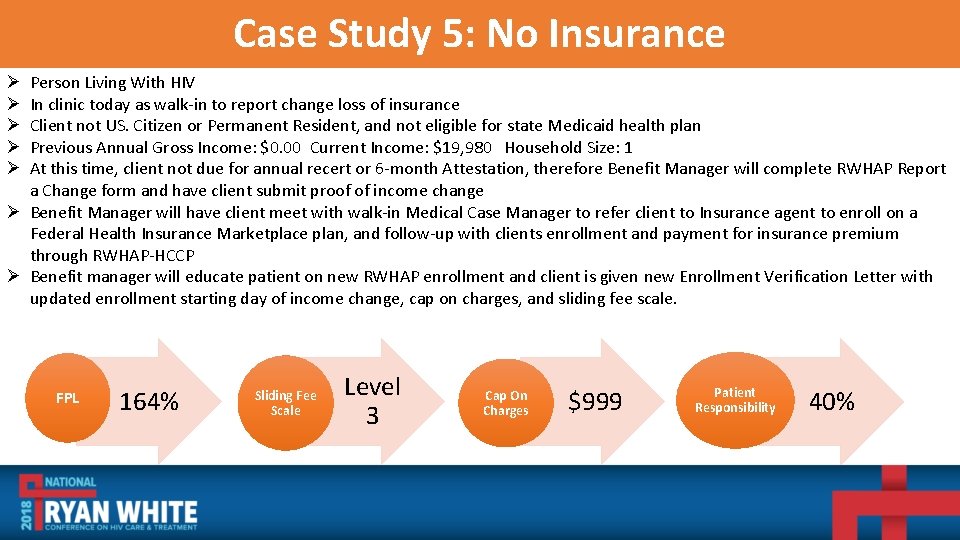
Case Study 5: No Insurance Person Living With HIV In clinic today as walk-in to report change loss of insurance Client not US. Citizen or Permanent Resident, and not eligible for state Medicaid health plan Previous Annual Gross Income: $0. 00 Current Income: $19, 980 Household Size: 1 At this time, client not due for annual recert or 6 -month Attestation, therefore Benefit Manager will complete RWHAP Report a Change form and have client submit proof of income change Ø Benefit Manager will have client meet with walk-in Medical Case Manager to refer client to Insurance agent to enroll on a Federal Health Insurance Marketplace plan, and follow-up with clients enrollment and payment for insurance premium through RWHAP-HCCP Ø Benefit manager will educate patient on new RWHAP enrollment and client is given new Enrollment Verification Letter with updated enrollment starting day of income change, cap on charges, and sliding fee scale. Ø Ø Ø FPL 164% Sliding Fee Scale Level 3 Cap On Charges $999 Patient Responsibility 40%
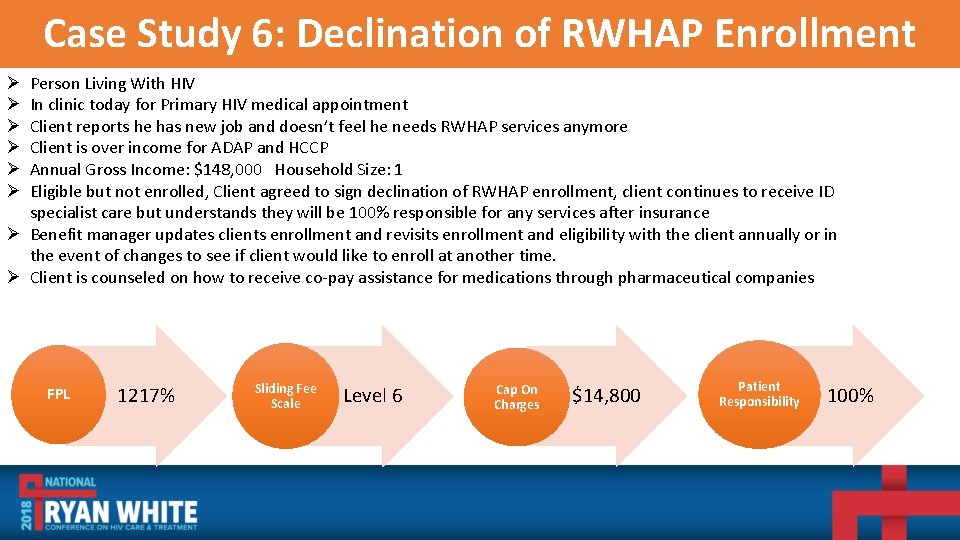
Case Study 6: Declination of RWHAP Enrollment Person Living With HIV In clinic today for Primary HIV medical appointment Client reports he has new job and doesn’t feel he needs RWHAP services anymore Client is over income for ADAP and HCCP Annual Gross Income: $148, 000 Household Size: 1 Eligible but not enrolled, Client agreed to sign declination of RWHAP enrollment, client continues to receive ID specialist care but understands they will be 100% responsible for any services after insurance Ø Benefit manager updates clients enrollment and revisits enrollment and eligibility with the client annually or in the event of changes to see if client would like to enroll at another time. Ø Client is counseled on how to receive co-pay assistance for medications through pharmaceutical companies Ø Ø Ø FPL 1217% Sliding Fee Scale Level 6 Cap On Charges $14, 800 Patient Responsibility 100%
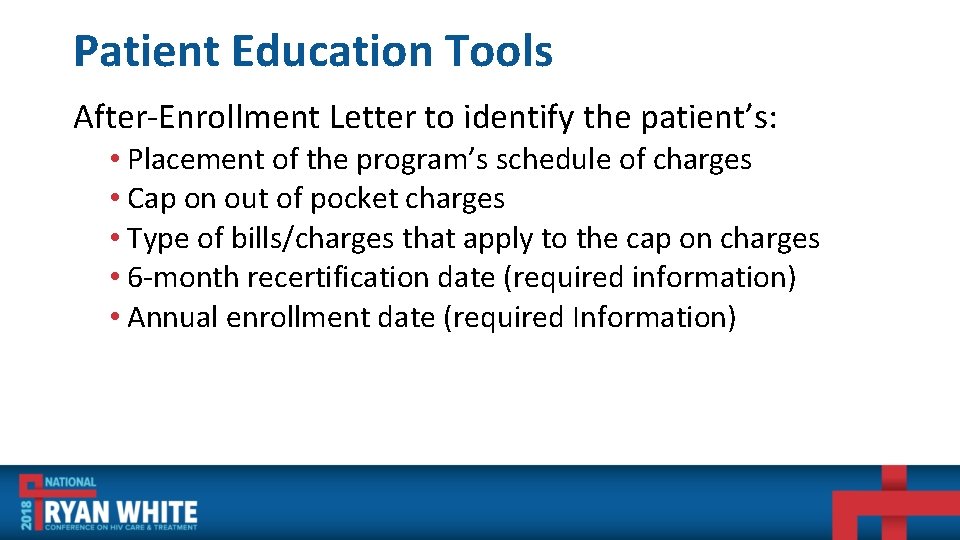
Patient Education Tools After-Enrollment Letter to identify the patient’s: • Placement of the program’s schedule of charges • Cap on out of pocket charges • Type of bills/charges that apply to the cap on charges • 6 -month recertification date (required information) • Annual enrollment date (required Information)
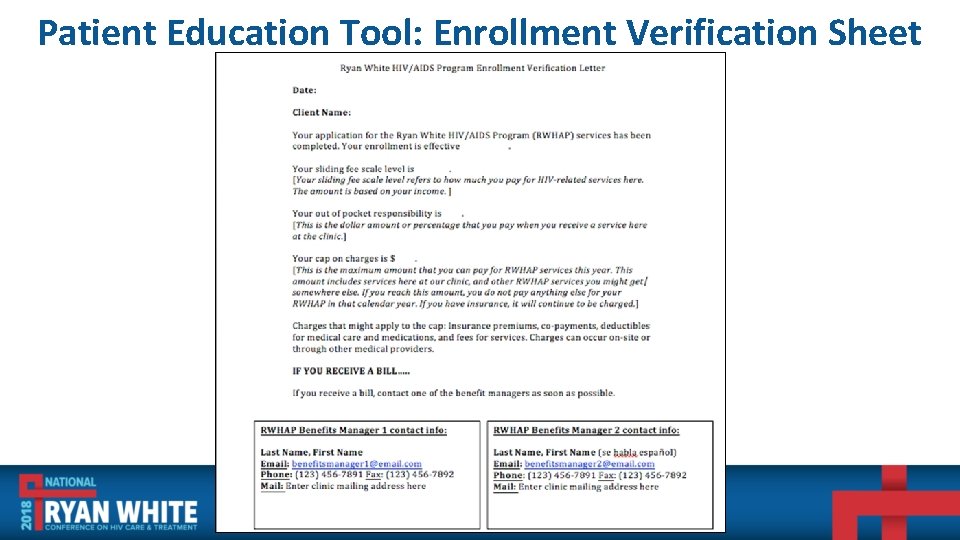
Patient Education Tool: Enrollment Verification Sheet
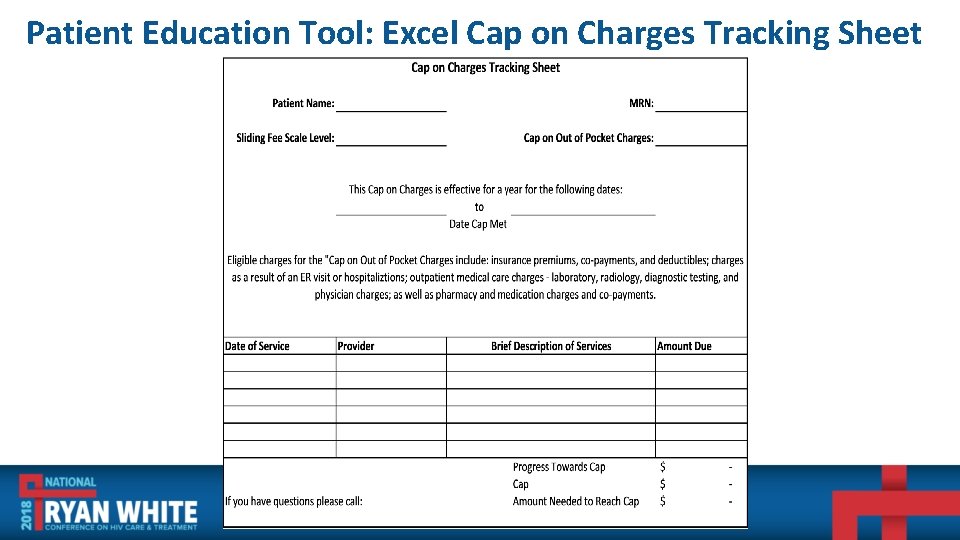
Patient Education Tool: Excel Cap on Charges Tracking Sheet
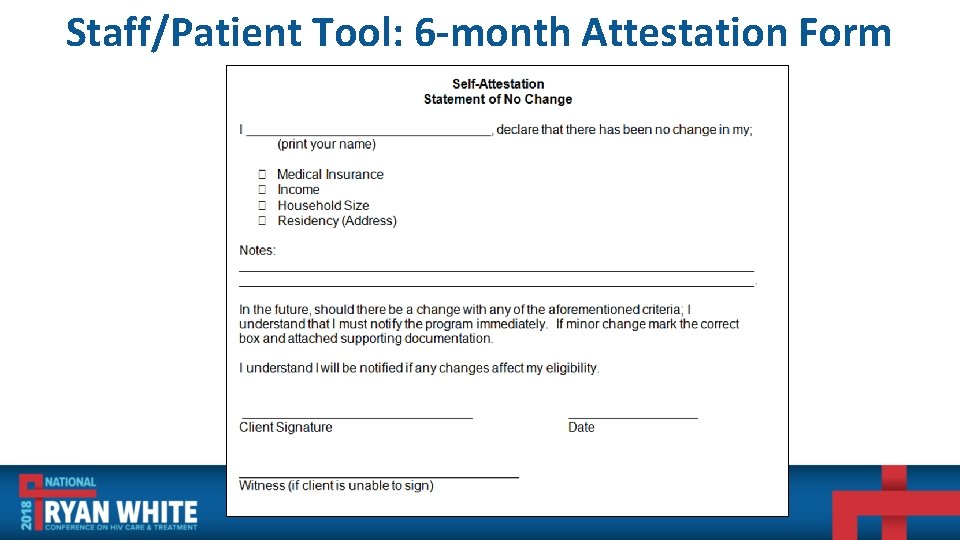
Staff/Patient Tool: 6 -month Attestation Form
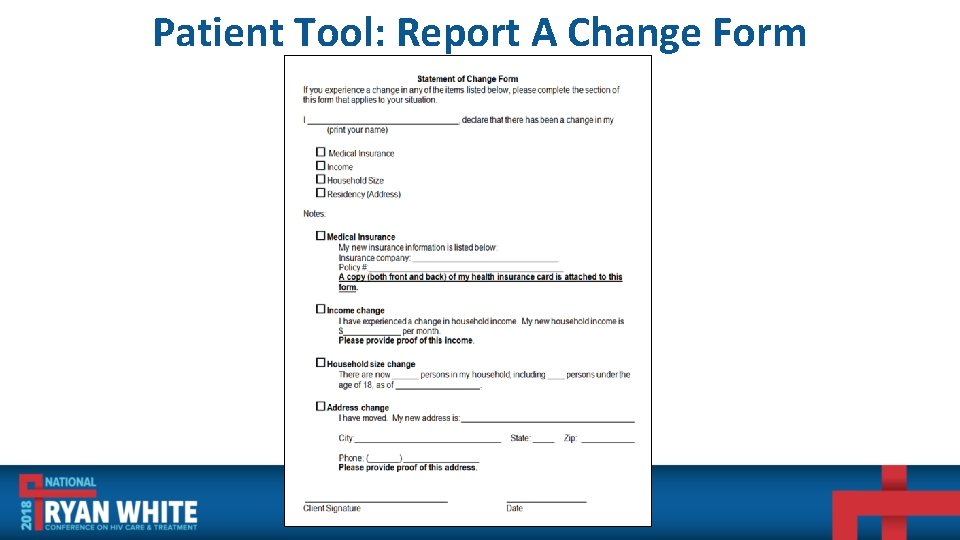
Patient Tool: Report A Change Form
Other Helpful RWHAP Enrollment Tools and Tracking Systems
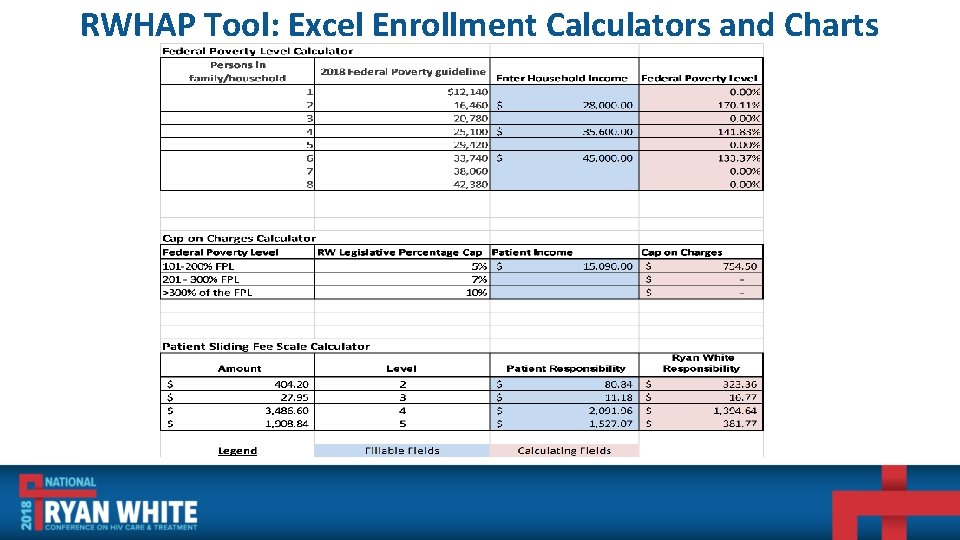
RWHAP Tool: Excel Enrollment Calculators and Charts
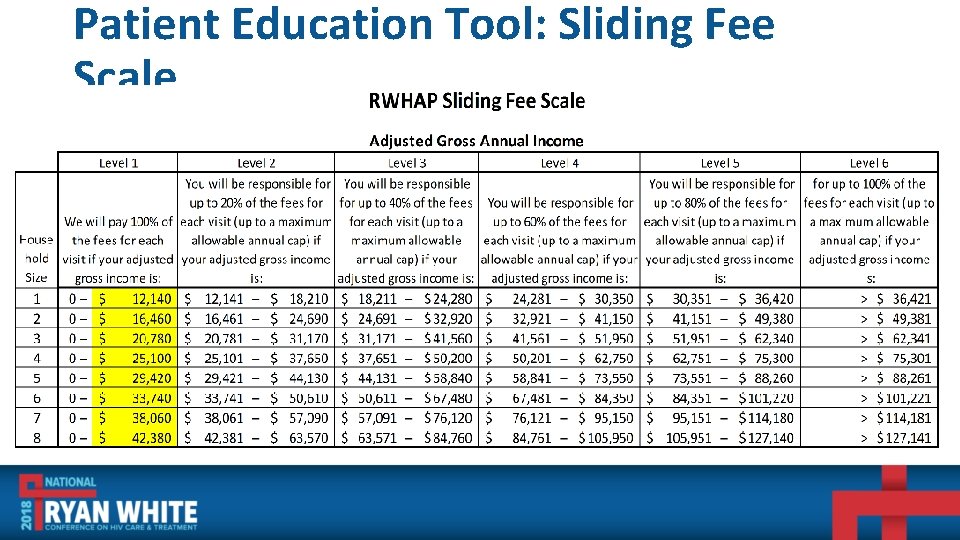
Patient Education Tool: Sliding Fee Scale
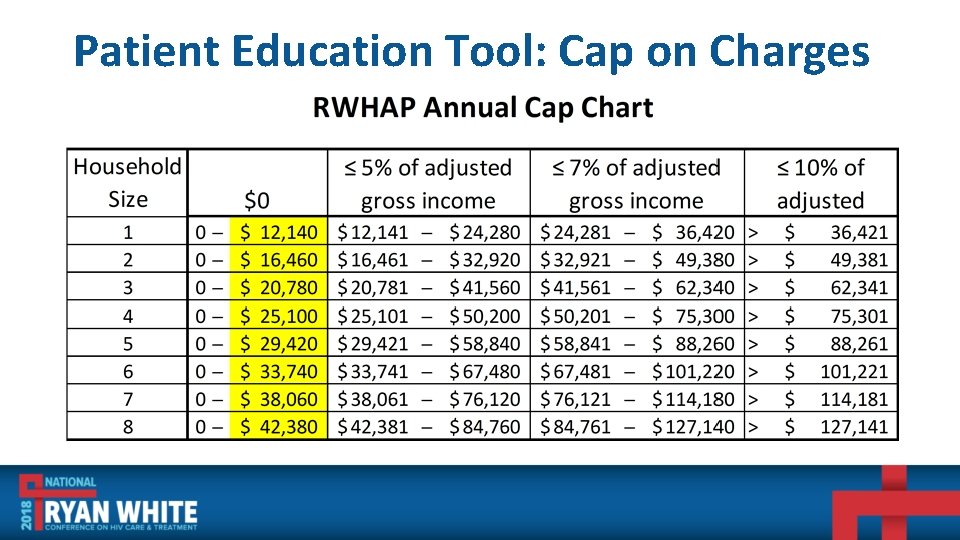
Patient Education Tool: Cap on Charges
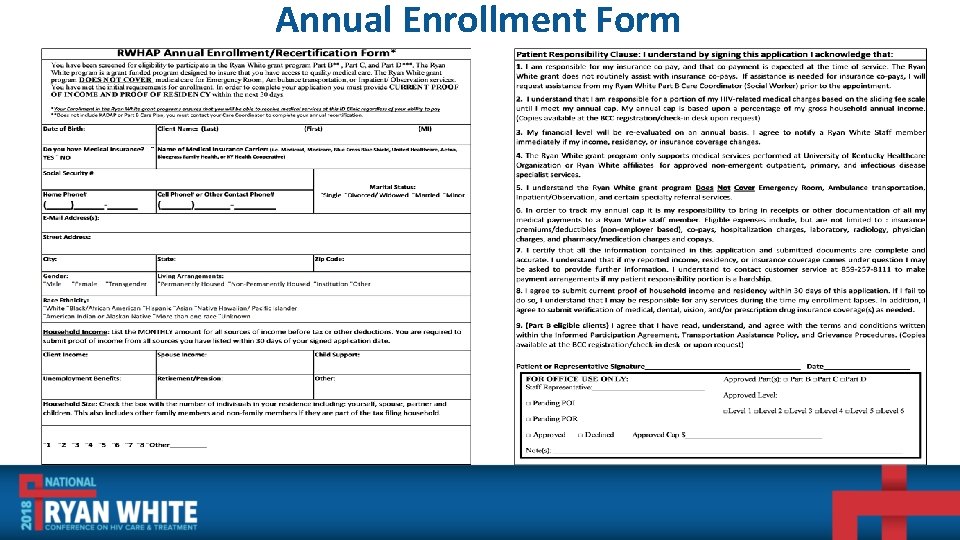
Annual Enrollment Form
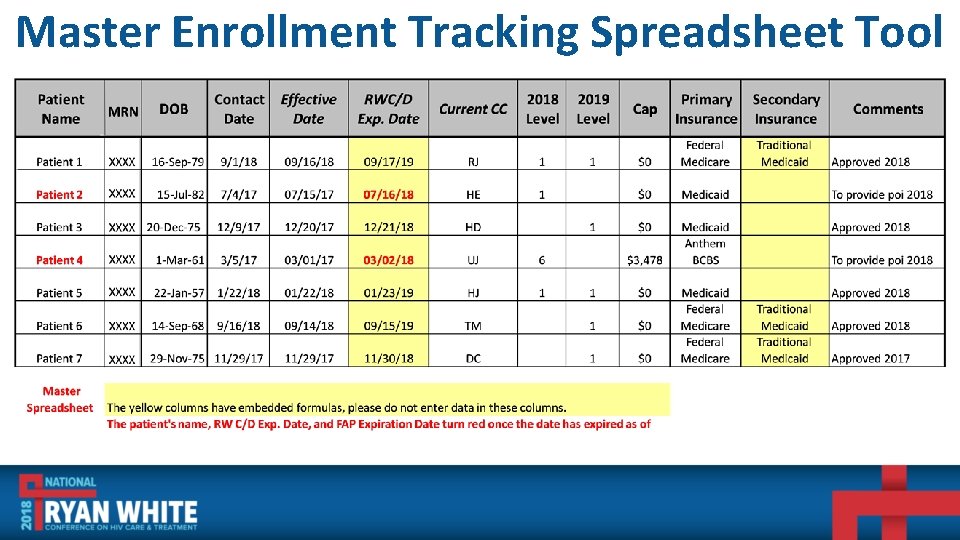
Master Enrollment Tracking Spreadsheet Tool
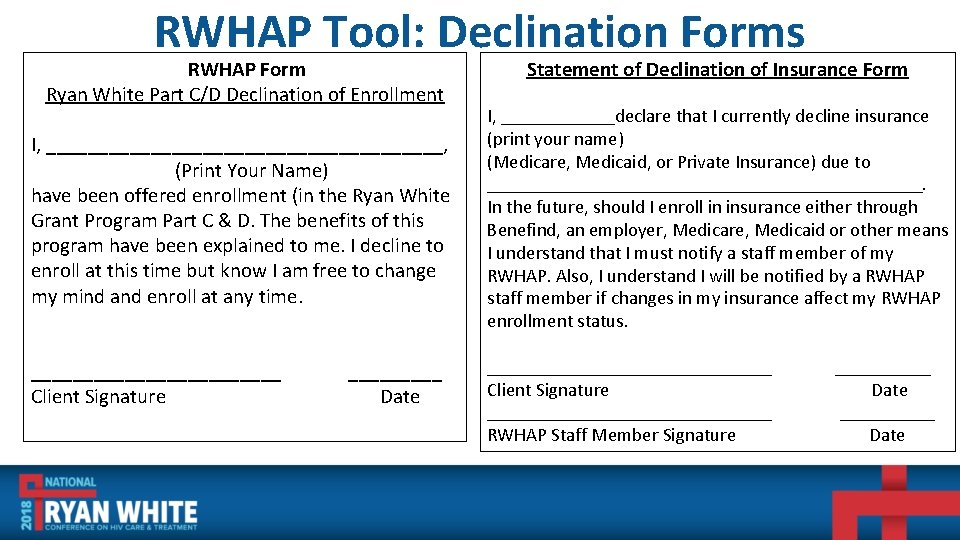
RWHAP Tool: Declination Forms RWHAP Form Ryan White Part C/D Declination of Enrollment I, ___________________, (Print Your Name) have been offered enrollment (in the Ryan White Grant Program Part C & D. The benefits of this program have been explained to me. I decline to enroll at this time but know I am free to change my mind and enroll at any time. ____________ _____ Client Signature Date Statement of Declination of Insurance Form I, ______declare that I currently decline insurance (print your name) (Medicare, Medicaid, or Private Insurance) due to _______________________. In the future, should I enroll in insurance either through Benefind, an employer, Medicare, Medicaid or other means I understand that I must notify a staff member of my RWHAP. Also, I understand I will be notified by a RWHAP staff member if changes in my insurance affect my RWHAP enrollment status. _______________ _____ Client Signature Date _______________ _____ RWHAP Staff Member Signature Date
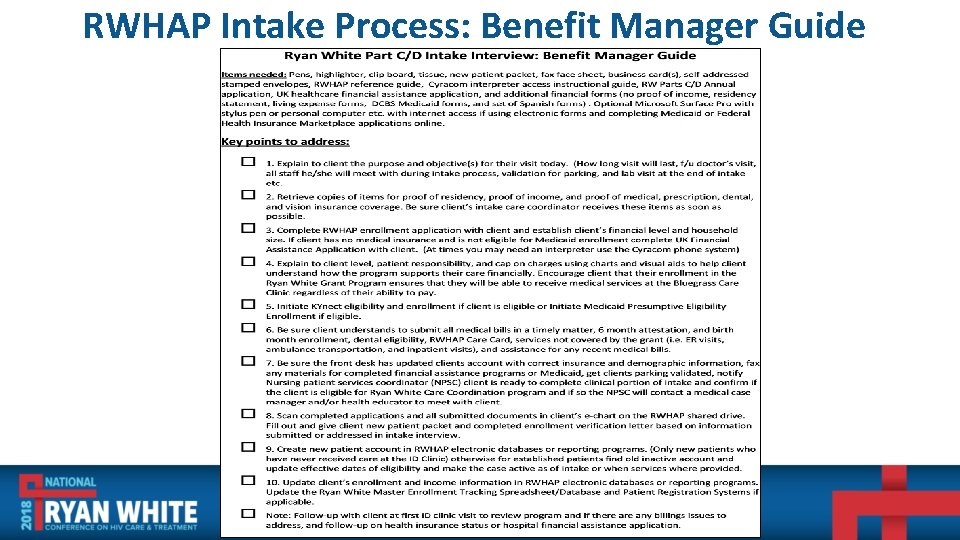
RWHAP Intake Process: Benefit Manager Guide
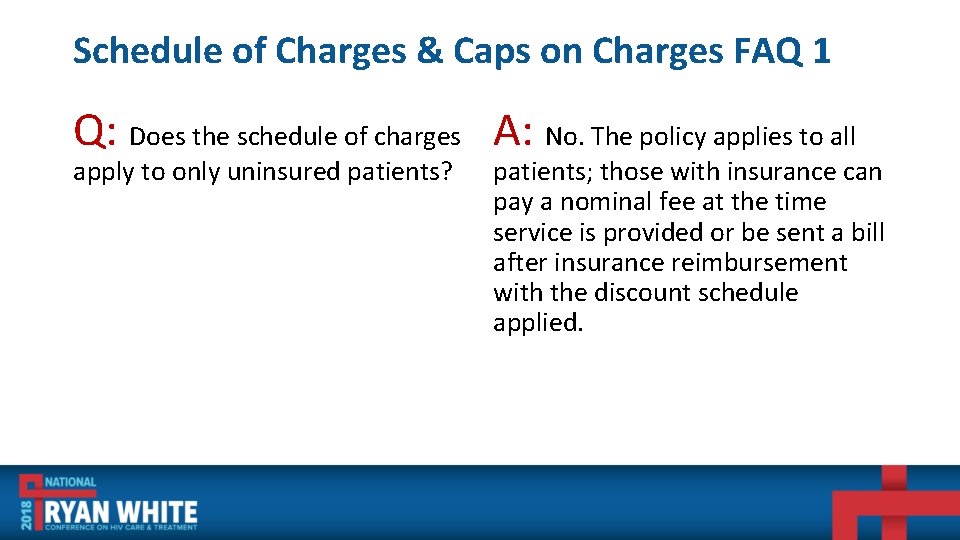
Schedule of Charges & Caps on Charges FAQ 1 Q: Does the schedule of charges A: No. The policy applies to all apply to only uninsured patients? patients; those with insurance can pay a nominal fee at the time service is provided or be sent a bill after insurance reimbursement with the discount schedule applied.
Schedule of Charges & Caps on Charges FAQ 2 Q. RWHAP discourages us from A. Unpaid patient balances turning delinquent accounts over to collection agencies. After reasonable efforts have been made to collect payments, could unpaid patient balances be transferred to the RWHAP? If yes, would the cost be at full or discounted rates? cannot be transferred to the RWHAP. If a client is charged but the agency does not collect payment, the charge is to be written off; grant funds cannot be drawn down to cover the remaining cost, which is considered balance billing and an unallowable use of RWHAP funds.
Schedule of Charges & Caps on Charges FAQ 3 Q. We never charge for RWHAP A. If none of your services are services. Do we still need to charge a nominal fee? Source: National Monitoring Standards Frequently Asked Questions http: //hab. hrsa. gov/sites/default/files/hab/Global/programmonitoringfaq. pdf billable, you do not need to charge RWHAP clients. If you bill non-RWHAP clients, but not RWHAP clients, you must bill RWHAP clients for the same services and then apply the schedule of charges.
Schedule of Charges & Caps on Charges FAQ 4 Q. We have patients with employer-based insurance which requires that they use a specialty mail-order pharmacy. They have $150 medication co-pays and can only fill 30 days supply at a time. Can we count the full year’s cost of 12 expected copays towards their cap at the beginning of the year in order to help them get to their cap? If we don’t, their out of pockets by the end of the year may exceed the cap. A. No, charges must be monitored and assessed as they are incurred, which would be monthly. Depending on available funding and jurisdictional requirements, your organization could help the client with medication co-pays before or after the cap has been reached.
Schedule of Charges & Caps on Charges FAQ 5 Q. If patients below 100% FPL are not allowed to be charged for services, does this mean we cannot charge them co-pays? If so, how do we reconcile that with insurance claims? A. If a client’s individual income is below 100% FPL, they cannot be charged co-pays. The schedule of charges applies to all out-of-pocket charges related to HIV care, including co-pays. The organization might be required to charge a co-pay, but they discount the co-pay based on income, so it could be discounted to zero. Additionally, RWHAP legislation supersedes contracts with insurers.
- Slides: 81