
ENPISEIS Project Towards a Shared Environmental Information System
- Slides: 26
ENPI-SEIS Project ‘Towards a Shared Environmental Information System (SEIS) in the European Neighbourhood’ UNECE Joint Task Force on Indicators Meeting, 11 -13 July 2011 European Environment Agency Gordon Mc. Innes, Deputy Director, Head of Programme Governance and Networks
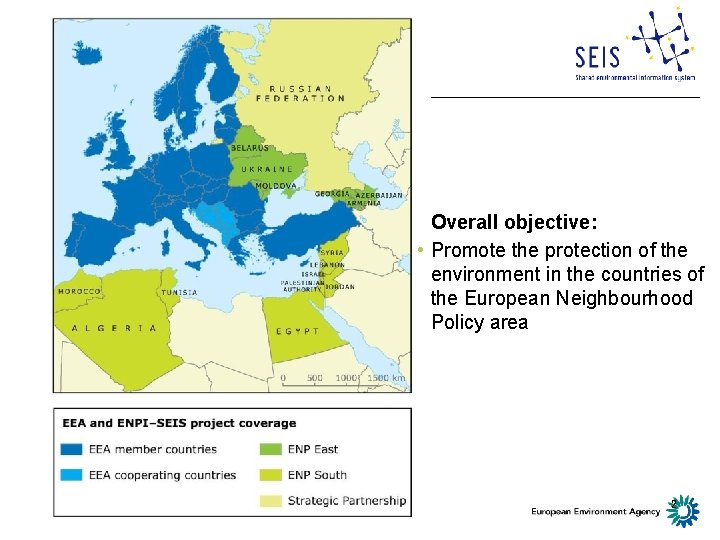
Overall objective: • Promote the protection of the environment in the countries of the European Neighbourhood Policy area 2
Project objectives of the ENPI-SEIS project Specific objectives: • Promote the setting up of national and regional environmental information systems in line with SEIS principles • Improve capacities in the field of monitoring, collection, storage, assessment, and reporting of environmental data • Identify / further develop environmental indicators • Track progress of the regional environmental initiatives (European Neighbourhood Policy, Eastern Partnership, Horizon 2020 , etc)
Main activity areas Agreed priority themes and other EU projects in the East region Priority themes 1. 2. 3. Water: fresh water Waste: household / municipal Air (emissions + climate change) Other EU projects in the region: • • Co-investment funding in the field of water and sanitation Environmental collaboration for the Black Sea Multi-country cooperation instruments (East): CBC, NIF, TWINNING TAIEX, SIGMA Support to Kyoto Protocol Implementation, SKPI Air Governance project Waste Governance project Transboundary river management for the Kura river - Phase II Water Governance in Western EECCA
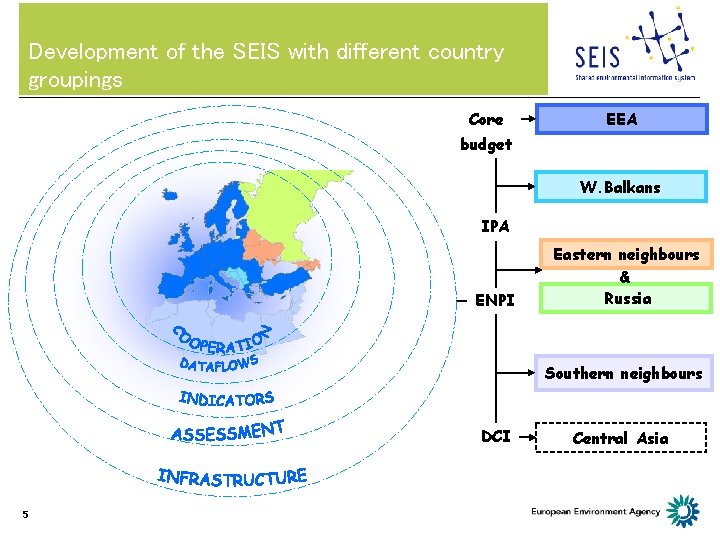
Development of the SEIS with different country groupings Core EEA budget W. Balkans IPA ENPI Eastern neighbours & Russia Southern neighbours DCI 5 Central Asia
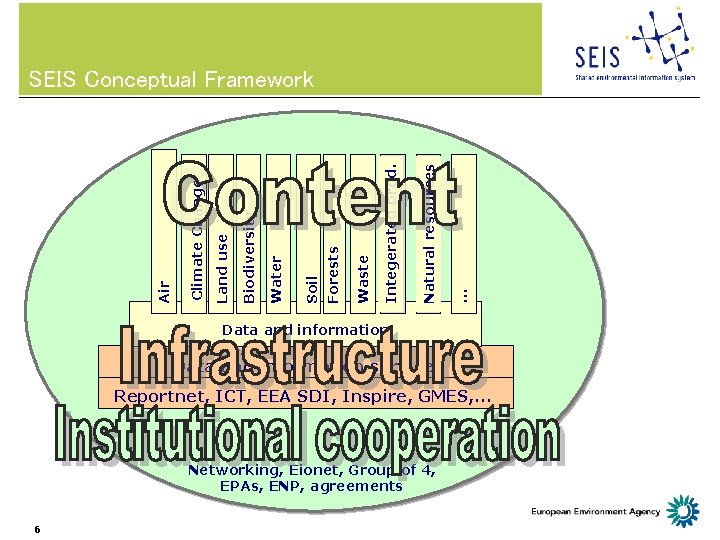
. . . Natural resources Integerated prod. Waste Forests Soil Water Biodiversity Land use Climate Change Air SEIS Conceptual Framework Data and information services Reportnet, ICT, EEA SDI, Inspire, GMES, . . . Networking, Eionet, Group of 4, EPAs, ENP, agreements 6
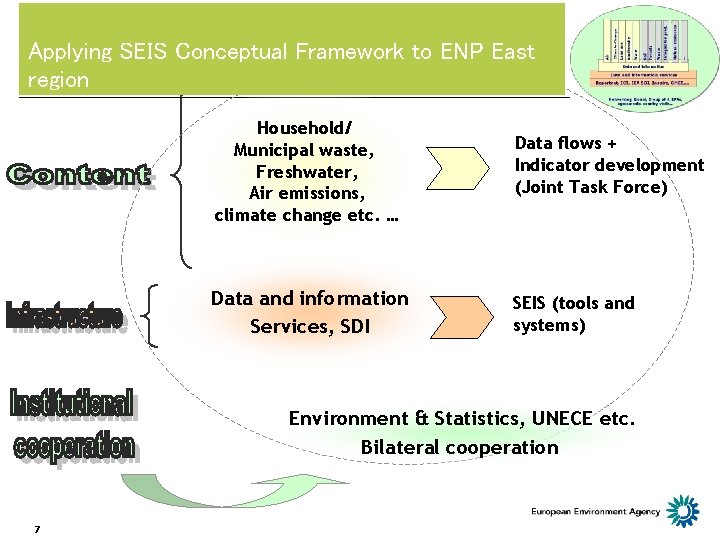
Applying SEIS Conceptual Framework to ENP East region Household/ Municipal waste, Freshwater, Air emissions, climate change etc. … Data flows + Indicator development (Joint Task Force) Data and information Services, SDI SEIS (tools and systems) Environment & Statistics, UNECE etc. Bilateral cooperation 7
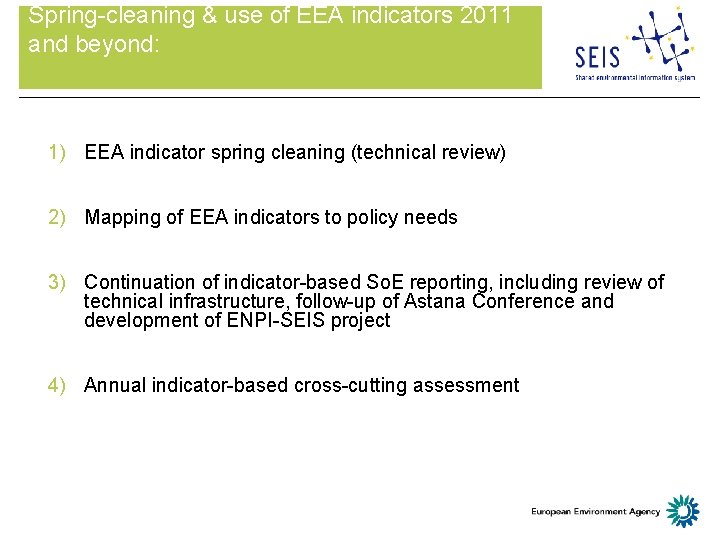
Spring-cleaning & use of EEA indicators 2011 and beyond: 1) EEA indicator spring cleaning (technical review) 2) Mapping of EEA indicators to policy needs 3) Continuation of indicator-based So. E reporting, including review of technical infrastructure, follow-up of Astana Conference and development of ENPI-SEIS project 4) Annual indicator-based cross-cutting assessment
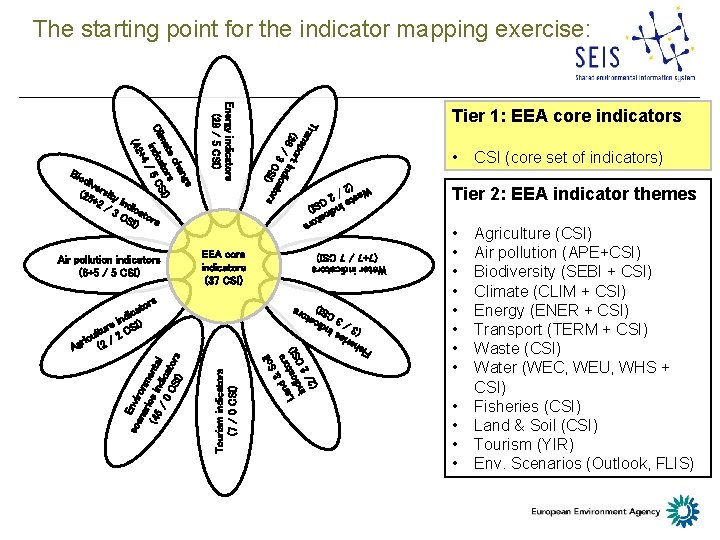
The starting point for the indicator mapping exercise: s tor ica ind SI) ste 2 C Wa (2 / Water indicators (7+7 / 7 CSI) EEA core indicators (37 CSI) rs ato c i ind re CSI) u t ul ric (2 / 2 Ag il So & rs nd La icato I) ind 2 CS (2/ Tourism indicators (7 / 0 CSI) F i s he rie (3 s ind / ic 3 CS ators I) sce Envir nar onm (45 ios in enta / 0 dica l CS tors I) T Air pollution indicators (6+5 / 5 CSI) ran sp (38 ort in dic / 3 CS ators I) div e (25 rsity +2 i / 3 ndica CS tors I) Energy indicators (29 / 5 CSI) e ang ch s te r ma cato CSI) Cli d n i /5 +4 (42 Bio Tier 1: EEA core indicators • CSI (core set of indicators) Tier 2: EEA indicator themes • • • Agriculture (CSI) Air pollution (APE+CSI) Biodiversity (SEBI + CSI) Climate (CLIM + CSI) Energy (ENER + CSI) Transport (TERM + CSI) Waste (CSI) Water (WEC, WEU, WHS + CSI) Fisheries (CSI) Land & Soil (CSI) Tourism (YIR) Env. Scenarios (Outlook, FLIS)
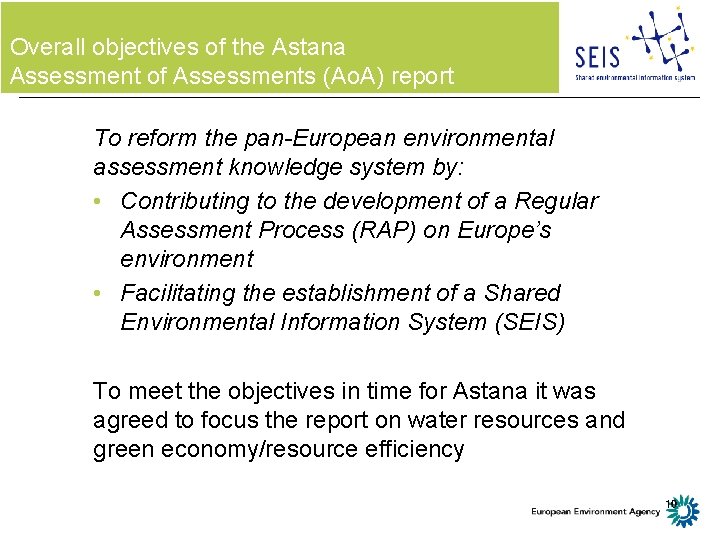
Overall objectives of the Astana Assessment of Assessments (Ao. A) report To reform the pan-European environmental assessment knowledge system by: • Contributing to the development of a Regular Assessment Process (RAP) on Europe’s environment • Facilitating the establishment of a Shared Environmental Information System (SEIS) To meet the objectives in time for Astana it was agreed to focus the report on water resources and green economy/resource efficiency 10
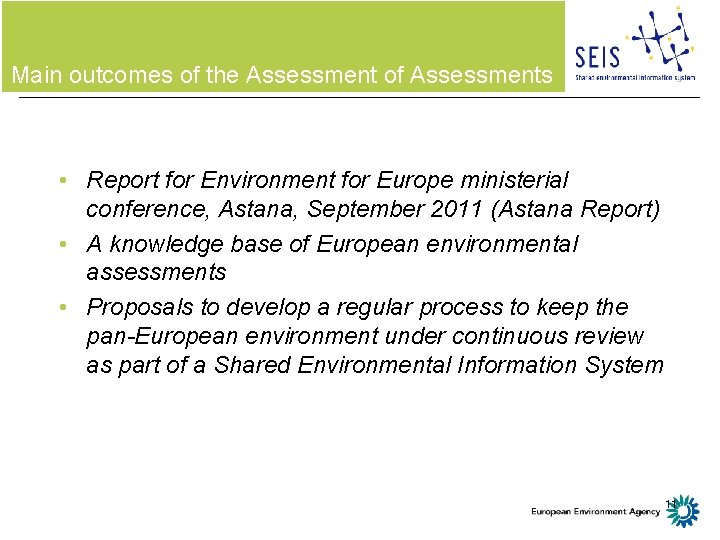
Main outcomes of the Assessment of Assessments • Report for Environment for Europe ministerial conference, Astana, September 2011 (Astana Report) • A knowledge base of European environmental assessments • Proposals to develop a regular process to keep the pan-European environment under continuous review as part of a Shared Environmental Information System 11
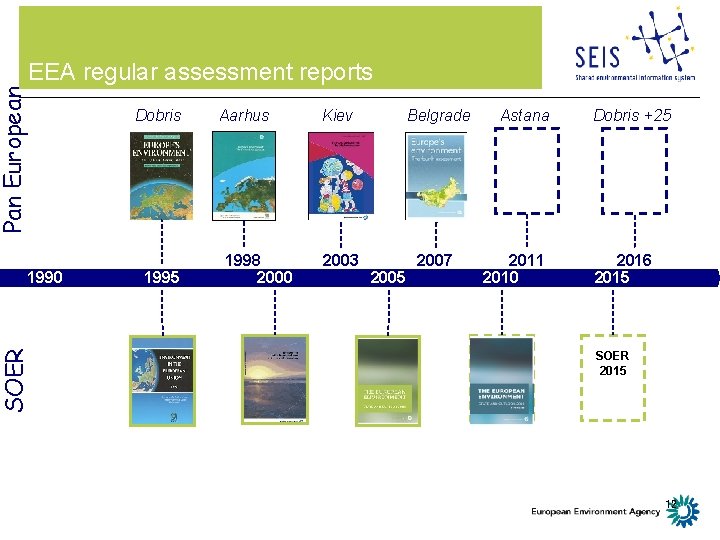
Pan European EEA regular assessment reports SOER 1990 Dobris 1995 Aarhus 1998 2000 Kiev Belgrade 2003 2007 2005 Astana 2011 2010 Dobris +25 2016 2015 SOER 2015 12
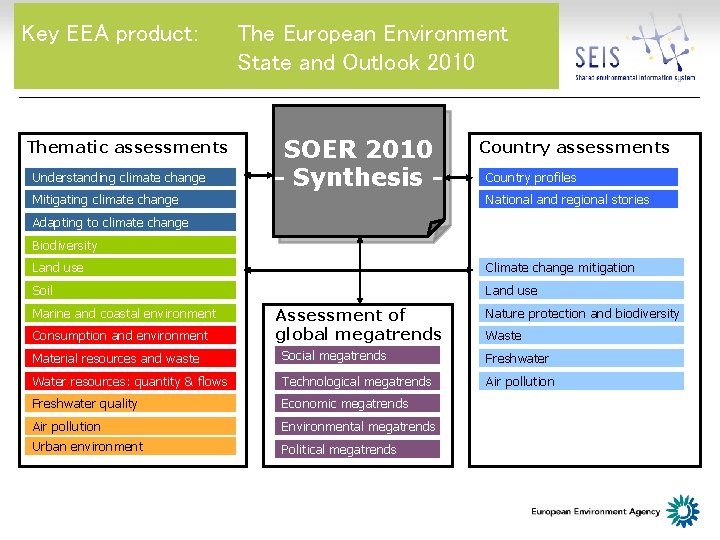
Key EEA product: Thematic assessments Understanding climate change Mitigating climate change The European Environment State and Outlook 2010 SOER 2010 - Synthesis - Country assessments Country profiles National and regional stories Adapting to climate change Biodiversity Common environmental themes Land use Climate change mitigation Soil Land use Marine and coastal environment Consumption and environment Assessment of global megatrends Nature protection and biodiversity Waste Material resources and waste Social megatrends Freshwater Water resources: quantity & flows Technological megatrends Air pollution Freshwater quality Economic megatrends Air pollution Environmental megatrends Urban environment Political megatrends Each EEA member country (32) and EEA cooperating country (6) assessed all six environmental themes above.
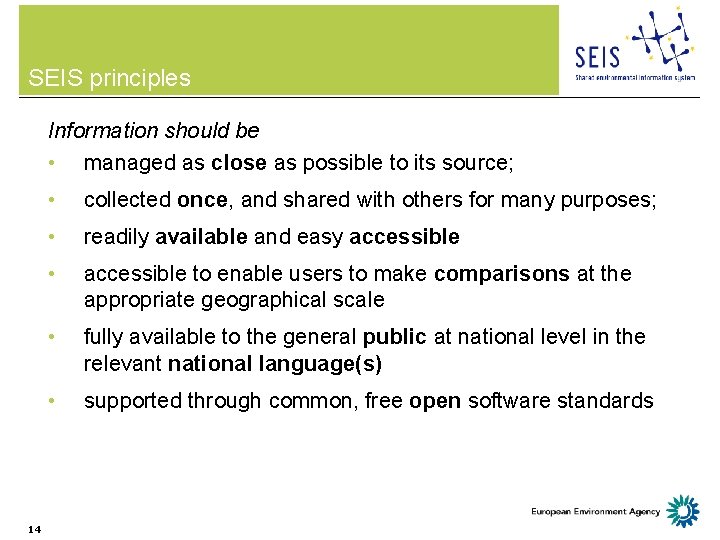
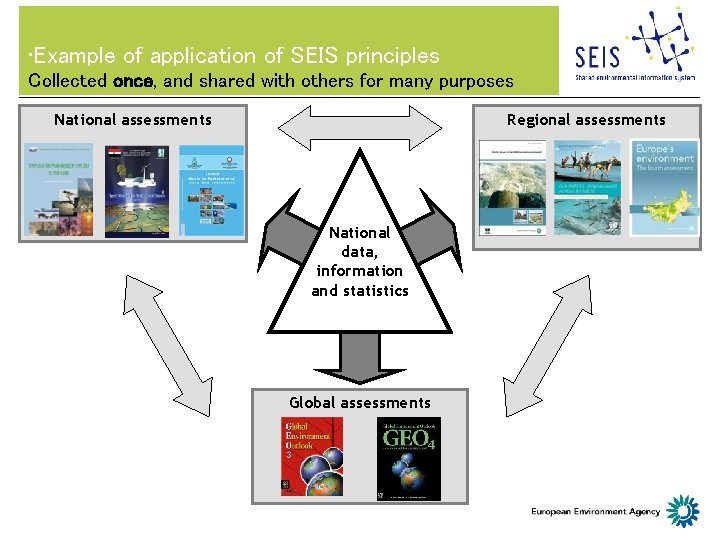
SEIS principles Information should be • managed as close as possible to its source; 14 • collected once, and shared with others for many purposes; • readily available and easy accessible • accessible to enable users to make comparisons at the appropriate geographical scale • fully available to the general public at national level in the relevant national language(s) • supported through common, free open software standards
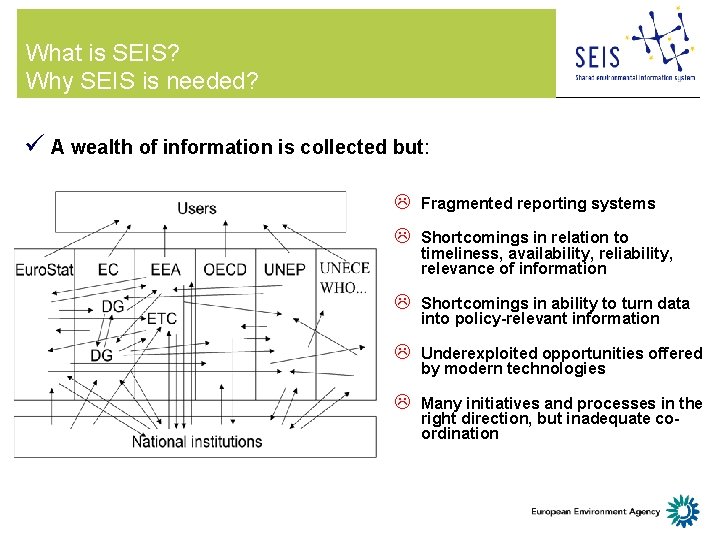
What is SEIS? Why SEIS is needed? ü A wealth of information is collected but: L Fragmented reporting systems L Shortcomings in relation to timeliness, availability, reliability, relevance of information L Shortcomings in ability to turn data into policy-relevant information L Underexploited opportunities offered by modern technologies L Many initiatives and processes in the right direction, but inadequate coordination
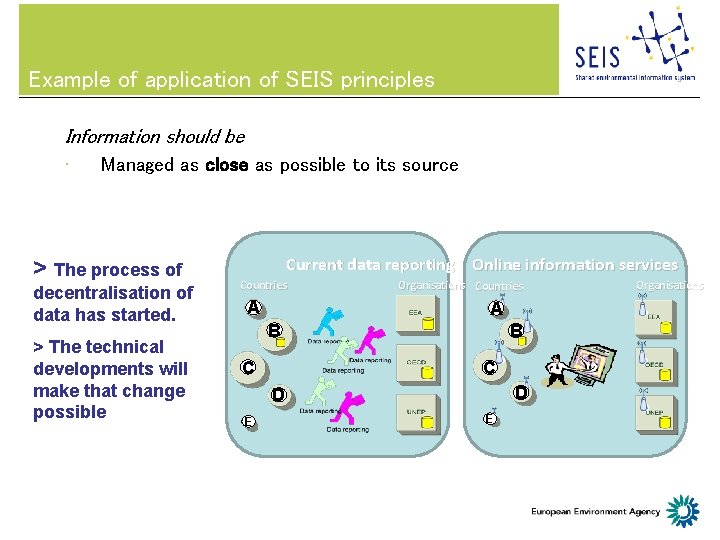
Example of application of SEIS principles Information should be • Managed as close as possible to its source > The process of decentralisation of data has started. > The technical developments will make that change possible Current data reporting Online information services Countries A Organisations Countries A B C D D E E Organisations
• Example of application of SEIS principles Collected once, and shared with others for many purposes National assessments Regional assessments National data, information and statistics Global assessments
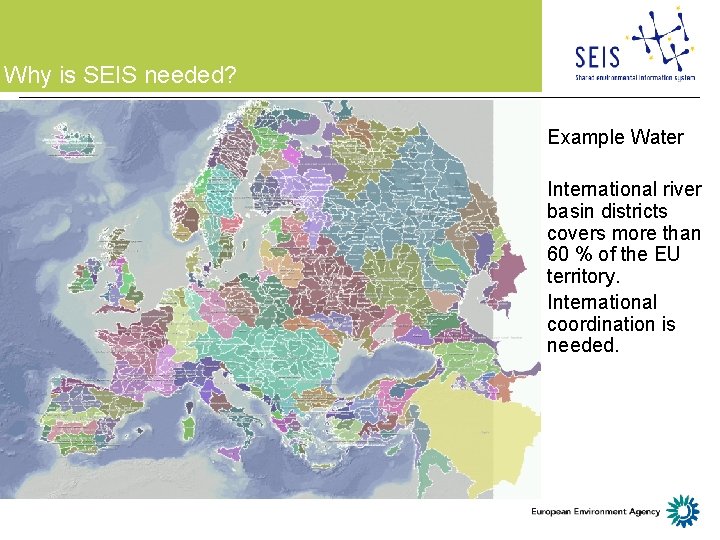
Why is SEIS needed? • Example Water • International river basin districts covers more than 60 % of the EU territory. • International coordination is needed.
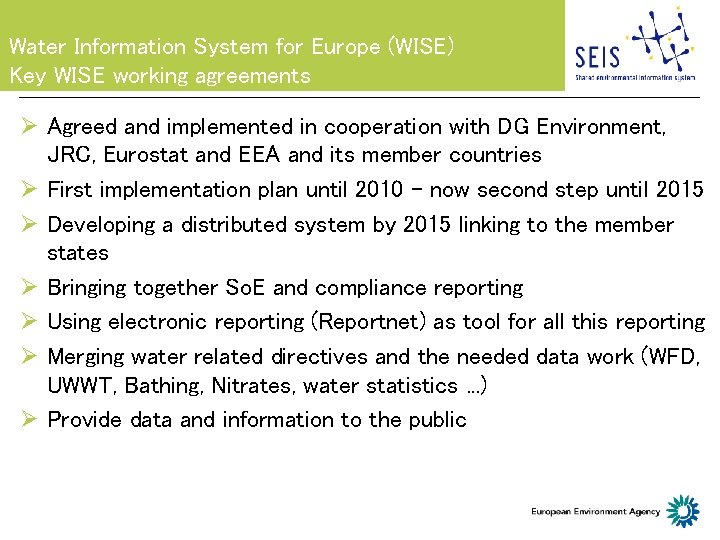
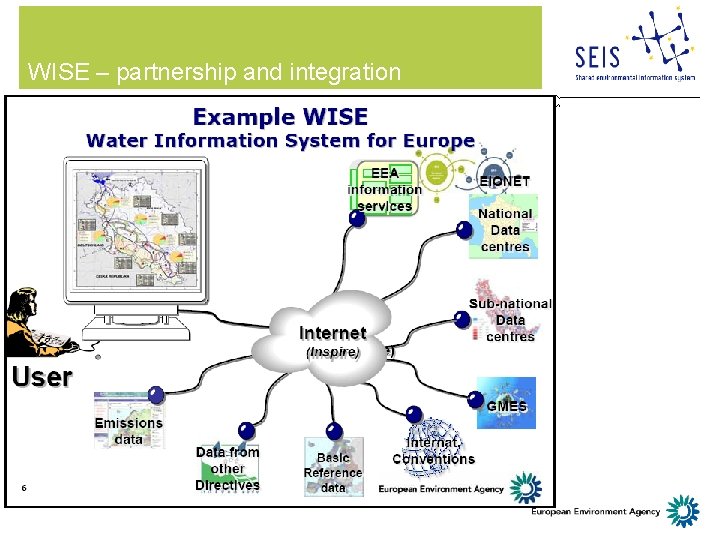
Water Information System for Europe (WISE) Key WISE working agreements Ø Agreed and implemented in cooperation with DG Environment, JRC, Eurostat and EEA and its member countries Ø First implementation plan until 2010 – now second step until 2015 Ø Developing a distributed system by 2015 linking to the member states Ø Bringing together So. E and compliance reporting Ø Using electronic reporting (Reportnet) as tool for all this reporting Ø Merging water related directives and the needed data work (WFD, UWWT, Bathing, Nitrates, water statistics. . . ) Ø Provide data and information to the public
WISE – partnership and integration
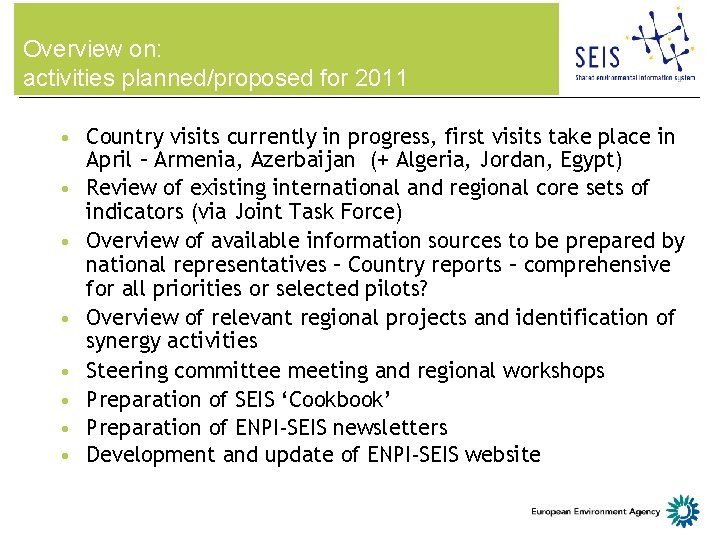
Overview on: activities planned/proposed for 2011 • Country visits currently in progress, first visits take place in April – Armenia, Azerbaijan (+ Algeria, Jordan, Egypt) • Review of existing international and regional core sets of indicators (via Joint Task Force) • Overview of available information sources to be prepared by national representatives – Country reports – comprehensive for all priorities or selected pilots? • Overview of relevant regional projects and identification of synergy activities • Steering committee meeting and regional workshops • Preparation of SEIS ‘Cookbook’ • Preparation of ENPI-SEIS newsletters • Development and update of ENPI-SEIS website
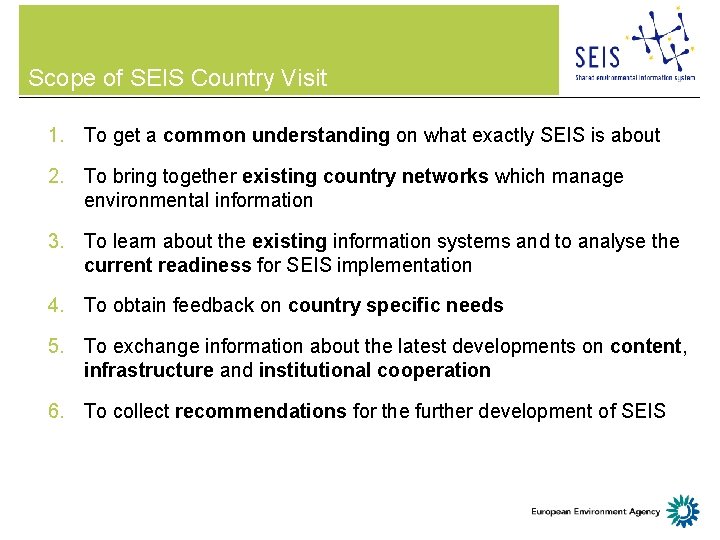
Scope of SEIS Country Visit 1. To get a common understanding on what exactly SEIS is about 2. To bring together existing country networks which manage environmental information 3. To learn about the existing information systems and to analyse the current readiness for SEIS implementation 4. To obtain feedback on country specific needs 5. To exchange information about the latest developments on content, infrastructure and institutional cooperation 6. To collect recommendations for the further development of SEIS
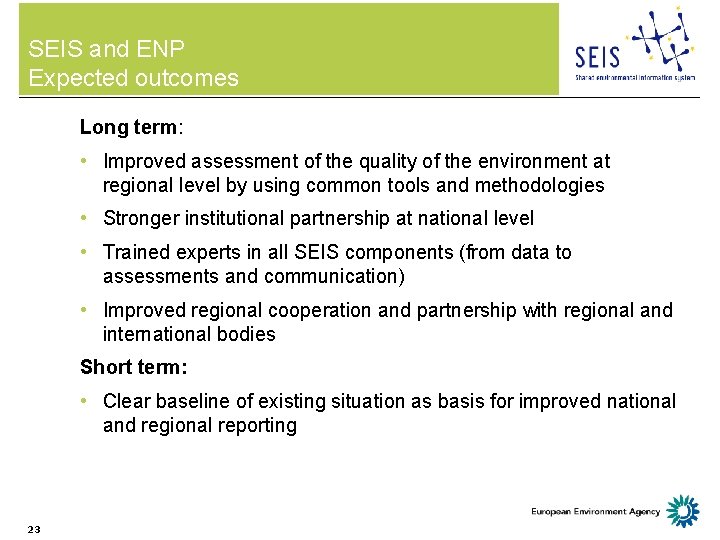
SEIS and ENP Expected outcomes Long term: • Improved assessment of the quality of the environment at regional level by using common tools and methodologies • Stronger institutional partnership at national level • Trained experts in all SEIS components (from data to assessments and communication) • Improved regional cooperation and partnership with regional and international bodies Short term: • Clear baseline of existing situation as basis for improved national and regional reporting 23
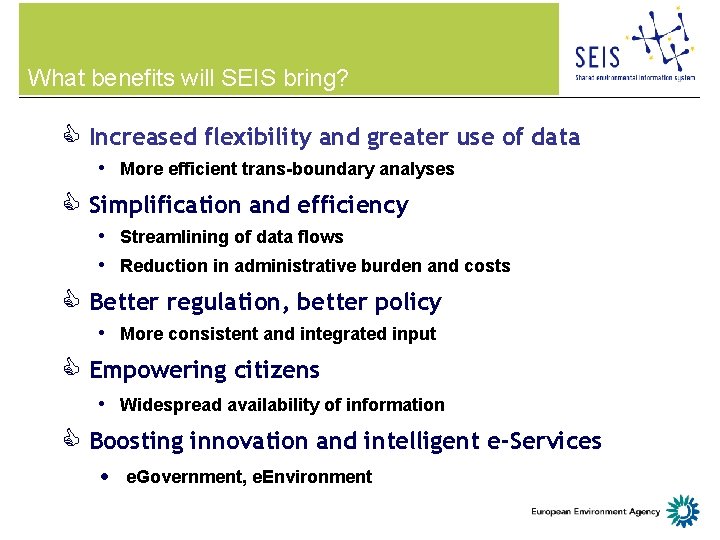
What benefits will SEIS bring? C Increased flexibility and greater use of data • More efficient trans-boundary analyses C Simplification and efficiency • Streamlining of data flows • Reduction in administrative burden and costs C Better regulation, better policy • More consistent and integrated input C Empowering citizens • Widespread availability of information C Boosting innovation and intelligent e-Services • e. Government, e. Environment
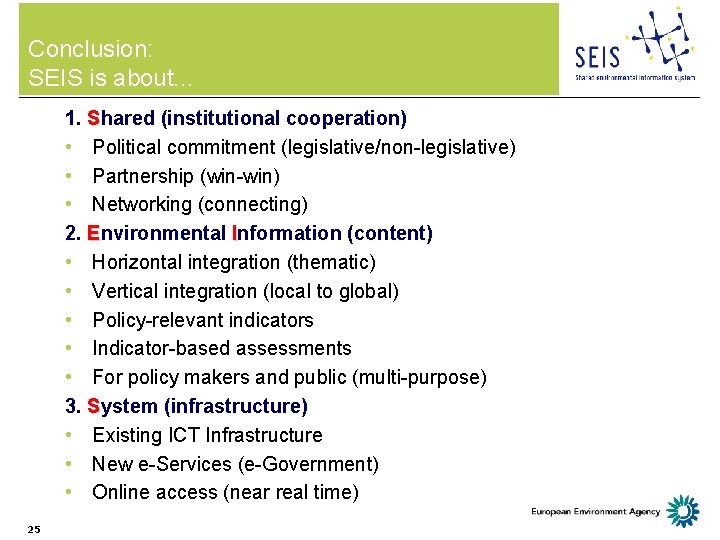
Conclusion: SEIS is about. . . 1. Shared (institutional cooperation) • Political commitment (legislative/non-legislative) • Partnership (win-win) • Networking (connecting) 2. Environmental Information (content) • Horizontal integration (thematic) • Vertical integration (local to global) • Policy-relevant indicators • Indicator-based assessments • For policy makers and public (multi-purpose) 3. System (infrastructure) • Existing ICT Infrastructure • New e-Services (e-Government) • Online access (near real time) 25
Thank you for your attention! Visit us at: http: //enpi-seis. ew. eea. europa. eu/ http: //eea. europa. eu