
Enough for all Biomass resource mapping under spatioeconomic
Enough for all? Biomass resource mapping under spatio-economic constraints Bernd Möller, Ph. D. Sustainable Energy Planning & Management Group Department of Development and Planning Aalborg University, Denmark
Spatial and economic constraints of biomass for energy • Production of photosynthetic biomass is highly dispersed • Biomass “consumes” land: area competition • Life cycle of biomass: include substitution effects • CO 2 neutrality only in the long run: monitoring and maintenance of global forest carbon stocks • Economies of scale, energy efficiency and competition with fossil fuels • Sourcing in DK: import vs. local supply strategies

Global biomass is unevenly distributed Global distribution of biomass flux in energy units. Source: Sørensen, 2001
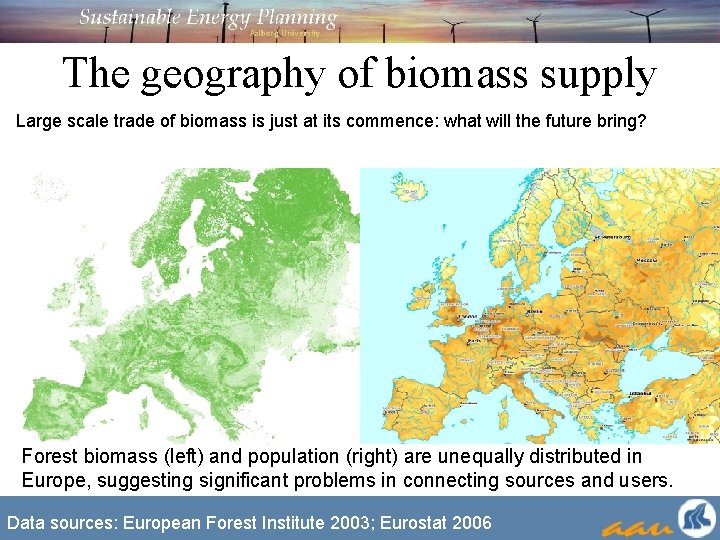
The geography of biomass supply Large scale trade of biomass is just at its commence: what will the future bring? Forest biomass (left) and population (right) are unequally distributed in Europe, suggesting significant problems in connecting sources and users. Data sources: European Forest Institute 2003; Eurostat 2006
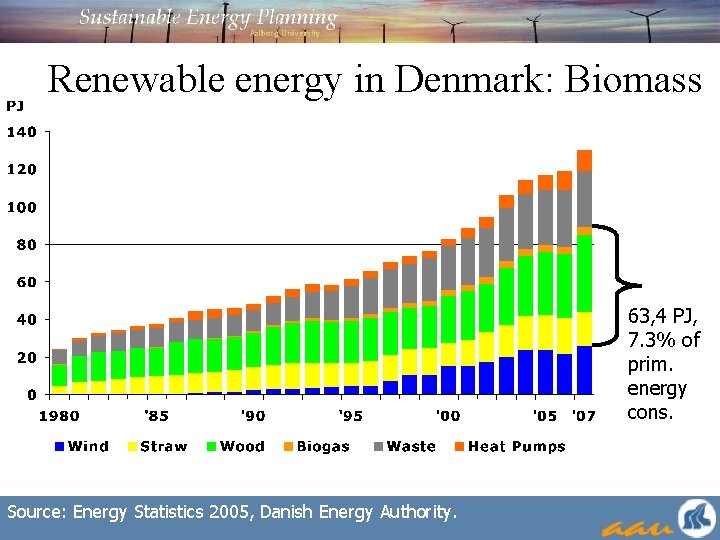
Renewable energy in Denmark: Biomass 63, 4 PJ, 7. 3% of prim. energy cons. Source: Energy Statistics 2005, Danish Energy Authority.
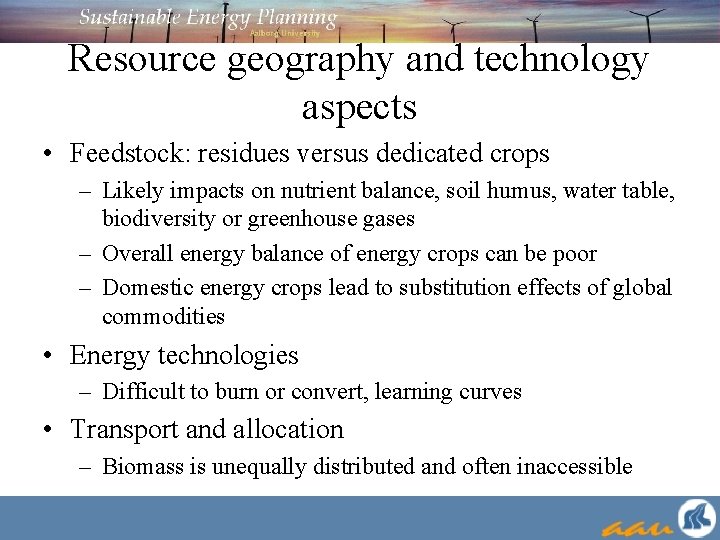
Resource geography and technology aspects • Feedstock: residues versus dedicated crops – Likely impacts on nutrient balance, soil humus, water table, biodiversity or greenhouse gases – Overall energy balance of energy crops can be poor – Domestic energy crops lead to substitution effects of global commodities • Energy technologies – Difficult to burn or convert, learning curves • Transport and allocation – Biomass is unequally distributed and often inaccessible
![Domestic biomass potential & consumption [PJ] Potential Demand Share (ENS) (2005) utilised Demand (ref.](http://slidetodoc.com/presentation_image_h2/337e959cbaf5d69a8011123fa67eb91d/image-7.jpg "Domestic biomass potential & consumption [PJ] Potential Demand Share (ENS) (2005) utilised Demand (ref.")
Domestic biomass potential & consumption [PJ] Potential Demand Share (ENS) (2005) utilised Demand (ref. 2030) Potential Demand (Felby) (IDA 2030) Straw 55 18 32. 5% 27 55 25 Wood, total 40 38. 3 95. 8 45 40 40 Manure, biogas 40 4 9. 3% 6. 5 40 32 Manure, fibre fract. 0 0 0. 0% 0 108 0 Energy crops 0 0 0. 0% 0 144 54 30 30 99. 7% 52 30 30 165 89. 5 54. 3% 131 417 180 M. H. Waste Sum Source: Danish Association of Engineers (IDA), Energy Plan 2030
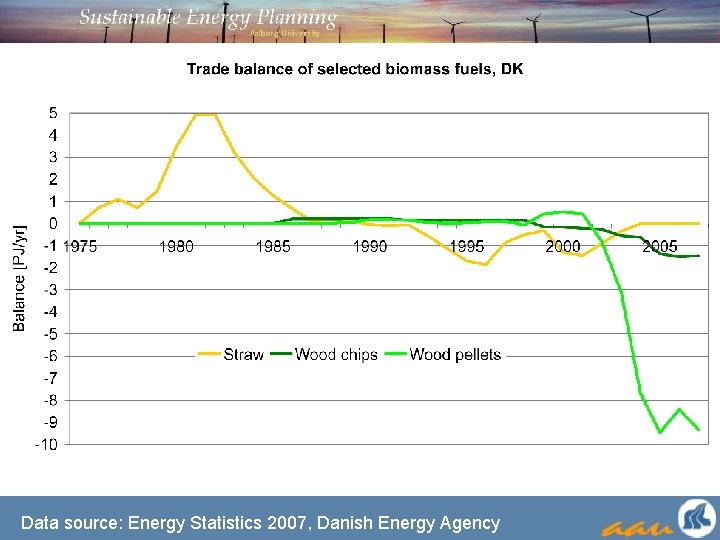
Data source: Energy Statistics 2007, Danish Energy Agency
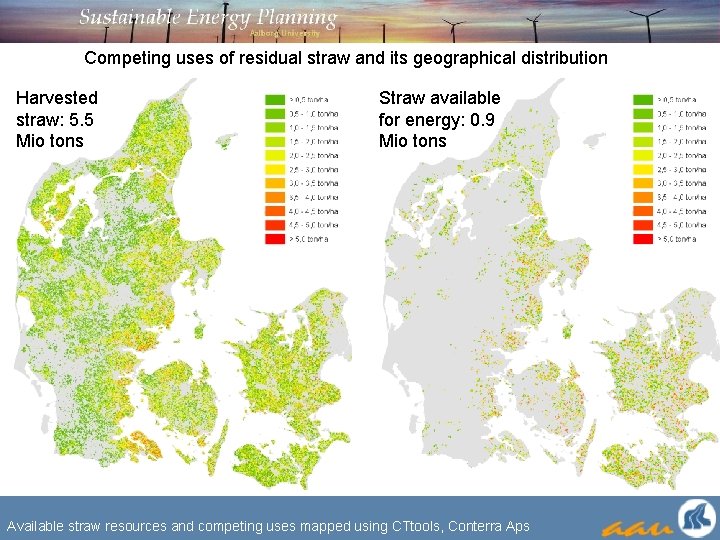
Competing uses of residual straw and its geographical distribution Harvested straw: 5. 5 Mio tons Straw available for energy: 0. 9 Mio tons Available straw resources and competing uses mapped using CTtools, Conterra Aps
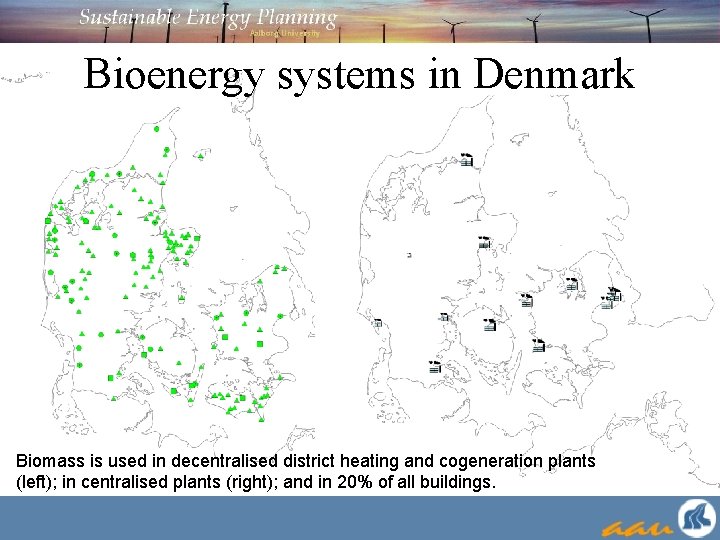
Bioenergy systems in Denmark Biomass is used in decentralised district heating and cogeneration plants (left); in centralised plants (right); and in 20% of all buildings.
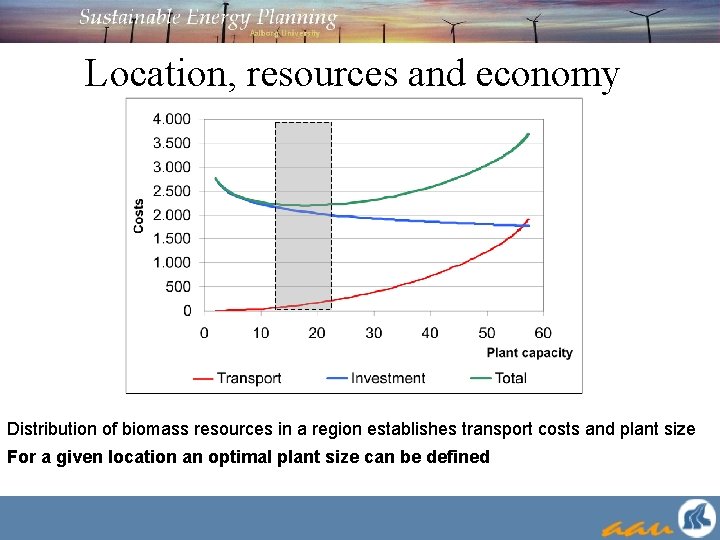
Location, resources and economy Distribution of biomass resources in a region establishes transport costs and plant size For a given location an optimal plant size can be defined
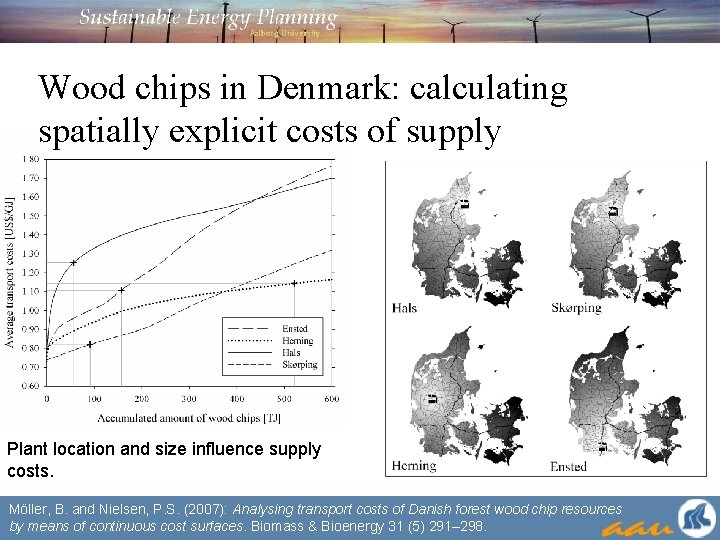
Wood chips in Denmark: calculating spatially explicit costs of supply Plant location and size influence supply costs. Möller, B. and Nielsen, P. S. (2007): Analysing transport costs of Danish forest wood chip resources by means of continuous cost surfaces. Biomass & Bioenergy 31 (5) 291– 298.
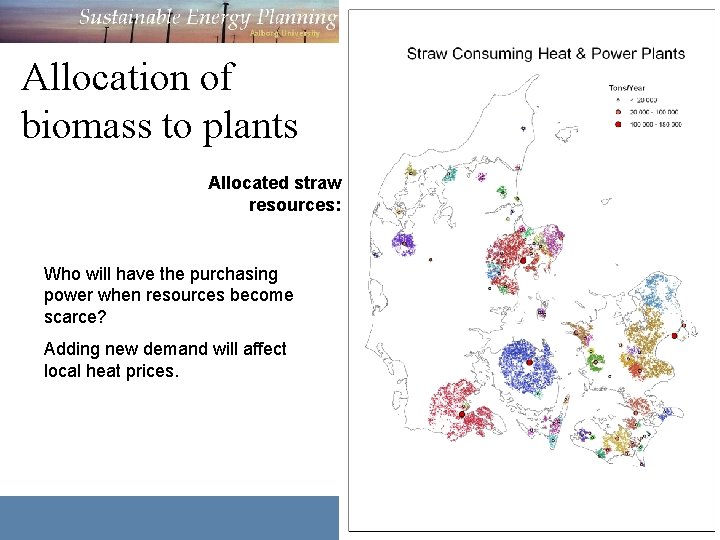
Allocation of biomass to plants Allocated straw resources: Who will have the purchasing power when resources become scarce? Adding new demand will affect local heat prices.
Conclusions • Biomass resources must be analysed as an integrated part of future energy systems: – Relative to regional availability (potentials & costs) – Including economies and efficiencies of scale – With respect to regional allocation • Energy crops and residual biomass can not necessarily be treated as any other commodity • Eventually biomass will become as scarce as fossil fuels and food.
Please visit www. energyplanning. aau. dk for information on the international M. Sc. Programme Sustainable Energy Planning & Management at Aalborg University
- Slides: 15