
Enough About Leaders What About Followers Andrew Graham
Enough About Leaders: What About Followers? Andrew Graham School of Police Studies Queen’s University
Followership “The function of leadership is to produce more leaders, not more followers. ” Ralph Nader 2
Followership “A follower shares in an influence relationship among leaders and other followers with the intent to support leaders who reflect their mutual purposes. ” — Rodger Adair Ph. D 3
Then, why does the concept of followership get such a bad rap?
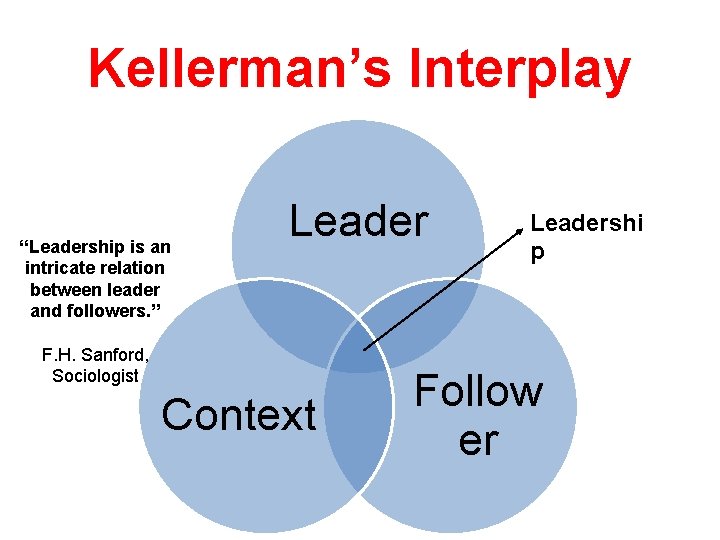
Kellerman’s Interplay “Leadership is an intricate relation between leader and followers. ” Leader F. H. Sanford, Sociologist Context Leadershi p Follow er
The Complicated Role of Followers “In any organization, followers can have as much influence on a leader as does a leader on the followers. Followers often abdicate responsibility and become sycophants or toadies. Leaders and followers often share a folie a deux, a collective madness that allows each side to accept uncritically common goals and behavior. ”
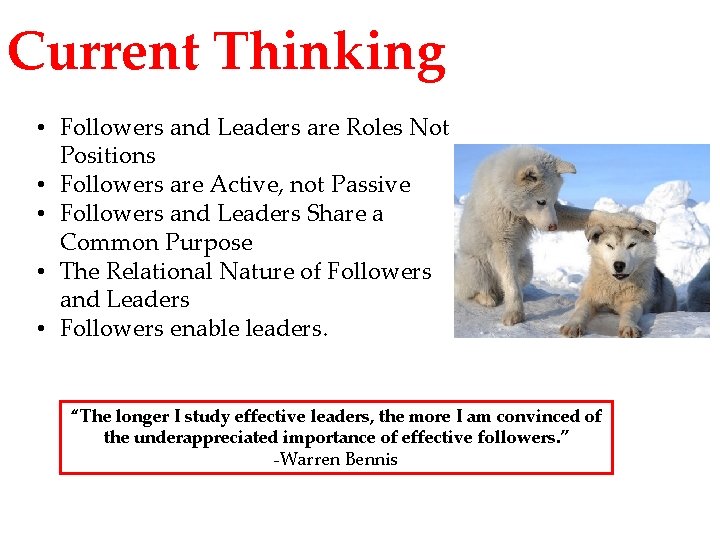
Current Thinking • Followers and Leaders are Roles Not Positions • Followers are Active, not Passive • Followers and Leaders Share a Common Purpose • The Relational Nature of Followers and Leaders • Followers enable leaders. “The longer I study effective leaders, the more I am convinced of the underappreciated importance of effective followers. ” -Warren Bennis
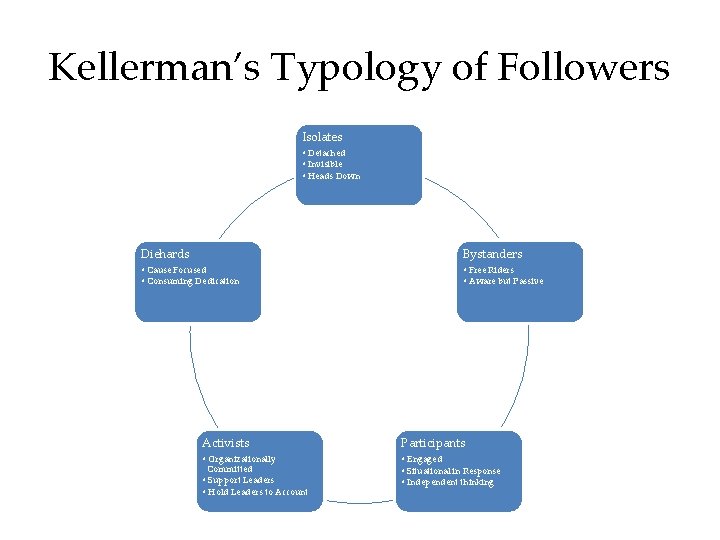
Kellerman’s Typology of Followers Isolates • Detached • Invisible • Heads Down Diehards Bystanders • Cause Focused • Consuming Dedication • Free Riders • Aware but Passive Activists Participants • Organizationally • Engaged • Situational in Response • Independent thinking Committed • Support Leaders • Hold Leaders to Account
Alienated Followers • • Are critical and independent in thinking but fulfill their role without enthusiasm Are often cynical and disgruntled Distance themselves from the organization and ownership of its mission May have experienced an obstacle or setback within the organization and given up
Passive Followers • • • Do not exhibit independent thinking or active participation Limit their activity to what they are told to do Are often the result of leaders who are overcontrolling of others and who punish mistakes
Conformist Followers • • • Are sometimes called “yes” people Actively participate but do not use critical thinking skills Typically carry out all duties without question Participate willingly but do not consider consequences Are concerned only with avoiding conflicts
Pragmatic Followers • • Have qualities of all follower styles – depending on what fits with the current situation Use whatever style best benefits their own position and minimizes their own risks Do not state their opinion on issues affecting the organization Will not take a stand, so are difficult to trust
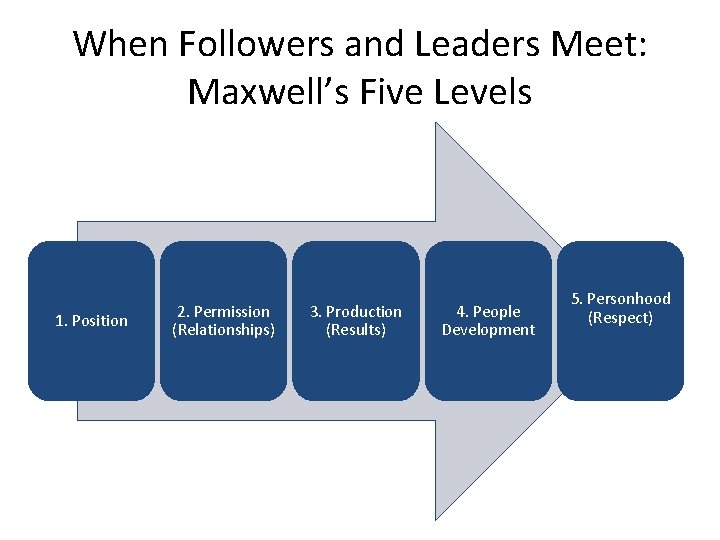
When Followers and Leaders Meet: Maxwell’s Five Levels 1. Position 2. Permission (Relationships) 3. Production (Results) 4. People Development 5. Personhood (Respect)
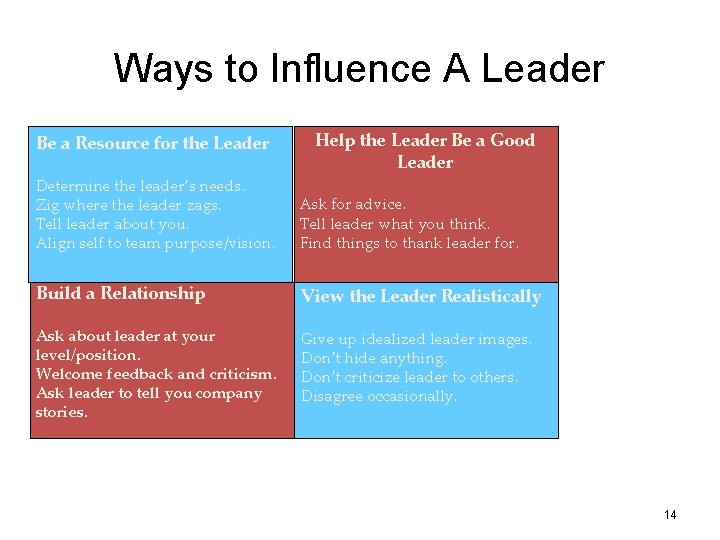
Ways to Influence A Leader Be a Resource for the Leader Help the Leader Be a Good Leader Determine the leader’s needs. Zig where the leader zags. Tell leader about you. Align self to team purpose/vision. Ask for advice. Tell leader what you think. Find things to thank leader for. Build a Relationship View the Leader Realistically Ask about leader at your level/position. Welcome feedback and criticism. Ask leader to tell you company stories. Give up idealized leader images. Don’t hide anything. Don’t criticize leader to others. Disagree occasionally. 14
What are the tools of resistance followers can use?
Leaders of followers… and leaders as followers • Followers have many roles to play and compliance is only one of them • Have to watch your mix of followers • Have to appreciate and use or leverage leadership in your followers • Disengagement is a poor option • Confronting oppositional followership is essential • Changing relationships as we push more team work, more soft interaction and adapt to an age of constant chatter, often about the leader
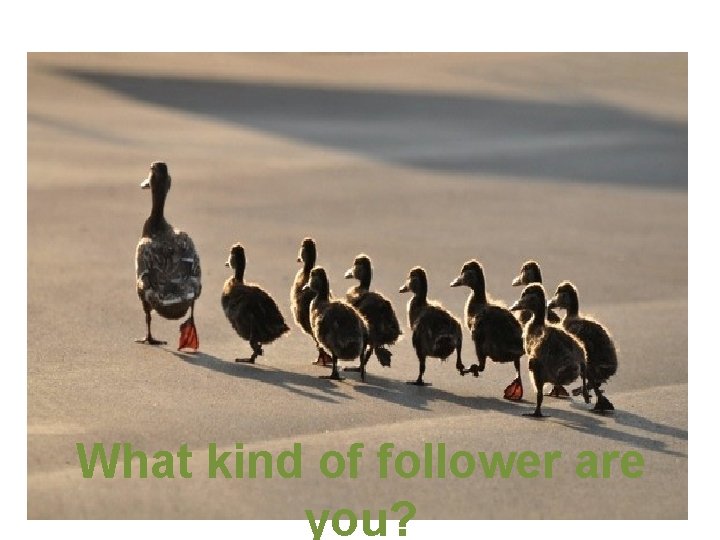
What kind of follower are you?
- Slides: 17