
Enlightenment Thinkers Today you will read about eight
Enlightenment Thinkers Today, you will read about eight Enlightenment thinkers & complete a Tree Map in your Note Books for six. As you read through the Power Point think about which Enlightenment ideas have influenced the United States Government.
Cesare Beccaria ( No notes-just read) � Rights of the Accused � Was a criminologist. � Believed people accused of a crime have right to fair treatment. � Believed that laws exist to protect security/order. � Did NOT believe torture should be used; no death penalty. � Punishment must fit the crime.
John Locke Natural Rights Governments get their power from the people they govern, not from God. People form communities and give power to a government in a social contract. The purpose of government is to protect life, liberty and property. People have the right to overthrown a government that is abusive to its people.
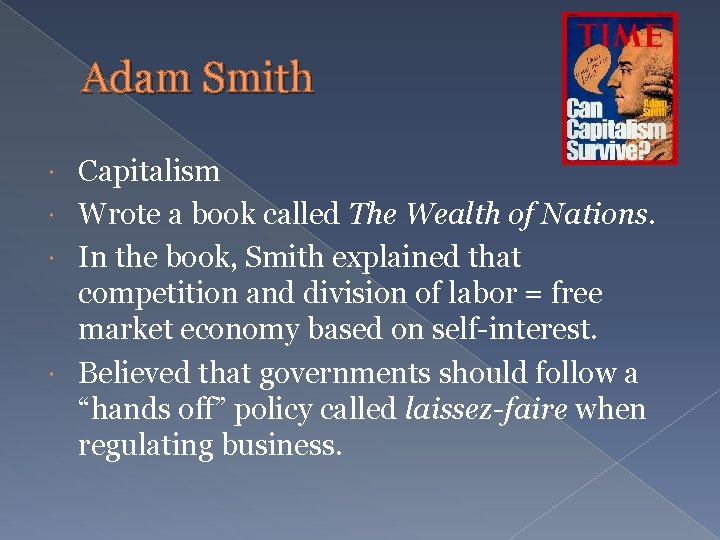
Adam Smith Capitalism Wrote a book called The Wealth of Nations. In the book, Smith explained that competition and division of labor = free market economy based on self-interest. Believed that governments should follow a “hands off” policy called laissez-faire when regulating business.
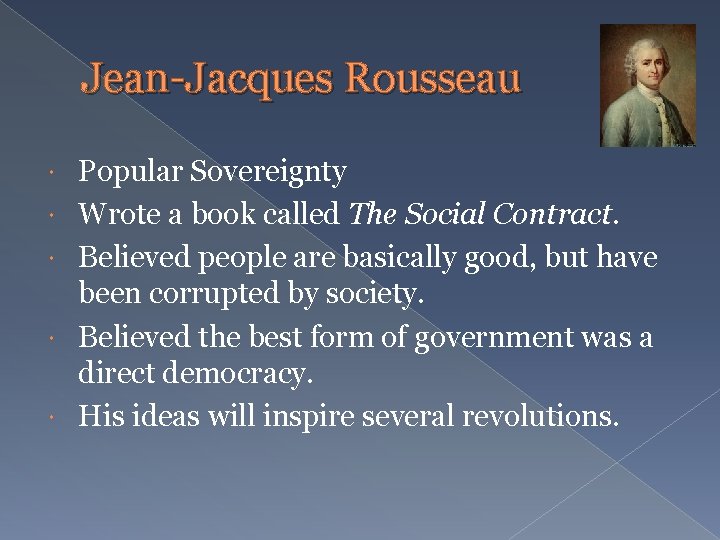
Jean-Jacques Rousseau Popular Sovereignty Wrote a book called The Social Contract. Believed people are basically good, but have been corrupted by society. Believed the best form of government was a direct democracy. His ideas will inspire several revolutions.
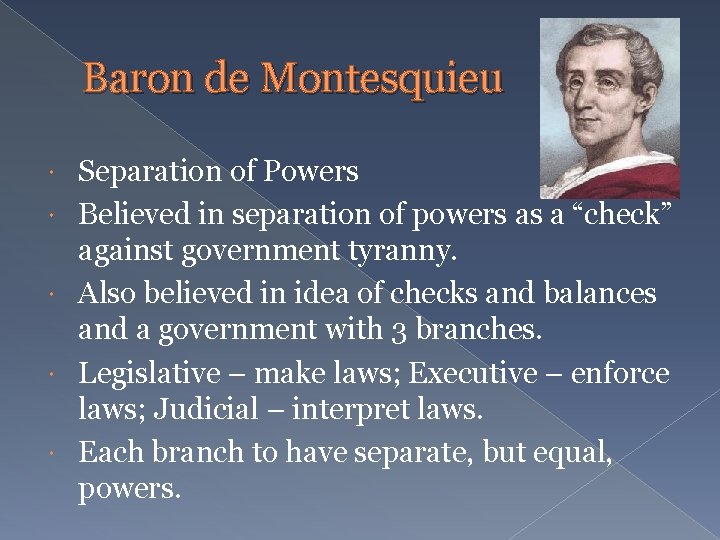
Baron de Montesquieu Separation of Powers Believed in separation of powers as a “check” against government tyranny. Also believed in idea of checks and balances and a government with 3 branches. Legislative – make laws; Executive – enforce laws; Judicial – interpret laws. Each branch to have separate, but equal, powers.
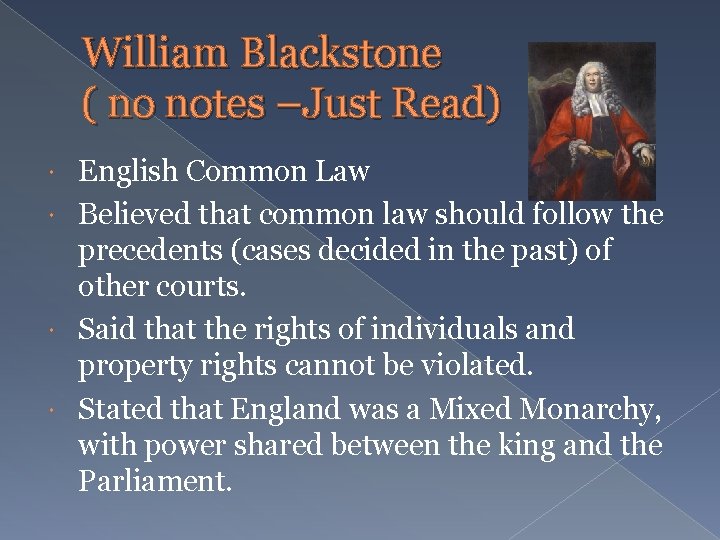
William Blackstone ( no notes –Just Read) English Common Law Believed that common law should follow the precedents (cases decided in the past) of other courts. Said that the rights of individuals and property rights cannot be violated. Stated that England was a Mixed Monarchy, with power shared between the king and the Parliament.
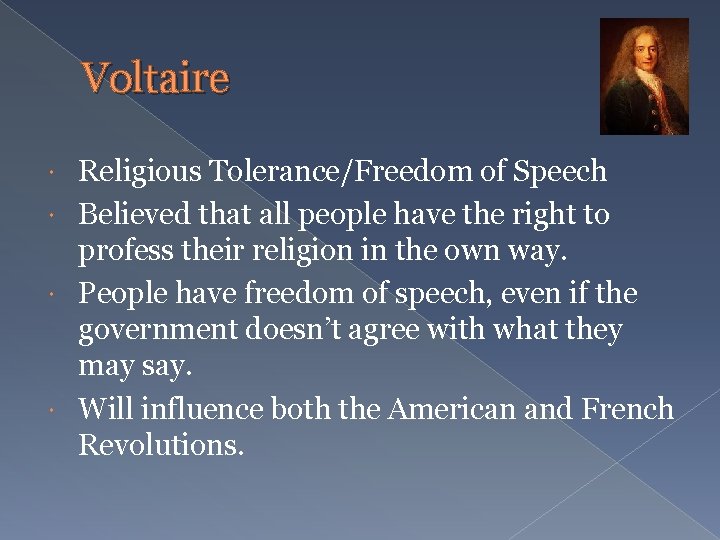
Voltaire Religious Tolerance/Freedom of Speech Believed that all people have the right to profess their religion in the own way. People have freedom of speech, even if the government doesn’t agree with what they may say. Will influence both the American and French Revolutions.
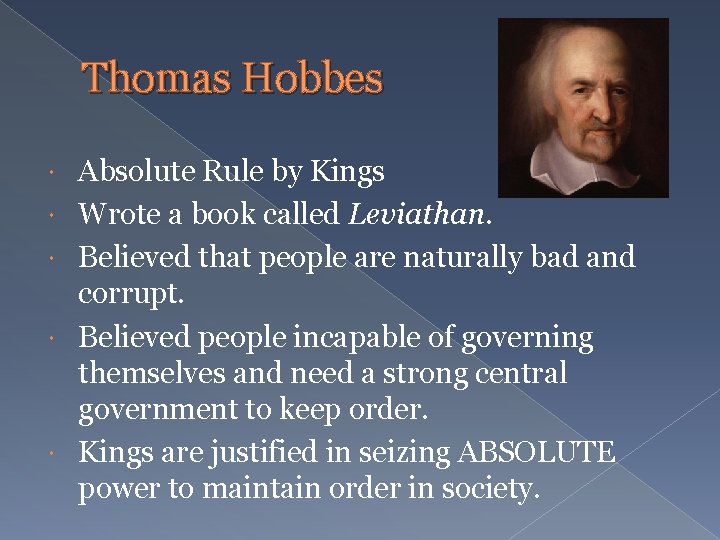
Thomas Hobbes Absolute Rule by Kings Wrote a book called Leviathan. Believed that people are naturally bad and corrupt. Believed people incapable of governing themselves and need a strong central government to keep order. Kings are justified in seizing ABSOLUTE power to maintain order in society.
- Slides: 9