
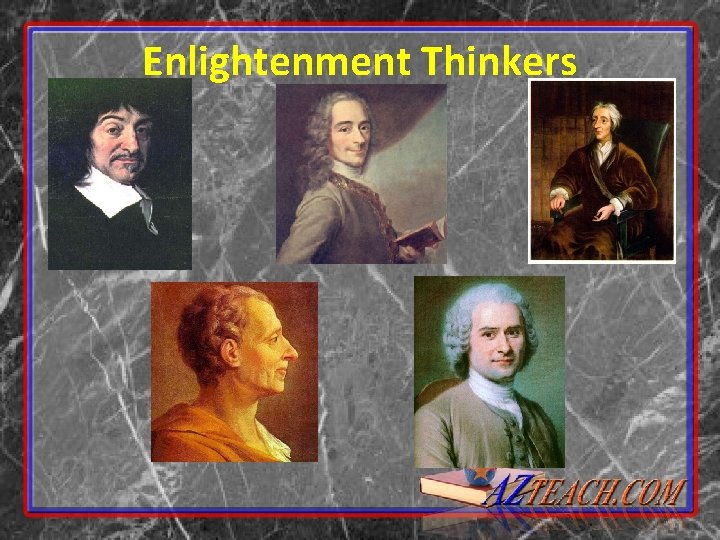
Enlightenment Thinkers Ren Descartes 1596 1650 French philosopher
- Slides: 10
Enlightenment Thinkers
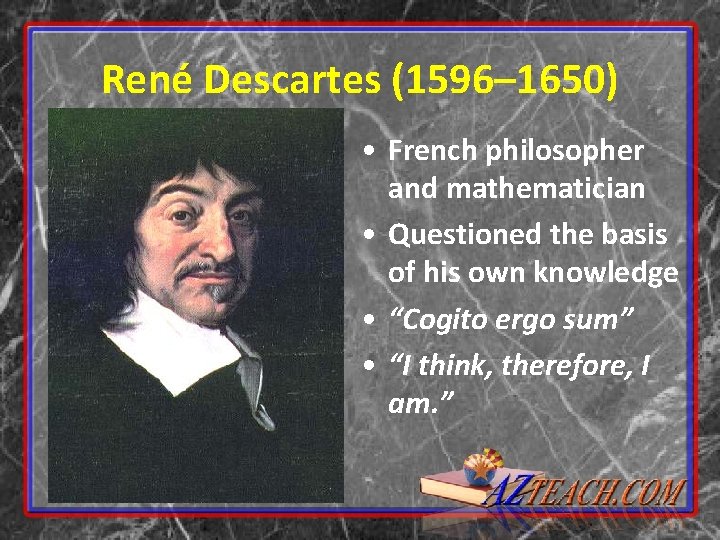
René Descartes (1596– 1650) • French philosopher and mathematician • Questioned the basis of his own knowledge • “Cogito ergo sum” • “I think, therefore, I am. ”
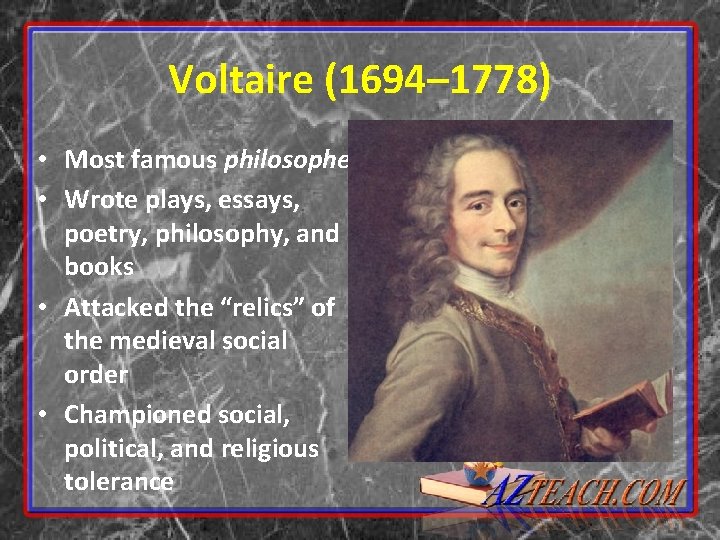
Voltaire (1694– 1778) • Most famous philosophe • Wrote plays, essays, poetry, philosophy, and books • Attacked the “relics” of the medieval social order • Championed social, political, and religious tolerance
Voltaire (con’t) • Credited with the idea of freedom of speech. • He was very critical of the French government and the Roman Catholic Church. • Was imprisoned in the Bastille twice. • “I do not agree with what you have to say, but I'll defend to the death your right to say it”.
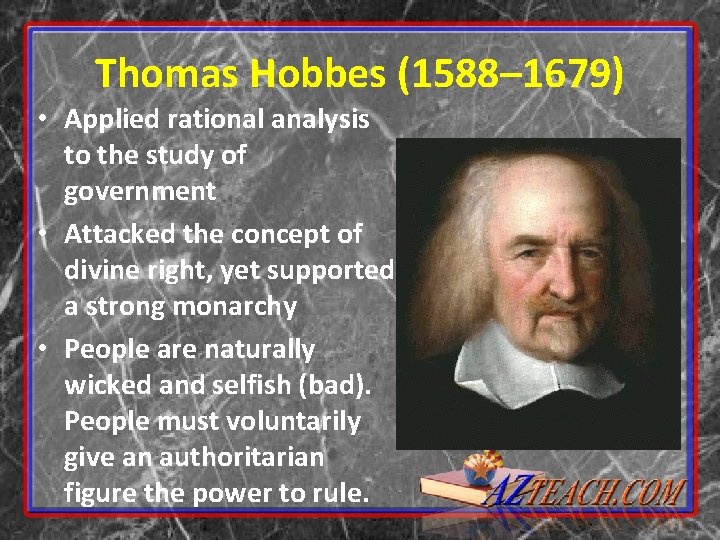
Thomas Hobbes (1588– 1679) • Applied rational analysis to the study of government • Attacked the concept of divine right, yet supported a strong monarchy • People are naturally wicked and selfish (bad). People must voluntarily give an authoritarian figure the power to rule.
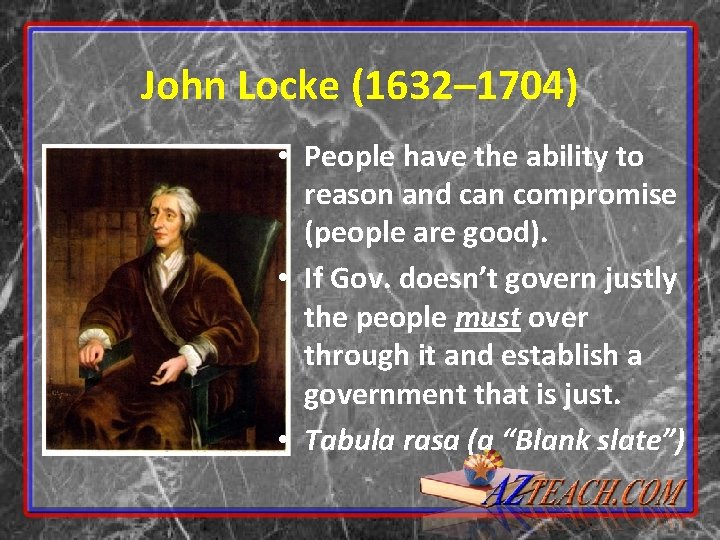
John Locke (1632– 1704) • People have the ability to reason and can compromise (people are good). • If Gov. doesn’t govern justly the people must over through it and establish a government that is just. • Tabula rasa (a “Blank slate”)
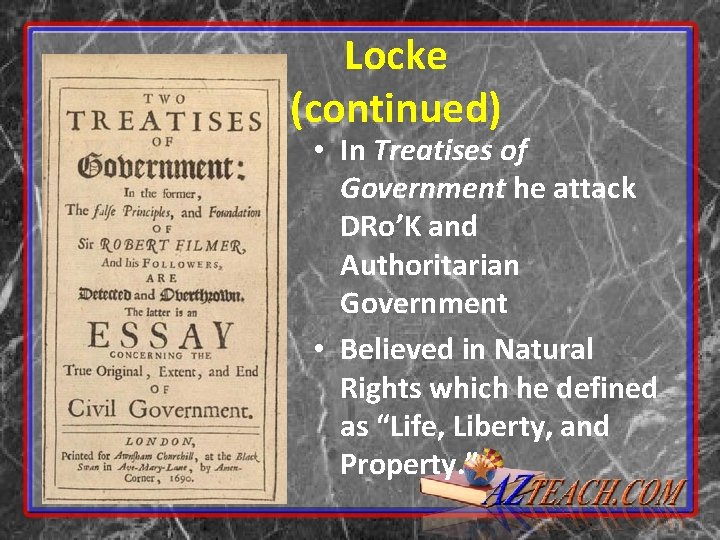
Locke (continued) • In Treatises of Government he attack DRo’K and Authoritarian Government • Believed in Natural Rights which he defined as “Life, Liberty, and Property. ”
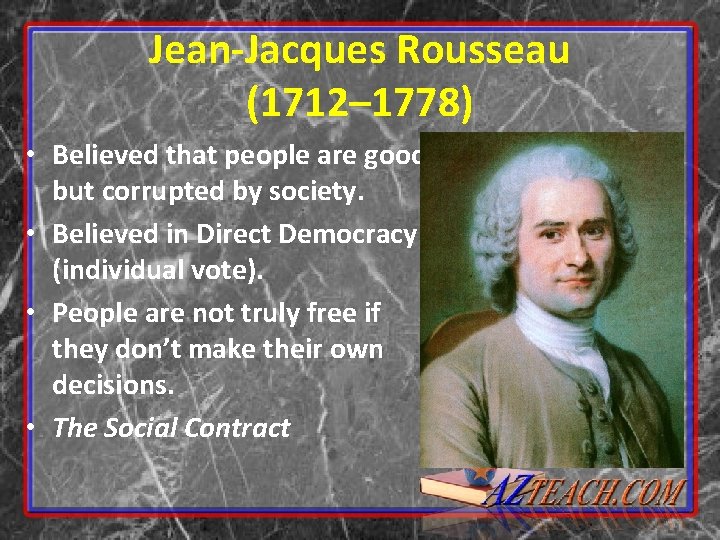
Jean-Jacques Rousseau (1712– 1778) • Believed that people are good but corrupted by society. • Believed in Direct Democracy (individual vote). • People are not truly free if they don’t make their own decisions. • The Social Contract
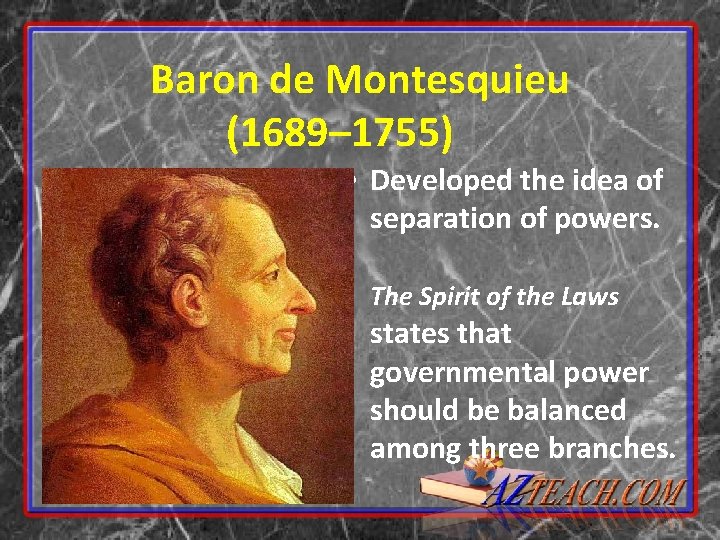
Baron de Montesquieu (1689– 1755) • Developed the idea of separation of powers. • The Spirit of the Laws states that governmental power should be balanced among three branches.
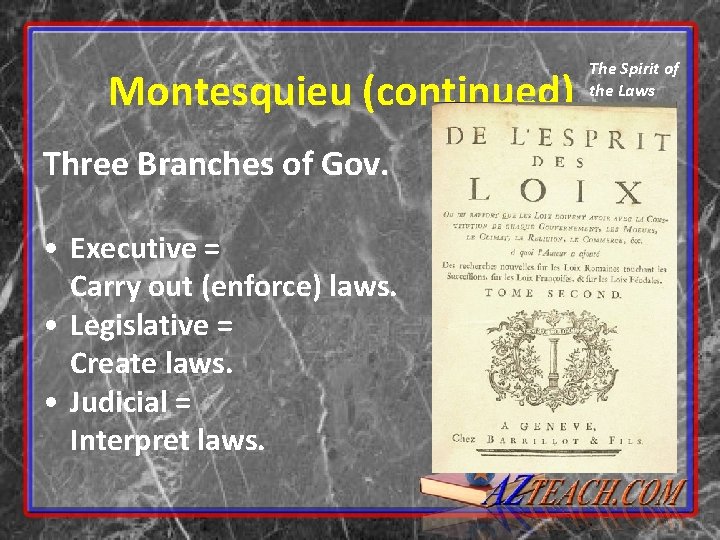
Montesquieu (continued) Three Branches of Gov. • Executive = Carry out (enforce) laws. • Legislative = Create laws. • Judicial = Interpret laws. The Spirit of the Laws