
Enlightenment The Enlightenment n What is the Enlightenment

- Slides: 12
Enlightenment
The Enlightenment n What is the Enlightenment? Period of the mid 1600 s-1700 s n Europeans believed “reason” could be used to make governments and society better n n “Reason” refers to education as opposed to tradition or faith
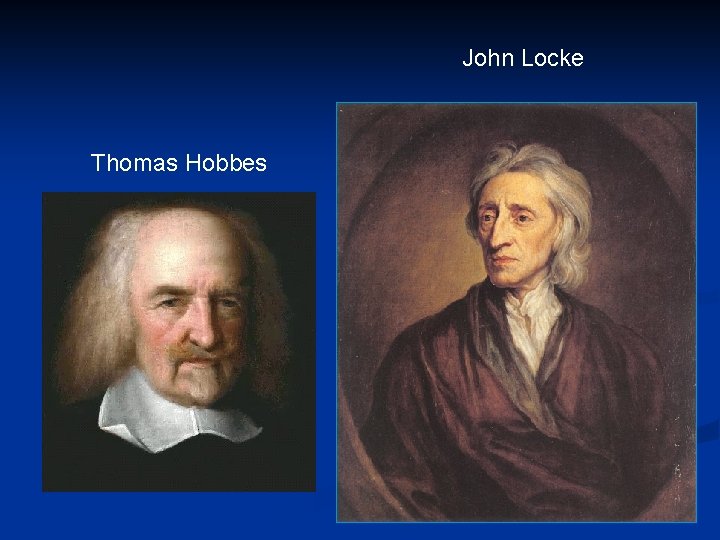
Enlightenment Thinkers – Hobbes and Locke n Thomas Hobbes (Leviathan) Distrusts people, favored a strong government n “Social Contract” – order by giving power to a monarch n n John Locke (Two Treatises on Government) Government gets power from the people n People have the right to overthrow an unjust government n Government must protect people’s “natural rights” n
John Locke Thomas Hobbes
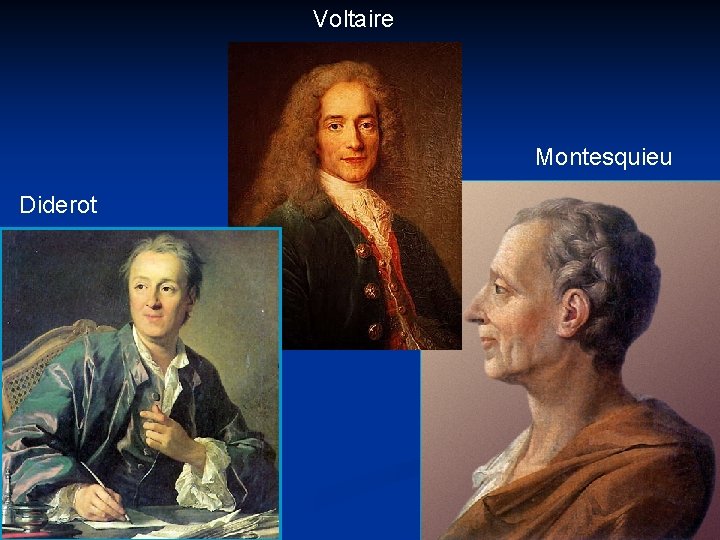
Important Thinkers n Voltaire n n Champion of freedom of speech and religious toleration Denis Diderot – Encyclopedia n Set of books on Enlightenment ideas n Spread n Enlightenment ideas throughout Europe Montesquieu n Favored the separation of powers in government n Prevents one person from having too much power
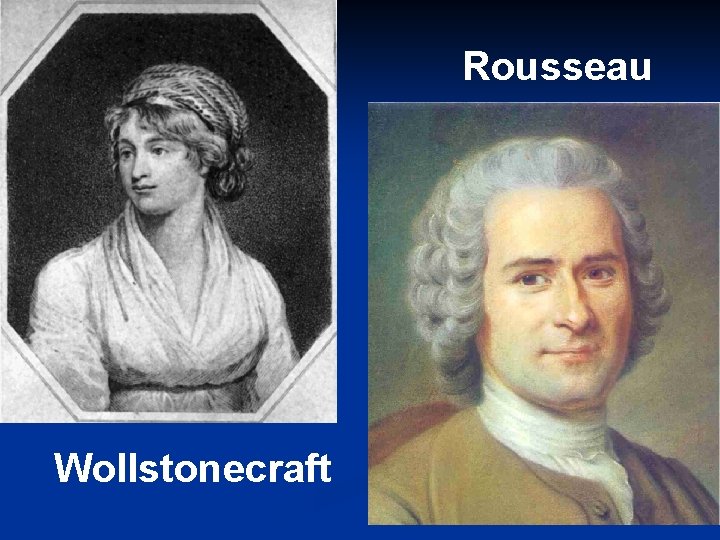
Important Thinkers (cont) n Mary Wollstonecraft n Wrote A Vindication of the Rights of Women (1792) n Called n for women to have equal rights as men Jean-Jacques Rousseau n Wrote The Social Contract (1762) n Everyone in a society agrees to be governed by what society as a whole wants
Rousseau Wollstonecraft
Voltaire Montesquieu Diderot
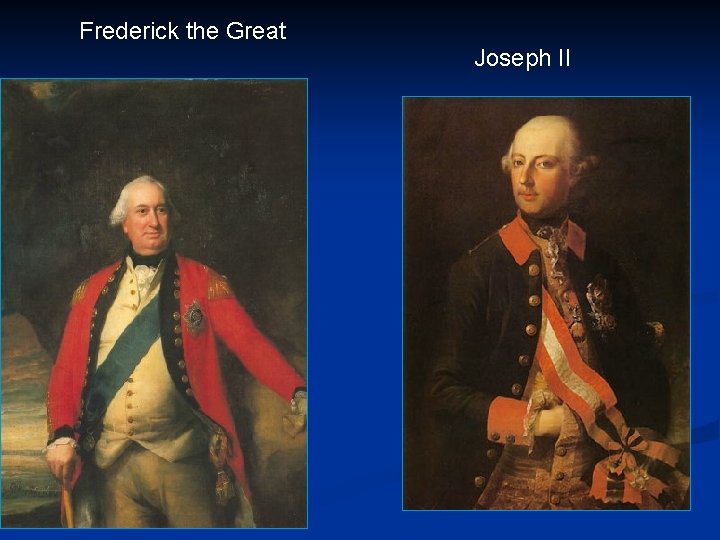
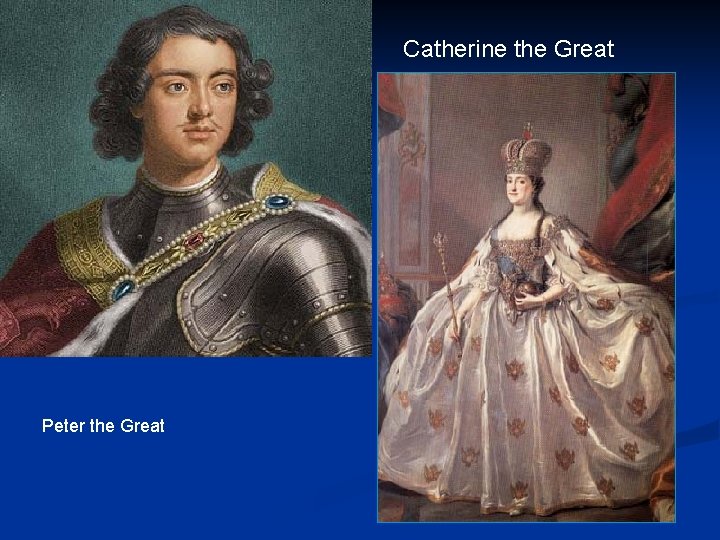
Enlightenment and Monarchy n Enlightened Autocrats n Monarchs who embrace Enlightenment ideas and values to strengthen their rule n Monarchs n n n Education Religious freedom, freedom of the press Reform the justice system and abolish torture n The n n tried to reform their countries Enlightened Autocrats Frederick the Great of Prussia Joseph II of Austria Catherine the Great of Russia Peter the Great of Russia
Frederick the Great Joseph II
Catherine the Great Peter the Great
END