
Enlightenment SOL 6 d Age of Enlightenment Period
- Slides: 41
Enlightenment SOL 6 d
Age of Enlightenment • Period of logical thinking and reasoning • Few rulers embraced the philosophies of the enlightenment-those that did were called enlightened despots
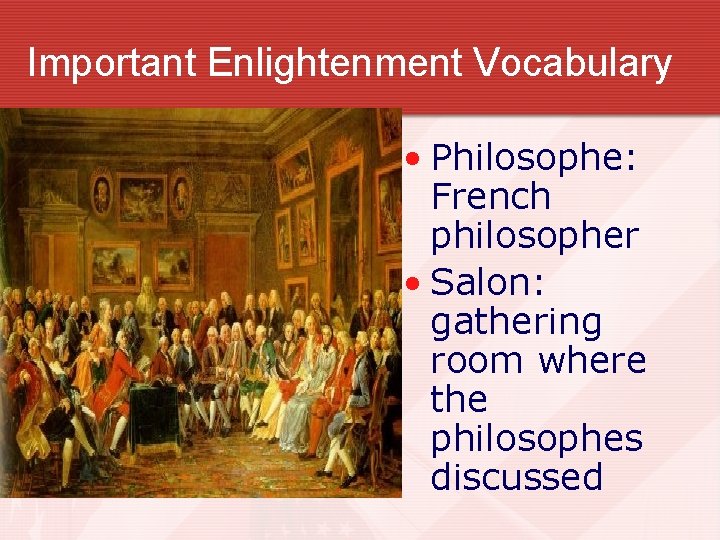
Important Enlightenment Vocabulary • Philosophe: French philosopher • Salon: gathering room where the philosophes discussed
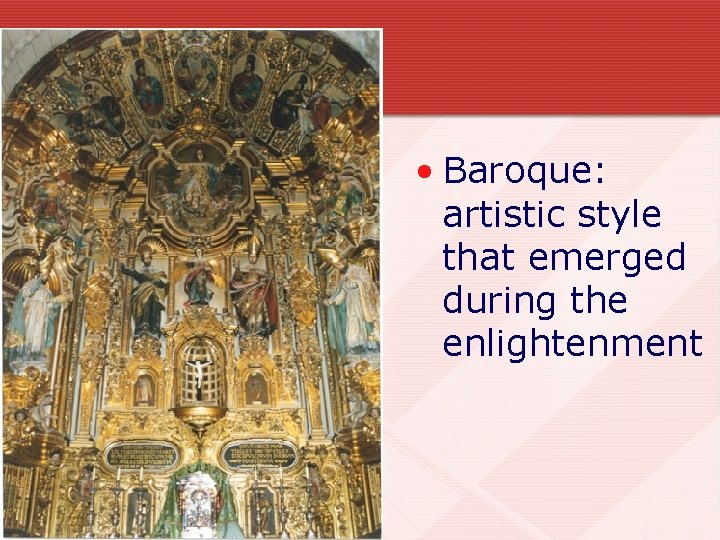
• Baroque: artistic style that emerged during the enlightenment
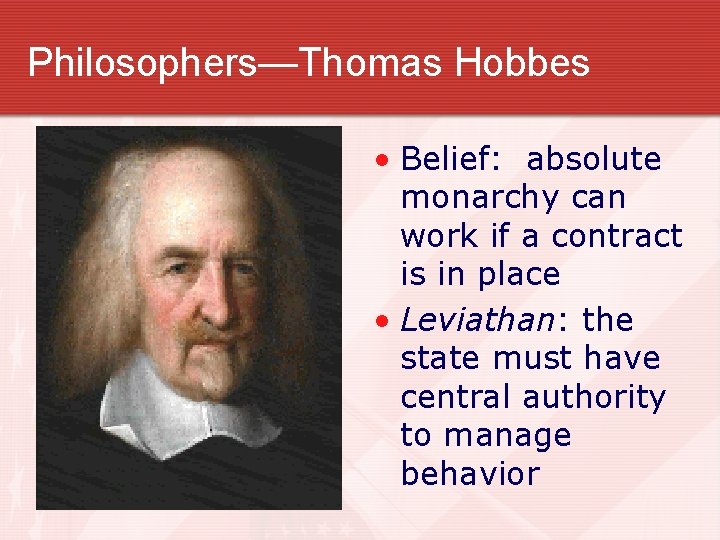
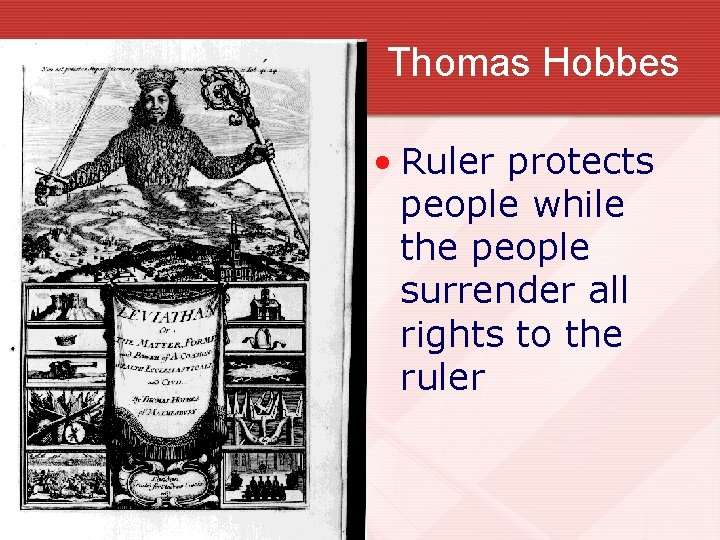
Philosophers—Thomas Hobbes • Belief: absolute monarchy can work if a contract is in place • Leviathan: the state must have central authority to manage behavior
Thomas Hobbes • Ruler protects people while the people surrender all rights to the ruler
John Locke • Two Treatises on Government: Ppl are sovereign; monarchs aren’t chosen by God • Belief: Social contract with natural rights • Ruler protects natural rights • People can change gov’t in cases of abuse
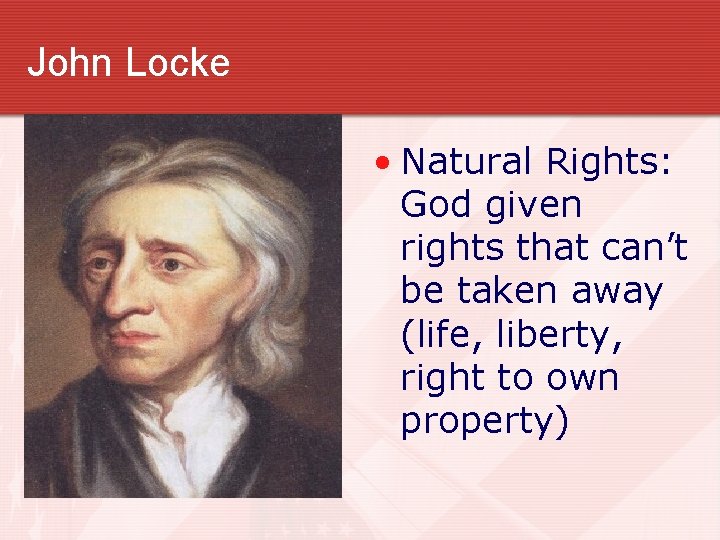
John Locke • Natural Rights: God given rights that can’t be taken away (life, liberty, right to own property)
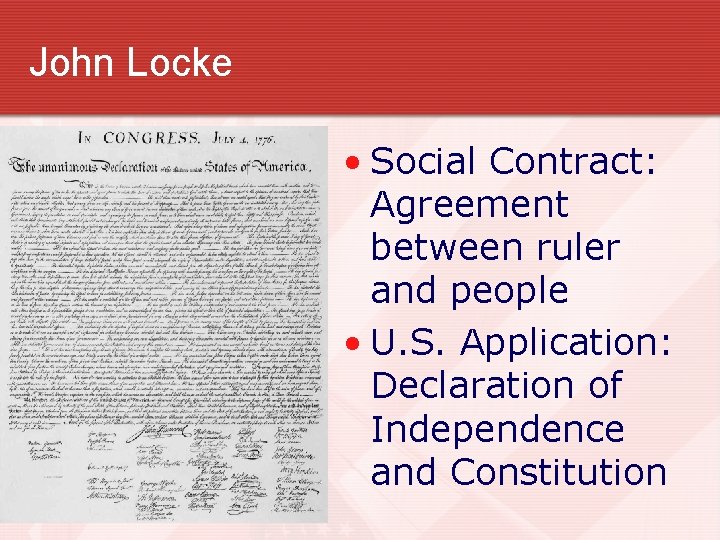
John Locke • Social Contract: Agreement between ruler and people • U. S. Application: Declaration of Independence and Constitution
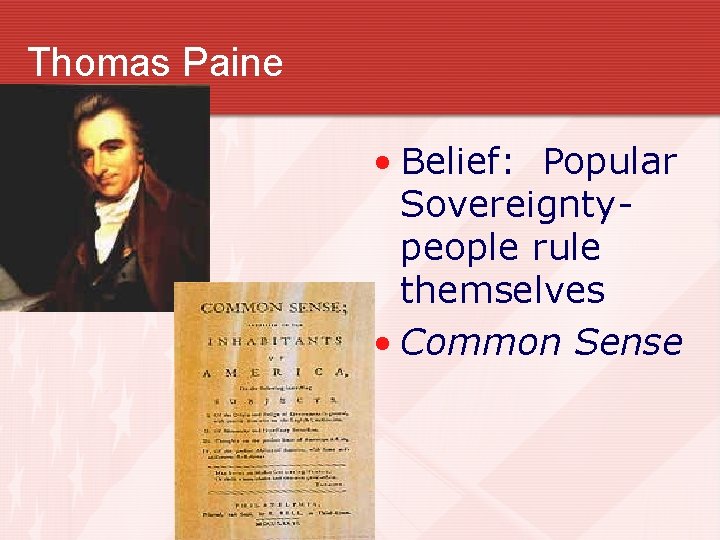
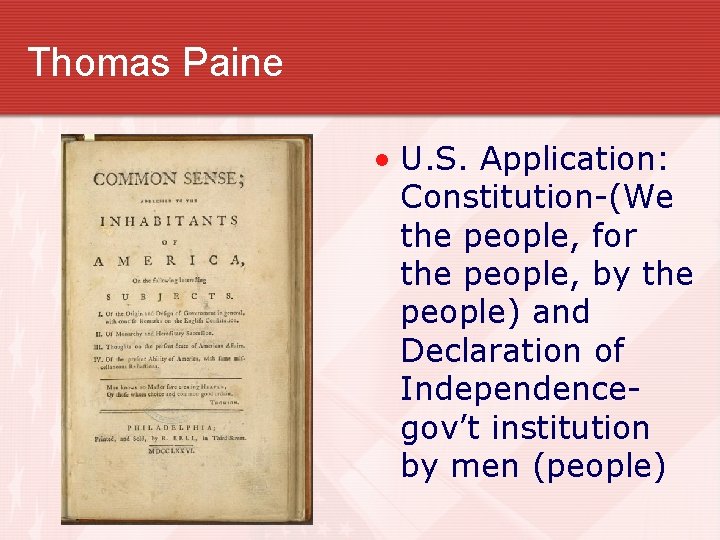
Thomas Paine • Belief: Popular Sovereigntypeople rule themselves • Common Sense
Thomas Paine • U. S. Application: Constitution-(We the people, for the people, by the people) and Declaration of Independencegov’t institution by men (people)
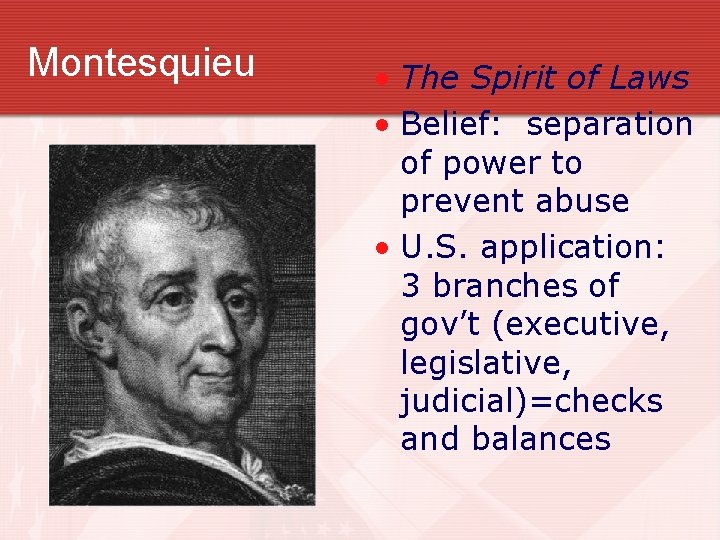
Montesquieu • The Spirit of Laws • Belief: separation of power to prevent abuse • U. S. application: 3 branches of gov’t (executive, legislative, judicial)=checks and balances
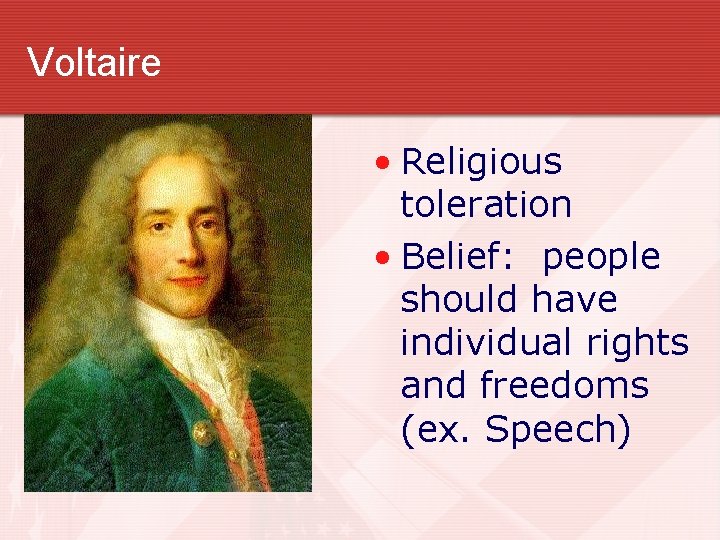
Voltaire • Religious toleration • Belief: people should have individual rights and freedoms (ex. Speech)
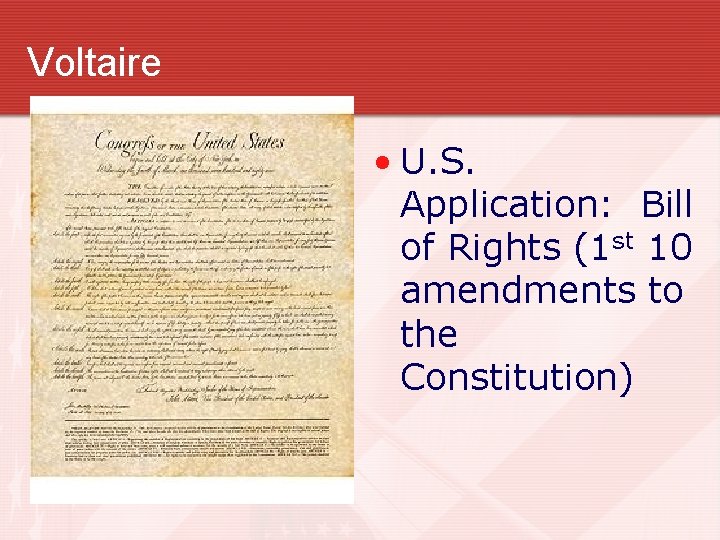
Voltaire • U. S. Application: Bill of Rights (1 st 10 amendments to the Constitution)
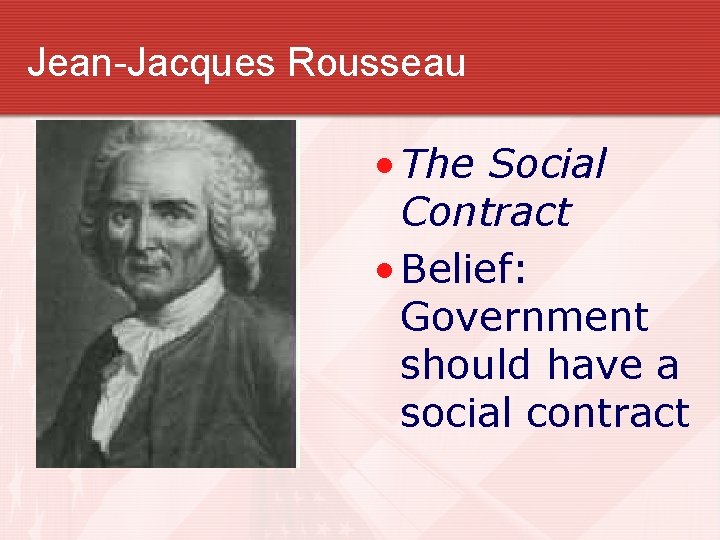
Jean-Jacques Rousseau • The Social Contract • Belief: Government should have a social contract
Rousseau • Ruler enforces the laws to keep order • People have to surrender some rights for the good of the community • U. S. Application: We have a contract-some of our rights are limited
Rousseau cont… • Belief: Popular Sovereignty • U. S. Application: We rule ourselves. Representative Democracy
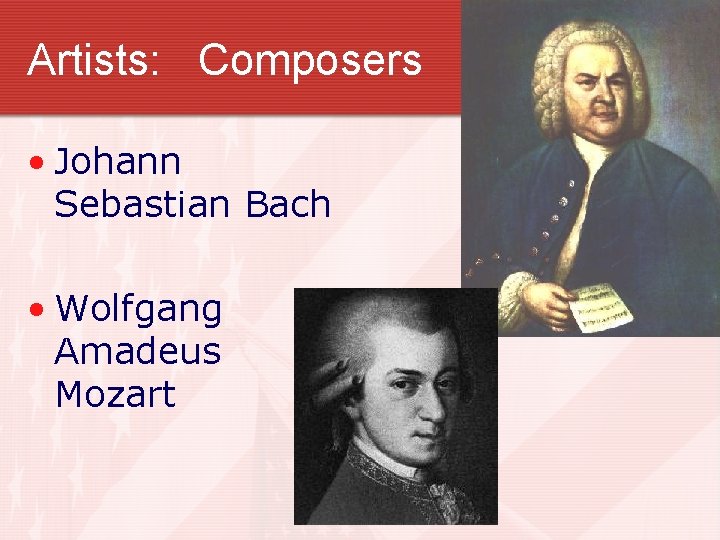
Artists: Composers • Johann Sebastian Bach • Wolfgang Amadeus Mozart
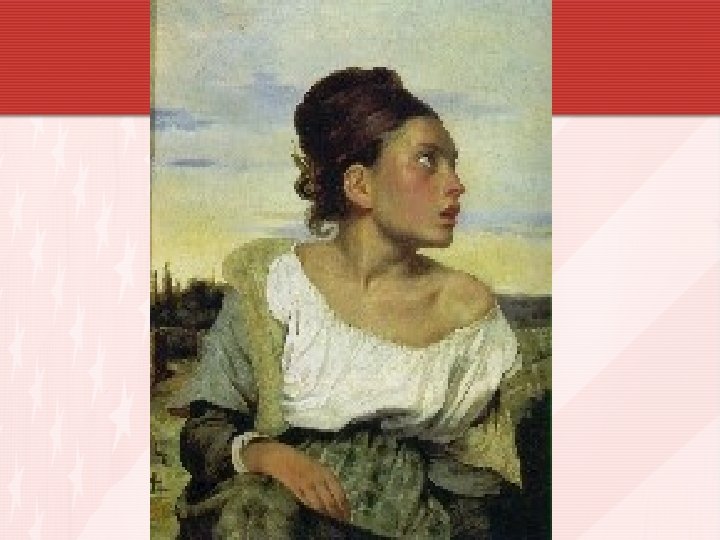
Artists: • Eugene Delacroix • New forms of art: • Painter • Paintings depicted classical subjects, public events, natural scenes, & portraits
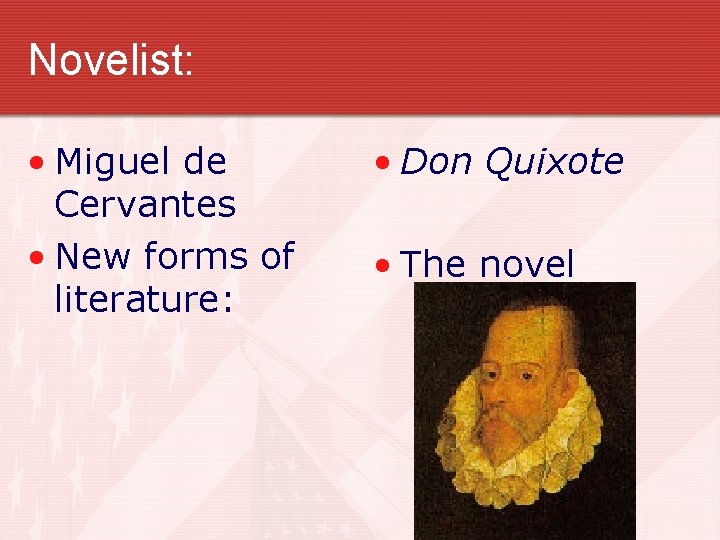
Novelist: • Miguel de Cervantes • New forms of literature: • Don Quixote • The novel
• The Age of Reason witnessed inventions and innovations in technology that stimulated trade and transportation.
Technologies: • All weather roads improved year-round transport & trade! • New designs in farm tools increased productivity (agricultural revolution) • Improvements in ship design lowered the cost of transport
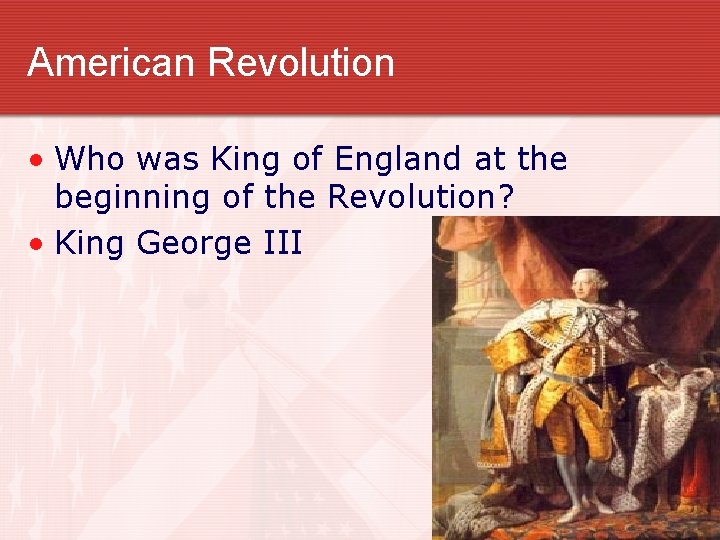
American Revolution • Who was King of England at the beginning of the Revolution? • King George III
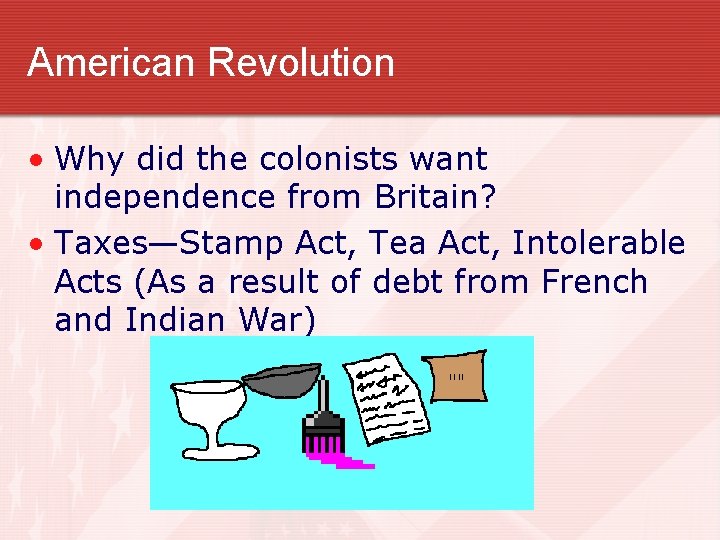
American Revolution • Why did the colonists want independence from Britain? • Taxes—Stamp Act, Tea Act, Intolerable Acts (As a result of debt from French and Indian War)
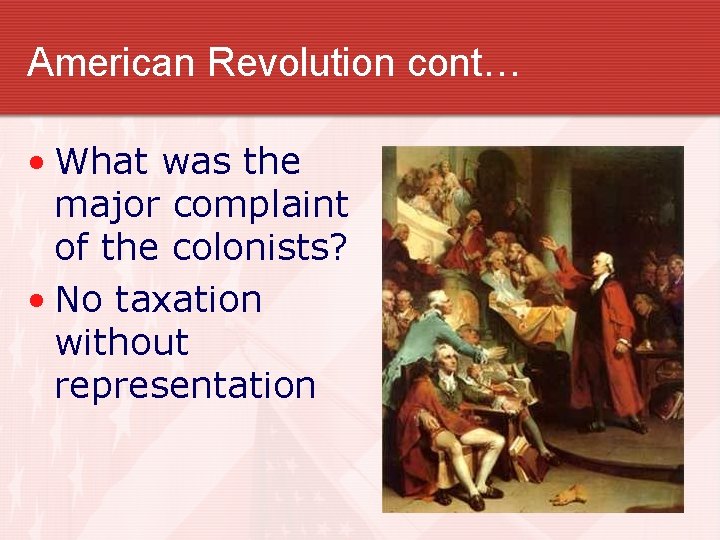
American Revolution cont… • What was the major complaint of the colonists? • No taxation without representation
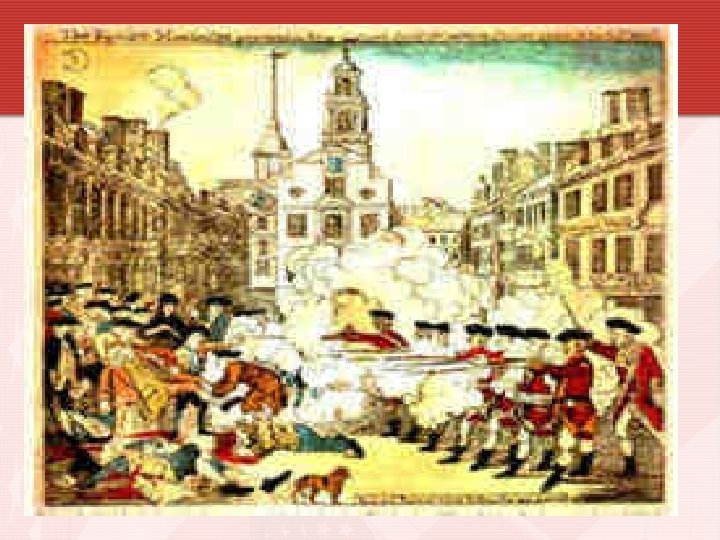
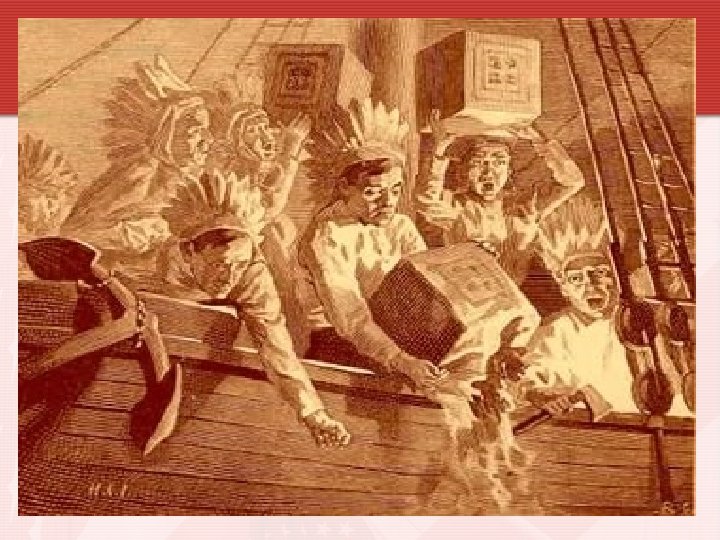
American Revolution con’d • Identify 2 violent clashes between the colonists and British soldiers prior to the Revolution • Boston Massacre— 1770; Boston Tea Party 1773
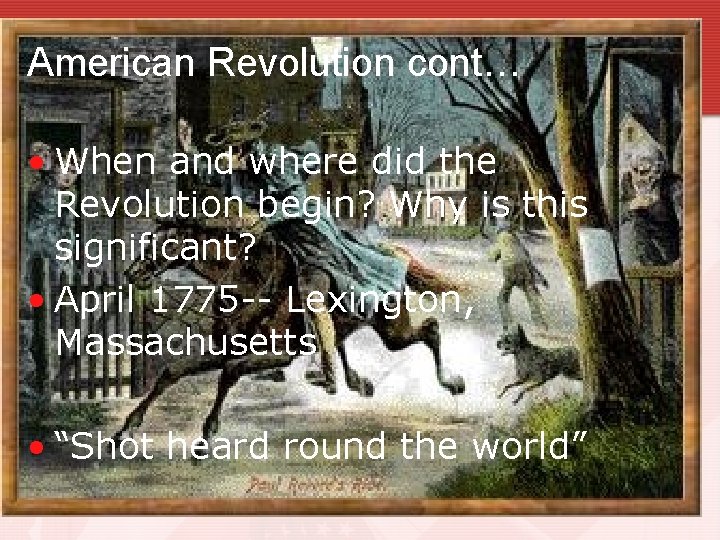
American Revolution cont… • When and where did the Revolution begin? Why is this significant? • April 1775 -- Lexington, Massachusetts • “Shot heard round the world”
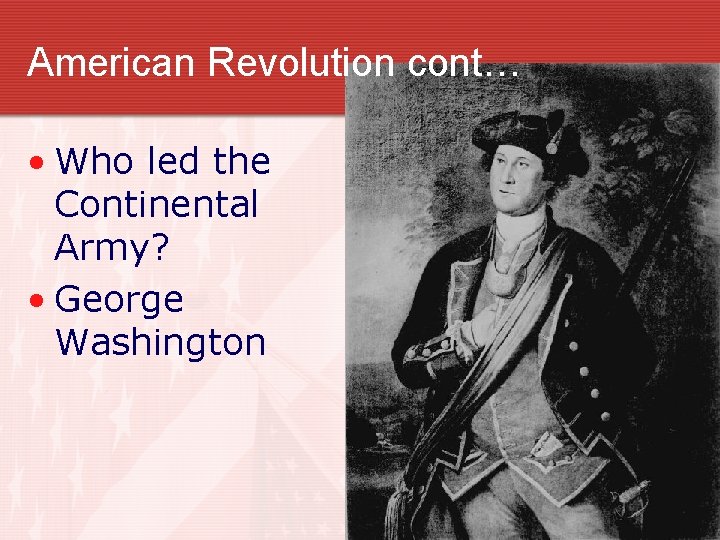
American Revolution cont… • Who led the Continental Army? • George Washington
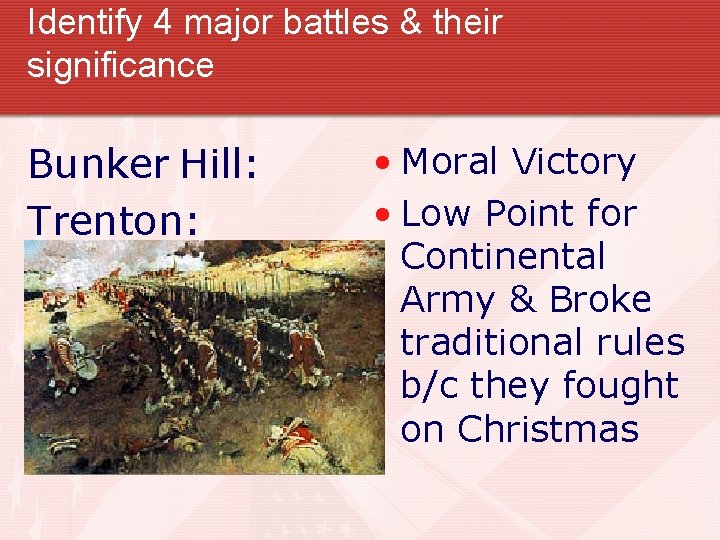
Identify 4 major battles & their significance Bunker Hill: Trenton: • Moral Victory • Low Point for Continental Army & Broke traditional rules b/c they fought on Christmas
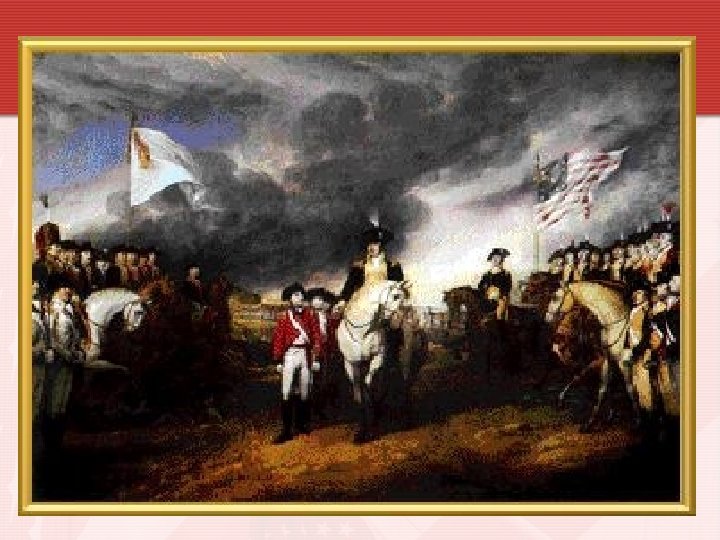
• Saratoga: • Yorktown: • Turning point b/c France entered on Continental side • Cornwallis surrenders the British Army!
American Revolution cont… • What was the first attempt at a gov’t for the U. S. ? Why did it fail? • Articles of Confederation—weak no national powers
• Laissez Faire--non-interference by the gov’t • Shay’s Rebellion (difficult to suppress, needed a stronger national gov’t)
Summarize the type of gov’t created by the Constitution • Popular Sovereignty • Federal System— between national and state • People decided! • Balanced power btwn the 2
• Separation of Powers • Social Contract • 3 separate branches
• Why were the Bill of Rights adopted? • To protect American Liberties/Personal Freedoms