
Enlightenment philosophers were inspired by the Scientific Revolution
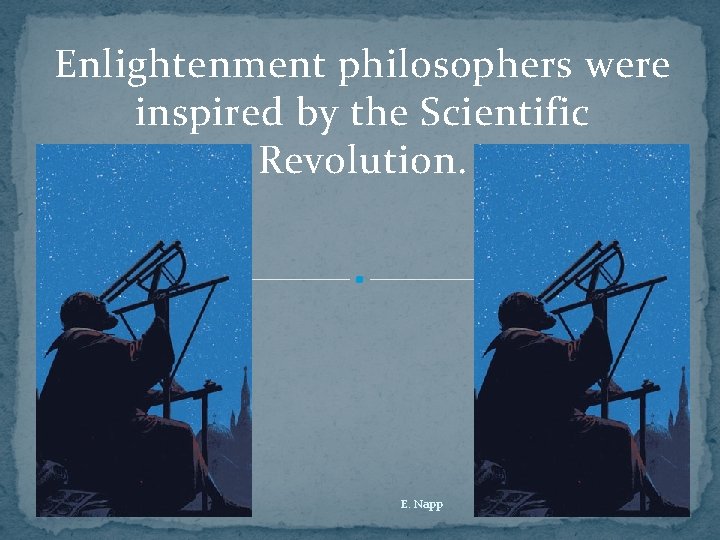
Enlightenment philosophers were inspired by the Scientific Revolution. E. Napp
�They wanted to improve society. So, they questioned everything. E. Napp

�What was the best form of government? What was the best way to end poverty? What? How? Why? E. Napp
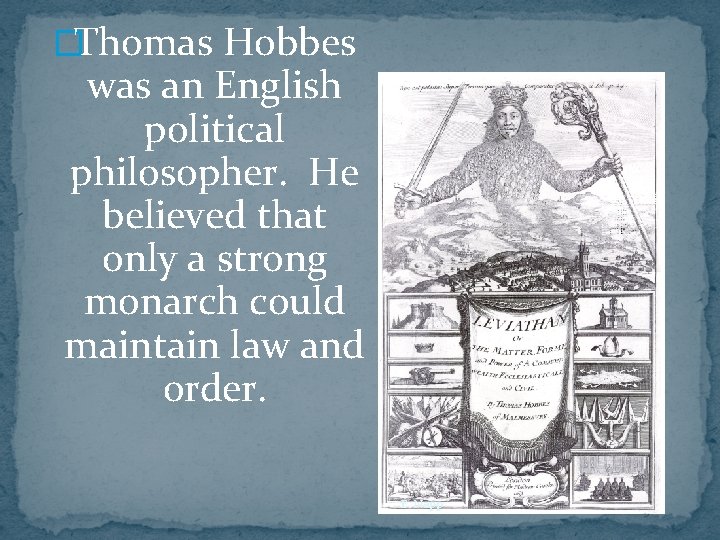
�Thomas Hobbes was an English political philosopher. He believed that only a strong monarch could maintain law and order. E. Napp

�Hobbes defended royal absolutism. E. Napp
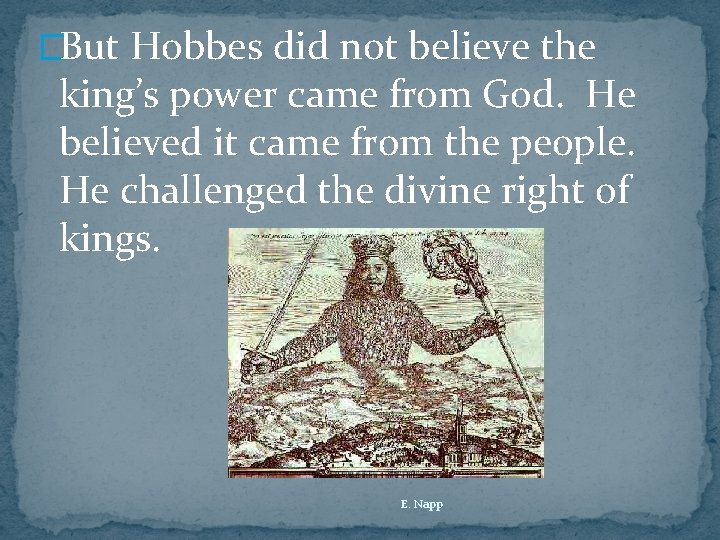
�But Hobbes did not believe the king’s power came from God. He believed it came from the people. He challenged the divine right of kings. E. Napp
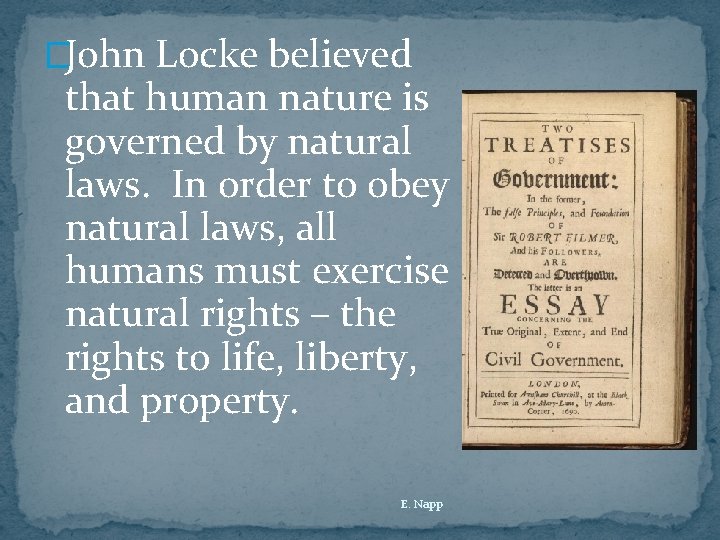
�John Locke believed that human nature is governed by natural laws. In order to obey natural laws, all humans must exercise natural rights – the rights to life, liberty, and property. E. Napp
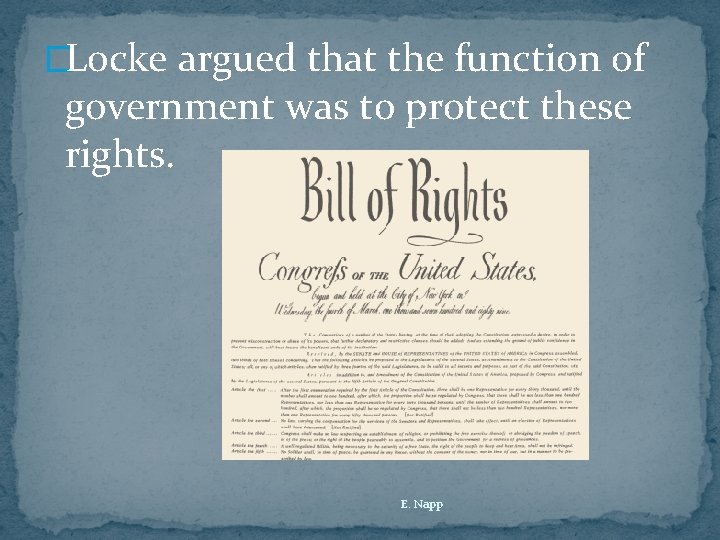
�Locke argued that the function of government was to protect these rights. E. Napp
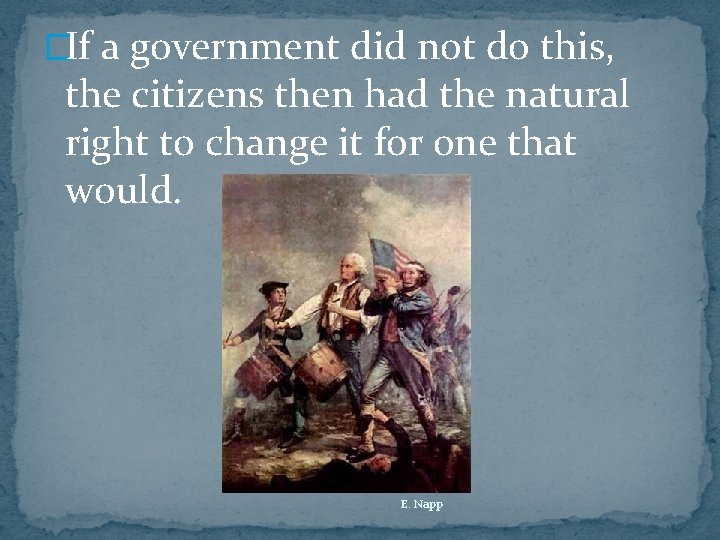
�If a government did not do this, the citizens then had the natural right to change it for one that would. E. Napp
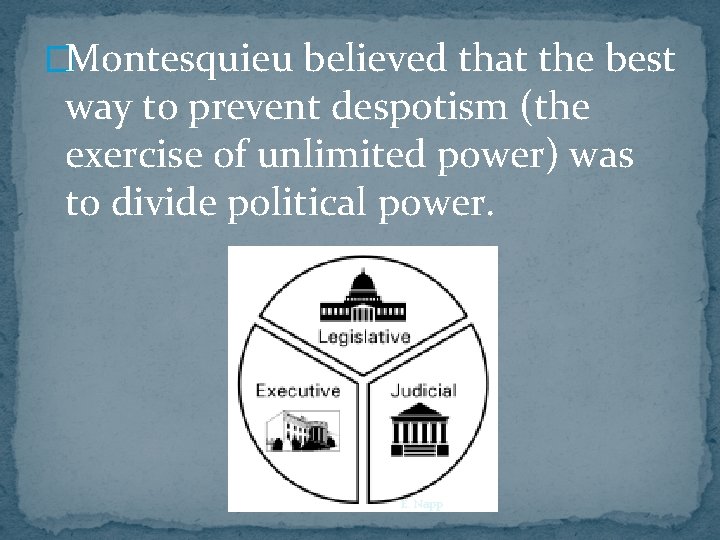
�Montesquieu believed that the best way to prevent despotism (the exercise of unlimited power) was to divide political power. E. Napp
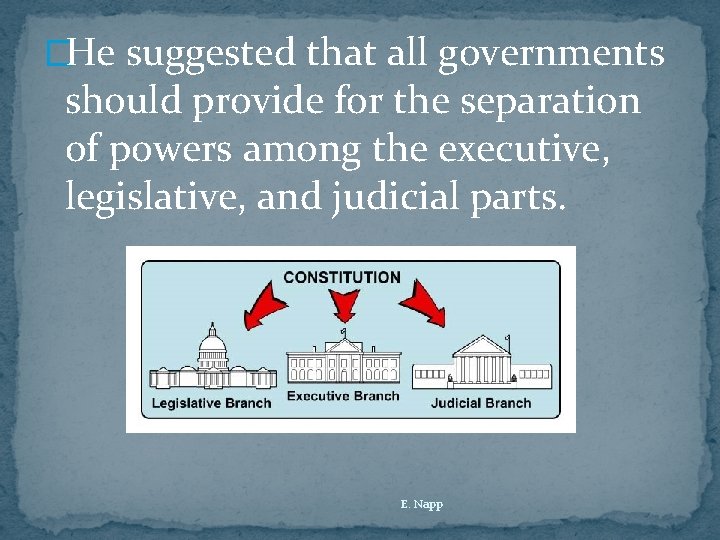
�He suggested that all governments should provide for the separation of powers among the executive, legislative, and judicial parts. E. Napp
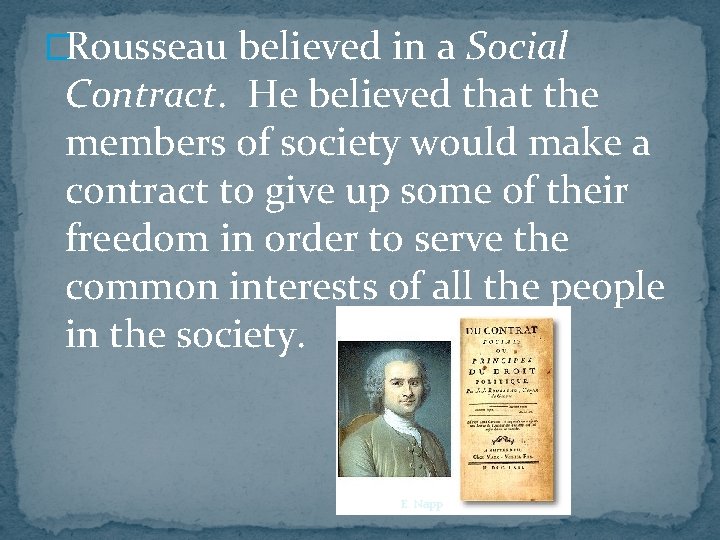
�Rousseau believed in a Social Contract. He believed that the members of society would make a contract to give up some of their freedom in order to serve the common interests of all the people in the society. E. Napp
�The general will would determine the common interest. E. Napp
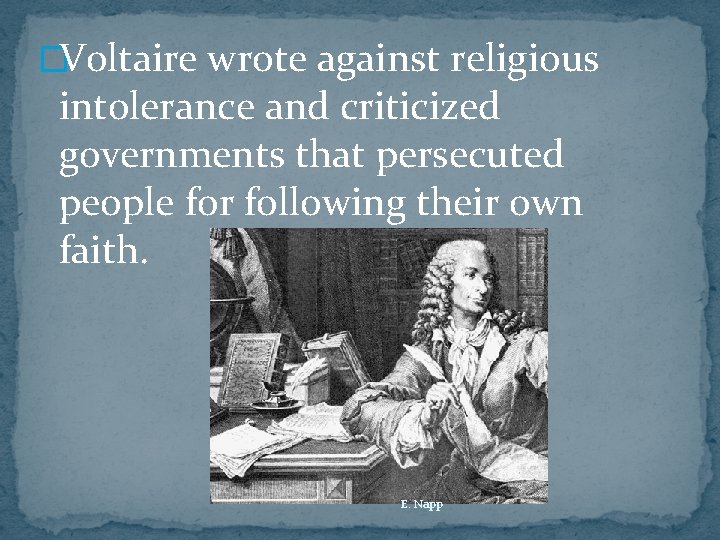
�Voltaire wrote against religious intolerance and criticized governments that persecuted people for following their own faith. E. Napp
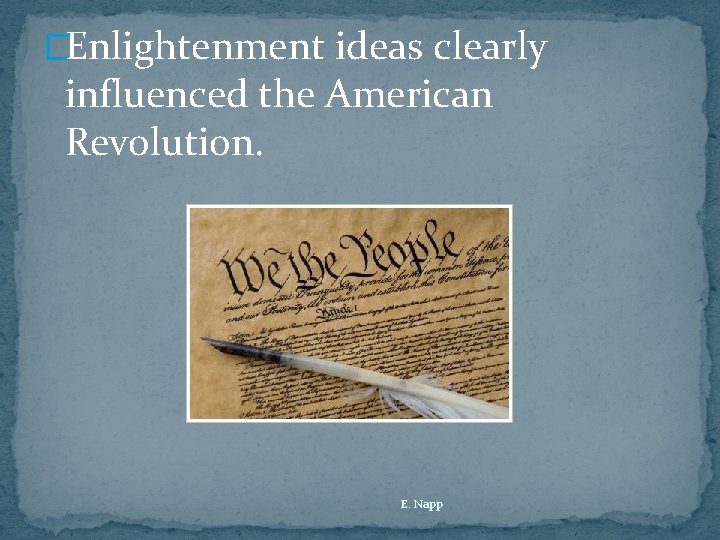
�Enlightenment ideas clearly influenced the American Revolution. E. Napp
�The ideas of the Enlightenment changed world history. E. Napp
- Slides: 16