
Enhancing The CODE OF BEHAVIOUR using RESTORATIVE PRACTICES
Enhancing The CODE OF BEHAVIOUR using RESTORATIVE PRACTICES Presented by: Marcella O Conluain Deputy Principal St Joseph’s NS Dundalk (Acting Principal 2007 -2008)
Restorative Approaches inspired by the philosophy and practices of restorative justice , which puts repairing harm done to relationships and people over and above the need for assigning blame and dispensing punishment.
Background § Still used in many indigenous communities § Maori Community ignited interest in it 1990 § § § Brehon Laws Youth Offending Families Schools Communities
Why Restorative Practices? § Always seeking new ways to meet the needs of own school population § An awareness that conflict erodes everybody's energy and is often not resolved § Willingness to learn – many felt we were already implementing good practice
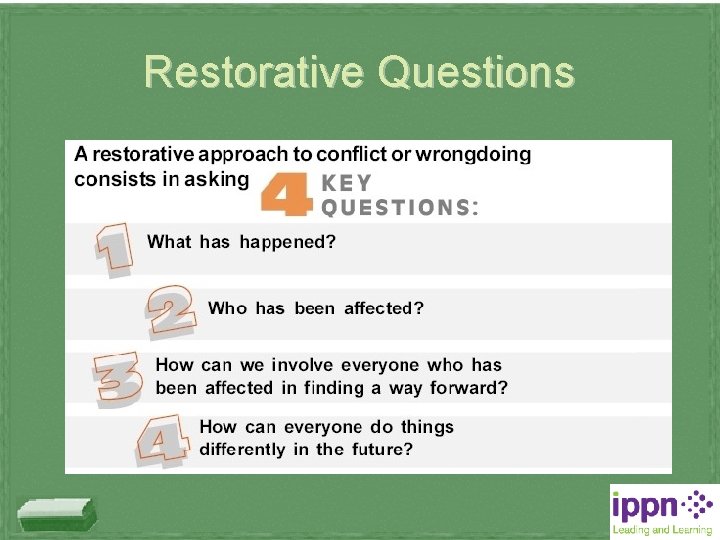
Restorative Questions
Restorative Practices – In School Setting § Supports a school ethos which promotes good relationships, mutual respect and a sense of belonging as key to successful teaching and learning. § The emphasis is on repairing the damage caused to relationships and on finding mutually acceptable ways forward. §The emphasis has the potential to transform the way that members of the school community think, feel and behave towards each other.
…. . Continued… § Emphasis is on active, non-judgemental, non- directive listening § Empathy is at the heart of good restorative practice § It has been used in New Zealand, USA and Canada in the criminal justice system and was deemed successful in achieving reconciliation between victims and offenders.
Day to Day use of Restorative Practice § § § Language – body / verbal / written Listening – non judgemental A structure to follow. Asking restorative questions (“what happened” replaces “ why did you do that”) Role – Modelling for colleagues / parents/ students Conferencing – informal and formal Reflected in Code of Behaviour
Language § Drop the ‘Why’s’ § Use ‘I’ statements § No ‘buts’ § ‘First names’ only
Questions § § § What happened? (Fact) What were you thinking about at the time? What have you thought of since? (Internal) Who has been affected and in what way? (External) What could you do differently the next time? (Problem solving) How can you repair the harm? (Future)
Outcomes for the Victim § Opportunity to report about what happened § To have someone listen sympathetically to their experiences § To have questions answered (Why me? ) § To have an opportunity to tell the offender how it affected them § The opportunity to receive an apology / compensation § The opportunity to meet the offender and not be powerless
Outcomes for the offender § To acknowledge responsibility and fully face up to what they have done § To have opportunity to apologise and make amends § To be treated with respect and perhaps forgiven
Benefits of this approach Feedback from “children” § § § § Time to think Someone to listen to my story A chance to explain to myself and others why I did it An opportunity to apologise A chance to make amends Reassurance that the matter is dealt with Hope that there is no resentment.
How we started § General introduction to all staff § Decision to participate § Principal, Deputy Principal and Assistant Principals trained with second level feeder school. § Staff released to attend selected training § Staff meeting follow up and Evaluation § Parents’ Training provided § Programme implemented in class and yard § Conflict resolution toolkit for everyone
Finally Restorative Practices is not a skill, technique or procedure that schools can implement as the latest must have programme. It is a value, an ethos, a philosophy that needs to be embraced and nurtured as carefully and as fully as the children we are charged with. Jim Mc Grath www. netcare-ni. com
- Slides: 15