
Enhancing the AreaEfficiency of FPGAs with Hard Blocks
Enhancing the Area-Efficiency of FPGAs with Hard Blocks Using Shadow Clusters Peter Jamieson and Jonathan Rose

Modern FPGAs Consist of: 1. Programmable logic and routing • soft logic cluster tile 2. Dedicated hard circuits • • e. g. multiplier tile e. g memory block tile

Fundamental FPGA Question • Hard circuits provide benefit when used – Faster – Smaller – Consume less power
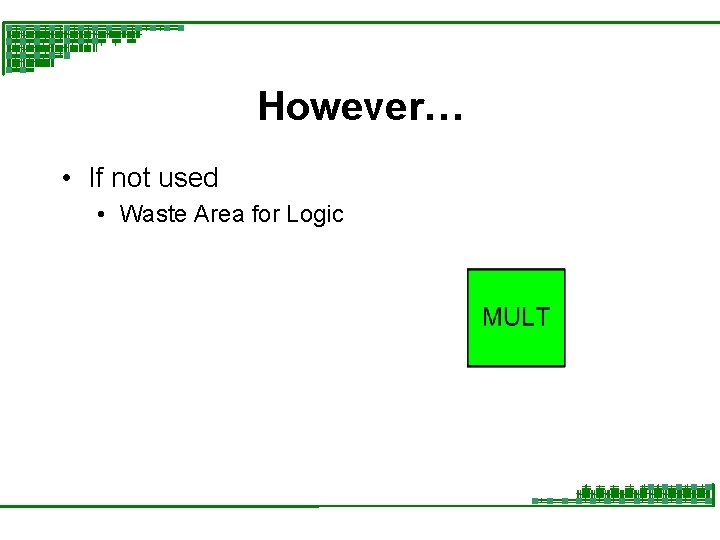
However… • If not used • Waste Area for Logic
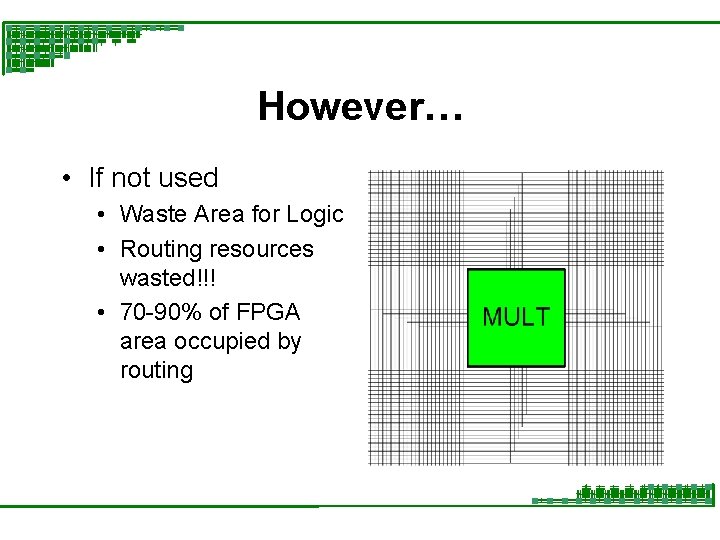
However… • If not used • Waste Area for Logic • Routing resources wasted!!! • 70 -90% of FPGA area occupied by routing
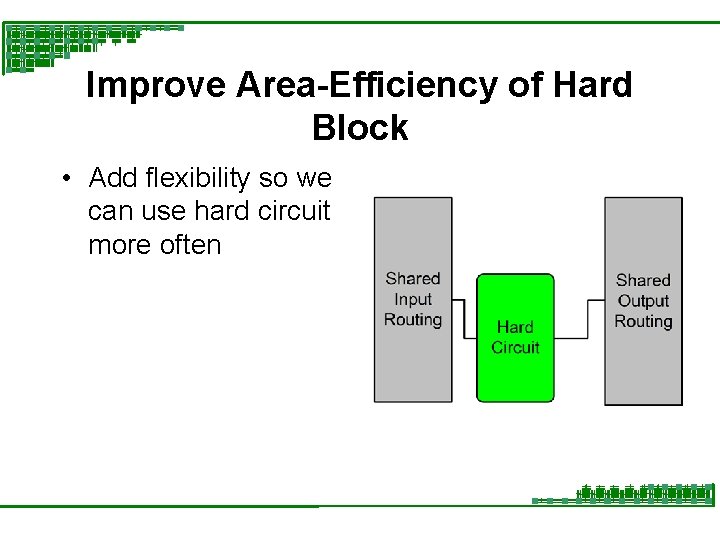
Improve Area-Efficiency of Hard Block • Add flexibility so we can use hard circuit more often

Improve Area-Efficiency of Hard Block • Add flexibility so we can use hard circuit more often • Why not soft logic SHADOW CLUSTER
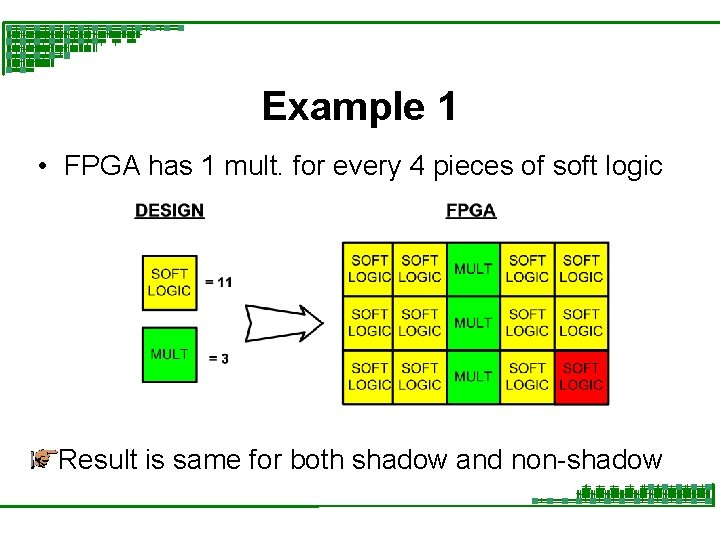
Example 1 • FPGA has 1 mult. for every 4 pieces of soft logic Result is same for both shadow and non-shadow
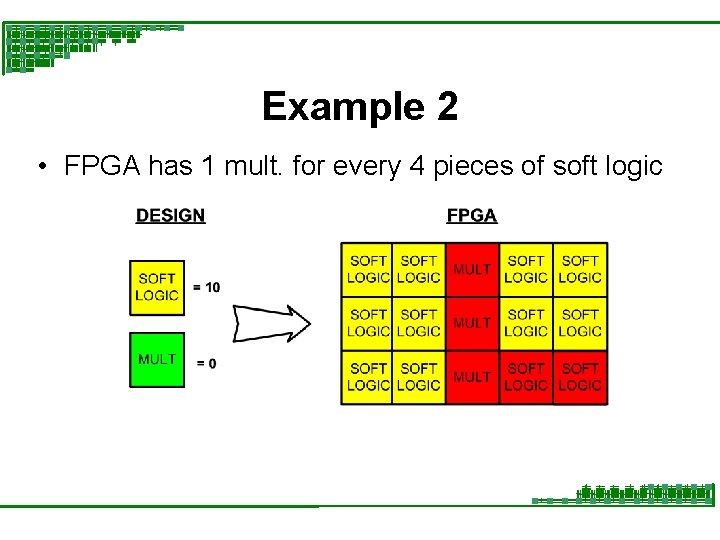
Example 2 • FPGA has 1 mult. for every 4 pieces of soft logic
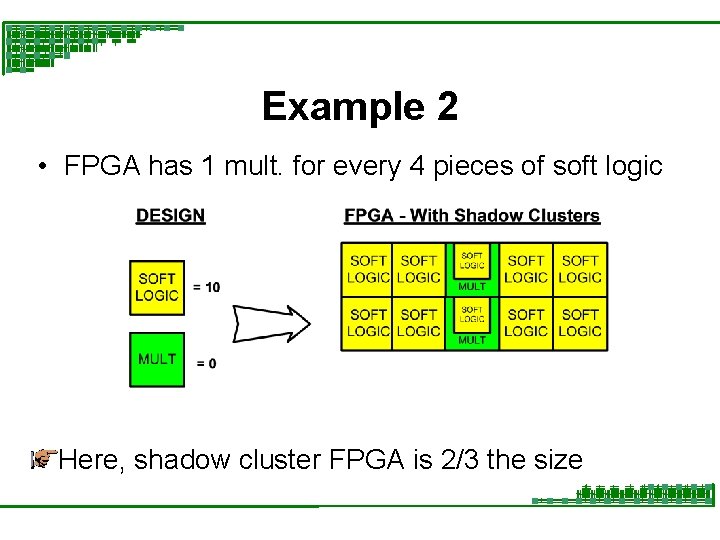
Example 2 • FPGA has 1 mult. for every 4 pieces of soft logic Here, shadow cluster FPGA is 2/3 the size
Notes • Wins even though hard circuit with shadow cluster is slightly bigger! • Benchmarks statistical demand for multipliers key – Average and Variance
One Interesting Result • Virtex 4 SX like FPGA with shadow clusters 7. 5% smaller than without
- Slides: 12