
Enhancing student critical reading of texts through the
- Slides: 20
Enhancing student critical reading of texts through the use of blogs Dr Jessie Paterson, School of Divinity, University of Edinburgh
Background • In the School of Divinity tutorials generally are about engaging with key weekly readings • For a number of years we have been successfully using blogs to assist students with tutorial preparation • Use Web. CT blogging tool • Students asked to blog on the readings for the tutorial prior to their arrival in the tutorial
Issues • Generally the use of blogs increased student preparation and engagement prior to the tutorial - more casual medium that is naturally peer-engaging BUT • The readings are isolated from tutor and the students, reducing the effectiveness of the tool – “atomizing of student learning”.
Solution • Pilot use of Word. Press Digress. it plugin http: //wordpress. org/extend/plugins/digres sit/ • Developed for use in Universities with the text embedded within the blog and comments added to the side
Project in action • Piloted in one first year School of Divinity course – Christian Ethics sources • Wordpress and plugin installed on University virtual server • All the weekly texts for the course digitised and uploaded to the platform, ensuring all copyright cleared
Tutorials in action • Five tutorial groups of about 10 -12 students • Each group had their own incidence of the tool • Access via EASE through links on the course Web. CT site
• Tutorial leaders - students in teams of two, lead the blog and the group discussion each week. The tutorial leaders submit 500 word blog by midnight on the Friday before each tutorial on the Monday on – identification of at least three key quotes in the assigned reading; – identification of particular points of controversy or disagreement between the texts; – questions to promote discussion • Rest of class post weekly comments of around 300 words on by midday on the day of the tutorial. • 20% of course grade given for properly posted comments but students need to post prior to the tutorial and must attend the tutorial.
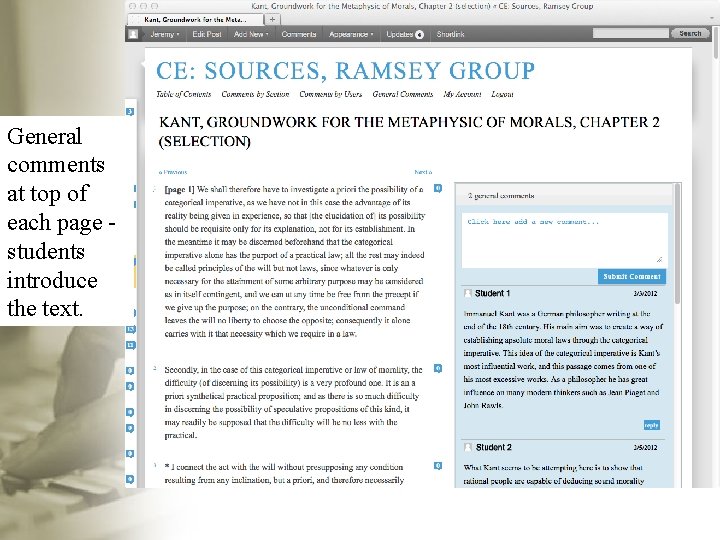
General comments at top of each page students introduce the text.
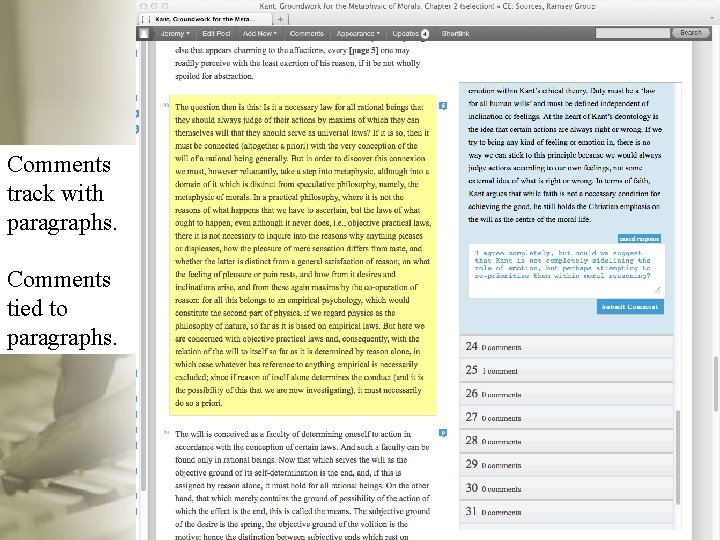
Comments track with paragraphs. Comments tied to paragraphs.
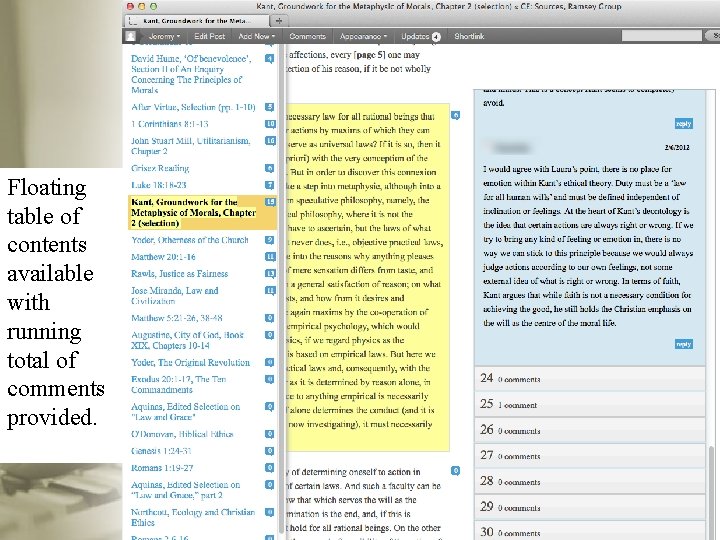
Floating table of contents available with running total of comments provided.
What happened? • Paper questionnaire at the end of the session • Focus group with the tutorial group leaders
Questionnaires • Most found the resource easy or acceptable to access • Only a few downtimes were reported – only at the start of the session • About 50% of the students accessed the materials twice a week for any purpose but most only posted once a week • On average they spent 2 hours/week using the tool
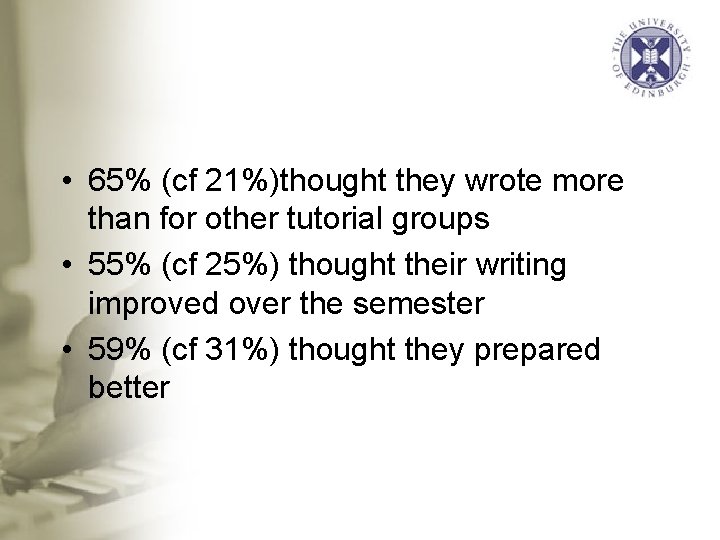
• 65% (cf 21%)thought they wrote more than for other tutorial groups • 55% (cf 25%) thought their writing improved over the semester • 59% (cf 31%) thought they prepared better
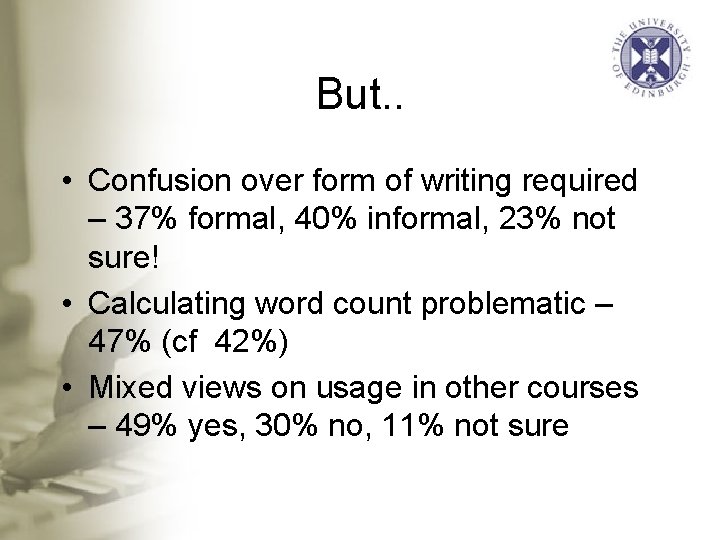
But. . • Confusion over form of writing required – 37% formal, 40% informal, 23% not sure! • Calculating word count problematic – 47% (cf 42%) • Mixed views on usage in other courses – 49% yes, 30% no, 11% not sure
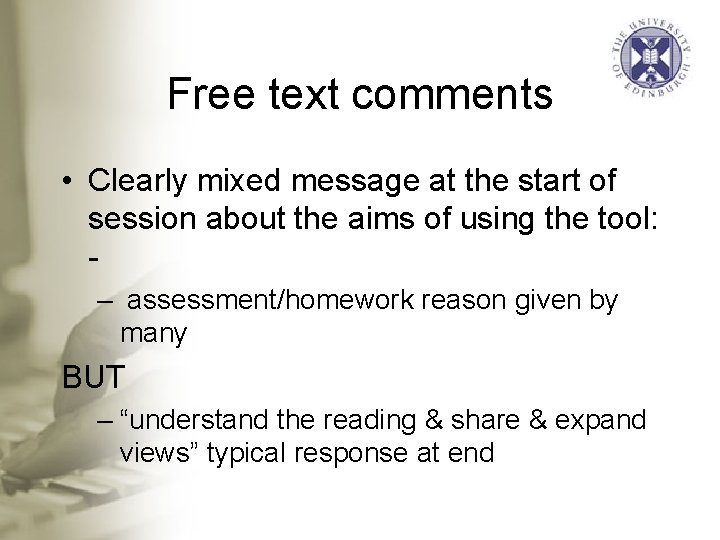
Free text comments • Clearly mixed message at the start of session about the aims of using the tool: – assessment/homework reason given by many BUT – “understand the reading & share & expand views” typical response at end
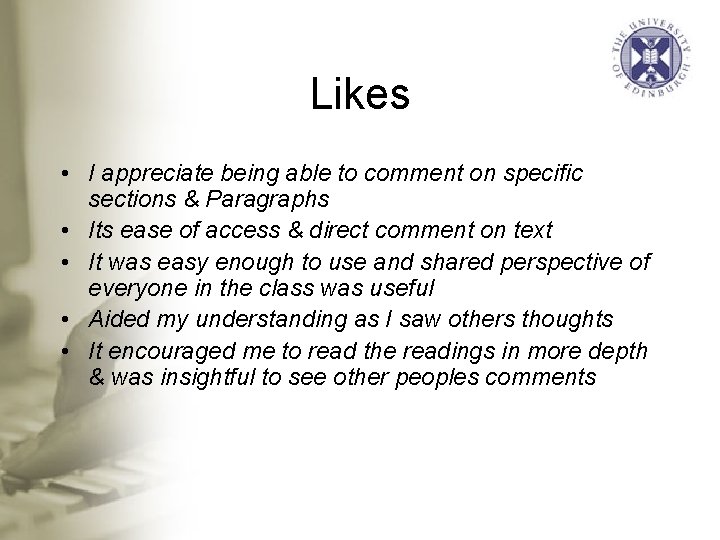
Likes • I appreciate being able to comment on specific sections & Paragraphs • Its ease of access & direct comment on text • It was easy enough to use and shared perspective of everyone in the class was useful • Aided my understanding as I saw others thoughts • It encouraged me to read the readings in more depth & was insightful to see other peoples comments
Dislikes • Couldn't reply to replies • Can't reply to replies & keep conversation going
Tutor comments Issues • Issue around style of writing • Having three readings but students seeing each in isolation with little connections made • Little over all synthesis, with sporadic postings • Word count not easy to work out But • Generally liked and thought a useful tool
Going forward • Use again for this course in 2012 -13 • Better induction as to requirements – both tutors and students • Refine tool to include word count • Look at methods to allow comments on comments
Thanks to • PTAS for funding the work • Team members – Professor Michael Northcott and RA – Jeremy Kidwell • First year Christian ethic sources students and tutors 2011 -12