
Enhancing resilience of smallholder agriculture to climate change
- Slides: 24
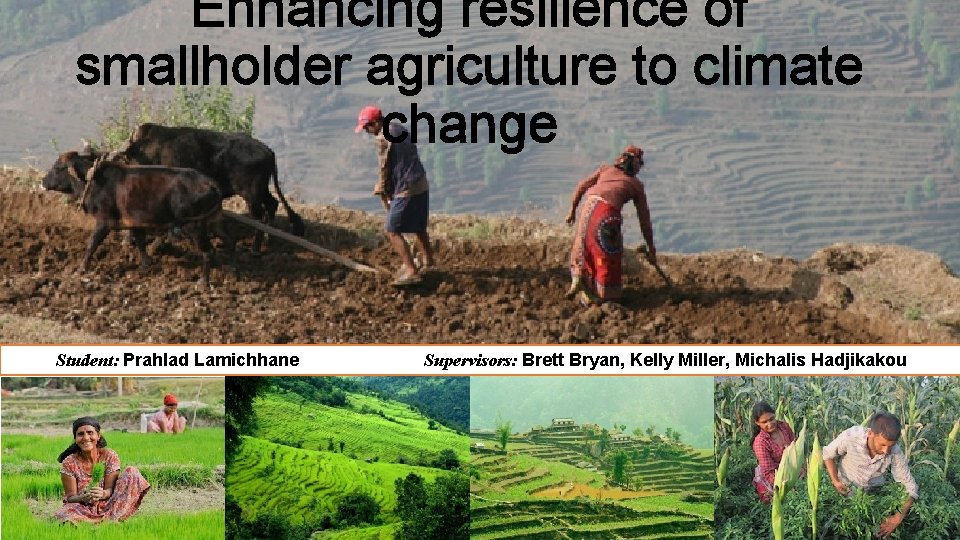
Enhancing resilience of smallholder agriculture to climate change Student: Prahlad Lamichhane Supervisors: Brett Bryan, Kelly Miller, Michalis Hadjikakou
Content • Introduction • Research aim and objectives • Study area • Research plan • Progress and plan • Risk management plan • Publication plan
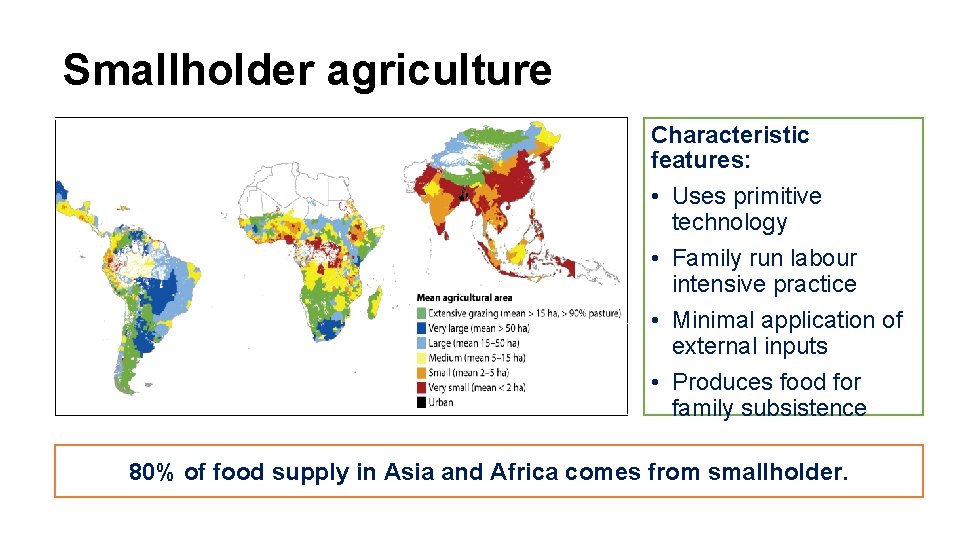
Smallholder agriculture Characteristic features: • Uses primitive technology • Family run labour intensive practice • Minimal application of external inputs • Produces food for family subsistence 80% of food supply in Asia and Africa comes from smallholder.
Emerging challenges • Climate change is evident in smallholder regions. • If smallholder suffers from significant climate change, it is likely to: • Aggravate hunger and food insecurity • Deteriorate health situations and malnutrition • Trigger civil conflict and migration • …
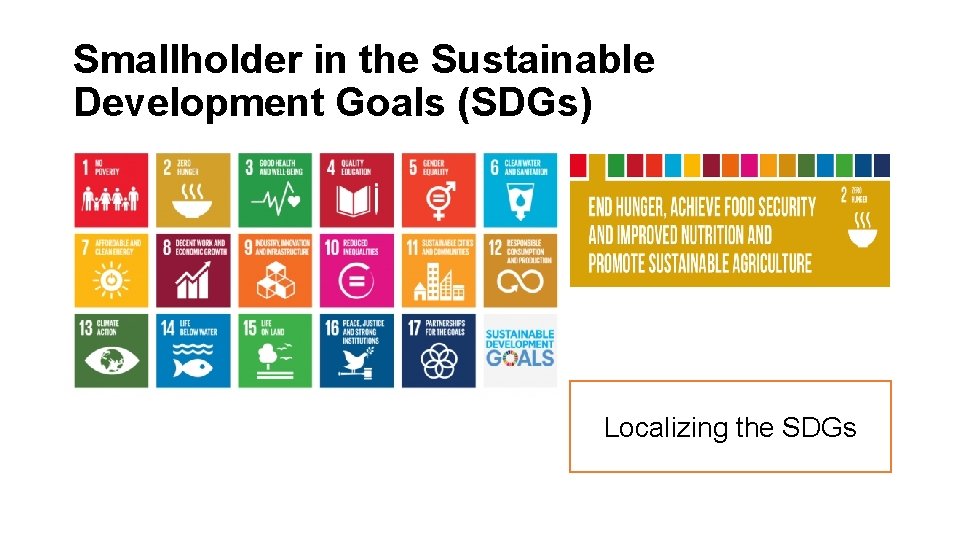
Smallholder in the Sustainable Development Goals (SDGs) Localizing the SDGs
Research gap …. . governments aim to sustain and substantially increase the crop yield in smallholder systems as their commitment to SDG – 2. ……… unfortunately, neither the impacts of climate change on the major crops are clear for the heterogeneous smallholder systems, nor are the pathways to achieve the goals. ……………. and it’s the gap that demands the research!
Research aim and objectives Aim: to identify science based approach to enhance the resilience of smallholder agriculture to climate change Objectives: • Quantify the resilience of smallholder agriculture to the impacts of climate change. • Assess smallholder farmers’ adaptation motivations and actions towards enhancing climate resilience • Identify resilient pathways for ensuring sustainability of smallholder agriculture
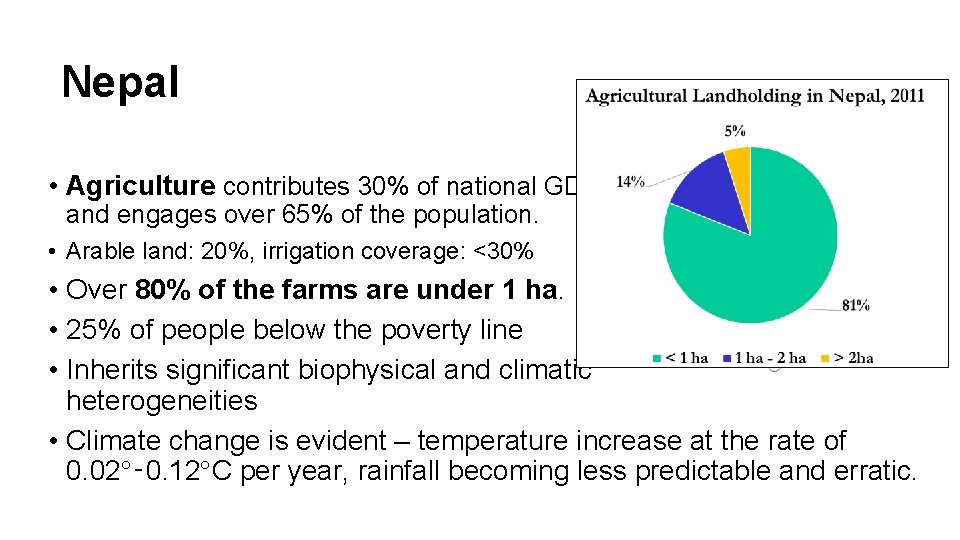
Nepal • Agriculture contributes 30% of national GDP and engages over 65% of the population. • Arable land: 20%, irrigation coverage: <30% • Over 80% of the farms are under 1 ha. • 25% of people below the poverty line • Inherits significant biophysical and climatic heterogeneities • Climate change is evident – temperature increase at the rate of 0. 02 ‑ 0. 12 C per year, rainfall becoming less predictable and erratic.
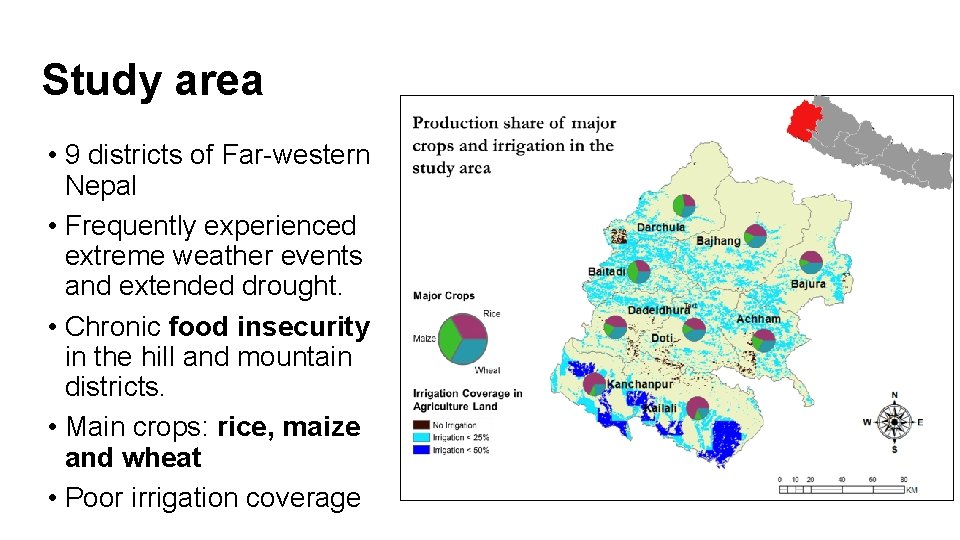
Study area • 9 districts of Far-western Nepal • Frequently experienced extreme weather events and extended drought. • Chronic food insecurity in the hill and mountain districts. • Main crops: rice, maize and wheat • Poor irrigation coverage
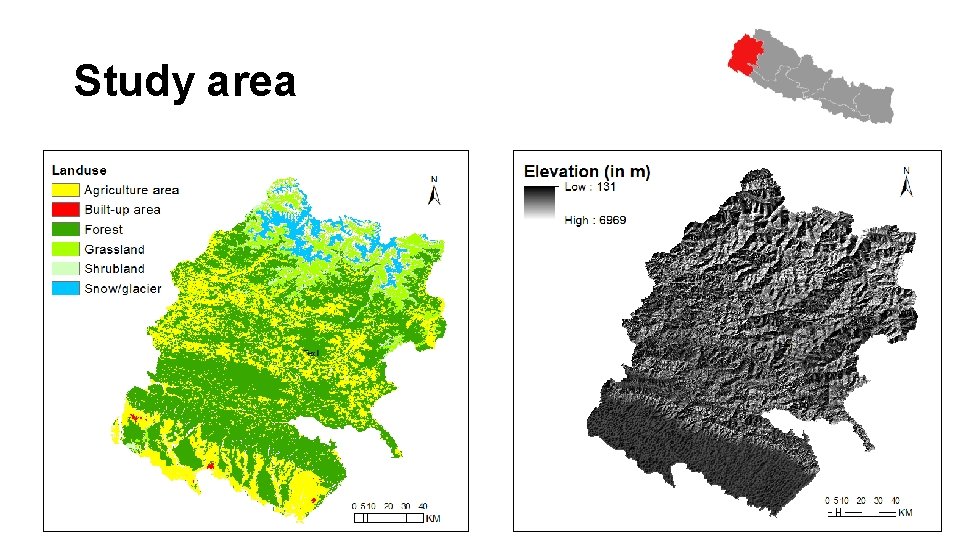
Study area
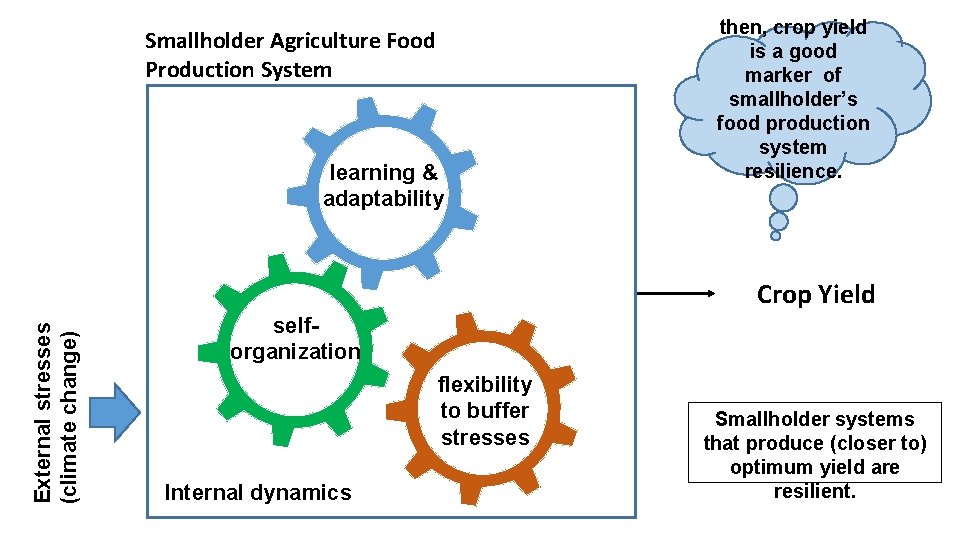
Research Plan: Objective 1 Quantifying resilience of smallholder agriculture food production system • Two widely practiced methods exist in measuring resilience: a) Using theory-driven indicator based approaches, b) Auto-regressive models using climate and yield data. • both of the approaches inherits significant shortcomings. • Needs an empirical approach to measure resilience. • Lets have a look at the concept of resilience:
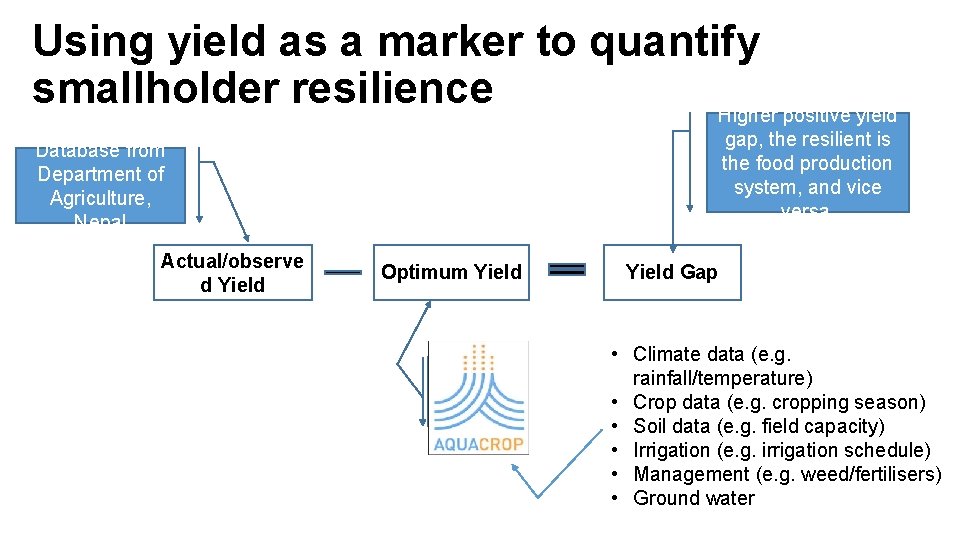
Smallholder Agriculture Food Production System learning & adaptability then, crop yield is a good marker of smallholder’s food production system resilience. External stresses (climate change) Crop Yield selforganization flexibility to buffer stresses Internal dynamics Smallholder systems that produce (closer to) optimum yield are resilient.
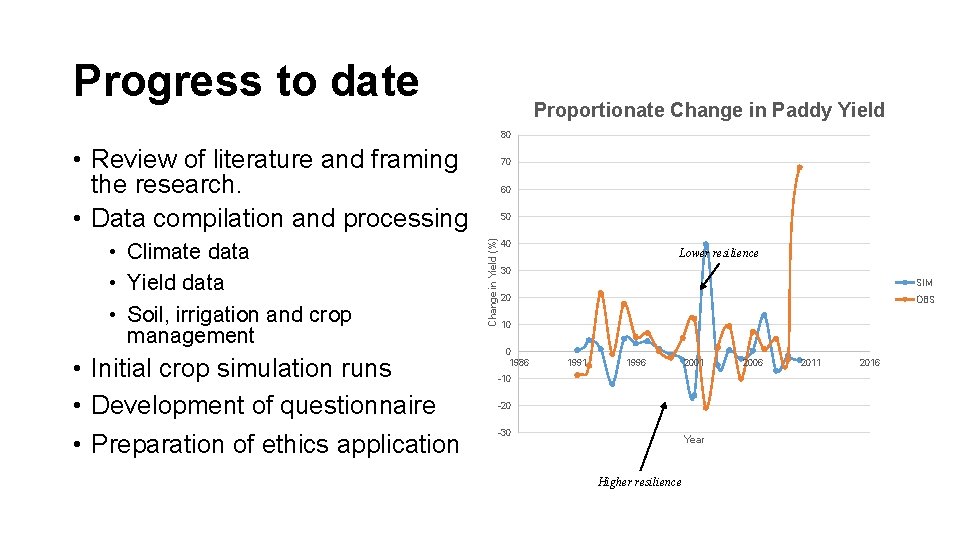
Using yield as a marker to quantify smallholder resilience Higher positive yield gap, the resilient is the food production system, and vice versa. Database from Department of Agriculture, Nepal Actual/observe d Yield Optimum Yield Gap • Climate data (e. g. rainfall/temperature) • Crop data (e. g. cropping season) • Soil data (e. g. field capacity) • Irrigation (e. g. irrigation schedule) • Management (e. g. weed/fertilisers) • Ground water
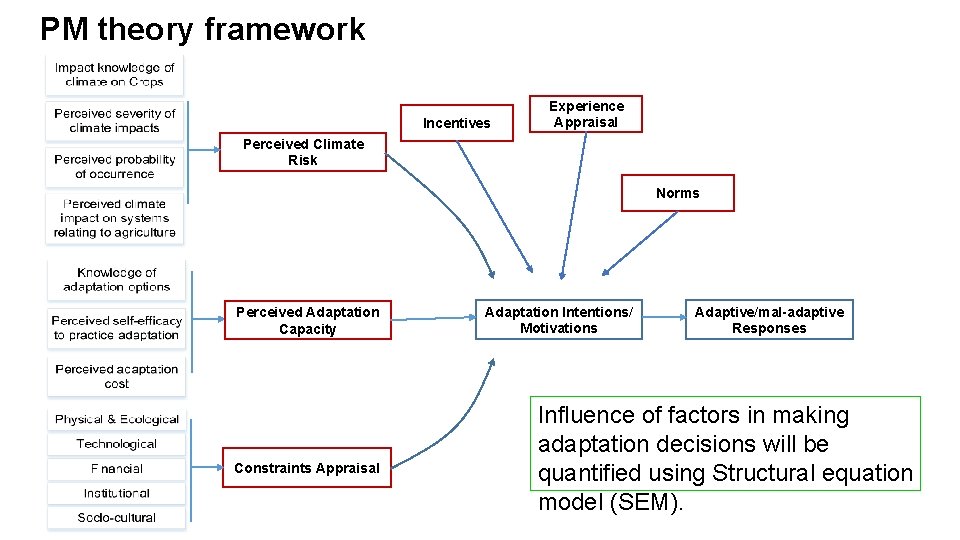
Research Plan: Objective 2 Farmer’s motivations and adaptation decisions • Protection motivation (PM) theory will be used to identify the factors influencing the adaptive behaviours/actions. • PM theory posits that individuals practice adaptive behaviours if such behaviours are likely to offset, avoid, or minimise the appraised threat/risk.
PM theory framework Incentives Experience Appraisal Perceived Climate Risk Norms Perceived Adaptation Capacity Constraints Appraisal Adaptation Intentions/ Motivations Adaptive/mal-adaptive Responses Influence of factors in making adaptation decisions will be quantified using Structural equation model (SEM).
Plan for data collection and analysis • A structured questionnaire will used be for data collection; with Likert scale. • Around 350 respondents will be interviewed. • A representative-stratified sampling technique will be used for the survey. • SEM will be used for data analysis.
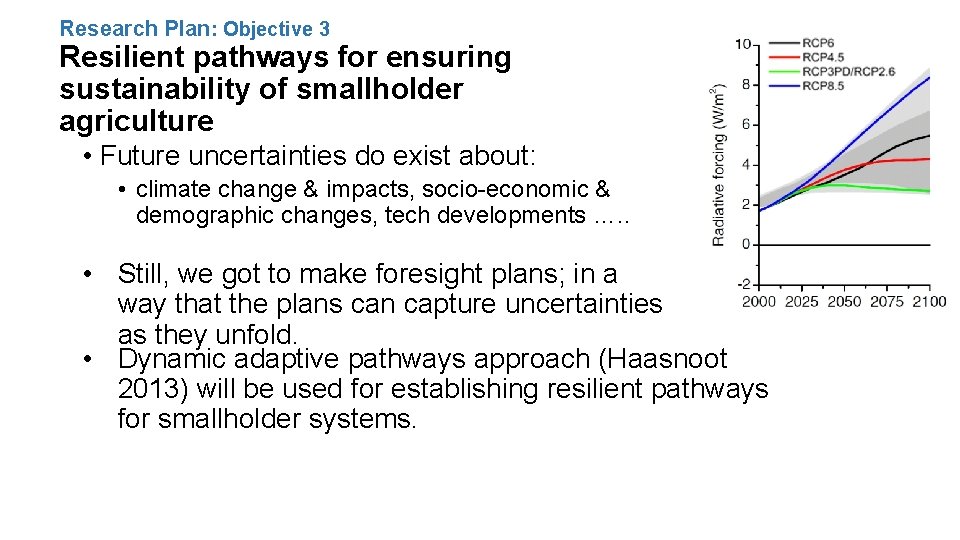
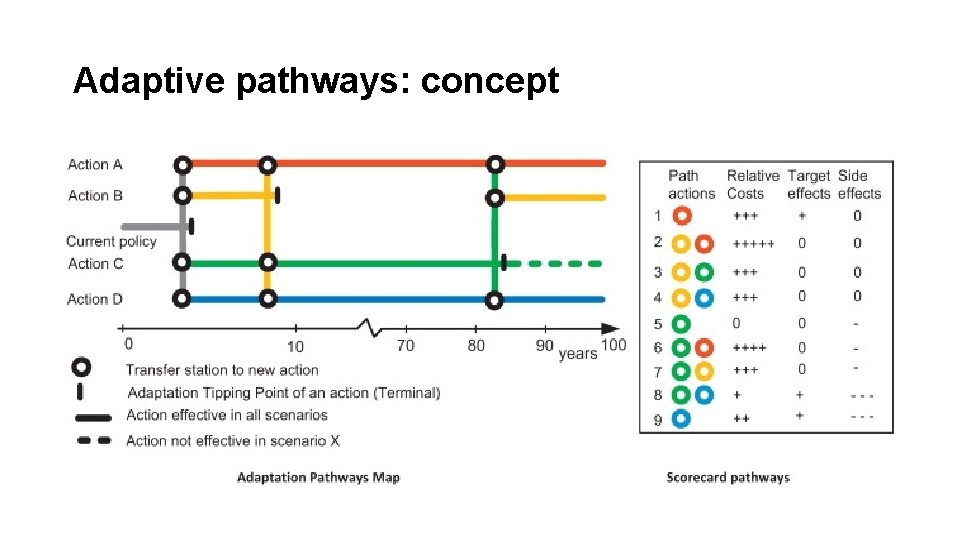
Research Plan: Objective 3 Resilient pathways for ensuring sustainability of smallholder agriculture • Future uncertainties do exist about: • climate change & impacts, socio-economic & demographic changes, tech developments …. . • Still, we got to make foresight plans; in a way that the plans can capture uncertainties as they unfold. • Dynamic adaptive pathways approach (Haasnoot 2013) will be used for establishing resilient pathways for smallholder systems.
Adaptive pathways: concept
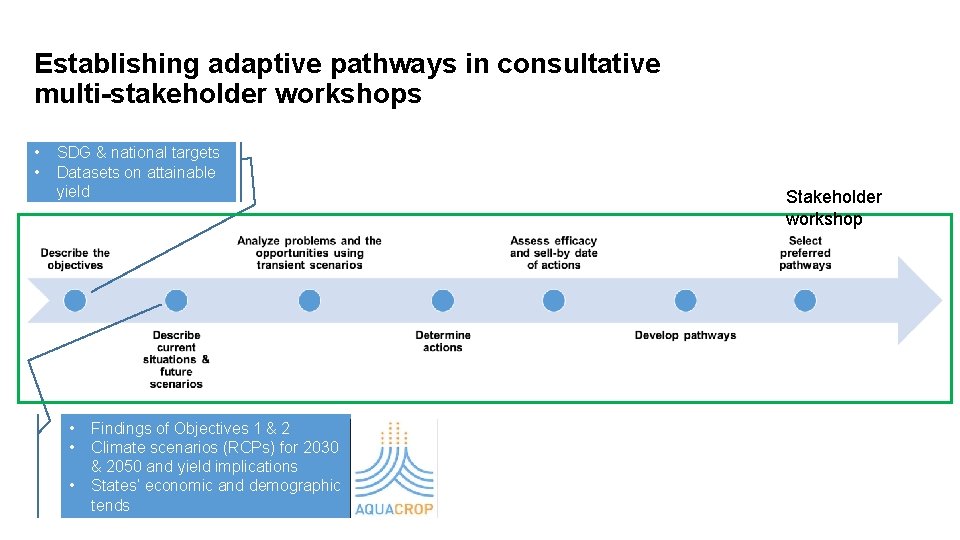
Establishing adaptive pathways in consultative multi-stakeholder workshops • • SDG & national targets Datasets on attainable yield • • • Findings of Objectives 1 & 2 Climate scenarios (RCPs) for 2030 & 2050 and yield implications States’ economic and demographic tends Stakeholder workshop
Progress to date Proportionate Change in Paddy Yield 80 • Review of literature and framing the research. • Data compilation and processing • Initial crop simulation runs • Development of questionnaire • Preparation of ethics application 60 50 Change in Yield (%) • Climate data • Yield data • Soil, irrigation and crop management 70 40 Lower resilience 30 SIM 20 OBS 10 0 1986 1991 1996 2001 -10 -20 -30 Year Higher resilience 2006 2011 2016
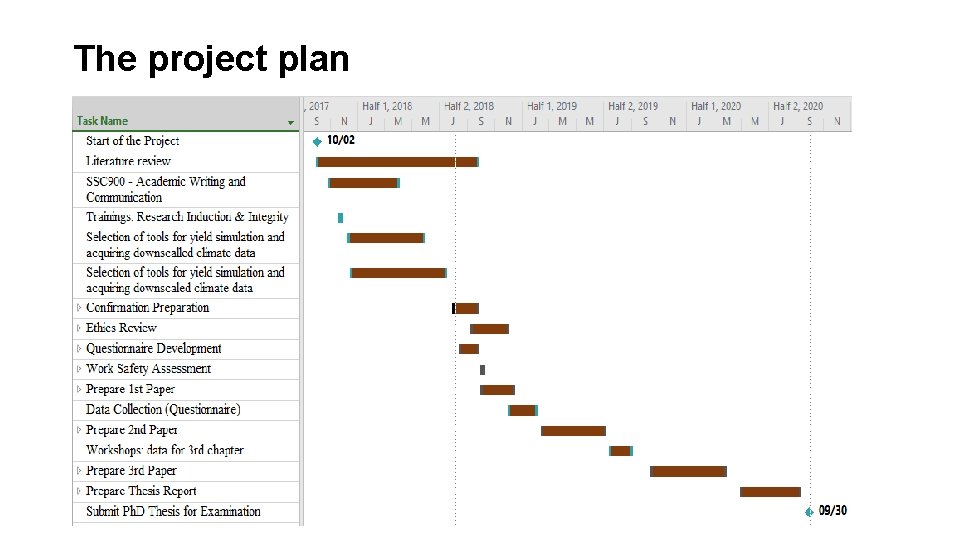
The project plan
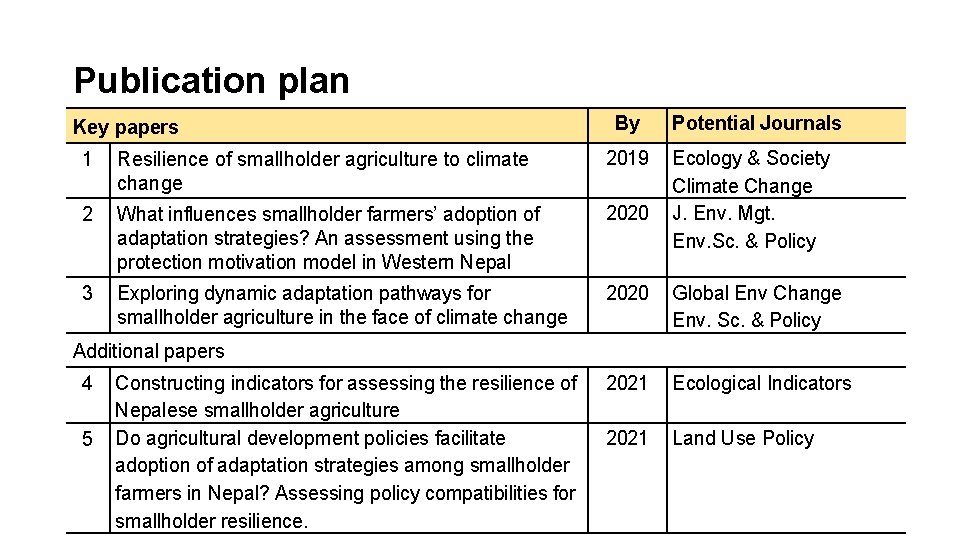
Publication plan Key papers By Potential Journals Ecology & Society Climate Change J. Env. Mgt. Env. Sc. & Policy 1 Resilience of smallholder agriculture to climate change 2019 2 What influences smallholder farmers’ adoption of adaptation strategies? An assessment using the protection motivation model in Western Nepal 2020 3 Exploring dynamic adaptation pathways for smallholder agriculture in the face of climate change 2020 Global Env Change Env. Sc. & Policy 2021 Ecological Indicators 2021 Land Use Policy Additional papers 4 5 Constructing indicators for assessing the resilience of Nepalese smallholder agriculture Do agricultural development policies facilitate adoption of adaptation strategies among smallholder farmers in Nepal? Assessing policy compatibilities for smallholder resilience.
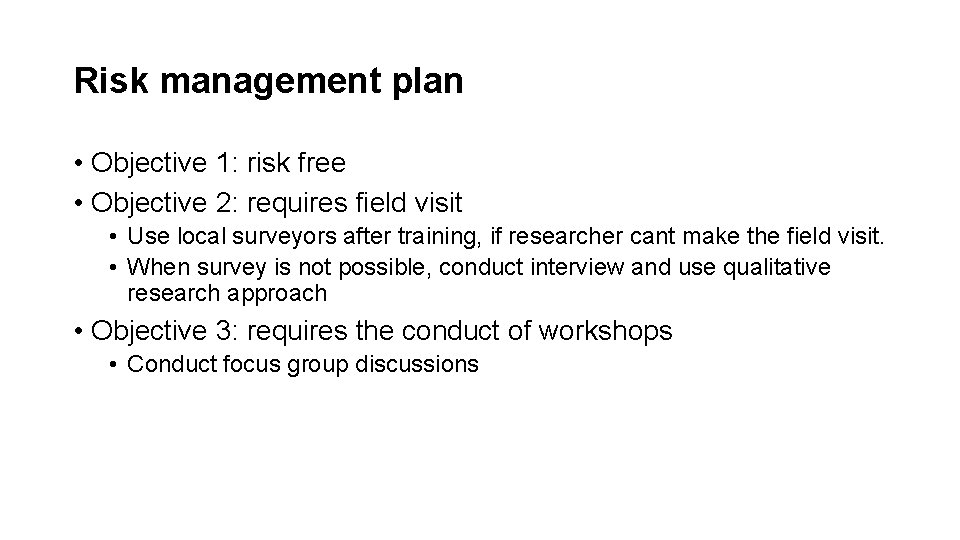
Risk management plan • Objective 1: risk free • Objective 2: requires field visit • Use local surveyors after training, if researcher cant make the field visit. • When survey is not possible, conduct interview and use qualitative research approach • Objective 3: requires the conduct of workshops • Conduct focus group discussions
The End Prahlad Lamichhane, MSc Resources Eng. , Universität Karlsruhe (TH), email: plamichh@deakin. edu. au