
Enhancing Production and Dissemination of Gender Sensitive Statistics
- Slides: 32
Enhancing Production and Dissemination of Gender. Sensitive Statistics in Ukraine Learning from International Standards and Approaches Lantona Sado Kyiev, 3 -5. 07. 2019
Content § Key terminology and requirements related to gender statistics § International approaches for gender statistics § The gender perspective in data collection: exploration of new initiatives § Strategic considerations for enhancing data analysis and dissemination Enhancing production and dissemination of Gender-Sensitive Statistics in Ukraine, Kyiv , 3 -5. 07. 2019 Pag 2
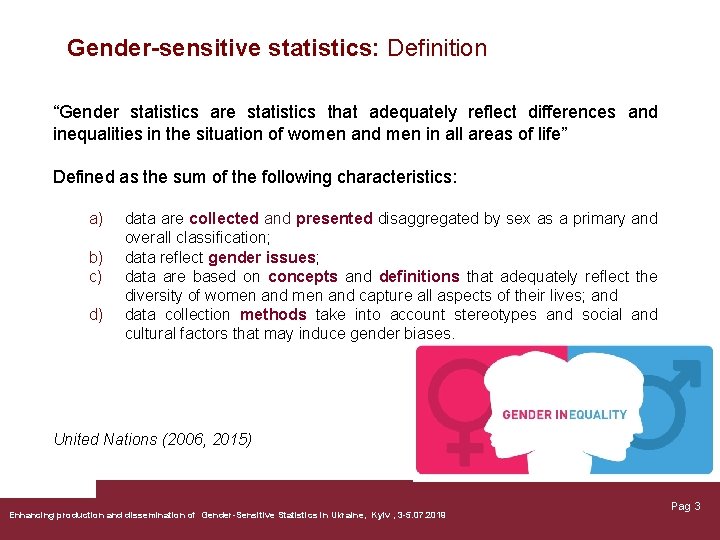
Gender-sensitive statistics: Definition “Gender statistics are statistics that adequately reflect differences and inequalities in the situation of women and men in all areas of life” Defined as the sum of the following characteristics: a) b) c) d) data are collected and presented disaggregated by sex as a primary and overall classification; data reflect gender issues; data are based on concepts and definitions that adequately reflect the diversity of women and capture all aspects of their lives; and data collection methods take into account stereotypes and social and cultural factors that may induce gender biases. United Nations (2006, 2015)) Enhancing production and dissemination of Gender-Sensitive Statistics in Ukraine, Kyiv , 3 -5. 07. 2019 Pag 3
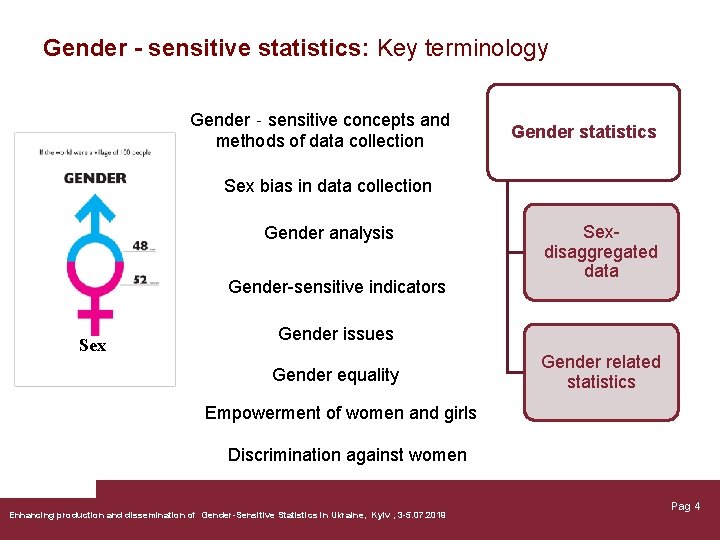
Gender - sensitive statistics: Key terminology Gender‐sensitive concepts and methods of data collection Gender statistics Sex bias in data collection Gender analysis ccc Gender-sensitive indicators Sex- disaggregated data Gender issues Gender equality Gender related statistics Empowerment of women and girls Discrimination against women Enhancing production and dissemination of Gender-Sensitive Statistics in Ukraine, Kyiv , 3 -5. 07. 2019 Pag 4
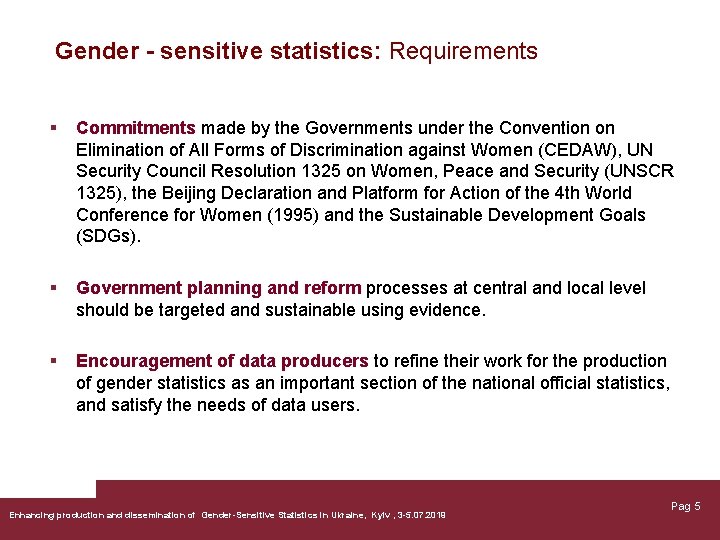
Gender - sensitive statistics: Requirements § Commitments made by the Governments under the Convention on Elimination of All Forms of Discrimination against Women (CEDAW), UN Security Council Resolution 1325 on Women, Peace and Security (UNSCR 1325), the Beijing Declaration and Platform for Action of the 4 th World Conference for Women (1995) and the Sustainable Development Goals (SDGs). § Government planning and reform processes at central and local level should be targeted and sustainable using evidence. § Encouragement of data producers to refine their work for the production of gender statistics as an important section of the national official statistics, and satisfy the needs of data users. Enhancing production and dissemination of Gender-Sensitive Statistics in Ukraine, Kyiv , 3 -5. 07. 2019 Pag 5
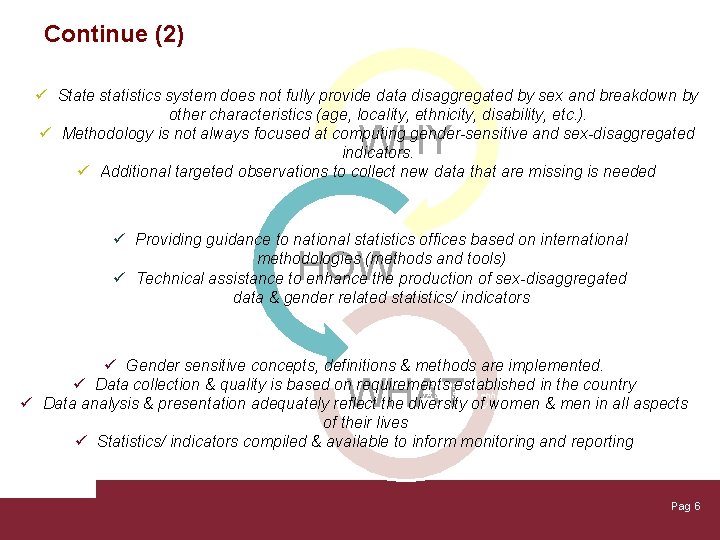
Continue (2) ü State statistics system does not fully provide data disaggregated by sex and breakdown by other characteristics (age, locality, ethnicity, disability, etc. ). ü Methodology is not always focused at computing gender-sensitive and sex-disaggregated indicators. ü Additional targeted observations to collect new data that are missing is needed WHY ü Providing guidance to national statistics offices based on international methodologies (methods and tools) ü Technical assistance to enhance the production of sex-disaggregated data & gender related statistics/ indicators HOW ü Gender sensitive concepts, definitions & methods are implemented. Identify key ues Providingestablished guidance to SSSU based on International ü Data collection & quality is based on requirements in the country. Methodologies TA to SSSU to enhance the production of sex-disaggregated data & gender ü Data analysis & presentation adequately reflect the diversity of women & men in all aspects related statistics/ indicators. of their lives ü Statistics/ indicators compiled & available to inform monitoring and reporting WHAT Pag 6
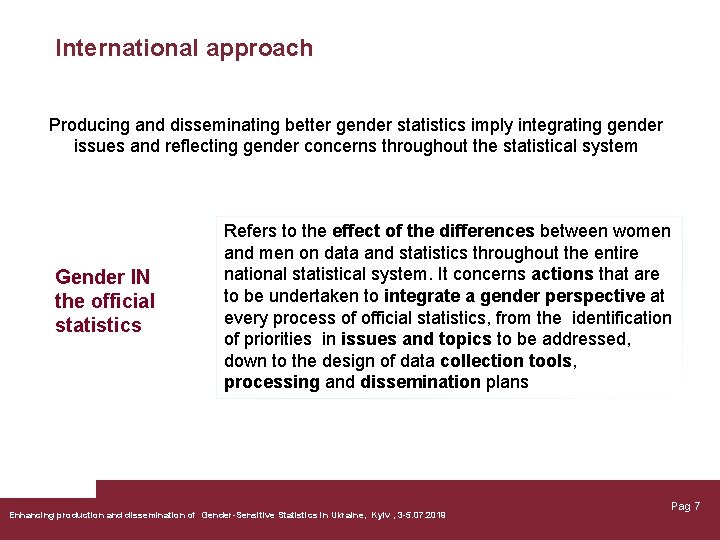
International approach Producing and disseminating better gender statistics imply integrating gender issues and reflecting gender concerns throughout the statistical system Gender IN the official statistics Refers to the effect of the differences between women and men on data and statistics throughout the entire national statistical system. It concerns actions that are to be undertaken to integrate a gender perspective at every process of official statistics, from the identification of priorities in issues and topics to be addressed, down to the design of data collection tools, processing and dissemination plans Enhancing production and dissemination of Gender-Sensitive Statistics in Ukraine, Kyiv , 3 -5. 07. 2019 Pag 7
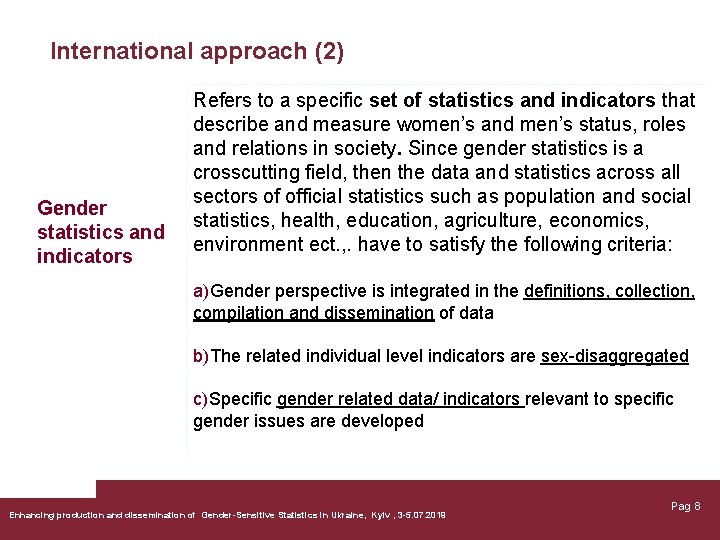
International approach (2) Gender statistics and indicators Refers to a specific set of statistics and indicators that describe and measure women’s and men’s status, roles and relations in society. Since gender statistics is a crosscutting field, then the data and statistics across all sectors of official statistics such as population and social statistics, health, education, agriculture, economics, environment ect. , . have to satisfy the following criteria: a)Gender perspective is integrated in the definitions, collection, compilation and dissemination of data b)The related individual level indicators are sex-disaggregated c)Specific gender related data/ indicators relevant to specific gender issues are developed Enhancing production and dissemination of Gender-Sensitive Statistics in Ukraine, Kyiv , 3 -5. 07. 2019 Pag 8
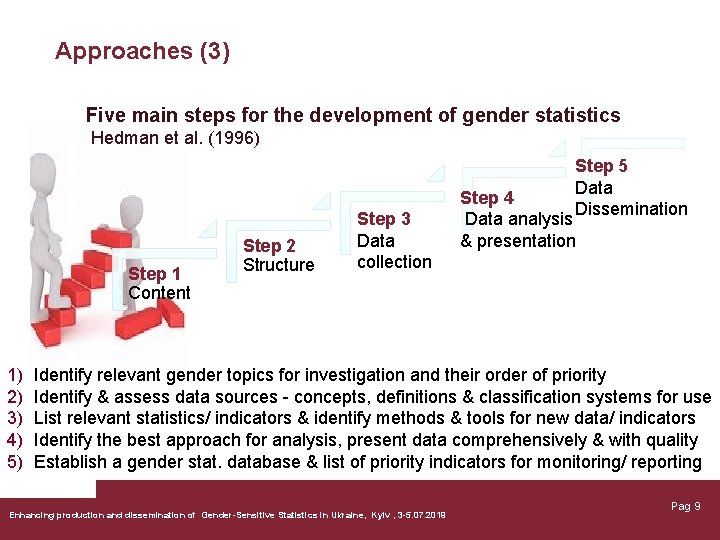
Approaches (3) Five main steps for the development of gender statistics Hedman et al. (1996) Step 1 Content 1) 2) 3) 4) 5) Step 2 Structure Step 3 Data collection Step 5 Data Step 4 Dissemination Data analysis & presentation Identify relevant gender topics for investigation and their order of priority Identify & assess data sources - concepts, definitions & classification systems for use List relevant statistics/ indicators & identify methods & tools for new data/ indicators Identify the best approach for analysis, present data comprehensively & with quality Establish a gender stat. database & list of priority indicators for monitoring/ reporting Enhancing production and dissemination of Gender-Sensitive Statistics in Ukraine, Kyiv , 3 -5. 07. 2019 Pag 9
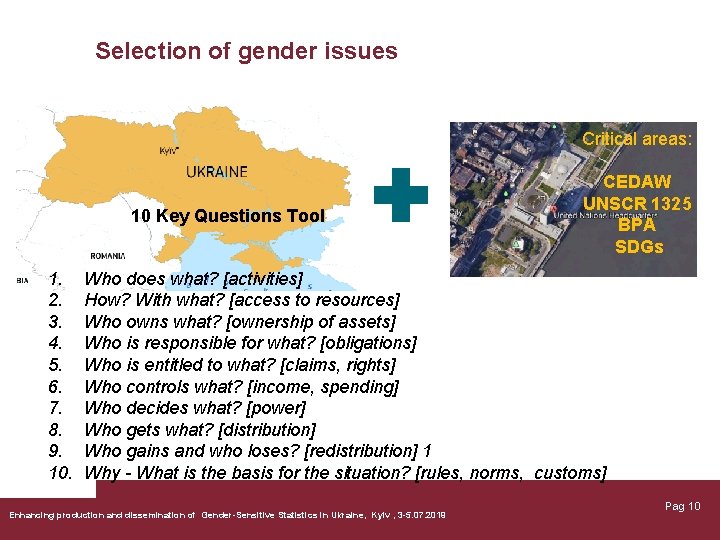
Selection of gender issues Critical areas: 10 Key Questions Tool 1. 2. 3. 4. 5. 6. 7. 8. 9. 10. CEDAW UNSCR 1325 BPA SDGs Who does what? [activities] How? With what? [access to resources] Who owns what? [ownership of assets] Who is responsible for what? [obligations] Who is entitled to what? [claims, rights] Who controls what? [income, spending] Who decides what? [power] Who gets what? [distribution] Who gains and who loses? [redistribution] 1 Why - What is the basis for the situation? [rules, norms, customs] Enhancing production and dissemination of Gender-Sensitive Statistics in Ukraine, Kyiv , 3 -5. 07. 2019 Pag 10
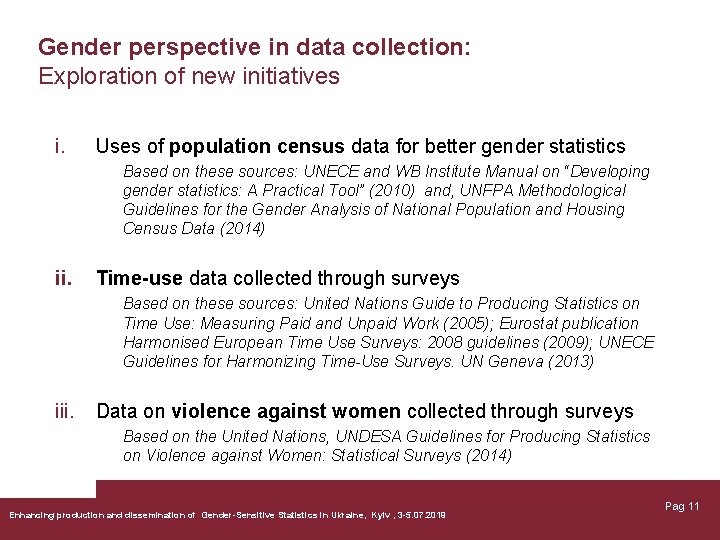
Gender perspective in data collection: Exploration of new initiatives i. Uses of population census data for better gender statistics Based on these sources: UNECE and WB Institute Manual on “Developing gender statistics: A Practical Tool” (2010) and, UNFPA Methodological Guidelines for the Gender Analysis of National Population and Housing Census Data (2014) ii. Time-use data collected through surveys Based on these sources: United Nations Guide to Producing Statistics on Time Use: Measuring Paid and Unpaid Work (2005); Eurostat publication Harmonised European Time Use Surveys: 2008 guidelines (2009); UNECE Guidelines for Harmonizing Time-Use Surveys. UN Geneva (2013) iii. Data on violence against women collected through surveys Based on the United Nations, UNDESA Guidelines for Producing Statistics on Violence against Women: Statistical Surveys (2014) Enhancing production and dissemination of Gender-Sensitive Statistics in Ukraine, Kyiv , 3 -5. 07. 2019 Pag 11
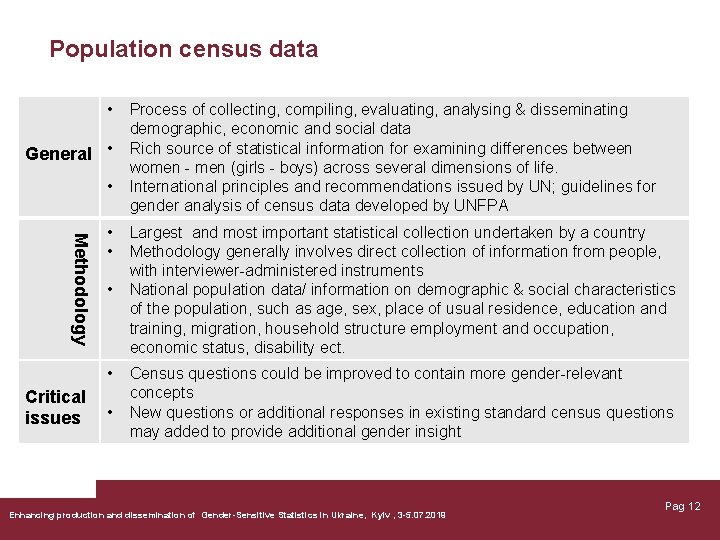
Population census data • General • • Methodology • • Critical issues • Process of collecting, compiling, evaluating, analysing & disseminating demographic, economic and social data Rich source of statistical information for examining differences between women - men (girls - boys) across several dimensions of life. International principles and recommendations issued by UN; guidelines for gender analysis of census data developed by UNFPA Largest and most important statistical collection undertaken by a country Methodology generally involves direct collection of information from people, with interviewer-administered instruments National population data/ information on demographic & social characteristics of the population, such as age, sex, place of usual residence, education and training, migration, household structure employment and occupation, economic status, disability ect. Census questions could be improved to contain more gender-relevant concepts New questions or additional responses in existing standard census questions may added to provide additional gender insight Enhancing production and dissemination of Gender-Sensitive Statistics in Ukraine, Kyiv , 3 -5. 07. 2019 Pag 12
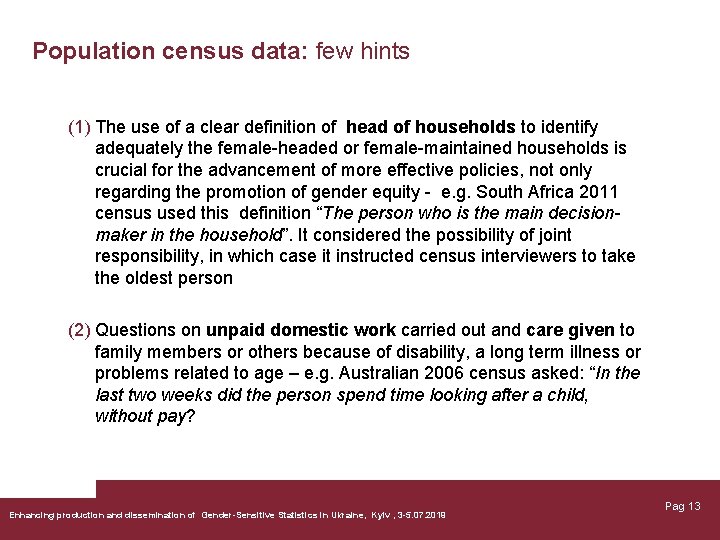
Population census data: few hints (1) The use of a clear definition of head of households to identify adequately the female-headed or female-maintained households is crucial for the advancement of more effective policies, not only regarding the promotion of gender equity - e. g. South Africa 2011 census used this definition “The person who is the main decisionmaker in the household”. It considered the possibility of joint responsibility, in which case it instructed census interviewers to take the oldest person (2) Questions on unpaid domestic work carried out and care given to family members or others because of disability, a long term illness or problems related to age – e. g. Australian 2006 census asked: “In the last two weeks did the person spend time looking after a child, without pay? Source : Manula of UNFPA Enhancing production and dissemination of Gender-Sensitive Statistics in Ukraine, Kyiv , 3 -5. 07. 2019 Pag 13
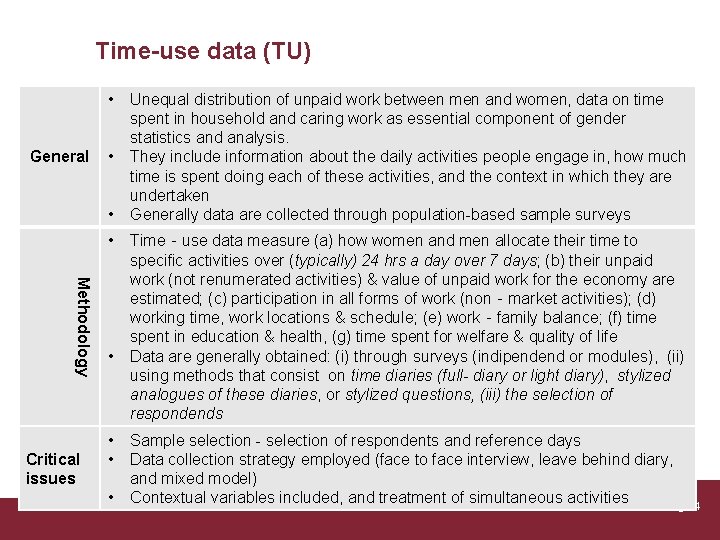
Time-use data (TU) • General • • • Methodology Critical issues • • Unequal distribution of unpaid work between men and women, data on time spent in household and caring work as essential component of gender statistics and analysis. They include information about the daily activities people engage in, how much time is spent doing each of these activities, and the context in which they are undertaken Generally data are collected through population-based sample surveys Time‐use data measure (a) how women and men allocate their time to specific activities over (typically) The gender perspective in data collection: 24 hrs a day over 7 days; (b) their unpaid Exploration of new initiatives work (not renumerated activities) & value of unpaid work for the economy are estimated; (c) participation in all forms of work (non‐market activities); (d) working time, work locations & schedule; (e) work‐family balance; (f) time spent in education & health, (g) time spent for welfare & quality of life Data are generally obtained: (i) through surveys (indipendend or modules), (ii) using methods that consist on time diaries (full- diary or light diary), stylized analogues of these diaries, or stylized questions, (iii) the selection of respondends Sample selection - selection of respondents and reference days Data collection strategy employed (face to face interview, leave behind diary, and mixed model) Contextual variables included, and treatment of simultaneous activities Pag 14
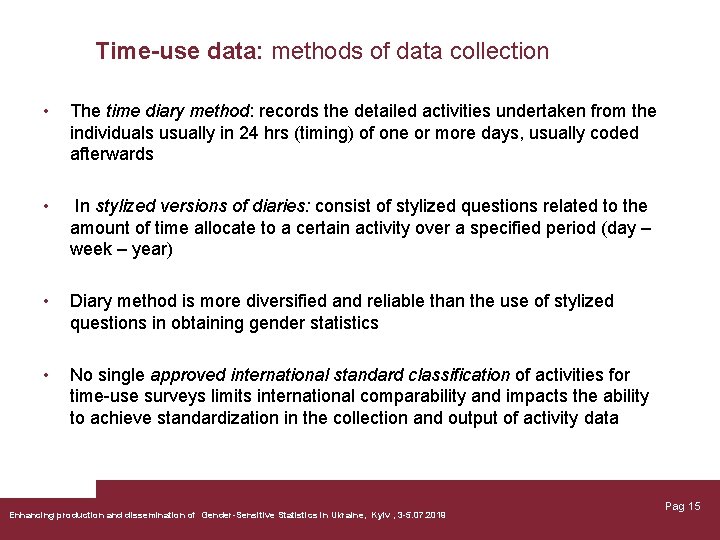
Time-use data: methods of data collection • The time diary method: records the detailed activities undertaken from the individuals usually in 24 hrs (timing) of one or more days, usually coded afterwards • In stylized versions of diaries: consist of stylized questions related to the amount of time allocate to a certain activity over a specified period (day – week – year) • Diary method is more diversified and reliable than the use of stylized questions in obtaining gender statistics • No single approved international standard classification of activities for time-use surveys limits international comparability and impacts the ability to achieve standardization in the collection and output of activity data Enhancing production and dissemination of Gender-Sensitive Statistics in Ukraine, Kyiv , 3 -5. 07. 2019 Pag 15
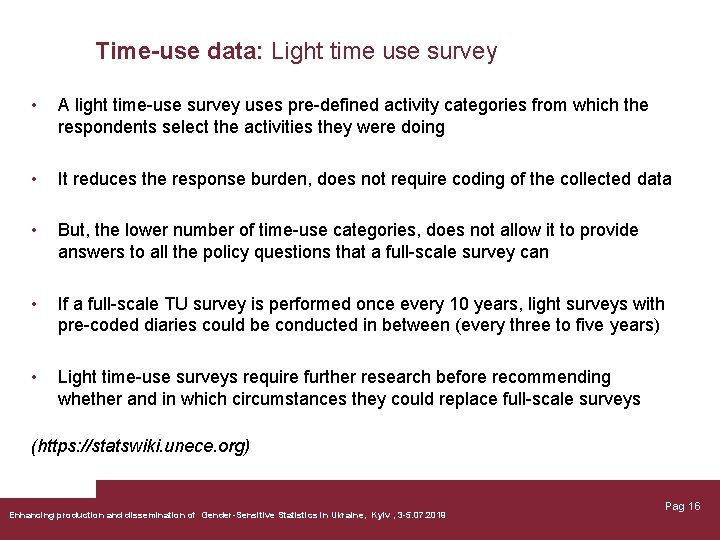
Time-use data: Light time use survey • A light time-use survey uses pre-defined activity categories from which the respondents select the activities they were doing • It reduces the response burden, does not require coding of the collected data • But, the lower number of time-use categories, does not allow it to provide answers to all the policy questions that a full-scale survey can • • If a full-scale TU survey is performed once every 10 years, light surveys with pre-coded diaries could be conducted in between (every three to five years) Light time-use surveys require further research before recommending whether and in which circumstances they could replace full-scale surveys (https: //statswiki. unece. org) Enhancing production and dissemination of Gender-Sensitive Statistics in Ukraine, Kyiv , 3 -5. 07. 2019 Pag 16
Time-use data: subjective well-being • Information on subjective well-being – including measures of life evaluation, positive and negative emotions – should be part of official statistics (Report by Commission on Measurement of Economic Performance and Social Progress (Stiglitz et al. 2009) • TU surveys are one of the primary vehicles for collecting this information, though still in its early stages • Further research and testing is required, in particular to identify the most appropriate scale for data collection and the means of reporting this as a one-dimensional index -techniques similar to the 2010 French TUS • A Questionnaire Module on Experienced Well-being is provided in the UNECE Guidelines for Harmonizing Time-Use Surveys (2013). (https: //statswiki. unece. org) Enhancing production and dissemination of Gender-Sensitive Statistics in Ukraine, Kyiv , 3 -5. 07. 2019 Pag 17
Time-use data: novel methods • Data collection through web-based reporting is increasing but unlikely that surveys will move to only web-based reporting, with a proportion of the population unable or unwilling to report online • Technological advancements with potential to collect geo-spatial data from GPS trackers, and levels of physical activity from accelerometers, and energy consumption from smart meters • Smartphones offer the possibility to bridge these various techniques, as applications can equip most phones to act as accelerometers and GPS trackers • There are no recommendations for the use of these technologies within the context of a national statistical office • For more see UNECE Countries consolidated TU questionnaires Enhancing production and dissemination of Gender-Sensitive Statistics in Ukraine, Kyiv , 3 -5. 07. 2019 Pag 18
Data on violence against women (VAW) • General • Methodology Critical issues • • VAW is “any act of gender-based violence that results in physical, sexual or psychological harm or suffering to women, including threats of such acts, coercion or arbitrary deprivation of liberty, occurring in public or in private life” (UN Declaration on the Elimination of Violence against Women) The need for accurate & reliable statistics recognized at national strategies and programms Dedicated modules - designed primarily to gather information on the extent of different forms of violence and their prevalence : physical, sexual, psychological and economic violence – UNECE and DHS module Survey module integrated in MICS Data collected in these surveys/modules are necessary (a) to estimate the prevalence of violence against women (the perpetror could be an intimate partner, non-intimate partner or estranger); (b) to identify the groups of women most at risk of violence; (c) to identify the characteristics of perpetrators; (d) to estimate the impact of violence on women’s physical and mental health; (e) to identify the barriers faced by victims of violence in seeking support and services; and (f) to understand attitudes towards violence against women Concepts and measurements Questionnaire design and topics for inclusion Selection and training of interviewers Ethical considerations Pag 19
Survey on violence against women: UNECE module § UNECE survey module developed to address the set of indicators developed by Friends of the Chair of the UNSC on Statistical Indicators on Violence against Women and builds on the Violence against Women instrument of WHO § It collects information on physical, sexual and intimate violence (i) Partner violence (current or previous); (ii) Non-partner violence - relatives, other people that they know (doctor, acquaintance, teacher), and/or strangers § Documents developed to accompany this module : - Question by question explanation of the module - Facilitators manual for workshops for training interviewers - Interviewer manual (including ethical and safety recommendations) - Codebook and analysis plan for the VAW indicators - Recode and analysis syntaxes (SPSS) to compute the UN VAW indicators Tested in Armenia, Georgia, Mexico, the Republic of Moldova and South Africa § ( (http: //www 1. unece. org/stat/platform/display/VAW) Pag 20
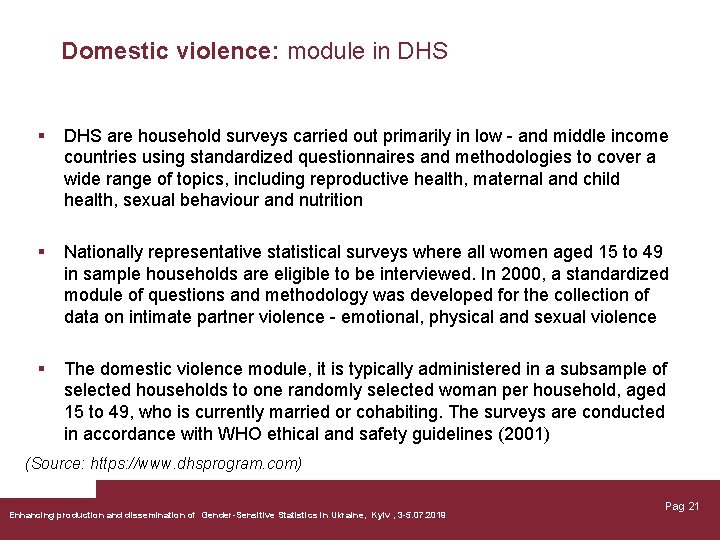
Domestic violence: module in DHS § DHS are household surveys carried out primarily in low - and middle income countries using standardized questionnaires and methodologies to cover a wide range of topics, including reproductive health, maternal and child health, sexual behaviour and nutrition § Nationally representative statistical surveys where all women aged 15 to 49 in sample households are eligible to be interviewed. In 2000, a standardized module of questions and methodology was developed for the collection of data on intimate partner violence - emotional, physical and sexual violence § The domestic violence module, it is typically administered in a subsample of selected households to one randomly selected woman per household, aged 15 to 49, who is currently married or cohabiting. The surveys are conducted in accordance with WHO ethical and safety guidelines (2001) (Source: https: //www. dhsprogram. com) Enhancing production and dissemination of Gender-Sensitive Statistics in Ukraine, Kyiv , 3 -5. 07. 2019 Pag 21
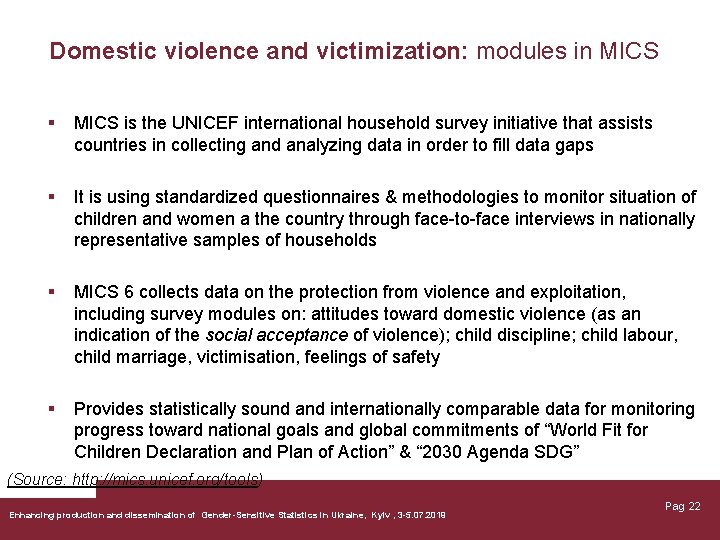
Domestic violence and victimization: modules in MICS § MICS is the UNICEF international household survey initiative that assists countries in collecting and analyzing data in order to fill data gaps § It is using standardized questionnaires & methodologies to monitor situation of children and women a the country through face-to-face interviews in nationally representative samples of households § MICS 6 collects data on the protection from violence and exploitation, including survey modules on: attitudes toward domestic violence (as an indication of the social acceptance of violence); child discipline; child labour, child marriage, victimisation, feelings of safety § Provides statistically sound and internationally comparable data for monitoring progress toward national goals and global commitments of “World Fit for Children Declaration and Plan of Action” & “ 2030 Agenda SDG” (Source: http: //mics. unicef. org/tools) Enhancing production and dissemination of Gender-Sensitive Statistics in Ukraine, Kyiv , 3 -5. 07. 2019 Pag 22
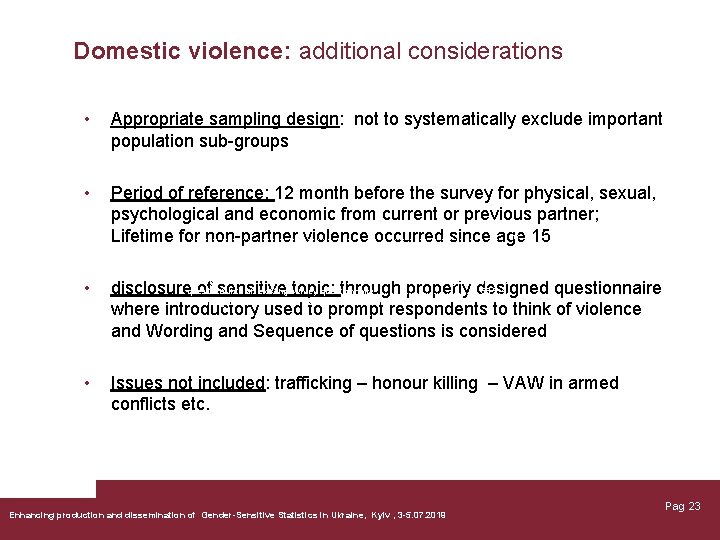
Domestic violence: additional considerations • Appropriate sampling design: not to systematically exclude important population sub-groups • Period of reference: 12 month before the survey for physical, sexual, psychological and economic from current or previous partner; Data collection strategies . . . . . . . . 66 Lifetime for non-partner violence occurred since age 15 2. 1. Conducting a stand-alone survey. . . . . . . 66 2. 2. Appending a survey module to an existing household survey. . . . . 67 2. 3. Integrating a minimum set of questions into an existing survey questionnaire. . . . . 68 2. 4. Choosing between the three data collection strategies . . . . . • disclosure of sensitive topic: through properly designed questionnaire where introductory used to prompt respondents to think of violence and Wording and Sequence of questions is considered • Issues not included: trafficking – honour killing – VAW in armed conflicts etc. Enhancing production and dissemination of Gender-Sensitive Statistics in Ukraine, Kyiv , 3 -5. 07. 2019 Pag 23
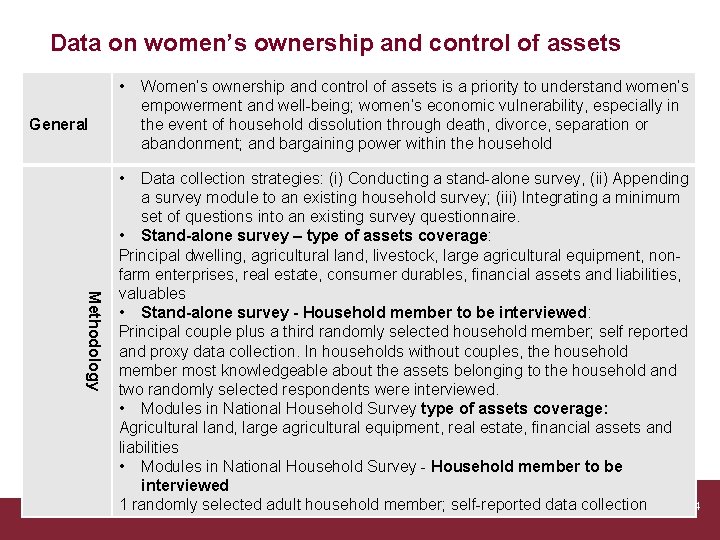
Data on women’s ownership and control of assets • General • Women’s ownership and control of assets is a priority to understand women’s empowerment and well-being; women’s economic vulnerability, especially in the event of household dissolution through death, divorce, separation or abandonment; and bargaining power within the household Methodology Data collection strategies: (i) Conducting a stand-alone survey, (ii) Appending a survey module to an existing household survey; (iii) Integrating a minimum set of questions into an existing survey questionnaire. • Stand-alone survey – type of assets coverage: Principal dwelling, agricultural land, livestock, large agricultural equipment, nonfarm enterprises, real estate, consumer durables, financial assets and liabilities, valuables • Stand-alone survey - Household member to be interviewed: Principal couple plus a third randomly selected household member; self reported and proxy data collection. In households without couples, the household member most knowledgeable about the assets belonging to the household and two randomly selected respondents were interviewed. • Modules in National Household Survey type of assets coverage: Agricultural land, large agricultural equipment, real estate, financial assets and liabilities • Modules in National Household Survey - Household member to be interviewed 1 randomly selected adult household member; self-reported data collection Pag 24
Women’s ownership and control of assets: additional considerations • The World Bank Living Standards Measurement Study- Integrated Surveys on Agriculture (LSMS-ISA), the Demographic Health Surveys (DHS) and Labour Force Surveys collect some individual-level data on the ownership and control of assets (self-reported) data from multiple household members • The Evidence and Data for Gender Equality (EDGE) methodology measures asset ownership from a gender perspective collecting both proxy and self-reported data from multiple household member. • Methodological Guidelines on the Production of Statistics on Asset Ownership from a Gender Perspective are available (https: //unstats. un. org/unsd/statcom/48 th-session/documents/BG-2017 -3 h-UN-Guidelines -Statistics-on-Asset-Ownership-From-Gender-Perspective-E. pdf) Pag 25
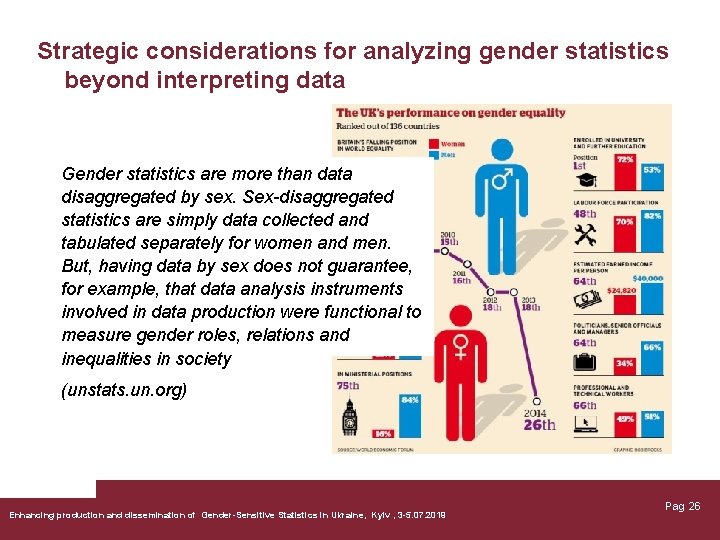
Strategic considerations for analyzing gender statistics beyond interpreting data Gender statistics are more than data disaggregated by sex. Sex-disaggregated statistics are simply data collected and tabulated separately for women and men. But, having data by sex does not guarantee, for example, that data analysis instruments involved in data production were functional to measure gender roles, relations and inequalities in society (unstats. un. org) Enhancing production and dissemination of Gender-Sensitive Statistics in Ukraine, Kyiv , 3 -5. 07. 2019 Pag 26
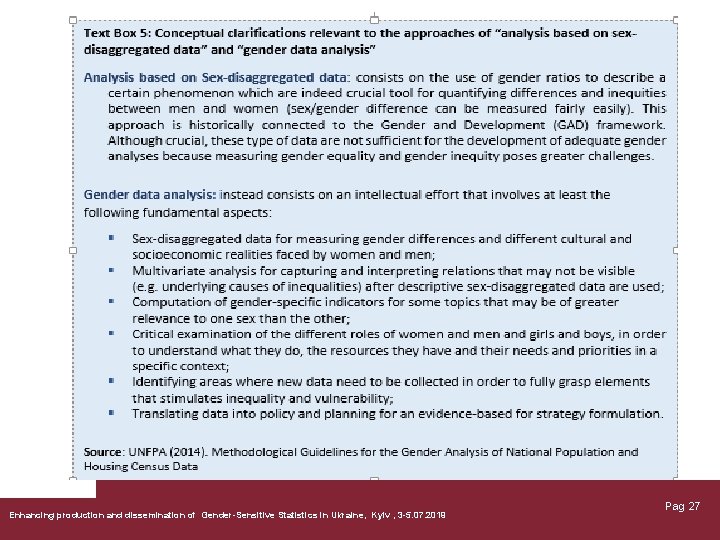
Enhancing production and dissemination of Gender-Sensitive Statistics in Ukraine, Kyiv , 3 -5. 07. 2019 Pag 27
Analyzing gender statistics (2) • Fundamental underlying principles: promoting gender-responsive data analysis to be in line with the human rights-based approach and ensures the fulfilment of human rights obligations of the country • Instrumental underlying principles: gender data analysis to contribute to more sustainable human development outcomes, building evidence for informing development policies/ programmes that takes into account specific needs of women and men, girls and boys • Institutional underlying principles: promoting gender analysis in the national official statistics is timely Enhancing production and dissemination of Gender-Sensitive Statistics in Ukraine, Kyiv , 3 -5. 07. 2019 Pag 28
Strength of census data for data analyses § Census provides a basic set of sex-disaggregated data at the smallest geographical level. § Data on private life (e. g. sexuality, reproduction, women’s unpaid care-and housework), community life (e. g. living conditions such as acess to water source and telecommunications, and social infrastructure such as facilities, schools, roads ect. , . ) of women and girls, men and boys, can be used with gender lens for insights into time-use. § Core background information is also provided, allowing for further research on women and men, girls and boys. Since, most houselold surveys on social and health issues (e. g MICS, DHS, LFS) draw their samples from master sampling frames provided by the most recent census, comparative analysis are possible. Pag 29
Strength of VAW data for data analyses § Analysis provide answers to principal questions regarding VAW as identified by national stakeholders at the outset of the survey protocol § Recommended tabulations for core indicators on VAW identified by the Friends of the Chair of the UNSC are developed and available in the UNDESA guidelines (2014: 141 -170) § Decisions on the form of analysis, incl. levels of disaggregation, dissemination strategies are available in the Manual on victimization surveys (UNODC & UNECE, 2010) § Standard analysis provide evidence for policy and satisfy information needs of the majority of stakeholders. Academics and researchers can approach with more sophisticated multivariate analysis based Enhancing production and dissemination of Gender-Sensitive Statistics in Ukraine, Kyiv , 3 -5. 07. 2019 Pag 30
Strategic considerations for disseminating data § National statistical publications (routine publication, or specific data collections ideally following a gender-sensitive approach) § The classical publication “The life of women and men” § Analytical reports or articles - products that result from gender analysis, have a narrow scope, and are policy-oriented § General or dedicated databases § Microdata files concerning specific data collection activities § Dedicated gender portals on websites § Brochures, flyers and posters for a general audience. Enhancing production and dissemination of Gender-Sensitive Statistics in Ukraine, Kyiv , 3 -5. 07. 2019 Pag 31
Thank you for your attention! Pag 32