
Enhancing Motivation History Transtheoretical Model of the Stages
- Slides: 27
Enhancing Motivation
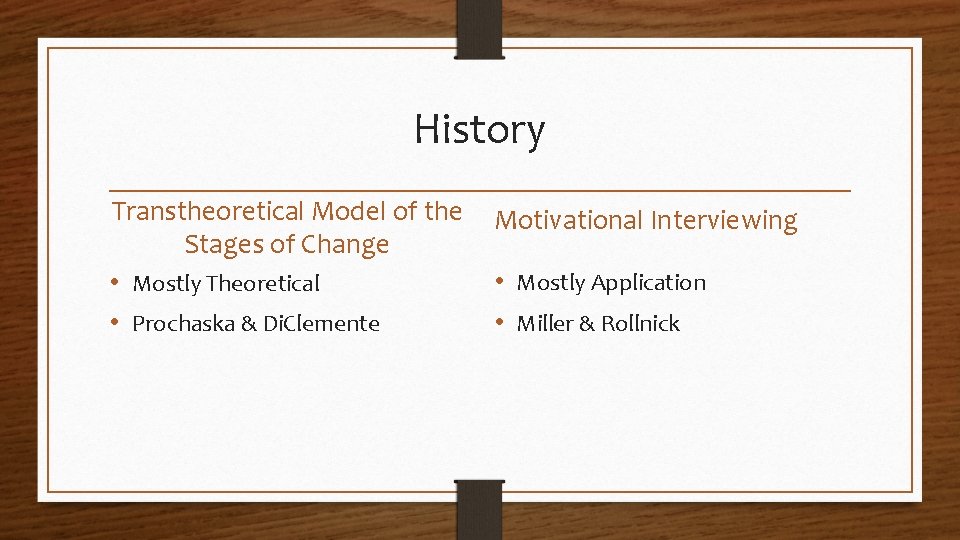
History Transtheoretical Model of the Stages of Change • Mostly Theoretical • Prochaska & Di. Clemente Motivational Interviewing • Mostly Application • Miller & Rollnick
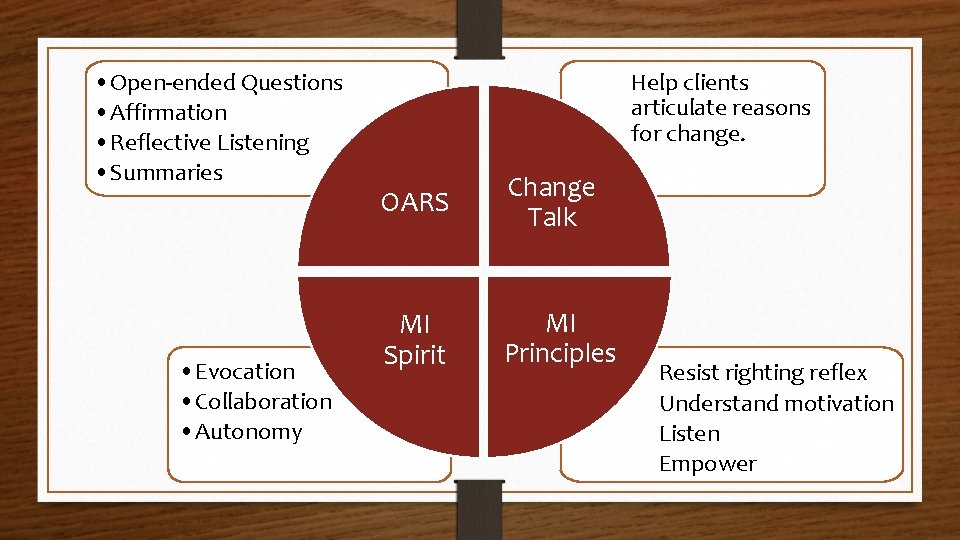
• Open-ended Questions • Affirmation • Reflective Listening • Summaries • Evocation • Collaboration • Autonomy Help clients articulate reasons for change. OARS Change Talk MI Spirit MI Principles Resist righting reflex Understand motivation Listen Empower
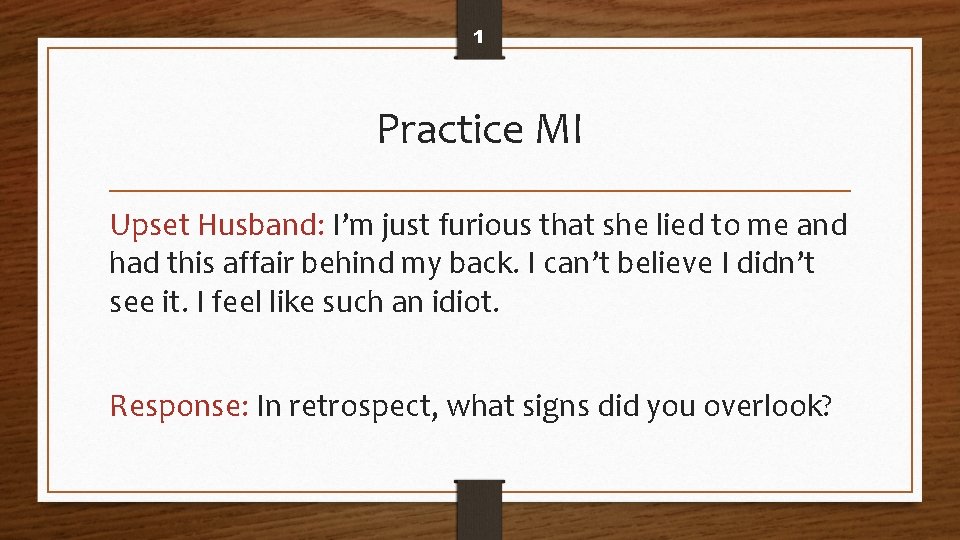
1 Practice MI Upset Husband: I’m just furious that she lied to me and had this affair behind my back. I can’t believe I didn’t see it. I feel like such an idiot. Response: In retrospect, what signs did you overlook?
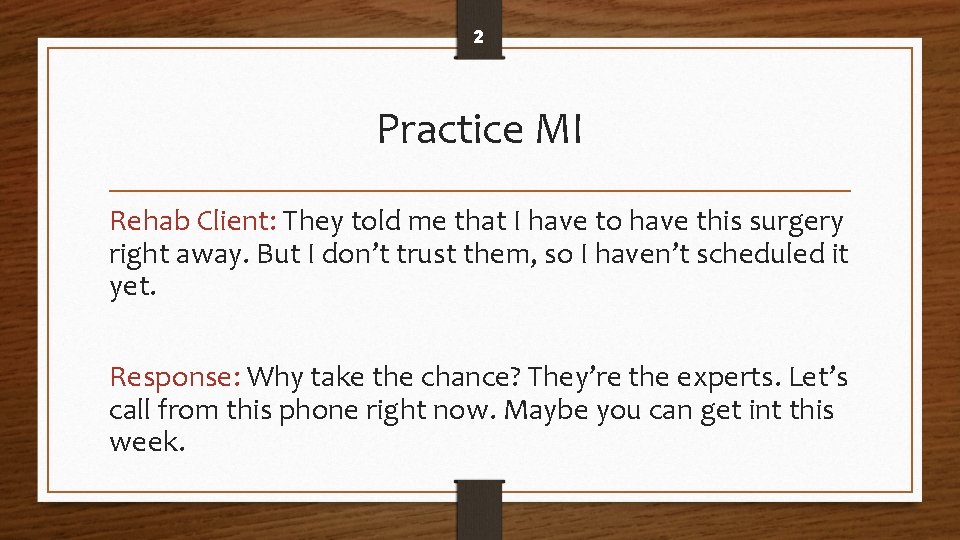
2 Practice MI Rehab Client: They told me that I have to have this surgery right away. But I don’t trust them, so I haven’t scheduled it yet. Response: Why take the chance? They’re the experts. Let’s call from this phone right now. Maybe you can get int this week.
Eliciting Change Talk
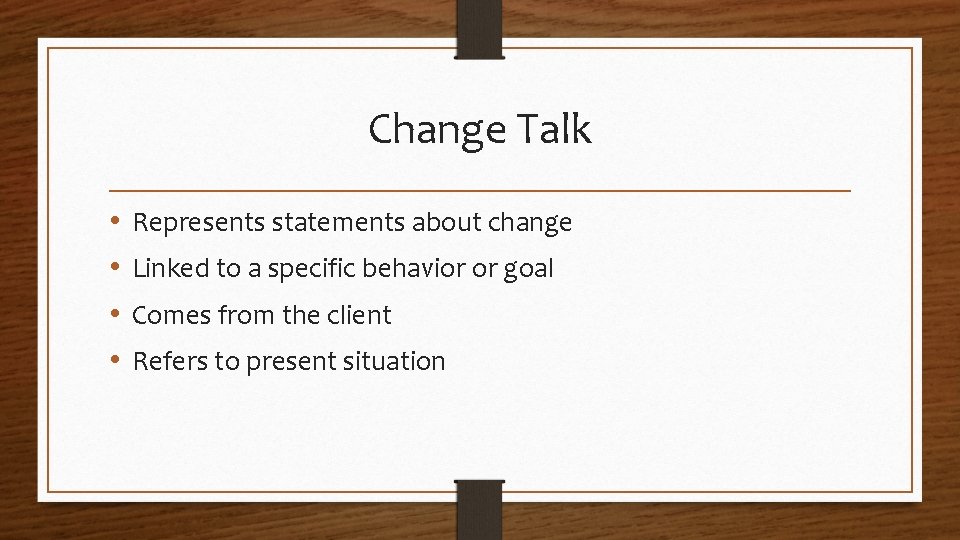
Change Talk • • Represents statements about change Linked to a specific behavior or goal Comes from the client Refers to present situation
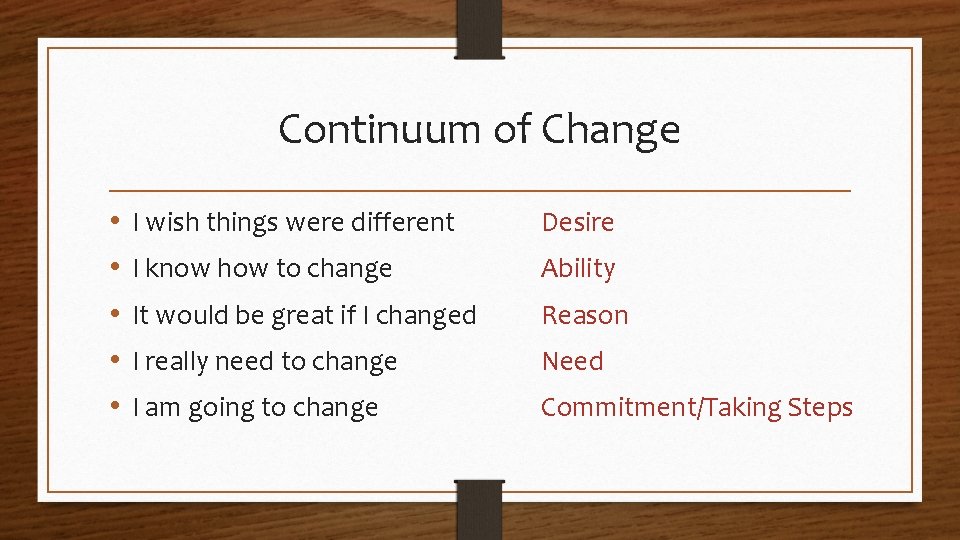
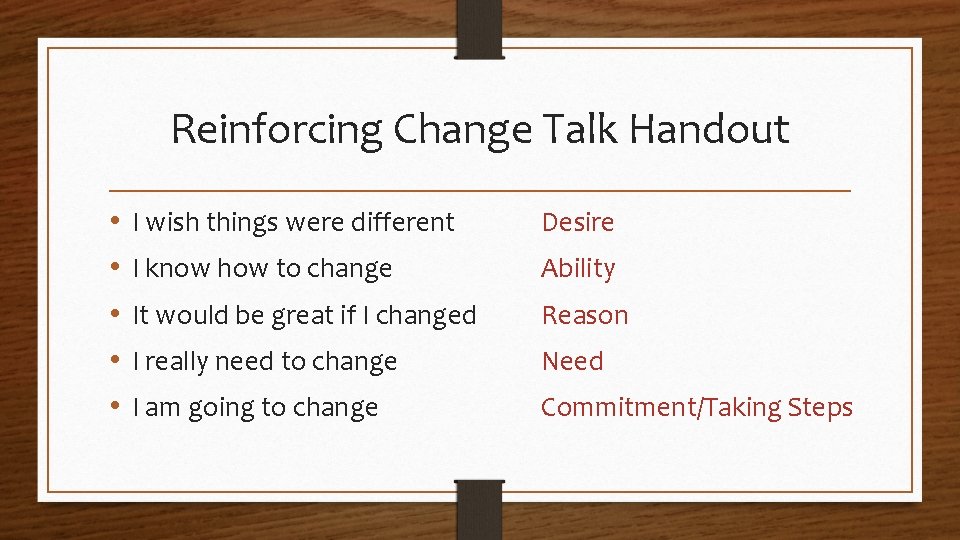
Continuum of Change • • • I wish things were different Desire I know how to change Ability It would be great if I changed Reason I really need to change Need I am going to change Commitment/Taking Steps
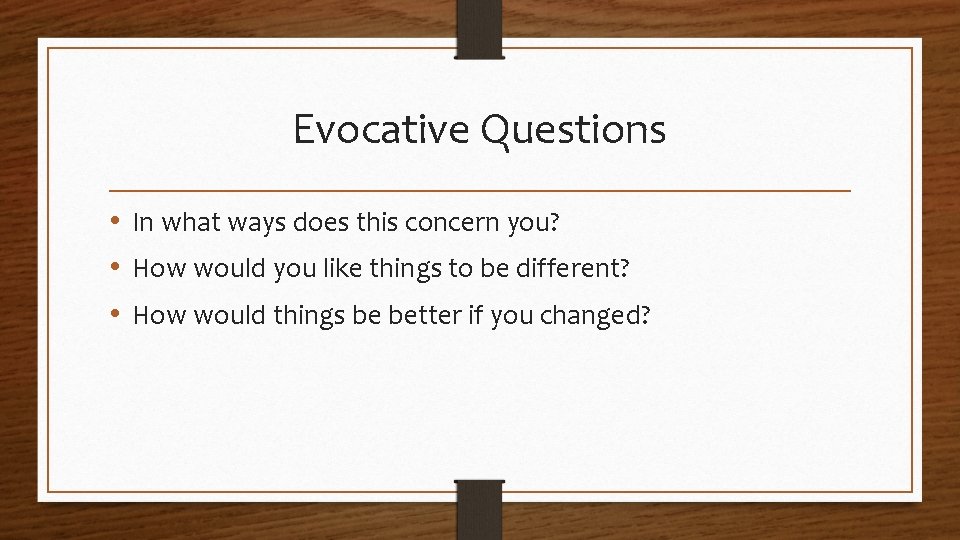
Evocative Questions • In what ways does this concern you? • How would you like things to be different? • How would things be better if you changed?
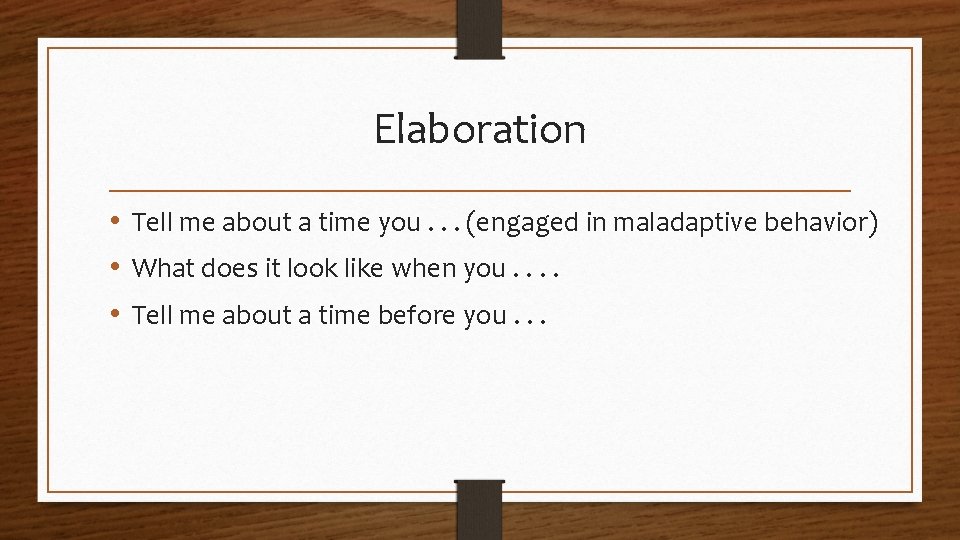
Elaboration • Tell me about a time you. . . (engaged in maladaptive behavior) • What does it look like when you. . • Tell me about a time before you. . .
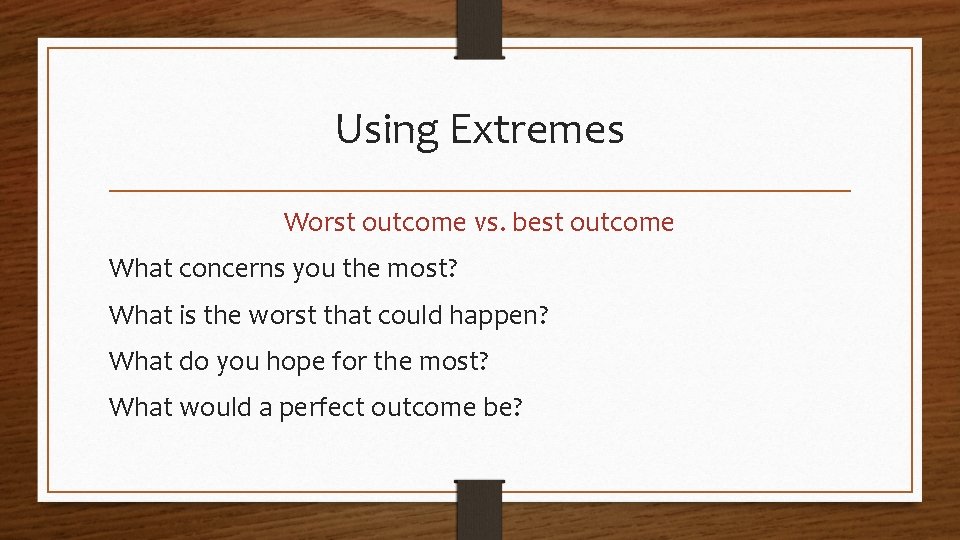
Using Extremes Worst outcome vs. best outcome What concerns you the most? What is the worst that could happen? What do you hope for the most? What would a perfect outcome be?
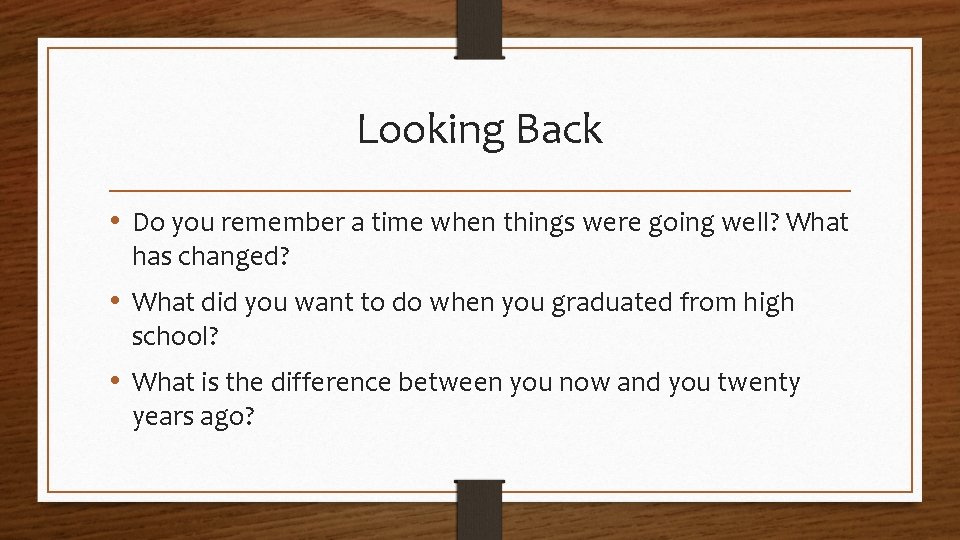
Looking Back • Do you remember a time when things were going well? What has changed? • What did you want to do when you graduated from high school? • What is the difference between you now and you twenty years ago?
Looking Forward • If nothing changes, what do you see happening in 5 years? If you decide to change, what will it be like? • What are your hopes for the near future?
Exploring Goals Use value card sort • What are some things you regard as important? How does drinking fit in with that? • What sorts of things do you want to accomplish in your life?
Use Feedback • Your scores on the Cognistat indicate that you have moderate deficits in problem solving and memory. How does that fit with your own experience?
Readiness Rulers • On a scale of 1 -10, how confident* are you – if you made a decision to change – that you could change, when 1=not at all confident and 10= extremely confident? • What led you to choose 6 rather than a 3? • What would it take to move from a 6 to a 7 or 8? * or important
Skill Practice
Reinforcing Change Talk Handout • • • I wish things were different Desire I know how to change Ability It would be great if I changed Reason I really need to change Need I am going to change Commitment/Taking Steps
1 Identifying Readiness So, what do other people say about this? I just can’t believe that people just cave in when they hear recommendations sending them to a halfway house. • Signs? • Your reasoning:
2 Identifying Readiness I agree it would be good to make some different choices that have less risk, but I also like to have fun with my friends. I have too much fun with them. • Signs? • Your reasoning:
3 Identifying Readiness You don't understand. These guys aren't going to take "No, thanks" for an answer. They're going to hound me. I've got to come back with something stronger. • Signs? • Your reasoning:
4 Identifying Readiness I don't see any point in talking about it. • Signs? • Your reasoning:
1 Ambivalence Strategies: ICAN "I don't want my mother brought into this. I don't see why she would need to be. I know some things need to change, and I have been talking about this with my dad. I live with him and he pays the bills, so I think it makes sense to talk with him. I know I need to get some things going, if I'm going to graduate. I've been talking with my teachers-more or less-and I think I know what I need to do. I am a little worried about all of the things that I have to do between now and the end of the year. "
2 Ambivalence Strategies: ICAN "I didn't like the way I felt on the medications. There were just too many side effects. So, I stopped. I haven't taken anything since I was 18. But I think I need to do something. Nothing feels good. I'm always anxious. I can never get comfortable. Sometimes I just sit at home because it just feels like too much of an effort to go out. But then I start getting depressed and nothing feels good. That's where I'm at now. This is my first time out of the house in 3 weeks. " •
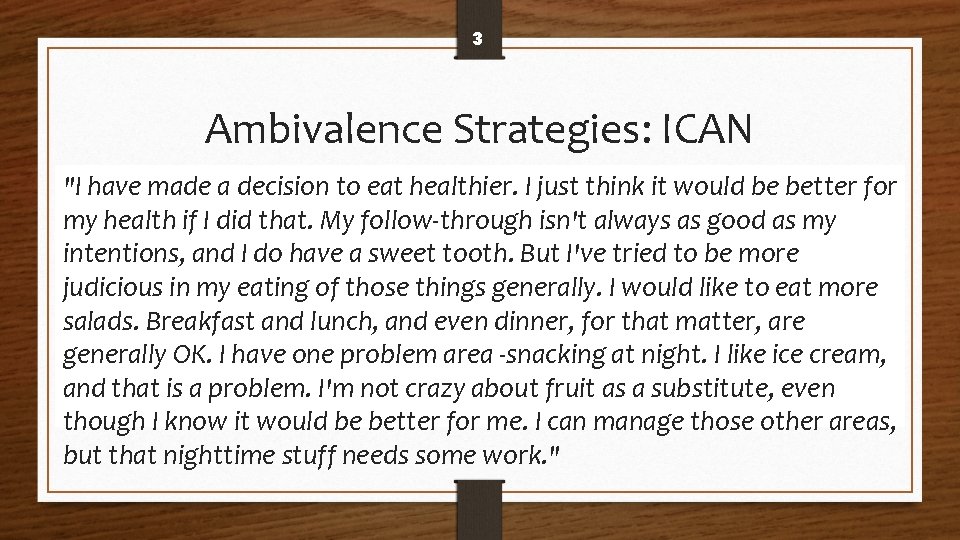
3 Ambivalence Strategies: ICAN "I have made a decision to eat healthier. I just think it would be better for my health if I did that. My follow-through isn't always as good as my intentions, and I do have a sweet tooth. But I've tried to be more judicious in my eating of those things generally. I would like to eat more salads. Breakfast and lunch, and even dinner, for that matter, are generally OK. I have one problem area -snacking at night. I like ice cream, and that is a problem. I'm not crazy about fruit as a substitute, even though I know it would be better for me. I can manage those other areas, but that nighttime stuff needs some work. "
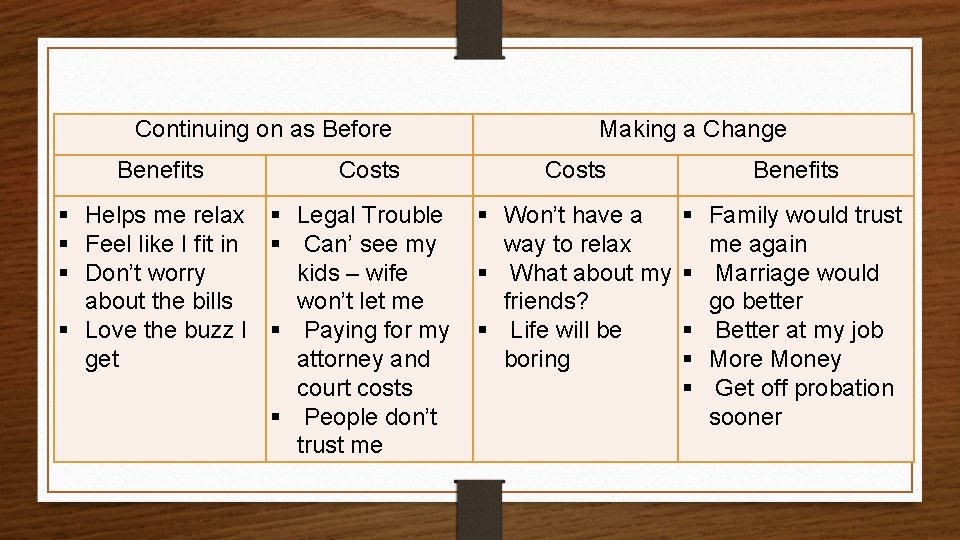
Continuing on as Before Benefits Costs § Helps me relax § Legal Trouble § Feel like I fit in § Can’ see my § Don’t worry kids – wife about the bills won’t let me § Love the buzz I § Paying for my get attorney and court costs § People don’t trust me Making a Change Costs Benefits § Won’t have a way to relax § What about my friends? § Life will be boring § Family would trust me again § Marriage would go better § Better at my job § More Money § Get off probation sooner
References • www. motivationalinterview. org • Miller, W. & Rollnick, S. (2002). Motivational interviewing: Preparing people for change (2 nd ed. ). New York: Guilford Press. • Rosengren, D. (2009). Building motivational interviewing skills. New York: Guilford Press.