
Enhancing Law Enforcement Response to Victims A Joint
- Slides: 60
Enhancing Law Enforcement Response to Victims A Joint Effort of the Office for Victims of Crime (OVC) and the International Association of Chiefs of Police (IACP)
IACP International Association of Chiefs of Police • • Founded in 1893 • • A non-profit organization with 20, 000 members Oldest and largest membership organization representing law enforcement executives from all over the world Largest portion of the membership are departments ü Serving under 25, 000 residents or ü With fewer than 25 sworn officers • 76% of U. S. police agencies have fewer than 25 officers www. theiacp. org
OVC Office for Victims of Crime • A component of the Office of Justice Programs, U. S. Department of Justice • • Established in 1984 by the Victims of Crime Act (VOCA) • Funds and oversees diverse programs that benefit victims of crime Provides substantial funding to state victim assistance and compensation funds www. ojp. gov/ovc
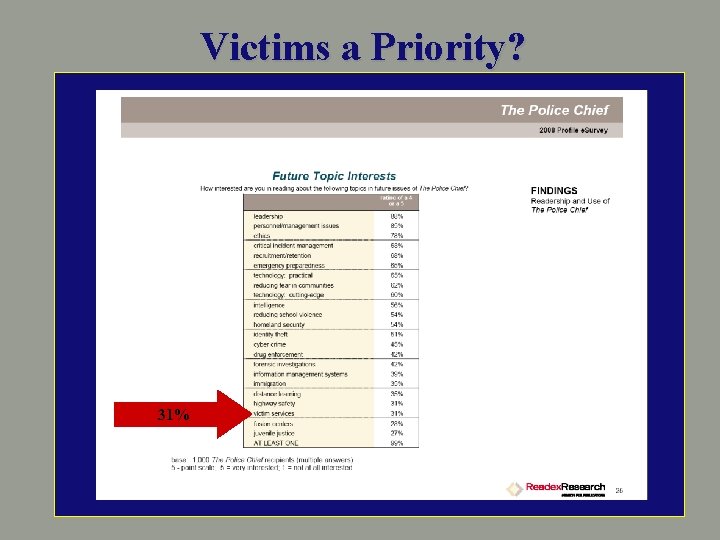
Victims a Priority? 31%
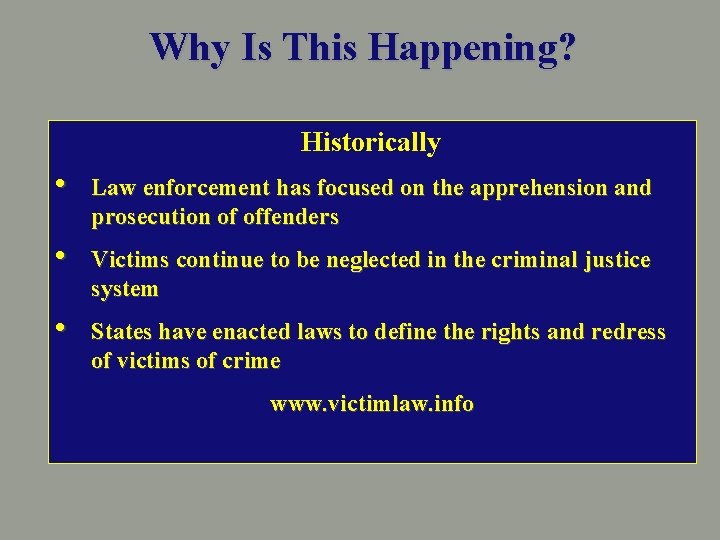
Why Is This Happening? Historically • Law enforcement has focused on the apprehension and prosecution of offenders • Victims continue to be neglected in the criminal justice system • States have enacted laws to define the rights and redress of victims of crime www. victimlaw. info
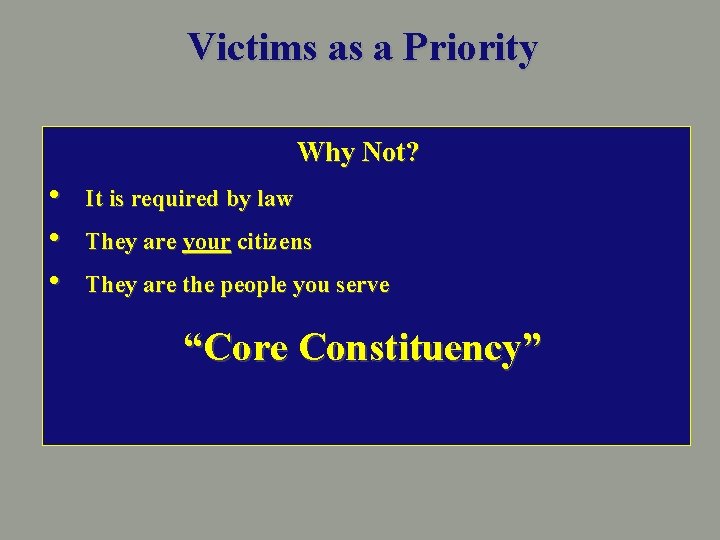
Victims as a Priority Why Not? • • • It is required by law They are your citizens They are the people you serve “Core Constituency”
Ask Yourself How would you want your mother, father, son, daughter, or friend treated should they become a victim of crime?
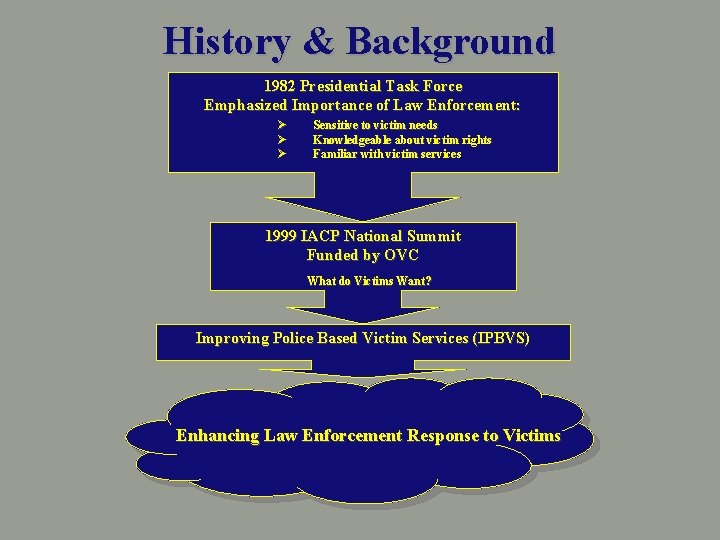
History & Background 1982 Presidential Task Force Emphasized Importance of Law Enforcement: Ø Ø Ø Sensitive to victim needs Knowledgeable about victim rights Familiar with victim services 1999 IACP National Summit Funded by OVC What do Victims Want? Improving Police Based Victim Services (IPBVS) Enhancing Law Enforcement Response to Victims
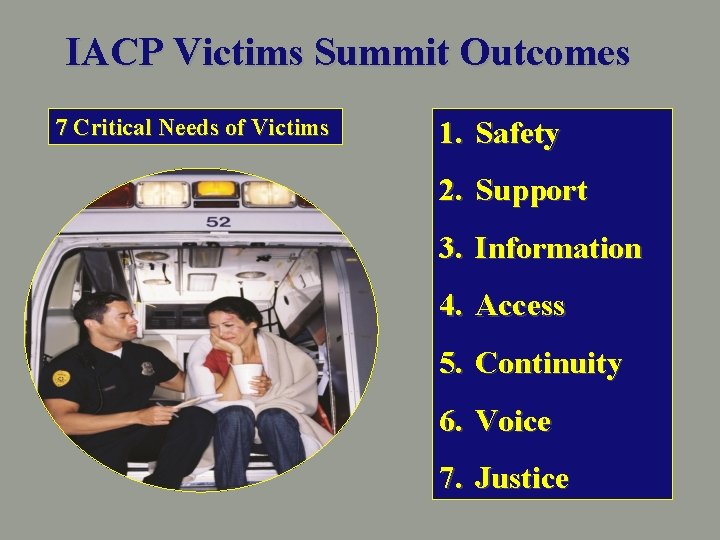
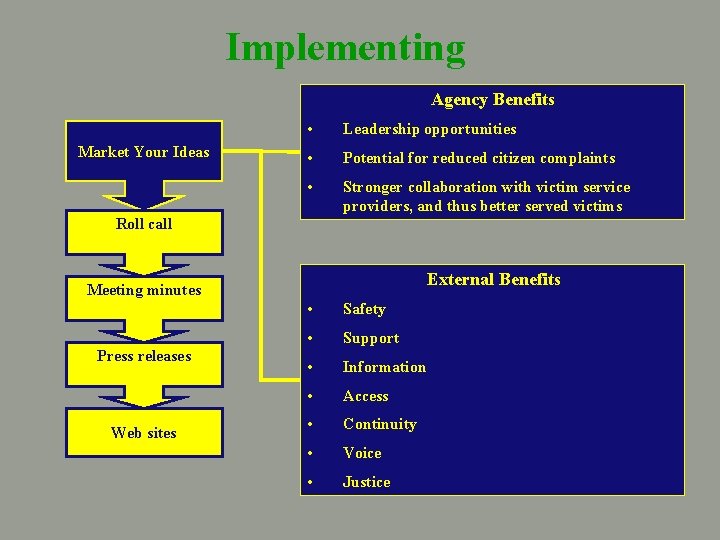
IACP Victims Summit Outcomes 7 Critical Needs of Victims 1. Safety 2. Support 3. Information 4. Access 5. Continuity 6. Voice 7. Justice
Implementation Sounds Great! • • • What’s in it for me? How do I do it? How much does it cost?
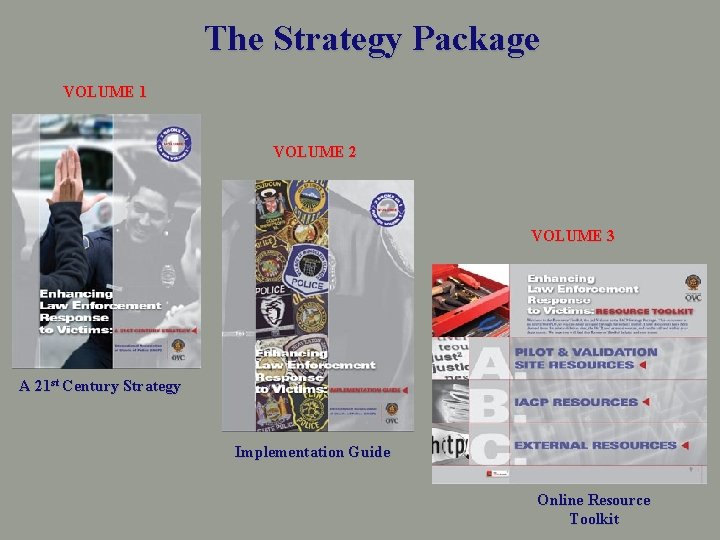
The Strategy Package VOLUME 1 VOLUME 2 VOLUME 3 A 21 st Century Strategy Implementation Guide Online Resource Toolkit
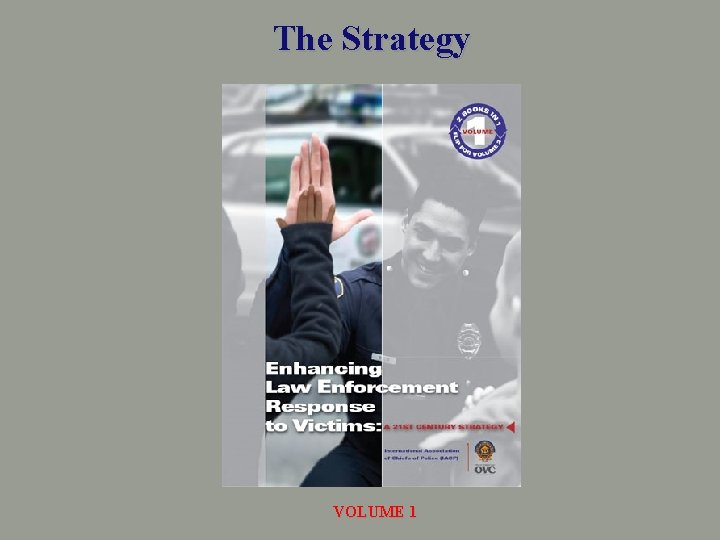
The Strategy VOLUME 1
Strategy Origins 3 Pilot Agencies: • Mundelein (IL) Police Department ü • Small agency category Beaverton (OR) Police Department ü Medium agency category • Charlotte-Mecklenburg (NC) Police Department ü Large agency category
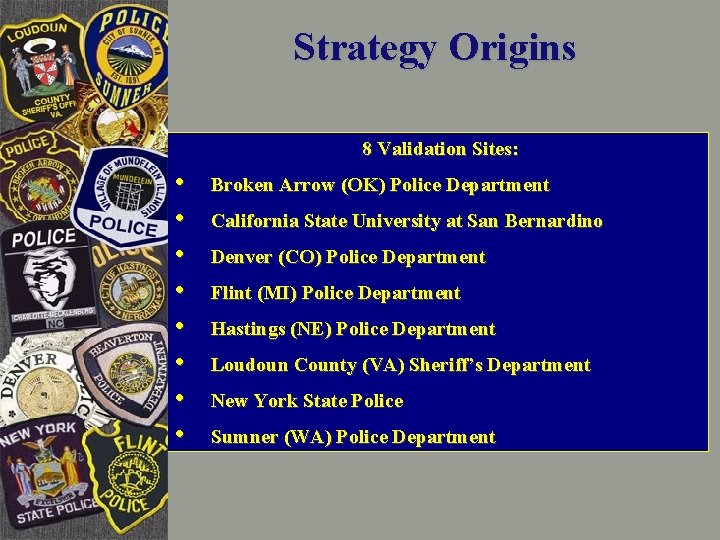
Strategy Origins 8 Validation Sites: • • Broken Arrow (OK) Police Department California State University at San Bernardino Denver (CO) Police Department Flint (MI) Police Department Hastings (NE) Police Department Loudoun County (VA) Sheriff’s Department New York State Police Sumner (WA) Police Department
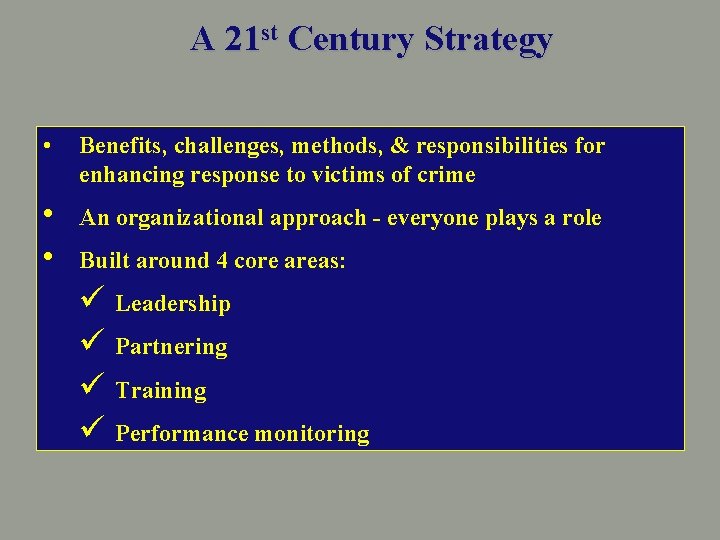
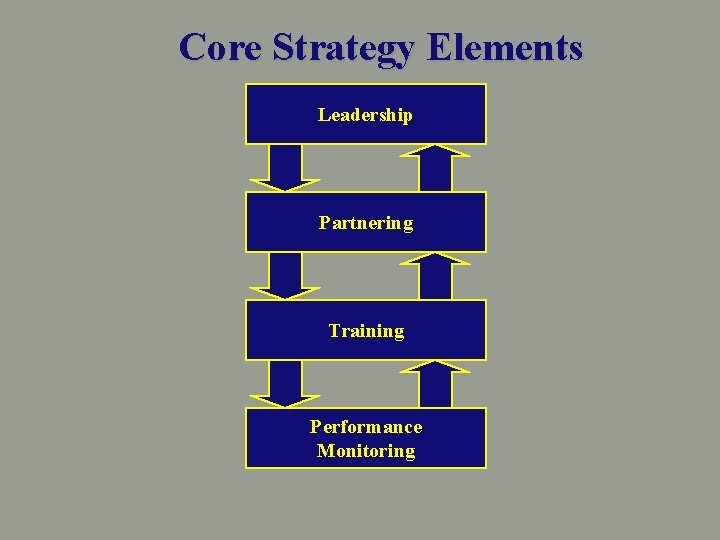
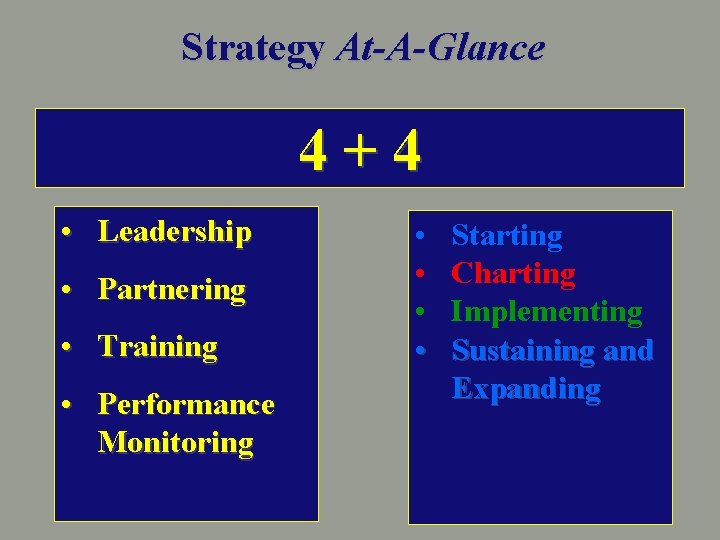
A 21 st Century Strategy • Benefits, challenges, methods, & responsibilities for enhancing response to victims of crime • • An organizational approach - everyone plays a role Built around 4 core areas: ü Leadership ü Partnering ü Training ü Performance monitoring
Strategy Goals Overall Goal • Create a “sea change” within America’s law enforcement community • Encourage agencies and individuals to embrace a new philosophy • Place victims’ interests at the center of response to crime and community problem solving
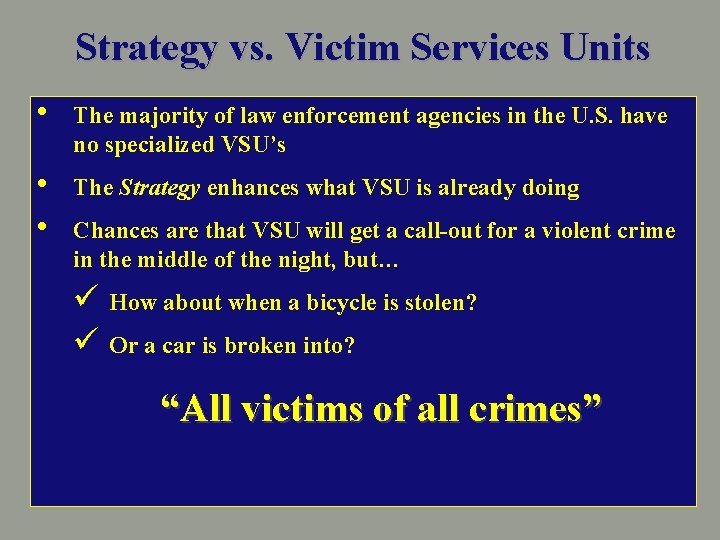
Strategy vs. Victim Services Units • The majority of law enforcement agencies in the U. S. have no specialized VSU’s • • The Strategy enhances what VSU is already doing Chances are that VSU will get a call-out for a violent crime in the middle of the night, but… ü How about when a bicycle is stolen? ü Or a car is broken into? “All victims of all crimes”
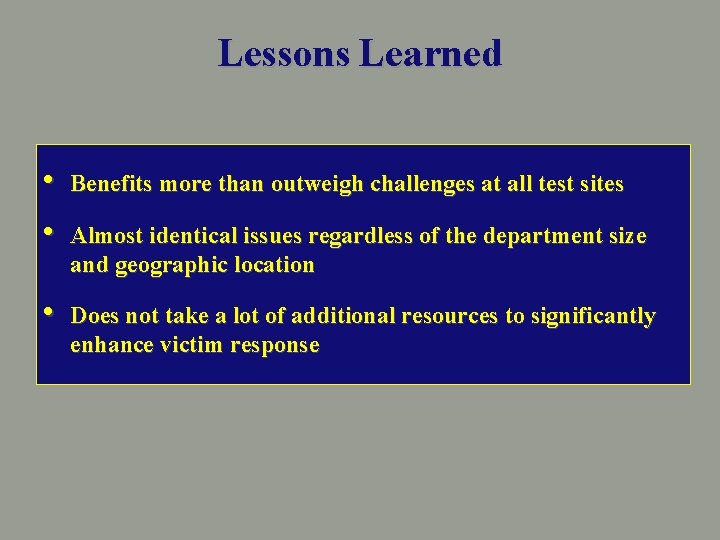
Lessons Learned • • Benefits more than outweigh challenges at all test sites • Does not take a lot of additional resources to significantly enhance victim response Almost identical issues regardless of the department size and geographic location
Core Strategy Elements Leadership Partnering Training Performance Monitoring
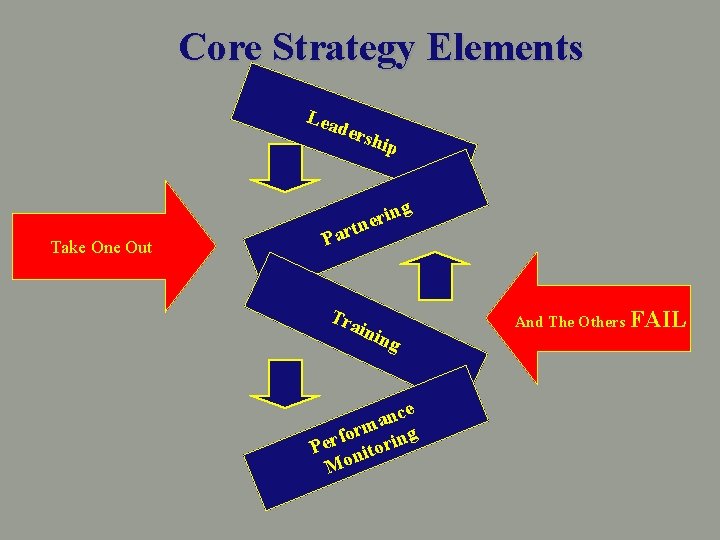
Core Strategy Elements Lea ders hip Take One Out Pa ing r e rtn Tra inin g ce n a rm ng o f r Pe nitori Mo And The Others FAIL
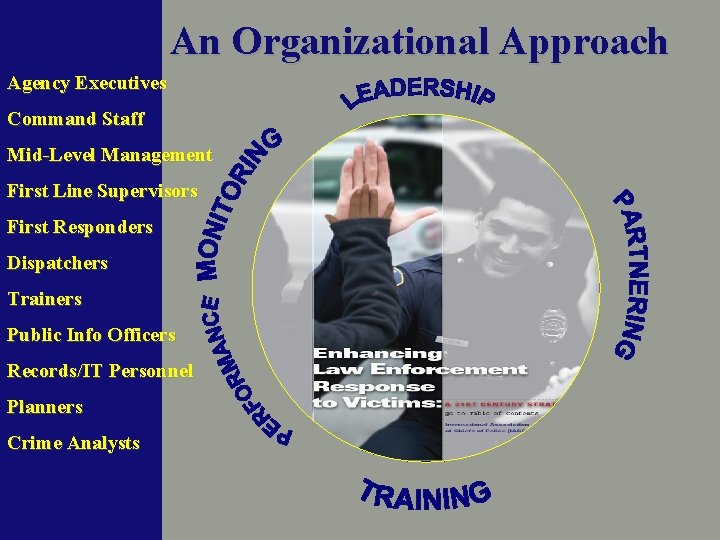
An Organizational Approach Agency Executives Command Staff Mid-Level Management First Line Supervisors First Responders Dispatchers Trainers Public Info Officers Records/IT Personnel Planners Crime Analysts
Leadership • • • Executives play a pivotal role in the success of this effort Commitment by the Chief Agency buy-in Core group of people to lead the effort Mission, vision, policies, practices
Partnering • • • Maximizing capacity to meet victim needs Identifying stakeholders (don’t forget the victims!) Bringing them together Defining partner roles and responsibilities Learning from each other
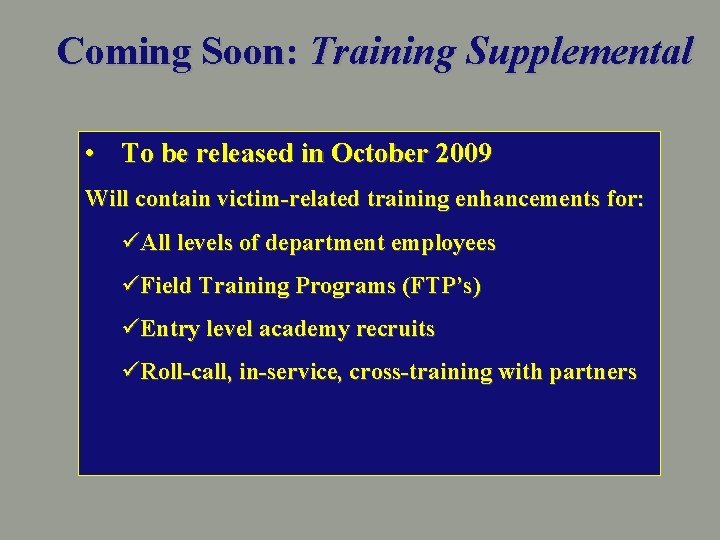
Training • • Building sustainability Probably the most challenging element Ride-a-longs/sit-a-longs Training Supplemental (Coming in October 2009): ü Department personnel ü FTO ü Recruit
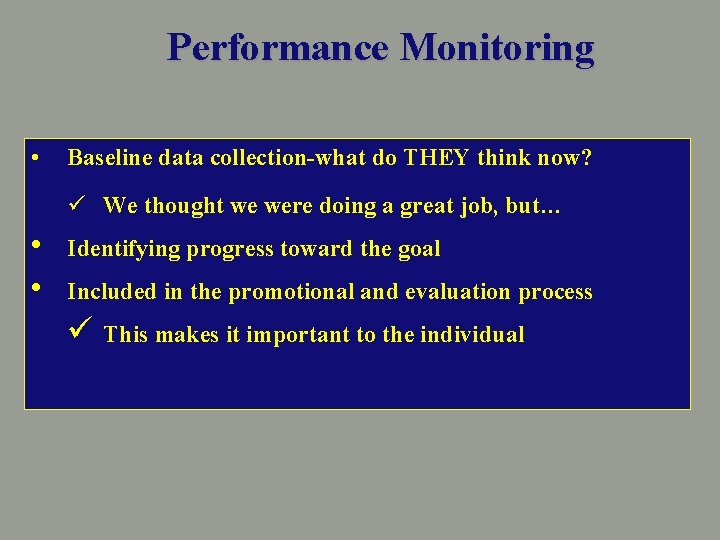
Performance Monitoring • Baseline data collection-what do THEY think now? ü We thought we were doing a great job, but… • • Identifying progress toward the goal Included in the promotional and evaluation process ü This makes it important to the individual
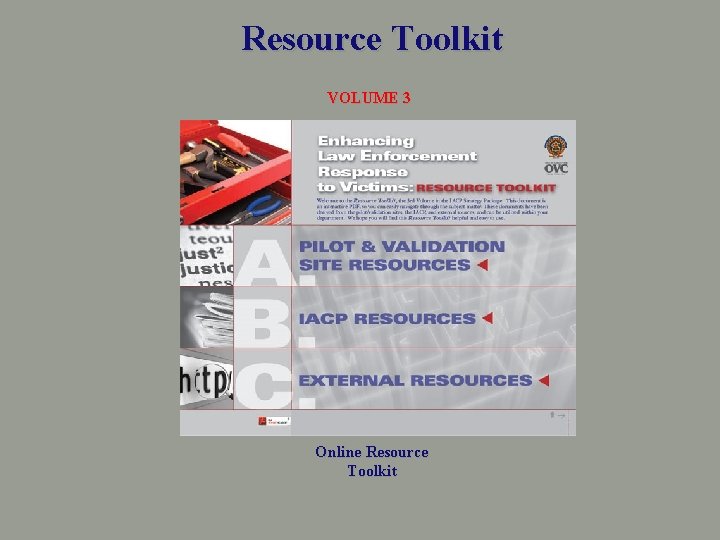
Resource Toolkit VOLUME 3 Online Resource Toolkit
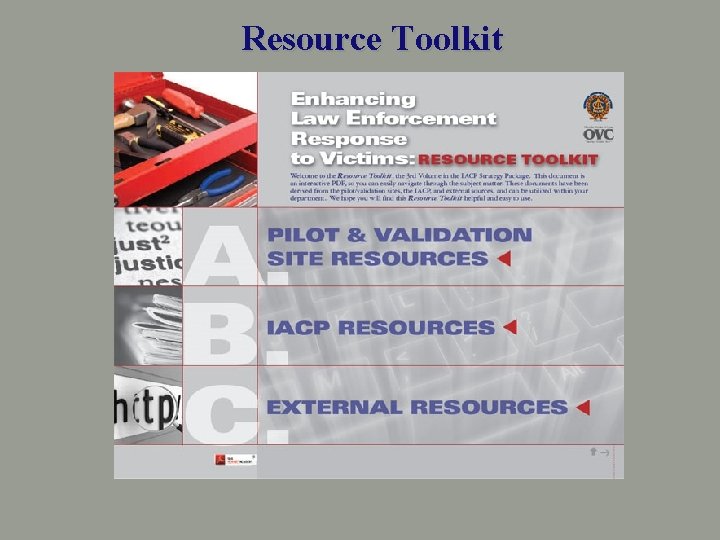
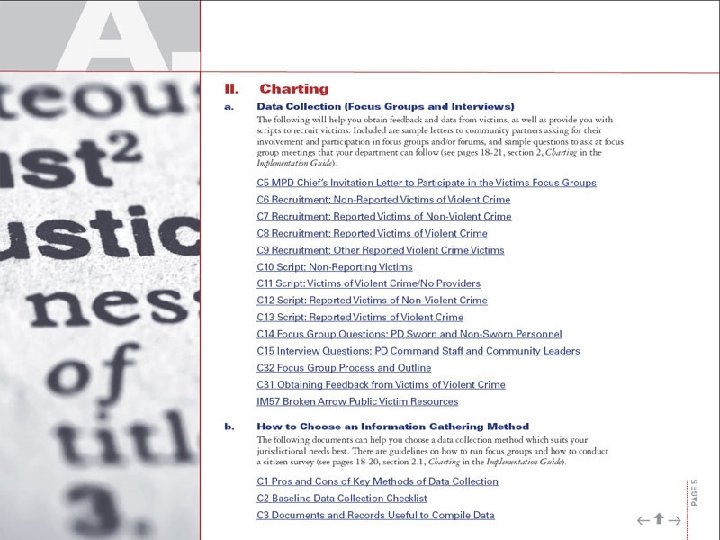
Resource Toolkit
Toolbox Icon
Implementation Guide VOLUME 2 Implementation Guide
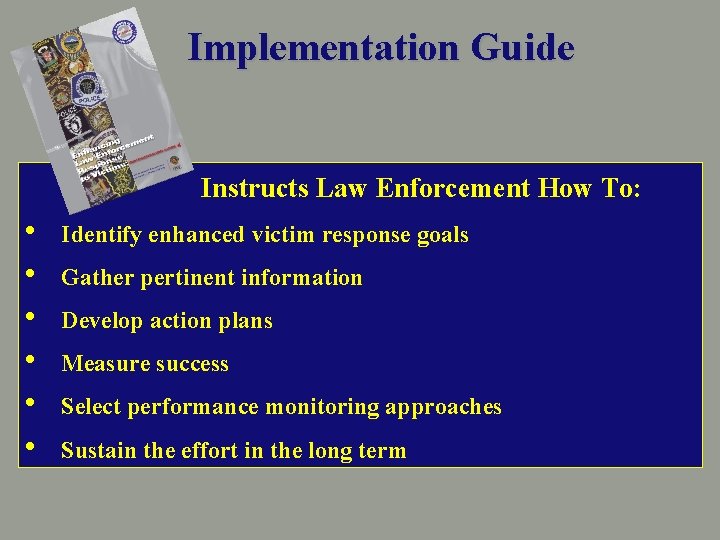
Implementation Guide Instructs Law Enforcement How To: • • • Identify enhanced victim response goals Gather pertinent information Develop action plans Measure success Select performance monitoring approaches Sustain the effort in the long term
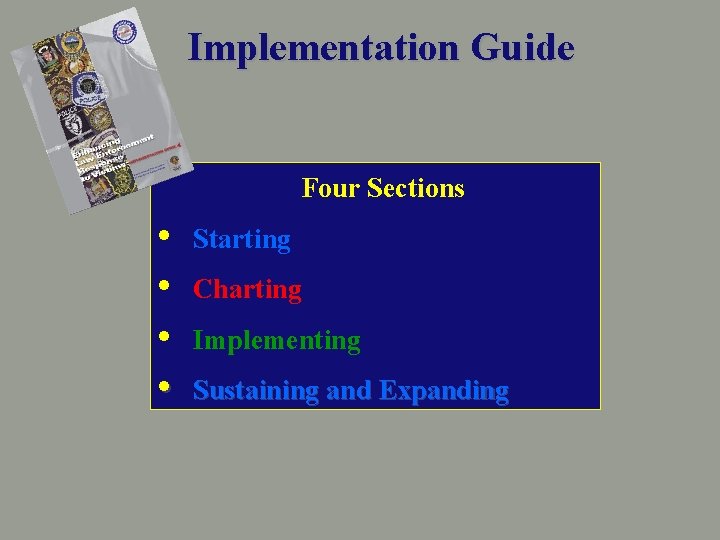
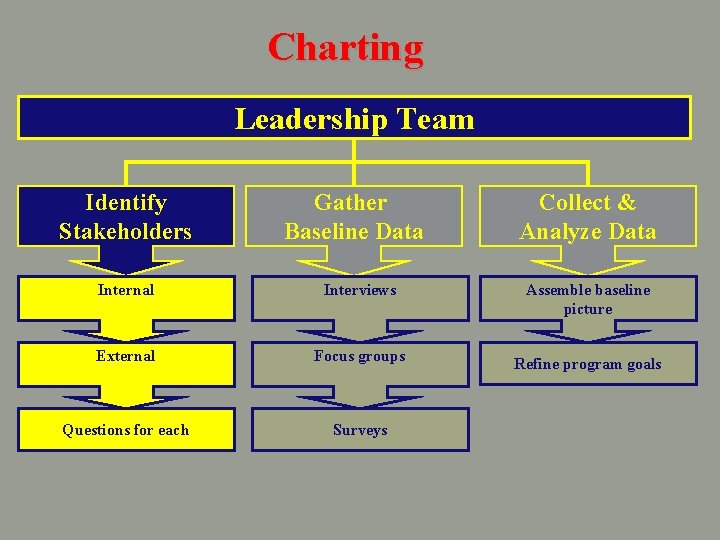
Implementation Guide Four Sections • • Starting Charting Implementing Sustaining and Expanding
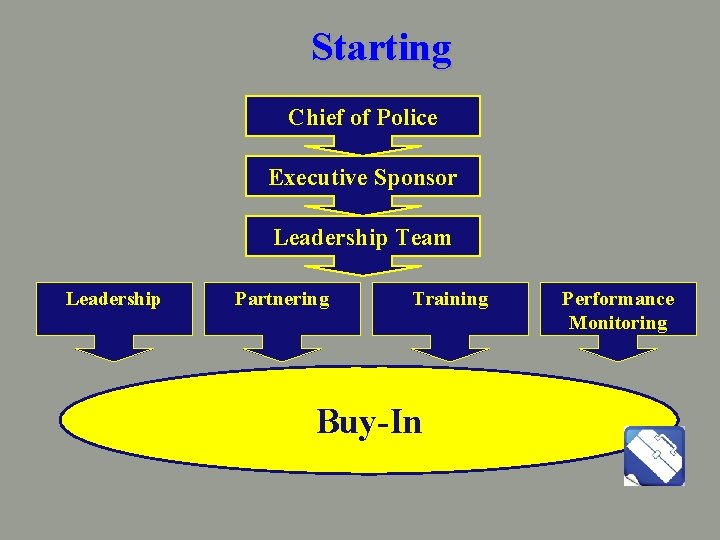
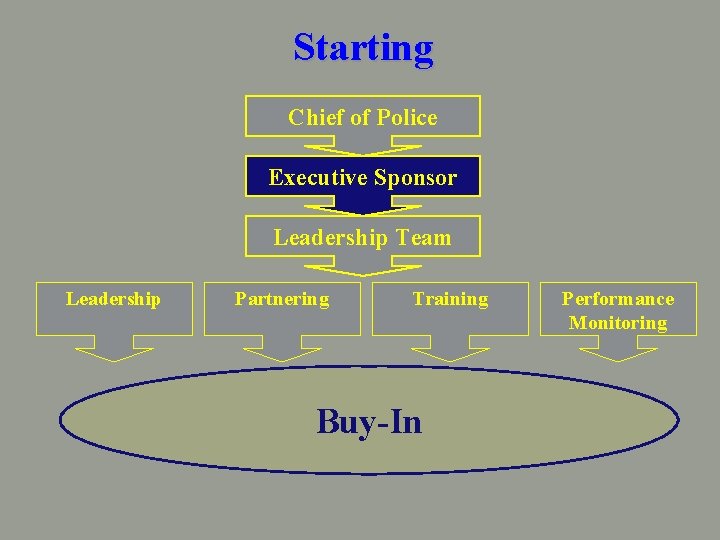
Starting Chief of Police Executive Sponsor Leadership Team Leadership Partnering Training Buy-In Performance Monitoring
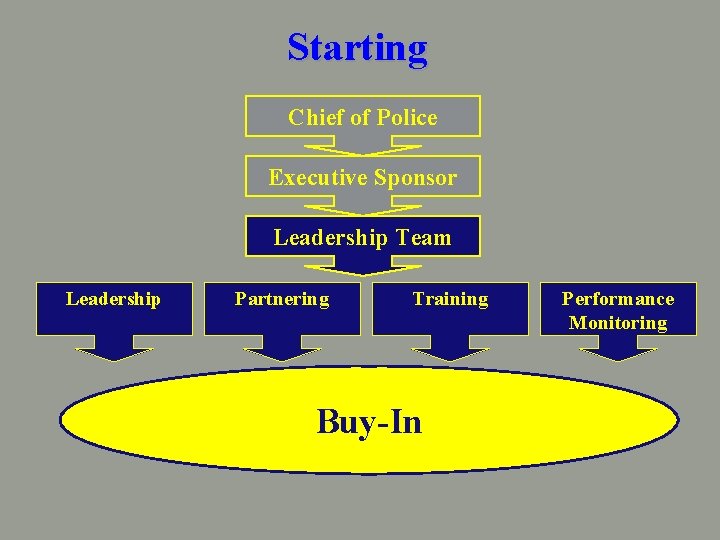
Starting Chief of Police Executive Sponsor Leadership Team Leadership Partnering Training Buy-In Performance Monitoring
Starting Chief of Police Executive Sponsor Leadership Team Leadership Partnering Training Buy-In Performance Monitoring
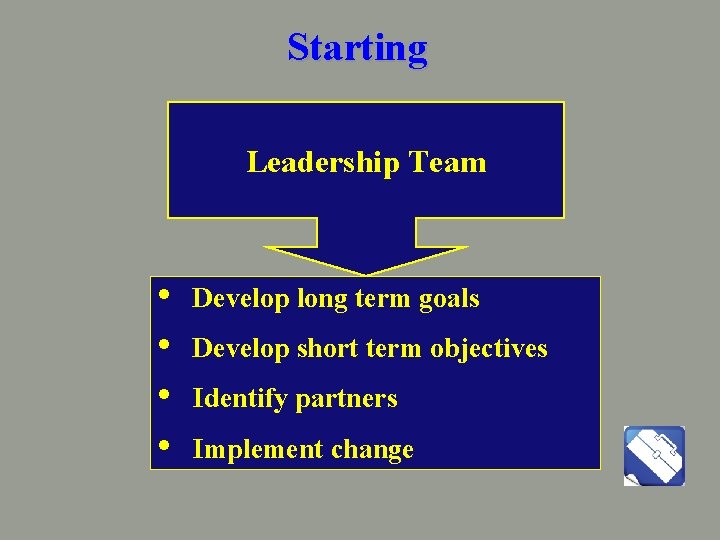
Starting Leadership Team • • Develop long term goals Develop short term objectives Identify partners Implement change
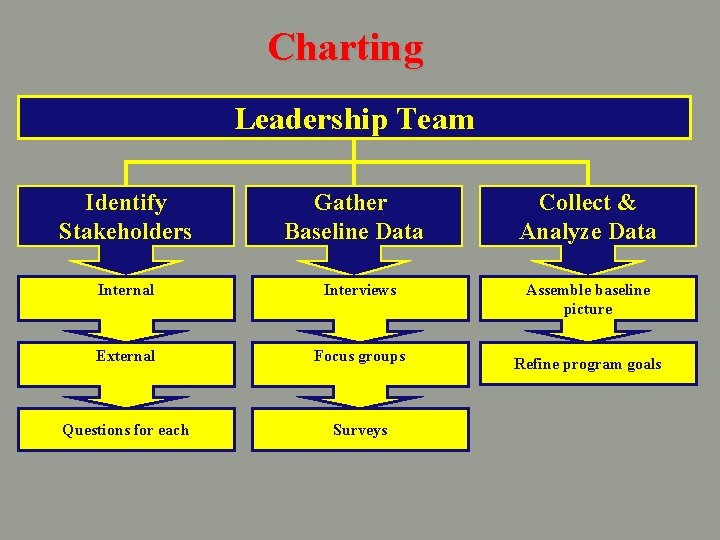
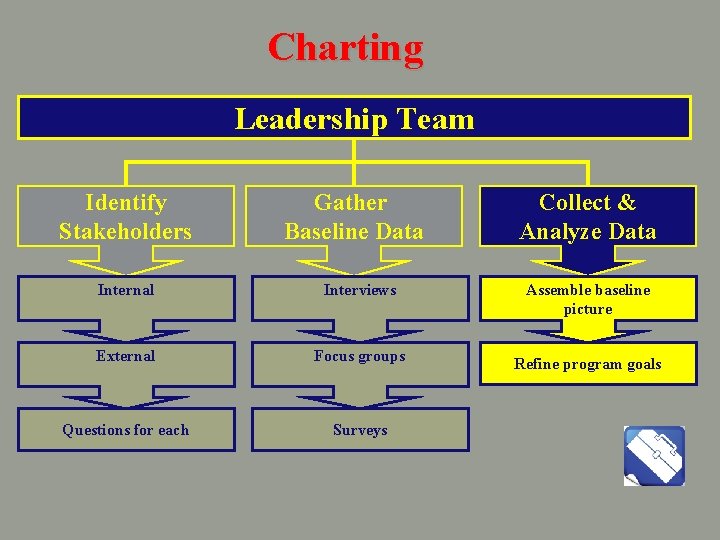
Charting Leadership Team Identify Stakeholders Gather Baseline Data Collect & Analyze Data Internal Interviews Assemble baseline picture External Focus groups Refine program goals Questions for each Surveys
Charting Leadership Team Identify Stakeholders Gather Baseline Data Collect & Analyze Data Internal Interviews Assemble baseline picture External Focus groups Refine program goals Questions for each Surveys
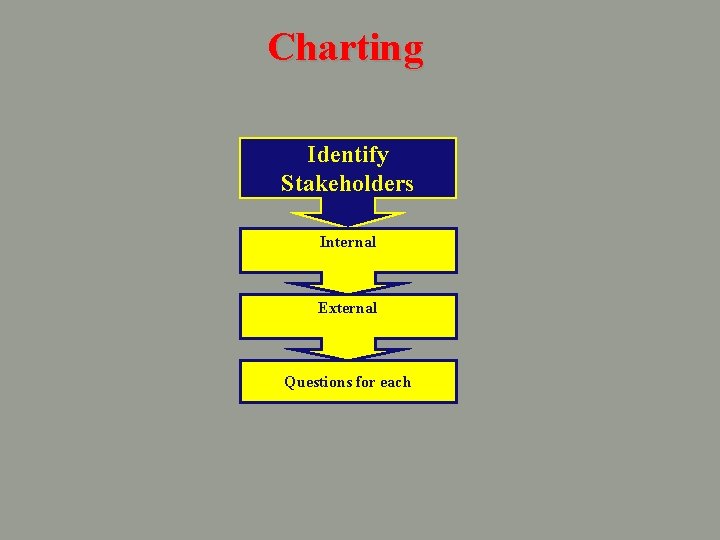
Charting Identify Stakeholders Internal External Questions for each
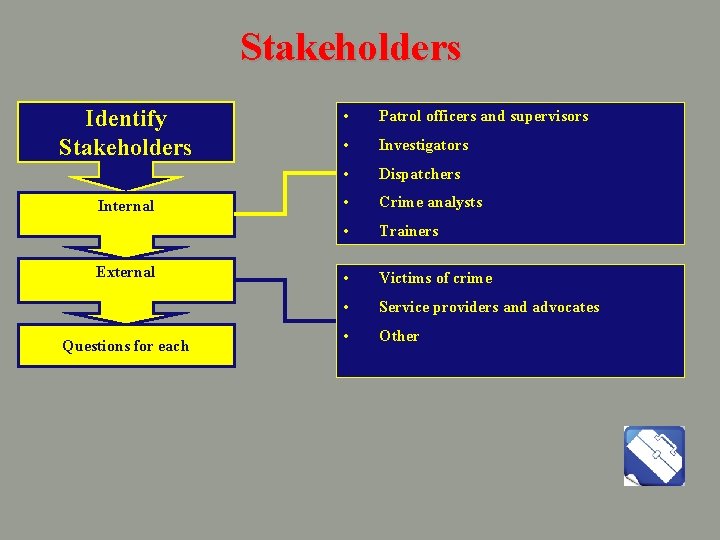
Stakeholders Identify Stakeholders Internal External Questions for each • Patrol officers and supervisors • Investigators • Dispatchers • Crime analysts • Trainers • Victims of crime • Service providers and advocates • Other
Charting Leadership Team Identify Stakeholders Gather Baseline Data Collect & Analyze Data Internal Interviews Assemble baseline picture External Focus groups Refine program goals Questions for each Surveys
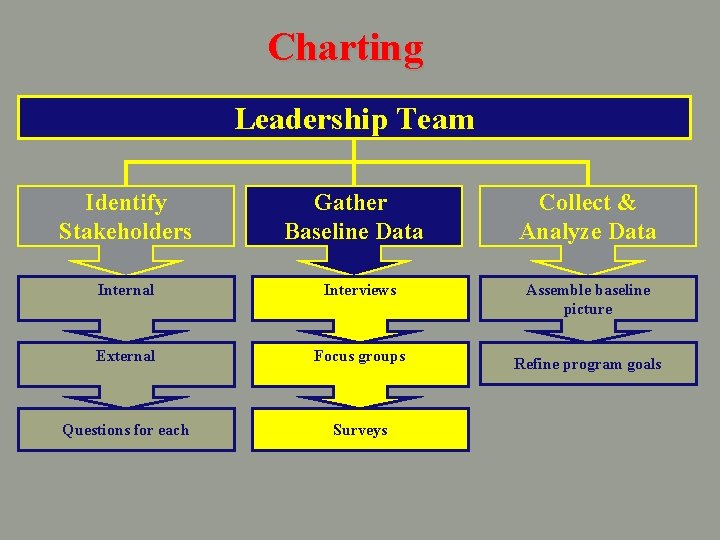
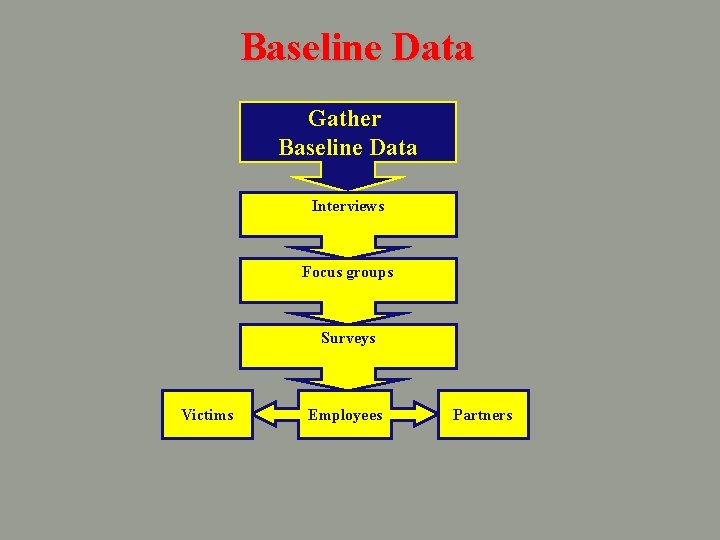
Baseline Data Gather Baseline Data Interviews Focus groups Surveys Victims Employees Partners
Charting Leadership Team Identify Stakeholders Gather Baseline Data Collect & Analyze Data Internal Interviews Assemble baseline picture External Focus groups Refine program goals Questions for each Surveys
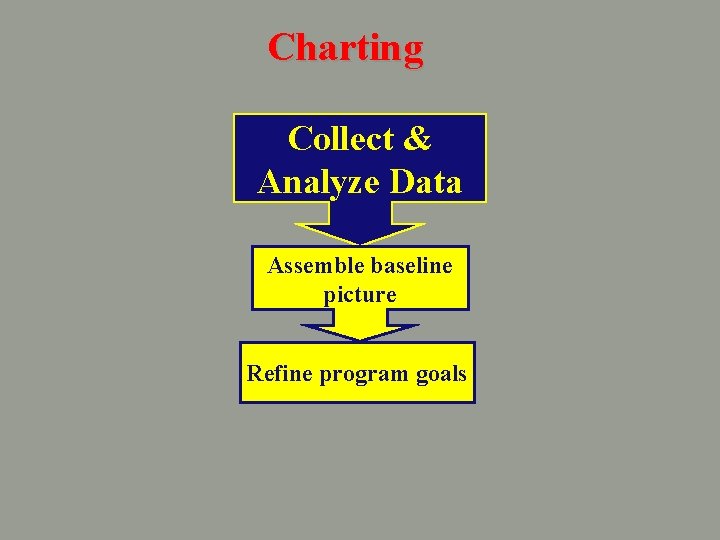
Charting Collect & Analyze Data Assemble baseline picture Refine program goals
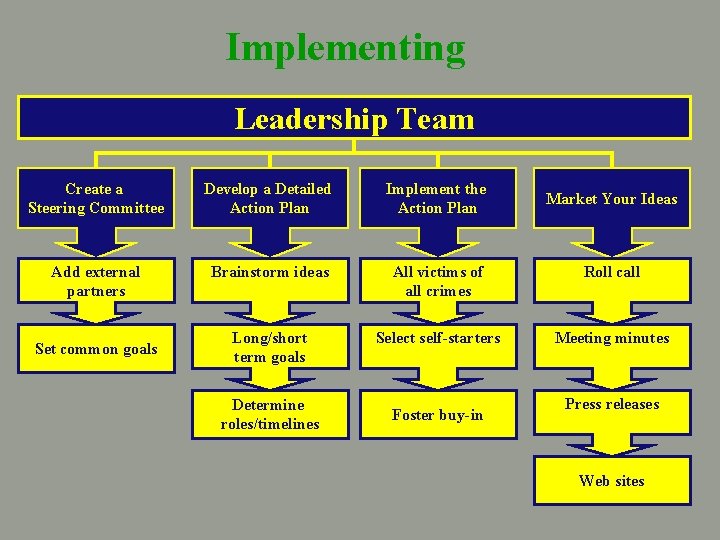
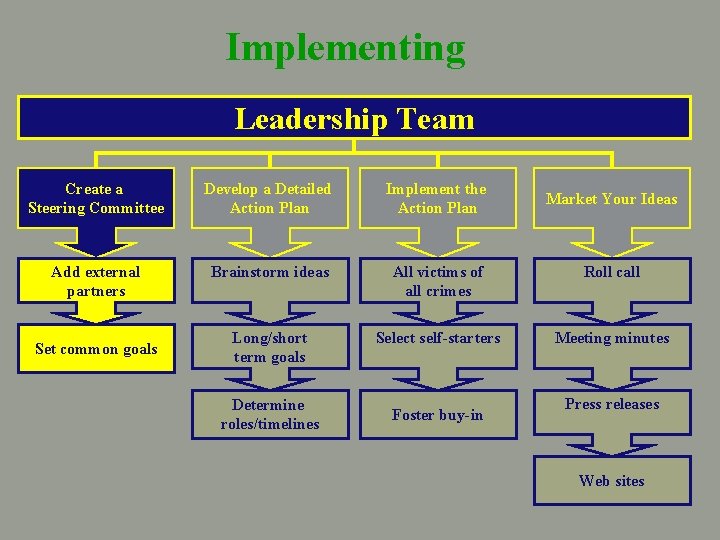
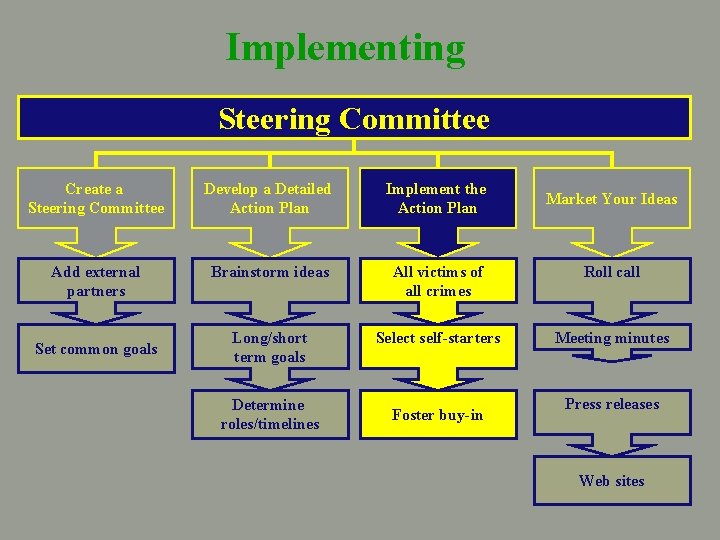
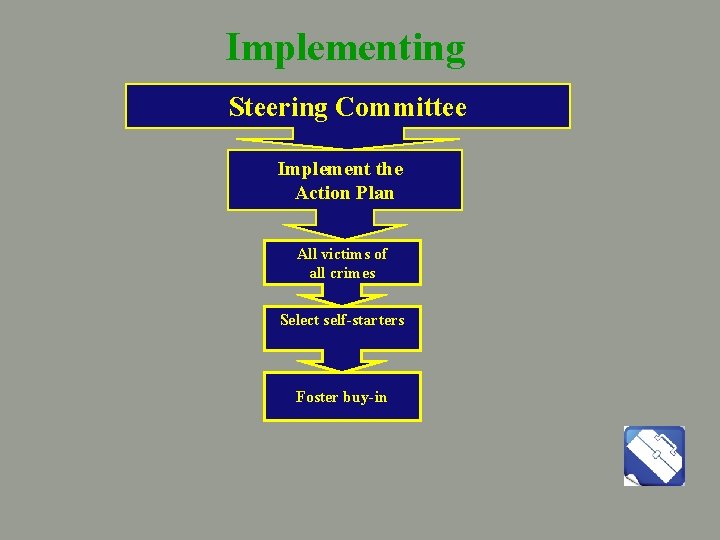
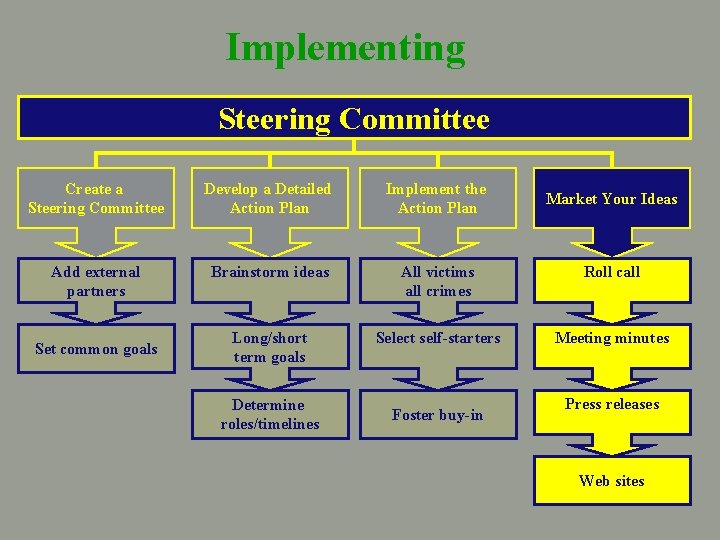
Implementing Leadership Team Create a Steering Committee Develop a Detailed Action Plan Implement the Action Plan Add external partners Brainstorm ideas All victims of all crimes Roll call Long/short term goals Select self-starters Meeting minutes Set common goals Determine roles/timelines Foster buy-in Market Your Ideas Press releases Web sites
Implementing Leadership Team Create a Steering Committee Develop a Detailed Action Plan Implement the Action Plan Add external partners Brainstorm ideas All victims of all crimes Roll call Long/short term goals Select self-starters Meeting minutes Set common goals Determine roles/timelines Foster buy-in Market Your Ideas Press releases Web sites
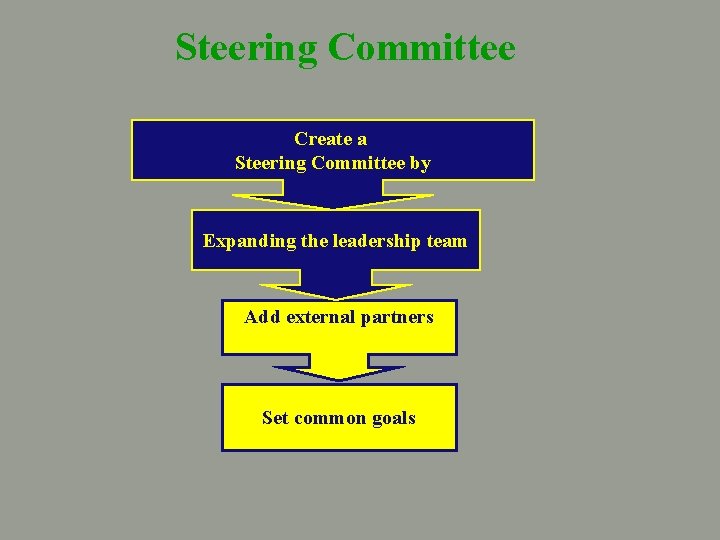
Steering Committee Create a Steering Committee by Expanding the leadership team Add external partners Set common goals
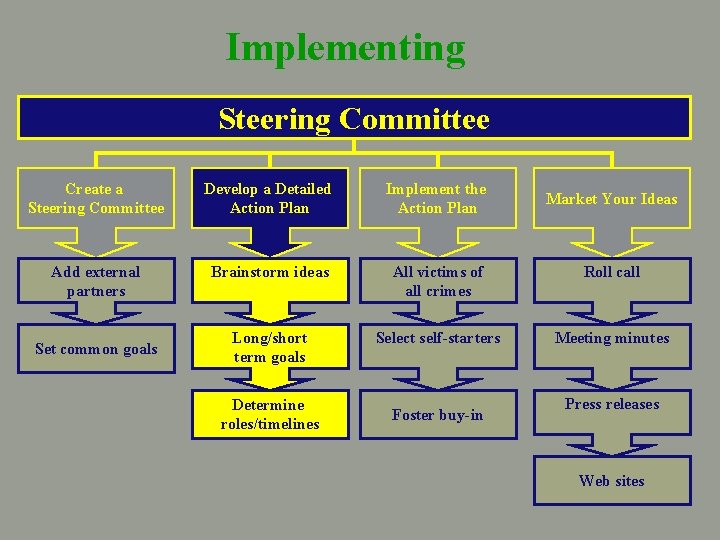
Implementing Steering Committee Create a Steering Committee Develop a Detailed Action Plan Implement the Action Plan Add external partners Brainstorm ideas All victims of all crimes Roll call Long/short term goals Select self-starters Meeting minutes Set common goals Determine roles/timelines Foster buy-in Market Your Ideas Press releases Web sites
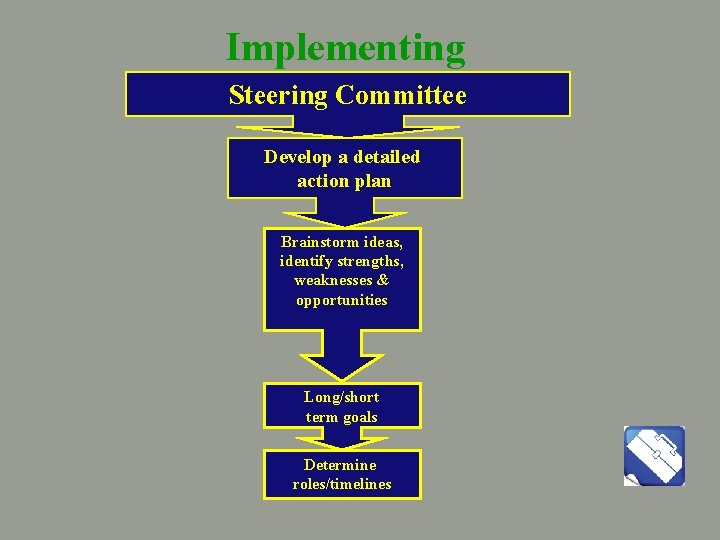
Implementing Steering Committee Develop a detailed action plan Brainstorm ideas, identify strengths, weaknesses & opportunities Long/short term goals Determine roles/timelines
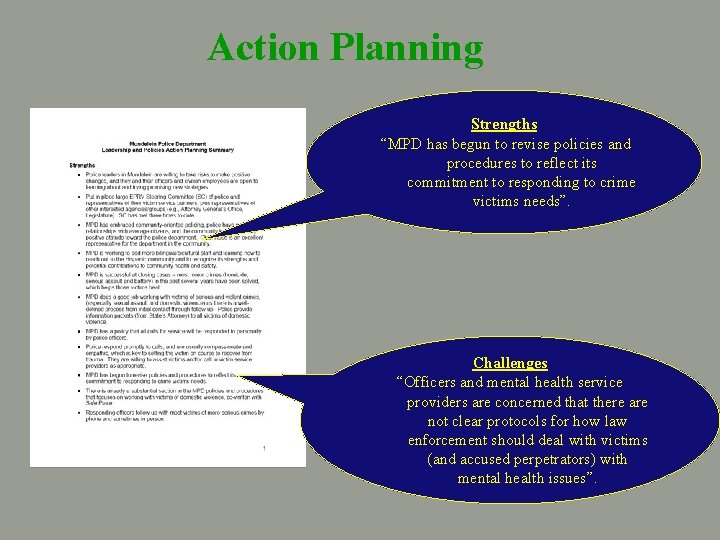
Action Planning Strengths “MPD has begun to revise policies and procedures to reflect its commitment to responding to crime victims needs”. Challenges “Officers and mental health service providers are concerned that there are not clear protocols for how law enforcement should deal with victims (and accused perpetrators) with mental health issues”.
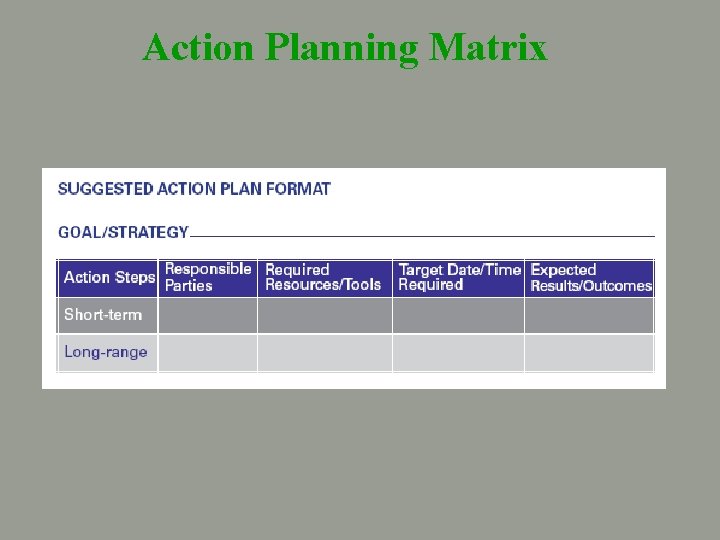
Action Planning Matrix
Implementing Steering Committee Create a Steering Committee Develop a Detailed Action Plan Implement the Action Plan Add external partners Brainstorm ideas All victims of all crimes Roll call Long/short term goals Select self-starters Meeting minutes Set common goals Determine roles/timelines Foster buy-in Market Your Ideas Press releases Web sites
Implementing Steering Committee Implement the Action Plan All victims of all crimes Select self-starters Foster buy-in
Implementing Steering Committee Create a Steering Committee Develop a Detailed Action Plan Implement the Action Plan Add external partners Brainstorm ideas All victims all crimes Roll call Long/short term goals Select self-starters Meeting minutes Set common goals Determine roles/timelines Foster buy-in Market Your Ideas Press releases Web sites
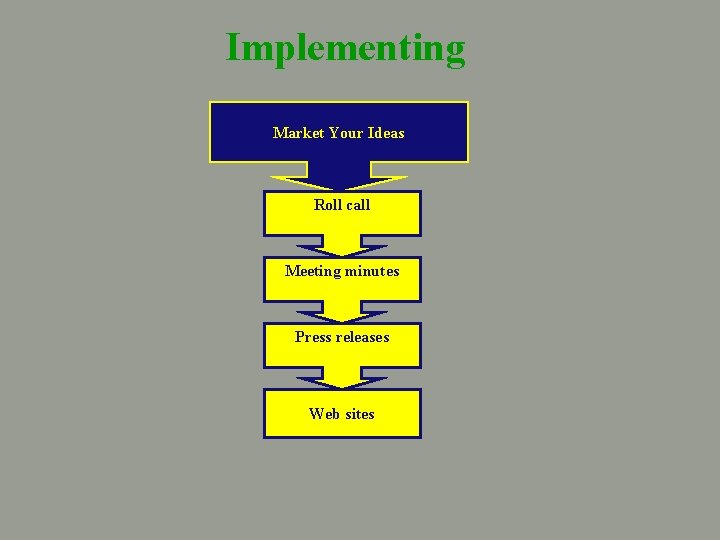
Implementing Market Your Ideas Roll call Meeting minutes Press releases Web sites
Implementing Agency Benefits Market Your Ideas • Leadership opportunities • Potential for reduced citizen complaints • Stronger collaboration with victim service providers, and thus better served victims Roll call External Benefits Meeting minutes Press releases Web sites • Safety • Support • Information • Access • Continuity • Voice • Justice
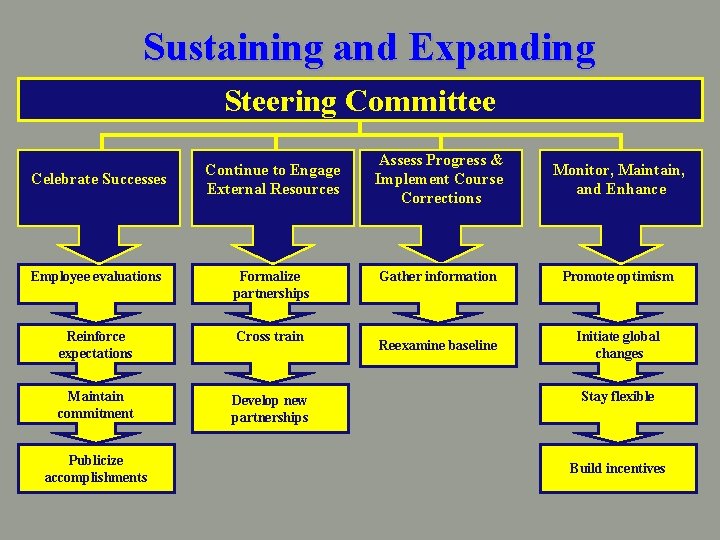
Sustaining and Expanding Steering Committee Celebrate Successes Continue to Engage External Resources Employee evaluations Formalize partnerships Reinforce expectations Cross train Maintain commitment Develop new partnerships Publicize accomplishments Assess Progress & Implement Course Corrections Monitor, Maintain, and Enhance Gather information Promote optimism Reexamine baseline Initiate global changes Stay flexible Build incentives
Coming Soon: Training Supplemental • To be released in October 2009 Will contain victim-related training enhancements for: üAll levels of department employees üField Training Programs (FTP’s) üEntry level academy recruits üRoll-call, in-service, cross-training with partners
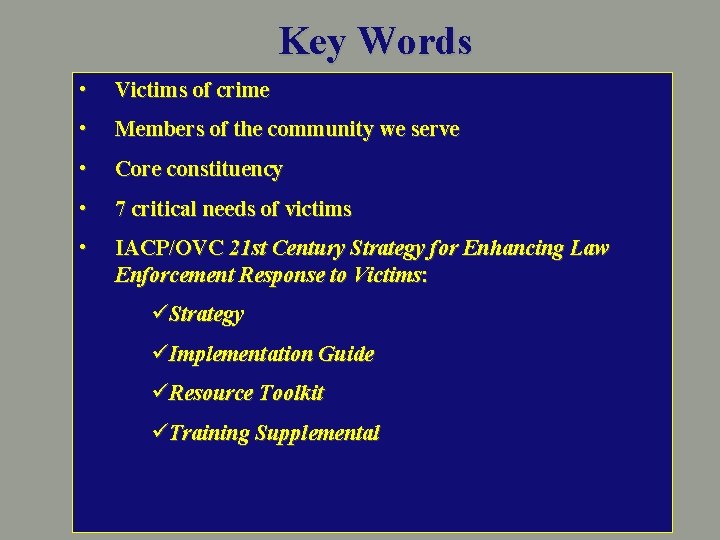
Key Words • Victims of crime • Members of the community we serve • Core constituency • 7 critical needs of victims • IACP/OVC 21 st Century Strategy for Enhancing Law Enforcement Response to Victims: üStrategy üImplementation Guide üResource Toolkit üTraining Supplemental
Strategy At-A-Glance 4+4 • Leadership • Partnering • Training • Performance Monitoring • • Starting Charting Implementing Sustaining and Expanding