
Enhancing Comparative Law Scholarship in East Asia Law
- Slides: 20
Enhancing Comparative Law Scholarship in East Asia Law via Internet 2015, Sydney Nov. 9 -11, 2015 Y. Matsuura (Nagoya U. , Japan) A. H. Shee (Chung Cheng U. , Taiwan) X. Ding (Renmin U. , China)
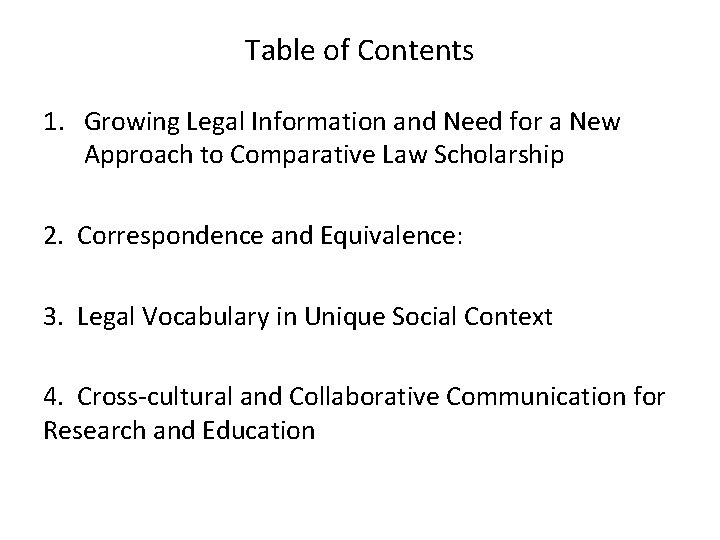
Table of Contents 1. Growing Legal Information and Need for a New Approach to Comparative Law Scholarship 2. Correspondence and Equivalence: 3. Legal Vocabulary in Unique Social Context 4. Cross-cultural and Collaborative Communication for Research and Education
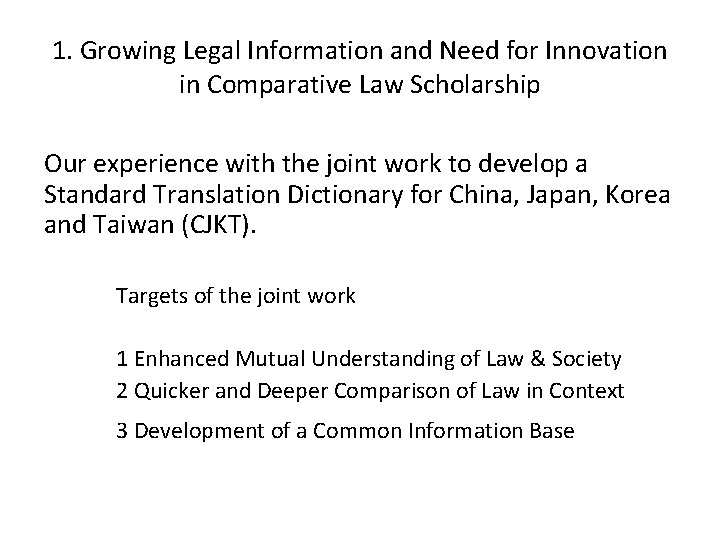
1. Growing Legal Information and Need for Innovation in Comparative Law Scholarship Our experience with the joint work to develop a Standard Translation Dictionary for China, Japan, Korea and Taiwan (CJKT). Targets of the joint work 1 Enhanced Mutual Understanding of Law & Society 2 Quicker and Deeper Comparison of Law in Context 3 Development of a Common Information Base
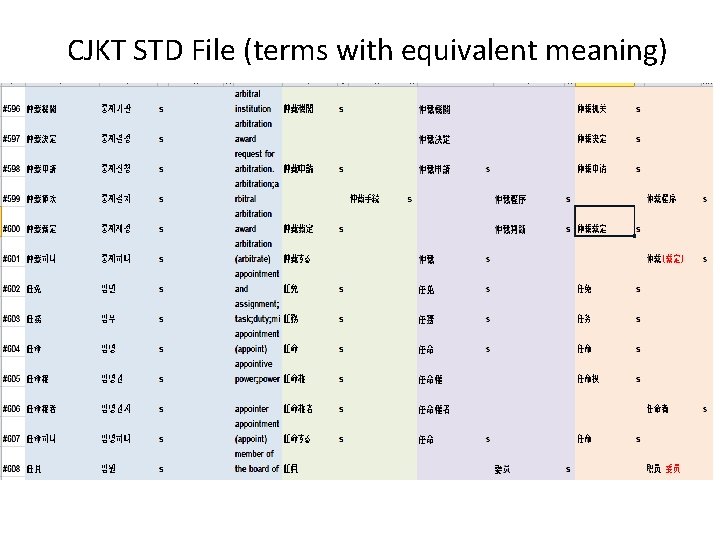
CJKT STD File (terms with equivalent meaning)
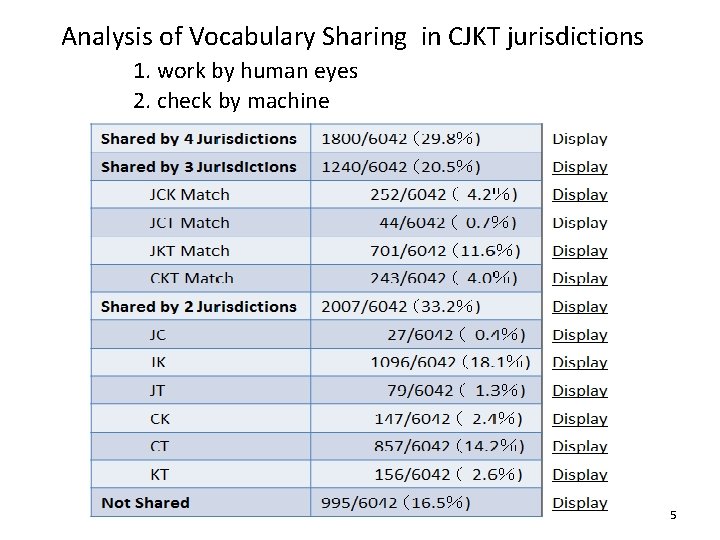
Analysis of Vocabulary Sharing in CJKT jurisdictions 1. work by human eyes 2. check by machine 5
A Puzzle in Proof-reading We share many terms of law in Chinese ideograms. But do we really share the same thing under the same terms of law? The development of a common dictionary for CJKT is just a beginning.
An Illustration: Case Law Yes, the case law is important in our jurisdiction. BUT 1. Is a judgment written with the same format and density? 2. Do we read the case in the same way? 3. Are the facts of a case important? 4. How is the case law formulated? 5. How is a case law used by the courts?
2. Correspondence and Equivalence: Doing Comparative Law Collaborative Teaching "Cross-Border Legal Institution Design“ “Global College“ "Campus Asia “ 1. Presentation of a Self-portrait 2. Contribution by partners from other jurisdictions to find correspondence & equivalence 3. Collaborative Research by Students 4. Sharing the Results 5. Further Collaborative Research by Experts
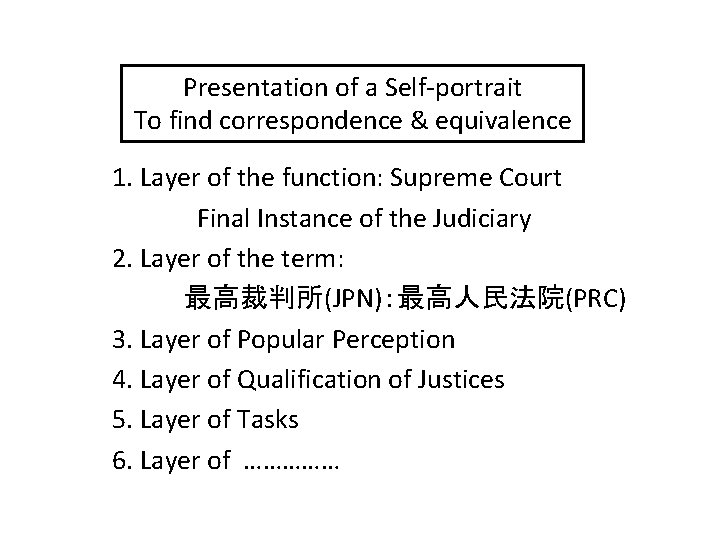
Presentation of a Self-portrait To find correspondence & equivalence 1. Layer of the function: Supreme Court Final Instance of the Judiciary 2. Layer of the term: 最高裁判所(JPN):最高人民法院(PRC) 3. Layer of Popular Perception 4. Layer of Qualification of Justices 5. Layer of Tasks 6. Layer of ……………
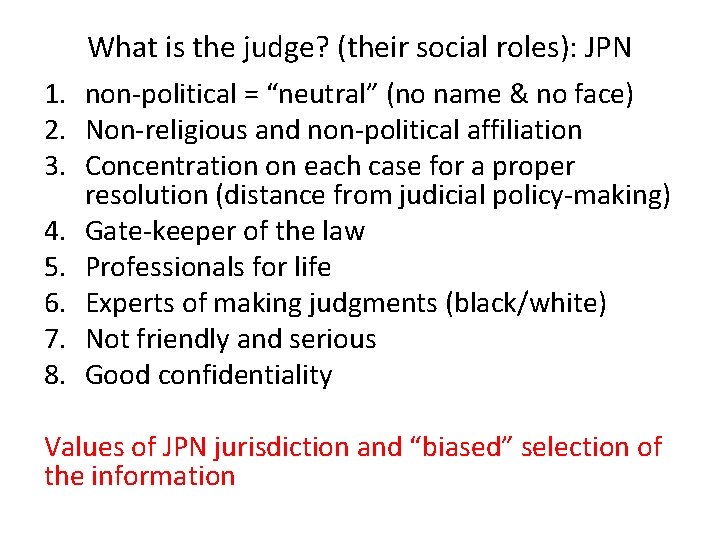
What is the judge? (their social roles): JPN 1. non-political = “neutral” (no name & no face) 2. Non-religious and non-political affiliation 3. Concentration on each case for a proper resolution (distance from judicial policy-making) 4. Gate-keeper of the law 5. Professionals for life 6. Experts of making judgments (black/white) 7. Not friendly and serious 8. Good confidentiality Values of JPN jurisdiction and “biased” selection of the information
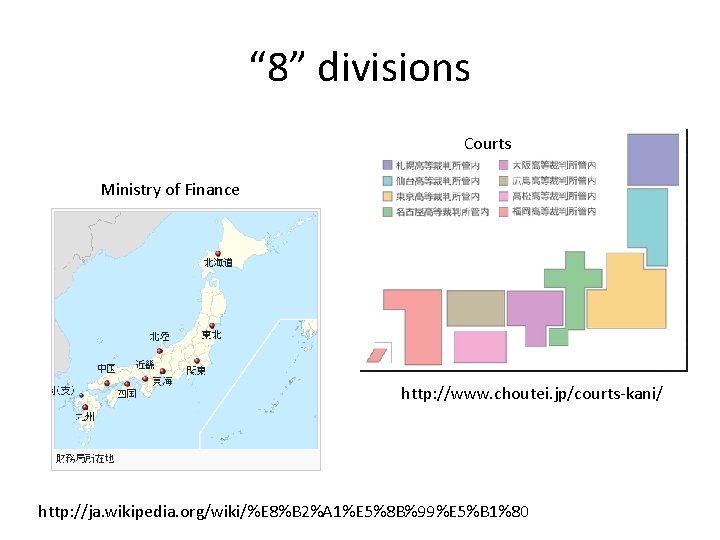
“ 8” divisions Courts Ministry of Finance http: //www. choutei. jp/courts-kani/ http: //ja. wikipedia. org/wiki/%E 8%B 2%A 1%E 5%8 B%99%E 5%B 1%80
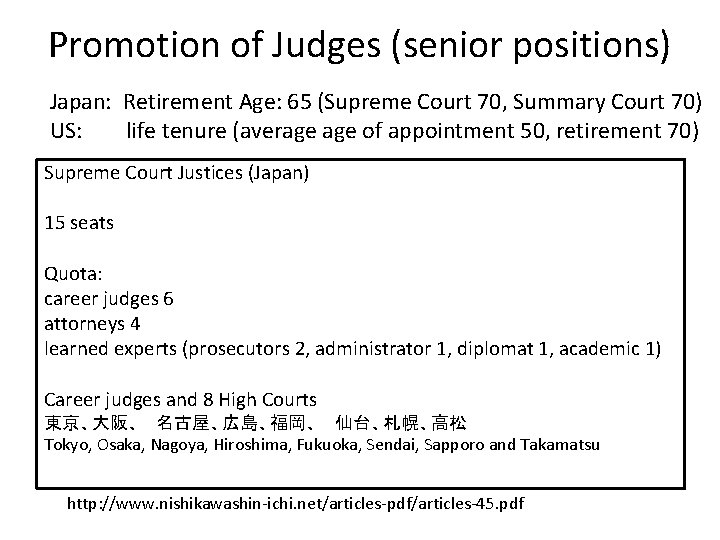
Promotion of Judges (senior positions) Japan: Retirement Age: 65 (Supreme Court 70, Summary Court 70) US: life tenure (average of appointment 50, retirement 70) Supreme Court Justices (Japan) 15 seats Quota: career judges 6 attorneys 4 learned experts (prosecutors 2, administrator 1, diplomat 1, academic 1) Career judges and 8 High Courts 東京、大阪、 名古屋、広島、福岡、 仙台、札幌、高松 Tokyo, Osaka, Nagoya, Hiroshima, Fukuoka, Sendai, Sapporo and Takamatsu http: //www. nishikawashin-ichi. net/articles-pdf/articles-45. pdf
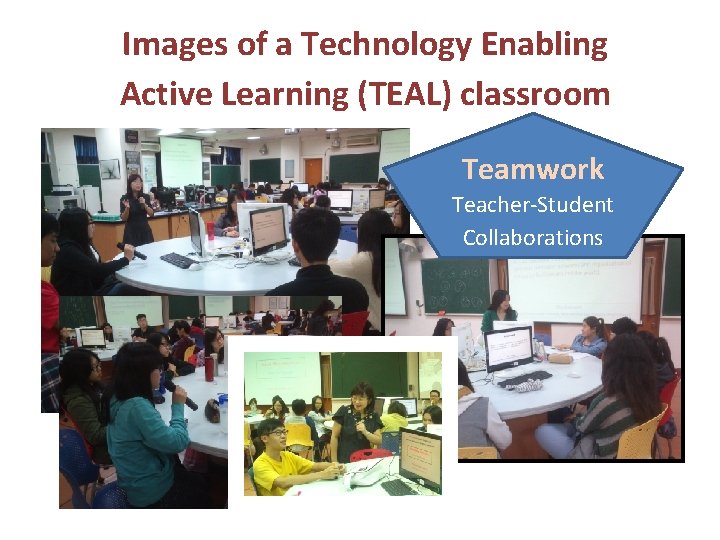
Images of a Technology Enabling Active Learning (TEAL) classroom Teamwork Teacher-Student Collaborations
Efforts to Identify the corresponding and equivalent information by colleagues from other jurisdictions Judges, what? 1. non-political = “neutral” (no name & no face) 2. Non-religious and non-political affiliation 3. Concentration on each case for a proper resolution (distance from judicial policy-making) 4. Gate-keeper of the law 5. Professionals for life 6. Experts of making judgments (black/white) 7. Not friendly and serious 8. Good confidentiality
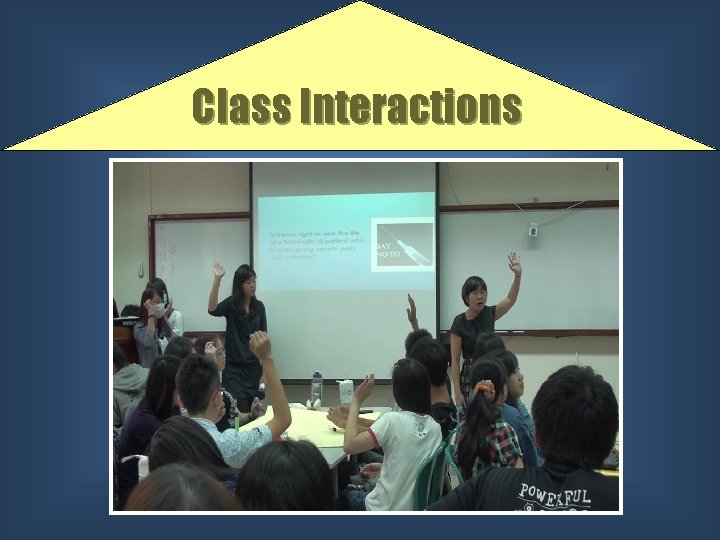
Classroom Activities Class Interactions 1. Students are divided into groups with 5 -8 people. 2. Students in groups work together to pick up concerned issues and make presentations. 3. Students in groups work on chosen issues and make presentations. 4. Each group sets dialectic questions for other groups to make debates or joint presentations.
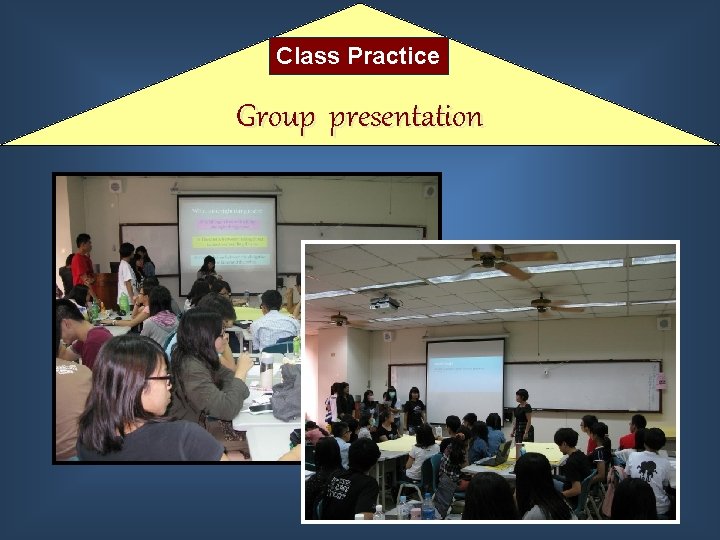
Class Practice Classroom Activities Group presentation 1. Students are divided into groups with 5 -8 people. 2. Students in groups work together to pick up concerned issues and make presentations. 3. Students in groups work on chosen issues and make presentations. 4. Each group sets dialectic questions for other groups to make debates or joint presentations.
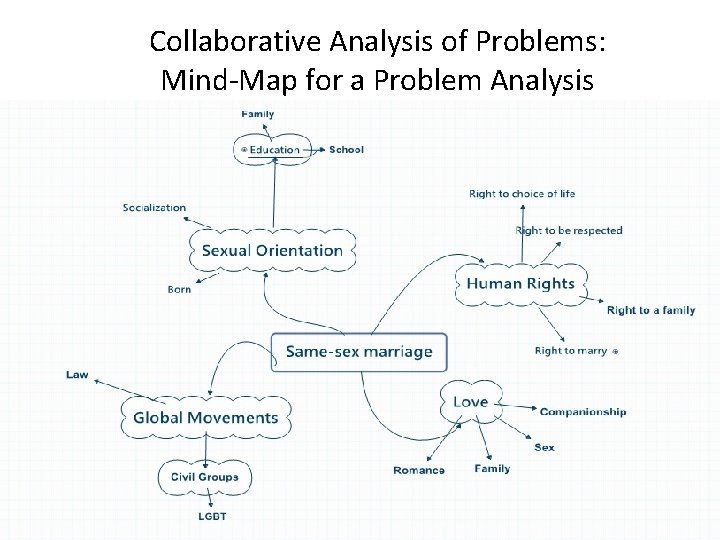
Collaborative Analysis of Problems: Mind-Map for a Problem Analysis
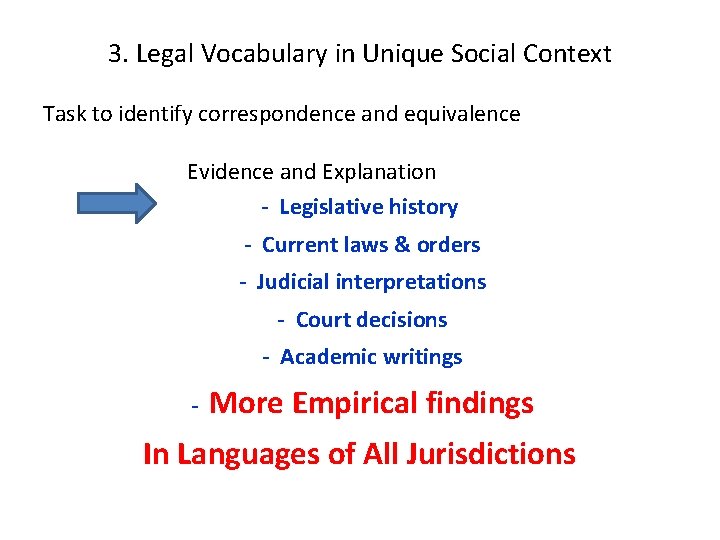
3. Legal Vocabulary in Unique Social Context Task to identify correspondence and equivalence Evidence and Explanation - Legislative history - Current laws & orders - Judicial interpretations - Court decisions - Academic writings - More Empirical findings In Languages of All Jurisdictions
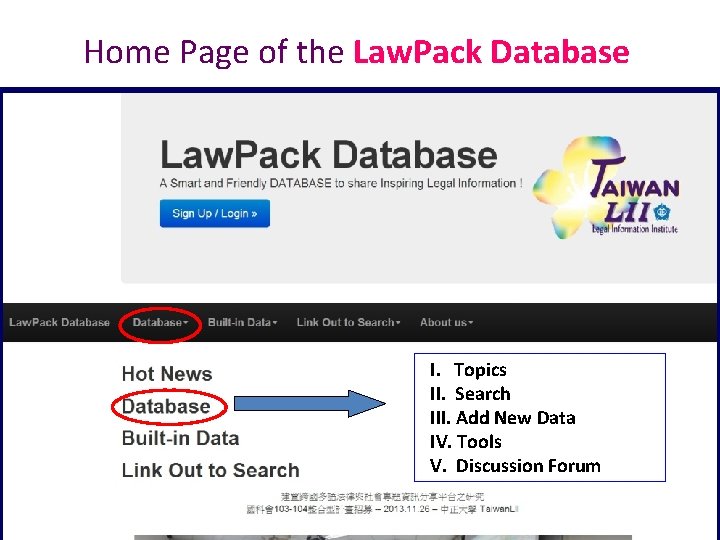
Home Page of the Law. Pack Database I. Topics II. Search III. Add New Data IV. Tools V. Discussion Forum 19
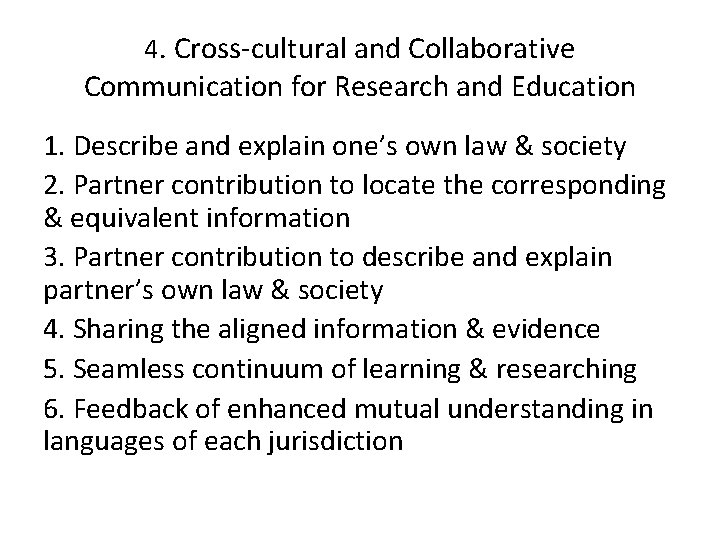
4. Cross-cultural and Collaborative Communication for Research and Education 1. Describe and explain one’s own law & society 2. Partner contribution to locate the corresponding & equivalent information 3. Partner contribution to describe and explain partner’s own law & society 4. Sharing the aligned information & evidence 5. Seamless continuum of learning & researching 6. Feedback of enhanced mutual understanding in languages of each jurisdiction