
Enhancing Biocontrol in Western Orchards An Overview Vincent
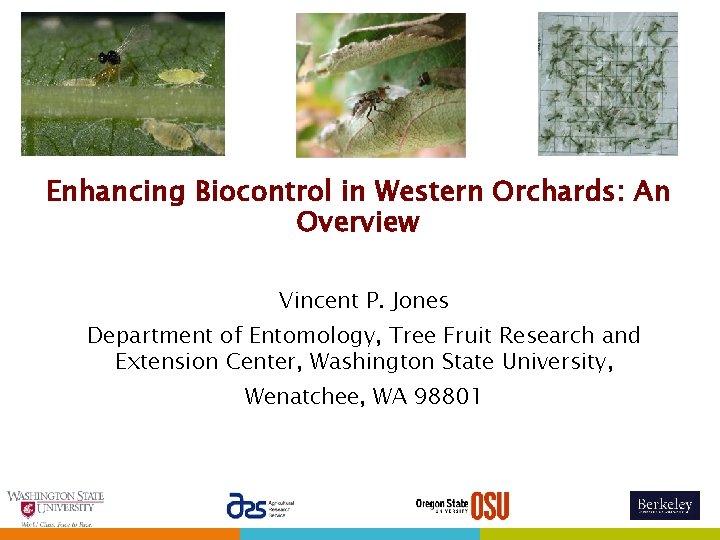
Enhancing Biocontrol in Western Orchards: An Overview Vincent P. Jones Department of Entomology, Tree Fruit Research and Extension Center, Washington State University, Wenatchee, WA 98801
SCRI TEAM WSU, UC BERKELEY, OSU, USDA-ARS
A teachable moment. . • IPM programs are in a state of flux § Increased use of mating disruption § Loss of OP’s from FQPA § 23 new active ingredients registered § Natural enemy impacts are often unknown until problems occur • Two different ways programs could go: § “Pesticide replacement therapy” § Ecologically based IPM focused on BC
Project Goals • To improve the long-term sustainability of apple, pear, and walnut industries in the Western US by enhancing BC • To synthesize the information developed in this project along with existing information to provide the outreach tools needed to bring about change in grower practices
Objectives • Evaluate acute and sub-lethal effects of pesticides • Determine phenology of key NEs • Develop new ways to monitor NEs • Economics of enhanced BC vs normal programs • Outreach § What is the best way to get data to stakeholders?
Obj. 1. Pesticide Impacts (Mills, Beers, Shearer, Amaraskare, Unruh) • Bioassays to ID lethal and sublethal effects • Target Insecticides/fungicides: • • Cyazypyr Rynaxypyr (Altacor) Spinetoram (Delegate) Novaluron (Rimon) λ cyhalotrin (Warrior) Copper hydroxide + Manzate Sulfur (Kumulus) Sublethal assays will use population growth as “common currency” to evaluate effects on a range of NEs
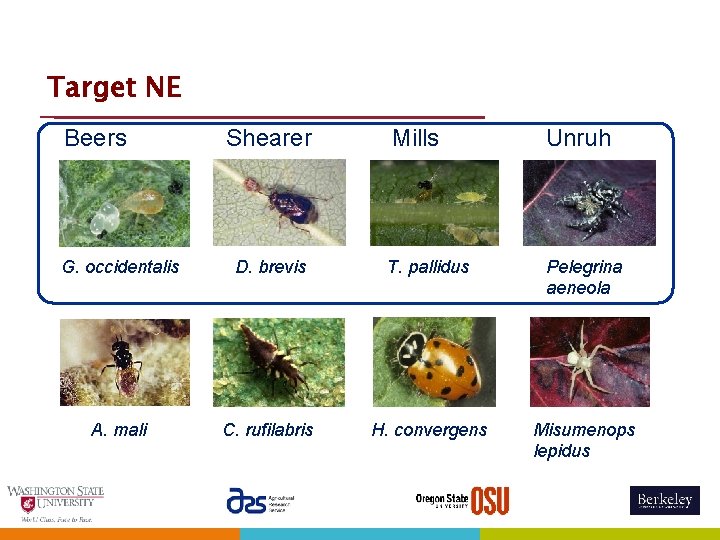
Target NE Beers Shearer Mills Unruh G. occidentalis D. brevis T. pallidus Pelegrina aeneola A. mali C. rufilabris H. convergens Misumenops lepidus
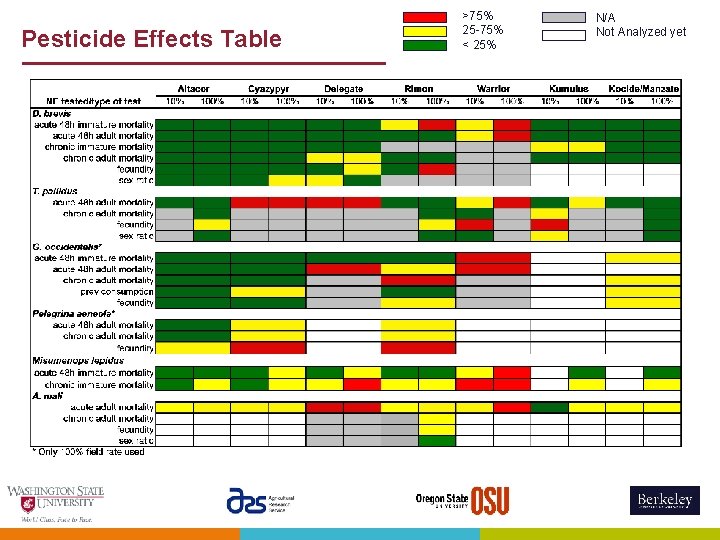
Pesticide Effects Table >75% 25 -75% < 25% N/A Not Analyzed yet
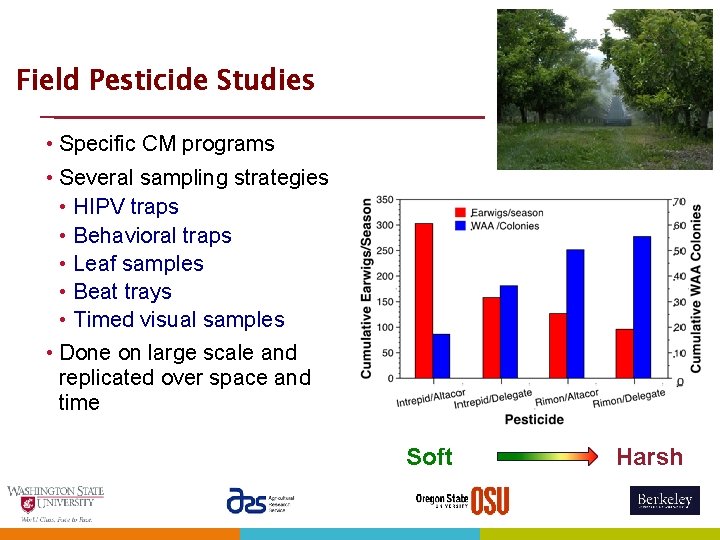
Field Pesticide Studies • Specific CM programs • Several sampling strategies • HIPV traps • Behavioral traps • Leaf samples • Beat trays • Timed visual samples • Done on large scale and replicated over space and time Soft Harsh
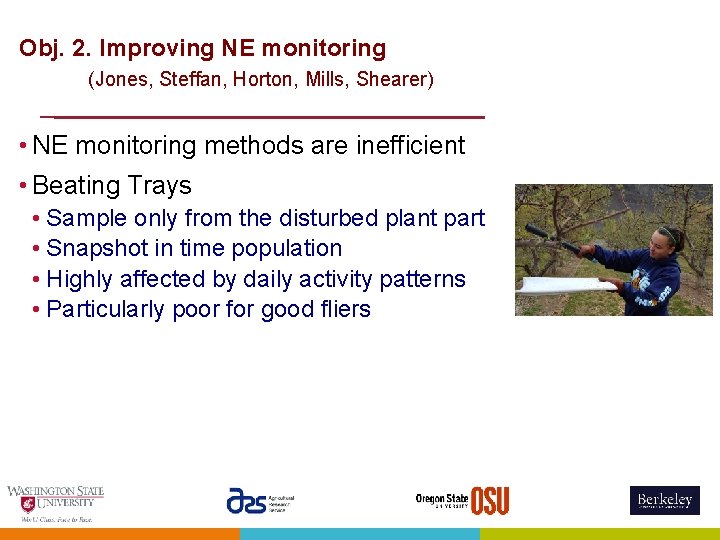
Obj. 2. Improving NE monitoring (Jones, Steffan, Horton, Mills, Shearer) • NE monitoring methods are inefficient • Beating Trays • Sample only from the disturbed plant part • Snapshot in time population • Highly affected by daily activity patterns • Particularly poor for good fliers
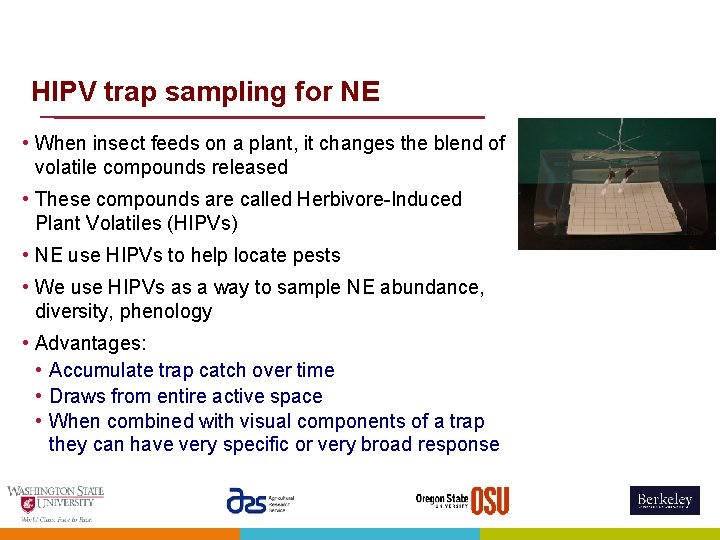
HIPV trap sampling for NE • When insect feeds on a plant, it changes the blend of volatile compounds released • These compounds are called Herbivore-Induced Plant Volatiles (HIPVs) • NE use HIPVs to help locate pests • We use HIPVs as a way to sample NE abundance, diversity, phenology • Advantages: • Accumulate trap catch over time • Draws from entire active space • When combined with visual components of a trap they can have very specific or very broad response

Example of Attractants vs Beating Trays 61 d 46 vs 153 days
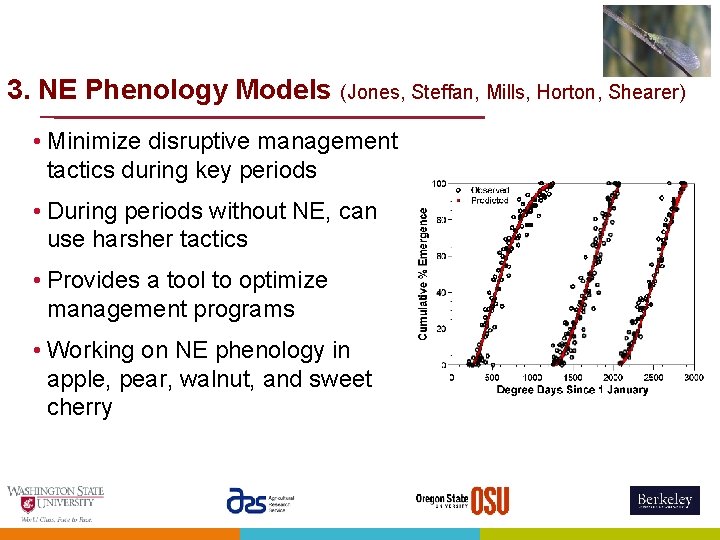
3. NE Phenology Models (Jones, Steffan, Mills, Horton, Shearer) • Minimize disruptive management tactics during key periods • During periods without NE, can use harsher tactics • Provides a tool to optimize management programs • Working on NE phenology in apple, pear, walnut, and sweet cherry
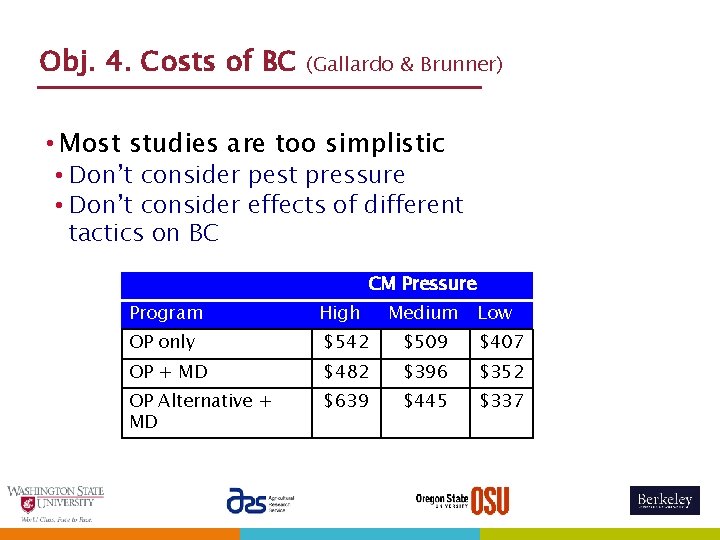
Obj. 4. Costs of BC (Gallardo & Brunner) • Most studies are too simplistic • Don’t consider pest pressure • Don’t consider effects of different tactics on BC CM Pressure Program High Medium Low OP only $542 $509 $407 OP + MD $482 $396 $352 OP Alternative + MD $639 $445 $337
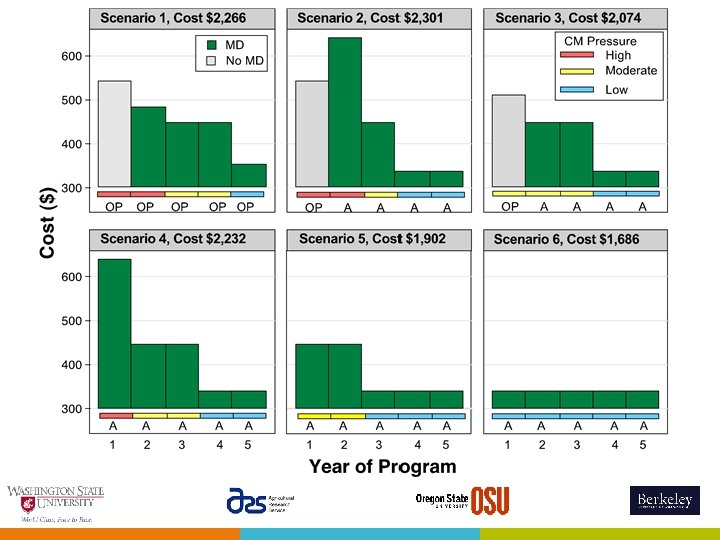
Cost of BC
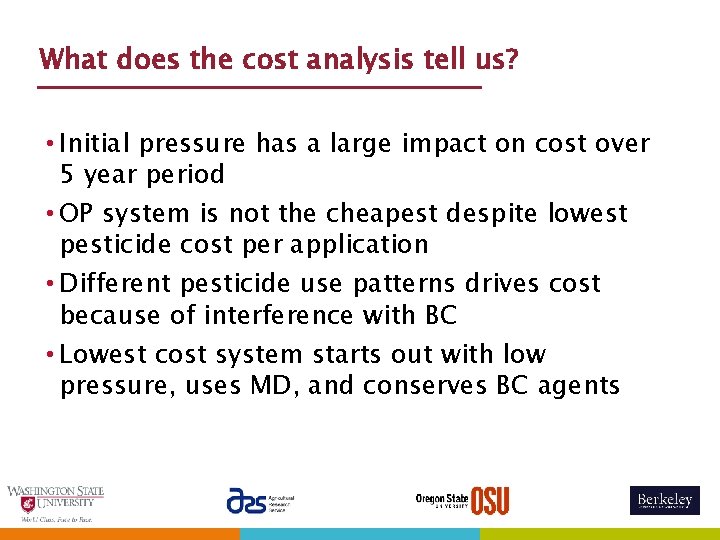
What does the cost analysis tell us? • Initial pressure has a large impact on cost over 5 year period • OP system is not the cheapest despite lowest pesticide cost per application • Different pesticide use patterns drives cost because of interference with BC • Lowest cost system starts out with low pressure, uses MD, and conserves BC agents
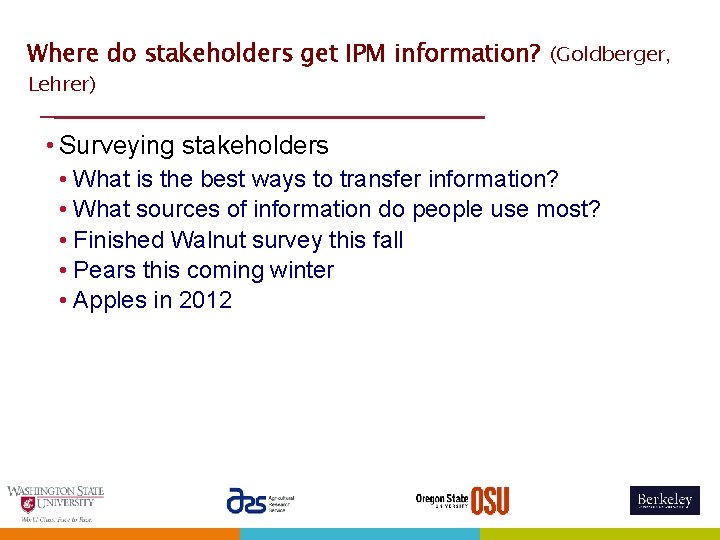
Where do stakeholders get IPM information? (Goldberger, Lehrer) • Surveying stakeholders • What is the best ways to transfer information? • What sources of information do people use most? • Finished Walnut survey this fall • Pears this coming winter • Apples in 2012
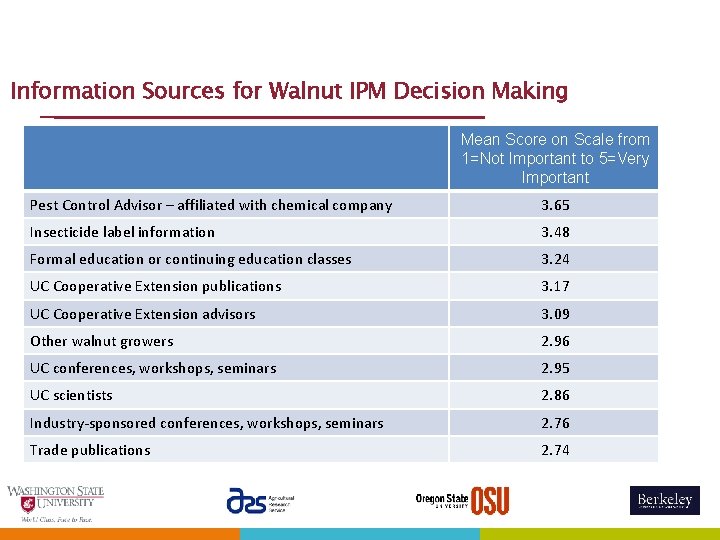
Information Sources for Walnut IPM Decision Making Mean Score on Scale from 1=Not Important to 5=Very Important Pest Control Advisor – affiliated with chemical company 3. 65 Insecticide label information 3. 48 Formal education or continuing education classes 3. 24 UC Cooperative Extension publications 3. 17 UC Cooperative Extension advisors 3. 09 Other walnut growers 2. 96 UC conferences, workshops, seminars 2. 95 UC scientists 2. 86 Industry-sponsored conferences, workshops, seminars 2. 76 Trade publications 2. 74
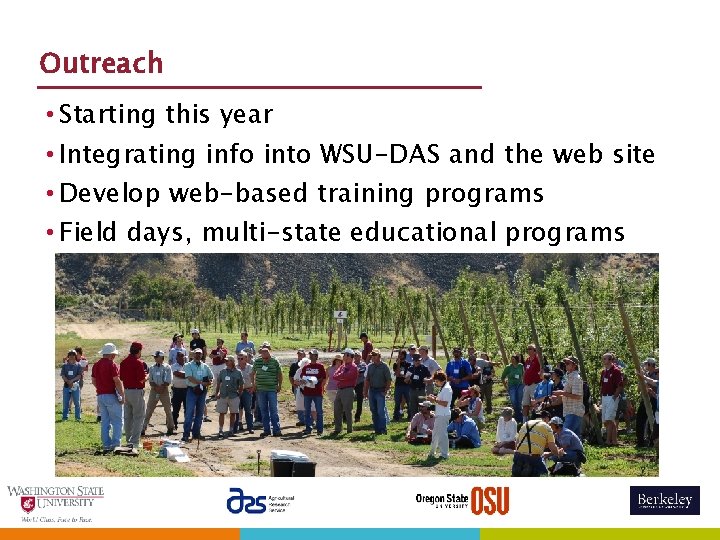
Outreach • Starting this year • Integrating info into WSU-DAS and the web site • Develop web-based training programs • Field days, multi-state educational programs
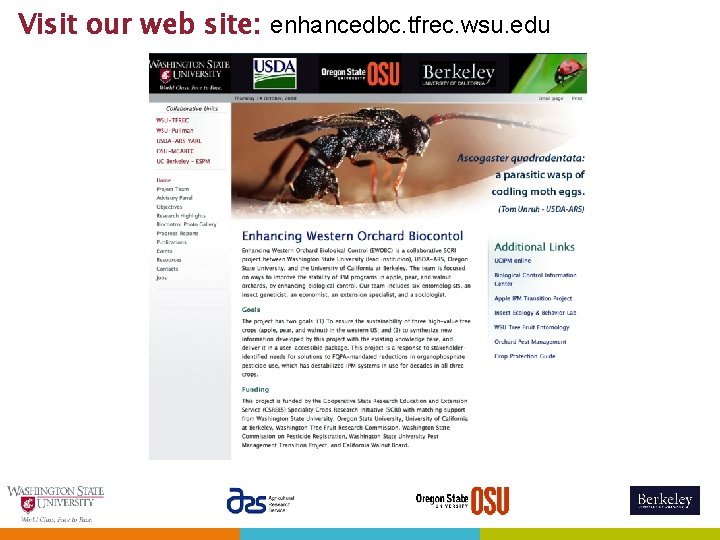
Visit our web site: enhancedbc. tfrec. wsu. edu
- Slides: 20