
Enhancing Antenna Boresight Gain Using a Small Metasurface

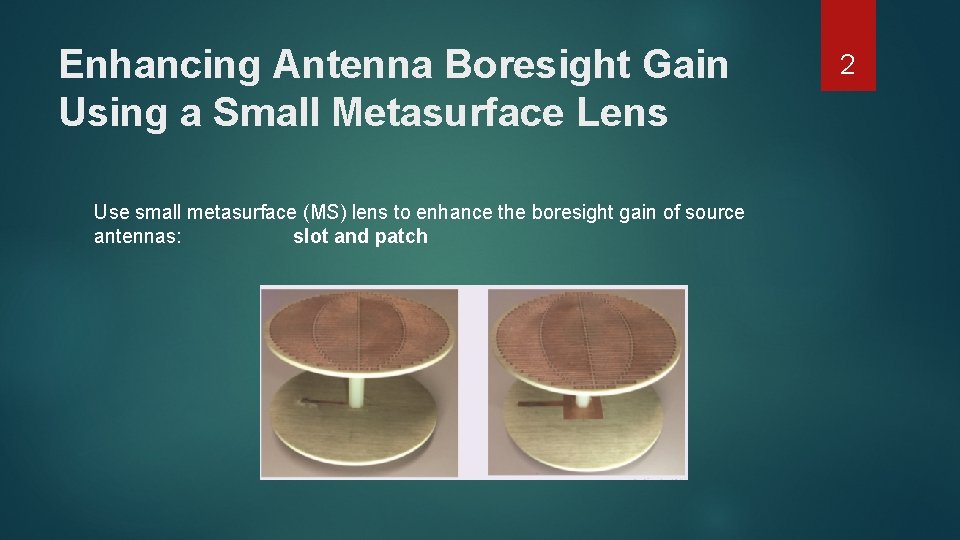
Enhancing Antenna Boresight Gain Using a Small Metasurface Lens Use small metasurface (MS) lens to enhance the boresight gain of source antennas: slot and patch 2
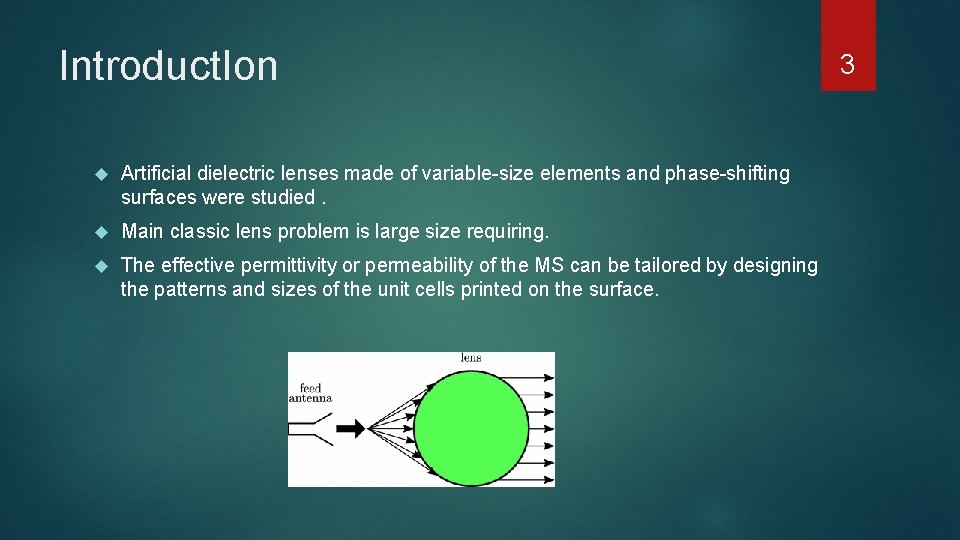
Introduct. Ion Artificial dielectric lenses made of variable-size elements and phase-shifting surfaces were studied. Main classic lens problem is large size requiring. The effective permittivity or permeability of the MS can be tailored by designing the patterns and sizes of the unit cells printed on the surface. 3
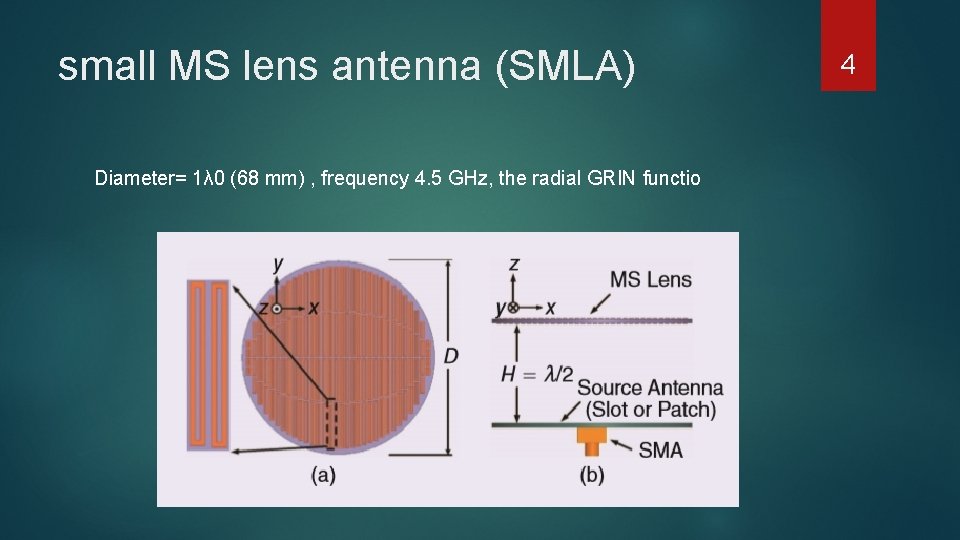
small MS lens antenna (SMLA) Diameter= 1λ 0 (68 mm) , frequency 4. 5 GHz, the radial GRIN functio 4
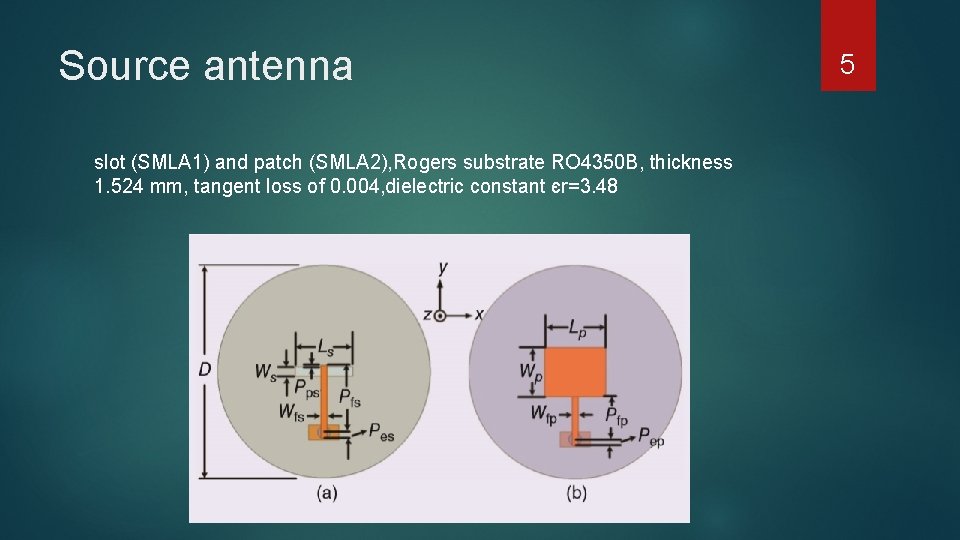
Source antenna slot (SMLA 1) and patch (SMLA 2), Rogers substrate RO 4350 B, thickness 1. 524 mm, tangent loss of 0. 004, dielectric constant єr=3. 48 5
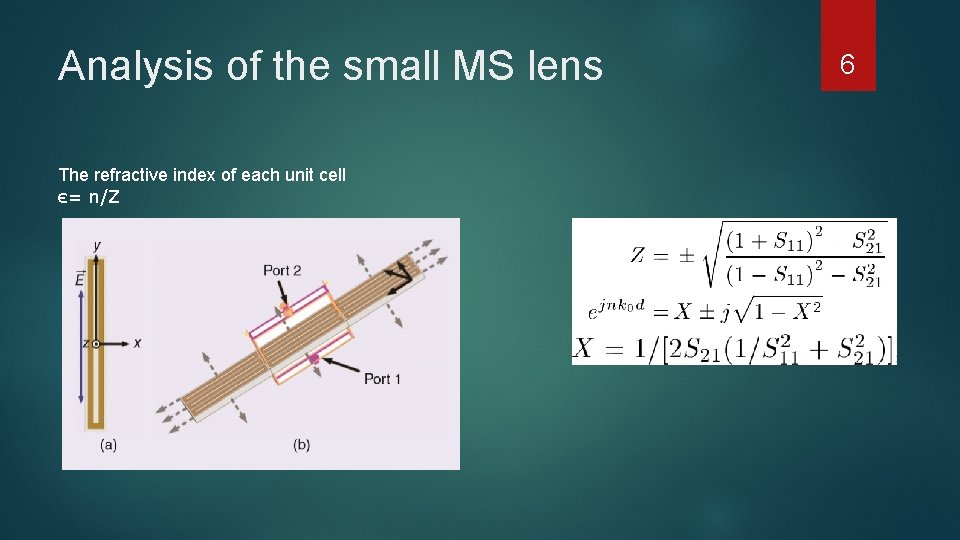
Analysis of the small MS lens The refractive index of each unit cell є= n/Z 6
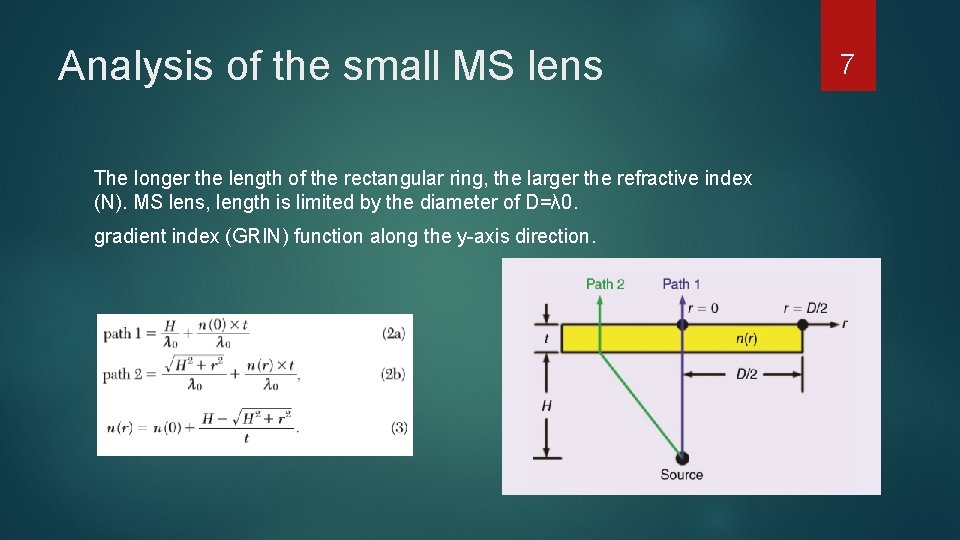
Analysis of the small MS lens The longer the length of the rectangular ring, the larger the refractive index (N). MS lens, length is limited by the diameter of D=λ 0. gradient index (GRIN) function along the y-axis direction. 7
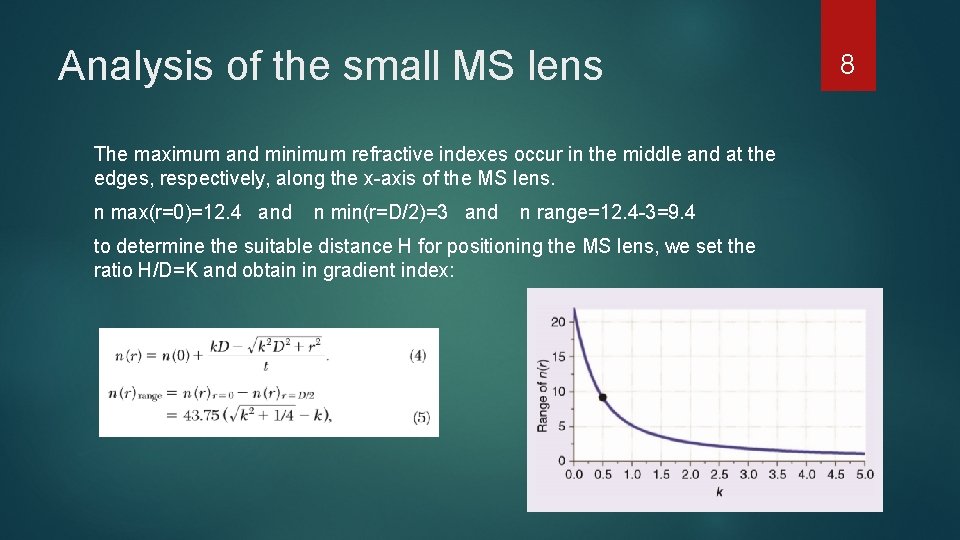
Analysis of the small MS lens The maximum and minimum refractive indexes occur in the middle and at the edges, respectively, along the x-axis of the MS lens. n max(r=0)=12. 4 and n min(r=D/2)=3 and n range=12. 4 -3=9. 4 to determine the suitable distance H for positioning the MS lens, we set the ratio H/D=K and obtain in gradient index: 8
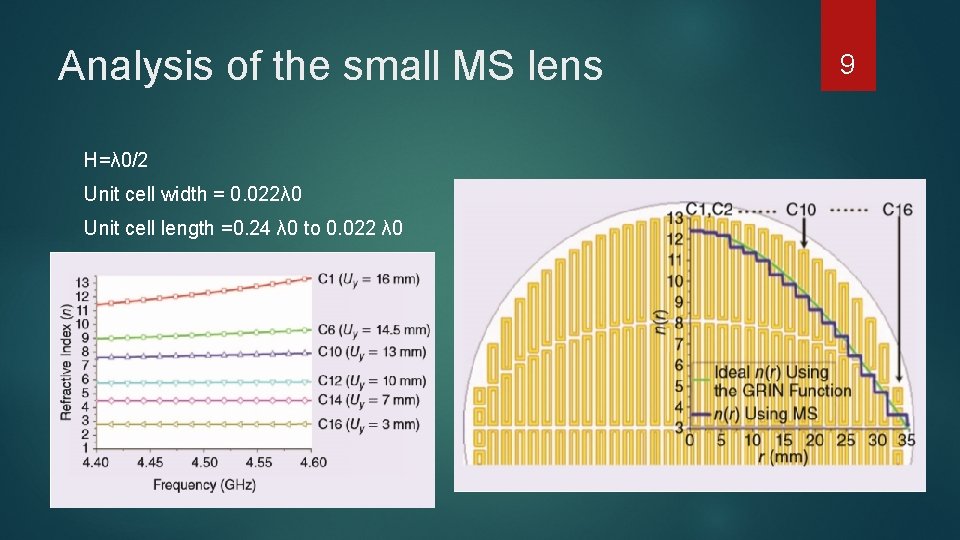
Analysis of the small MS lens H=λ 0/2 Unit cell width = 0. 022λ 0 Unit cell length =0. 24 λ 0 to 0. 022 λ 0 9
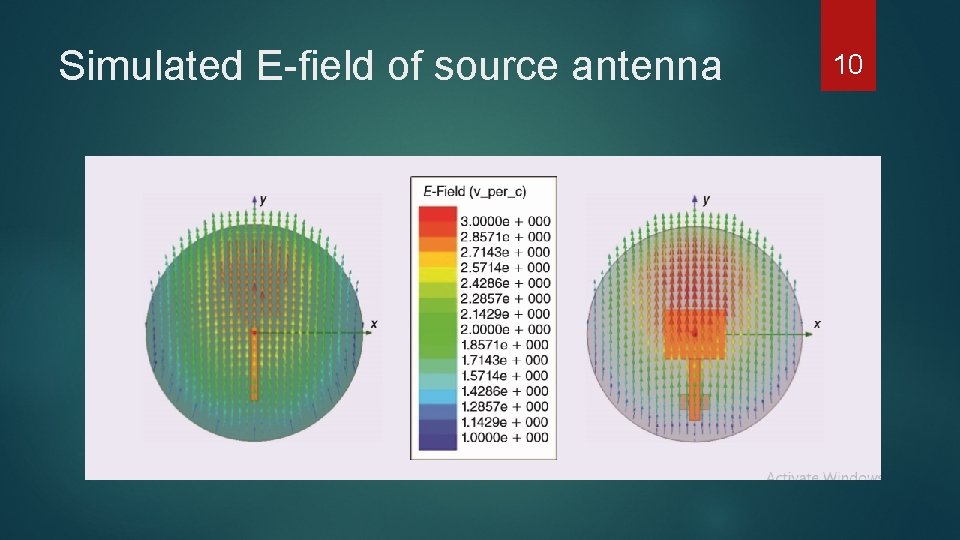
Simulated E-field of source antenna 10
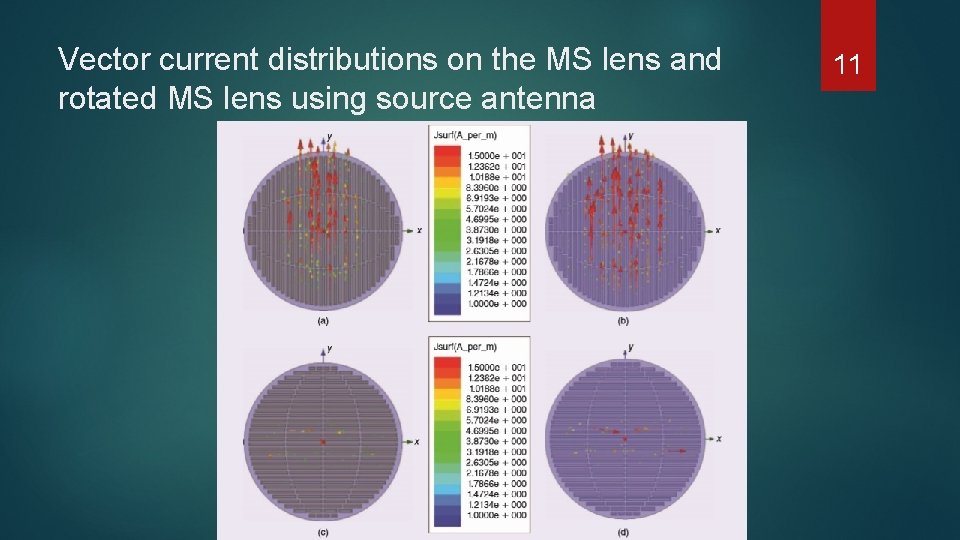
Vector current distributions on the MS lens and rotated MS lens using source antenna 11
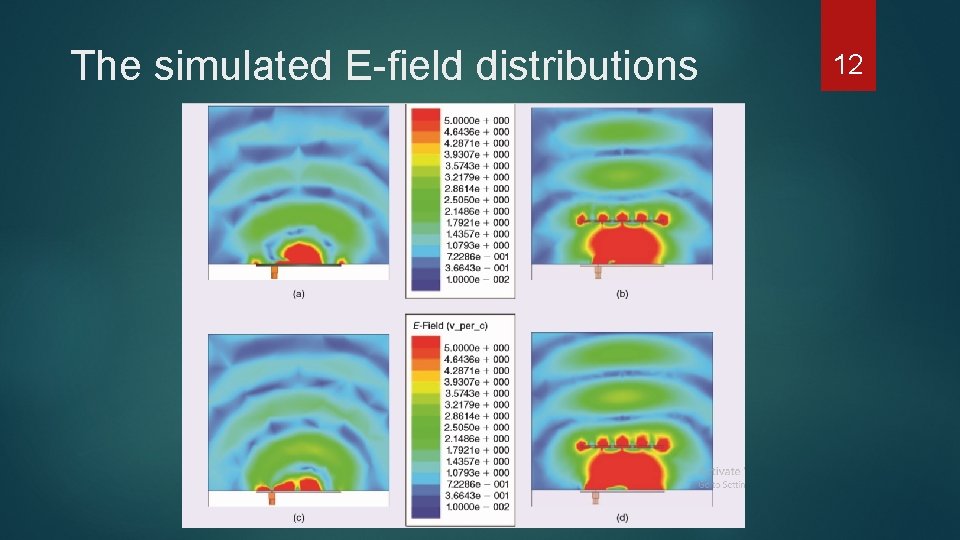
The simulated E-field distributions 12
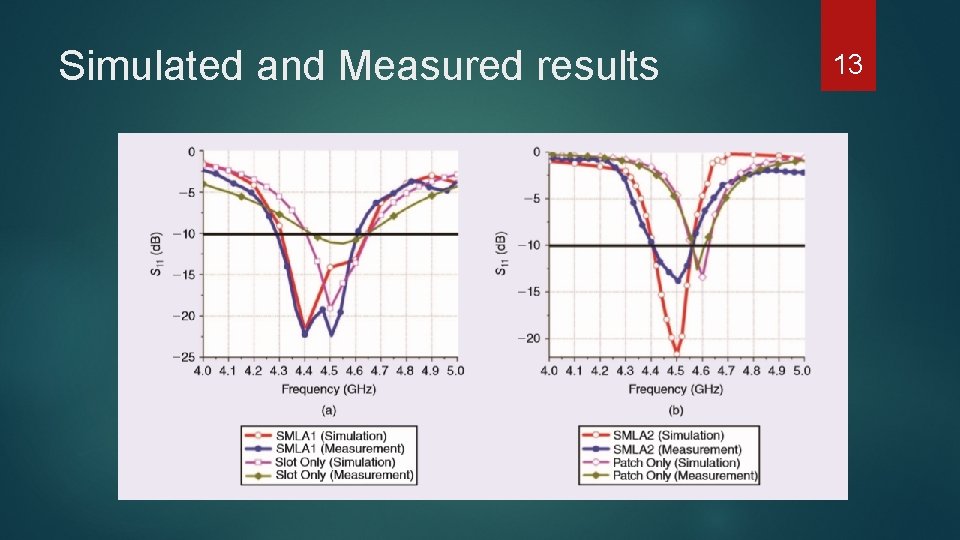
Simulated and Measured results 13
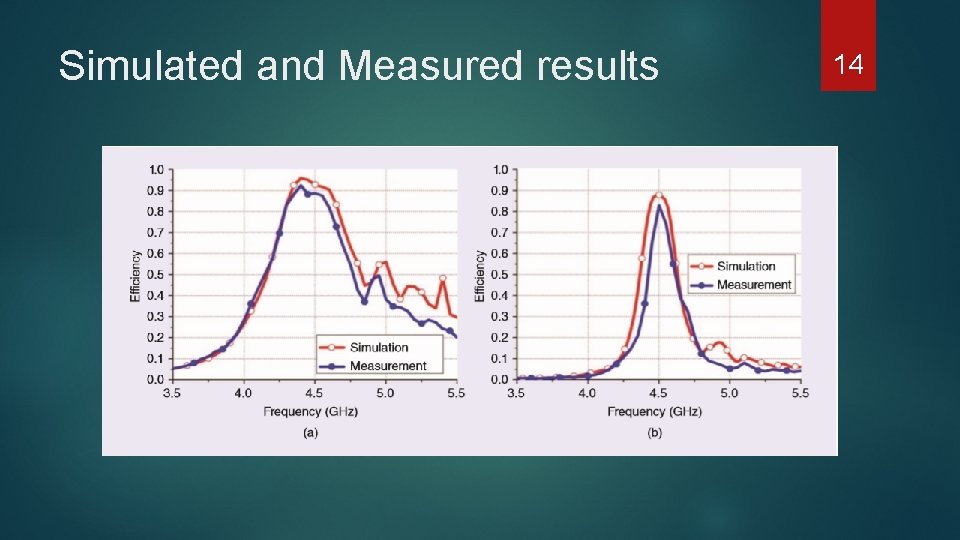
Simulated and Measured results 14
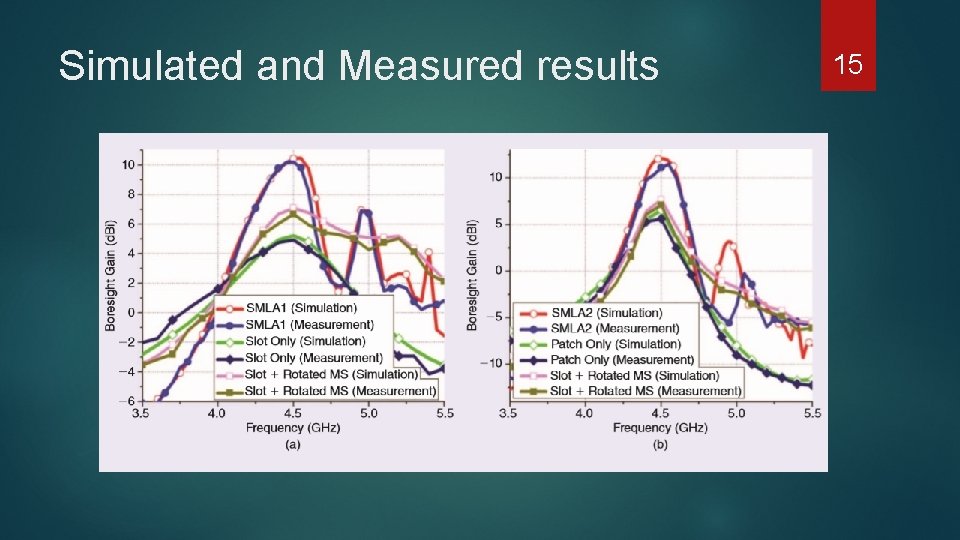
Simulated and Measured results 15
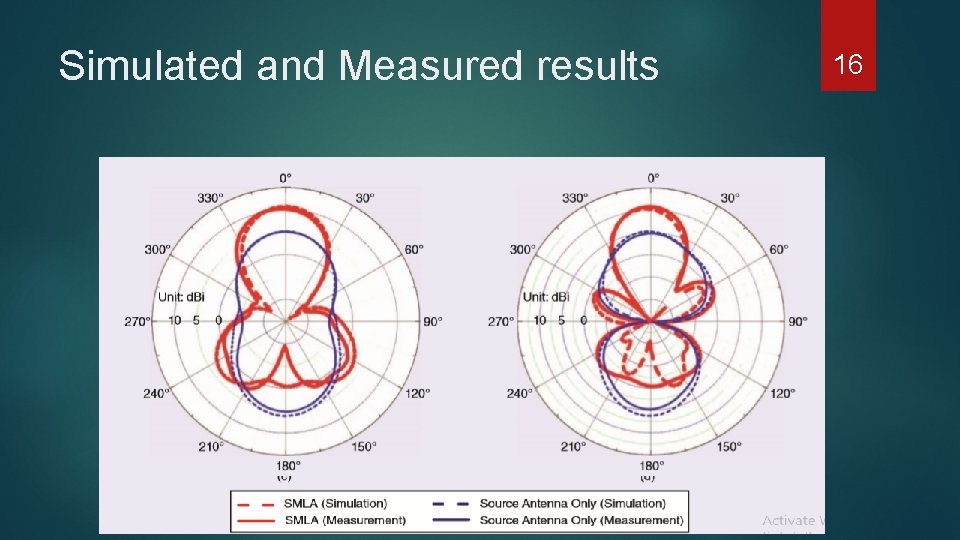
Simulated and Measured results 16
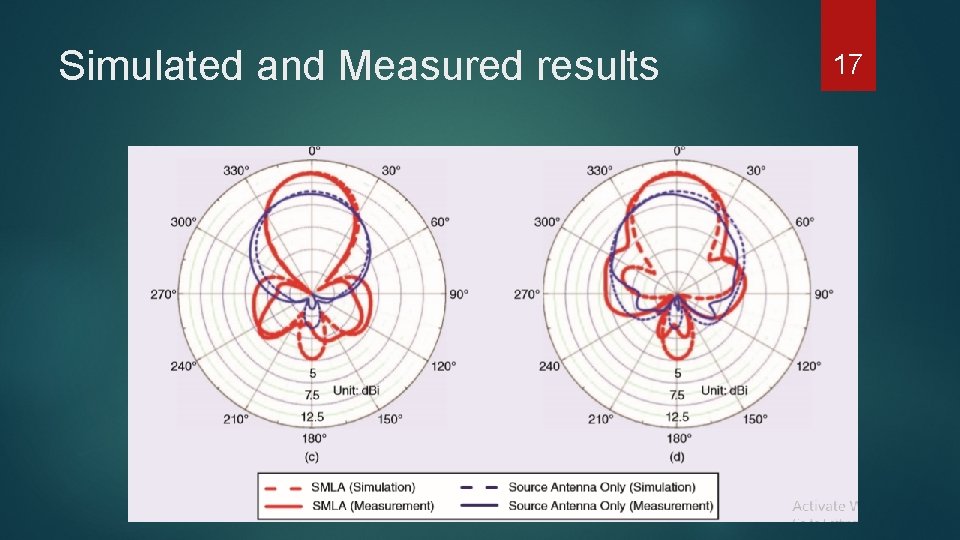
Simulated and Measured results 17
![references [1] X. Chen, H. F. Ma, X. Y. Zou, W. X. Jiang, and](http://slidetodoc.com/presentation_image_h2/2a8308a29b454a53a414991af30f6913/image-18.jpg "references [1] X. Chen, H. F. Ma, X. Y. Zou, W. X. Jiang, and")
references [1] X. Chen, H. F. Ma, X. Y. Zou, W. X. Jiang, and T. J. Cui, “Three-dimensional broadband high-directivity lens antenna made of metamaterials, ” J. Appl. Phys. , vol. 110, no. 4, pp. 044904– 044904 -8, 2011. [2] H. L. Zhu, S. W. Cheung, X. H. Liu, Y. F. Cao, and T. I. Yuk, “Frequency reconfigurable slot antenna using metasurface, ” in Proc. 8 th European Conf. Antennas Propagation, 2014, pp. 2575– 2577. [3] H. L. Zhu, S. W. Cheung, and T. I. Yuk, “Antenna reconfiguration using metasurfaces, ” in Proc. 35 th Progress Electromagnetics Research Symp. , Guangzhou, China, 2014, pp. 2400– 2404. [4] H. L. Zhu, X. H. Liu, S. W. Cheung, and T. I. Yuk, “Frequency-reconfigurable antenna using metasurface, ” IEEE Trans. Antennas Propagat. vol. 62, no. 1, pp. 80– 85, 2014. [5] D. R. Smith, S. Schultz, P. Markoš, and C. M. Soukoulis, “Determination of effective permittivity and permeability of metamaterials from reflection and transmission coefficients, ” Phys. Rev. B, vol. 65, p. 195104, Apr. 2002. 18
- Slides: 18