
ENHANCED WDN HYDRAULIC MODELLING WDNet XL vs EPANET


- Slides: 50
ENHANCED WDN HYDRAULIC MODELLING WDNet. XL vs. EPANET Orazio Giustolisi (orazio. giustolisi@poliba. it) Antonietta Simone (antonietta. simone@poliba. it) Luigi Berardi (luigi. berardi@unich. it) Daniele Laucelli (daniele. laucelli@poliba. it)
Aims and scopes Innovation Decision Environment Awareness Transfer technology and innovative tools for analysis and decision support from research to complex systems in civil engineering to raise awareness of management decisions in terms of effectiveness, efficiency and sustainability.
Main activities ü Scientific and technical advice for the analysis and decision support in civil engineering through http: //www. hydroinformatics. it/IDEA-RT/ innovative tools developed by the company, also integrated with other systems orazio. giustolisi@poliba. it rita. ugarelli@sintef. no vincenzo. simeone@poliba. it brunone@unipg. it ü Training of users in developing and using innovative tools by organizing workshops, webinars and conferences oriented to researchers’ training or professional training; ü Customized solutions and training of professionals on advanced tools for data analysis and decision support systems in civil engineering
WHY AND WHERE ENHANCED HYDRAULIC MODELLING
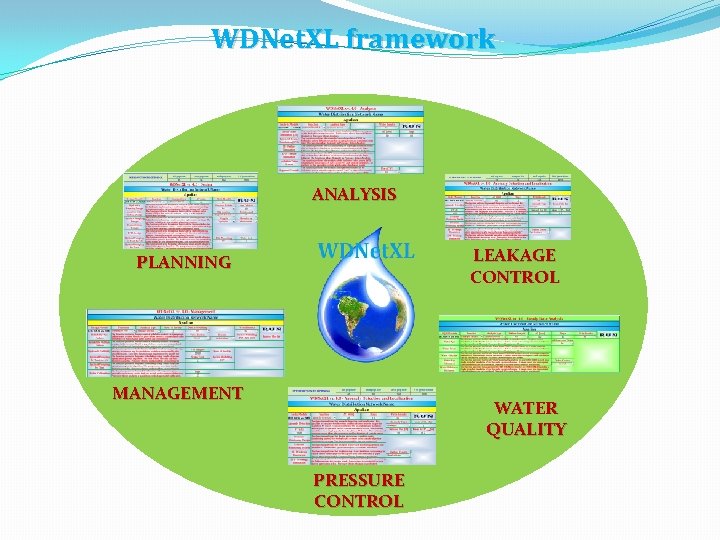
WDNet. XL framework ANALYSIS LEAKAGE CONTROL PLANNING MANAGEMENT WATER QUALITY PRESSURE CONTROL
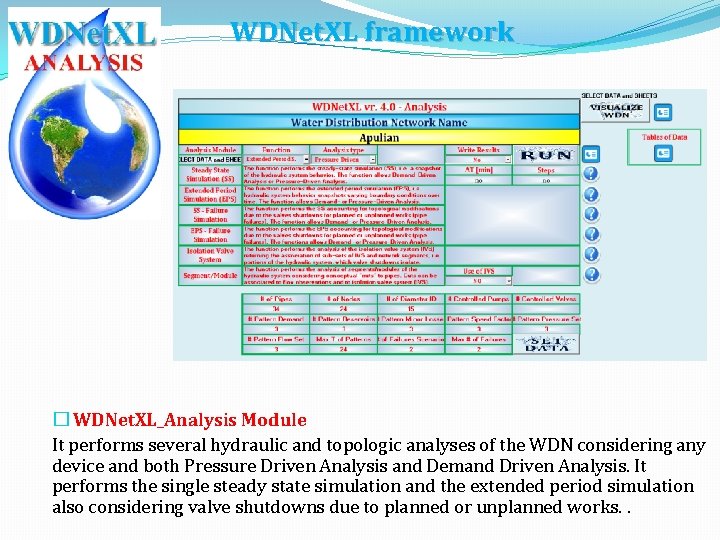
WDNet. XL framework � WDNet. XL_Analysis Module It performs several hydraulic and topologic analyses of the WDN considering any device and both Pressure Driven Analysis and Demand Driven Analysis. It performs the single steady state simulation and the extended period simulation also considering valve shutdowns due to planned or unplanned works. .
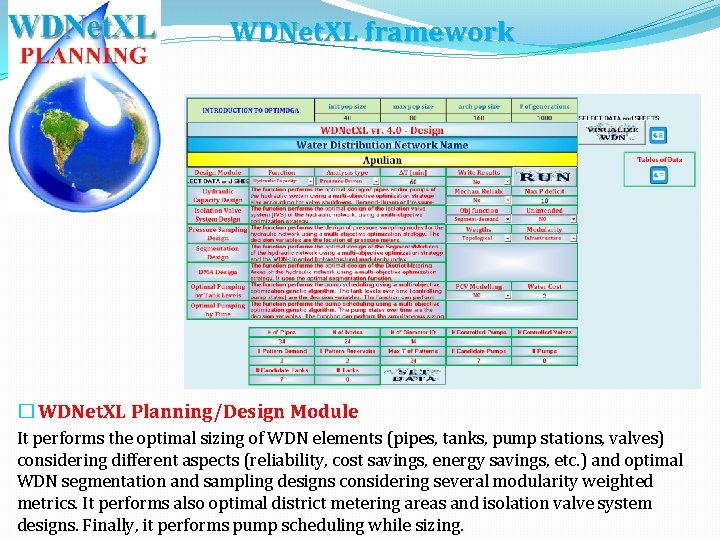
WDNet. XL framework � WDNet. XL Planning/Design Module It performs the optimal sizing of WDN elements (pipes, tanks, pump stations, valves) considering different aspects (reliability, cost savings, energy savings, etc. ) and optimal WDN segmentation and sampling designs considering several modularity weighted metrics. It performs also optimal district metering areas and isolation valve system designs. Finally, it performs pump scheduling while sizing.
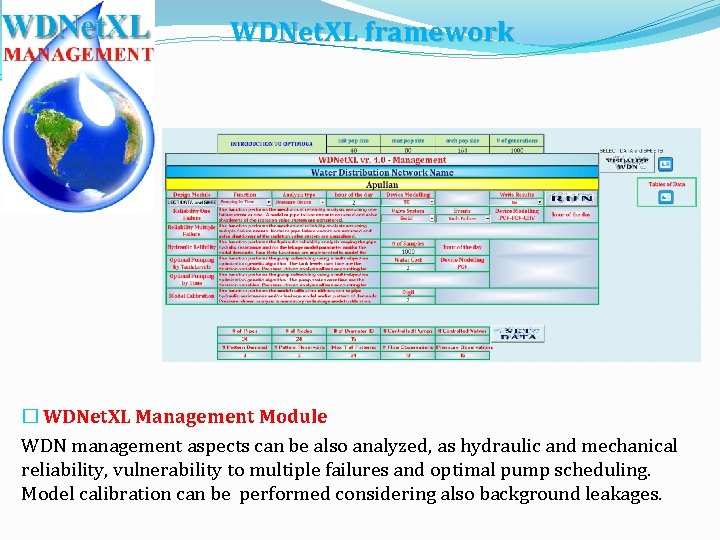
WDNet. XL framework � WDNet. XL Management Module WDN management aspects can be also analyzed, as hydraulic and mechanical reliability, vulnerability to multiple failures and optimal pump scheduling. Model calibration can be performed considering also background leakages.
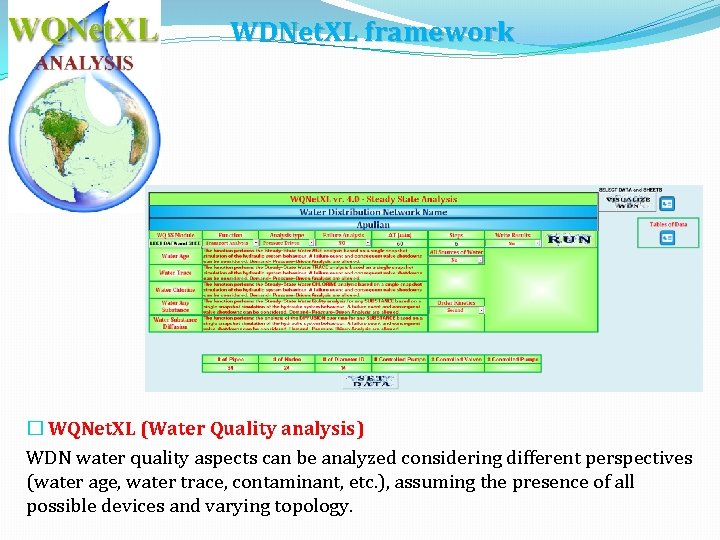
WDNet. XL framework � WQNet. XL (Water Quality analysis) WDN water quality aspects can be analyzed considering different perspectives (water age, water trace, contaminant, etc. ), assuming the presence of all possible devices and varying topology.
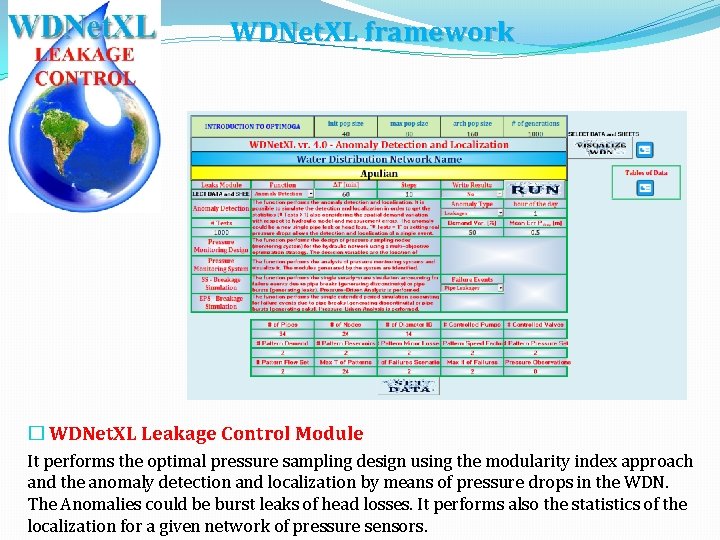
WDNet. XL framework � WDNet. XL Leakage Control Module It performs the optimal pressure sampling design using the modularity index approach and the anomaly detection and localization by means of pressure drops in the WDN. The Anomalies could be burst leaks of head losses. It performs also the statistics of the localization for a given network of pressure sensors.
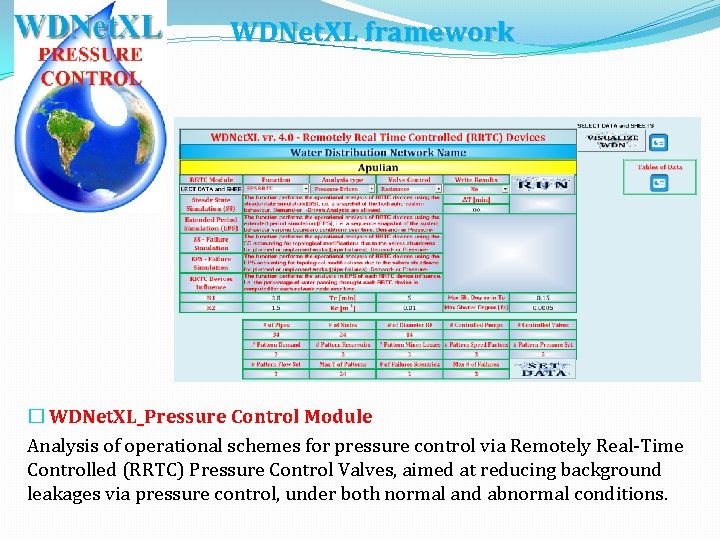
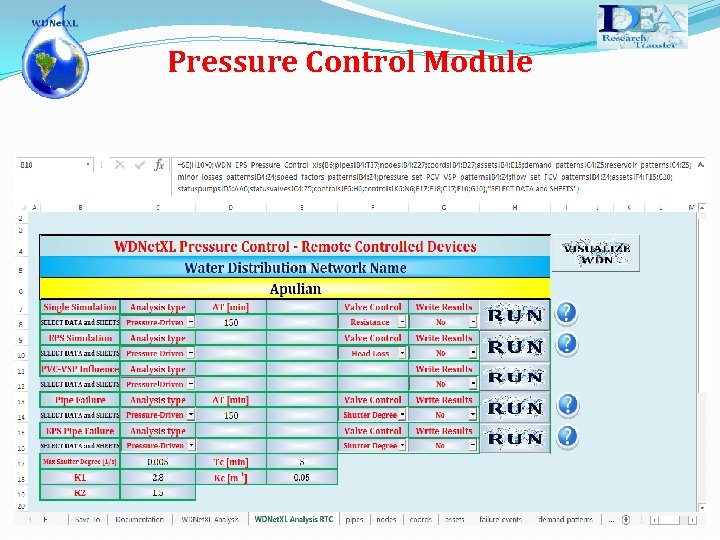
WDNet. XL framework � WDNet. XL_Pressure Control Module Analysis of operational schemes for pressure control via Remotely Real-Time Controlled (RRTC) Pressure Control Valves, aimed at reducing background leakages via pressure control, under both normal and abnormal conditions.
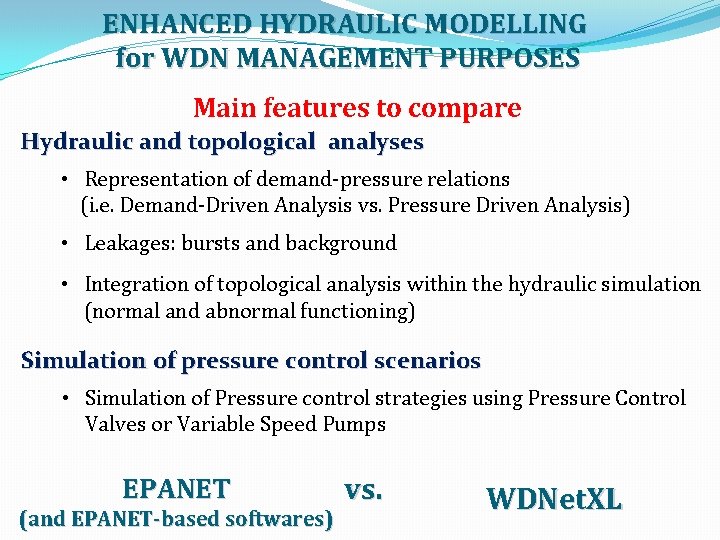
ENHANCED HYDRAULIC MODELLING for WDN MANAGEMENT PURPOSES Main features to compare Hydraulic and topological analyses • Representation of demand-pressure relations (i. e. Demand-Driven Analysis vs. Pressure Driven Analysis) • Leakages: bursts and background • Integration of topological analysis within the hydraulic simulation (normal and abnormal functioning) Simulation of pressure control scenarios • Simulation of Pressure control strategies using Pressure Control Valves or Variable Speed Pumps EPANET (and EPANET-based softwares) vs. WDNet. XL
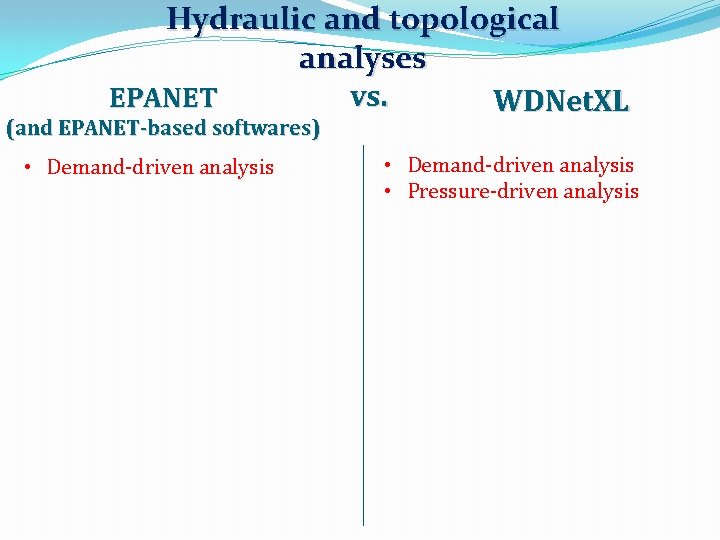
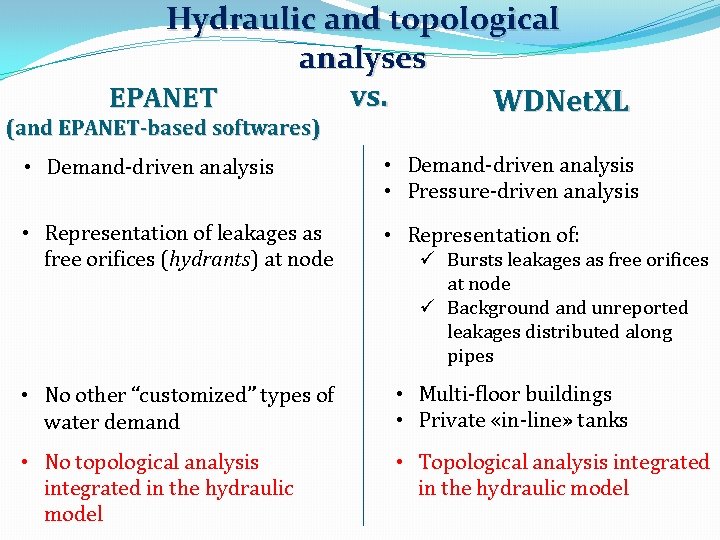
Hydraulic and topological analyses vs. EPANET WDNet. XL (and EPANET-based softwares) • Demand-driven analysis • Pressure-driven analysis
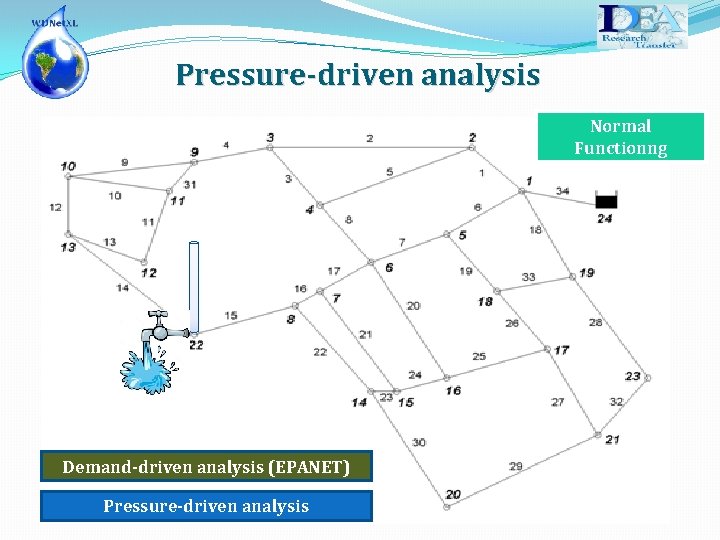
Pressure-driven analysis Normal Functionng Demand-driven analysis (EPANET) Pressure-driven analysis
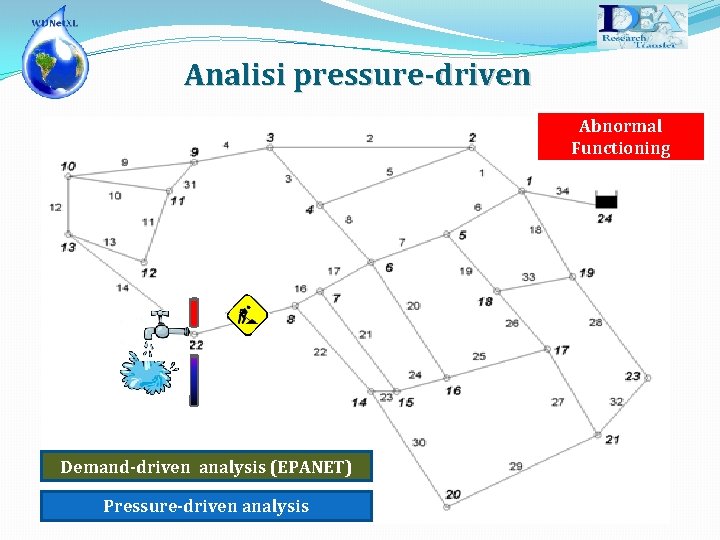
Analisi pressure-driven Abnormal Functioning Demand-driven analysis (EPANET) Pressure-driven analysis
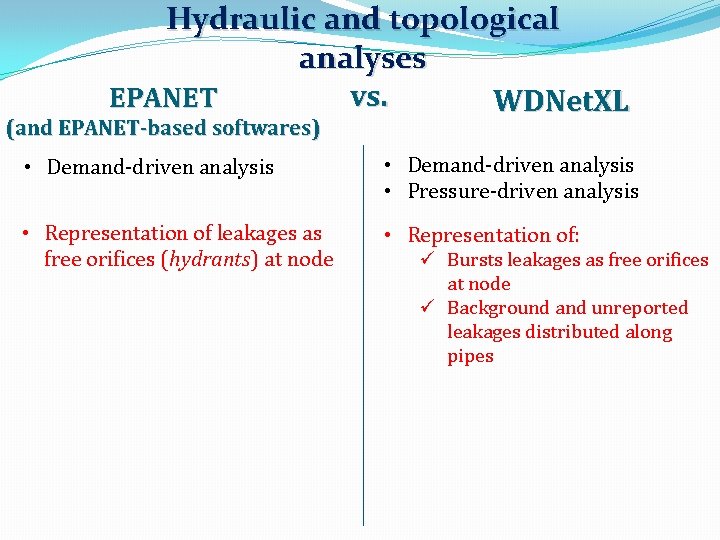
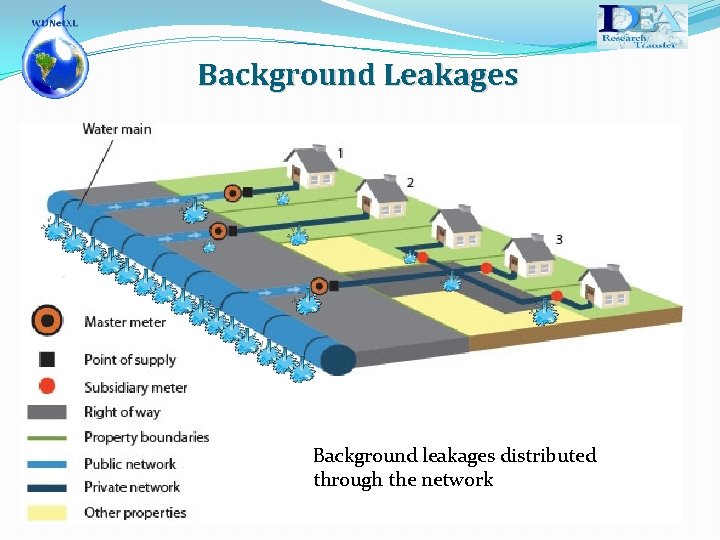
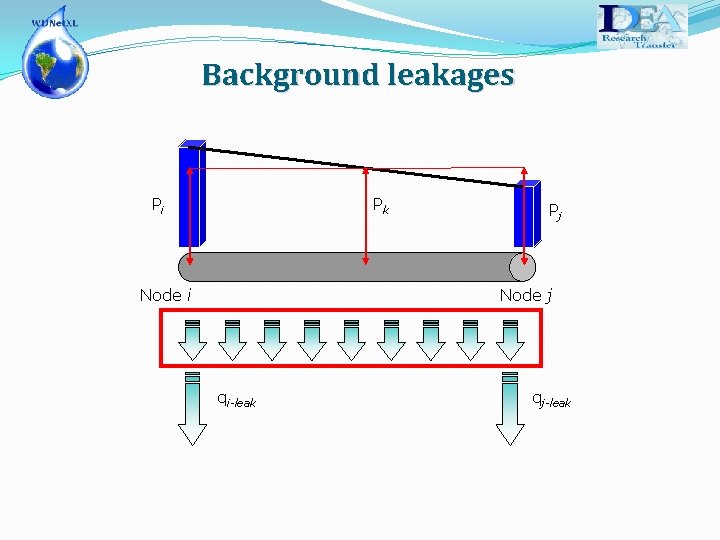
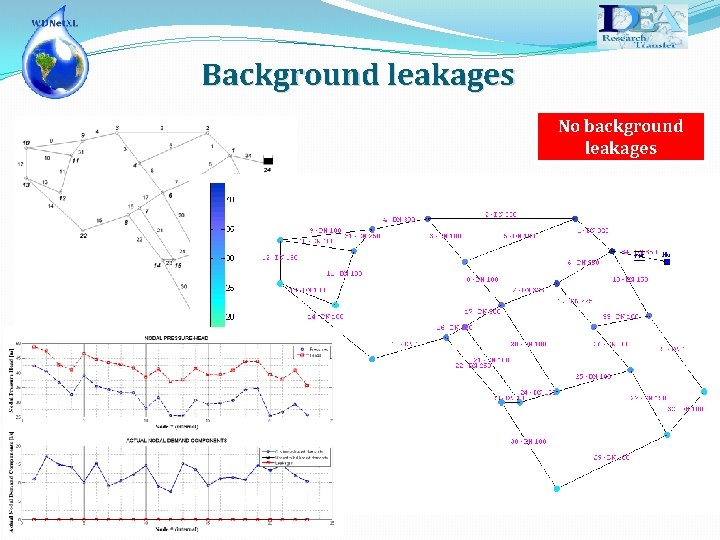
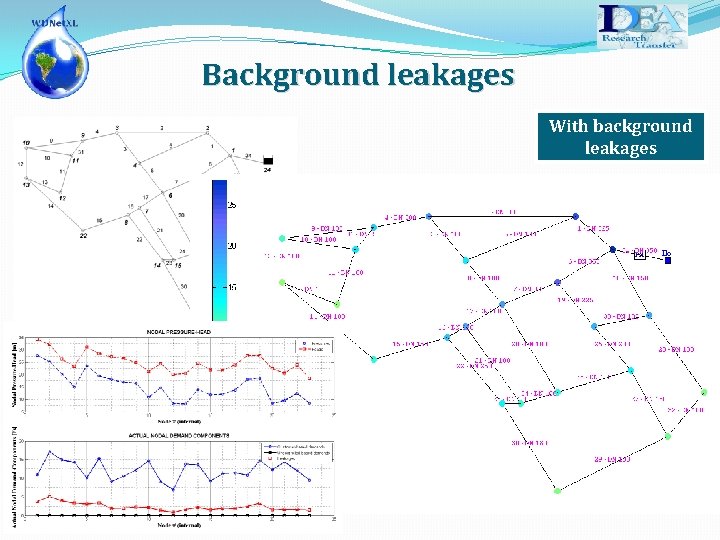
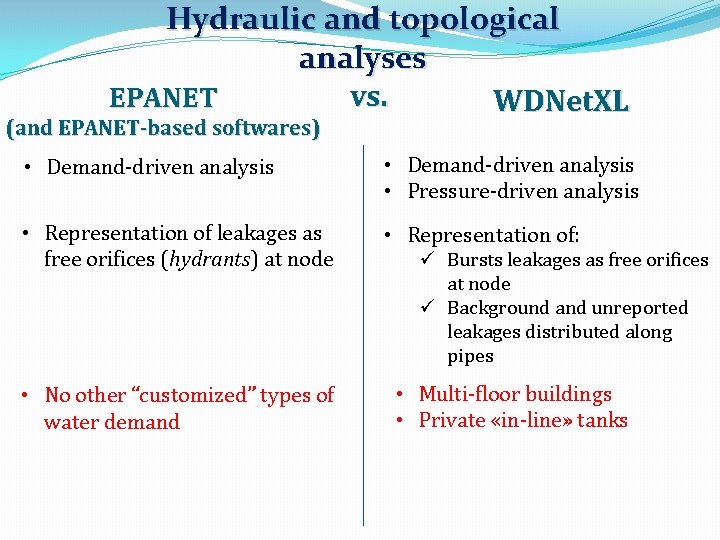
Hydraulic and topological analyses vs. EPANET WDNet. XL (and EPANET-based softwares) • Demand-driven analysis • Pressure-driven analysis • Representation of leakages as free orifices (hydrants) at node • Representation of: ü Bursts leakages as free orifices at node ü Background and unreported leakages distributed along pipes
Background Leakages Background leakages distributed through the network
Background leakages Pi Pk Node i Pj Node j qi-leak qj-leak
Background leakages No background leakages
Background leakages With background leakages
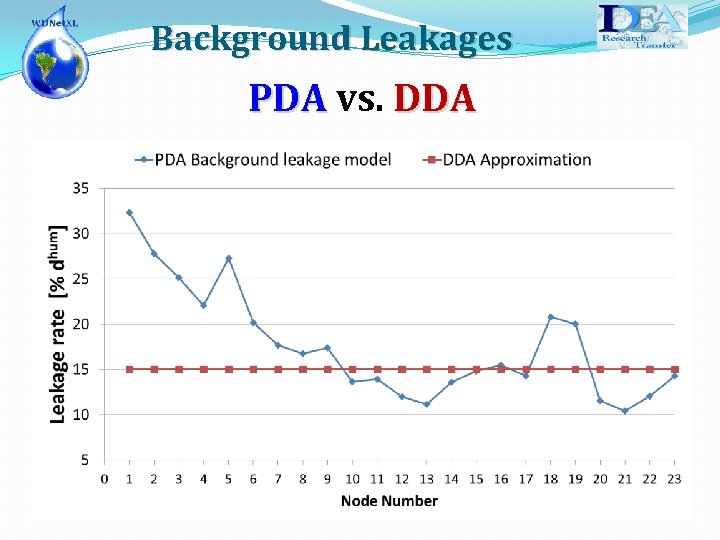
Background Leakages PDA vs. DDA
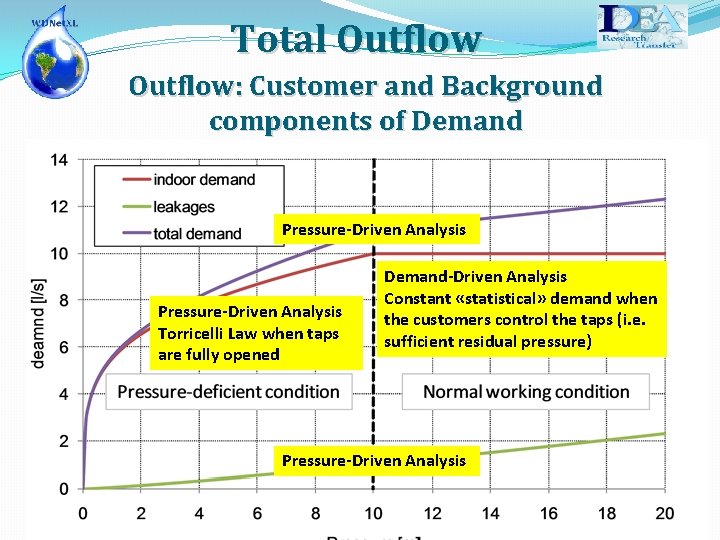
Total Outflow: Customer and Background components of Demand Pressure-Driven Analysis Torricelli Law when taps are fully opened Demand-Driven Analysis Constant «statistical» demand when the customers control the taps (i. e. sufficient residual pressure) Pressure-Driven Analysis
Hydraulic and topological analyses vs. EPANET WDNet. XL (and EPANET-based softwares) • Demand-driven analysis • Pressure-driven analysis • Representation of leakages as free orifices (hydrants) at node • Representation of: • No other “customized” types of water demand ü Bursts leakages as free orifices at node ü Background and unreported leakages distributed along pipes • Multi-floor buildings • Private «in-line» tanks
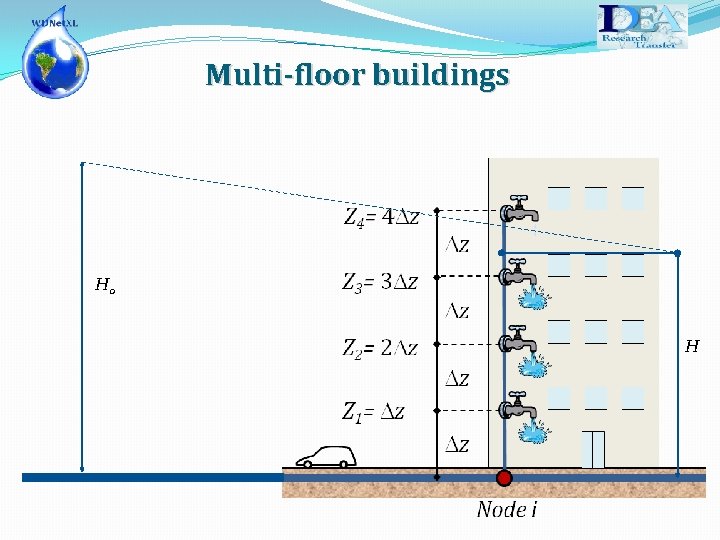
Multi-floor buildings H 0 H
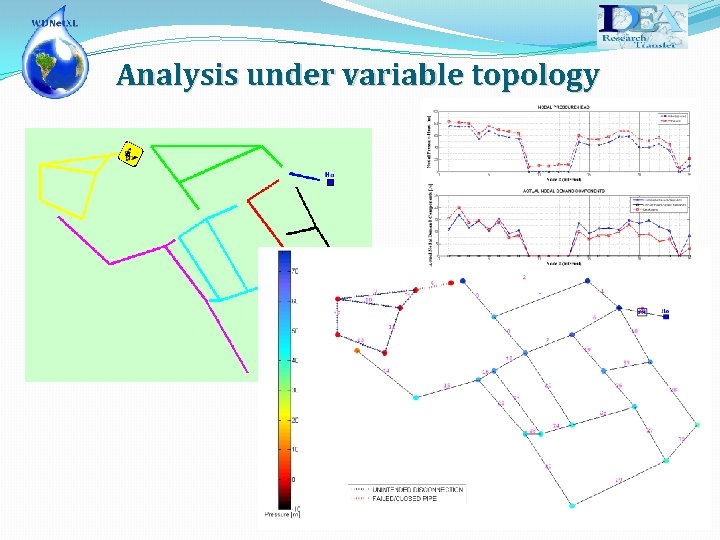
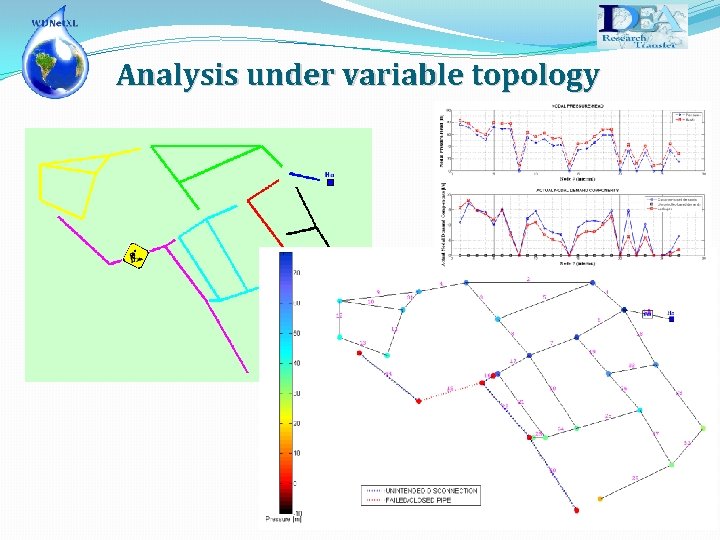
Hydraulic and topological analyses vs. EPANET WDNet. XL (and EPANET-based softwares) • Demand-driven analysis • Pressure-driven analysis • Representation of leakages as free orifices (hydrants) at node • Representation of: ü Bursts leakages as free orifices at node ü Background and unreported leakages distributed along pipes • No other “customized” types of water demand • Multi-floor buildings • Private «in-line» tanks • No topological analysis integrated in the hydraulic model • Topological analysis integrated in the hydraulic model
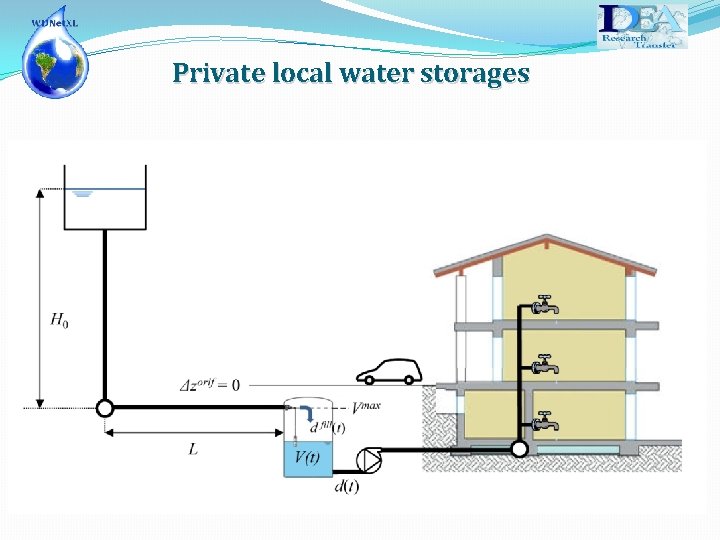
Private local water storages
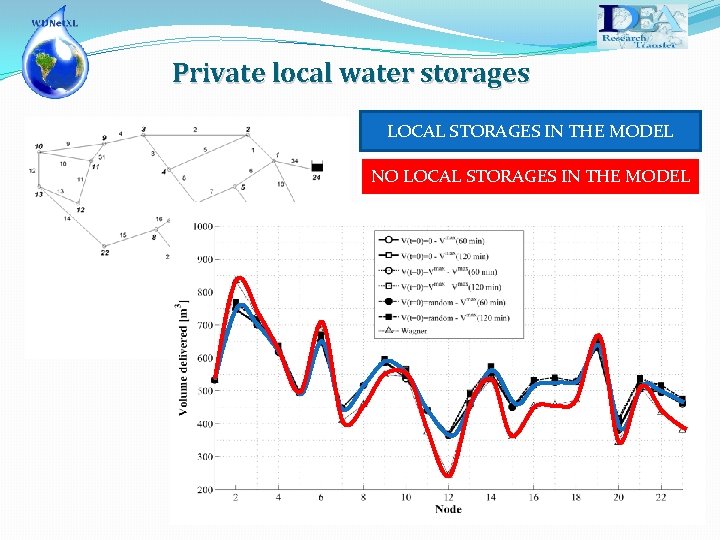
Private local water storages LOCAL STORAGES IN THE MODEL NO LOCAL STORAGES IN THE MODEL
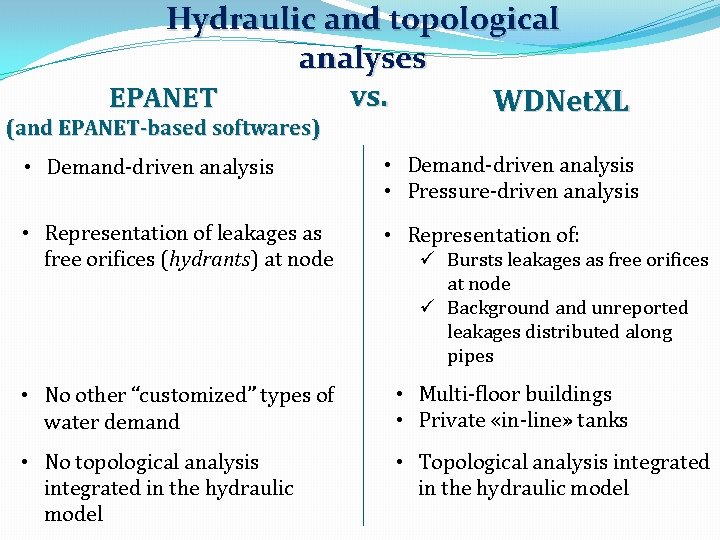
Hydraulic and topological analyses vs. EPANET WDNet. XL (and EPANET-based softwares) • Demand-driven analysis • Pressure-driven analysis • Representation of leakages as free orifices (hydrants) at node • Representation of: ü Bursts leakages as free orifices at node ü Background and unreported leakages distributed along pipes • No other “customized” types of water demand • Multi-floor buildings • Private «in-line» tanks • No topological analysis integrated in the hydraulic model • Topological analysis integrated in the hydraulic model
Analysis under variable topology
Analysis under variable topology
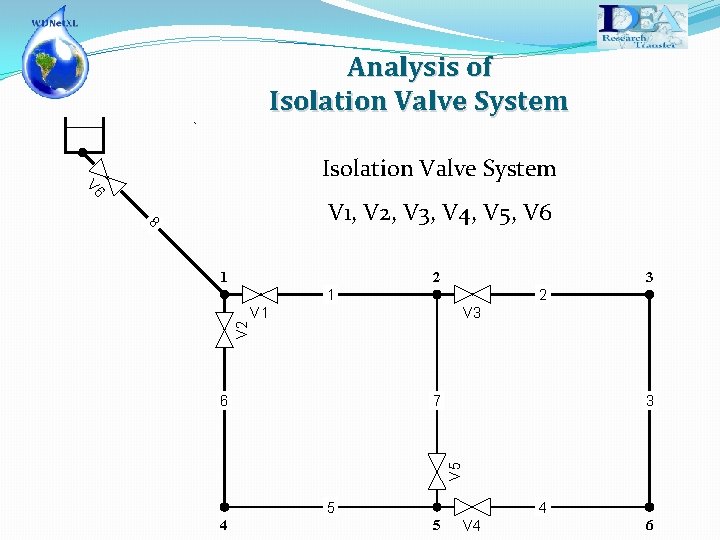
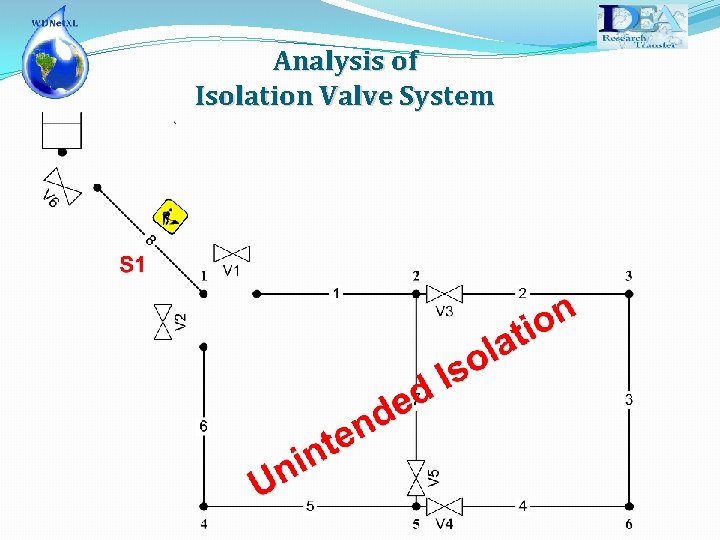
Analysis of Isolation Valve System V 6 8 V 1, V 2, V 3, V 4, V 5, V 6 1 2 3 V 2 1 2 V 1 V 3 7 3 V 5 6 5 4 4 5 V 4 6
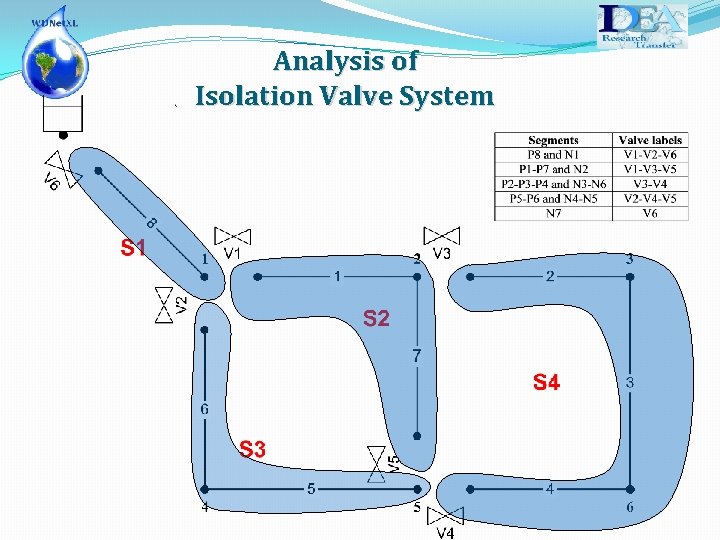
Analysis of Isolation Valve System
Analysis of Isolation Valve System
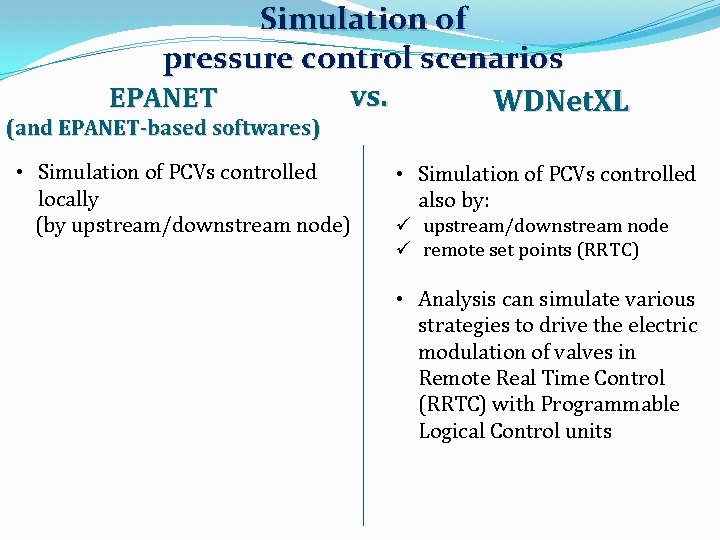
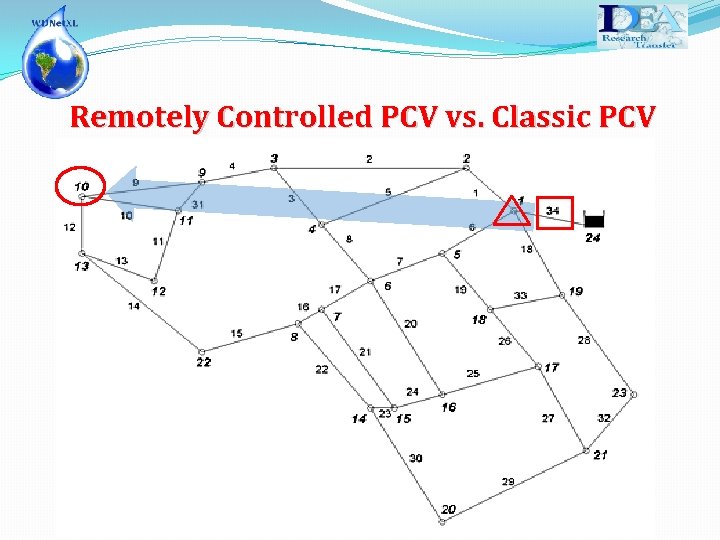
Simulation of pressure control scenarios vs. EPANET WDNet. XL (and EPANET-based softwares) • Simulation of PCVs controlled locally (by upstream/downstream node) • Simulation of PCVs controlled also by: ü upstream/downstream node ü remote set points (RRTC) • Analysis can simulate various strategies to drive the electric modulation of valves in Remote Real Time Control (RRTC) with Programmable Logical Control units
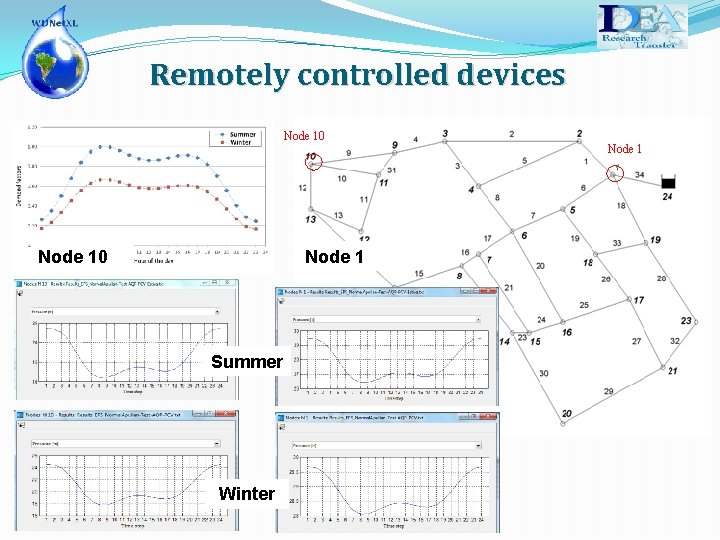
Remotely controlled devices Node 10 Node 1 Summer Winter Node 1
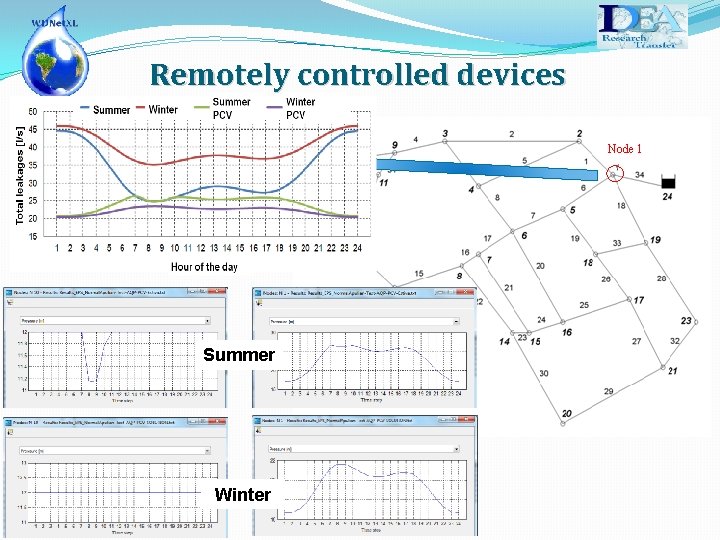
Remotely controlled devices Node 10 Node 1 Summer Winter Node 1
Pressure Control Module
Planning assume instantaneous achieving of pressure target �Need for planning valve positions and controlling nodes which are reliable (i. e. controlling the valve in any state of the water system) �Need for closing some pipes to allow a better functioning of the valves �Need for computing the setting points �Need for assessing the background leakages reduction �Etc. Operative �Need for simulating real-time functioning of valves � Time step for control �Strategy to control the shutter degree �Curve of the valve �Maximum shutter degree �Etc.
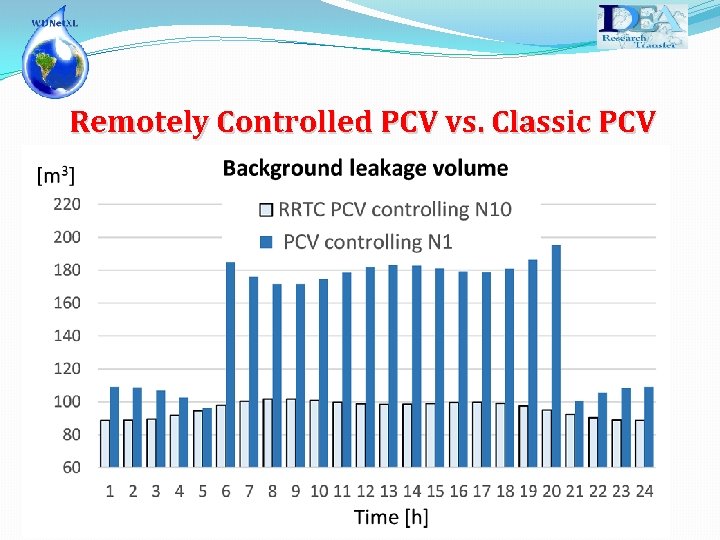
Remotely Controlled PCV vs. Classic PCV
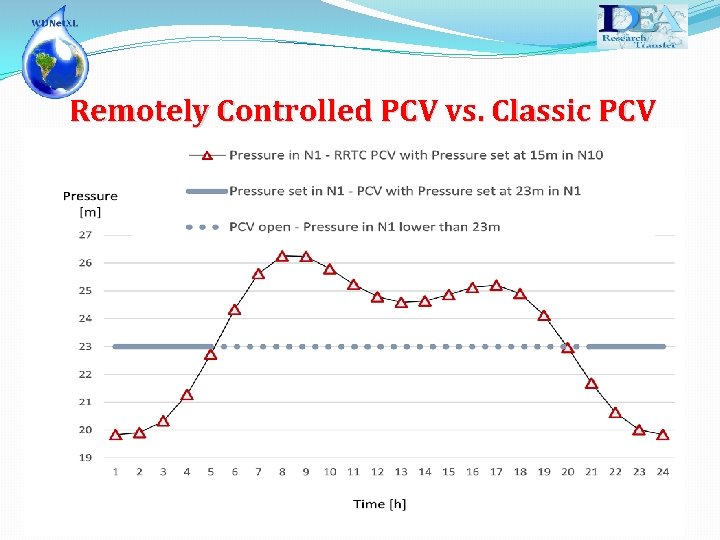
Remotely Controlled PCV vs. Classic PCV
Remotely Controlled PCV vs. Classic PCV
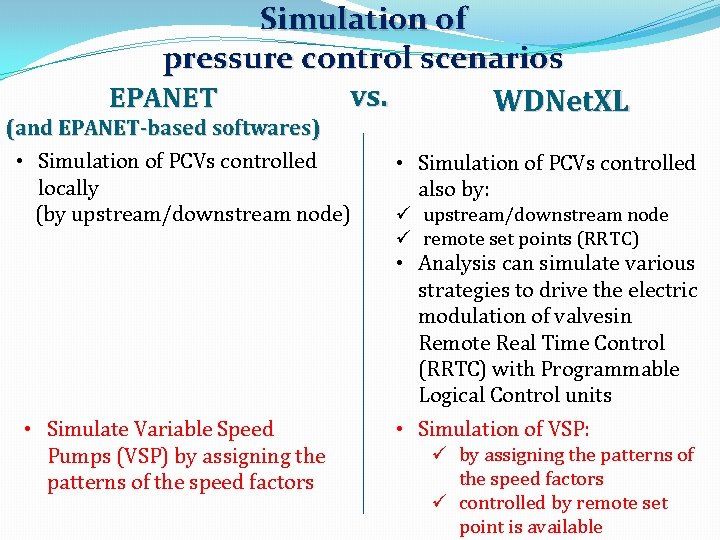
Simulation of pressure control scenarios vs. EPANET WDNet. XL (and EPANET-based softwares) • Simulation of PCVs controlled locally (by upstream/downstream node) • Simulation of PCVs controlled also by: ü upstream/downstream node ü remote set points (RRTC) • Analysis can simulate various strategies to drive the electric modulation of valvesin Remote Real Time Control (RRTC) with Programmable Logical Control units • Simulate Variable Speed Pumps (VSP) by assigning the patterns of the speed factors • Simulation of VSP: ü by assigning the patterns of the speed factors ü controlled by remote set point is available
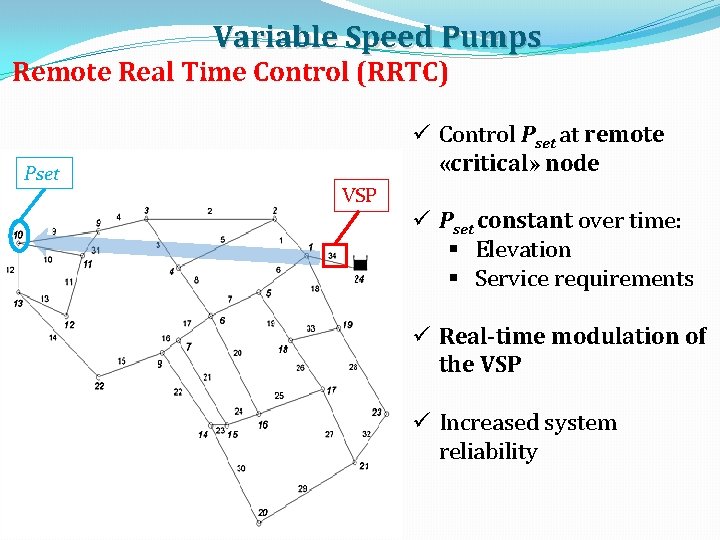
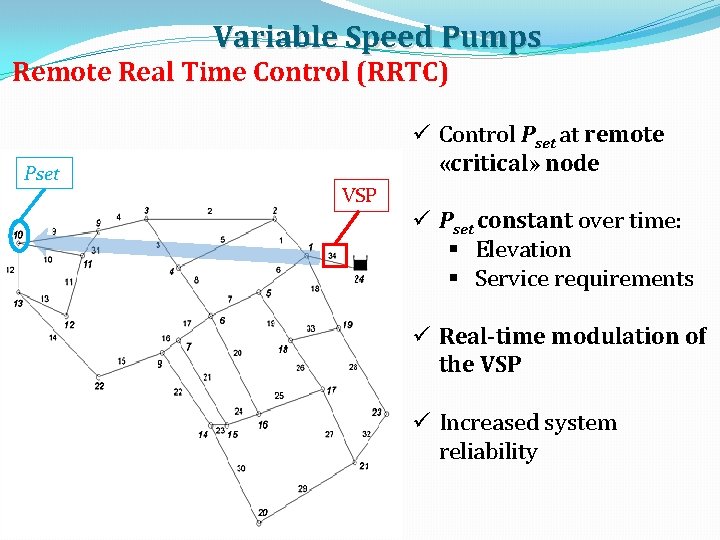
Variable Speed Pumps Remote Real Time Control (RRTC) Pset ü Control Pset at remote «critical» node VSP ü Pset constant over time: § Elevation § Service requirements ü Real-time modulation of the VSP ü Increased system reliability
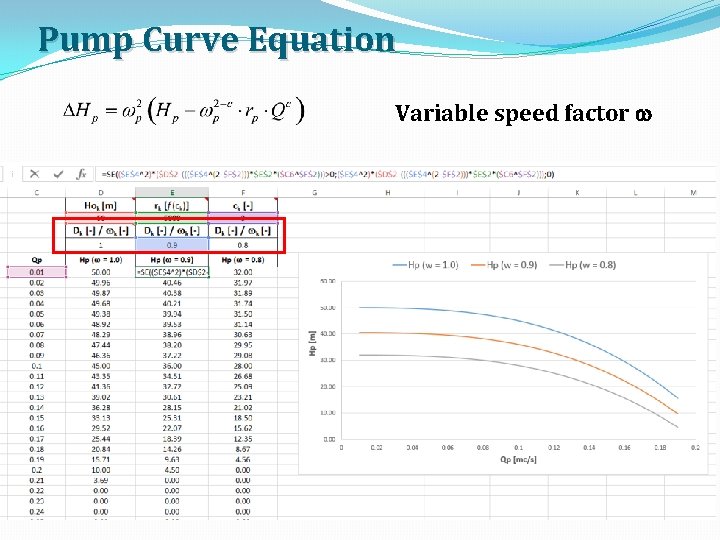
Pump Curve Equation Variable speed factor w
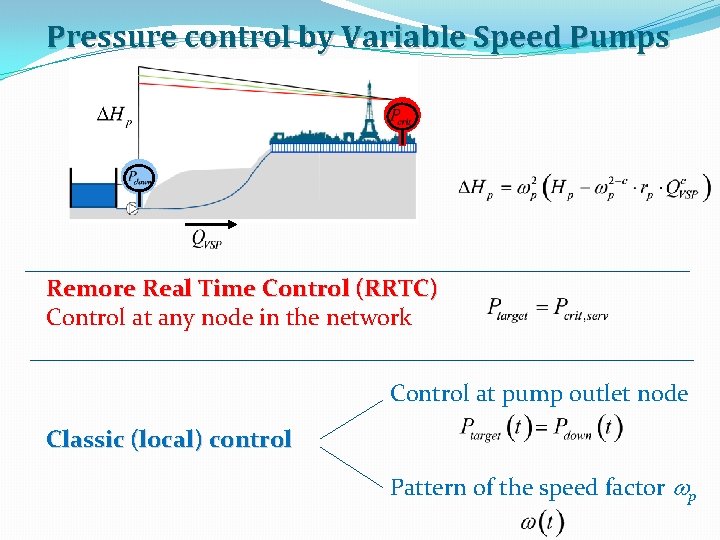
Pressure control by Variable Speed Pumps Remore Real Time Control (RRTC) Control at any node in the network Control at pump outlet node Classic (local) control Pattern of the speed factor wp
Variable Speed Pumps Remote Real Time Control (RRTC) Pset ü Control Pset at remote «critical» node VSP ü Pset constant over time: § Elevation § Service requirements ü Real-time modulation of the VSP ü Increased system reliability
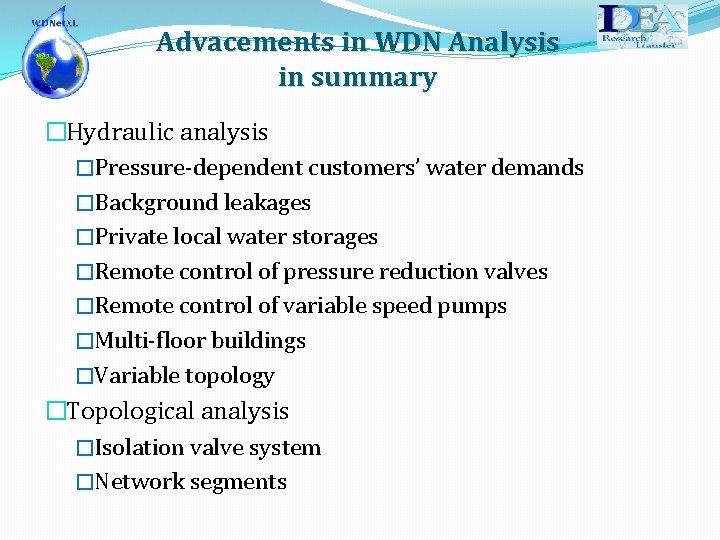
Advacements in WDN Analysis in summary �Hydraulic analysis �Pressure-dependent customers’ water demands �Background leakages �Private local water storages �Remote control of pressure reduction valves �Remote control of variable speed pumps �Multi-floor buildings �Variable topology �Topological analysis �Isolation valve system �Network segments
WDNet. XL Remote assistance www. idea-rt. com
THANK YOU www. idea-rt. com