
Enhanced HPC Approach 2020 Global Protection Cluster Workshop
Enhanced HPC Approach 2020 Global Protection Cluster Workshop 23 May 2019 Bangkok, Thailand
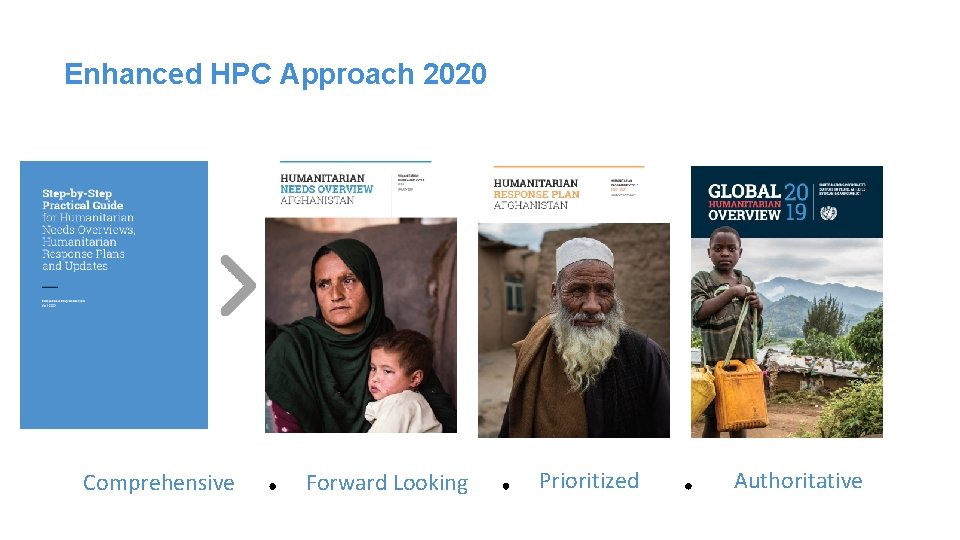
Enhanced HPC Approach 2020 Comprehensive Forward Looking Prioritized Authoritative
What is new for the 2020 HPC? ü Strengthening linkages between HNO and HRP. ü Identification of development-related needs and priorities (economic development, poverty reduction, institutional capacity and infrastructure, good governance, etc. ) ü Increased focus on the inter-sectoral nature of needs and inter-sector response required ü Identifying priority groups and/or geographic areas directly based on the needs analysis, and formulating results-based strategic objectives
What is new for the 2020 HPC? (cont. ) ü Establishing or augmenting monitoring systems that allow for ongoing analysis of changes of the situation and needs together with response achievements ü Prioritizing inclusivity through disaggregation and/or analysis of the differential impacts of the crisis and associated needs for diverse groups of people including communicating with communities ü Forward looking risk analysis, projections and anticipatory actions.
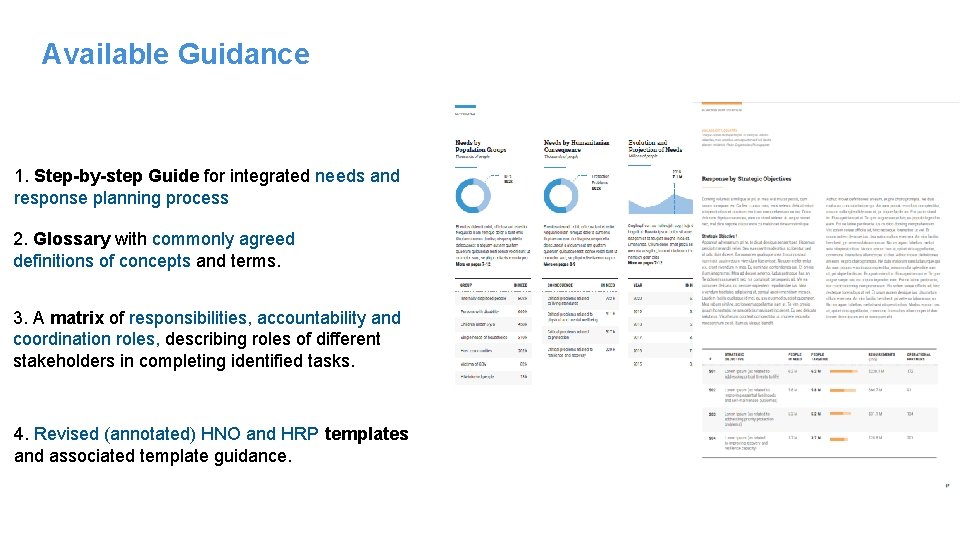
Available Guidance 1. Step-by-step Guide for integrated needs and response planning process 2. Glossary with commonly agreed definitions of concepts and terms. 3. A matrix of responsibilities, accountability and coordination roles, describing roles of different stakeholders in completing identified tasks. 4. Revised (annotated) HNO and HRP templates and associated template guidance.
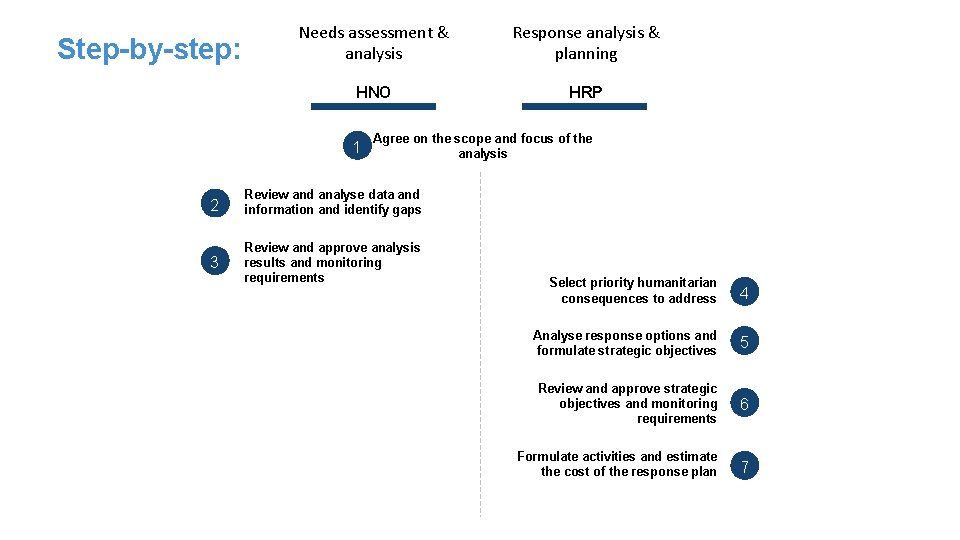
Step-by-step: Needs assessment & analysis Response analysis & planning HNO HRP 1 Agree on the scope and focus of the analysis 2 Review and analyse data and information and identify gaps 3 Review and approve analysis results and monitoring requirements Select priority humanitarian consequences to address 4 Analyse response options and formulate strategic objectives 5 Review and approve strategic objectives and monitoring requirements 6 Formulate activities and estimate the cost of the response plan 7
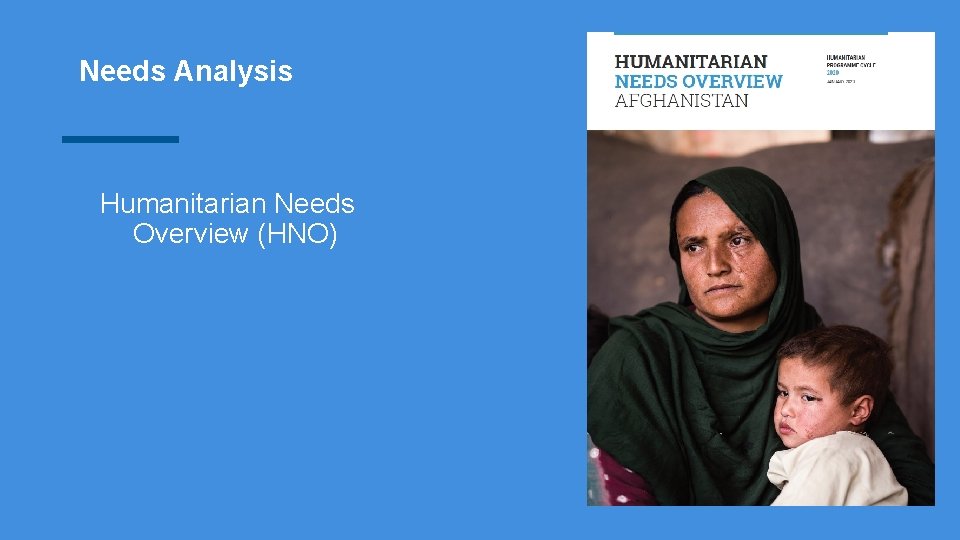
Needs Analysis Humanitarian Needs Overview (HNO)
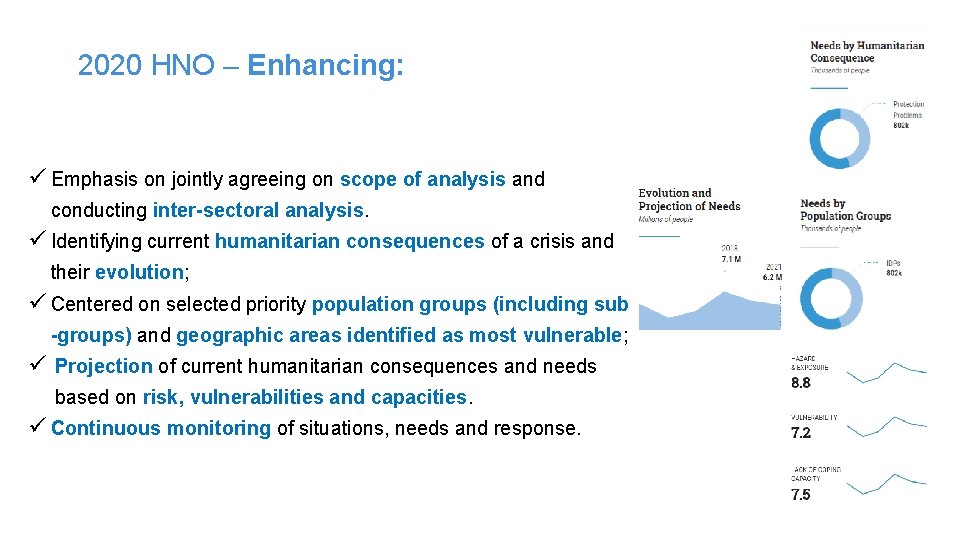
2020 HNO – Enhancing: ü Emphasis on jointly agreeing on scope of analysis and conducting inter-sectoral analysis. ü Identifying current humanitarian consequences of a crisis and their evolution; ü Centered on selected priority population groups (including sub -groups) and geographic areas identified as most vulnerable; ü Projection of current humanitarian consequences and needs based on risk, vulnerabilities and capacities. ü Continuous monitoring of situations, needs and response.
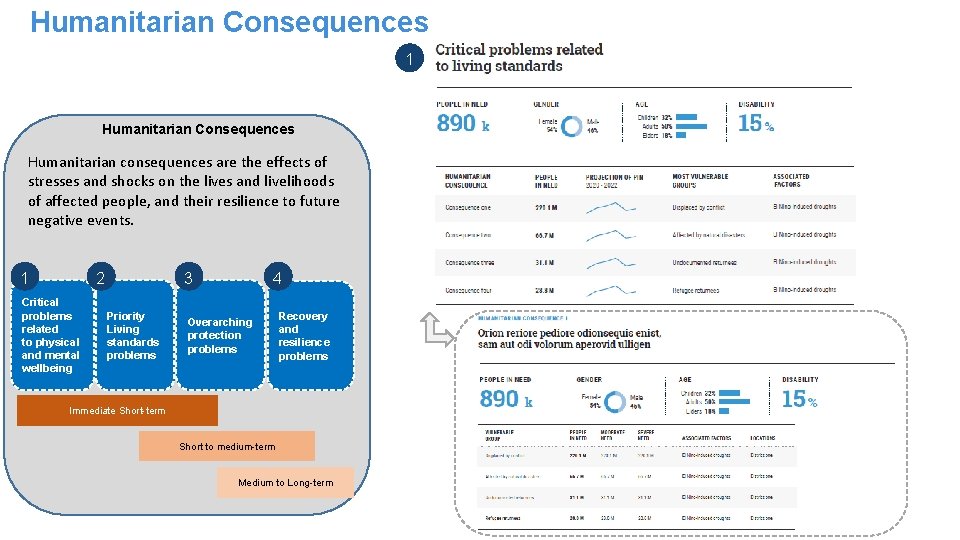
Humanitarian Consequences 1 Humanitarian Consequences Humanitarian consequences are the effects of stresses and shocks on the lives and livelihoods of affected people, and their resilience to future negative events. 1 2 Critical problems related to physical and mental wellbeing 3 Priority Living standards problems 4 Overarching protection problems Recovery and resilience problems Immediate Short-term Short to medium-term Medium to Long-term
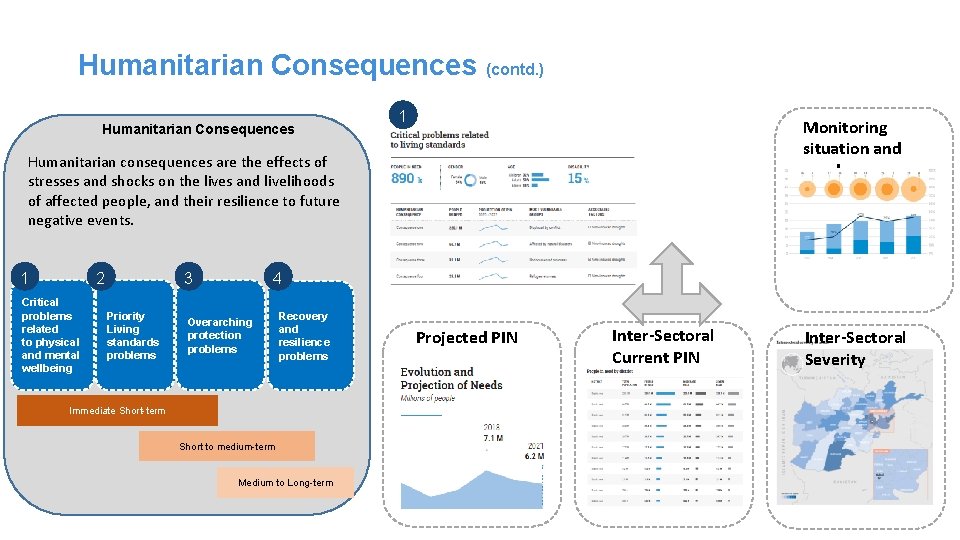
Humanitarian Consequences (contd. ) Humanitarian Consequences 1 Monitoring situation and needs Humanitarian consequences are the effects of stresses and shocks on the lives and livelihoods of affected people, and their resilience to future negative events. 1 2 Critical problems related to physical and mental wellbeing 3 Priority Living standards problems 4 Overarching protection problems Recovery and resilience problems Immediate Short-term Short to medium-term Medium to Long-term Projected PIN Inter-Sectoral Current PIN Inter-Sectoral Severity
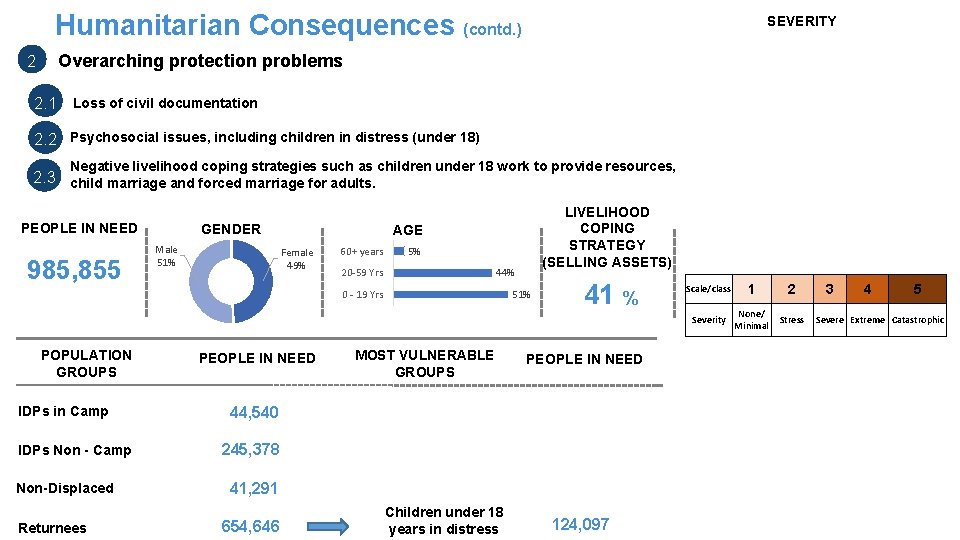
Humanitarian Consequences (contd. ) 2 SEVERITY Overarching protection problems 2. 1 Loss of civil documentation 2. 2 Psychosocial issues, including children in distress (under 18) Negative livelihood coping strategies such as children under 18 work to provide resources, 2. 3 child marriage and forced marriage for adults. PEOPLE IN NEED 985, 855 GENDER Male 51% AGE Female 49% 60+ years 5% 44% 20 -59 Yrs 0 - 19 Yrs POPULATION GROUPS IDPs in Camp IDPs Non - Camp Non-Displaced Returnees LIVELIHOOD COPING STRATEGY (SELLING ASSETS) PEOPLE IN NEED 51% MOST VULNERABLE GROUPS 41 % PEOPLE IN NEED 44, 540 245, 378 41, 291 654, 646 Children under 18 years in distress 124, 097 Scale/class 1 2 Severity None/ Minimal Stress 3 4 5 Severe Extreme Catastrophic
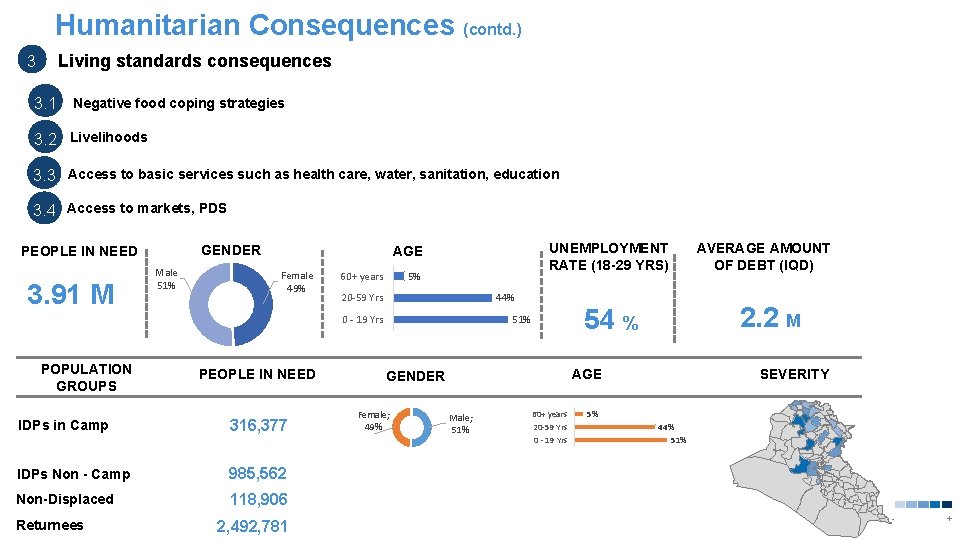
Humanitarian Consequences (contd. ) 3 Living standards consequences 3. 1 Negative food coping strategies 3. 2 Livelihoods 3. 3 Access to basic services such as health care, water, sanitation, education 3. 4 Access to markets, PDS GENDER PEOPLE IN NEED 3. 91 M Male 51% UNEMPLOYMENT RATE (18 -29 YRS) AGE Female 49% 60+ years 5% 44% 20 -59 Yrs 0 - 19 Yrs POPULATION GROUPS PEOPLE IN NEED IDPs in Camp 316, 377 IDPs Non - Camp 985, 562 Non-Displaced 118, 906 Returnees 2, 492, 781 AGE GENDER Female; 49% 2. 2 M 54 % 51% Male; 51% 60+ years 20 -59 Yrs 0 - 19 Yrs AVERAGE AMOUNT OF DEBT (IQD) SEVERITY 5% 44% 51% - +
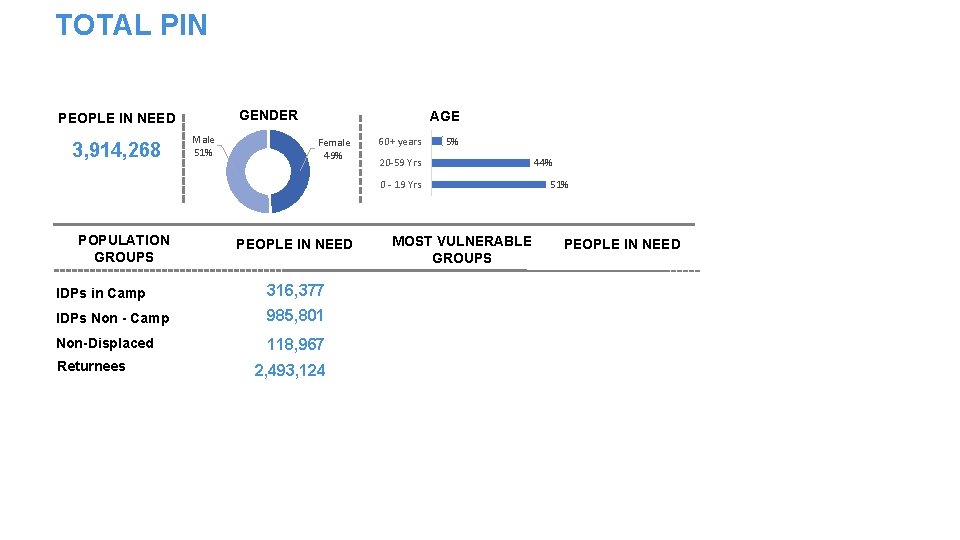
TOTAL PIN GENDER PEOPLE IN NEED 3, 914, 268 Male 51% AGE Female 49% 60+ years 5% 20 -59 Yrs 0 - 19 Yrs POPULATION GROUPS PEOPLE IN NEED IDPs in Camp 316, 377 IDPs Non - Camp 985, 801 Non-Displaced 118, 967 Returnees 2, 493, 124 MOST VULNERABLE GROUPS 44% 51% PEOPLE IN NEED
Response Analysis & Planning Humanitarian Response Plan (HRP)
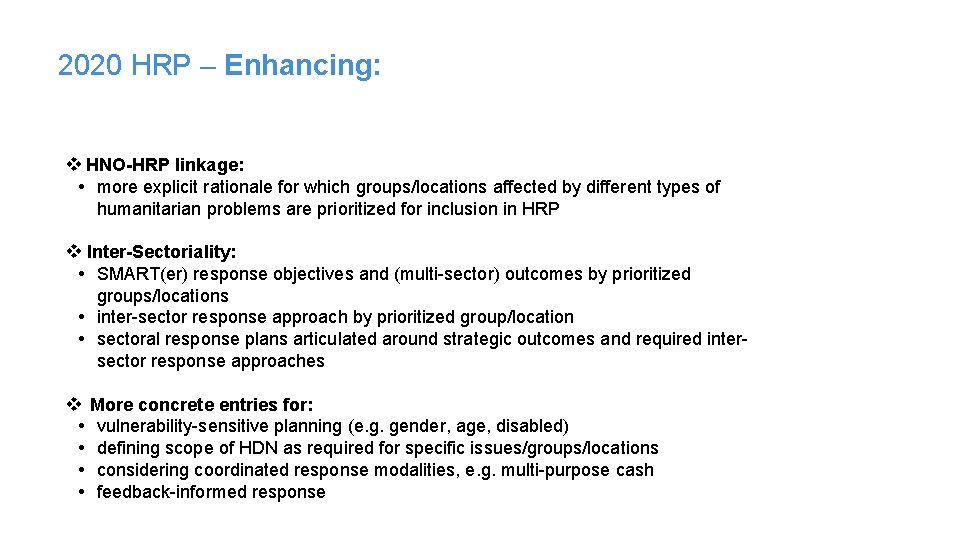
2020 HRP – Enhancing: v HNO-HRP linkage: • more explicit rationale for which groups/locations affected by different types of humanitarian problems are prioritized for inclusion in HRP v Inter-Sectoriality: • SMART(er) response objectives and (multi-sector) outcomes by prioritized groups/locations • inter-sector response approach by prioritized group/location • sectoral response plans articulated around strategic outcomes and required intersector response approaches v More concrete entries for: • vulnerability-sensitive planning (e. g. gender, age, disabled) • defining scope of HDN as required for specific issues/groups/locations • considering coordinated response modalities, e. g. multi-purpose cash • feedback-informed response
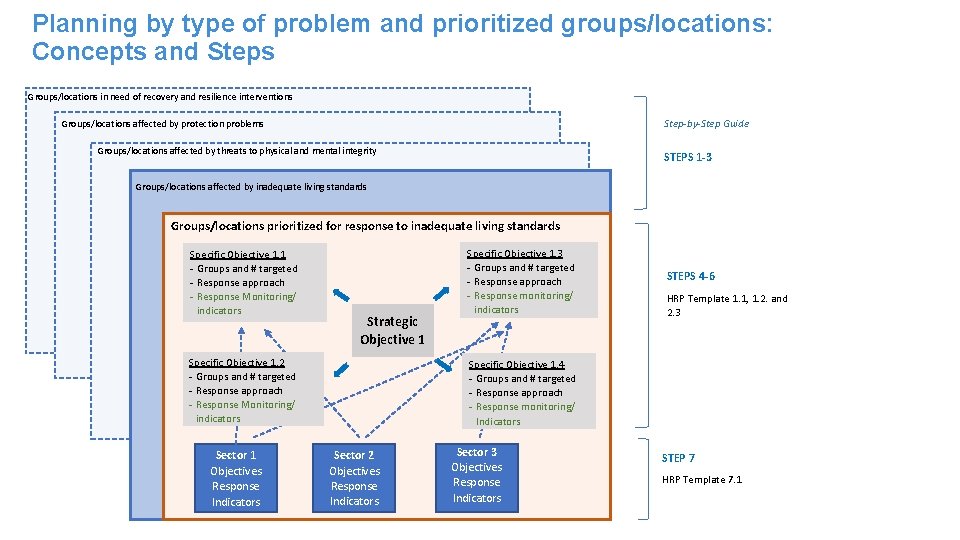
Planning by type of problem and prioritized groups/locations: Concepts and Steps Groups/locations in need of recovery and resilience interventions Step-by-Step Guide Groups/locations affected by protection problems Groups/locations affected by threats to physical and mental integrity STEPS 1 -3 Groups/locations affected by inadequate living standards Groups/locations prioritized for response to inadequate living standards Specific Objective 1. 1 - Groups and # targeted - Response approach - Response Monitoring/ indicators Strategic Objective 1 Specific Objective 1. 2 - Groups and # targeted - Response approach - Response Monitoring/ indicators Sector 1 Objectives Response Indicators Specific Objective 1. 3 - Groups and # targeted - Response approach - Response monitoring/ indicators STEPS 4 -6 HRP Template 1. 1, 1. 2. and 2. 3 Specific Objective 1. 4 - Groups and # targeted - Response approach - Response monitoring/ Indicators Sector 2 Objectives Response Indicators Sector 3 Objectives Response Indicators STEP 7 HRP Template 7. 1
Coordination and Facilitation Increased focus on inter-sector response analysis to: • define boundaries for response to most affected locations/groups, considering: severity, magnitude, specific vulnerabilities and irreversibility • link analysis of direct drivers of need, expressed community priorities and feasibility to inform multi-sector response objectives and approach • recommend adjustments to current response patterns (Possible) Roles and Facilitation: • dedicated task forces (members of ISG + ICCs at hub level? ) for each prioritized group/location • members with an analytical and programming profile • task forces (approx. 2 weeks) . validation workshop sector planning

Continuous Monitoring (Needs & Response)
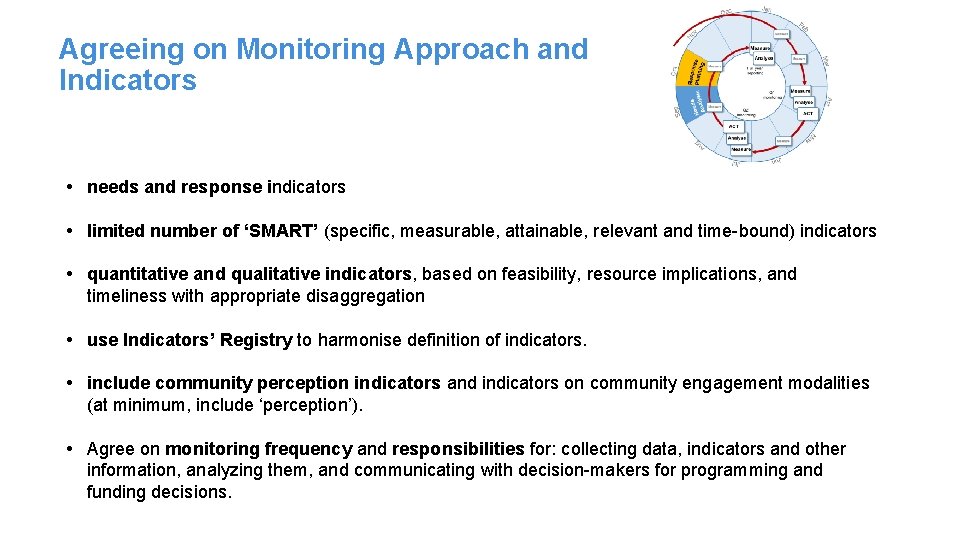
Agreeing on Monitoring Approach and Indicators • needs and response indicators • limited number of ‘SMART’ (specific, measurable, attainable, relevant and time-bound) indicators • quantitative and qualitative indicators, based on feasibility, resource implications, and timeliness with appropriate disaggregation • use Indicators’ Registry to harmonise definition of indicators. • include community perception indicators and indicators on community engagement modalities (at minimum, include ‘perception’). • Agree on monitoring frequency and responsibilities for: collecting data, indicators and other information, analyzing them, and communicating with decision-makers for programming and funding decisions.
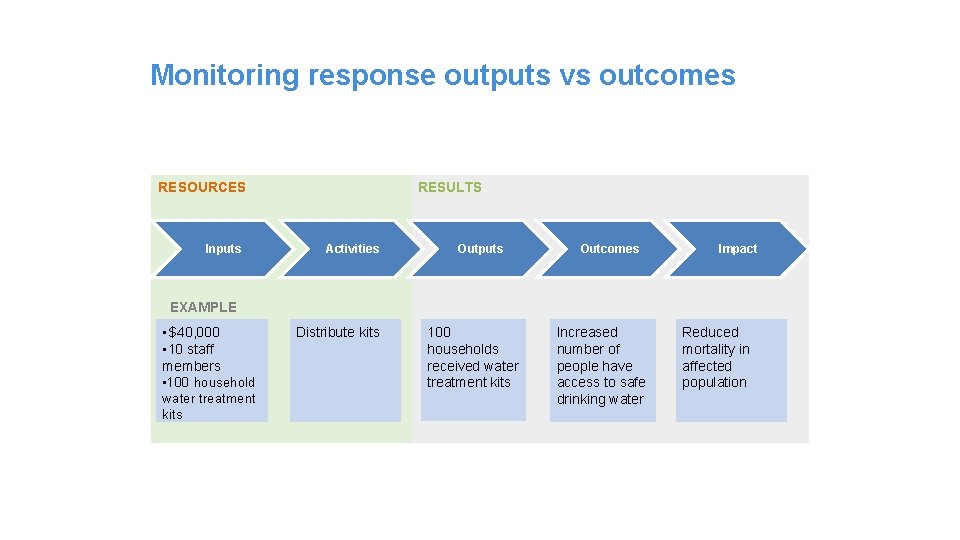
Monitoring response outputs vs outcomes RESOURCES Inputs RESULTS Activities Outputs Outcomes Impact EXAMPLE • $40, 000 • 10 staff members • 100 household water treatment kits Distribute kits 100 households received water treatment kits Increased number of people have access to safe drinking water Reduced mortality in affected population
- Slides: 20