
Enhanced eye care in Wales A new service
- Slides: 42
Enhanced eye care in Wales – A new service
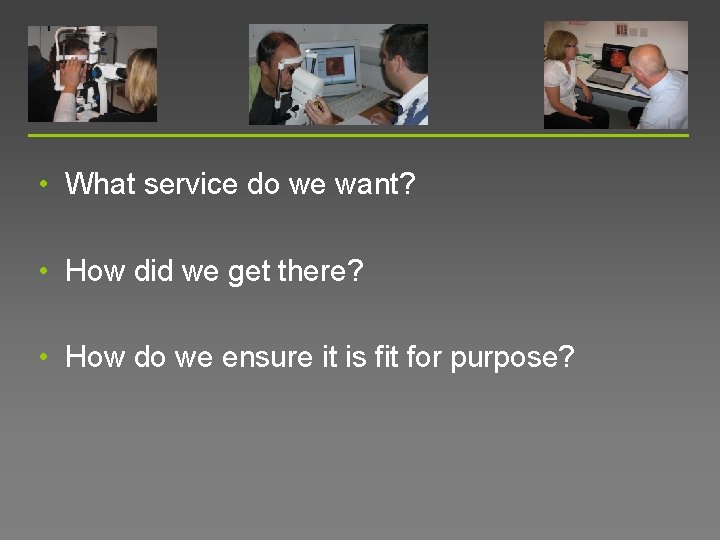
• What service do we want? • How did we get there? • How do we ensure it is fit for purpose?
What service do we want? • Appropriate, efficient, fit for purpose community eye care service for patients in Wales • Accessible for those who need it • Learn from previous eye care services – Updating and improving for patients
How did we get there?
Started with WECI Welsh Eye Care Initiative (WECI) • Welsh Eye Health Examination (WEHE) • Primary Eyecare Acute Referral Scheme (PEARS) • Welsh Low Vision Service (WLVS)
Purpose of WECI • Detect eye problems in individuals at high risk • Enable early assessment of acute eye problems • Provide an accessible low vision service
Perceived advantages • Providing services close to peoples’ homes • Reduced demand on GP and hospital resources • More patients managed in primary care • Better quality of referral from primary to secondary care • Using facilities and personnel which were underutilised
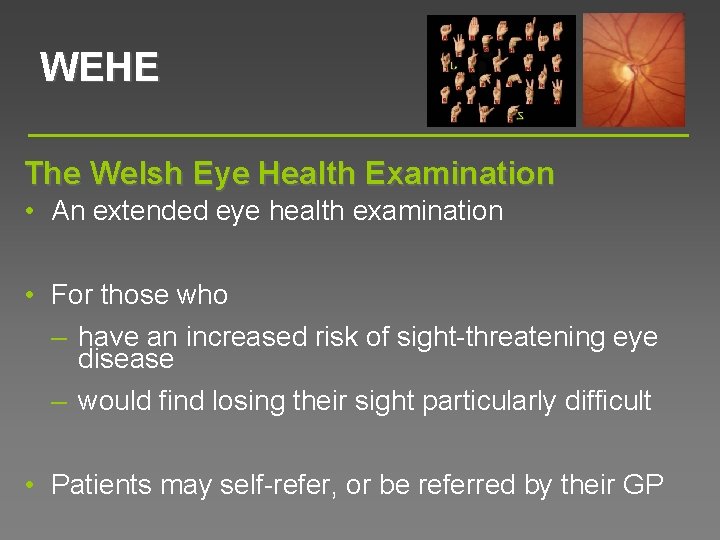
WEHE The Welsh Eye Health Examination • An extended eye health examination • For those who – have an increased risk of sight-threatening eye disease – would find losing their sight particularly difficult • Patients may self-refer, or be referred by their GP
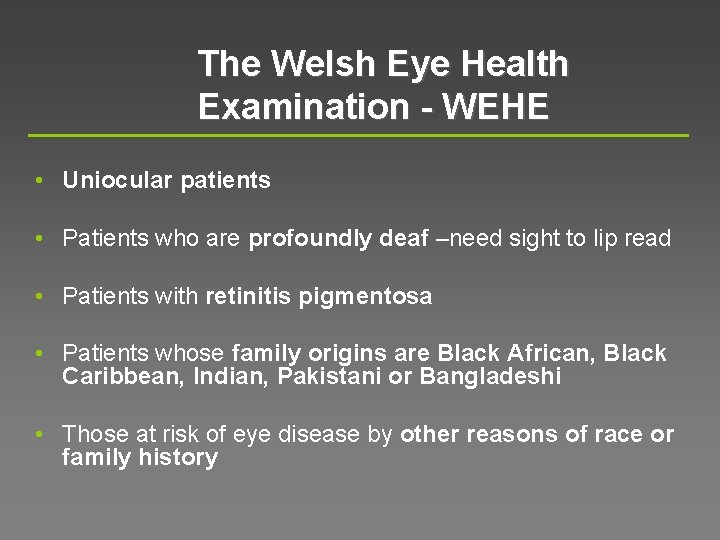
The Welsh Eye Health Examination - WEHE • Uniocular patients • Patients who are profoundly deaf –need sight to lip read • Patients with retinitis pigmentosa • Patients whose family origins are Black African, Black Caribbean, Indian, Pakistani or Bangladeshi • Those at risk of eye disease by other reasons of race or family history
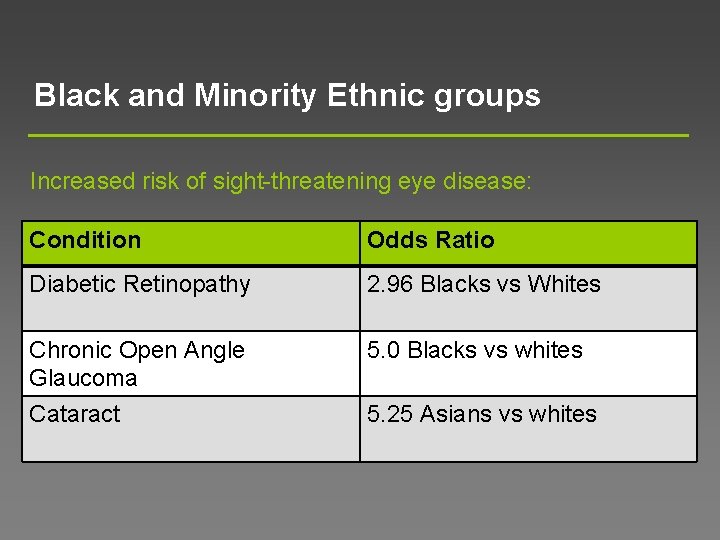
Black and Minority Ethnic groups Increased risk of sight-threatening eye disease: Condition Odds Ratio Diabetic Retinopathy 2. 96 Blacks vs Whites Chronic Open Angle Glaucoma 5. 0 Blacks vs whites Cataract 5. 25 Asians vs whites
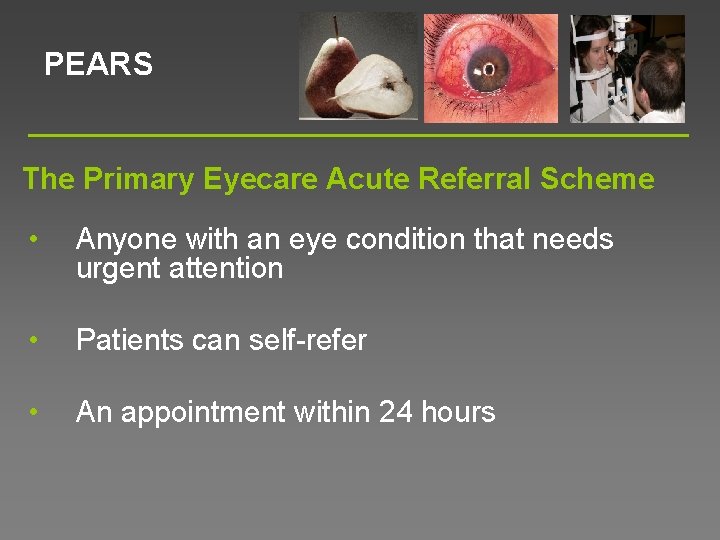
PEARS The Primary Eyecare Acute Referral Scheme • Anyone with an eye condition that needs urgent attention • Patients can self-refer • An appointment within 24 hours
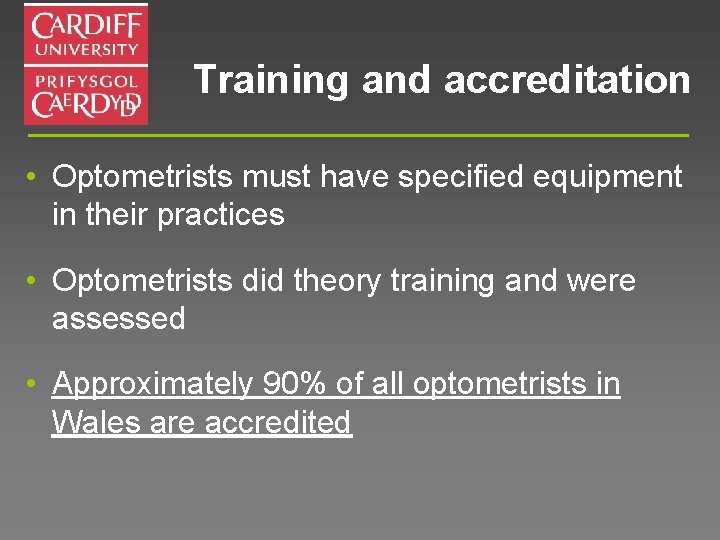
Training and accreditation • Optometrists must have specified equipment in their practices • Optometrists did theory training and were assessed • Approximately 90% of all optometrists in Wales are accredited
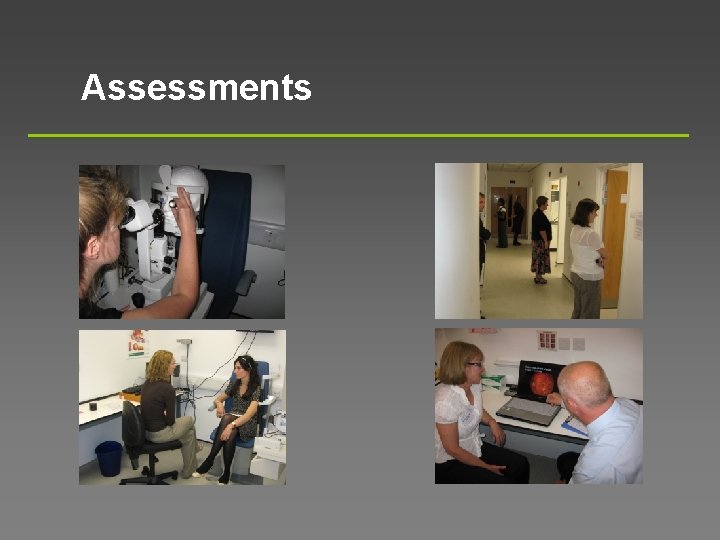
Assessments
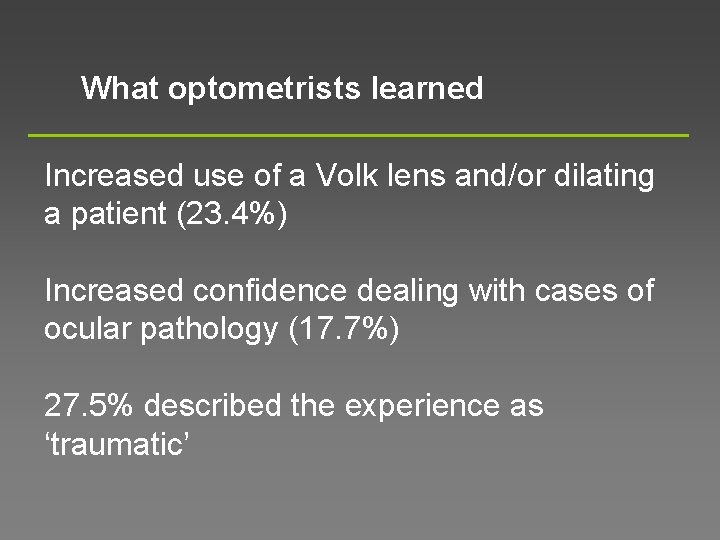
What optometrists learned Increased use of a Volk lens and/or dilating a patient (23. 4%) Increased confidence dealing with cases of ocular pathology (17. 7%) 27. 5% described the experience as ‘traumatic’
WEHE & PEARS Service Evaluation
Evaluation • An evaluation was carried out • Customised records cards were filled in by optometrists • Referrals scrutinised
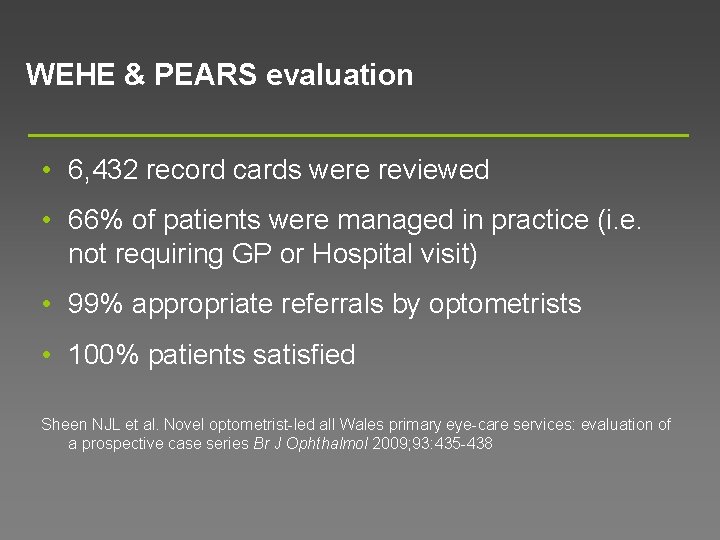
WEHE & PEARS evaluation • 6, 432 record cards were reviewed • 66% of patients were managed in practice (i. e. not requiring GP or Hospital visit) • 99% appropriate referrals by optometrists • 100% patients satisfied Sheen NJL et al. Novel optometrist-led all Wales primary eye-care services: evaluation of a prospective case series Br J Ophthalmol 2009; 93: 435 -438
Welsh Low Vision Service (WLVS)
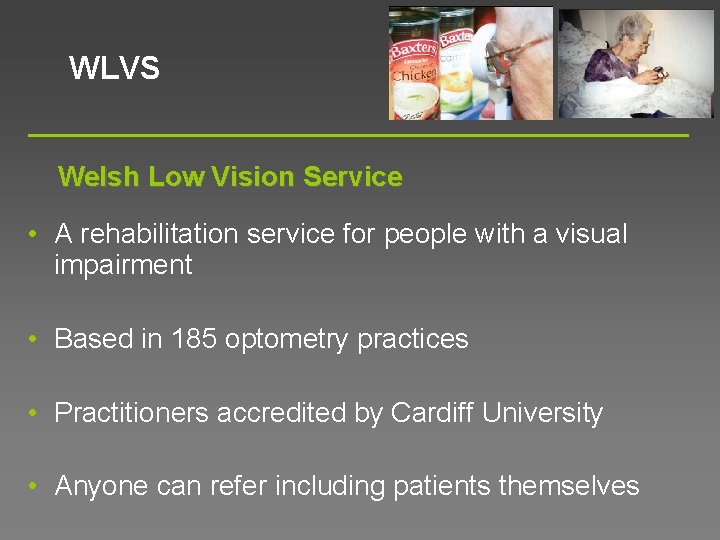
WLVS Welsh Low Vision Service • A rehabilitation service for people with a visual impairment • Based in 185 optometry practices • Practitioners accredited by Cardiff University • Anyone can refer including patients themselves
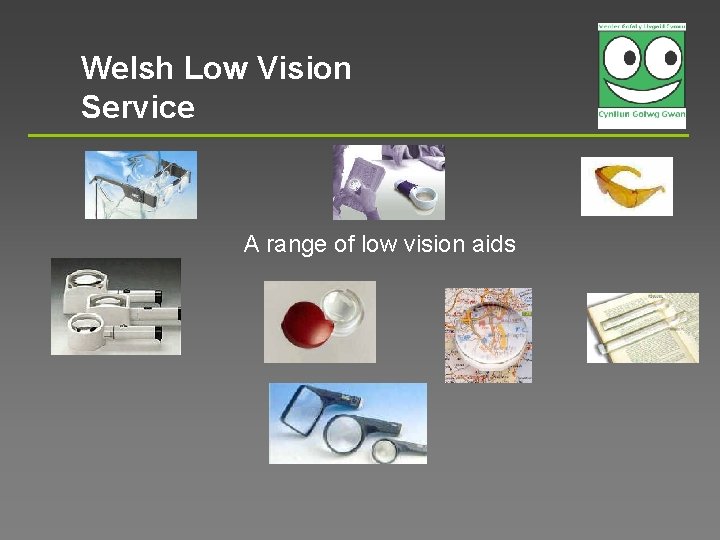
Welsh Low Vision Service A range of low vision aids
Welsh Low Vision Service Holistic • Multi-disciplinary sessions during training • Training for rehabilitation workers and specialist teachers
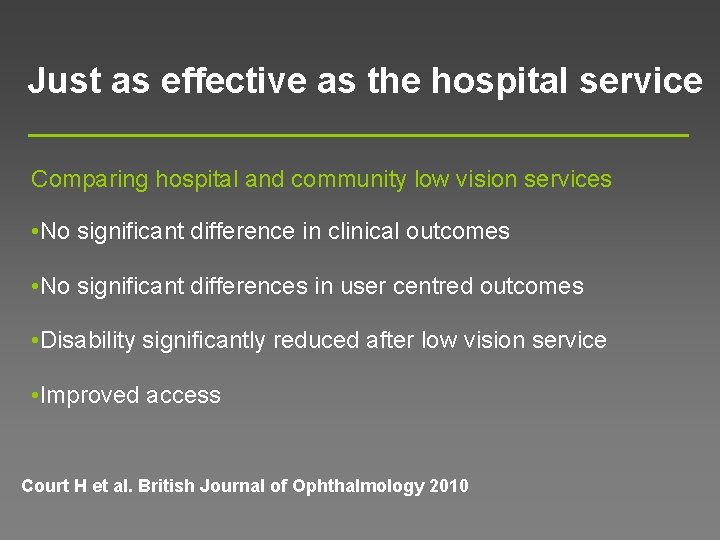
Just as effective as the hospital service Comparing hospital and community low vision services • No significant difference in clinical outcomes • No significant differences in user centred outcomes • Disability significantly reduced after low vision service • Improved access Court H et al. British Journal of Ophthalmology 2010
Proven services that are effective • Low Vision • PEARS/ WEHE Why change?
Changes to PEARS/ WEHE needed • There are categories of patients at risk of eye disease that were not covered • Ethnicity categories not well defined • PEARS/ WEHE/ WECI can be confusing • No permanency to services
Changes to PEARS/ WEHE needed • Clinical guidelines had changed • Focus On Ophthalmology • Potential to alleviate hospital eye service capacity issues
What has changed • Updated – Name of services – Structure – further categories – Clinical guidelines – Referral forms – Service guidelines
Name of services • Welsh Eyecare Initiative now becomes Wales Eye Care Service (WECS) • PEARS/ WEHE are now amalgamated to single service Eye Health Examinations Wales (EHEW) • Welsh Low Vision Service now becomes Low Vision Service Wales
Eye Health Examination Wales (EHEW) • Introduces new categories for: – referral by DRSSW – monitoring dry AMD yearly – cataract referral refinement
Eye Health Examination Wales (EHEW) • Other improvements: – Reporting of ethnicity and clarification of ethnicity categories – ONS Census linked
Eye Health Examination Wales (EHEW) • Guidelines for referrals, emphasis on: – Optoms to repeat Intra-ocular pressure readings with Applanation tonometry – Optoms to repeat visual field examinations
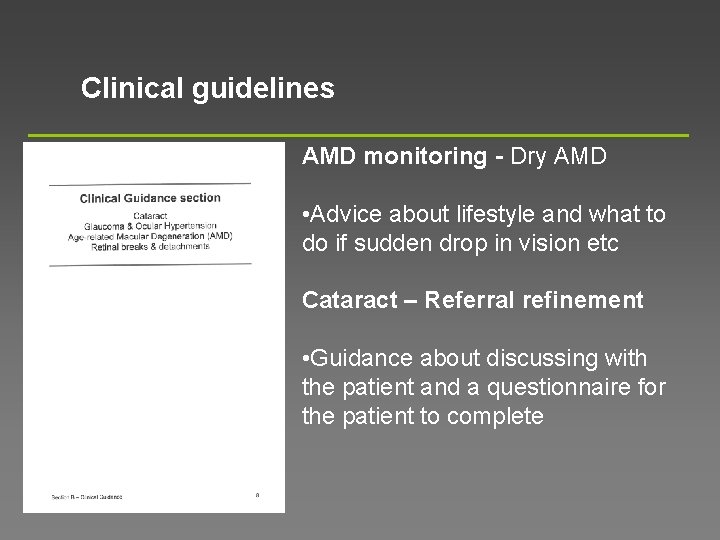
Clinical guidelines AMD monitoring - Dry AMD • Advice about lifestyle and what to do if sudden drop in vision etc Cataract – Referral refinement • Guidance about discussing with the patient and a questionnaire for the patient to complete
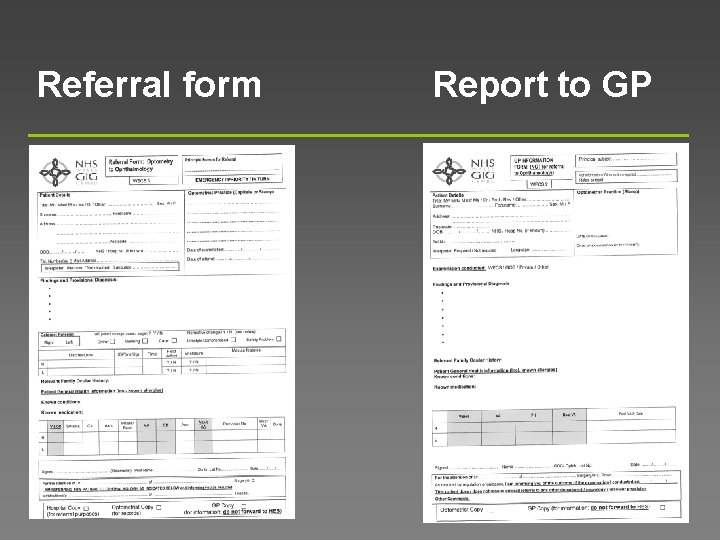
Referral and report forms • New referral to ophthalmology form – Paper and electronic • New report to GP form – Paper and electronic
Referral form Report to GP
EHEW How do we ensure it stays fit for purpose?
Evaluation and Audit • Service guidelines and new forms make it easier • Regular audit • Evaluation of referrals • Findings from audits will feed into training
Training • Benefits gained should outweigh cost • Training programmes should focus on evidence based practise and should always display strong links to desired outcomes (Mays 2004) • We need to ensure it has an positive effect on behavior
Training – peer review • Peer review as a vehicle for communicating results of audits and changes to service • Cases used to embed learning outcomes for optometrist practitioners • Discussing cases makes it ‘real’ • Evaluate impact that peer review has
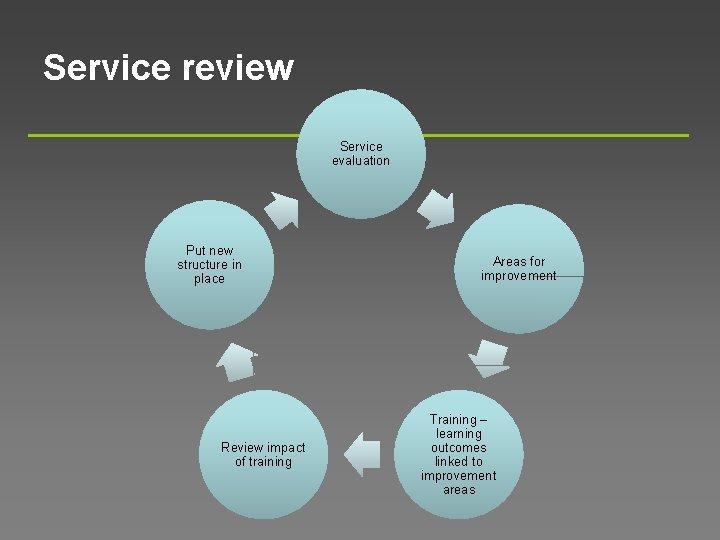
Service review Service evaluation Put new structure in place Review impact of training Areas for improvement Training – learning outcomes linked to improvement areas
Conclusions • We seek to have the best service possible for those patients who need it most • We will continue to evolve the service by evidence based evaluation and training • We believe that we have a service that will be fit for purpose
Ensuring changes are communicated • GPs • Ophthalmologists • Third sector organizations • Other healthcare workers • Patients!
Without whom. . • WG- Richard Roberts & Sarah O’Sullivan-Adams • OW – Sali Davis & Mike George • WOC – Ian Jones & committee • WOPEC – Barbara Ryan • Optometrists in Wales
Thank you Questions?