
ENHANCED ENERGETIC NEUTRAL ATOM IMAGING Earl Scime West
- Slides: 20
ENHANCED ENERGETIC NEUTRAL ATOM IMAGING Earl Scime West Virginia University Active Experiments in Space Meeting September 2017
EVOLUTION OF AN ACTIVE SPACE EXPERIMENT CONCEPT 1. Scientific Questions Requiring Active Space Experiments Wave interactions with trapped energetic electron populations: Radiation belts Ionospheric-Magnetospheric mapping: Inner magnetospheric boundary What about the rest of the magnetosphere? Spatially resolved energetic neutral imaging? 2. Key Geocoronal Properties 3. Neutral Atom Imaging Essentials 4. Enhancement of Neutral Density 5. Science Goals
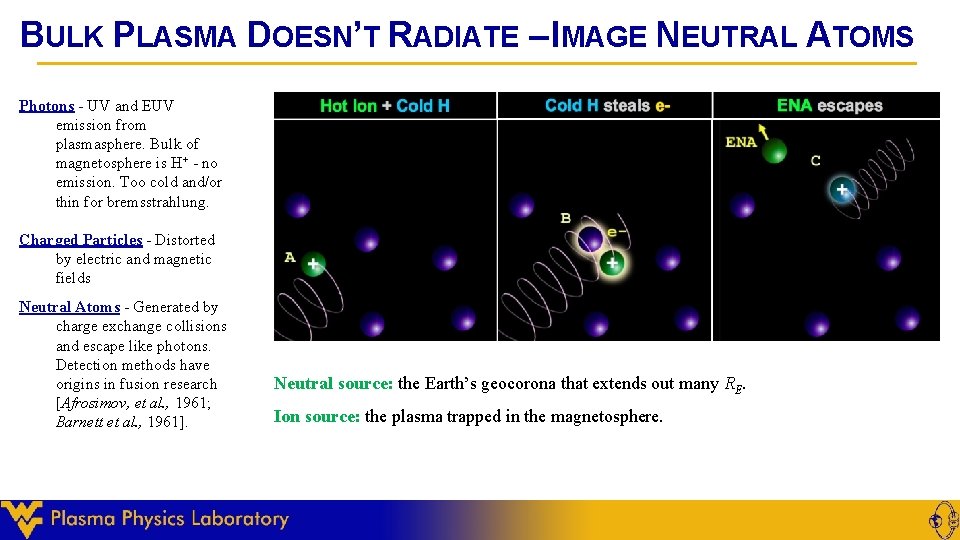
BULK PLASMA DOESN’T RADIATE – IMAGE NEUTRAL ATOMS Photons - UV and EUV emission from plasmasphere. Bulk of magnetosphere is H+ - no emission. Too cold and/or thin for bremsstrahlung. Charged Particles - Distorted by electric and magnetic fields Neutral Atoms - Generated by charge exchange collisions and escape like photons. Detection methods have origins in fusion research [Afrosimov, et al. , 1961; Barnett et al. , 1961]. Neutral source: the Earth’s geocorona that extends out many RE. Ion source: the plasma trapped in the magnetosphere.
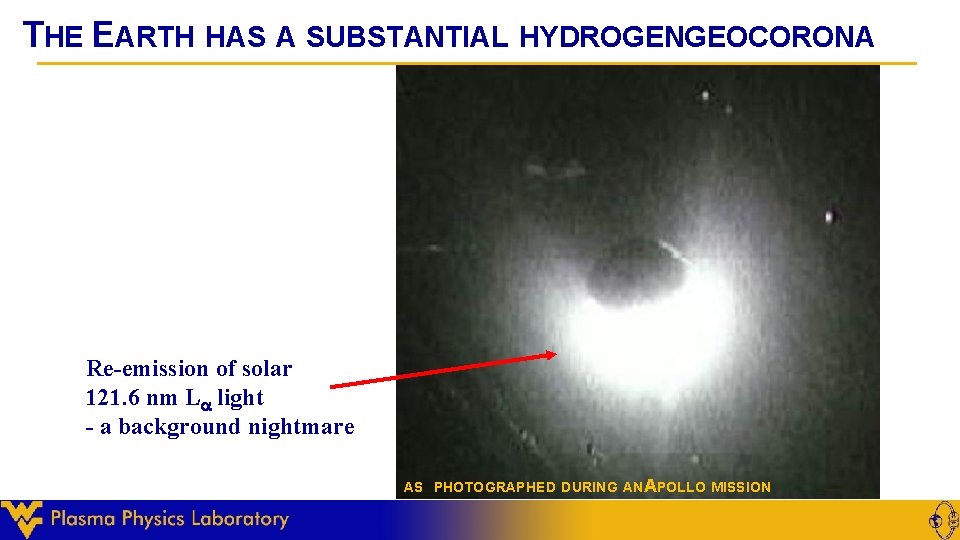
THE EARTH HAS A SUBSTANTIAL HYDROGENGEOCORONA Re-emission of solar 121. 6 nm La light - a background nightmare AS PHOTOGRAPHED DURING ANAPOLLO MISSION
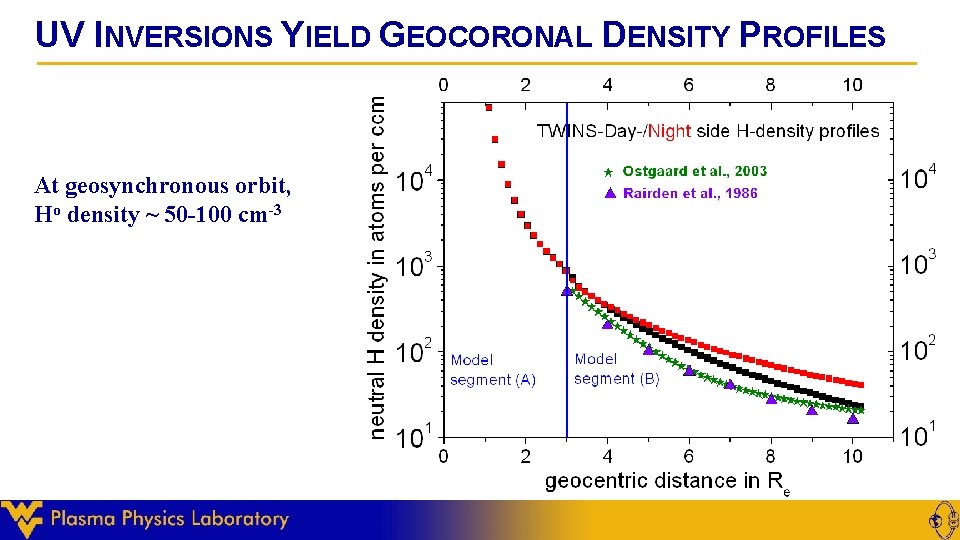
UV INVERSIONS YIELD GEOCORONAL DENSITY PROFILES At geosynchronous orbit, Ho density ~ 50 -100 cm-3
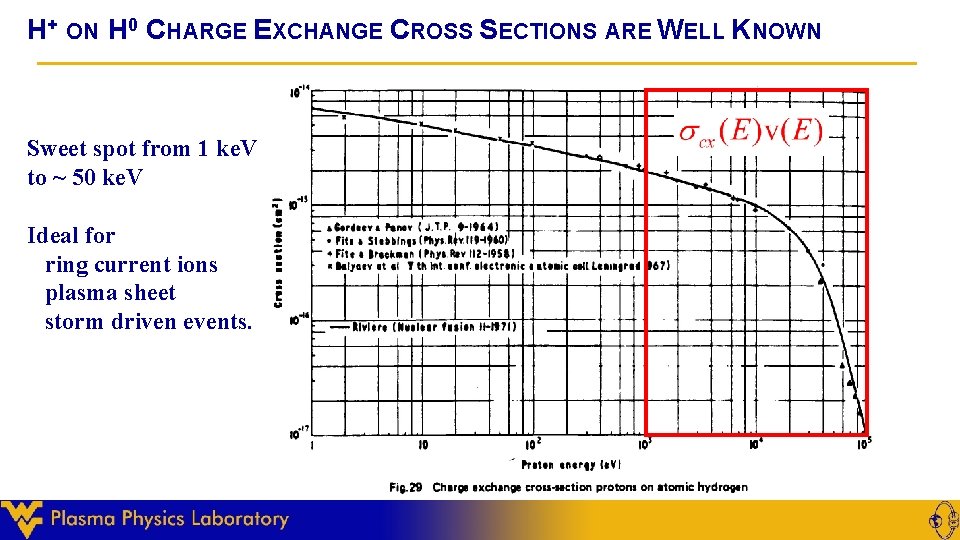
H+ ON H 0 CHARGE EXCHANGE CROSS SECTIONS ARE WELL KNOWN Sweet spot from 1 ke. V to ~ 50 ke. V Ideal for ring current ions plasma sheet storm driven events.
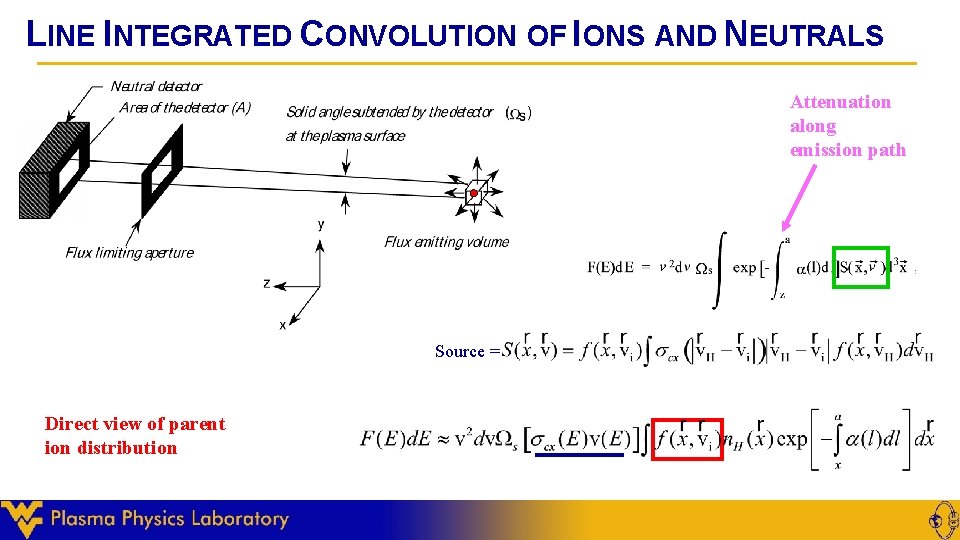
LINE INTEGRATED CONVOLUTION OF IONS AND NEUTRALS Attenuation along emission path Source = Direct view of parent ion distribution
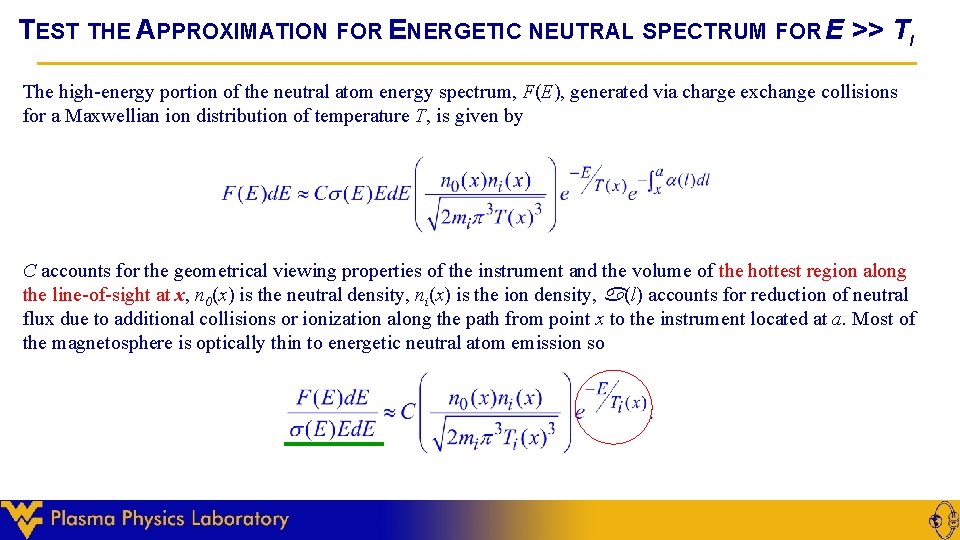
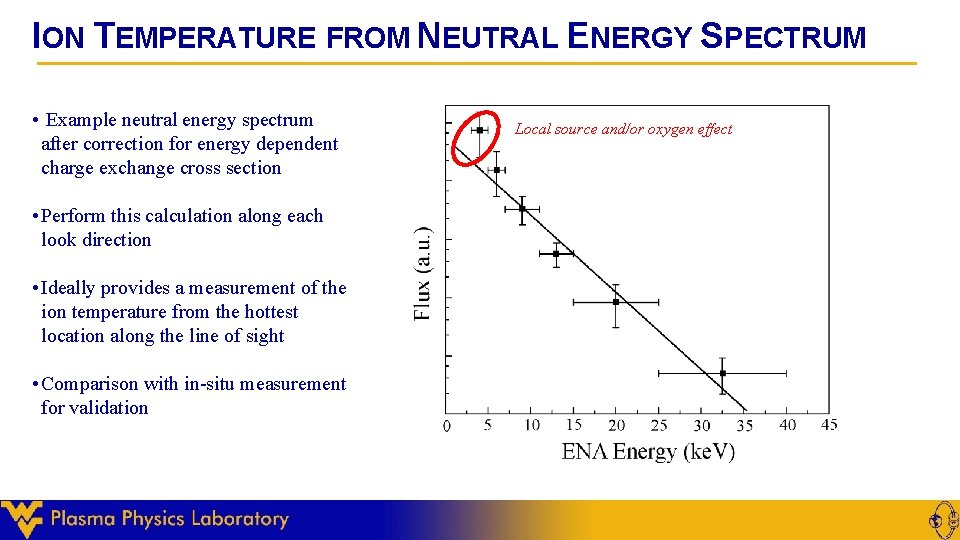
TEST THE APPROXIMATION FOR ENERGETIC NEUTRAL SPECTRUM FOR E >> TI The high-energy portion of the neutral atom energy spectrum, F(E), generated via charge exchange collisions for a Maxwellian ion distribution of temperature T, is given by C accounts for the geometrical viewing properties of the instrument and the volume of the hottest region along the line-of-sight at x, n 0(x) is the neutral density, ni(x) is the ion density, (l) accounts for reduction of neutral flux due to additional collisions or ionization along the path from point x to the instrument located at a. Most of the magnetosphere is optically thin to energetic neutral atom emission so
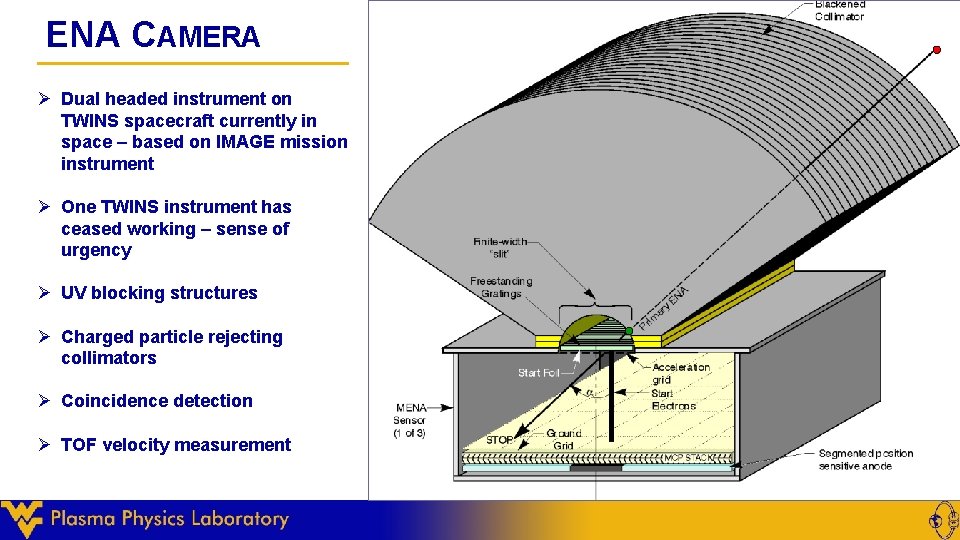
ENA CAMERA Ø Dual headed instrument on TWINS spacecraft currently in space – based on IMAGE mission instrument Ø One TWINS instrument has ceased working – sense of urgency Ø UV blocking structures Ø Charged particle rejecting collimators Ø Coincidence detection Ø TOF velocity measurement
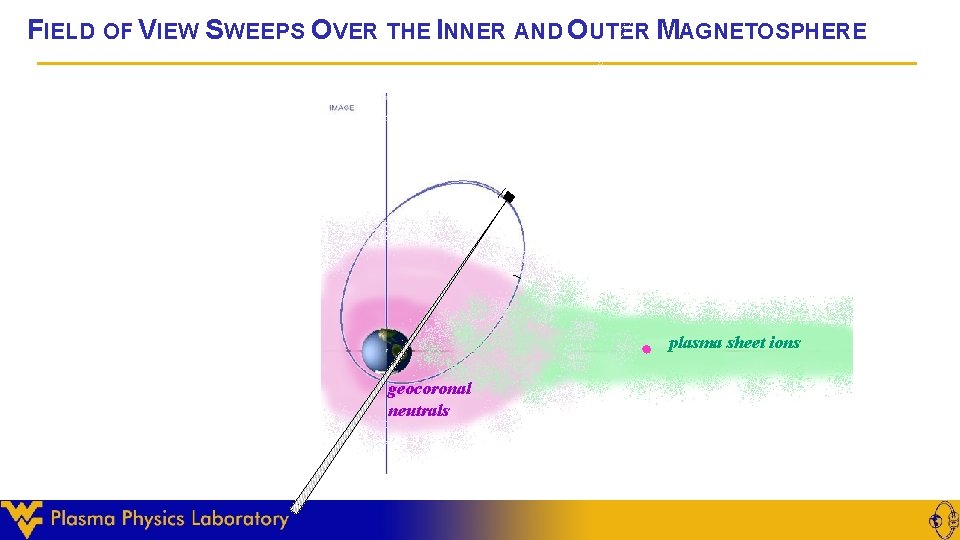
FIELD OF VIEW SWEEPS OVER THE INNER AND OUTER MAGNETOSPHERE plasma sheet ions geocoronal neutrals
ION TEMPERATURE FROM NEUTRAL ENERGY SPECTRUM • Example neutral energy spectrum after correction for energy dependent charge exchange cross section • Perform this calculation along each look direction • Ideally provides a measurement of the ion temperature from the hottest location along the line of sight • Comparison with in-situ measurement for validation Local source and/or oxygen effect
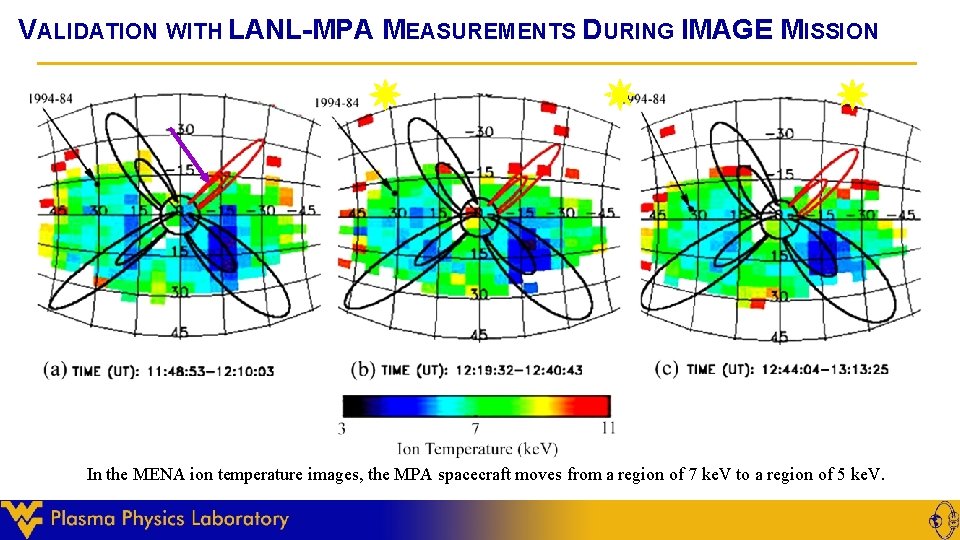
VALIDATION WITH LANL-MPA MEASUREMENTS DURING IMAGE MISSION In the MENA ion temperature images, the MPA spacecraft moves from a region of 7 ke. V to a region of 5 ke. V.
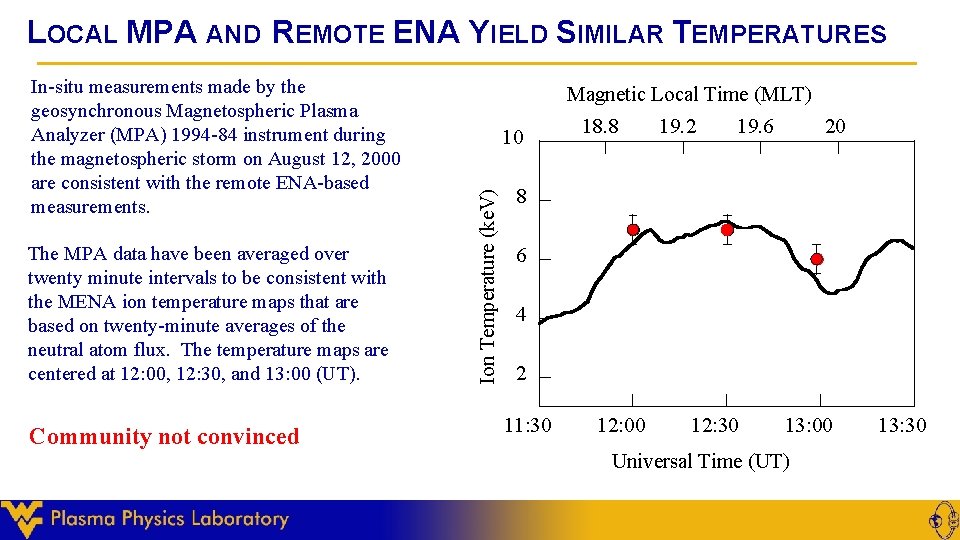
LOCAL MPA AND REMOTE ENA YIELD SIMILAR TEMPERATURES The MPA data have been averaged over twenty minute intervals to be consistent with the MENA ion temperature maps that are based on twenty-minute averages of the neutral atom flux. The temperature maps are centered at 12: 00, 12: 30, and 13: 00 (UT). Community not convinced Magnetic Local Time (MLT) 10 Ion Temperature (ke. V) In-situ measurements made by the geosynchronous Magnetospheric Plasma Analyzer (MPA) 1994 -84 instrument during the magnetospheric storm on August 12, 2000 are consistent with the remote ENA-based measurements. 18. 8 19. 2 19. 6 20 8 6 4 2 11: 30 12: 00 12: 30 13: 00 Universal Time (UT) 13: 30
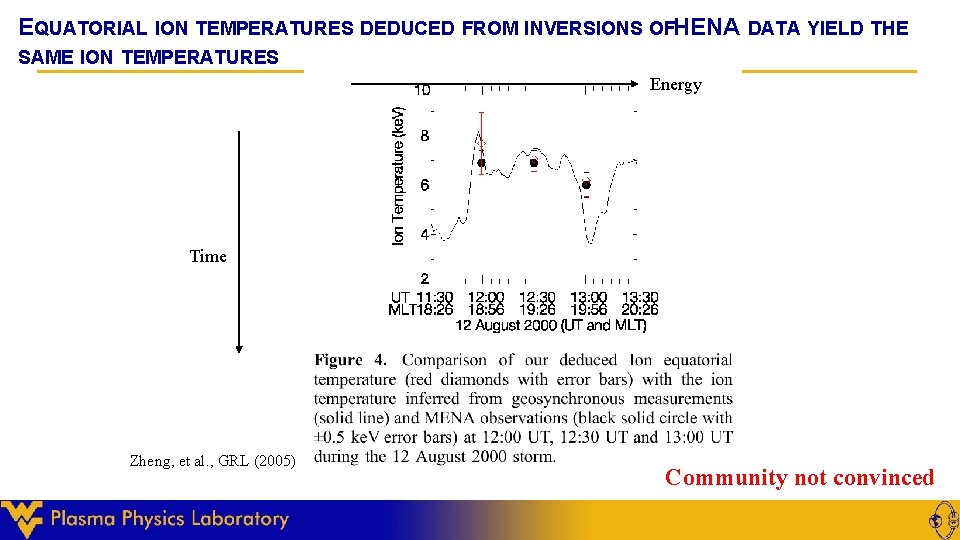
EQUATORIAL ION TEMPERATURES DEDUCED FROM INVERSIONS OFHENA DATA YIELD THE SAME ION TEMPERATURES Energy Time Zheng, et al. , GRL (2005) Community not convinced
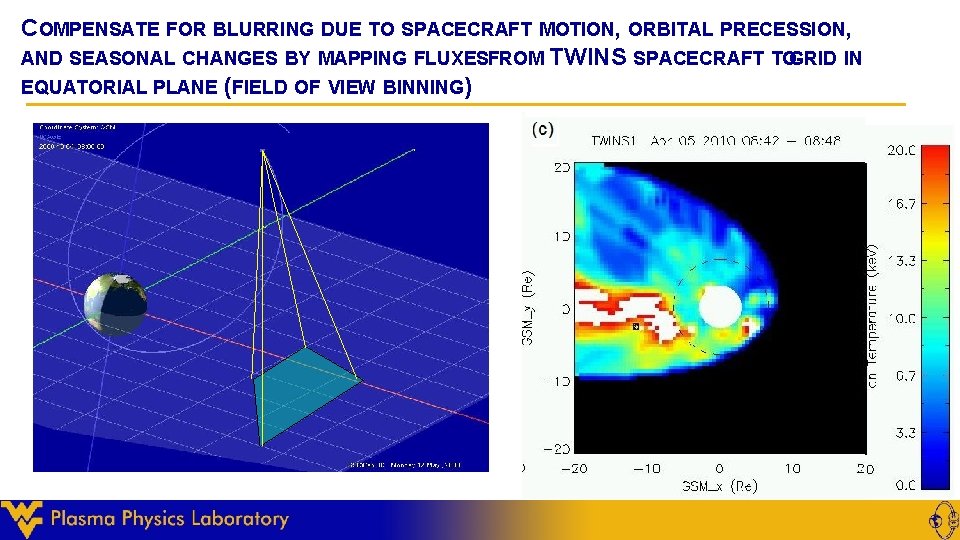
COMPENSATE FOR BLURRING DUE TO SPACECRAFT MOTION, ORBITAL PRECESSION, AND SEASONAL CHANGES BY MAPPING FLUXESFROM TWINS SPACECRAFT TOGRID IN EQUATORIAL PLANE (FIELD OF VIEW BINNING)
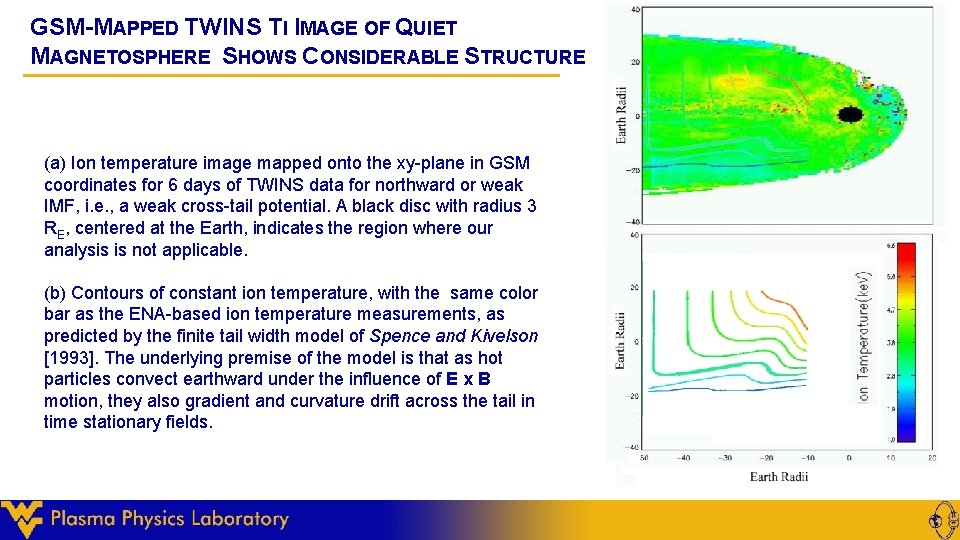
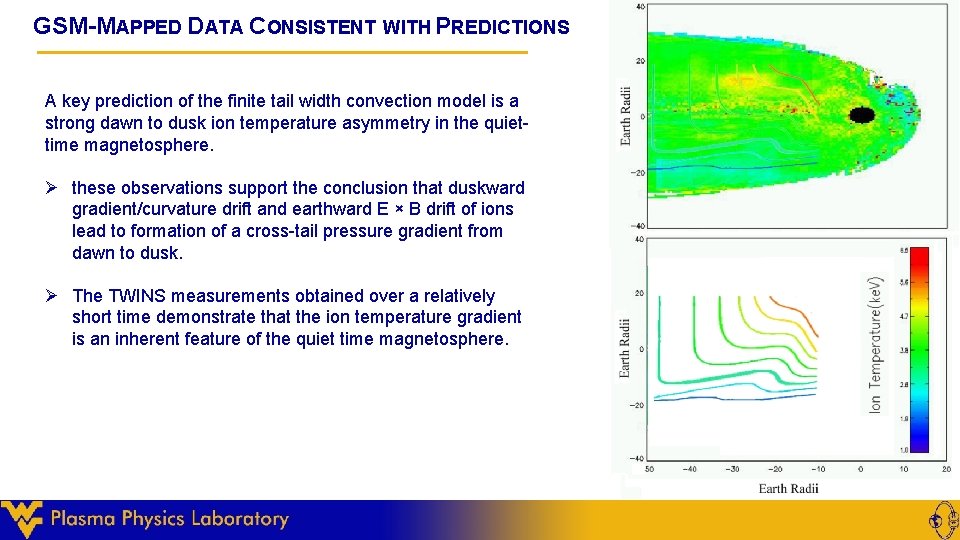
GSM-MAPPED TWINS TI IMAGE OF QUIET MAGNETOSPHERE SHOWS CONSIDERABLE STRUCTURE (a) Ion temperature image mapped onto the xy-plane in GSM coordinates for 6 days of TWINS data for northward or weak IMF, i. e. , a weak cross-tail potential. A black disc with radius 3 RE, centered at the Earth, indicates the region where our analysis is not applicable. (b) Contours of constant ion temperature, with the same color bar as the ENA-based ion temperature measurements, as predicted by the finite tail width model of Spence and Kivelson [1993]. The underlying premise of the model is that as hot particles convect earthward under the influence of E x B motion, they also gradient and curvature drift across the tail in time stationary fields. 16
GSM-MAPPED DATA CONSISTENT WITH PREDICTIONS A key prediction of the finite tail width convection model is a strong dawn to dusk ion temperature asymmetry in the quiettime magnetosphere. Ø these observations support the conclusion that duskward gradient/curvature drift and earthward E × B drift of ions lead to formation of a cross-tail pressure gradient from dawn to dusk. Ø The TWINS measurements obtained over a relatively short time demonstrate that the ion temperature gradient is an inherent feature of the quiet time magnetosphere.
WHAT IS REQUIRED TO LOCALIZE A ENA MEASUREMENT? Ø A significant/detectable increase in ENA flux from a specific location in space Ø Increase (or modulate) ion density or neutral density to increase ENA signal Ø At geosynchronous orbit the Ho density ~ 50 -100 cm-3 Ø To double the neutral hydrogen density in a cubic Earth radius: 100 cm-3 x (637, 100, 000 cm)3 = 2. 6 x 1028 atoms of hydrogen = 43, 189 moles of hydrogen = 21. 6 k. G of liquid H 2 (liquid H 2 density = 2. 02 g/mol) = 305 liters (liquid H 2 density = 70. 85 g/l) Ø Fuel capacity of 2 nd stage of a Falcon 9 rocket = 27, 600 Liters liquid O 2 and 17, 400 Liters Propellant = 0. 7 % of fuel tank 10% of fuel tank volume enough for 14 releases
MISSION CONCEPT Minimal spacecraft just enough for orbit control, pressurized tanks, UV lamp, and gas release valves Launch Vehicle single Falcon 9 launch with spacecraft as either a primary or ancillary vehicle Orbit design orbit for passes through interesting magnetospheric regions with conjunctions between gas release spacecraft and constellation missions, e. g. , MMS. Ho Generation from H 2 use strong EUV light source (4. 75 e. V binding energy requires 261 nm light source – easy to do with frequency quadrupled, pulsed Nd. YAG laser) ENA acquisition use existing TWINS spacecraft or specialized Cube. Sats in low Earth orbit for ENA measurements
SCIENCE GOALS 1. Resolve integrated versus “hottest along line of sight” uncertainty of ENA measurements 2. Measure average ion temperature on spatial scales of 0. 25 RE 3 to RE 3 scales. 3. Compare remotely measured ion energy distributions to those measured with in-situ, local, instruments during impulsive magnetospheric events 4. Benchmark models of geocoronal neutral density from comparative ENA flux measurements 5. Launch the field of “active” distant magnetospheric experiments 6. Challenges, rate of photoionization and impact ionization of released neutral H, detector sensitivity, timing of releases, ….