
English Verb Tense Review Simple Tenses Present SIMPLE

English Verb Tense Review


Simple Tenses
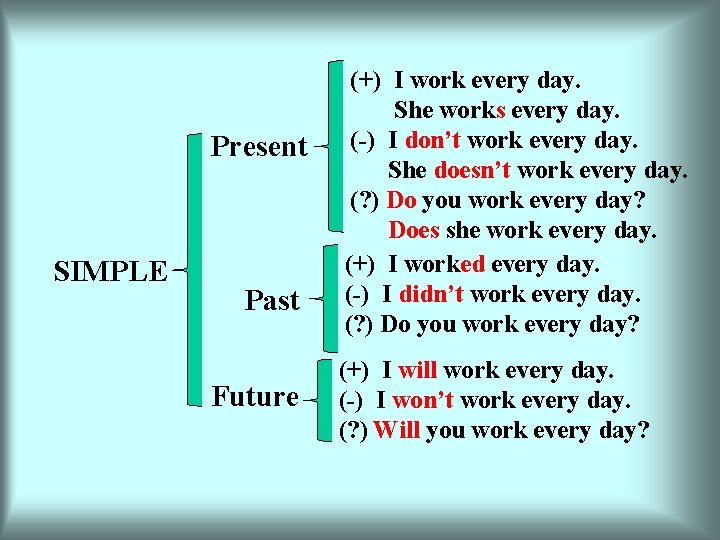
Present SIMPLE Past Future (+) I work every day. She works every day. (-) I don’t work every day. She doesn’t work every day. (? ) Do you work every day? Does she work every day. (+) I worked every day. (-) I didn’t work every day. (? ) Do you work every day? (+) I will work every day. (-) I won’t work every day. (? ) Will you work every day?

Simple Present Tense
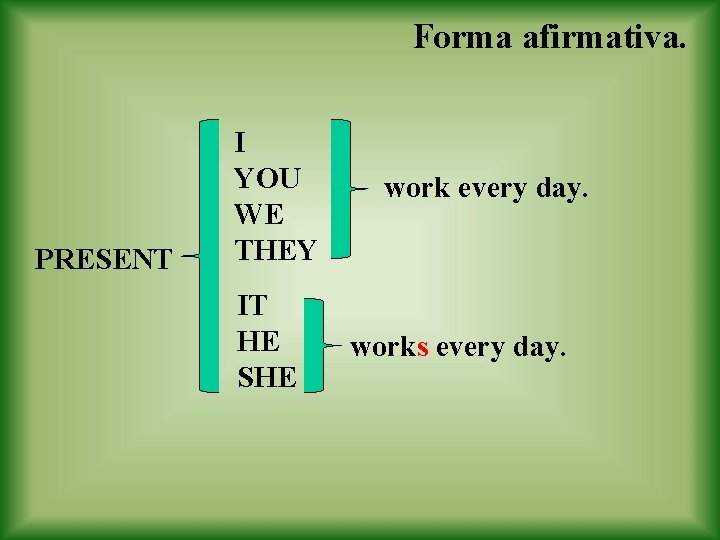
Forma afirmativa. PRESENT I YOU WE THEY IT HE SHE work every day. works every day.
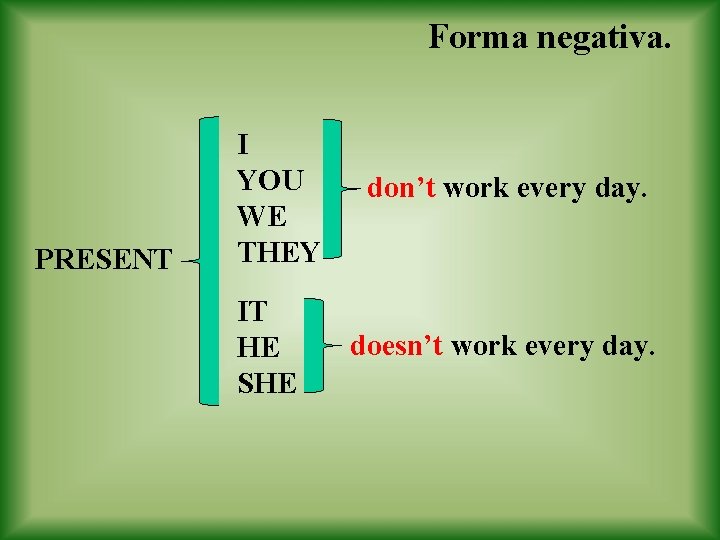
Forma negativa. PRESENT I YOU WE THEY IT HE SHE don’t work every day. doesn’t work every day.
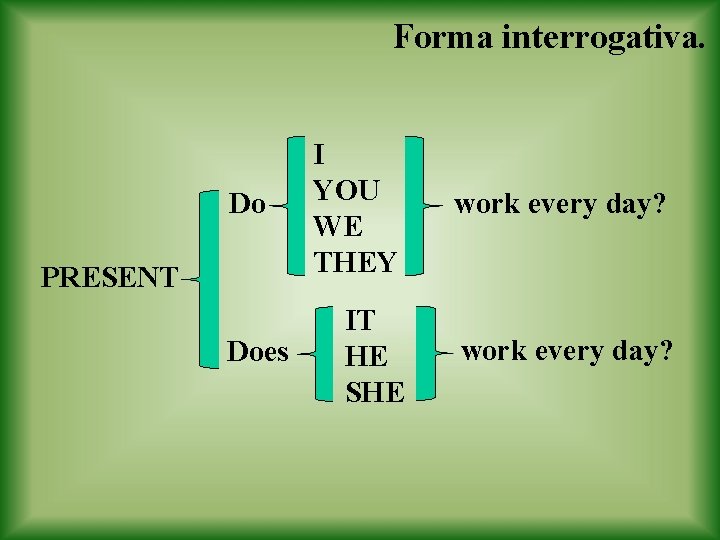
Forma interrogativa. Do PRESENT Does I YOU WE THEY work every day? IT HE SHE work every day?
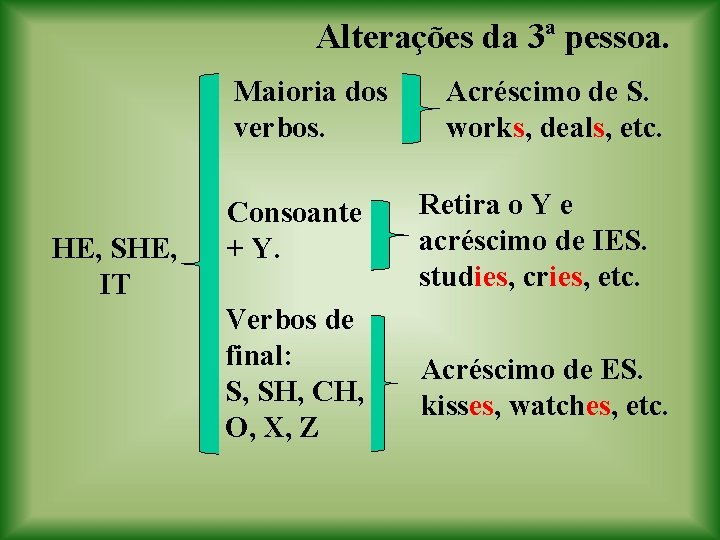
Alterações da 3ª pessoa. Maioria dos verbos. HE, SHE, IT Acréscimo de S. works, deals, etc. Consoante + Y. Retira o Y e acréscimo de IES. studies, cries, etc. Verbos de final: S, SH, CH, O, X, Z Acréscimo de ES. kisses, watches, etc.
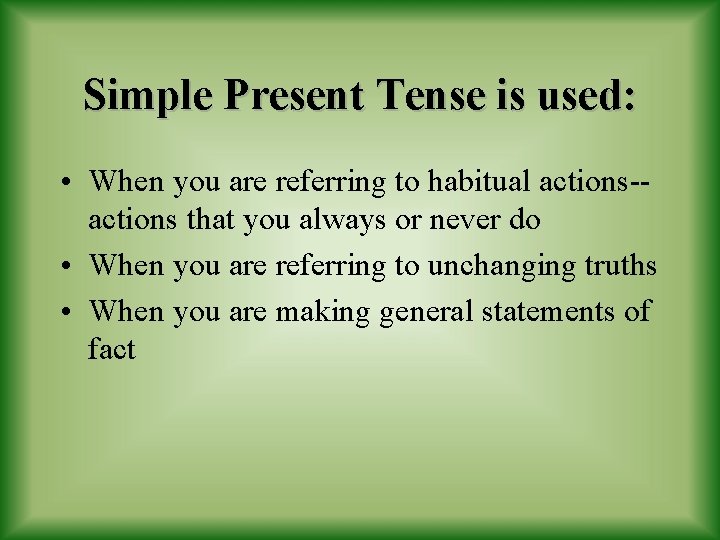
Simple Present Tense is used: • When you are referring to habitual actions-actions that you always or never do • When you are referring to unchanging truths • When you are making general statements of fact
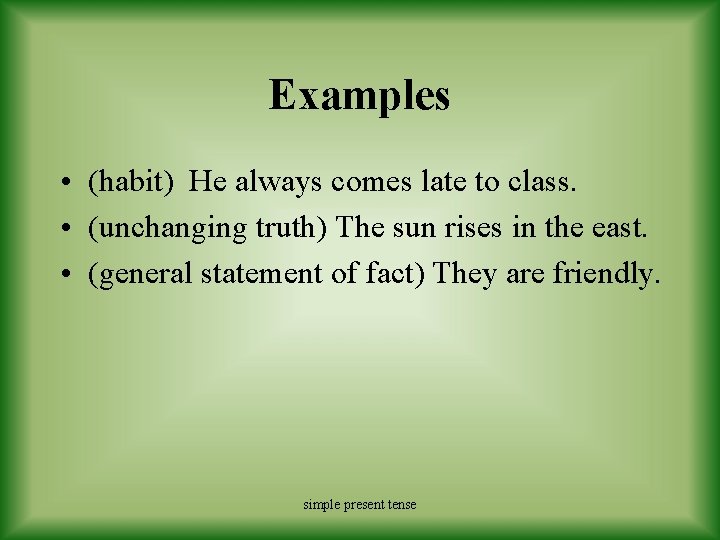
Examples • (habit) He always comes late to class. • (unchanging truth) The sun rises in the east. • (general statement of fact) They are friendly. simple present tense

Indicators simple present tense
Simple Past Tense
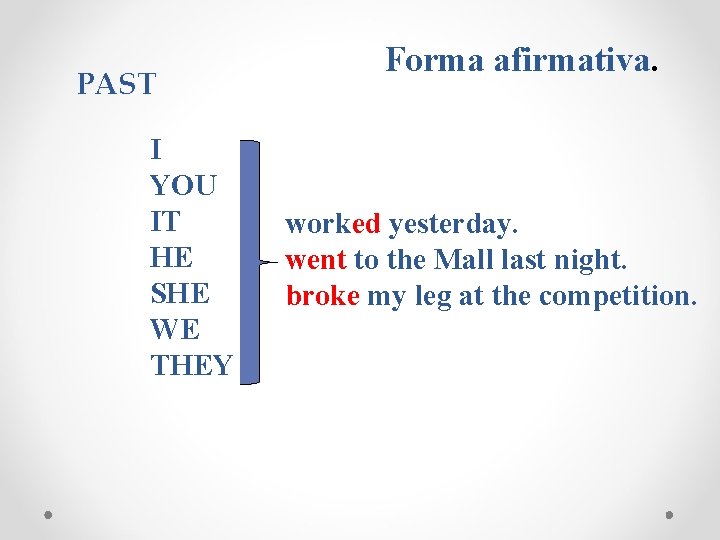
PAST I YOU IT HE SHE WE THEY Forma afirmativa. worked yesterday. went to the Mall last night. broke my leg at the competition.
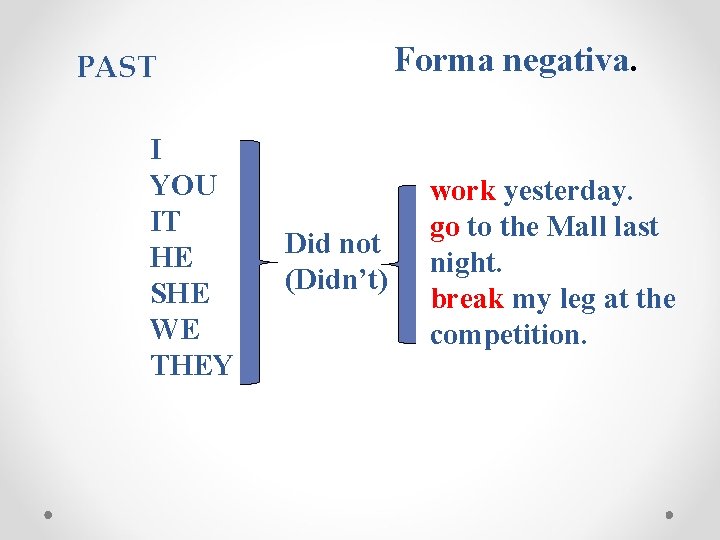
Forma negativa. PAST I YOU IT HE SHE WE THEY Did not (Didn’t) work yesterday. go to the Mall last night. break my leg at the competition.
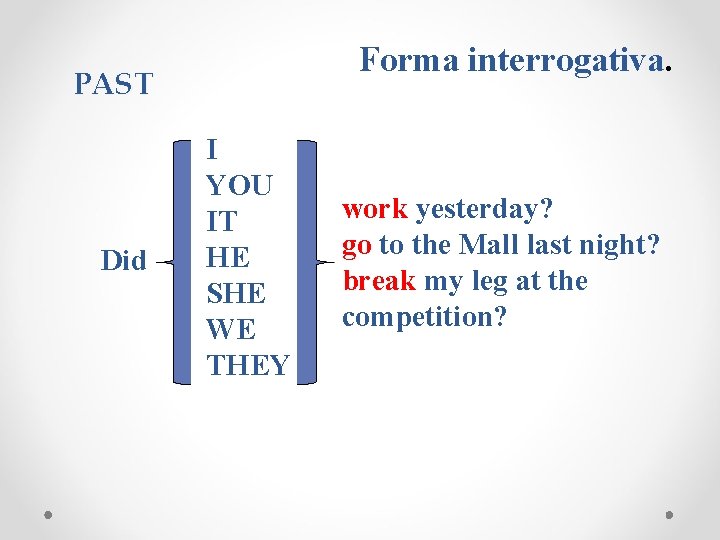
Forma interrogativa. PAST Did I YOU IT HE SHE WE THEY work yesterday? go to the Mall last night? break my leg at the competition?
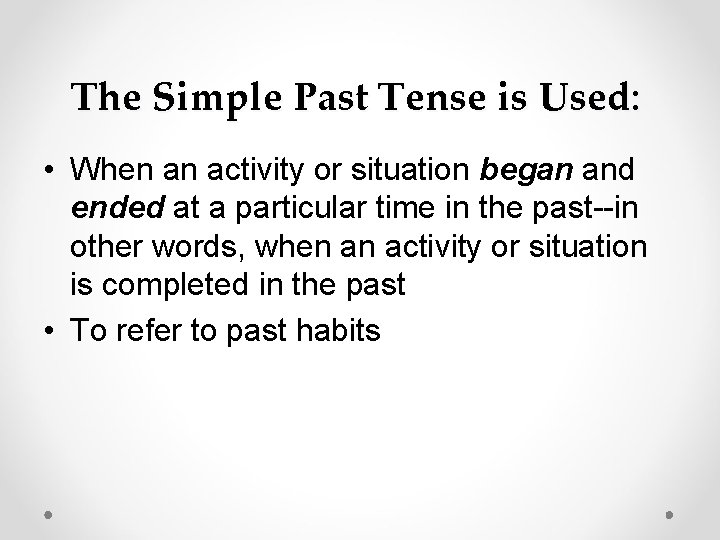
The Simple Past Tense is Used: • When an activity or situation began and ended at a particular time in the past--in other words, when an activity or situation is completed in the past • To refer to past habits
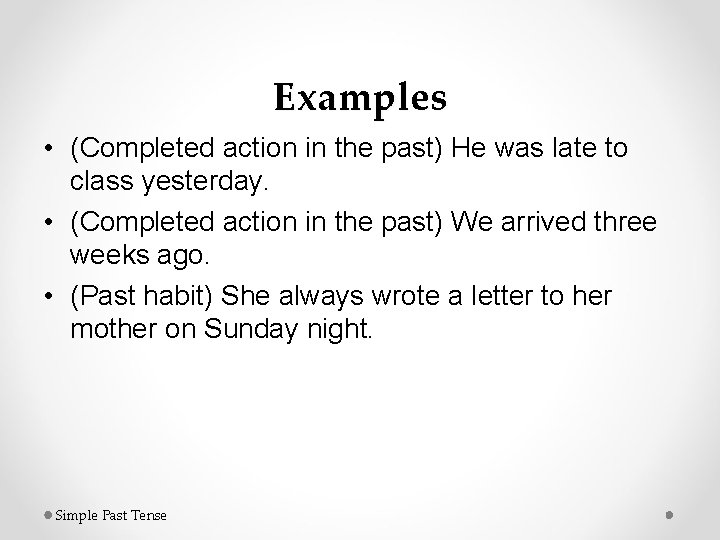
Examples • (Completed action in the past) He was late to class yesterday. • (Completed action in the past) We arrived three weeks ago. • (Past habit) She always wrote a letter to her mother on Sunday night. Simple Past Tense

Indicators Simple Past Tense

Simple Future Tense
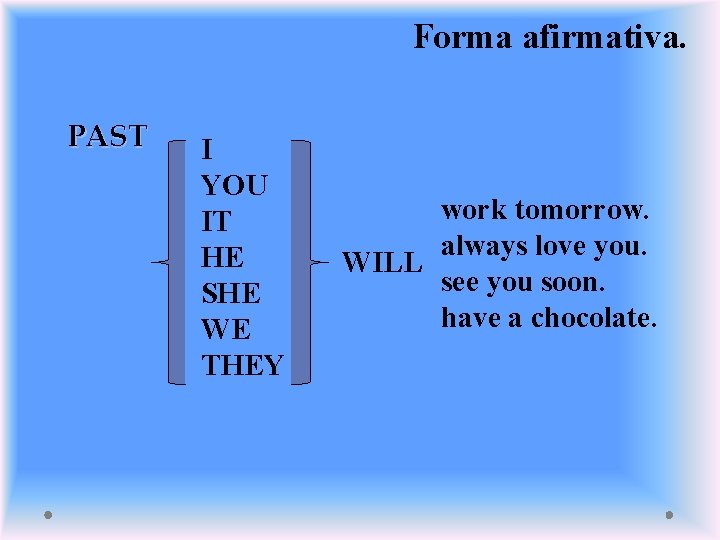
Forma afirmativa. PAST I YOU IT HE SHE WE THEY work tomorrow. always love you. WILL see you soon. have a chocolate.
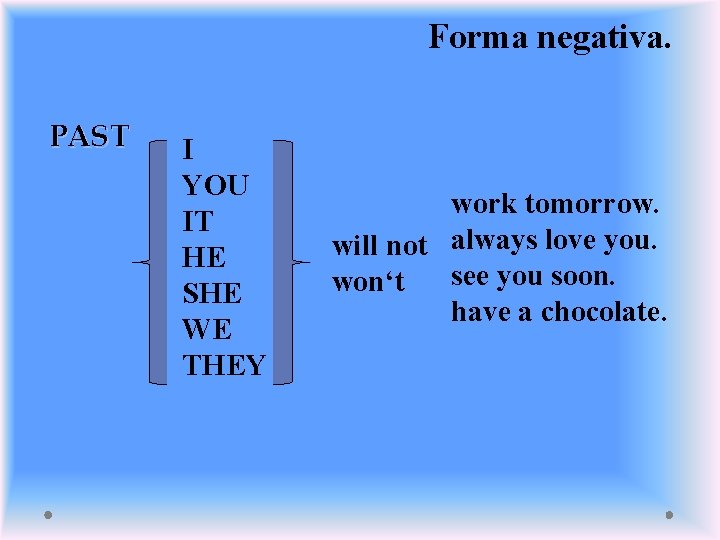
Forma negativa. PAST I YOU IT HE SHE WE THEY work tomorrow. will not always love you. see you soon. won‘t have a chocolate.
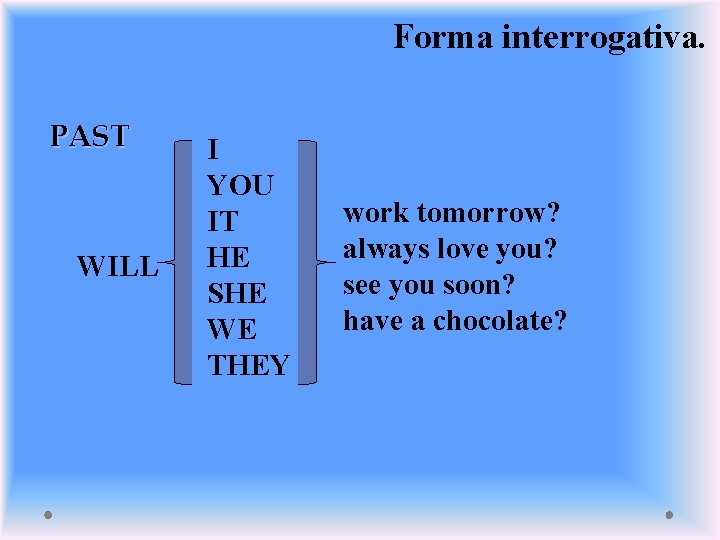
Forma interrogativa. PAST WILL I YOU IT HE SHE WE THEY work tomorrow? always love you? see you soon? have a chocolate?
The Future Tense is Used: • To indicate that an activity or event will take place at a time in the future
Examples • • When I’m retired, I’m going to travel. Next week, we will work on punctuation. He is going to get his car fixed tomorrow. Our plane departs at noon next Friday. Future
Indicators Future

Perfect Tenses
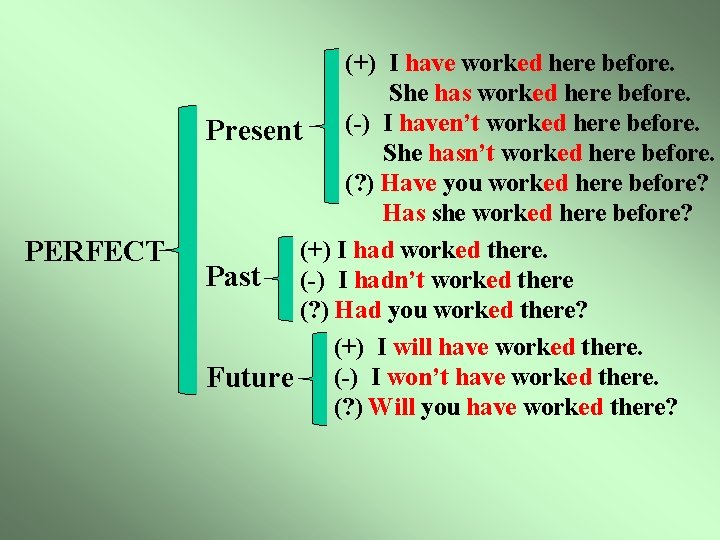
PERFECT (+) I have worked here before. She has worked here before. Present (-) I haven’t worked here before. She hasn’t worked here before. (? ) Have you worked here before? Has she worked here before? (+) I had worked there. Past (-) I hadn’t worked there (? ) Had you worked there? Future (+) I will have worked there. (-) I won’t have worked there. (? ) Will you have worked there?
The Present Perfect Tense
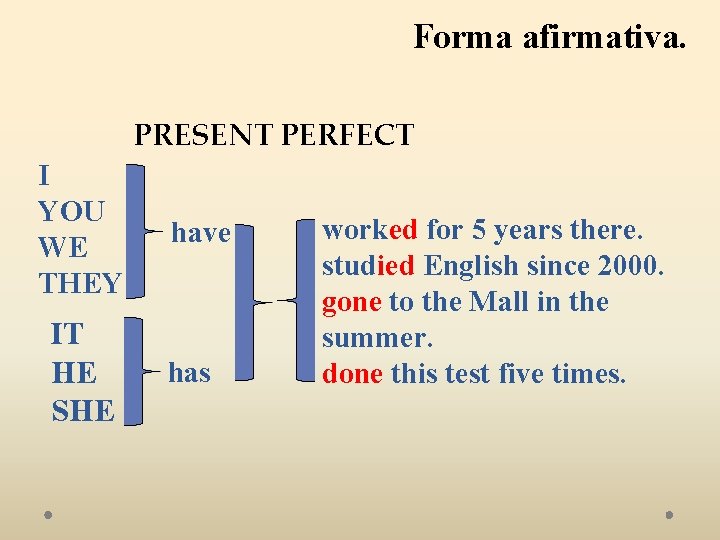
Forma afirmativa. PRESENT PERFECT I YOU WE THEY IT HE SHE have has worked for 5 years there. studied English since 2000. gone to the Mall in the summer. done this test five times.
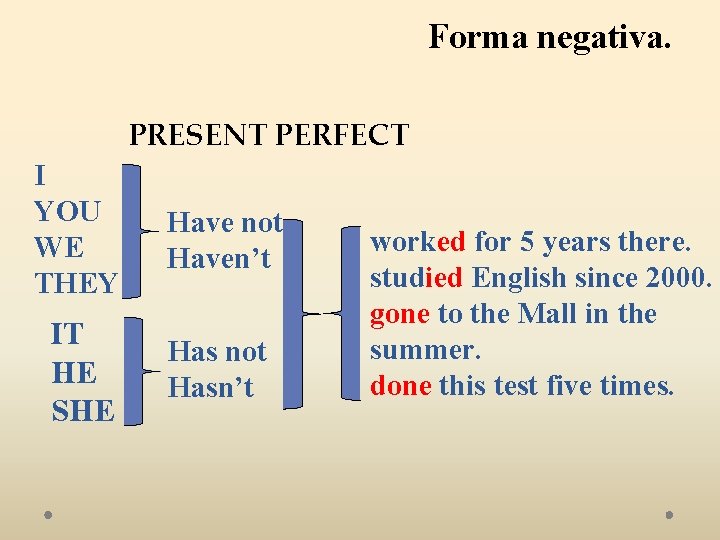
Forma negativa. PRESENT PERFECT I YOU WE THEY Have not Haven’t IT HE SHE Has not Hasn’t worked for 5 years there. studied English since 2000. gone to the Mall in the summer. done this test five times.
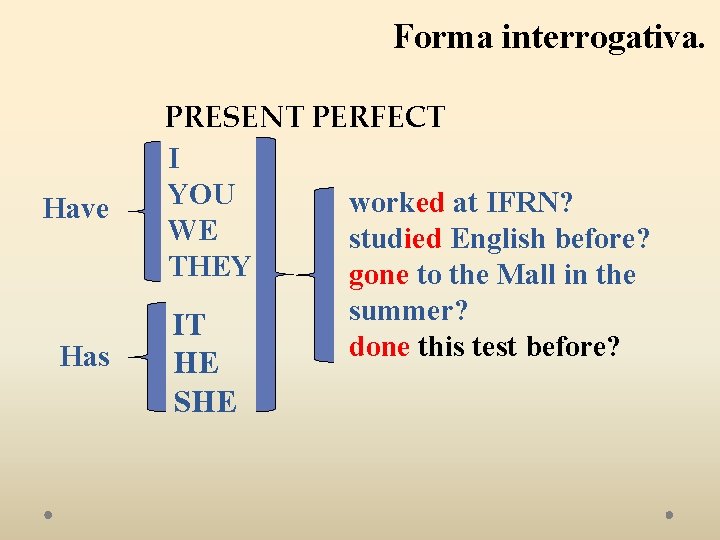
Forma interrogativa. Have Has PRESENT PERFECT I YOU worked at IFRN? WE studied English before? THEY gone to the Mall in the summer? IT done this test before? HE SHE
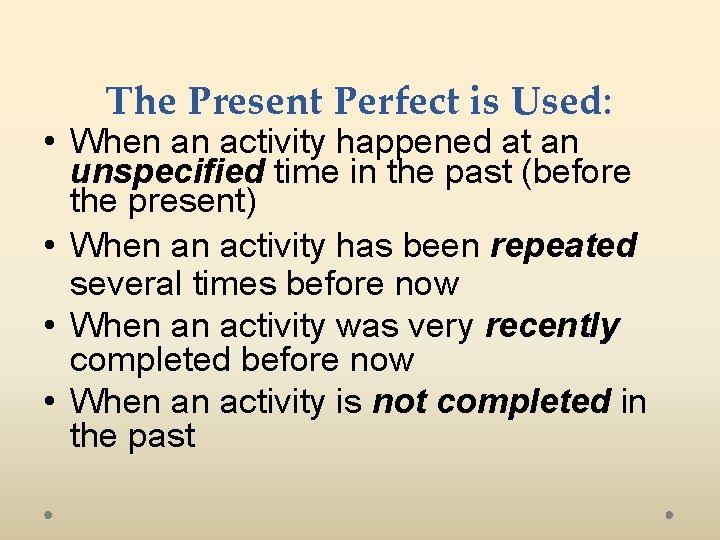
The Present Perfect is Used: • When an activity happened at an unspecified time in the past (before the present) • When an activity has been repeated several times before now • When an activity was very recently completed before now • When an activity is not completed in the past
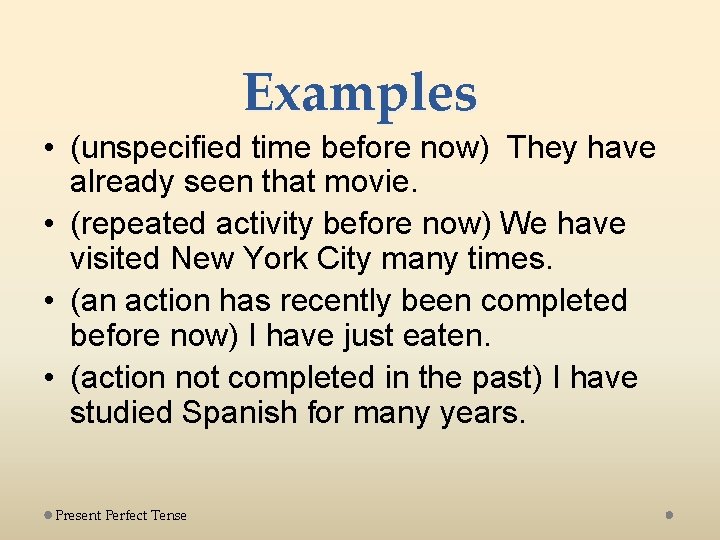
Examples • (unspecified time before now) They have already seen that movie. • (repeated activity before now) We have visited New York City many times. • (an action has recently been completed before now) I have just eaten. • (action not completed in the past) I have studied Spanish for many years. Present Perfect Tense
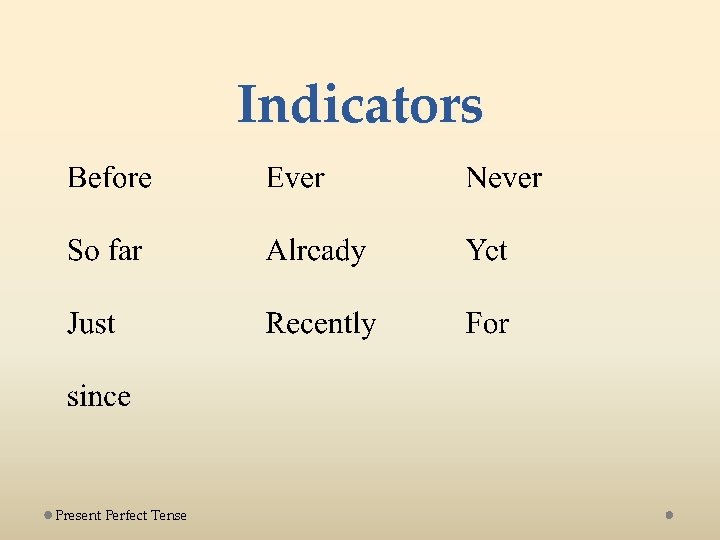
Indicators Present Perfect Tense
The Past Perfect
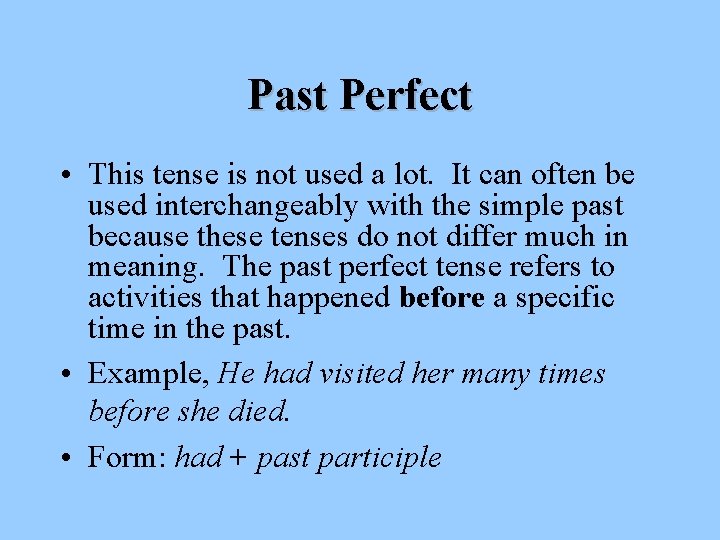
Past Perfect • This tense is not used a lot. It can often be used interchangeably with the simple past because these tenses do not differ much in meaning. The past perfect tense refers to activities that happened before a specific time in the past. • Example, He had visited her many times before she died. • Form: had + past participle

The Future Perfect
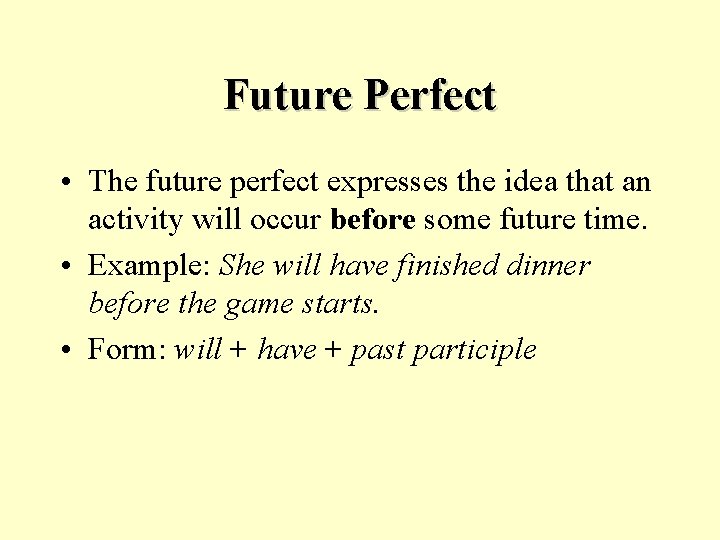
Future Perfect • The future perfect expresses the idea that an activity will occur before some future time. • Example: She will have finished dinner before the game starts. • Form: will + have + past participle
Progressive Tenses
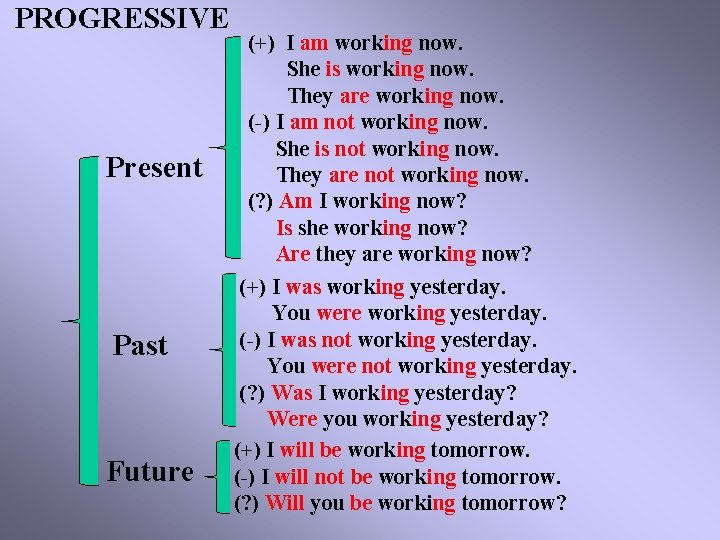
PROGRESSIVE Present Past Future (+) I am working now. She is working now. They are working now. (-) I am not working now. She is not working now. They are not working now. (? ) Am I working now? Is she working now? Are they are working now? (+) I was working yesterday. You were working yesterday. (-) I was not working yesterday. You were not working yesterday. (? ) Was I working yesterday? Were you working yesterday? (+) I will be working tomorrow. (-) I will not be working tomorrow. (? ) Will you be working tomorrow?
The Present Progressive Tense
The Present Progressive Tense is Used: • When an activity is in progress now at the moment of speaking • When an activity began before now and continues into the future without stopping. • When an activity is temporary. • When an activity is developing and changing.
Examples • I’m explaining something to the class right now. • He’s taking 16 credits this semester. • She is understanding English more and more because she moved into the dorm. Present Progressive Tense
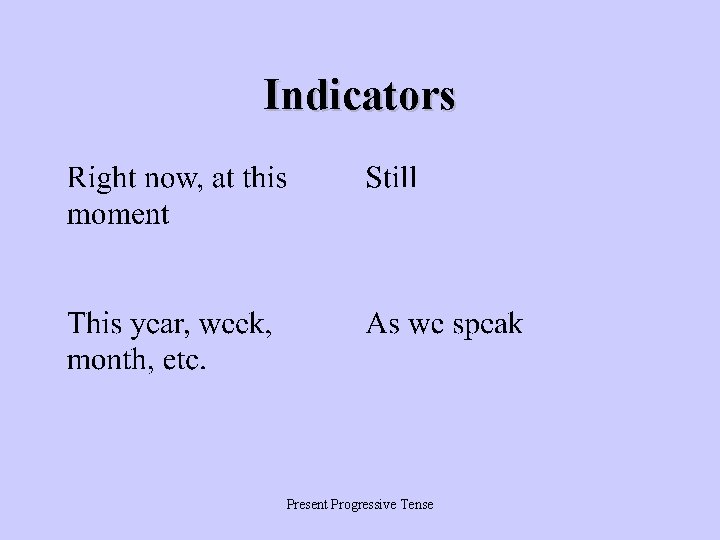
Indicators Present Progressive Tense
The Past Progressive Tense
Past Progressive • This tense is used to refer to activities continuously in progress around a time in the past. • Example: They were eating when the taxi arrived. • Form: was or were + verbing
The Future Progressive Tense
Future Progressive Tense • This tense is used to refer to activities that will be continuously in progress around some future time. • Example: We will be flying over New York at noon tomorrow. • Form: will + be + verbing
Other tenses
Past Perfect Progressive • This tense is used when an activity was continuously in progress before a specific time in the past. • Example: I had been thinking about her before she called. • Form: had + been + verbing
Present Perfect Progressive • This tense is used to describe actions that have been continuously in progress before now. These actions are not completed. • Example: I have been waiting here for the last two hours. • Form: have or has + been + verbing
Future Perfect Progressive • This tense is used to refer to activities that will be continuously in progress before a future time. • Example: He will have been working for 3 hours before you arrive. • Form: will + have + been + verbing
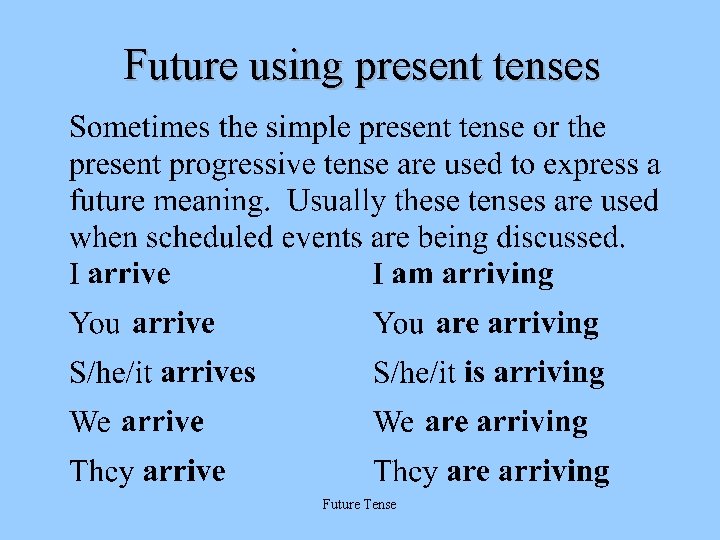
Future using present tenses Future Tense
- Slides: 54