
English Term 3 Week 2 Instructions Instructions are



- Slides: 15
English Term 3 Week 2 Instructions
Instructions are written for someone who needs to know how to do something.
What do you think instructions are used for? Think of some examples…
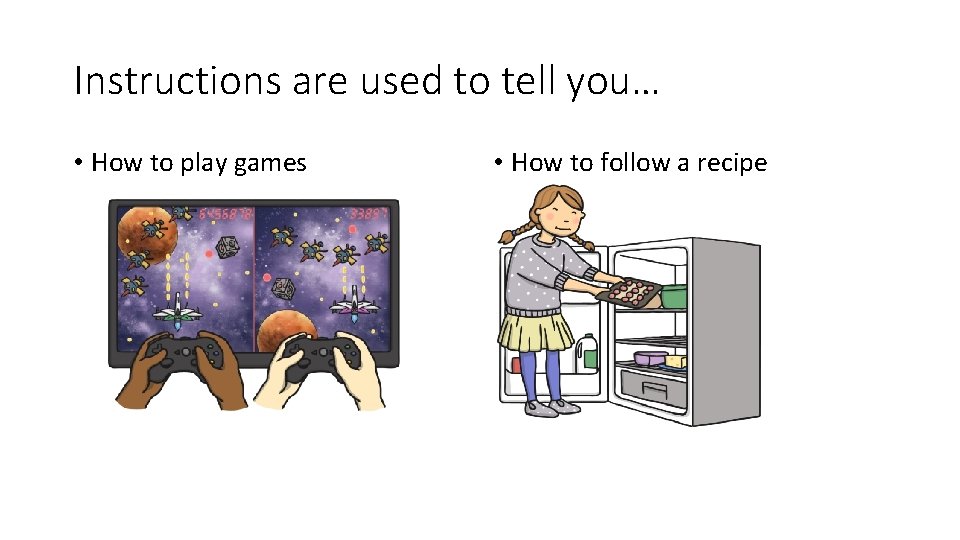
Instructions are used to tell you… • How to play games • How to follow a recipe
Also… • How to make things • Safety procedures
Imperative Verbs We are going to practise giving instructions on how to wash our hands. We are going to use imperative verbs to give these instructions. • Imperative verbs are sometimes known as bossy verbs. • They are verbs which tell you what to do. • They are often seen at the beginning of a sentence to create a demand. For example: • Go outside to play. • Kick the football into the goal. • Wash your hands. • After a story we will practise using some imperative/bossy verbs.
Using some imperative/bossy verbs, give you partner/teddy instructions on how to wash their hands. • Make sure your instructions are in the correct order.
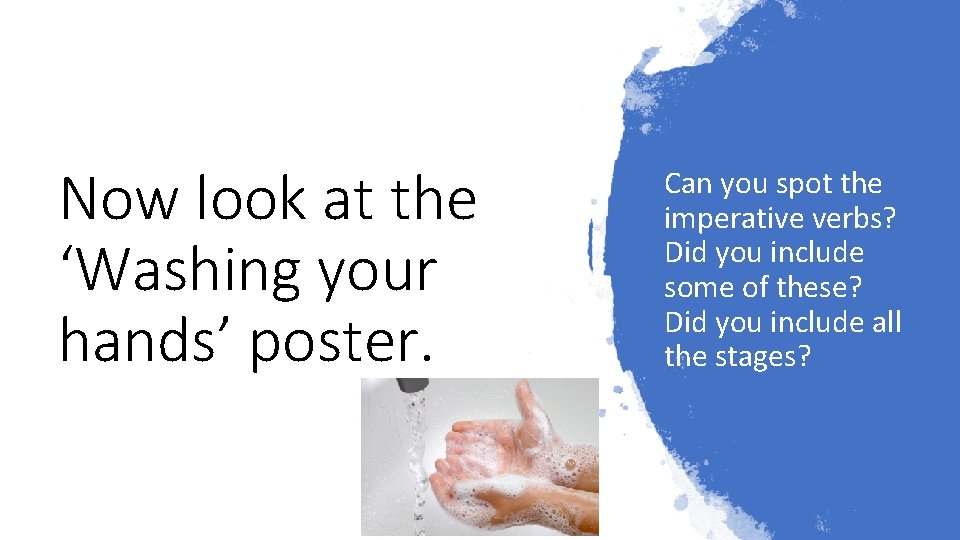
Now look at the ‘Washing your hands’ poster. Can you spot the imperative verbs? Did you include some of these? Did you include all the stages?
Now have a go at sequencing the pictures of how to wash your hands. • If you prefer, (or if you don’t have a printer), you can draw pictures instead of cutting and sticking.
Wednesday 13 th January Time Connectives What are time connectives? Why are they useful? How do they help us when using and following instructions?
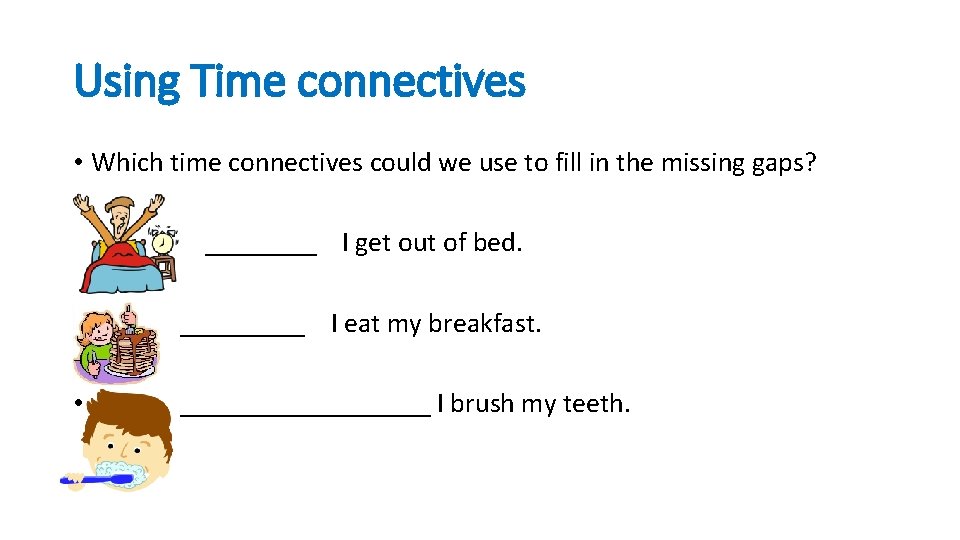
Using Time connectives • Which time connectives could we use to fill in the missing gaps? • ________ I get out of bed. • _____ I eat my breakfast. • _________ I brush my teeth.
Now draw some pictures to sequence your morning. Don’t forget to sequence them with time connectives. First Then Next After that Finally Remember to say your sentence first, use capital letters, full stops and finger spaces. When you have written each sentence read it to check it makes sense.
Thursday 14 th January • Today we are going to use everything we have learnt about instructions to create our own instruction posters which shows to wash your hands correctly. • Why is it important to wash your hands? • Where could we display our instructions?
Which features do we need to include? • 1. Numbers. • 2. Time connectives e. g. first, then, next, then, after that, finally. • 3. Imperative/bossy verbs e. g. turn, wet, rub, rinse, dry. • 4. Each instruction on a new line. • 5. Instructions sequenced correctly. • 6. Capital letters, full stops and finger spaces.
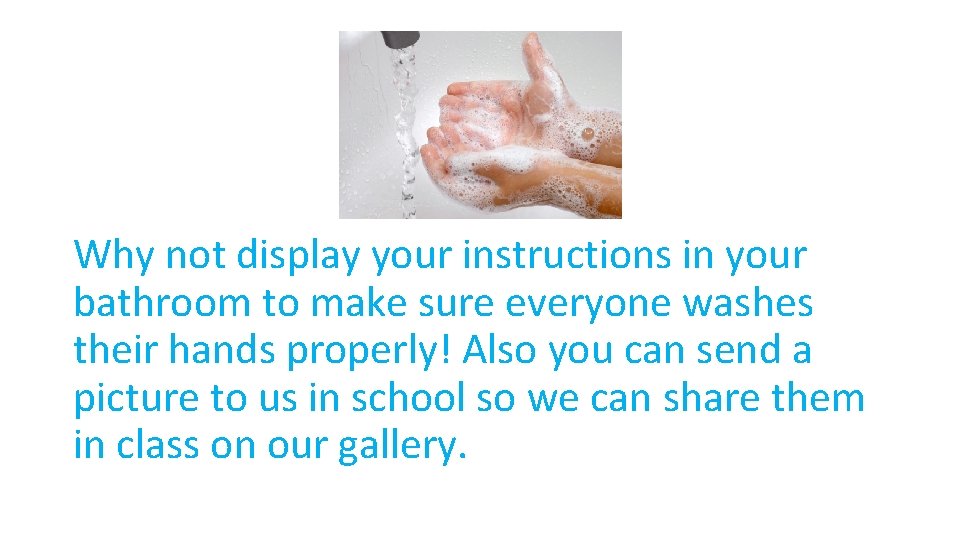
Why not display your instructions in your bathroom to make sure everyone washes their hands properly! Also you can send a picture to us in school so we can share them in class on our gallery.