
English Tenses Simple Present Tense Use of the
- Slides: 8
English Tenses
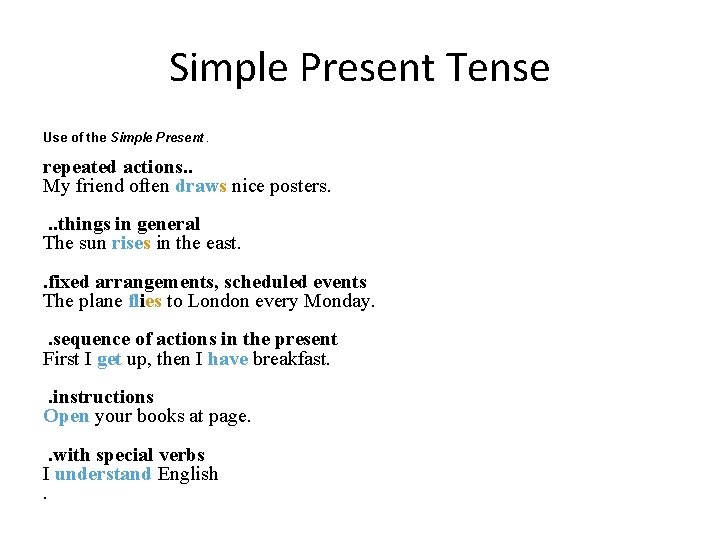
Simple Present Tense Use of the Simple Present. repeated actions. . My friend often draws nice posters. . . things in general The sun rises in the east. . fixed arrangements, scheduled events The plane flies to London every Monday. . sequence of actions in the present First I get up, then I have breakfast. . instructions Open your books at page. . with special verbs I understand English.
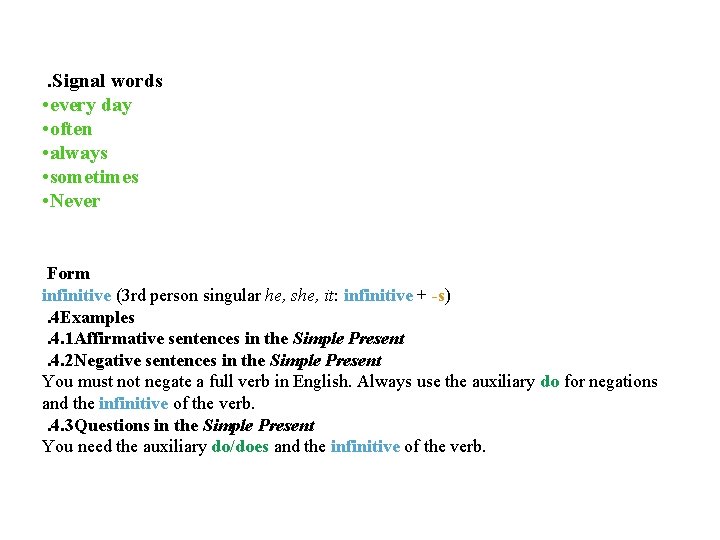
. Signal words • every day • often • always • sometimes • Never Form infinitive (3 rd person singular he, she, it: infinitive + -s). 4 Examples. 4. 1 Affirmative sentences in the Simple Present. 4. 2 Negative sentences in the Simple Present You must not negate a full verb in English. Always use the auxiliary do for negations and the infinitive of the verb. . 4. 3 Questions in the Simple Present You need the auxiliary do/does and the infinitive of the verb.
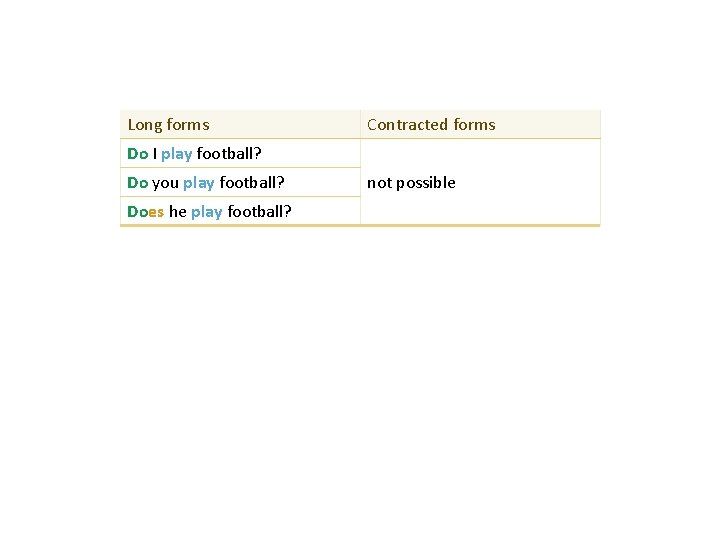
Long forms Contracted forms Do I play football? Do you play football? Does he play football? not possible
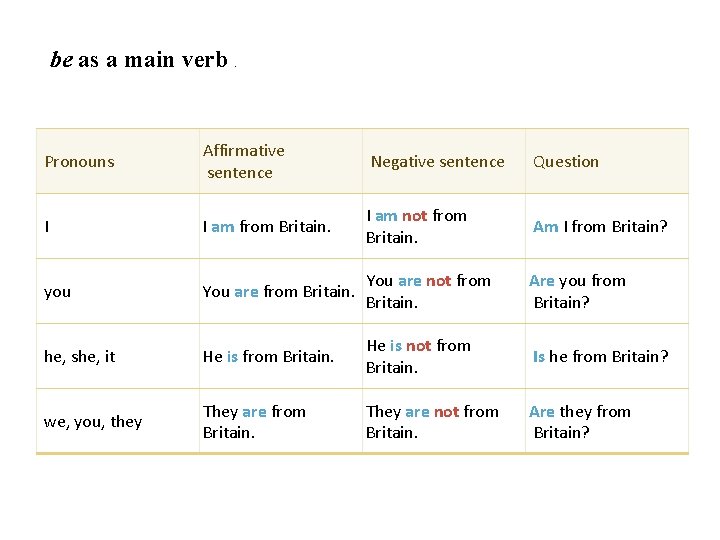
be as a main verb . Pronouns Affirmative sentence Negative sentence Question I I am from Britain. I am not from Britain. Am I from Britain? you You are from Britain. You are not from Britain. Are you from Britain? he, she, it He is from Britain. He is not from Britain. Is he from Britain? we, you, they They are from Britain. They are not from Britain. Are they from Britain?
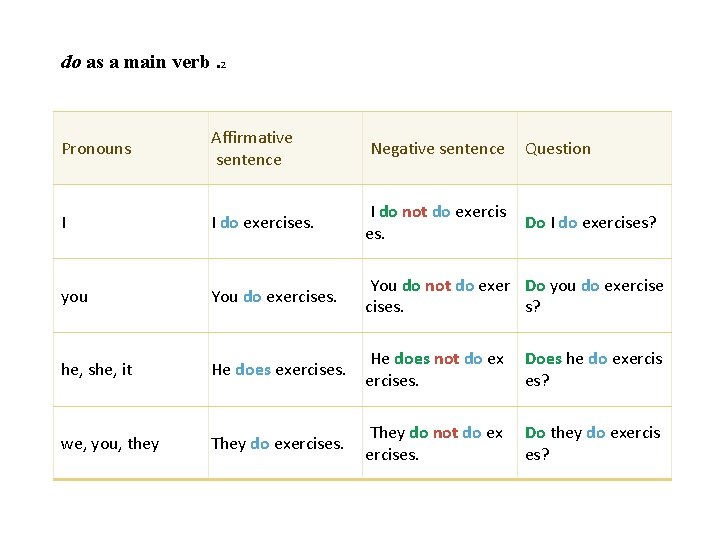
do as a main verb. 2 Pronouns Affirmative sentence Negative sentence Question I I do exercises. I do not do exercis es. Do I do exercises? you You do exercises. You do not do exer Do you do exercises. s? he, she, it He does exercises. He does not do ex ercises. Does he do exercis es? we, you, they They do exercises. They do not do ex ercises. Do they do exercis es?
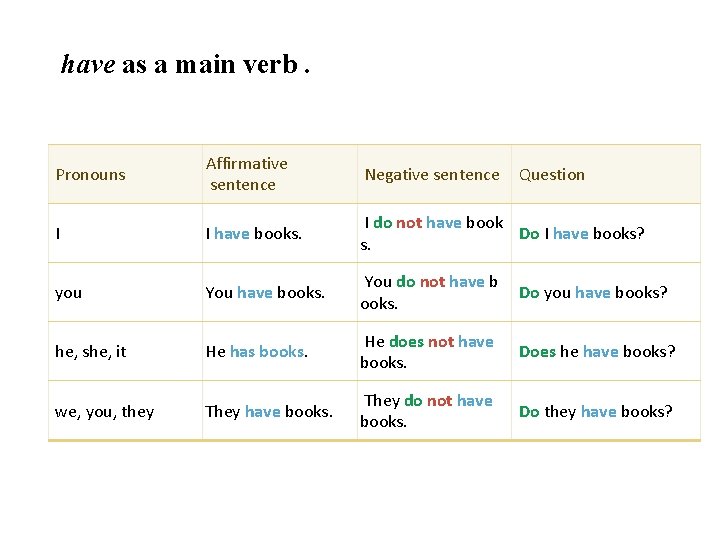
have as a main verb. Pronouns Affirmative sentence Negative sentence I I have books. I do not have book Do I have books? s. you You have books. You do not have b ooks. Do you have books? he, she, it He has books. He does not have books. Does he have books? we, you, they They have books. They do not have books. Do they have books? Question
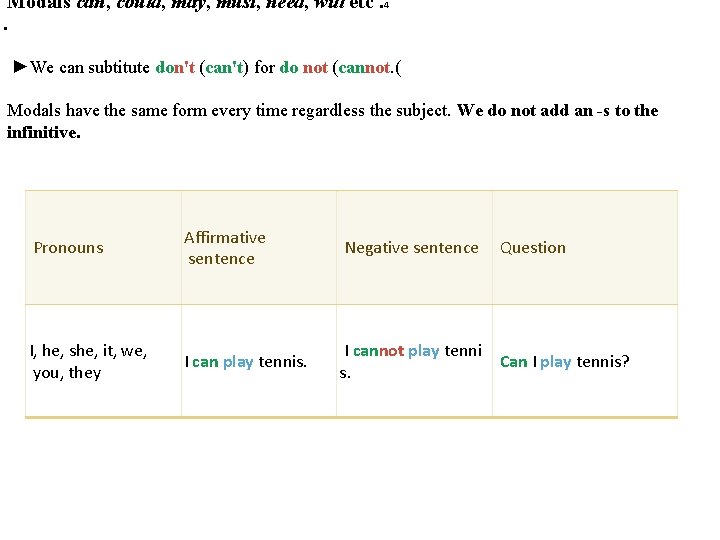
Modals can, could, may, must, need, will etc. 4. ►We can subtitute don't (can't) for do not (cannot. ( Modals have the same form every time regardless the subject. We do not add an -s to the infinitive. Pronouns Affirmative sentence Negative sentence I, he, she, it, we, you, they I can play tennis. I cannot play tenni Can I play tennis? s. Question