
English PST Training Development and Consultation 15 th
- Slides: 13
English PST Training, Development and Consultation 15 th March 2021 Placement 2 Update
Trainee Progress • For FRAP 3 we’ve asked trainees and Mentors to interpret the standards in relation to the opportunities that trainees have had – i. e. limited face to face teaching • Trainees may have a different progress profile, compared to ‘normal’ years
Trainee Progress If you have a trainee currently ØWhat are their strengths? ØWhat are their areas for development?
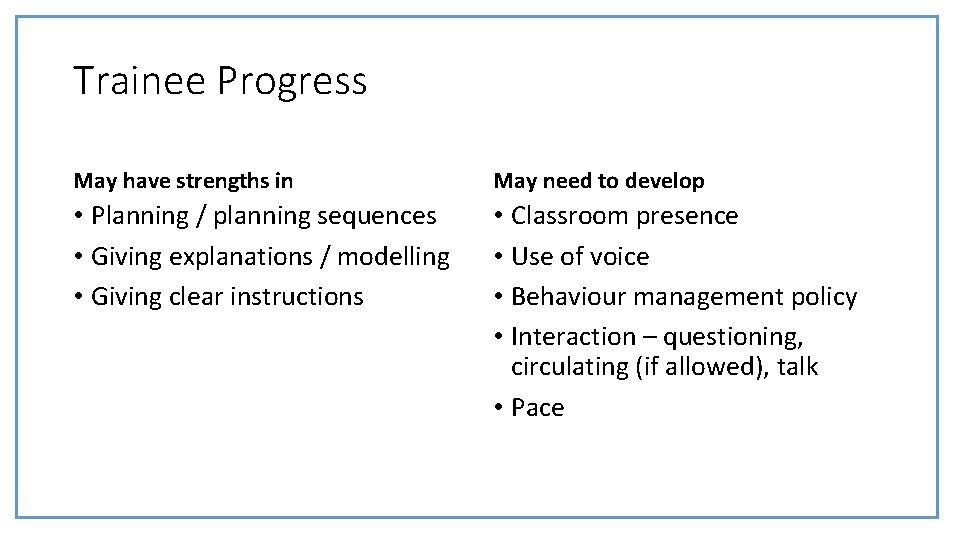
Trainee Progress May have strengths in May need to develop • Planning / planning sequences • Giving explanations / modelling • Giving clear instructions • Classroom presence • Use of voice • Behaviour management policy • Interaction – questioning, circulating (if allowed), talk • Pace
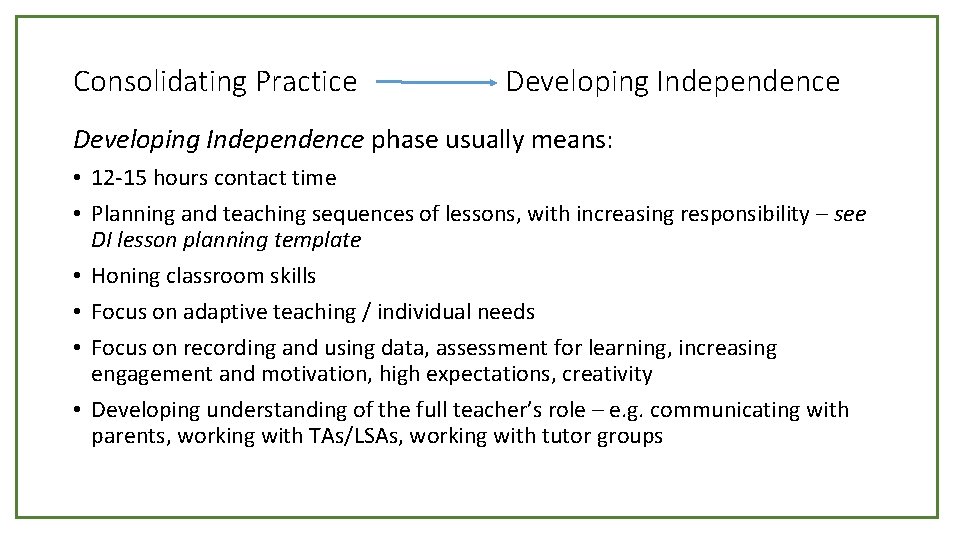
Consolidating Practice Developing Independence phase usually means: • 12 -15 hours contact time • Planning and teaching sequences of lessons, with increasing responsibility – see DI lesson planning template • Honing classroom skills • Focus on adaptive teaching / individual needs • Focus on recording and using data, assessment for learning, increasing engagement and motivation, high expectations, creativity • Developing understanding of the full teacher’s role – e. g. communicating with parents, working with TAs/LSAs, working with tutor groups
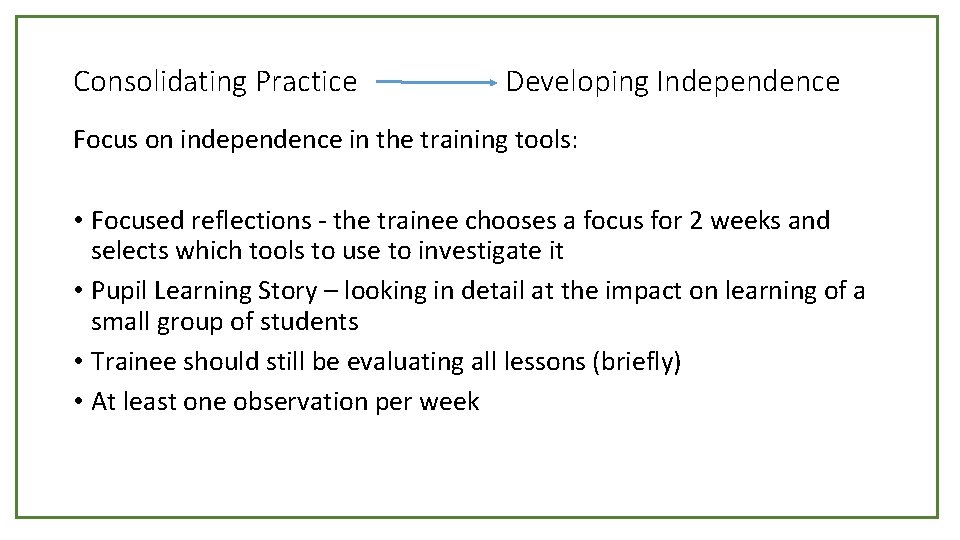
Consolidating Practice Developing Independence Focus on independence in the training tools: • Focused reflections - the trainee chooses a focus for 2 weeks and selects which tools to use to investigate it • Pupil Learning Story – looking in detail at the impact on learning of a small group of students • Trainee should still be evaluating all lessons (briefly) • At least one observation per week
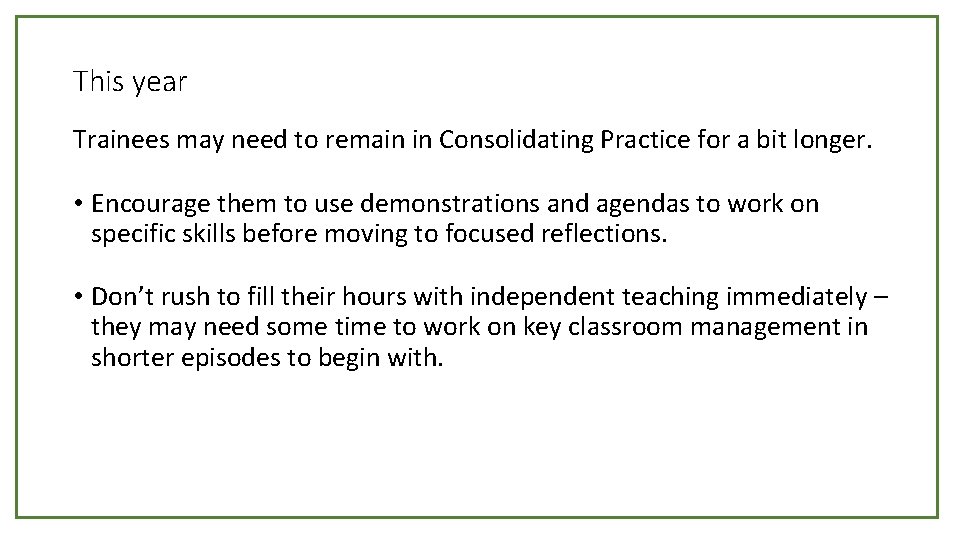
This year Trainees may need to remain in Consolidating Practice for a bit longer. • Encourage them to use demonstrations and agendas to work on specific skills before moving to focused reflections. • Don’t rush to fill their hours with independent teaching immediately – they may need some time to work on key classroom management in shorter episodes to begin with.
Target-Setting Ø If you have a trainee currently, what target would you give them for their first week in their new placement?
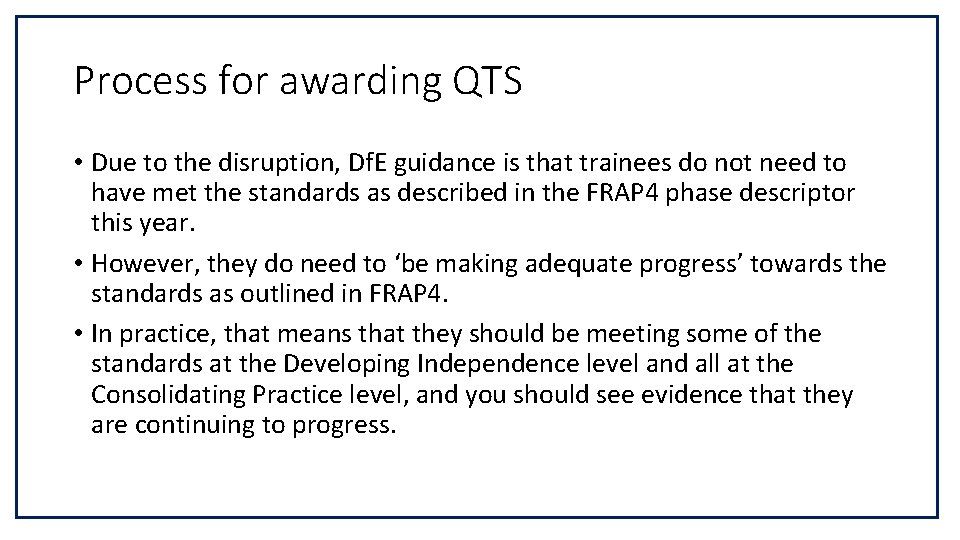
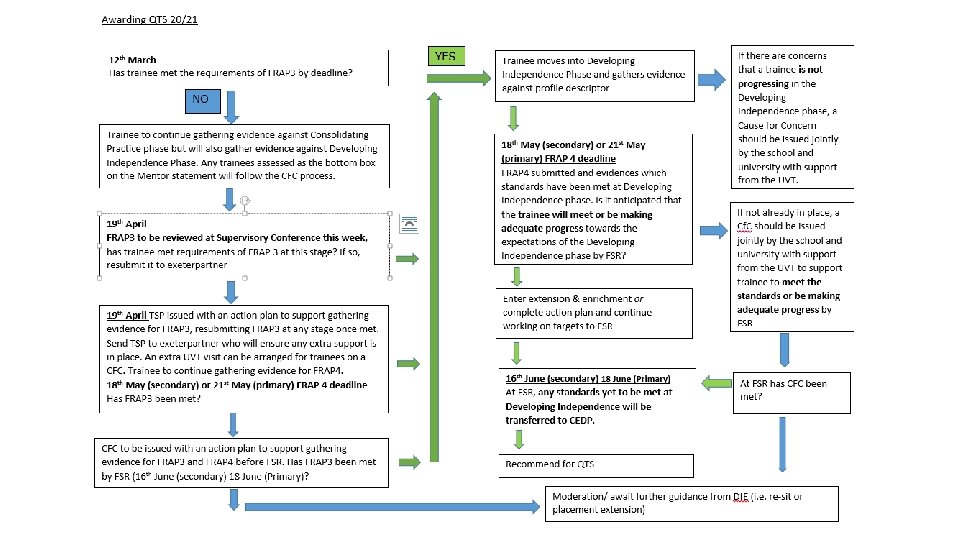
Process for awarding QTS • Due to the disruption, Df. E guidance is that trainees do not need to have met the standards as described in the FRAP 4 phase descriptor this year. • However, they do need to ‘be making adequate progress’ towards the standards as outlined in FRAP 4. • In practice, that means that they should be meeting some of the standards at the Developing Independence level and all at the Consolidating Practice level, and you should see evidence that they are continuing to progress.
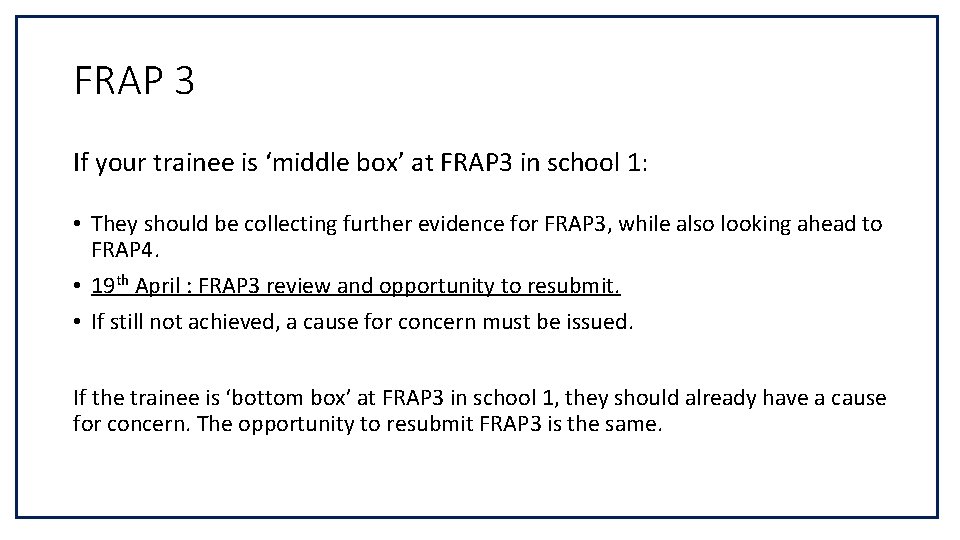
FRAP 3 If your trainee is ‘middle box’ at FRAP 3 in school 1: • They should be collecting further evidence for FRAP 3, while also looking ahead to FRAP 4. • 19 th April : FRAP 3 review and opportunity to resubmit. • If still not achieved, a cause for concern must be issued. If the trainee is ‘bottom box’ at FRAP 3 in school 1, they should already have a cause for concern. The opportunity to resubmit FRAP 3 is the same.
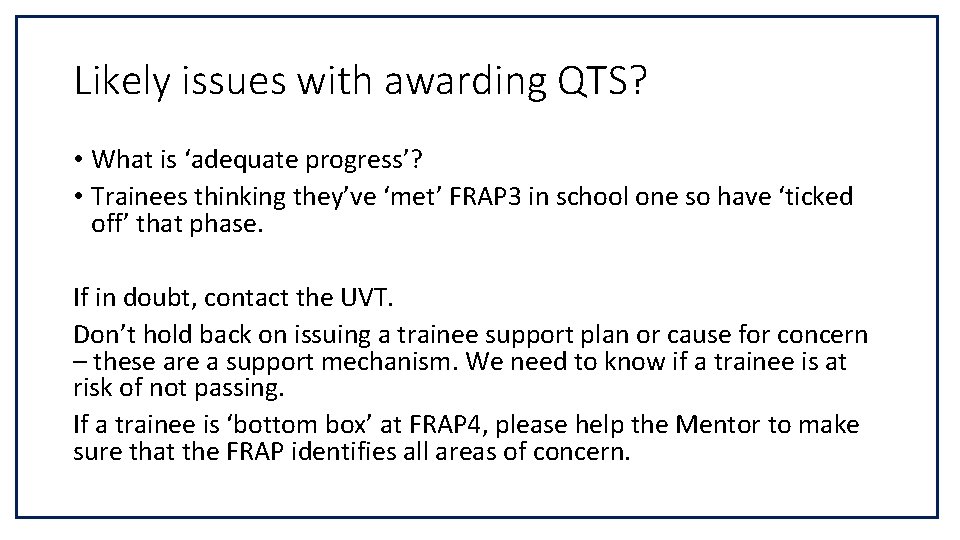
Likely issues with awarding QTS? • What is ‘adequate progress’? • Trainees thinking they’ve ‘met’ FRAP 3 in school one so have ‘ticked off’ that phase. If in doubt, contact the UVT. Don’t hold back on issuing a trainee support plan or cause for concern – these are a support mechanism. We need to know if a trainee is at risk of not passing. If a trainee is ‘bottom box’ at FRAP 4, please help the Mentor to make sure that the FRAP identifies all areas of concern.
Thank you! • Any questions?