
English Literature THEATRE DRAMA THEORY Esta obra est
English Literature THEATRE / DRAMA THEORY Esta obra está bajo una Licencia Creative Commons Atribución-No. Comercial. Compartir. Igual 4. 0 Internacional.
D EFINITION v “A composition in prose or verse presenting in dialogue or pantomime a story involving conflict or contrast of character, especially one intended to be acted on the stage; a play. ” v One of the most recognisable genres of literature, and one of the most discussed.
TYPES OF DRAMA v Tragedy v Comedy v Tragicomedy
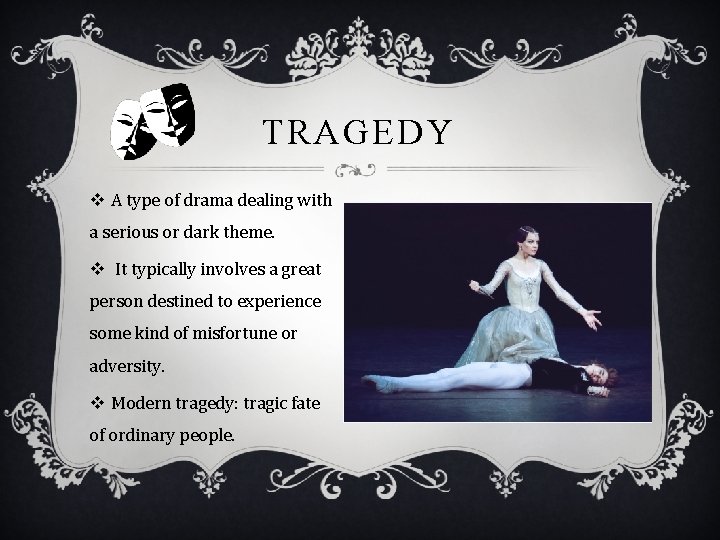
TRAGEDY v A type of drama dealing with a serious or dark theme. v It typically involves a great person destined to experience some kind of misfortune or adversity. v Modern tragedy: tragic fate of ordinary people.
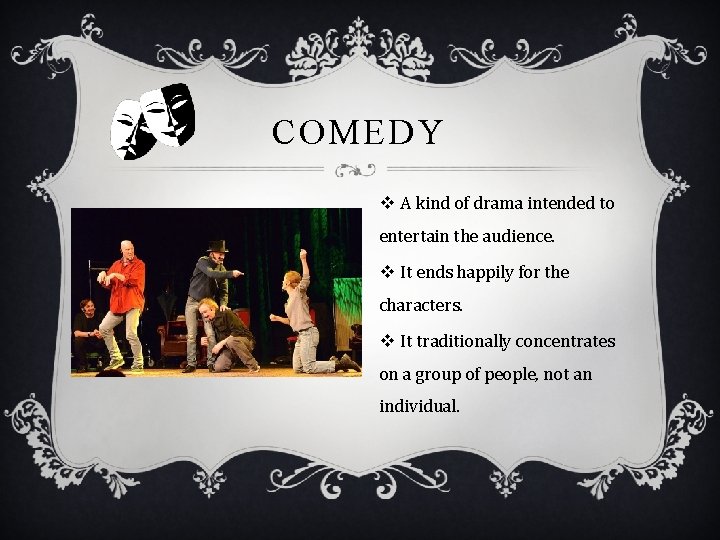
COMEDY v A kind of drama intended to entertain the audience. v It ends happily for the characters. v It traditionally concentrates on a group of people, not an individual.

TRAGICOMEDY v Tragicomedy can refer to: • Plays that seem tragic until the happy ending. • Plays that combine comic and tragic elements.
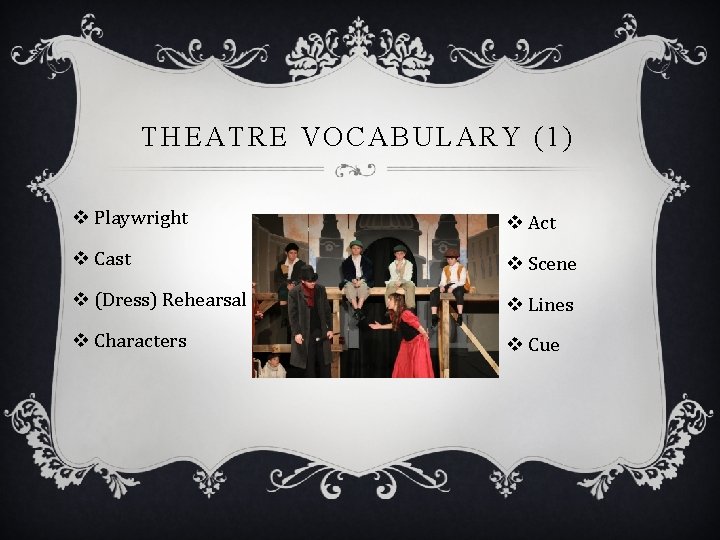
THEATRE VOCABULARY (1) v Playwright v Act v Cast v Scene v (Dress) Rehearsal v Lines v Characters v Cue
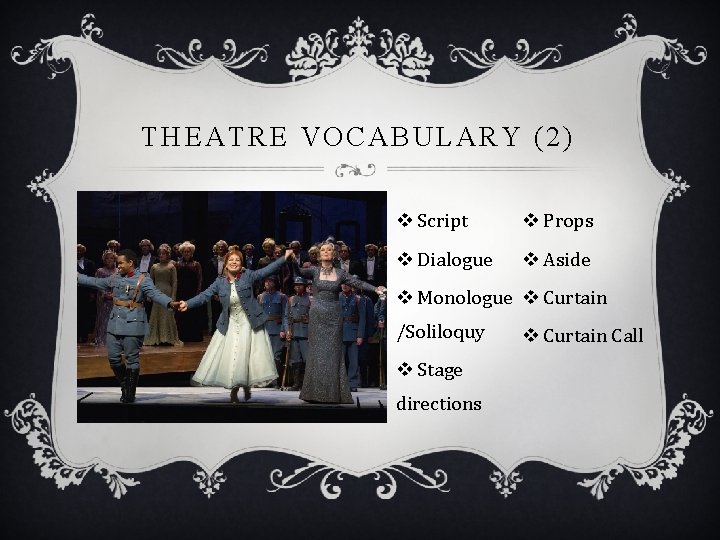
THEATRE VOCABULARY (2) v Script v Props v Dialogue v Aside v Monologue v Curtain /Soliloquy v Stage directions v Curtain Call
AN EXTRACT FROM ROALD DAHL’S THE WITCHES BOY is in bed, sleeping. He tosses and turns a little and then suddenly sits bolt upright) BOY: [A horrified cry] Mama! Papa! No! GRANDMOTHER goes over to him and comforts BOY, trying to calm him. GRANDMOTHER: Don´t worry darling, you are safe here with me. Grandma is here. BOY: Will I ever see them again? Mama and Papa? GRANDMOTHER: Someday darling, yes, someday darling.
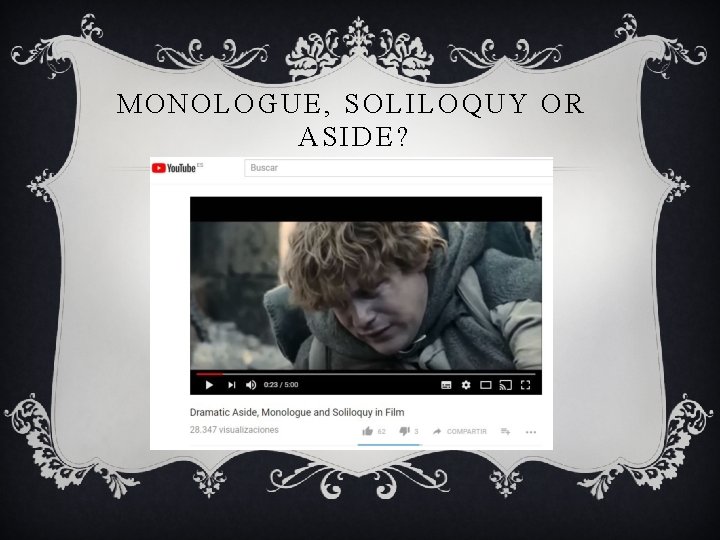
MONOLOGUE, SOLILOQUY OR ASIDE?
REFERENCES v TEXT • http: //www. dictionary. com/browse/drama v VIDEO • https: //www. youtube. com/watch? v=w. RRx-7 f. AEw. A v IMAGES • • https: //pixabay. com https: //openclipart. org http: //creativecommons. org https: //www. flickr. com/photos/usaghumphreys/11504816236
- Slides: 11