
English Literature During the Bourgeois Revolution HISTORICAL BACKGROUND
English Literature During the Bourgeois Revolution
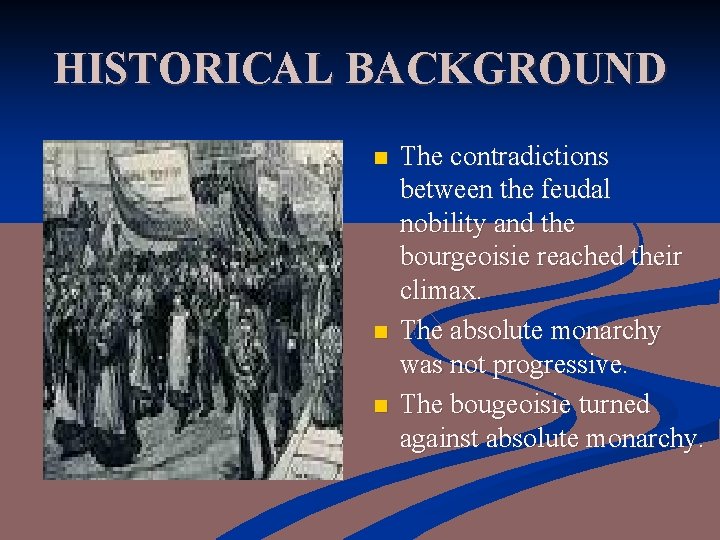
HISTORICAL BACKGROUND n n n The contradictions between the feudal nobility and the bourgeoisie reached their climax. The absolute monarchy was not progressive. The bougeoisie turned against absolute monarchy.
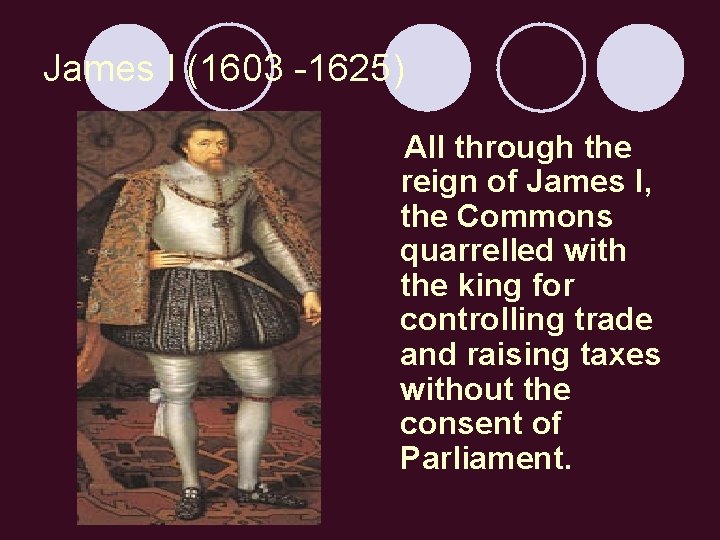
James I (1603 -1625) All through the reign of James I, the Commons quarrelled with the king for controlling trade and raising taxes without the consent of Parliament.
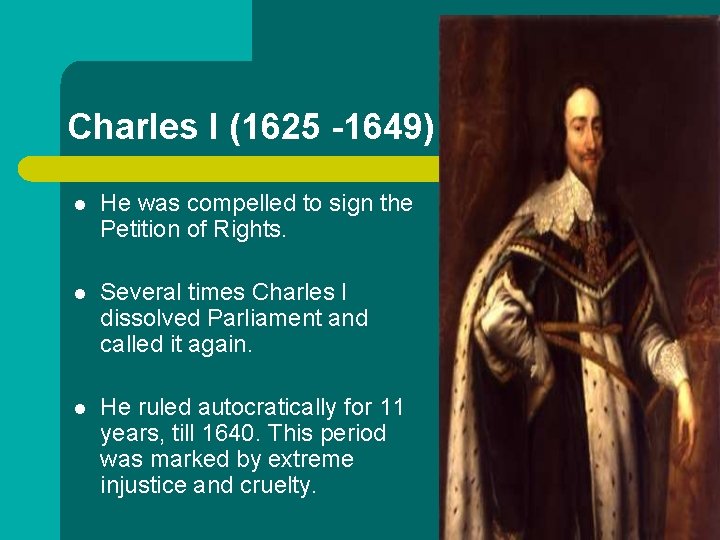
Charles I (1625 -1649) l He was compelled to sign the Petition of Rights. l Several times Charles I dissolved Parliament and called it again. l He ruled autocratically for 11 years, till 1640. This period was marked by extreme injustice and cruelty.
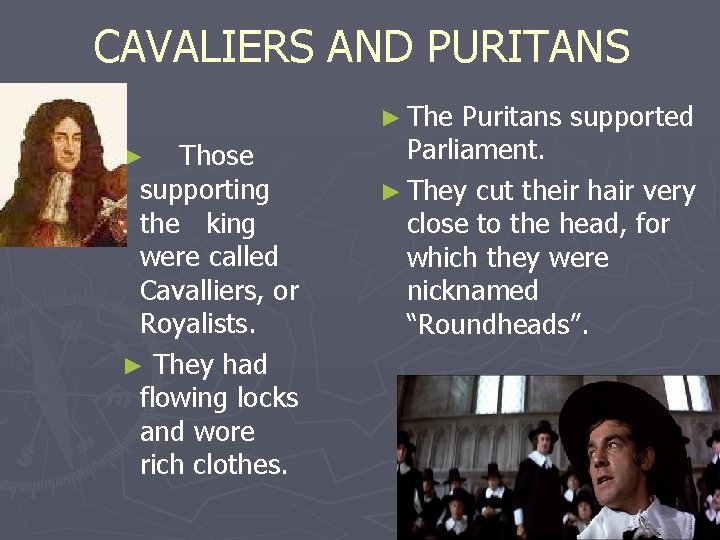
CAVALIERS AND PURITANS ► The Those supporting the king were called Cavalliers, or Royalists. ► They had flowing locks and wore rich clothes. ► Puritans supported Parliament. ► They cut their hair very close to the head, for which they were nicknamed “Roundheads”.
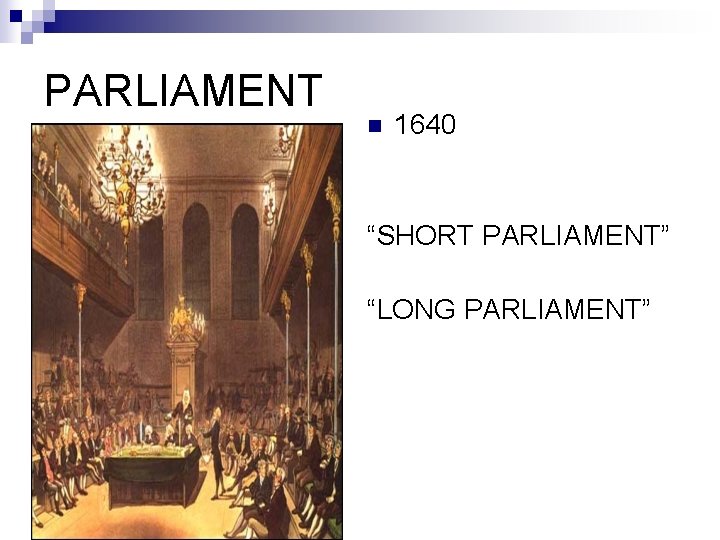
PARLIAMENT n 1640 “SHORT PARLIAMENT” “LONG PARLIAMENT”
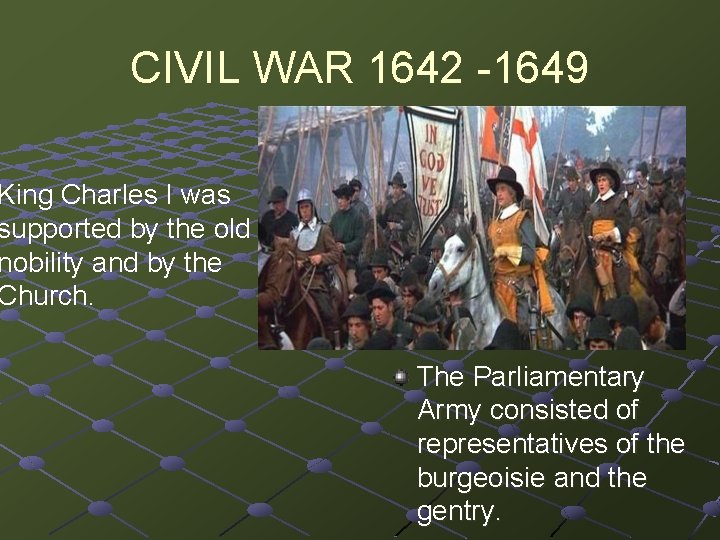
CIVIL WAR 1642 -1649 King Charles I was supported by the old nobility and by the Church. The Parliamentary Army consisted of representatives of the burgeoisie and the gentry.
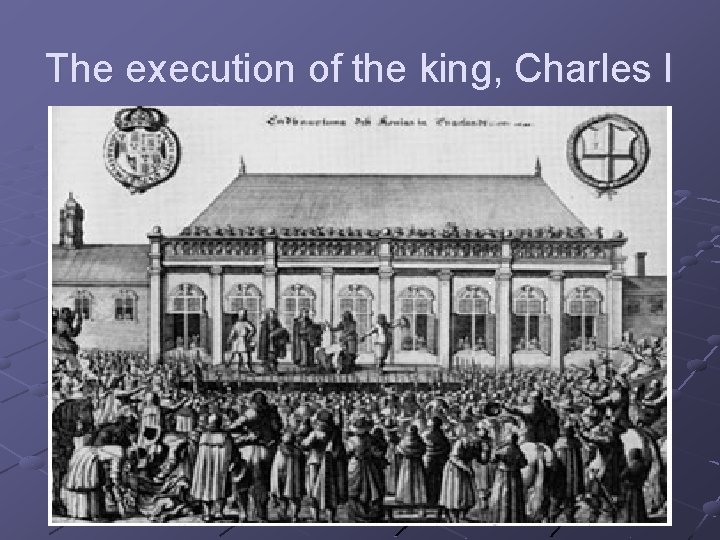
The execution of the king, Charles I
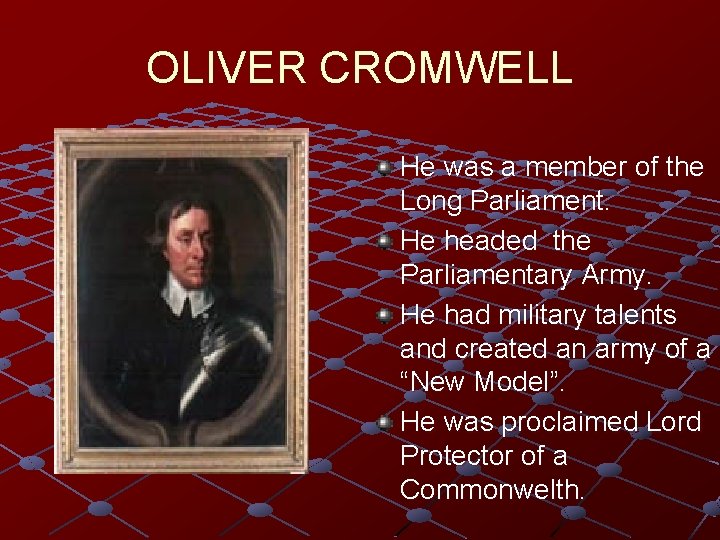
OLIVER CROMWELL He was a member of the Long Parliament. He headed the Parliamentary Army. He had military talents and created an army of a “New Model”. He was proclaimed Lord Protector of a Commonwelth.
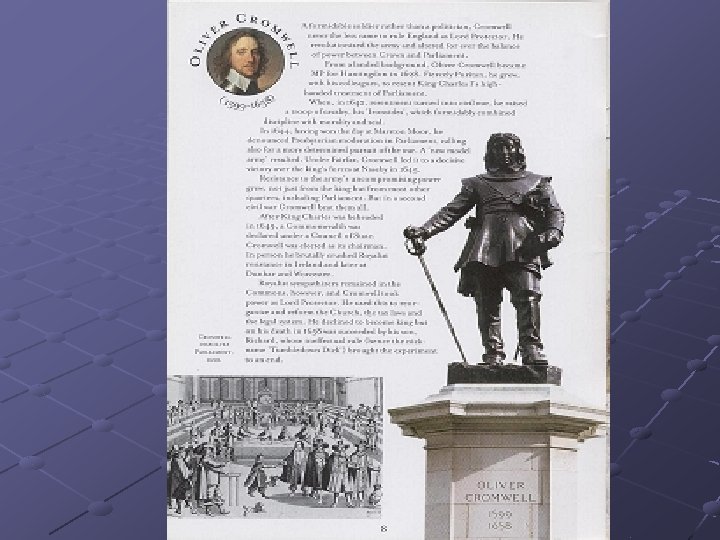
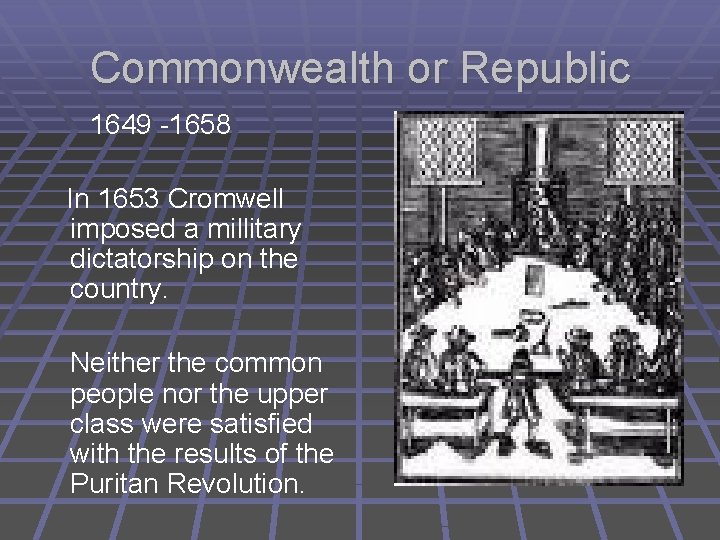
Commonwealth or Republic 1649 -1658 In 1653 Cromwell imposed a millitary dictatorship on the country. Neither the common people nor the upper class were satisfied with the results of the Puritan Revolution.
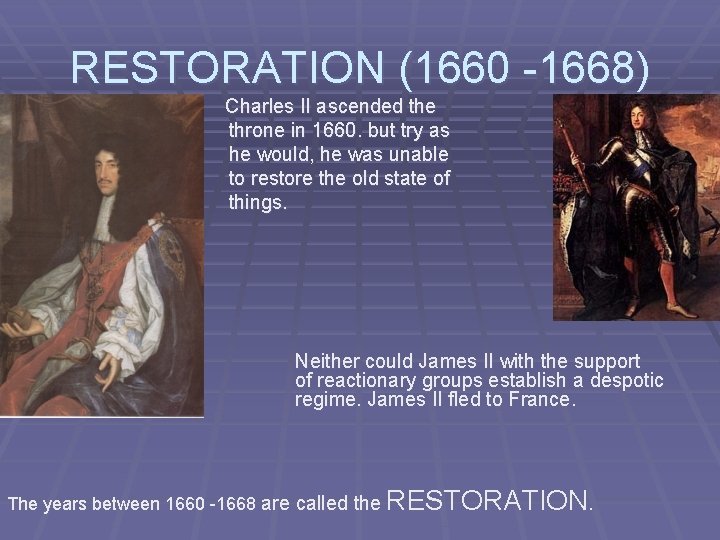
RESTORATION (1660 -1668) Charles II ascended the throne in 1660. but try as he would, he was unable to restore the old state of things. Neither could James II with the support of reactionary groups establish a despotic regime. James II fled to France. The years between 1660 -1668 are called the RESTORATION.
“WHIGS” and “TORIES” § By that time two main parties had been formed in Parliament, one representing the interests of business men, the other, of the land-owners and clergy. § The two parties hated each other so much that the insulting nicknames of “Whigs” for the business men and “Tories” for land-owners 55 were invented. § Later, these names came to be used officially.
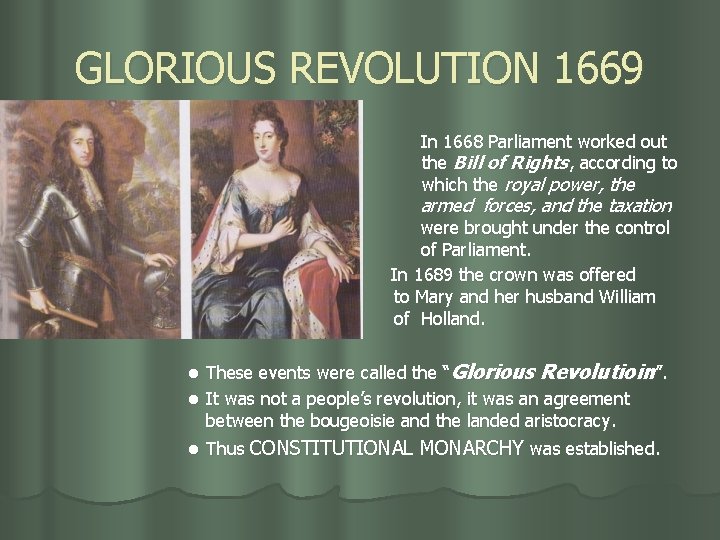
GLORIOUS REVOLUTION 1669 l In 1668 Parliament worked out the Bill of Rights, according to which the royal power, the armed forces, and the taxation l were brought under the control of Parliament. In 1689 the crown was offered to Mary and her husband William of Holland. These events were called the “Glorious Revolutioin”. l It was not a people’s revolution, it was an agreement between the bougeoisie and the landed aristocracy. l l Thus CONSTITUTIONAL MONARCHY was established.
- Slides: 15