
ENGLISH LANGUAGE TEACHING ELT FOR YOUNG LEARNERS By
ENGLISH LANGUAGE TEACHING (ELT) FOR YOUNG LEARNERS By: Sri Supiah Cahyati, M. Pd English Education Study Program IKIP Siliwangi 2019
Session 2 • Theories of Children Learning Development: • Mutiple Intelligences • TEYL in Indonesia Context (Identifying English teaching-learning for YL, the name of the school, the book used, the way the teacher teach, the assignment given. • Classroom Language
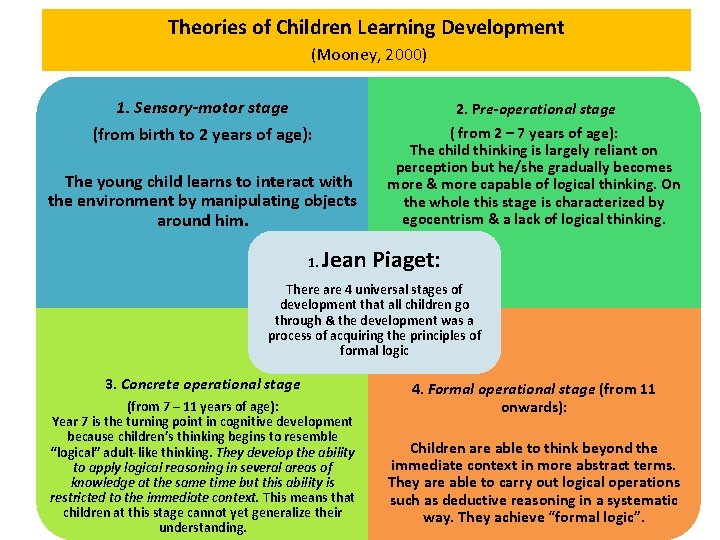
Theories of Children Learning Development (Mooney, 2000) 1. Sensory-motor stage (from birth to 2 years of age): The young child learns to interact with the environment by manipulating objects around him. 1. 2. Pre-operational stage ( from 2 – 7 years of age): The child thinking is largely reliant on perception but he/she gradually becomes more & more capable of logical thinking. On the whole this stage is characterized by egocentrism & a lack of logical thinking. Jean Piaget: There are 4 universal stages of development that all children go through & the development was a process of acquiring the principles of formal logic 3. Concrete operational stage (from 7 – 11 years of age): Year 7 is the turning point in cognitive development because children’s thinking begins to resemble “logical” adult-like thinking. They develop the ability to apply logical reasoning in several areas of knowledge at the same time but this ability is restricted to the immediate context. This means that children at this stage cannot yet generalize their understanding. 4. Formal operational stage (from 11 onwards): Children are able to think beyond the immediate context in more abstract terms. They are able to carry out logical operations such as deductive reasoning in a systematic way. They achieve “formal logic”.
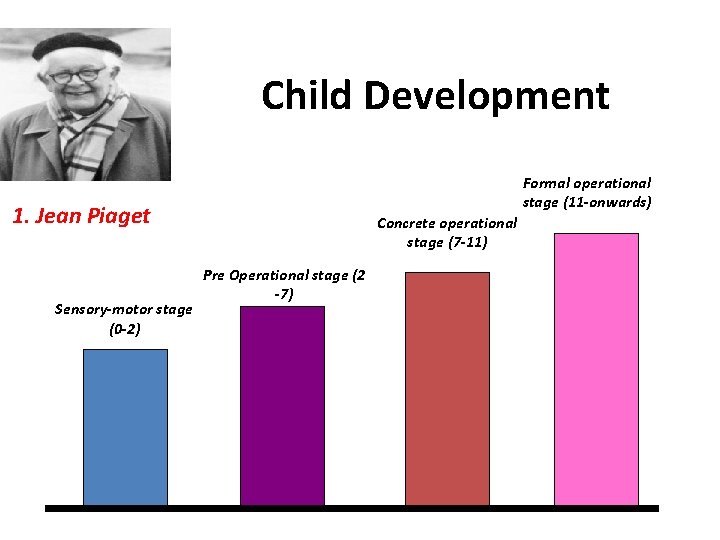
Child Development Formal operational stage (11 -onwards) 1. Jean Piaget Sensory-motor stage (0 -2) Concrete operational stage (7 -11) Pre Operational stage (2 -7)
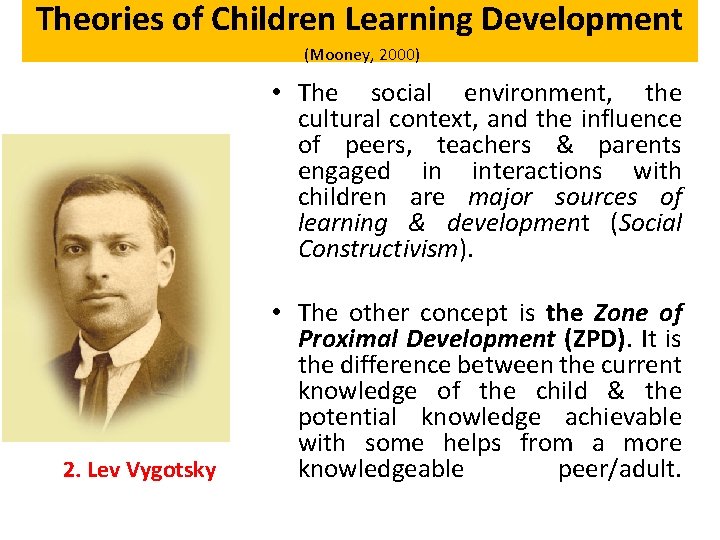
Theories of Children Learning Development (Mooney, 2000) • The social environment, the cultural context, and the influence of peers, teachers & parents engaged in interactions with children are major sources of learning & development (Social Constructivism). 2. Lev Vygotsky • The other concept is the Zone of Proximal Development (ZPD). It is the difference between the current knowledge of the child & the potential knowledge achievable with some helps from a more knowledgeable peer/adult.
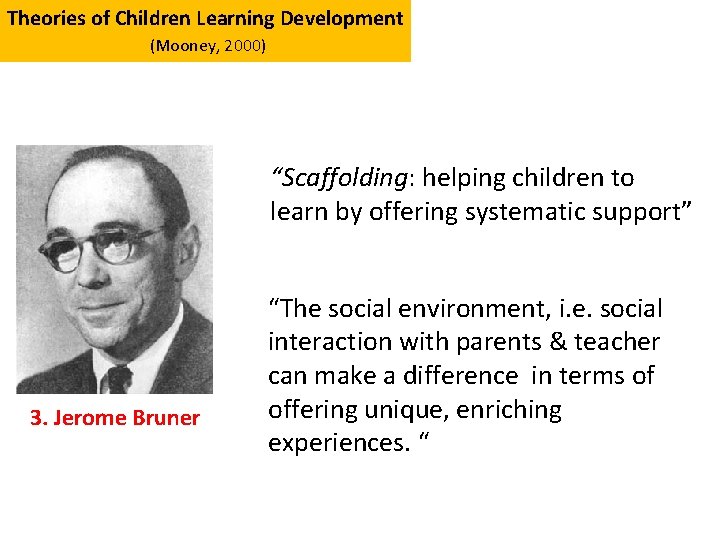
Theories of Children Learning Development (Mooney, 2000) “Scaffolding: helping children to learn by offering systematic support” 3. Jerome Bruner “The social environment, i. e. social interaction with parents & teacher can make a difference in terms of offering unique, enriching experiences. “
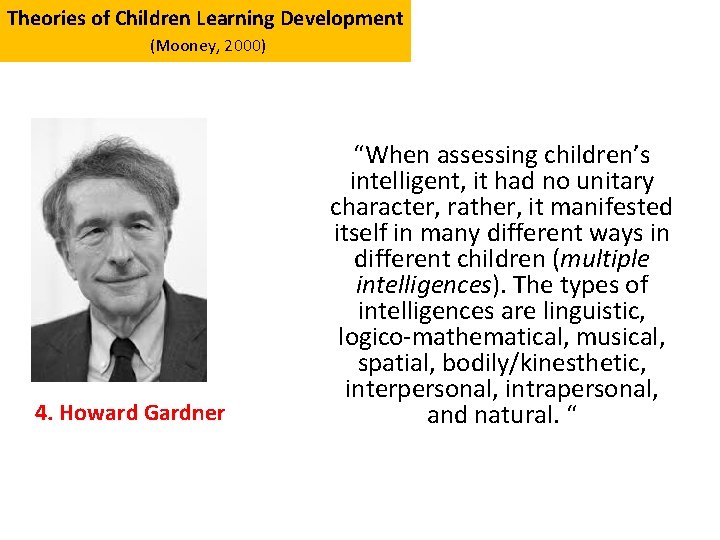
Theories of Children Learning Development (Mooney, 2000) 4. Howard Gardner “When assessing children’s intelligent, it had no unitary character, rather, it manifested itself in many different ways in different children (multiple intelligences). The types of intelligences are linguistic, logico-mathematical, musical, spatial, bodily/kinesthetic, interpersonal, intrapersonal, and natural. “
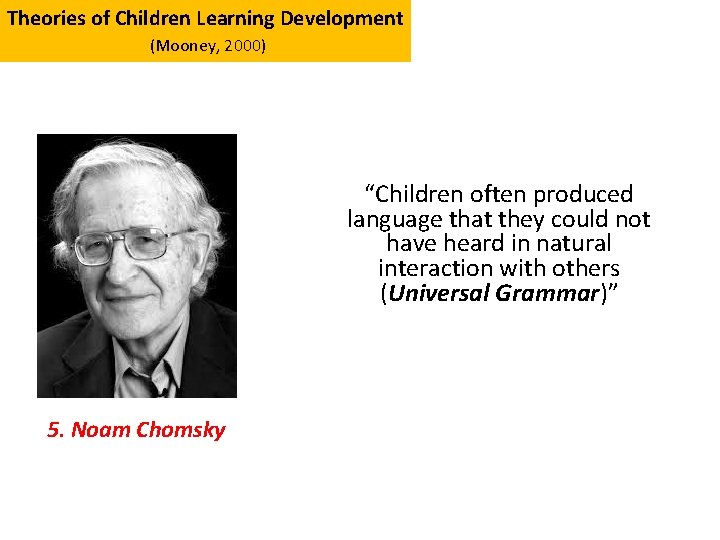
Theories of Children Learning Development (Mooney, 2000) “Children often produced language that they could not have heard in natural interaction with others (Universal Grammar)” 5. Noam Chomsky
Theories of Children Learning Development (Mooney, 2000) 6. Eric Lenneberg “Brain plasticity was only conducive to language learning until puberty (Critical period hypothesis). Children below 1112, who are given advantageous learning circumstances, such as plenty of input & interaction in an English environment, are more likely to acquire English to native levels without an accent”
Theories of Children Learning Development (Mooney, 2000) Total Physical Response (TPR): Kinesthetic intelligence and memory is used because children do not learn in a conscious intellectual way. Children do not learn by thinking, but by “doing” things. 7. James Asher
Theories of Children Learning Development (Mooney, 2000) 8. Krashen & Terrell The Input Hipothesis Spoken fluency in second language is not taught directly. Rather the ability to speak fluently and easily in a second language emerges by itself, after a sufficient amount of competence has been acquired through input. Stephen Krashen We acquire (not learn) language by understanding input that is a little beyond our current level of (acquired) competence. Listening comprehension and reading are the primary importance in the language program, and the ability to speak (or write) fluently in a second language will come on its own with time. Speaking ability "emerges" after the acquirer has built up competence through comprehending input. Tracey Terrel
Input Hypothesis (Cont. ) The Major Points On the Input Hypothesis are: It relates to acquisition, not to learning; We acquire by understanding language a bit beyond our current level of competence. This is done with the help of context Spoken fluency emerges gradually and is not taught directly When caretakers talk to acquirers so that the acquirers understand the message, input automatically contains "i+1", the grammatical structures the acquirer is "ready" to acquire
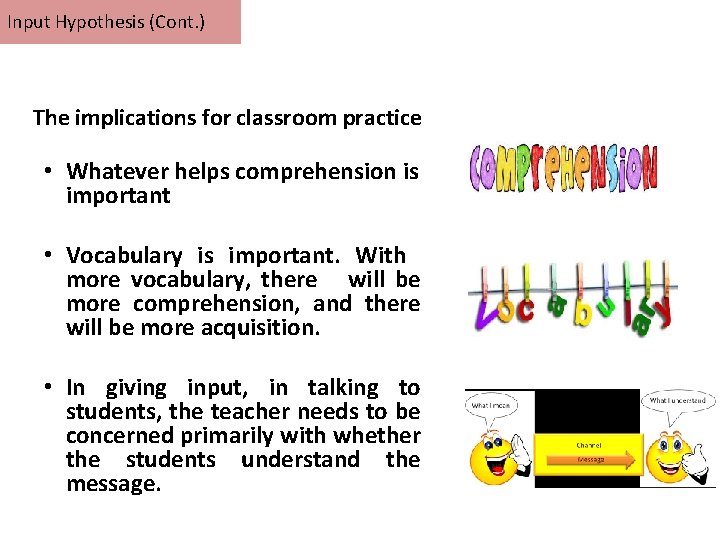
Input Hypothesis (Cont. ) The implications for classroom practice • Whatever helps comprehension is important • Vocabulary is important. With more vocabulary, there will be more comprehension, and there will be more acquisition. • In giving input, in talking to students, the teacher needs to be concerned primarily with whether the students understand the message.
Theories of Children Learning Development (Mooney, 2000) 9. John Dewey • Education should be child centered. • Education must be both active & interactive. • Education must involve the social world of the child and the community. • Plan purposeful curriculum. • Make sense of the world for children. • “It’s fun” is not enough.
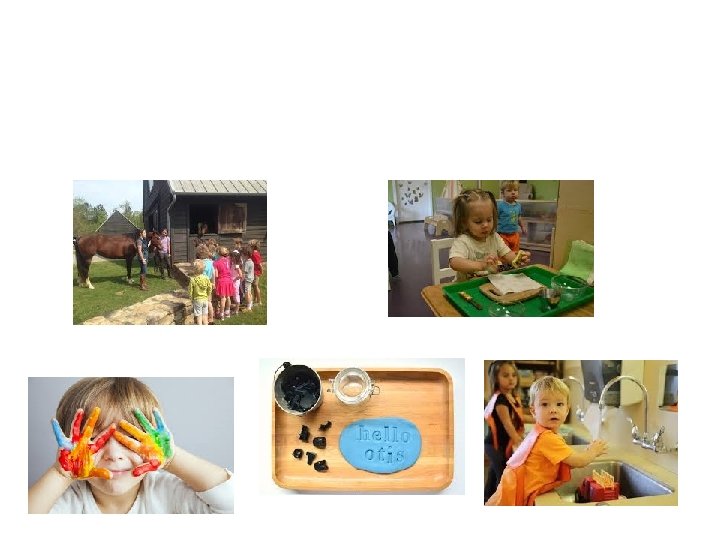
Theories of Children Learning Development (Mooney, 2000) • Children learn language and other significant life skills, without conscious effort, from the environments where they spend their time. • Children learn best through sensory experiences, by doing & through repetition. 10. Maria Montessori • Children are capable of great concentration when they are surrounded by many interesting things to do & given the time and freedom to do them. • Children need more physical activity.
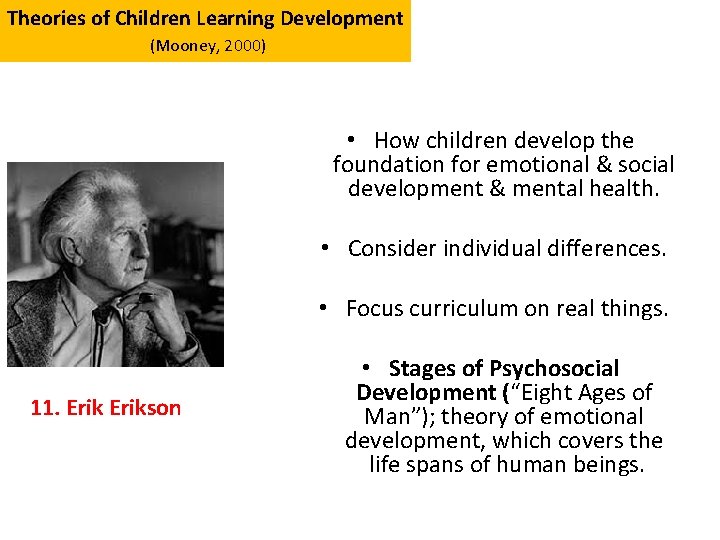
Theories of Children Learning Development (Mooney, 2000) • How children develop the foundation for emotional & social development & mental health. • Consider individual differences. • Focus curriculum on real things. 11. Erikson • Stages of Psychosocial Development (“Eight Ages of Man”); theory of emotional development, which covers the life spans of human beings.
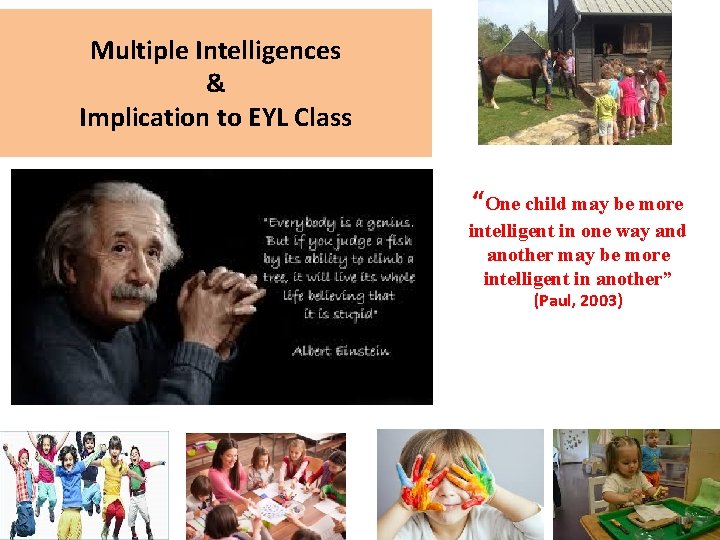
Multiple Intelligences & Implication to EYL Class “One child may be more intelligent in one way and another may be more intelligent in another” (Paul, 2003)
Multiple Intelligences & Implication to EYL Class For teachers (responsibility): To learn about the different learning styles or intelligences to cater every type of learners in the classrooms.
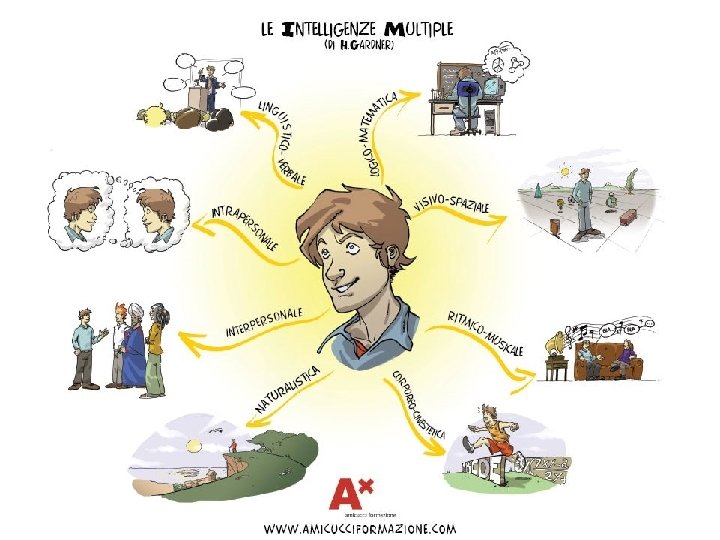
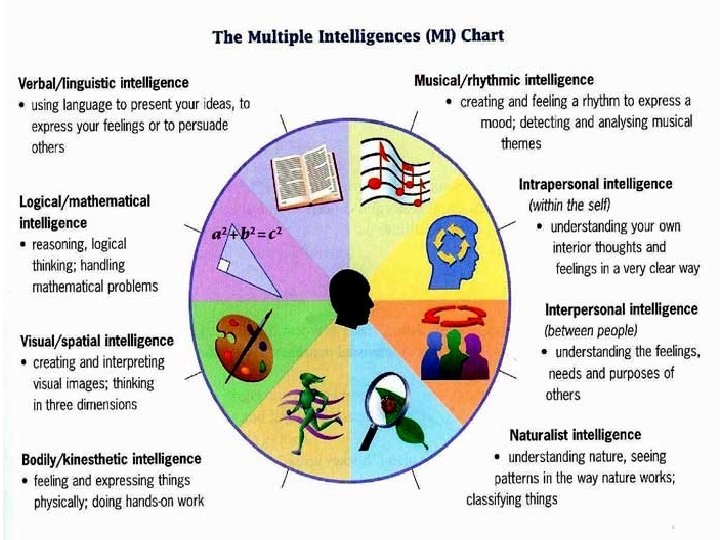
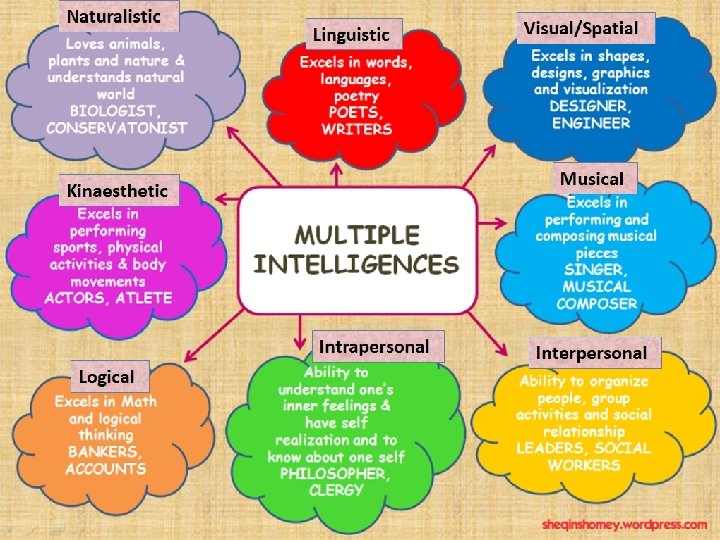
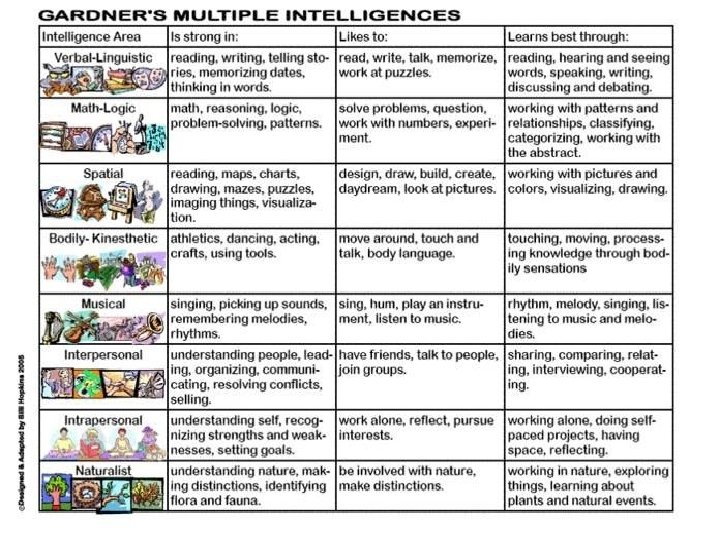
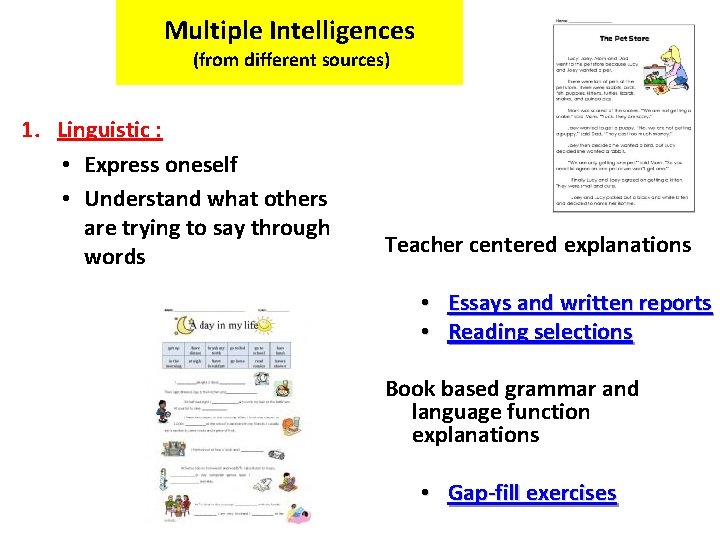
Multiple Intelligences (from different sources) 1. Linguistic : • Express oneself • Understand what others are trying to say through words Teacher centered explanations • Essays and written reports • Reading selections Book based grammar and language function explanations • Gap-fill exercises
Multiple Intelligences (from different sources) 2. Logical/mathematical : • Understand manipulate numbers • See cause and effect relationship Grammar categorizing activities • Grammar rules study and inductive explanations • Error recognition • Correcting work based on teacher indications • Develop mind-maps and other vocabulary charts
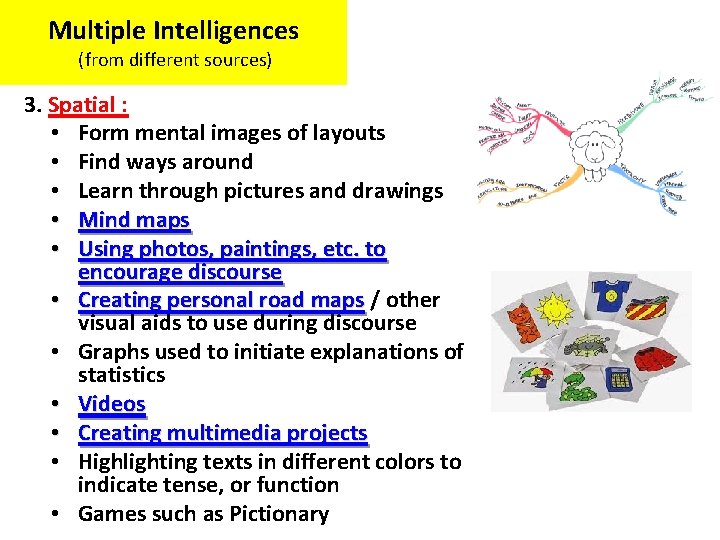
Multiple Intelligences (from different sources) 3. Spatial : • Form mental images of layouts • Find ways around • Learn through pictures and drawings • Mind maps • Using photos, paintings, etc. to encourage discourse • Creating personal road maps / other visual aids to use during discourse • Graphs used to initiate explanations of statistics • Videos • Creating multimedia projects • Highlighting texts in different colors to indicate tense, or function • Games such as Pictionary
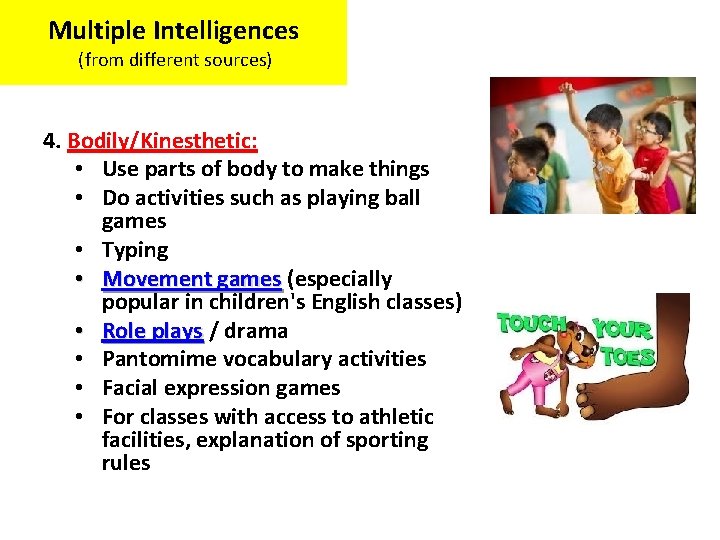
Multiple Intelligences (from different sources) 4. Bodily/Kinesthetic: • Use parts of body to make things • Do activities such as playing ball games • Typing • Movement games (especially popular in children's English classes) • Role plays / drama • Pantomime vocabulary activities • Facial expression games • For classes with access to athletic facilities, explanation of sporting rules
Multiple Intelligences (from different sources) 5. Musical : • Produce and recognize songs • Play around with melodies • Singing • Composing rhythm • Adapting/modifying song
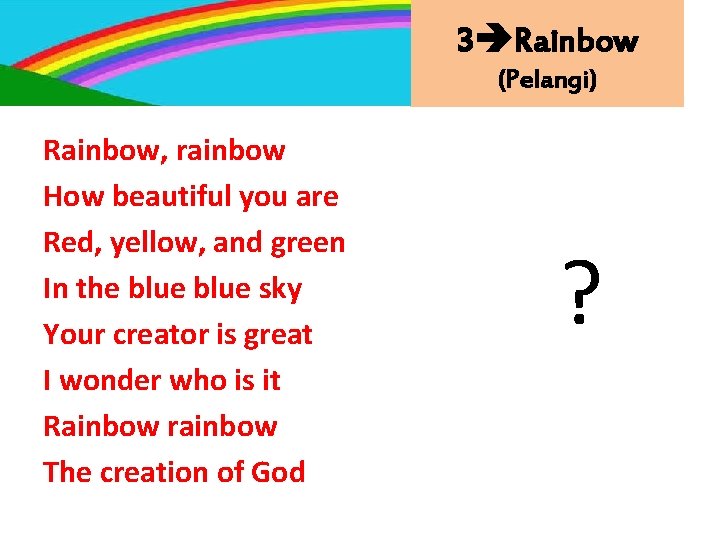
3 Rainbow (Pelangi) Rainbow, rainbow How beautiful you are Red, yellow, and green In the blue sky Your creator is great I wonder who is it Rainbow rainbow The creation of God ?
3 I Love Everybody (Aku Sayang Ibu ) One and one I love my mommy Two and two I love my daddy Three and three I love brother, sister One and two and three I love everybody ?
3 Family I love my father, and I love my mother, I love my brother, and my sister too (2 x) Yes, they are my family (2 x) Famili. . . family. . . oh. .
3 Little Teapot (Teko Kecil ) I’m a little teapot, short and stout Here is my handle, here is my spout When I get my steam up then I shout (tweeeeet) Tip me over and pour me out Aku teko kecil yang mungil Ini gagangku dan corongku Bila mendidih, aku bersiul (tuiiiiit) Miringkan aku dan tuangkan
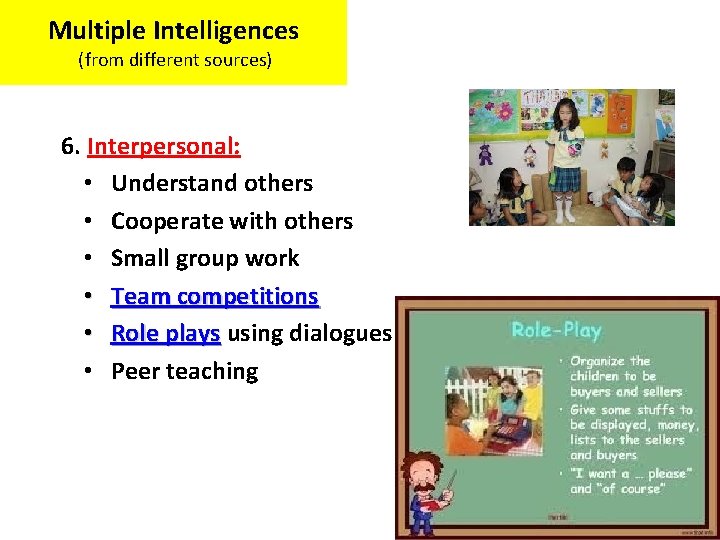
Multiple Intelligences (from different sources) 6. Interpersonal: • Understand others • Cooperate with others • Small group work • Team competitions • Role plays using dialogues • Peer teaching
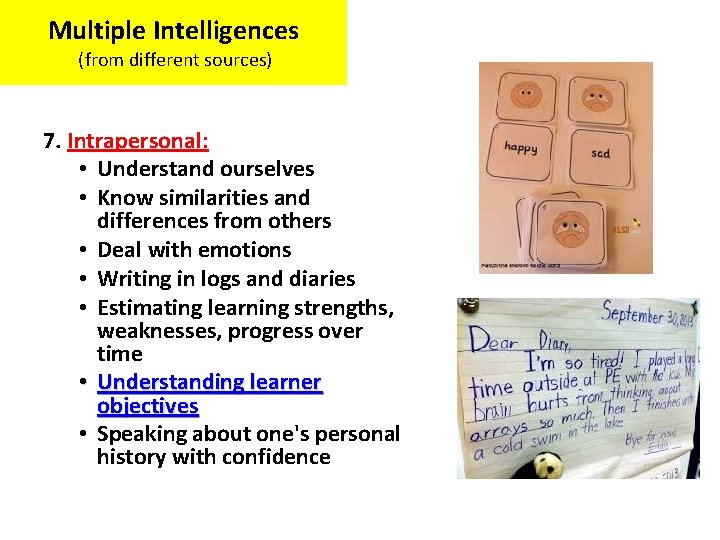
Multiple Intelligences (from different sources) 7. Intrapersonal: • Understand ourselves • Know similarities and differences from others • Deal with emotions • Writing in logs and diaries • Estimating learning strengths, weaknesses, progress over time • Understanding learner objectives • Speaking about one's personal history with confidence
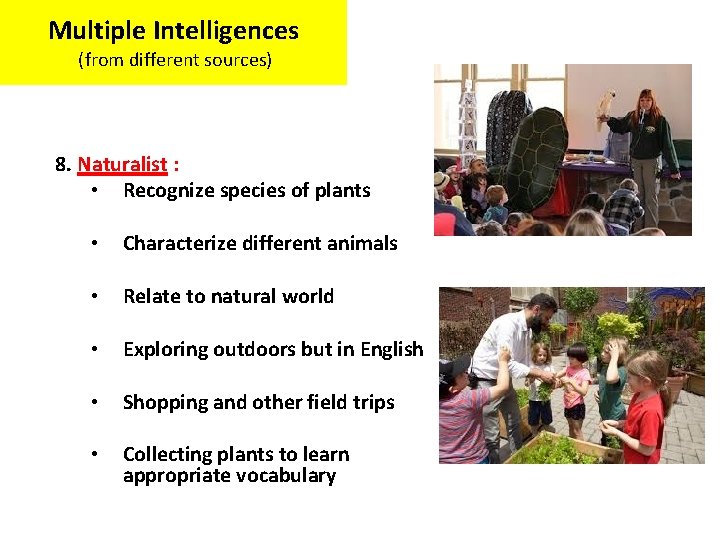
Multiple Intelligences (from different sources) 8. Naturalist : • Recognize species of plants • Characterize different animals • Relate to natural world • Exploring outdoors but in English • Shopping and other field trips • Collecting plants to learn appropriate vocabulary
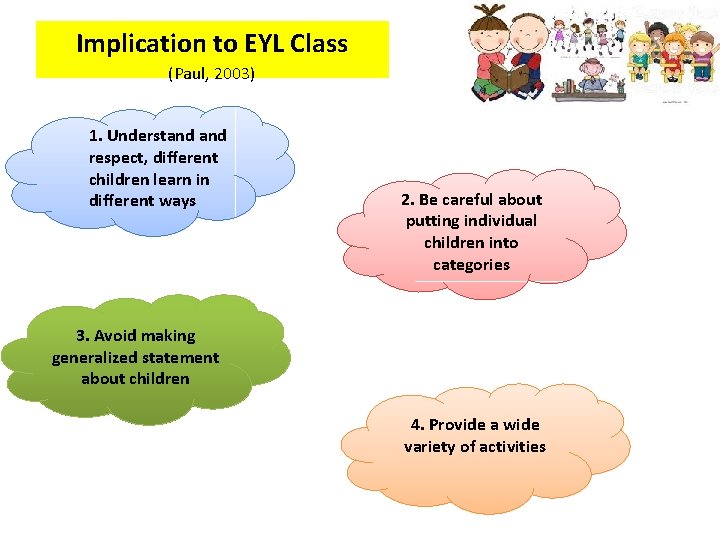
Implication to EYL Class (Paul, 2003) 1. Understand respect, different children learn in different ways 2. Be careful about putting individual children into categories 3. Avoid making generalized statement about children 4. Provide a wide variety of activities

“Exposure to English”: How much children hear & how often they have opportunity to interact in English. It’s important that opportunities are created in the classroom for children to be exposed to natural language & to interact with each other The implication: Teachers’ competencies in terms of their proficiency in English to provide the necessary exposure to the language, and their methodology to offer appropriate tasks & activities for children to communicate in a variety ways.
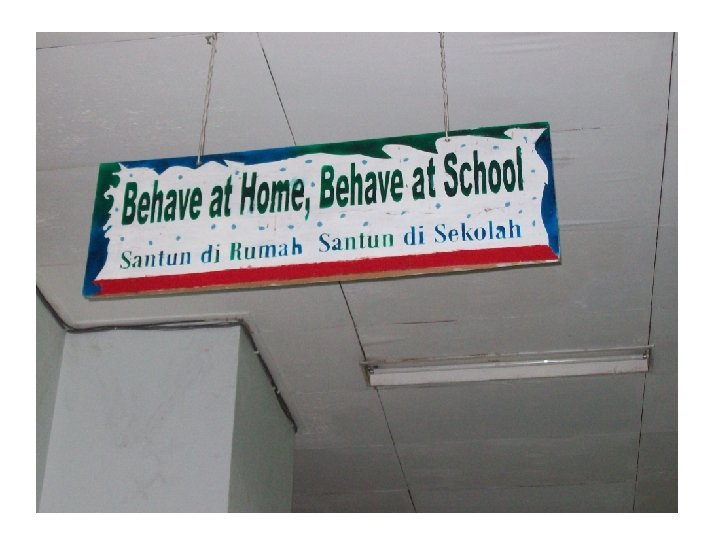
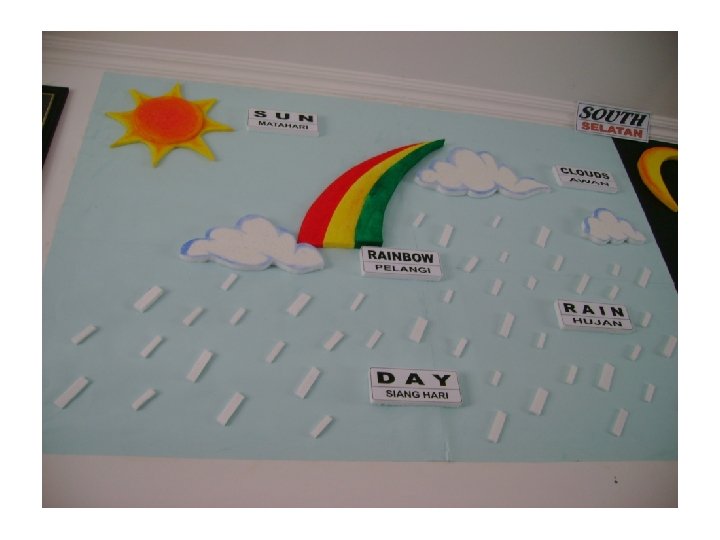
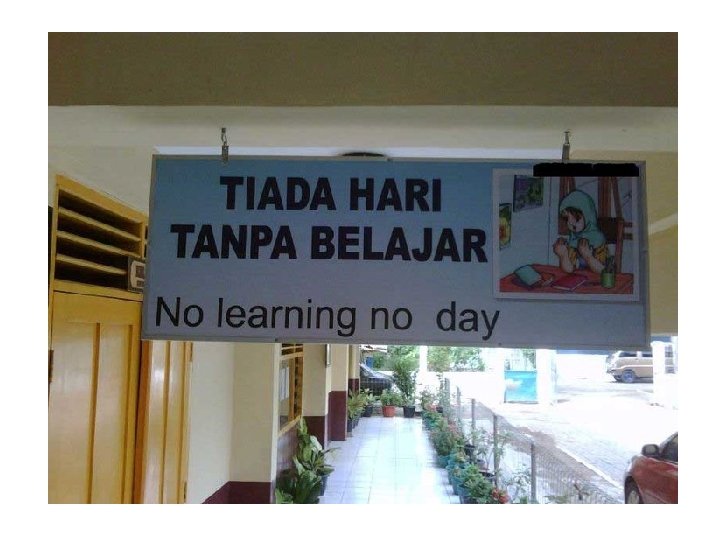
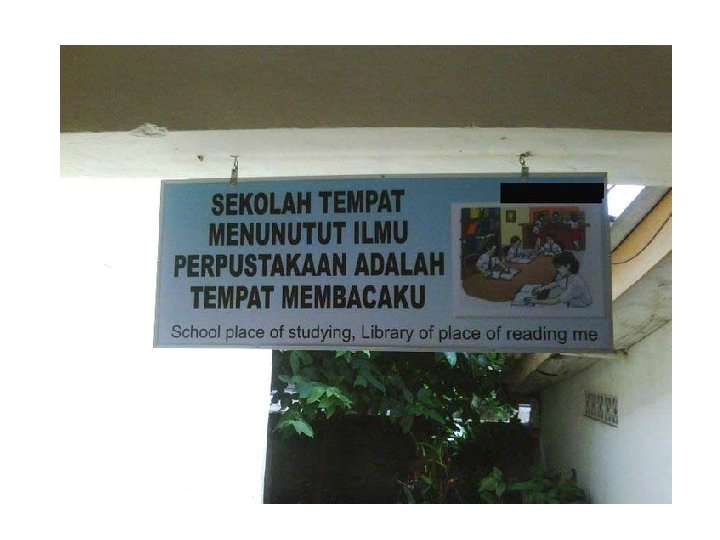
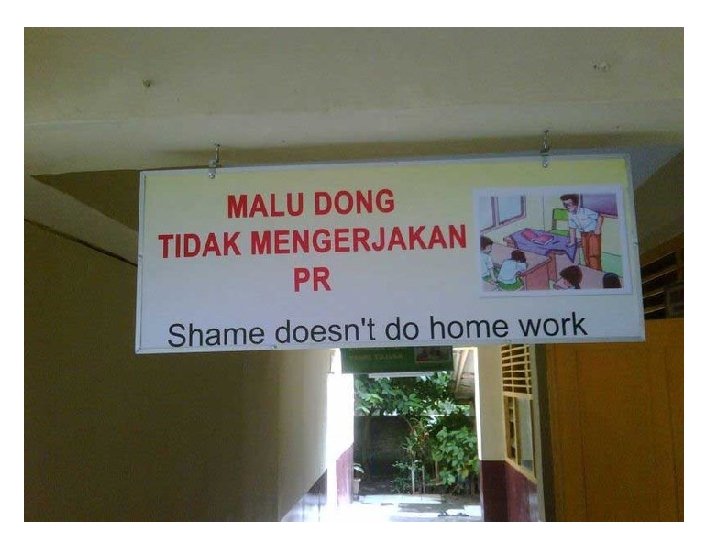
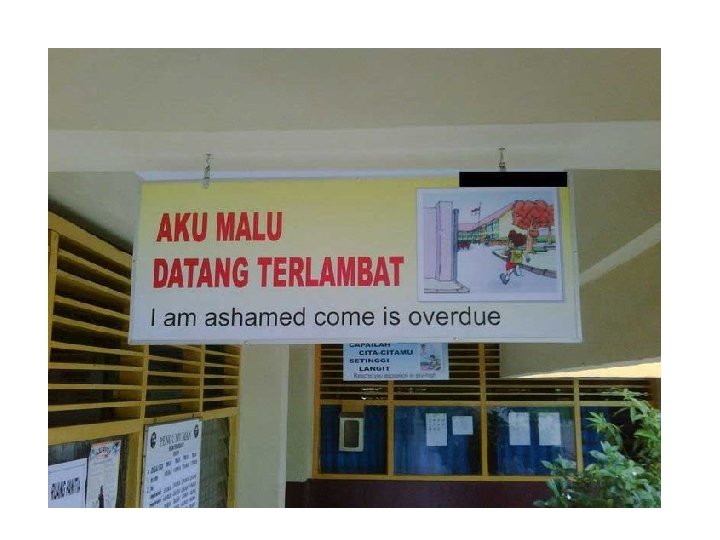
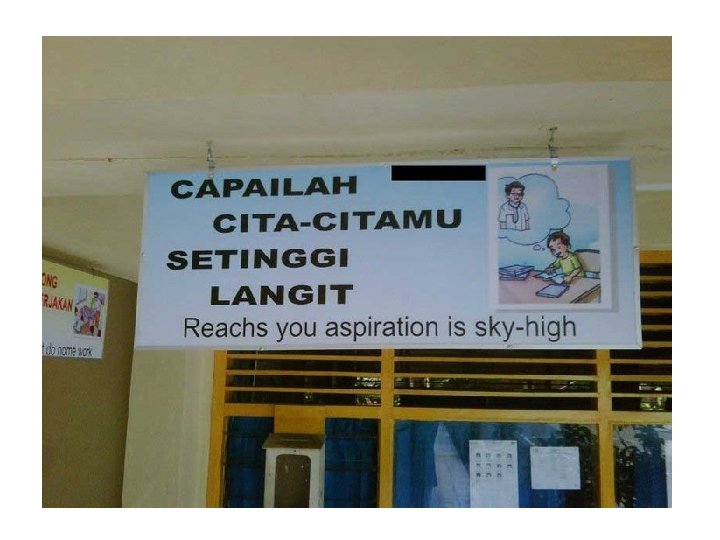
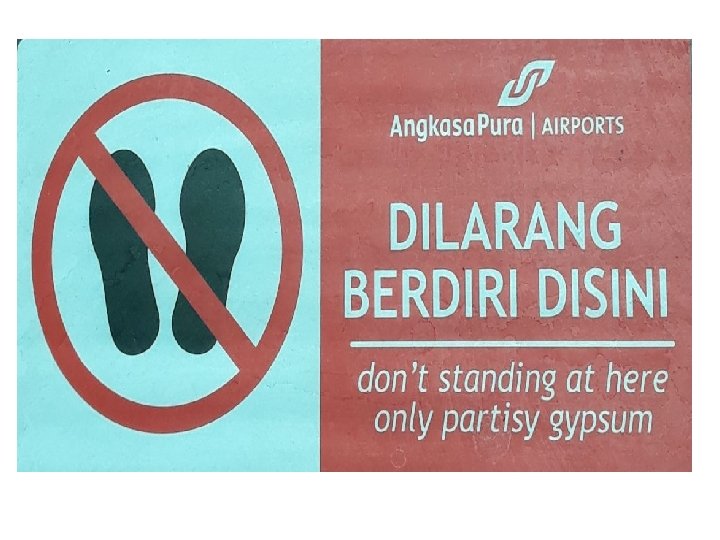
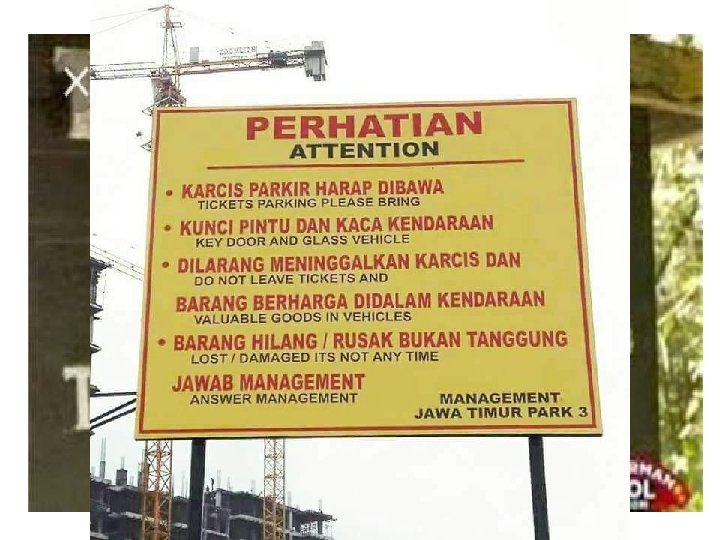
Creating English-rich environment at schools 1. Wise words in the halls 2. Labels in English 3. Wall magazines in English

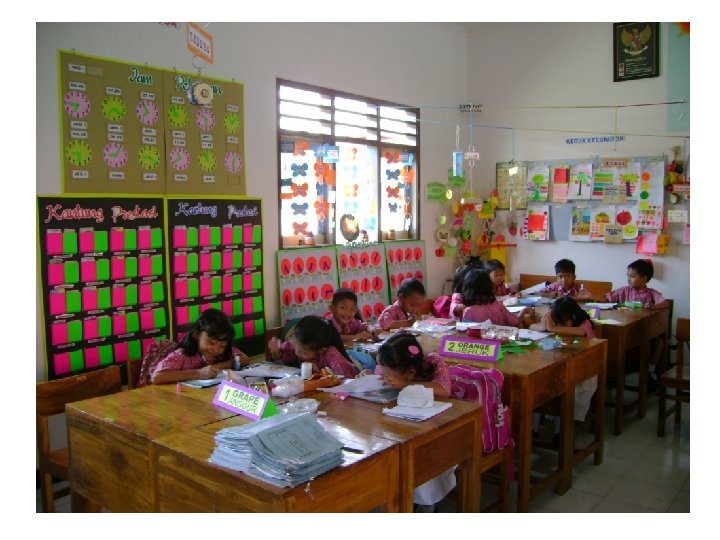
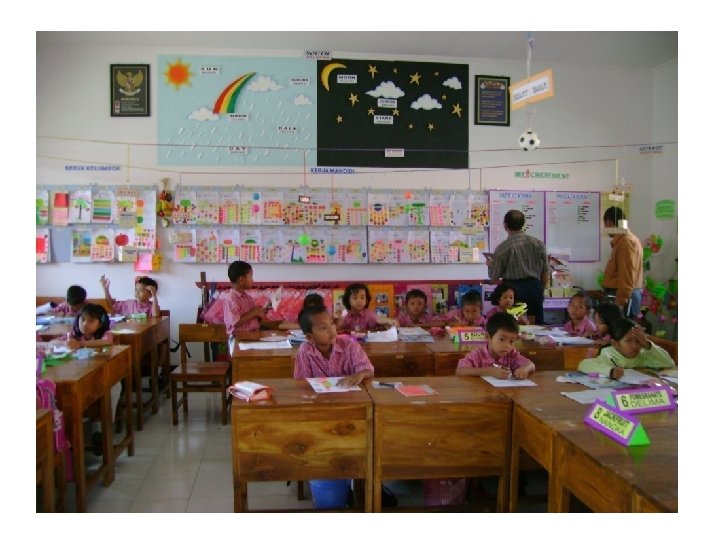
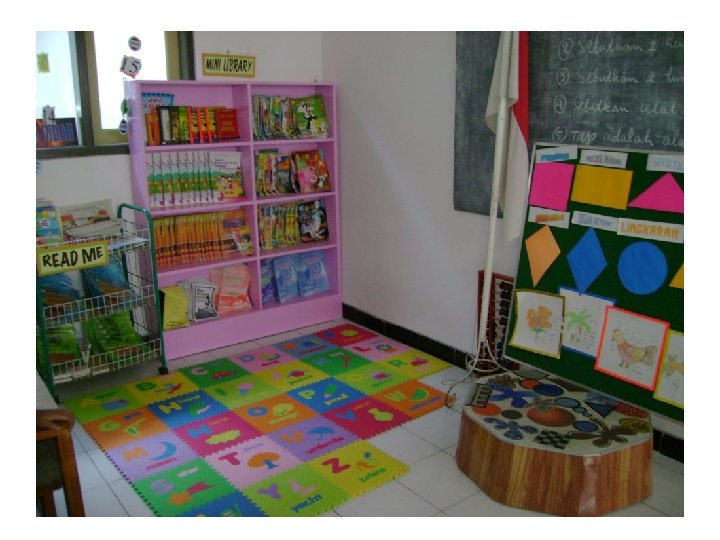
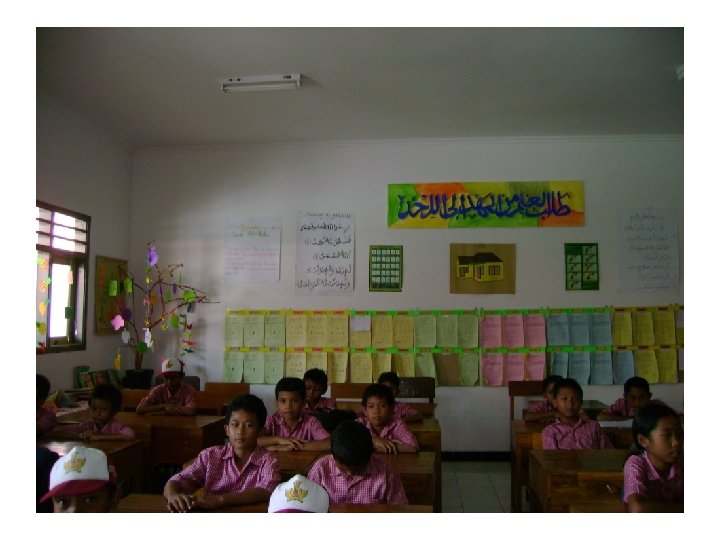
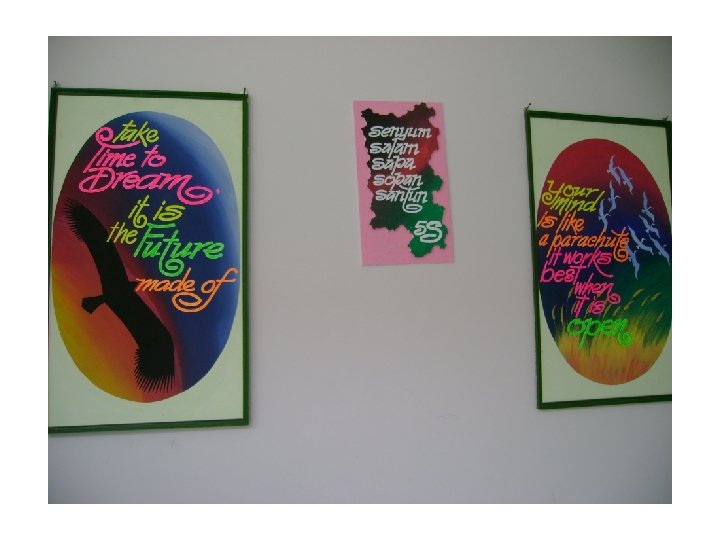
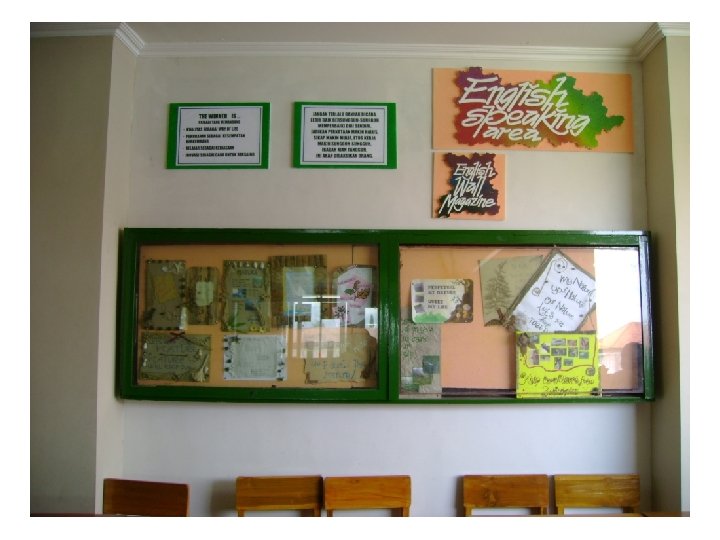
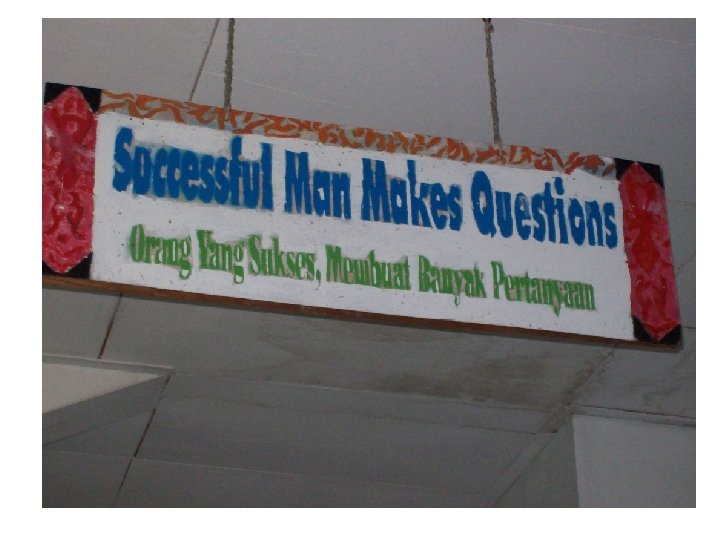


Always check the spelling!


MATERI PEMBELAJARAN ANAK USIA DINI (dari berbagai sumber)

Materi usia 0 – 3 tahun: • Pengenalan diri sendiri (Pengembangan konsep diri) • Pengenalan perasaan (perkembangan emosi) • Pengenalan tentang orang lain (perkembangan sosial) • Pengenalan berbagai gerak (perkembangan fisik) • Mengembangkan komunikasi (perkembangan bahasa) • Keterampilan berfikir (perkembangan kognitif)
Materi usia 3 tahun ke atas: • Keaksaraan (peningkatan kosa kata & bahasa, kesadaran phonologui, wawasan p[engetahuan, percakapan, memahami buku-buku & teks lainnya. • Konsep Matematika (pengenalan angka-angka, pola & hubungan, geometri & kesadaran ruang, pengukuran, pengumpulan data, pengorganisasian & mempresentasikannya. • Pengetahuan alam (objek fisik, kehidupan, bumi & lingkungan) • Pengetahuan sosial (tempat hidup orang banyak, bekerja, berinteraksi)
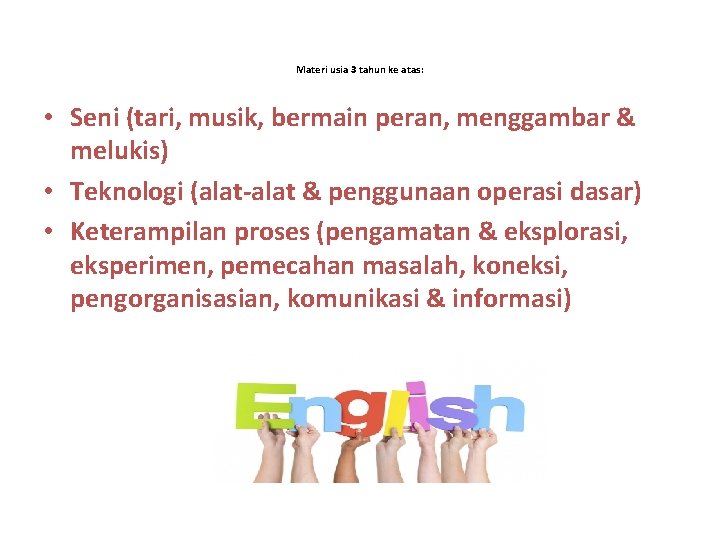
Materi usia 3 tahun ke atas: • Seni (tari, musik, bermain peran, menggambar & melukis) • Teknologi (alat-alat & penggunaan operasi dasar) • Keterampilan proses (pengamatan & eksplorasi, eksperimen, pemecahan masalah, koneksi, pengorganisasian, komunikasi & informasi)
Hal penting bagi orang tua: • Peka terhadap perbedaan kemampuan masing-masing anak • Terbuka terhadap perubahan anak • Pendampingan dan penghargaan yang tepat. • Kecerdasan tidak ditentukan oleh gen namun lebih banyak ditentukan oleh perlakuan/lingkungan.
Metode Pembelajaran • Bermain. • Bercerita • Bernyanyi • Bercakap (dialog dan tanya jawab) • Piknik • Praktik langsung • Bermain peran (sosio-drama) • Penugasan Noble, Professional & Global Educator
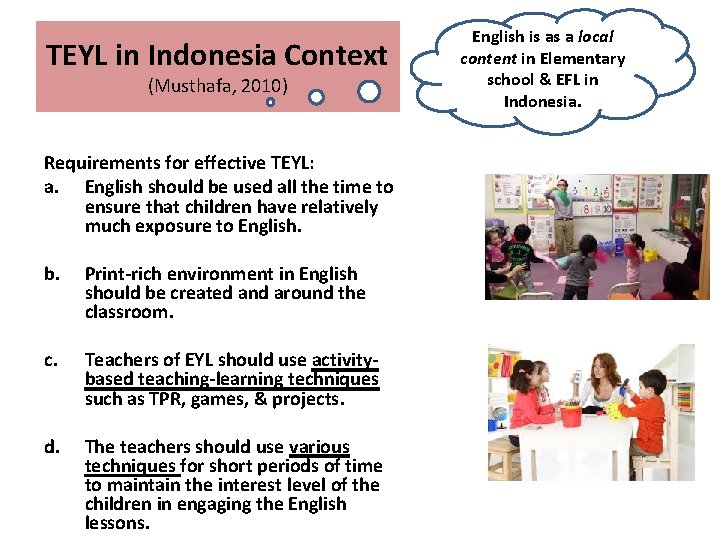
TEYL in Indonesia Context (Musthafa, 2010) Requirements for effective TEYL: a. English should be used all the time to ensure that children have relatively much exposure to English. b. Print-rich environment in English should be created and around the classroom. c. Teachers of EYL should use activitybased teaching-learning techniques such as TPR, games, & projects. d. The teachers should use various techniques for short periods of time to maintain the interest level of the children in engaging the English lessons. English is as a local content in Elementary school & EFL in Indonesia.
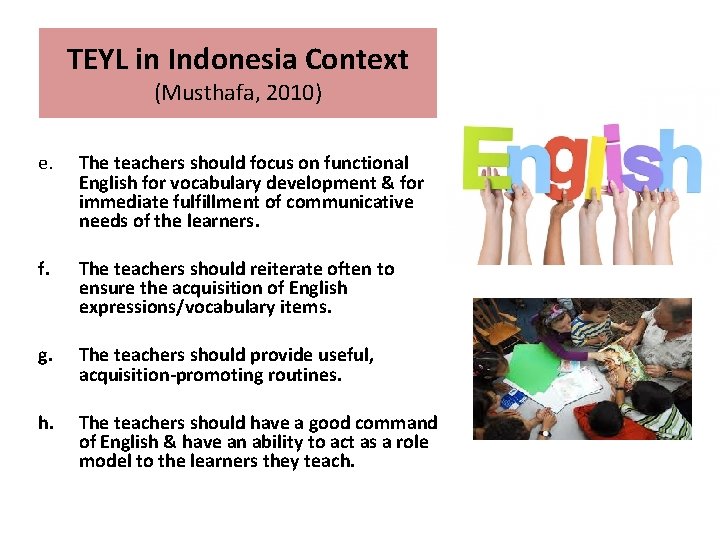
TEYL in Indonesia Context (Musthafa, 2010) e. The teachers should focus on functional English for vocabulary development & for immediate fulfillment of communicative needs of the learners. f. The teachers should reiterate often to ensure the acquisition of English expressions/vocabulary items. g. The teachers should provide useful, acquisition-promoting routines. h. The teachers should have a good command of English & have an ability to act as a role model to the learners they teach.
The Problem of EYL in Indonesia Context (Fadilah, 2017) a. No exact curriculum/lesson plan for teachers to teach EYL conducted by the government in Indonesia. b. The English teachers in primary schools are confuse of how to conduct a good lesson plan. c. The stage is not clear enough to achieve the lesson’s objectives which are appropriate with the level of the students.
English Lesson at Elementary Education (Maili, 2018) • The purpose: provide students’ competence in understanding oral and written information and simple expressions • Students learn English better at Elementary school because there has not been a process of separation of left brain and right brain function in children (Lenneberg’s theory). • Learning English at elementary school can help the students in learning English at Junior high school. • The teaching method, model, materials should be varied and appropriate with the children’s development & characteristics.
Benefit of Learning More Languages (Chapelton, 2016). • Children learning an additional language tend to score better on standardized tests because learning languages develops listening, observation, problemsolving, and critical thinking skills. • These are transferable skills that are of life-long benefit, both personally and professionally. • Encouraging in children a love of language at an early age prepares them well for school and for life
Classroom Language • Instructions in Organizing the Classroom
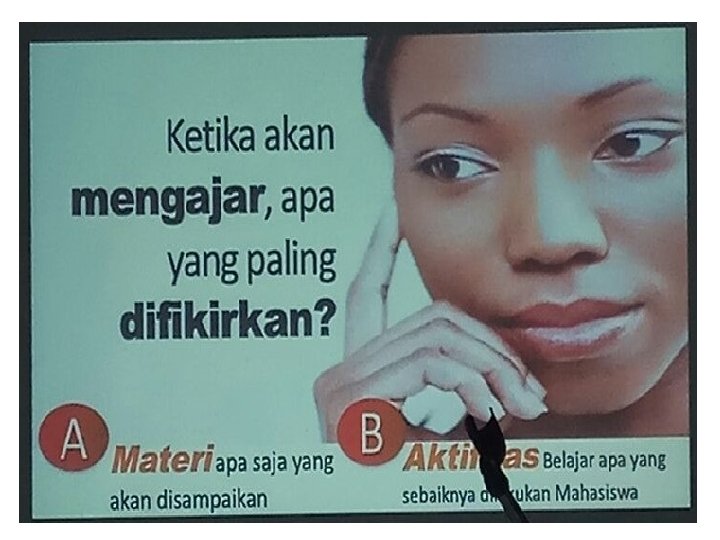
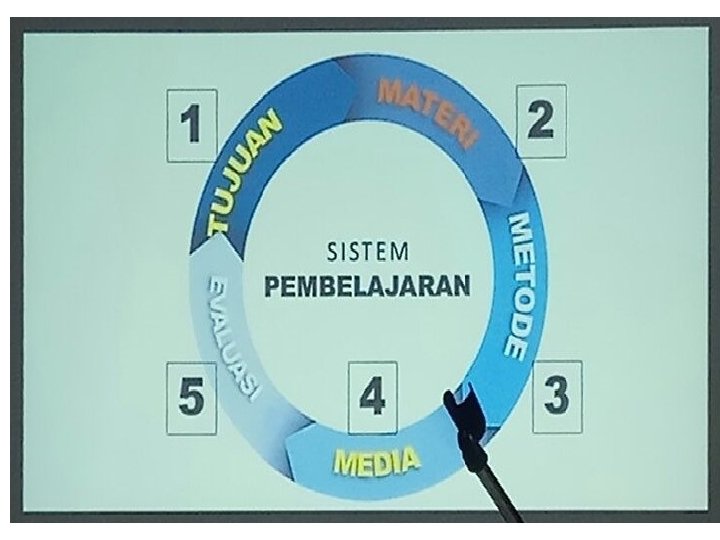
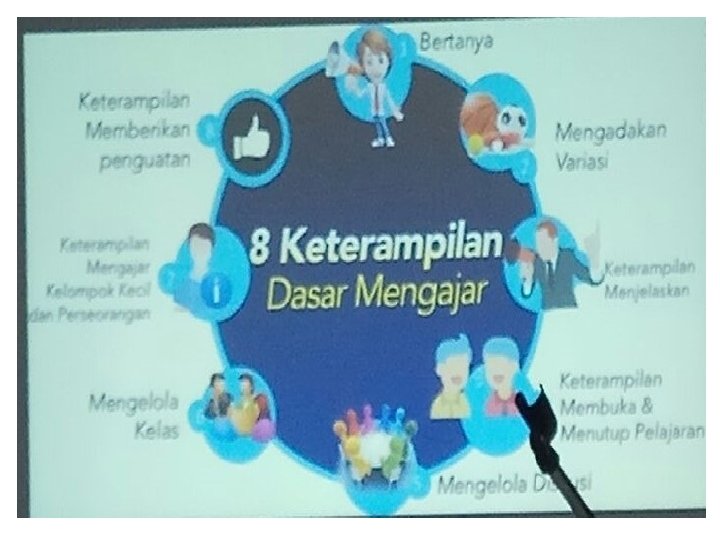
Teacher’s Instructions in Organizing the Classroom
1. Pre-activities: a. Greetings: Good morning, students. Good afternoon, everybody. b. Do the prayer before we start let’s pray together.
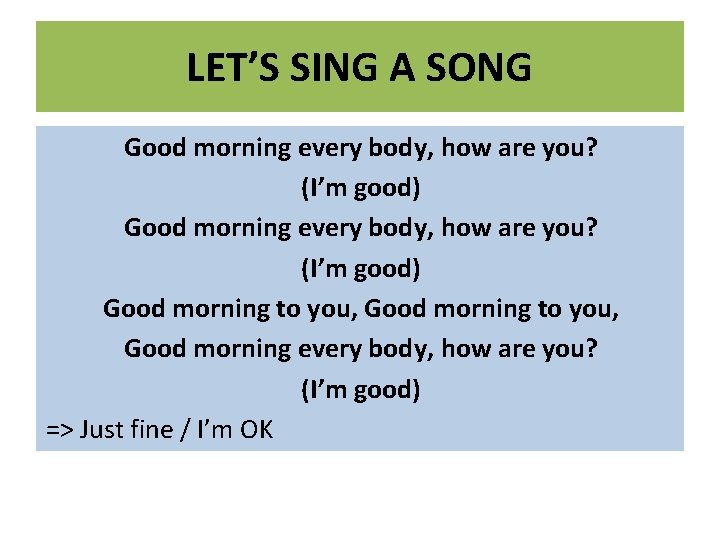
LET’S SING A SONG Good morning every body, how are you? (I’m good) Good morning to you, Good morning every body, how are you? (I’m good) => Just fine / I’m OK
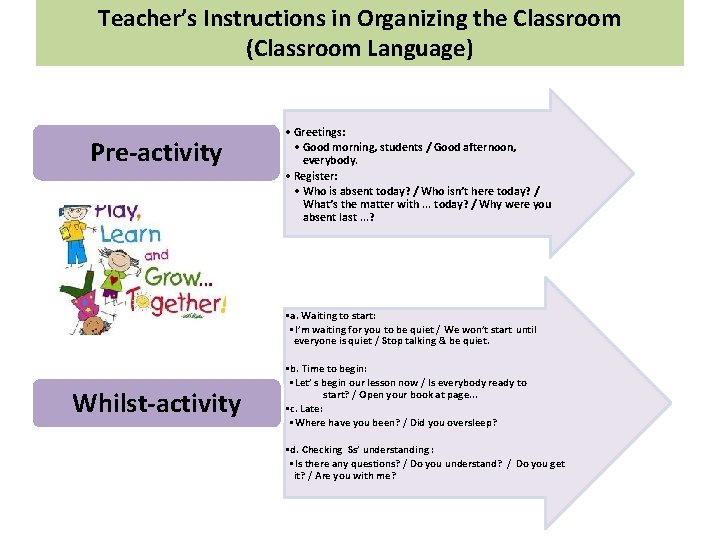
Teacher’s Instructions in Organizing the Classroom (Classroom Language) Pre-activity • Greetings: • Good morning, students / Good afternoon, everybody. • Register: • Who is absent today? / Who isn’t here today? / What’s the matter with. . . today? / Why were you absent last. . . ? • a. Waiting to start: • I’m waiting for you to be quiet / We won’t start until everyone is quiet / Stop talking & be quiet. Whilst-activity • b. Time to begin: • Let’ s begin our lesson now / Is everybody ready to start? / Open your book at page. . . • c. Late: • Where have you been? / Did you oversleep? • d. Checking Ss’ understanding : • Is there any questions? / Do you understand? / Do you get it? / Are you with me?
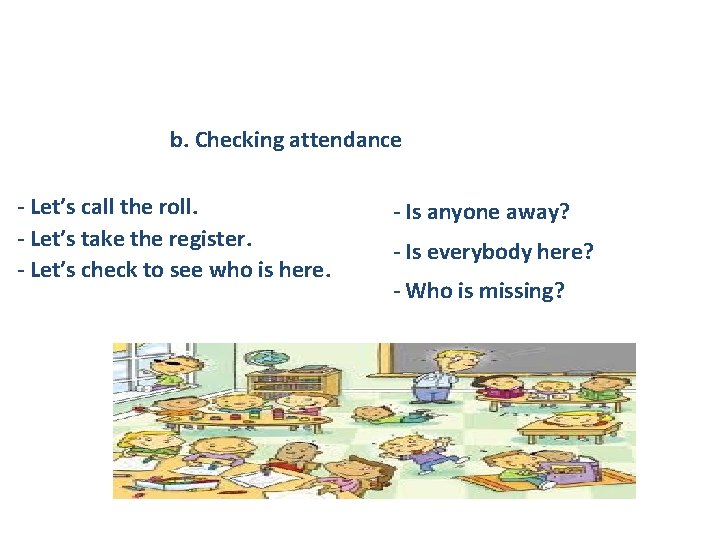
b. Checking attendance - Let’s call the roll. - Let’s take the register. - Let’s check to see who is here. - Is anyone away? - Is everybody here? - Who is missing?
c. Ways of starting lessons - Arrange the classroom - Sing a song - Say a rhyme - Play a game
2. Main-activity: - I’m waiting for you to be quiet - Stop talking & be quiet. - Let’ s begin our lesson now - Is everybody ready to start? - Open your book at page. . . - Is there any questions? - Do you understand? - Do you get it? - Are you with me?
Daily Conversation in Classroom • • • Listen! Repeat! Sit down Work in pairs Raise your hand May I borrow your pen? May I go to the toilet ? How do you say ……. In English? Make a line Close the door. Come forward, please. Open the book
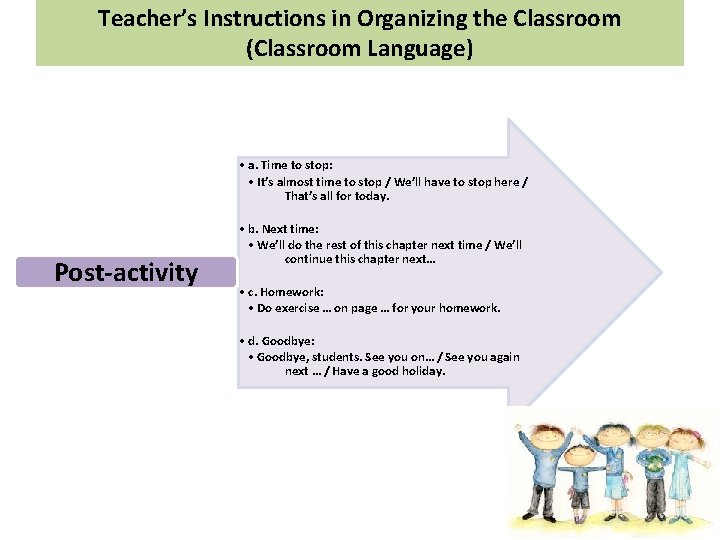
Teacher’s Instructions in Organizing the Classroom (Classroom Language) • a. Time to stop: • It’s almost time to stop / We’ll have to stop here / That’s all for today. Post-activity • b. Next time: • We’ll do the rest of this chapter next time / We’ll continue this chapter next… • c. Homework: • Do exercise … on page … for your homework. • d. Goodbye: • Goodbye, students. See you on… / See you again next … / Have a good holiday.
3. Post-activity: a. That’s all for today. b. Goodbye, students. c. See you on… d. See you again tomorrow e. Have a good holiday.
Classroom language: General Closing • • Good Bye See you again See you tomorrow Thanks for coming Have a good day Have a nice day
Classroom Language: General greetings • Hello! • Good morning/afternoon. • Good day • Good to see you. • How are you? • How are you doing? • How is everything? • How’s everything going? • Hi. • What’s up? • How are things (with you)? • How’s it going? It’s always a pleasure to see you.
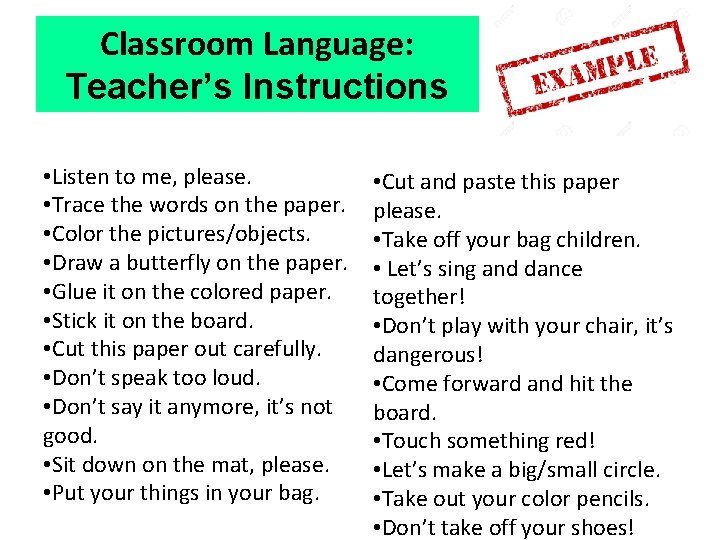
Classroom Language: Teacher’s Instructions • Listen to me, please. • Trace the words on the paper. • Color the pictures/objects. • Draw a butterfly on the paper. • Glue it on the colored paper. • Stick it on the board. • Cut this paper out carefully. • Don’t speak too loud. • Don’t say it anymore, it’s not good. • Sit down on the mat, please. • Put your things in your bag. • Cut and paste this paper please. • Take off your bag children. • Let’s sing and dance together! • Don’t play with your chair, it’s dangerous! • Come forward and hit the board. • Touch something red! • Let’s make a big/small circle. • Take out your color pencils. • Don’t take off your shoes!
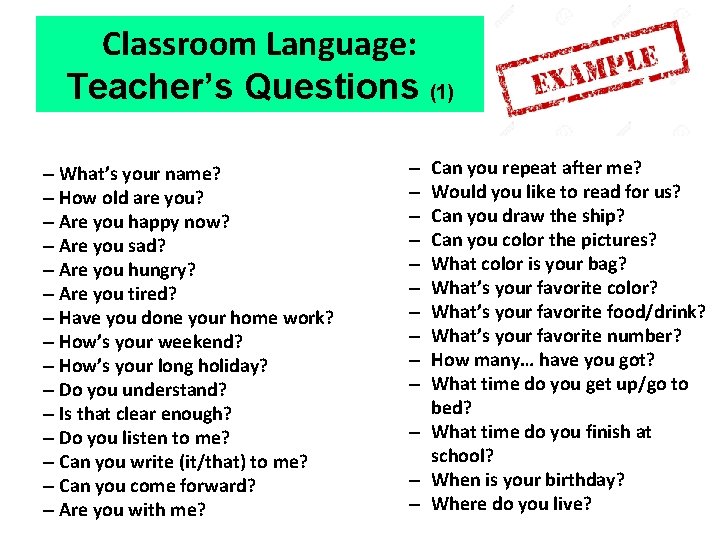
Classroom Language: Teacher’s Questions (1) – What’s your name? – How old are you? – Are you happy now? – Are you sad? – Are you hungry? – Are you tired? – Have you done your home work? – How’s your weekend? – How’s your long holiday? – Do you understand? – Is that clear enough? – Do you listen to me? – Can you write (it/that) to me? – Can you come forward? – Are you with me? Can you repeat after me? Would you like to read for us? Can you draw the ship? Can you color the pictures? What color is your bag? What’s your favorite color? What’s your favorite food/drink? What’s your favorite number? How many… have you got? What time do you get up/go to bed? – What time do you finish at school? – When is your birthday? – Where do you live? – – – – –
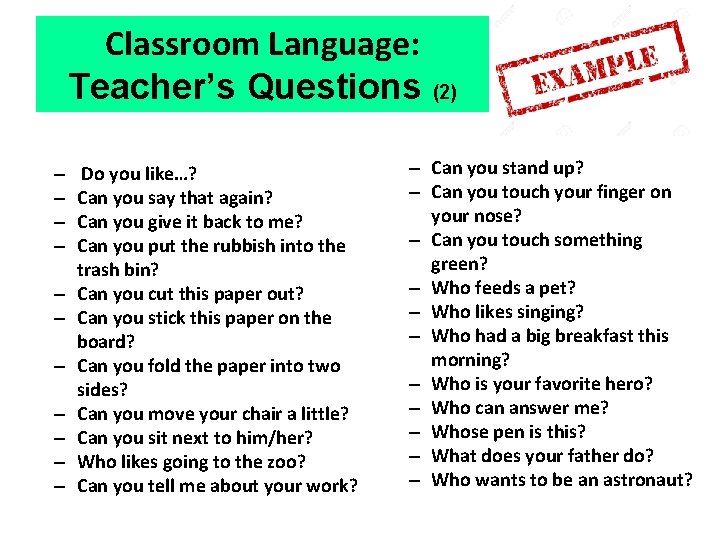
Classroom Language: Teacher’s Questions (2) – – – Do you like…? Can you say that again? Can you give it back to me? Can you put the rubbish into the trash bin? Can you cut this paper out? Can you stick this paper on the board? Can you fold the paper into two sides? Can you move your chair a little? Can you sit next to him/her? Who likes going to the zoo? Can you tell me about your work? – Can you stand up? – Can you touch your finger on your nose? – Can you touch something green? – Who feeds a pet? – Who likes singing? – Who had a big breakfast this morning? – Who is your favorite hero? – Who can answer me? – Whose pen is this? – What does your father do? – Who wants to be an astronaut?
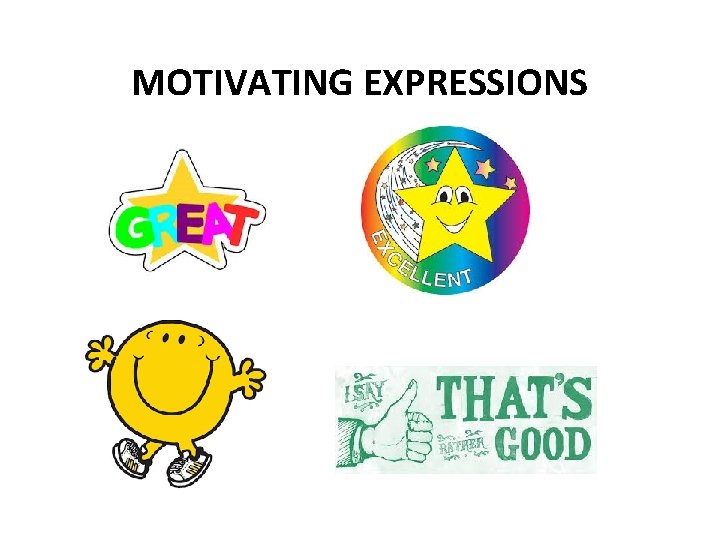
MOTIVATING EXPRESSIONS
Motivating Expressions: • That’s good! • You’re right! • Good work! • Great! • That’s it! • Excellent! • Good remembering! • Keep on trying! • Keep up the good work! => see more
Bland, Janice (ed. ) (2015). Teaching English to Young Learners: Critical Issues in Language Teaching with 3 -12 Year Olds. London: Bloomsbury Publishing Plc. Brewster, Jean; Ellis, Gail; Grard, Dennis. (2003). The Primary English Teacher’s Guide (New Edition). England: Penguin English. Cameron, L. (2001). Teaching Languages to Young Learners. Cambridge: Cambridge University Press. Chapelton , Tracey. 2016. How can young children best learn languages? . British Council. https: //www. britishcouncil. org/voices-magazine/how-can-young-children-best-learn-languages Damayanti, Ika Lestari. (2017). From Story Telling to Story Writing: The Implementation of Reading to Learn (R 2 L) Pedagogy to Teach English as a Foreign Language in Indonesian Journal of Applied Linguistics vol. 6 no. 2, January 2017, pp. 229 -242. Fadilah, Rahmi. (2017). Madeline Hunter’s Lesson Plan as Alternative Model for TEYL. Proceedings in English Conference at STKIP Pasundan. Garton, Sue & Copland, Fiona (ed. ). (2019). Teaching English to Young Learners. New York: Routledge. Halliwell, S. (2004). Teaching English in the primary classroom. Essex: Pearson Education Limited. Harmer, Jeremy. (2004). How to Teach English: An Introduction to the Practice of English Language Teaching. England: Longman. Harmer, Jeremy. (2007). How to teach English (New Edition). Essex: Pearson Longman. Ioannou-Georgiou, Sophie & Pavlou, Pavlos. 2003. Assessing Young Learners. Oxford: Oxford University Press. Linse, Caroline T. (2005). Practical English Language Teaching: Young Learners. New York: Mc. Graw-Hill.
Maili, Sjafty Nursiti. 2018. Bahasa Inggris pada SD: Mengapa Perlu dan Mengapa Dipersoalkan. Jurnal Pendidikan Unsika vol 6 no. 1, Maret 2018 pp. 23 -28. Mckay, P. (2006). Assessing young language learners. Cambridge: Cambridge University Press. Mooney, Carol Garhart. (2000). Theories of Childhood: An Introduction to Dewey, Montessori, Erikson, Piaget, and Vygotsky. USA: Redleaf Press. Musthafa, Bachrudin. (2000). Teaching English to Young Learners: Principles & Techniques. Bandung: Pasca Sarjana Universitas Pendidikan Indonesia. Mustafa, Bachrudin. (2008). Teaching English to young learners. Bandung: UPI Press. Mustafa, Bachrudin. (2010). Teaching English to young learners in Indonesia: Essential requirements. Jurnal Educationist. Vol. 4 no. 2, Juli 2010 pp. 120 -125. Paul, David. (2003). Teaching English to Children in Asia. Hongkong; Longman Asia ELT. Pinter, Annamaria. (2006). Teaching Young Language Learners. Oxford: Oxford University Press. Slattery, M. & Willis, J. (2005). English for Primary Teachers: A Handbook of Activities and Classroom Language. Oxford: Oxford University Press. Youtube
- Slides: 94