
English Language Paper 2 Revision Timings 1 hour
- Slides: 13
English Language Paper 2 Revision
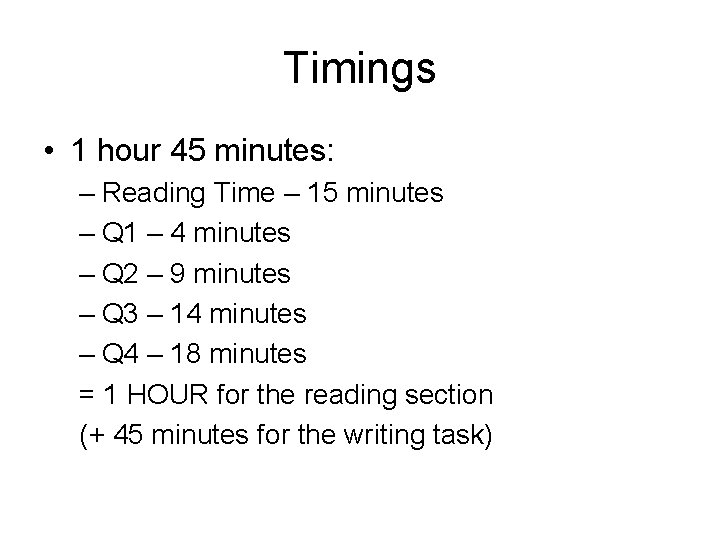
Timings • 1 hour 45 minutes: – Reading Time – 15 minutes – Q 1 – 4 minutes – Q 2 – 9 minutes – Q 3 – 14 minutes – Q 4 – 18 minutes = 1 HOUR for the reading section (+ 45 minutes for the writing task)
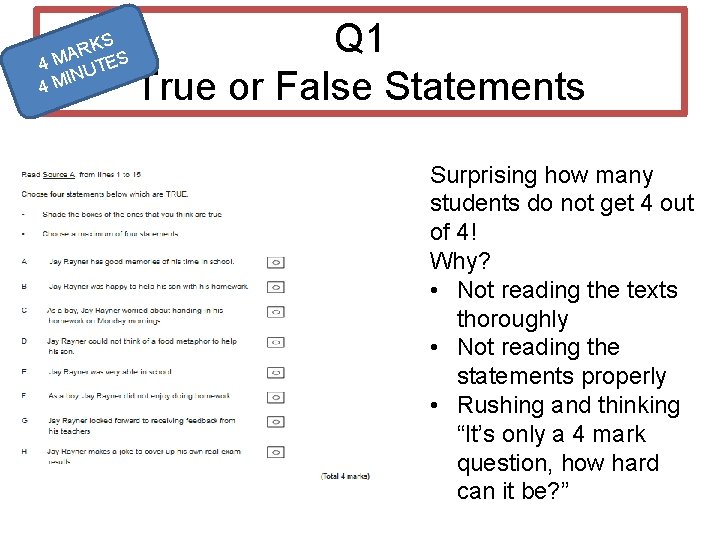
RKS S A 4 M UTE IN 4 M Q 1 True or False Statements Surprising how many students do not get 4 out of 4! Why? • Not reading the texts thoroughly • Not reading the statements properly • Rushing and thinking “It’s only a 4 mark question, how hard can it be? ”
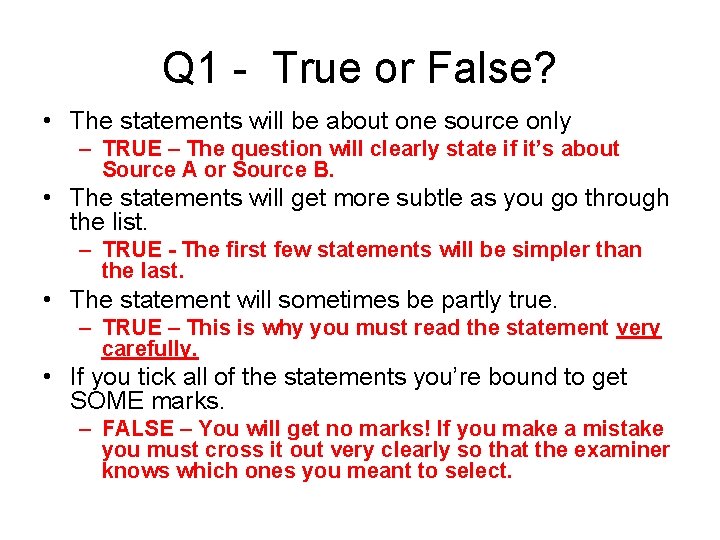
Q 1 - True or False? • The statements will be about one source only – TRUE – The question will clearly state if it’s about Source A or Source B. • The statements will get more subtle as you go through the list. – TRUE - The first few statements will be simpler than the last. • The statement will sometimes be partly true. – TRUE – This is why you must read the statement very carefully. • If you tick all of the statements you’re bound to get SOME marks. – FALSE – You will get no marks! If you make a mistake you must cross it out very clearly so that the examiner knows which ones you meant to select.
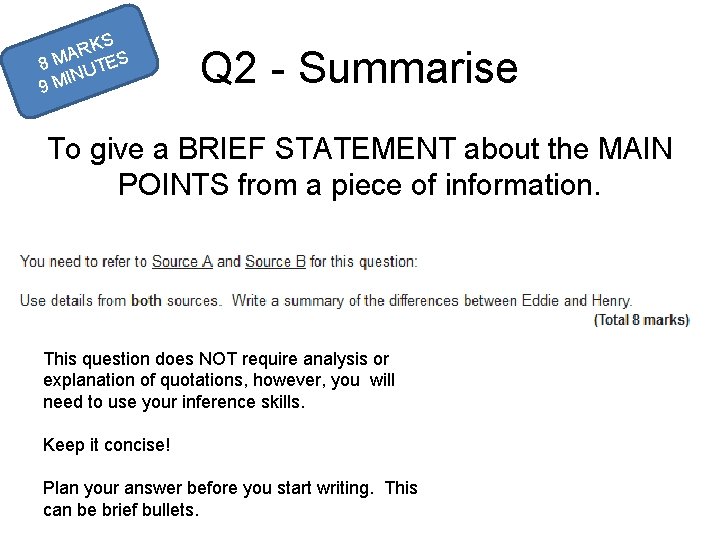
RKS S A 8 M UTE IN 9 M Q 2 - Summarise To give a BRIEF STATEMENT about the MAIN POINTS from a piece of information. This question does NOT require analysis or explanation of quotations, however, you will need to use your inference skills. Keep it concise! Plan your answer before you start writing. This can be brief bullets.
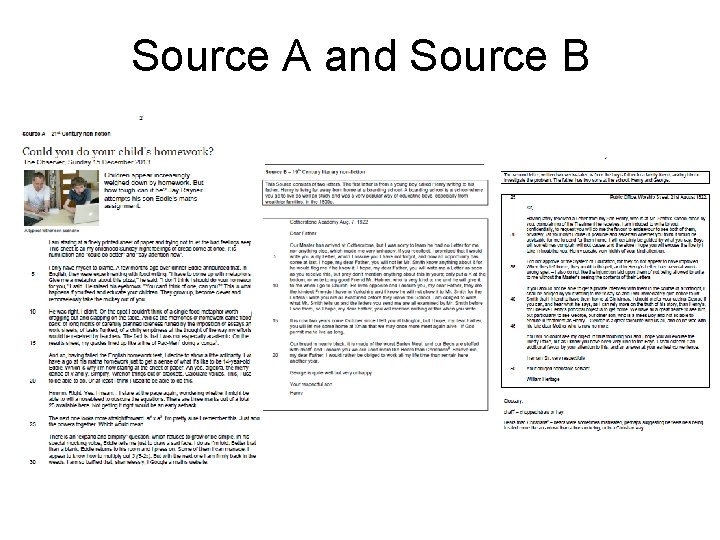
Source A and Source B
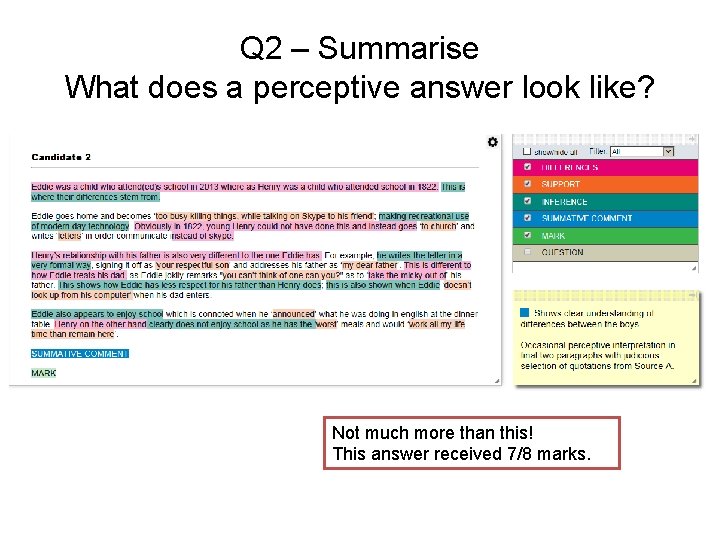
Q 2 – Summarise What does a perceptive answer look like? Not much more than this! This answer received 7/8 marks.
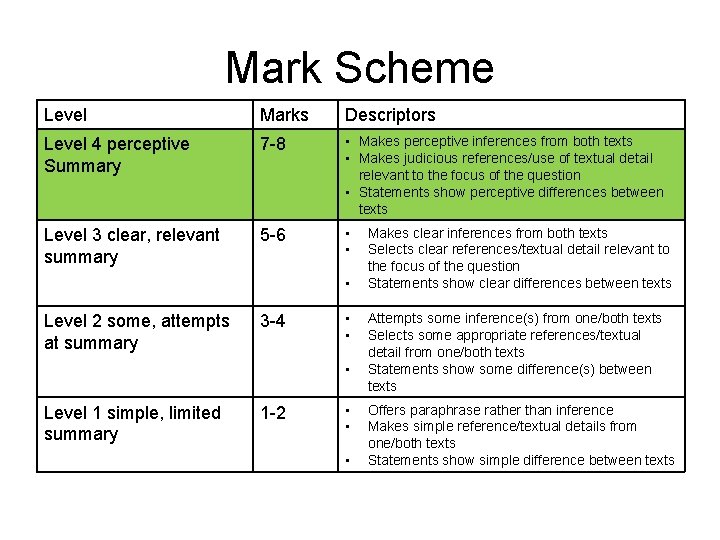
Mark Scheme Level Marks Descriptors Level 4 perceptive Summary 7 -8 • Makes perceptive inferences from both texts • Makes judicious references/use of textual detail relevant to the focus of the question • Statements show perceptive differences between texts Level 3 clear, relevant summary 5 -6 • • • Level 2 some, attempts at summary 3 -4 • • • Level 1 simple, limited summary 1 -2 • • • Makes clear inferences from both texts Selects clear references/textual detail relevant to the focus of the question Statements show clear differences between texts Attempts some inference(s) from one/both texts Selects some appropriate references/textual detail from one/both texts Statements show some difference(s) between texts Offers paraphrase rather than inference Makes simple reference/textual details from one/both texts Statements show simple difference between texts
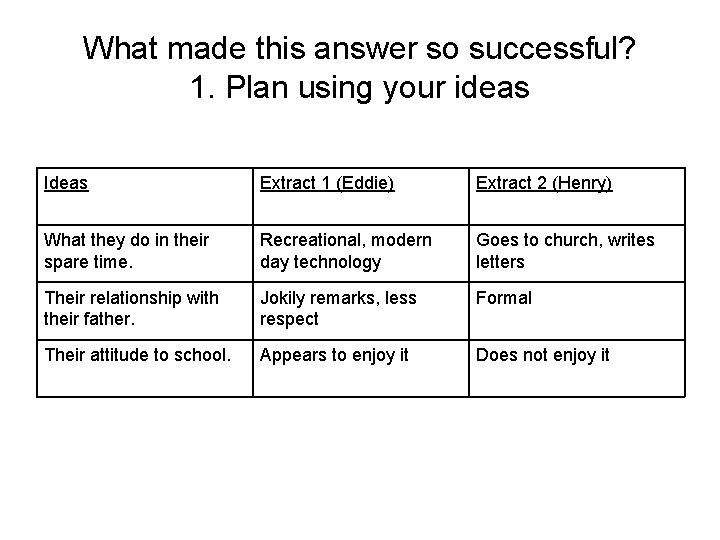
What made this answer so successful? 1. Plan using your ideas Ideas Extract 1 (Eddie) Extract 2 (Henry) What they do in their spare time. Recreational, modern day technology Goes to church, writes letters Their relationship with their father. Jokily remarks, less respect Formal Their attitude to school. Appears to enjoy it Does not enjoy it
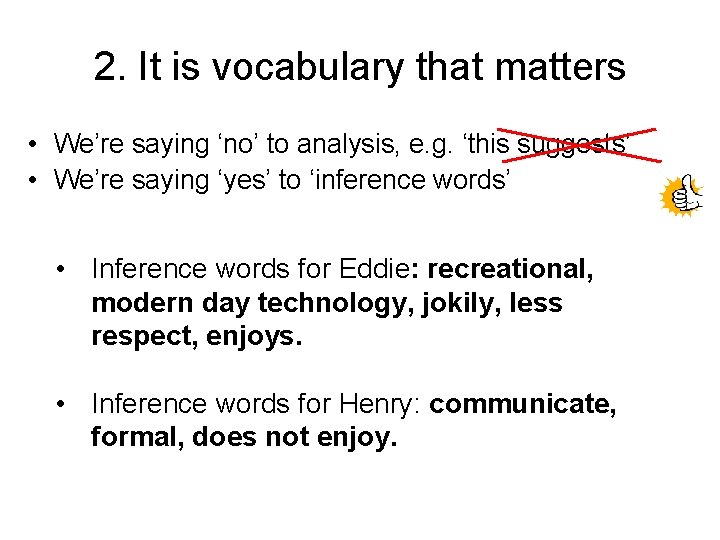
2. It is vocabulary that matters • We’re saying ‘no’ to analysis, e. g. ‘this suggests’ • We’re saying ‘yes’ to ‘inference words’ • Inference words for Eddie: recreational, modern day technology, jokily, less respect, enjoys. • Inference words for Henry: communicate, formal, does not enjoy.
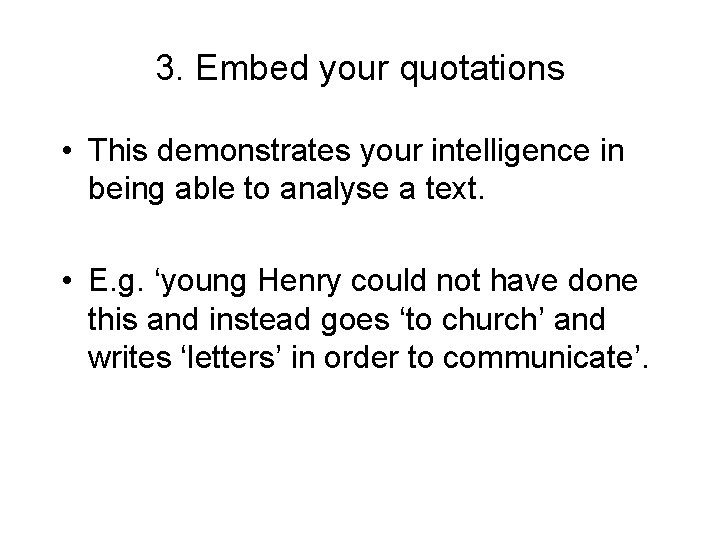
3. Embed your quotations • This demonstrates your intelligence in being able to analyse a text. • E. g. ‘young Henry could not have done this and instead goes ‘to church’ and writes ‘letters’ in order to communicate’.
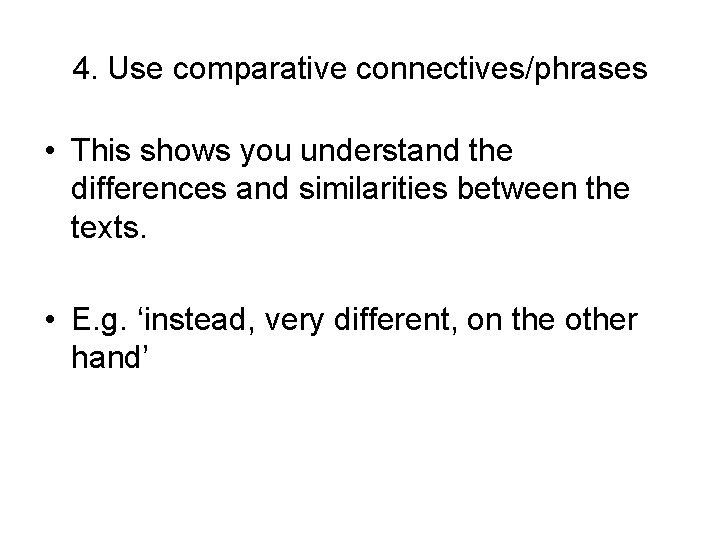
4. Use comparative connectives/phrases • This shows you understand the differences and similarities between the texts. • E. g. ‘instead, very different, on the other hand’
To summarise