
ENGLISH LANGUAGE Lessons 5 6 2 5 Input
- Slides: 10
ENGLISH LANGUAGE Lessons 5 - 6 2
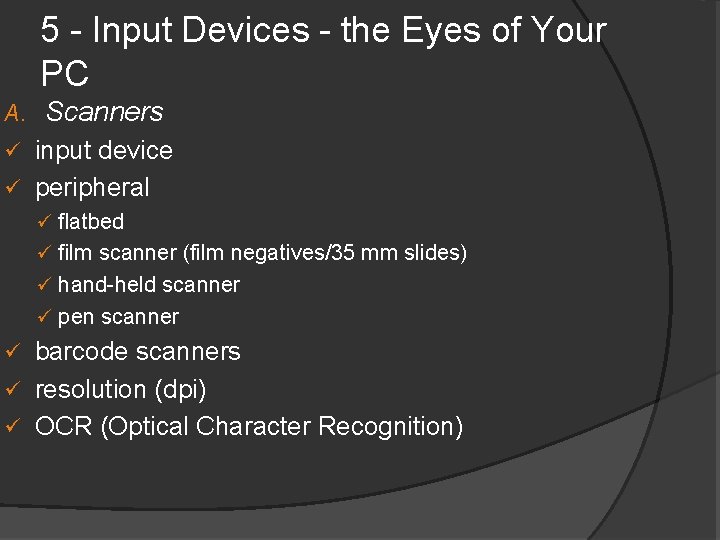
5 - Input Devices - the Eyes of Your PC A. Scanners input device ü peripheral ü ü flatbed ü film scanner (film negatives/35 mm slides) ü hand-held scanner ü pen scanner barcode scanners ü resolution (dpi) ü OCR (Optical Character Recognition) ü
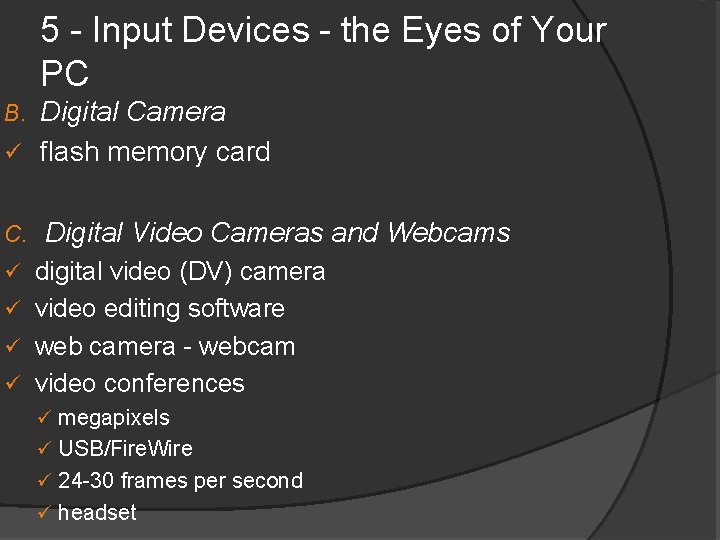
5 - Input Devices - the Eyes of Your PC Digital Camera ü flash memory card B. C. Digital Video Cameras and Webcams digital video (DV) camera ü video editing software ü web camera - webcam ü video conferences ü ü megapixels ü USB/Fire. Wire ü 24 -30 frames per second ü headset
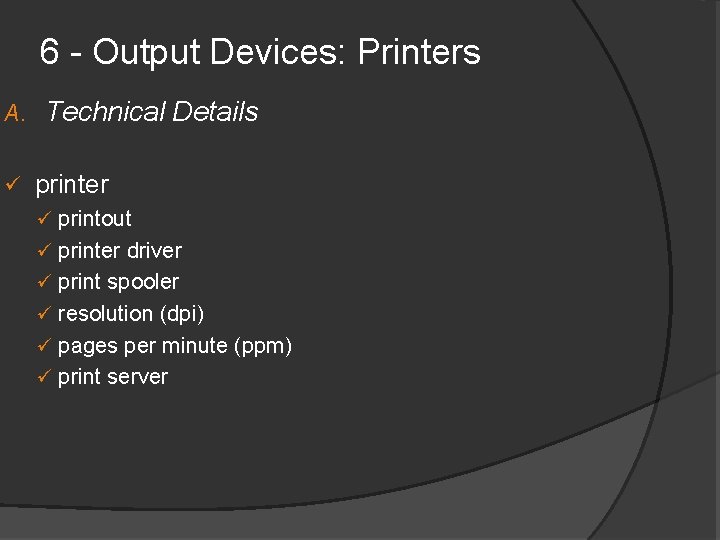
6 - Output Devices: Printers A. ü Technical Details printer ü printout ü printer driver ü print spooler ü resolution (dpi) ü pages per minute (ppm) ü print server
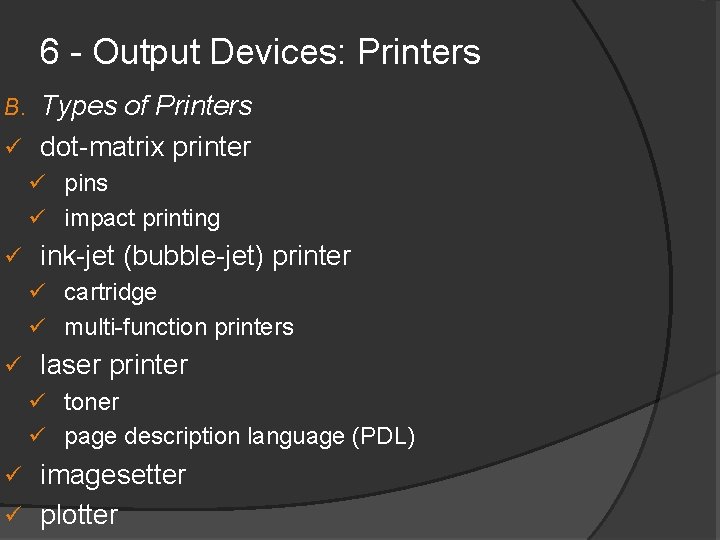
6 - Output Devices: Printers Types of Printers ü dot-matrix printer B. ü pins ü impact printing ü ink-jet (bubble-jet) printer ü cartridge ü multi-function printers ü laser printer ü toner ü page description language (PDL) imagesetter ü plotter ü
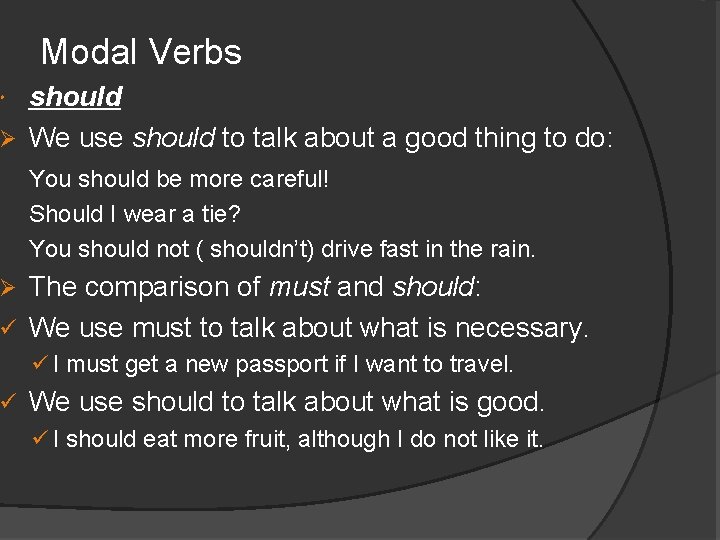
Modal Verbs should Ø We use should to talk about a good thing to do: You should be more careful! Should I wear a tie? You should not ( shouldn’t) drive fast in the rain. The comparison of must and should: ü We use must to talk about what is necessary. Ø ü ü I must get a new passport if I want to travel. We use should to talk about what is good. ü I should eat more fruit, although I do not like it.
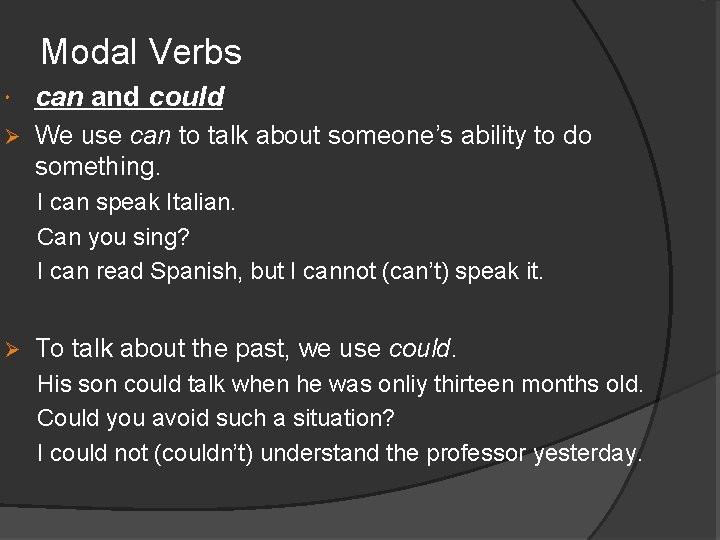
Modal Verbs can and could Ø We use can to talk about someone’s ability to do something. I can speak Italian. Can you sing? I can read Spanish, but I cannot (can’t) speak it. Ø To talk about the past, we use could. His son could talk when he was onliy thirteen months old. Could you avoid such a situation? I could not (couldn’t) understand the professor yesterday.
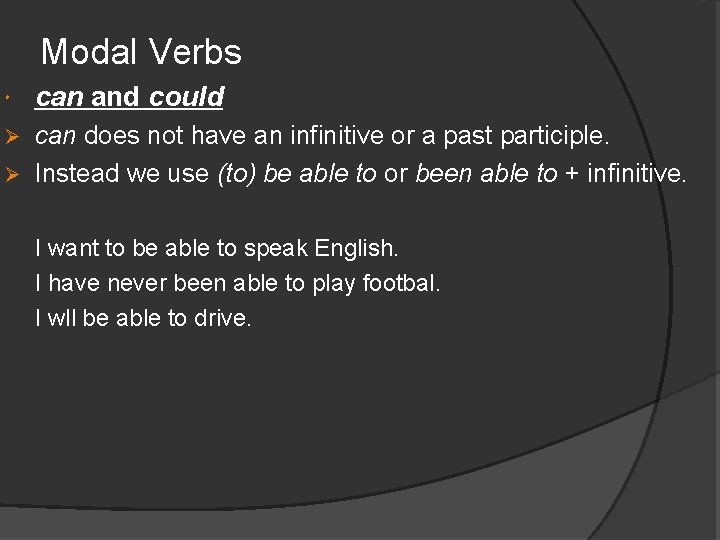
Modal Verbs can and could can does not have an infinitive or a past participle. Ø Instead we use (to) be able to or been able to + infinitive. Ø I want to be able to speak English. I have never been able to play footbal. I wll be able to drive.
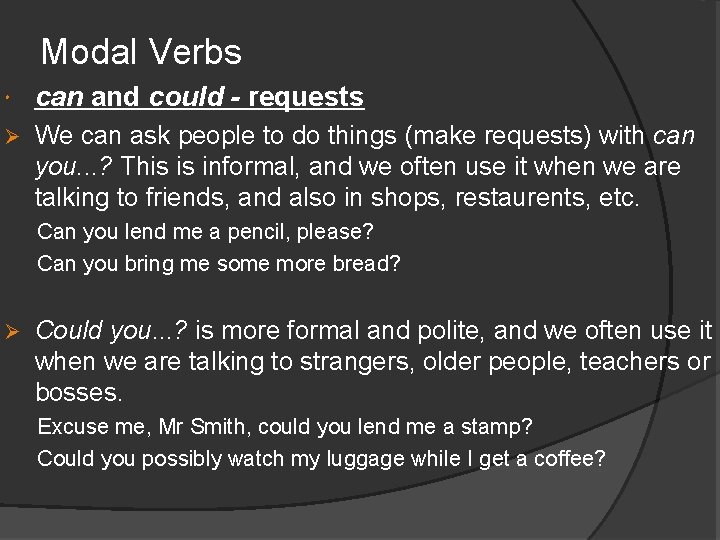
Modal Verbs can and could - requests Ø We can ask people to do things (make requests) with can you. . . ? This is informal, and we often use it when we are talking to friends, and also in shops, restaurents, etc. Can you lend me a pencil, please? Can you bring me some more bread? Ø Could you. . . ? is more formal and polite, and we often use it when we are talking to strangers, older people, teachers or bosses. Excuse me, Mr Smith, could you lend me a stamp? Could you possibly watch my luggage while I get a coffee?
QUESTIONS?