
ENGLISH LANGUAGE ARTS 11 AND 12 January 16
- Slides: 18
ENGLISH LANGUAGE ARTS 11 AND 12 January 16 and 20, 2015
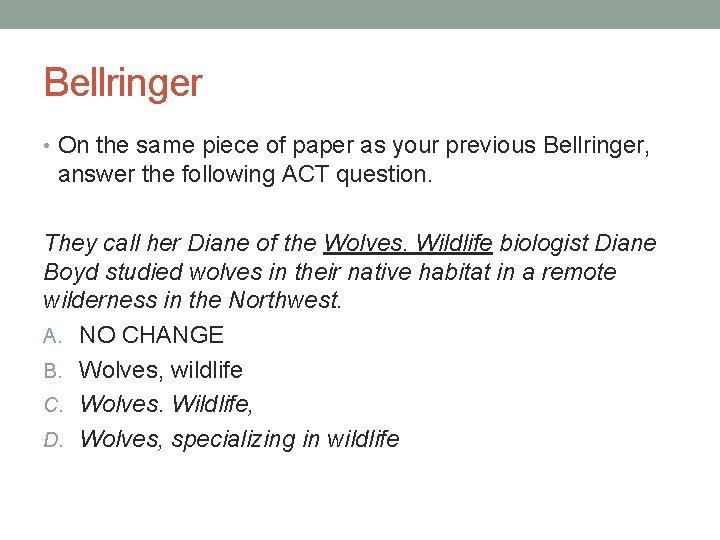
Bellringer • On the same piece of paper as your previous Bellringer, answer the following ACT question. They call her Diane of the Wolves. Wildlife biologist Diane Boyd studied wolves in their native habitat in a remote wilderness in the Northwest. A. NO CHANGE B. Wolves, wildlife C. Wolves. Wildlife, D. Wolves, specializing in wildlife
Reading Workshop • 20 -25 minutes • Reminder: In order to receive daily SSR points you must be present and on task. That means NO sleeping, doing homework, leaving the classroom for restroom/library, talking, distracting others, etc.
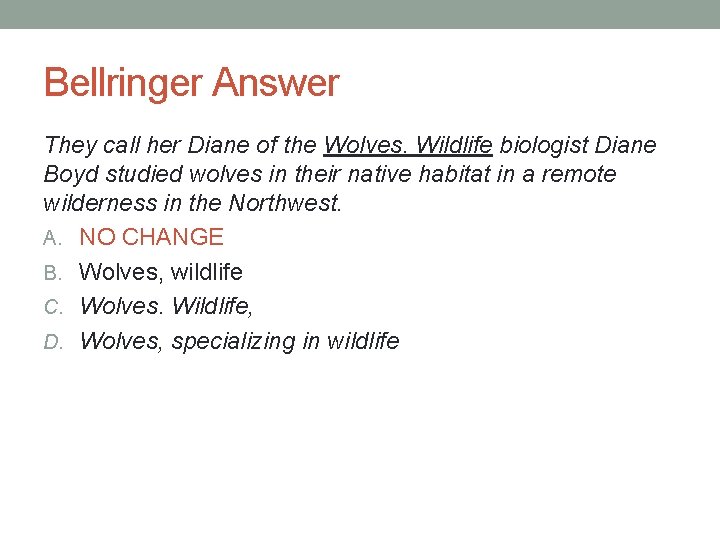
Bellringer Answer They call her Diane of the Wolves. Wildlife biologist Diane Boyd studied wolves in their native habitat in a remote wilderness in the Northwest. A. NO CHANGE B. Wolves, wildlife C. Wolves. Wildlife, D. Wolves, specializing in wildlife
Summary Analysis Notes • Author-First and Last Name, properly capitalized
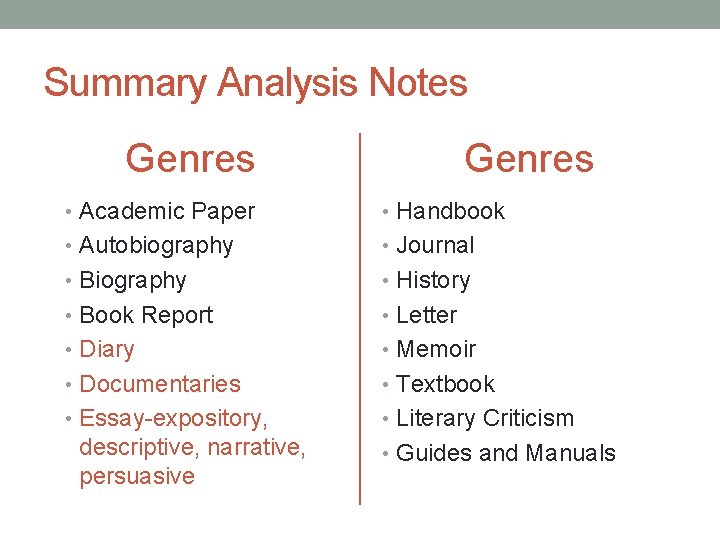
Summary Analysis Notes Genres • Academic Paper • Handbook • Autobiography • Journal • Biography • History • Book Report • Letter • Diary • Memoir • Documentaries • Textbook • Essay-expository, • Literary Criticism descriptive, narrative, persuasive • Guides and Manuals
Summary Analysis Notes • Title-Properly Capitalized and Underlined or in Quotations
Summary Analysis Notes • Publication Date-why is it important?
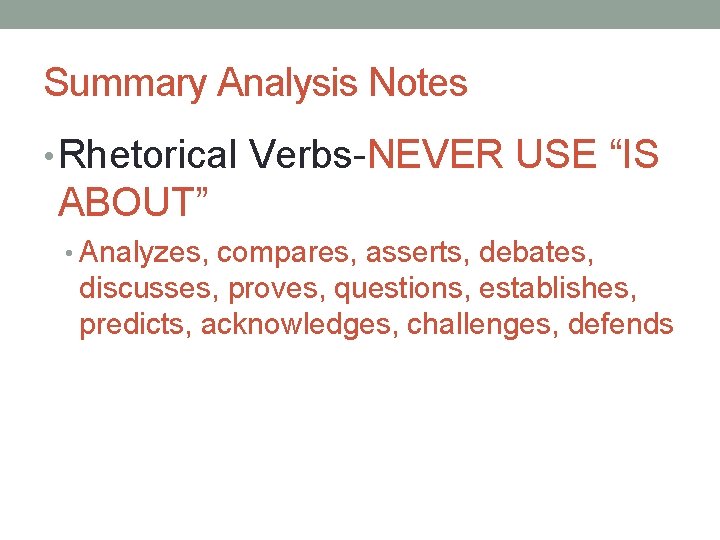
Summary Analysis Notes • Rhetorical Verbs-NEVER USE “IS ABOUT” • Analyzes, compares, asserts, debates, discusses, proves, questions, establishes, predicts, acknowledges, challenges, defends
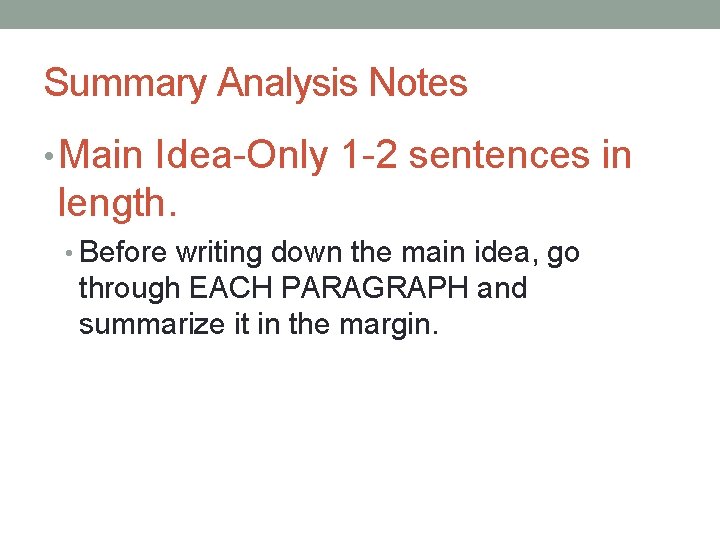
Summary Analysis Notes • Main Idea-Only 1 -2 sentences in length. • Before writing down the main idea, go through EACH PARAGRAPH and summarize it in the margin.
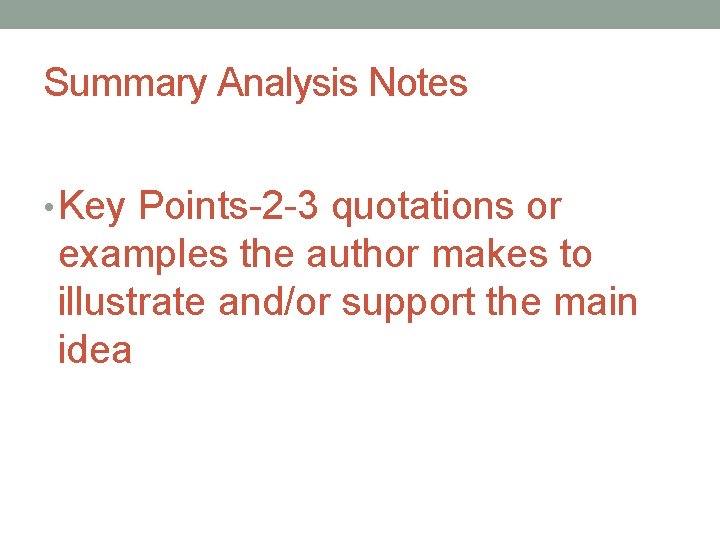
Summary Analysis Notes • Key Points-2 -3 quotations or examples the author makes to illustrate and/or support the main idea
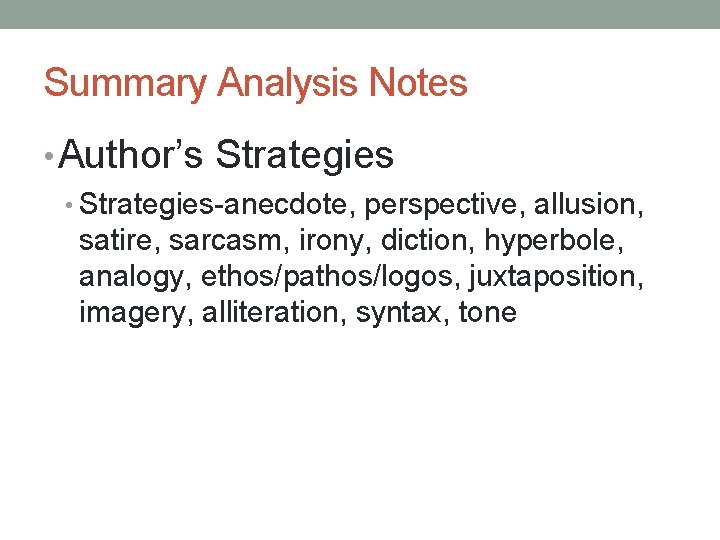
Summary Analysis Notes • Author’s Strategies • Strategies-anecdote, perspective, allusion, satire, sarcasm, irony, diction, hyperbole, analogy, ethos/pathos/logos, juxtaposition, imagery, alliteration, syntax, tone
Summary Analysis Notes • Devices-allusion, oxymoron, hyperbole, alliteration, tone, understatement, metaphor, simile
Summary Analysis Notes • Organization-description, sequence and order, compare and contrast, cause and effect, problem and solution
Summary Analysis Notes • Author’s Purpose-inform, instruct, persuade, narrate, respond • Inform-provide information; describe, explain, give the reader facts, • • tell what something looks like, summarize Instruct-tell the reader how to do something; outline a process Persuade-influence the reader to take action or to subscribe to a belief Narrate-draw the reader into an event or sequence of events to provide insights into the life of a human, life form, or situation Respond-express ideas about a text or topic; engage in critical, evaluative thinking; may include a specific prompt or format
Eyes past print • “Don’t Blame the Eater” by David Zinczenko
Writing Workshop • Together we will practice completing a summary analysis over “Don’t Blame the Eater”
Homework • None-all work due at the end of the hour.