
English Language and English Literature Exam Dates Literature

- Slides: 22
English Language and English Literature
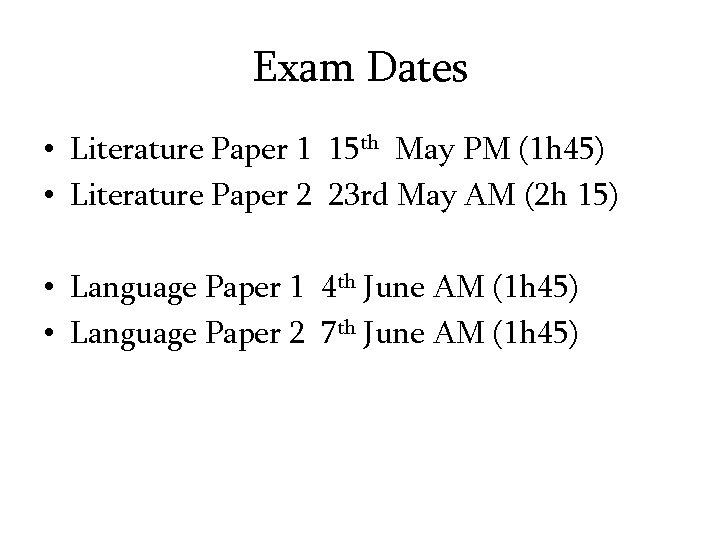
Exam Dates • Literature Paper 1 15 th May PM (1 h 45) • Literature Paper 2 23 rd May AM (2 h 15) • Language Paper 1 4 th June AM (1 h 45) • Language Paper 2 7 th June AM (1 h 45)
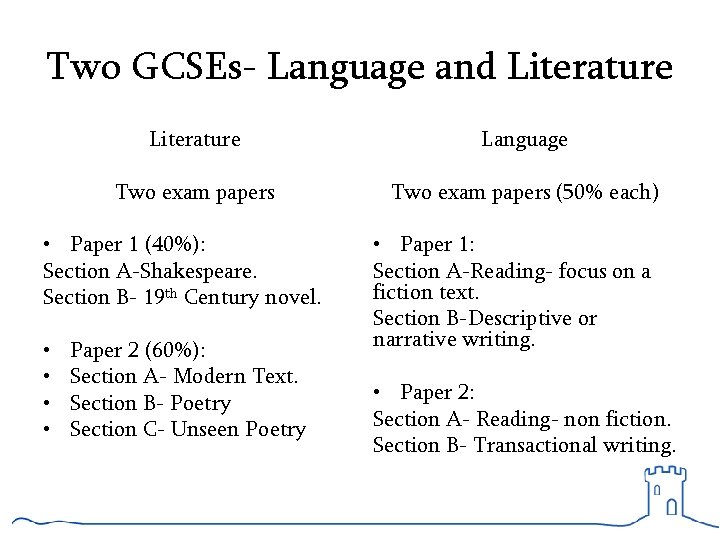
Two GCSEs- Language and Literature Language Two exam papers (50% each) • Paper 1 (40%): Section A-Shakespeare. Section B- 19 th Century novel. • • Paper 2 (60%): Section A- Modern Text. Section B- Poetry Section C- Unseen Poetry • Paper 1: Section A-Reading- focus on a fiction text. Section B-Descriptive or narrative writing. • Paper 2: Section A- Reading- non fiction. Section B- Transactional writing.
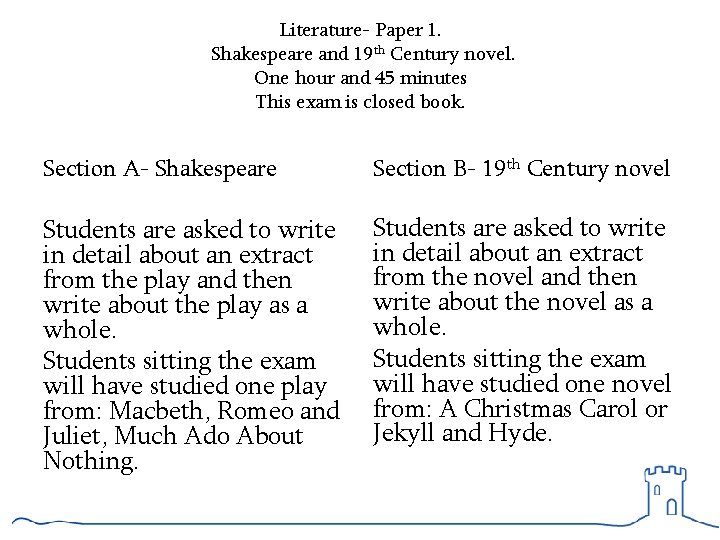
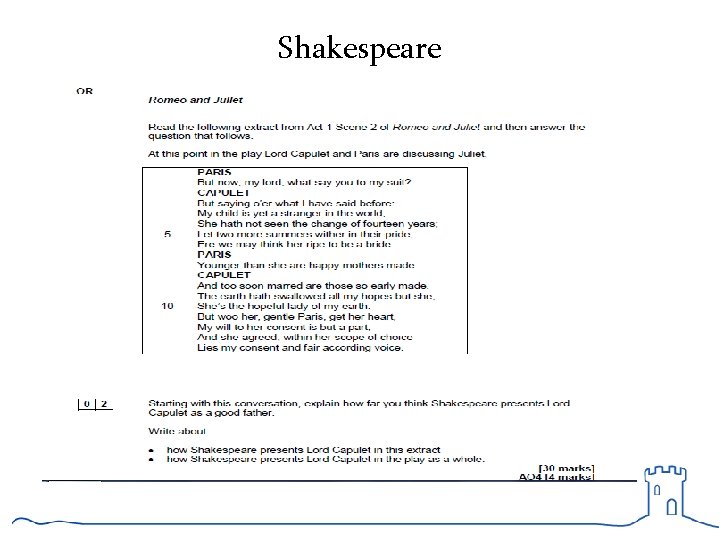
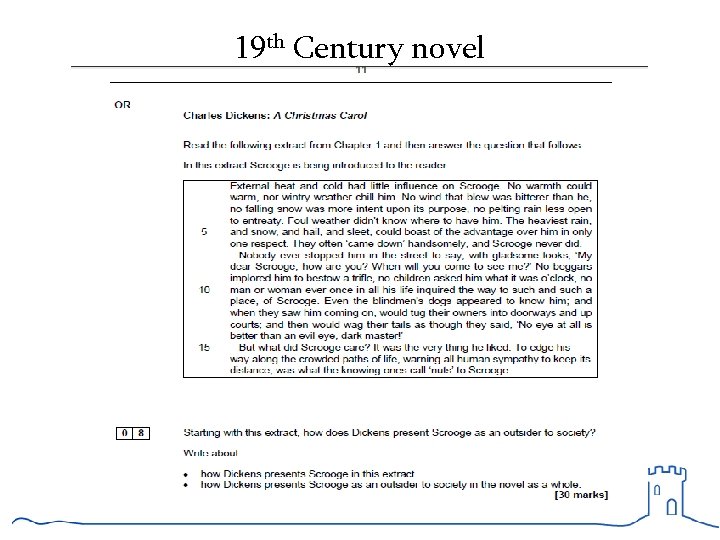
Literature- Paper 1. Shakespeare and 19 th Century novel. One hour and 45 minutes This exam is closed book. Section A- Shakespeare Section B- 19 th Century novel Students are asked to write in detail about an extract from the play and then write about the play as a whole. Students sitting the exam will have studied one play from: Macbeth, Romeo and Juliet, Much Ado About Nothing. Students are asked to write in detail about an extract from the novel and then write about the novel as a whole. Students sitting the exam will have studied one novel from: A Christmas Carol or Jekyll and Hyde.
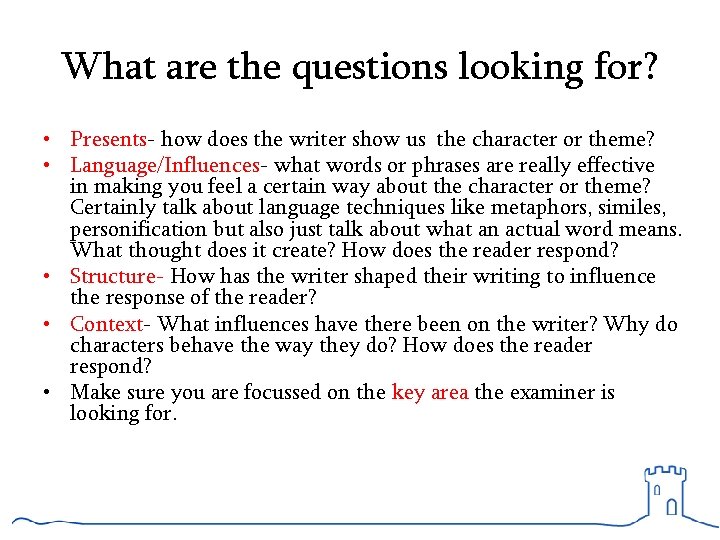
What are the questions looking for? • Presents- how does the writer show us the character or theme? • Language/Influences- what words or phrases are really effective in making you feel a certain way about the character or theme? Certainly talk about language techniques like metaphors, similes, personification but also just talk about what an actual word means. What thought does it create? How does the reader respond? • Structure- How has the writer shaped their writing to influence the response of the reader? • Context- What influences have there been on the writer? Why do characters behave the way they do? How does the reader respond? • Make sure you are focussed on the key area the examiner is looking for.
Shakespeare
19 th Century novel
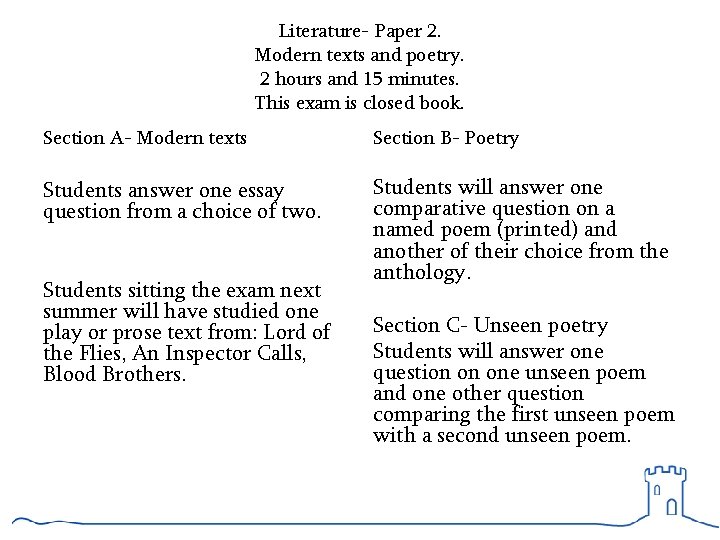
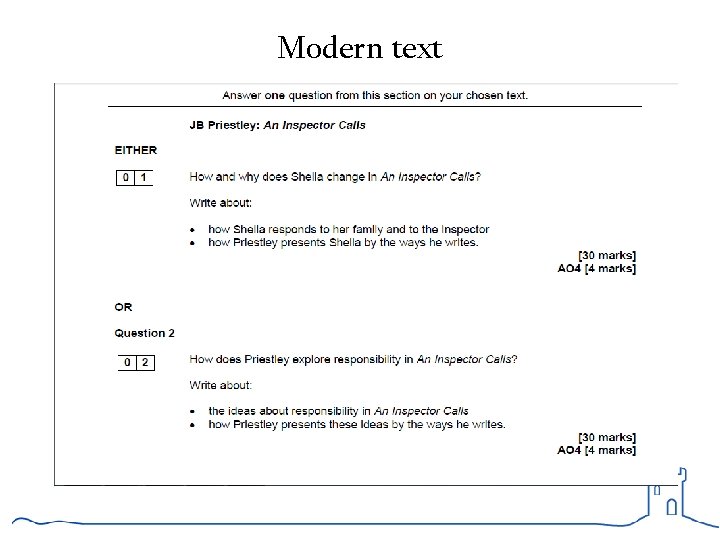
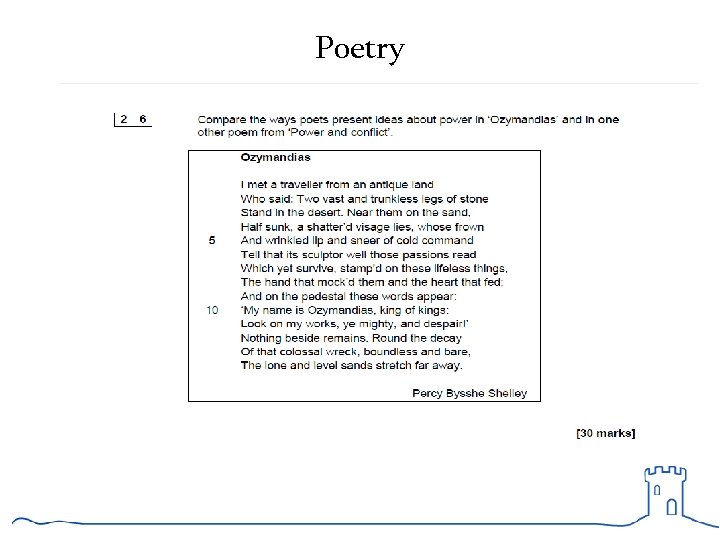
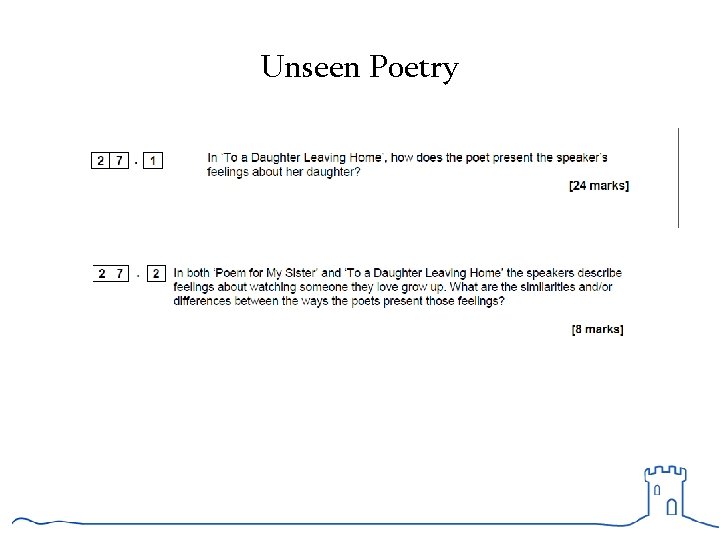
Literature- Paper 2. Modern texts and poetry. 2 hours and 15 minutes. This exam is closed book. Section A- Modern texts Section B- Poetry Students answer one essay question from a choice of two. Students will answer one comparative question on a named poem (printed) and another of their choice from the anthology. Students sitting the exam next summer will have studied one play or prose text from: Lord of the Flies, An Inspector Calls, Blood Brothers. Section C- Unseen poetry Students will answer one question on one unseen poem and one other question comparing the first unseen poem with a second unseen poem.
Modern text
Poetry
Unseen Poetry
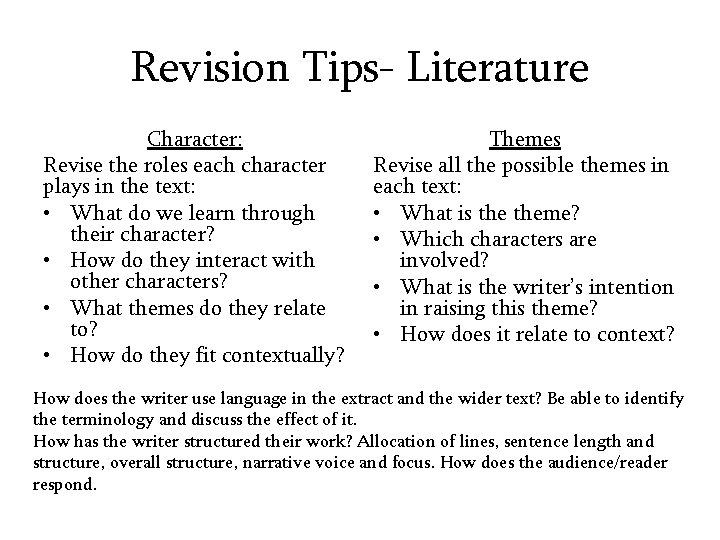
Revision Tips- Literature Character: Revise the roles each character plays in the text: • What do we learn through their character? • How do they interact with other characters? • What themes do they relate to? • How do they fit contextually? Themes Revise all the possible themes in each text: • What is theme? • Which characters are involved? • What is the writer’s intention in raising this theme? • How does it relate to context? How does the writer use language in the extract and the wider text? Be able to identify the terminology and discuss the effect of it. How has the writer structured their work? Allocation of lines, sentence length and structure, overall structure, narrative voice and focus. How does the audience/reader respond.
Revision Tips- Poetry Linking Consider which poems you have studied link together by theme. Remember that a poem may link with more than one other poem. Themes Revise all themes in each poem: • What is theme? • What is the writer’s intention in raising this theme? • How does the writer use language in the poem? Be able to identify the terminology and discuss the effect of it. • How has the writer structured their work?
English Language
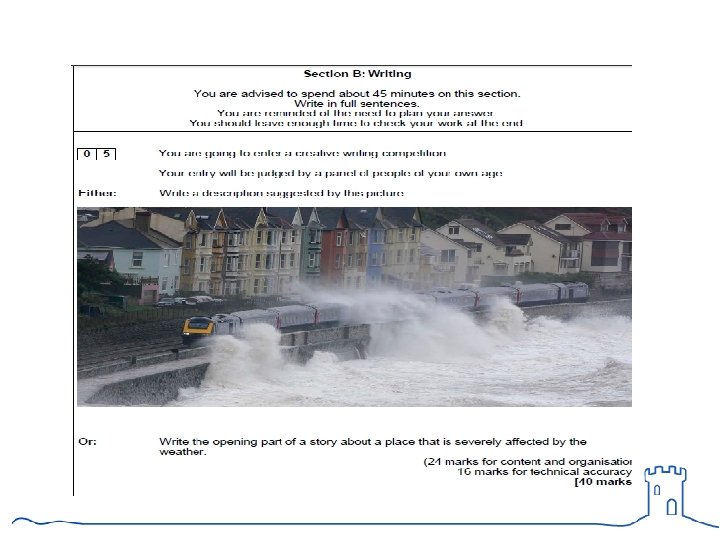
Language- Paper 1 Explorations in Creative Reading and Writing. 1 hour and 45 minutes Section A- Reading Section B- Writing Students respond to an extract from a fiction text. One short question, two longer questions, one extended question. Students answer one extended writing question using either picture stimulus or a written task.
Paper 1 Section A Fictional Reading Students asked to read an extract from a fiction text. They will not have seen this text prior to the exam. Q 1: List four things we learn about _____. [4 marks] Q 2: How does the writer use language to describe ______ ? [8 marks] Q 3: How has the writer structured the text to interest you as a reader? [8 marks] Q 4: Thinking about this text, to what extent do you agree that…? [20 marks]
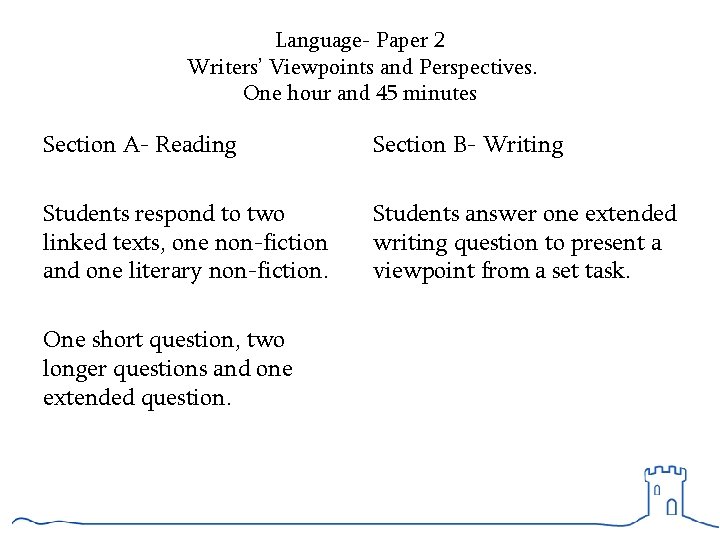
Language- Paper 2 Writers’ Viewpoints and Perspectives. One hour and 45 minutes Section A- Reading Section B- Writing Students respond to two linked texts, one non-fiction and one literary non-fiction. Students answer one extended writing question to present a viewpoint from a set task. One short question, two longer questions and one extended question.
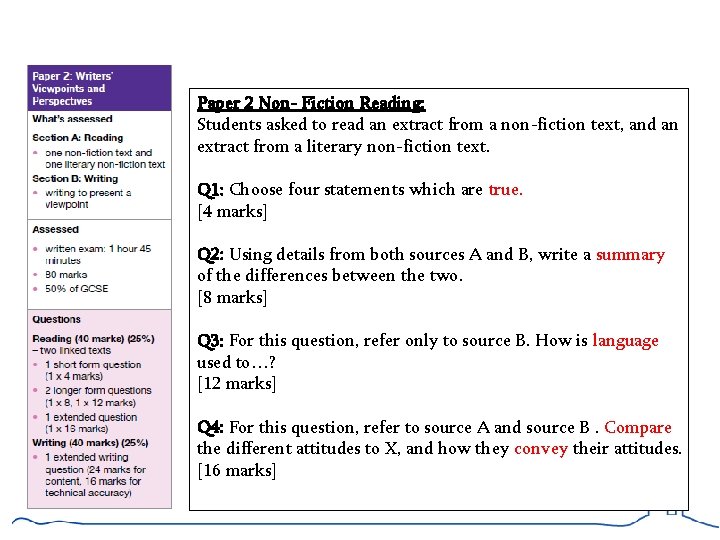
Paper 2 Non- Fiction Reading: Students asked to read an extract from a non-fiction text, and an extract from a literary non-fiction text. Q 1: Choose four statements which are true. [4 marks] Q 2: Using details from both sources A and B, write a summary of the differences between the two. [8 marks] Q 3: For this question, refer only to source B. How is language used to…? [12 marks] Q 4: For this question, refer to source A and source B. Compare the different attitudes to X, and how they convey their attitudes. [16 marks]
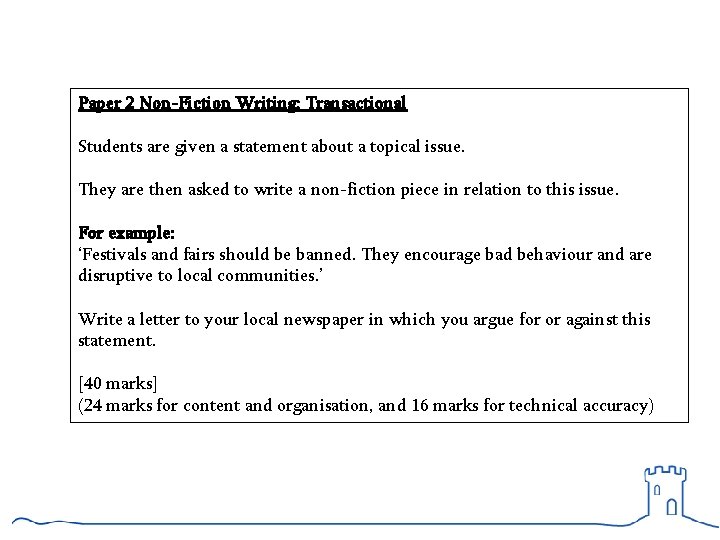
Paper 2 Non-Fiction Writing: Transactional Students are given a statement about a topical issue. They are then asked to write a non-fiction piece in relation to this issue. For example: ‘Festivals and fairs should be banned. They encourage bad behaviour and are disruptive to local communities. ’ Write a letter to your local newspaper in which you argue for or against this statement. [40 marks] (24 marks for content and organisation, and 16 marks for technical accuracy)
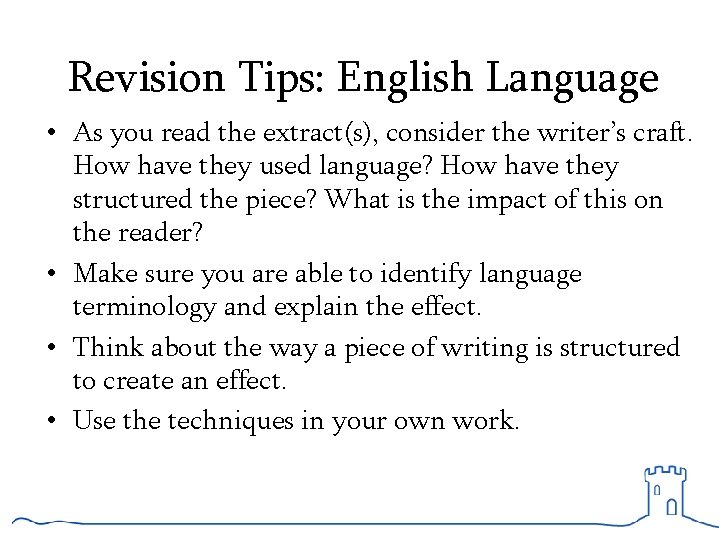
Revision Tips: English Language • As you read the extract(s), consider the writer’s craft. How have they used language? How have they structured the piece? What is the impact of this on the reader? • Make sure you are able to identify language terminology and explain the effect. • Think about the way a piece of writing is structured to create an effect. • Use the techniques in your own work.
Revision Activities • • Mind Maps Booklets Quizzes Flash Cards Matching Pairs Posters Time lines • • BBC learn- Youtube GCSE Pod BBC Bitesize Sample questions- again and again.