
English I Literary Devices TAKE NOTES AMBIGUITY AMBIGUITY
English I Literary Devices (TAKE NOTES!!!)
AMBIGUITY
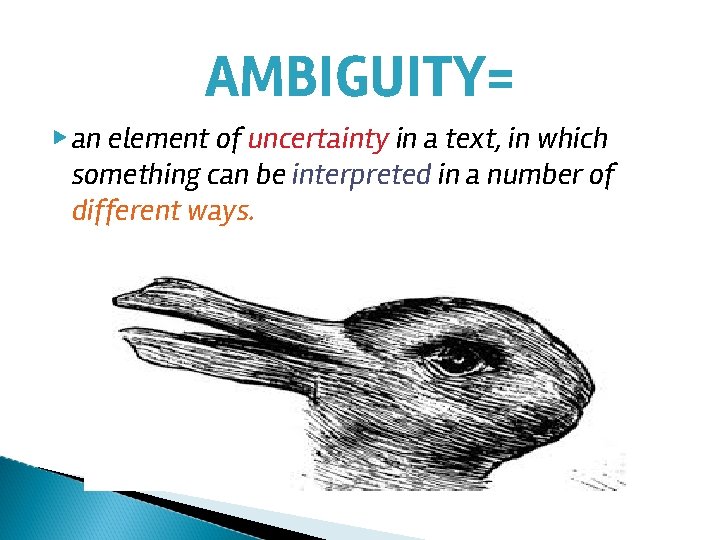
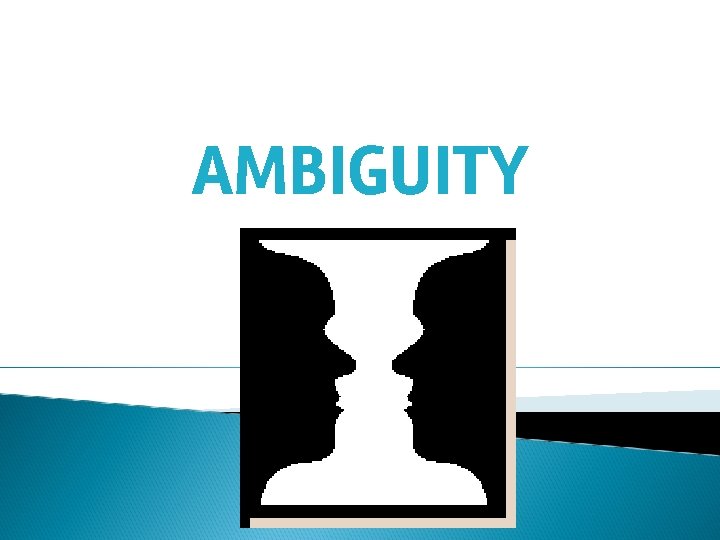
AMBIGUITY= ▶ an element of uncertainty in a text, in which something can be interpreted in a number of different ways.
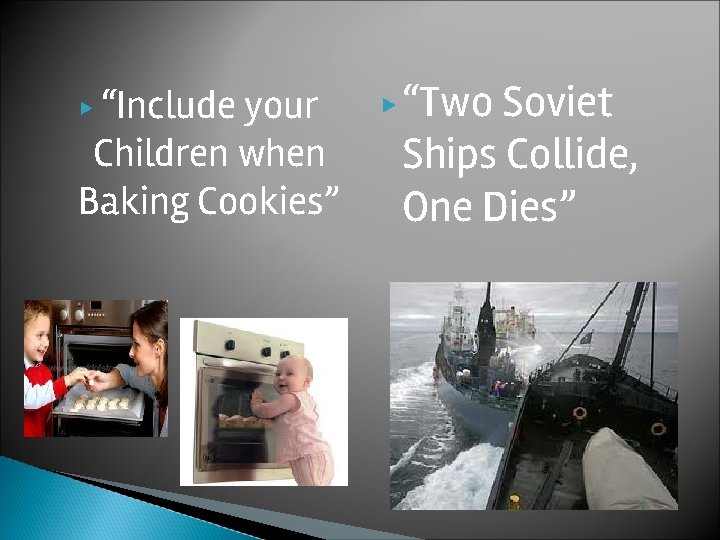
▶ “Include your Children when Baking Cookies” ▶ “Two Soviet Ships Collide, One Dies”
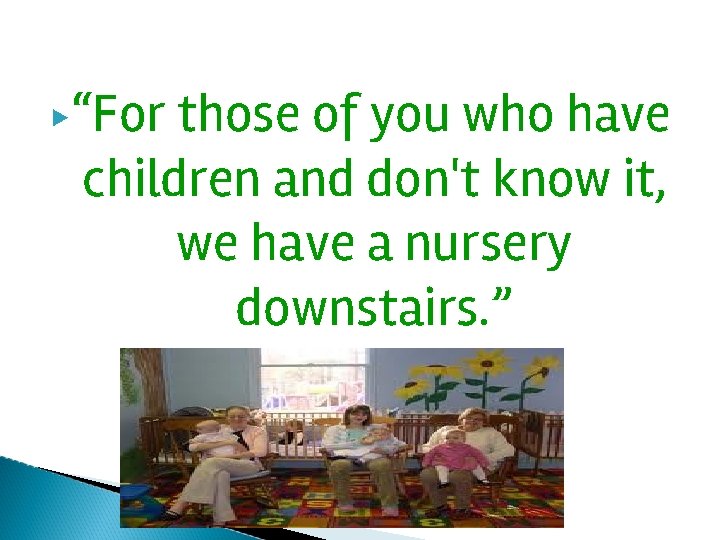
▶ “For those of you who have children and don't know it, we have a nursery downstairs. ”
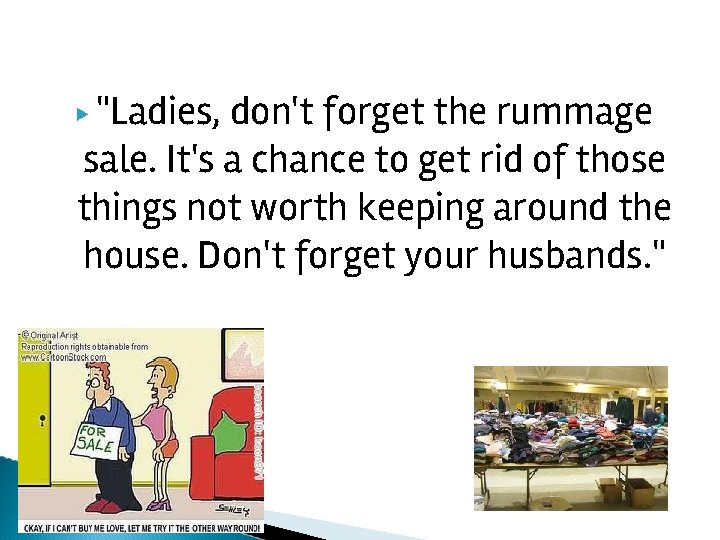
▶ "Ladies, don't forget the rummage sale. It's a chance to get rid of those things not worth keeping around the house. Don't forget your husbands. "
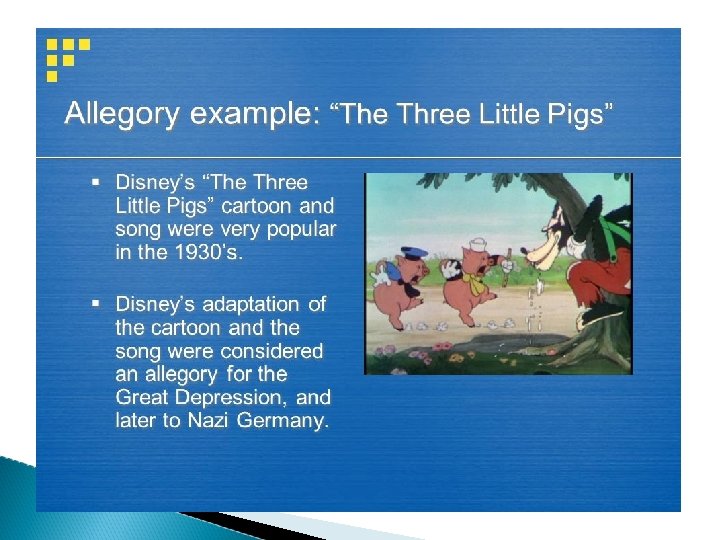
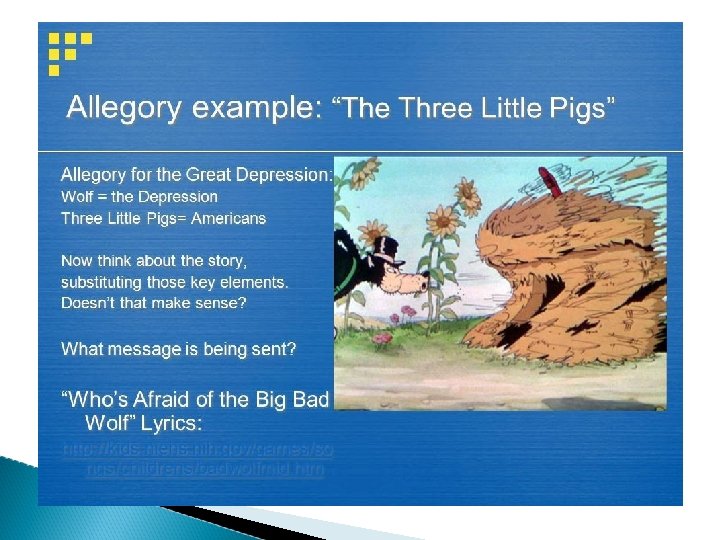
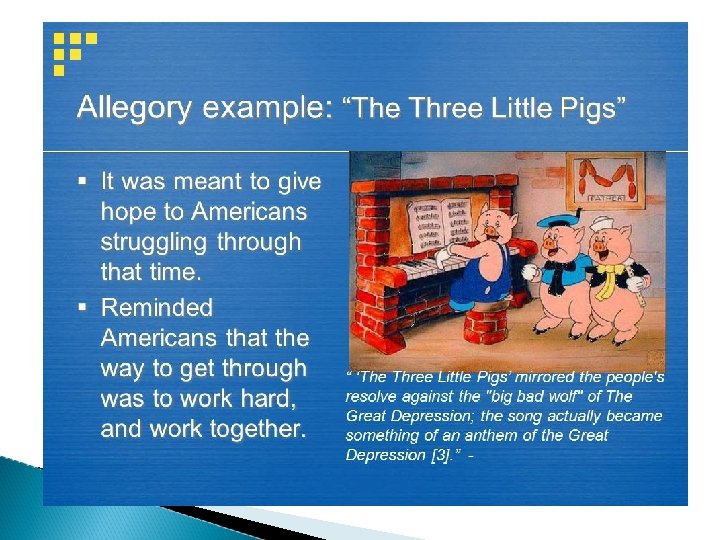
Allegory ▶ a work in which the characters, images, and/or events act as symbols. ▶ The symbolism in an allegory can be interpreted to have a deeper meaning. ▶ An author may use allegory to illustrate a moral or spiritual truth, or political or historical situation.
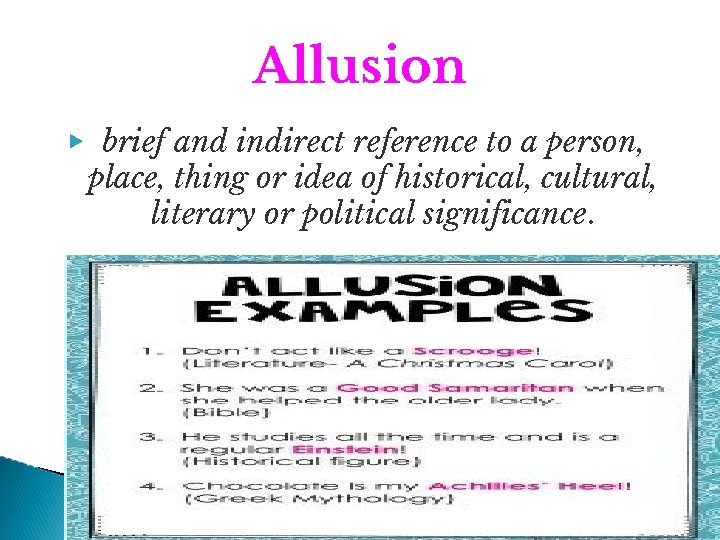
Allusion ▶ brief and indirect reference to a person, place, thing or idea of historical, cultural, literary or political significance.
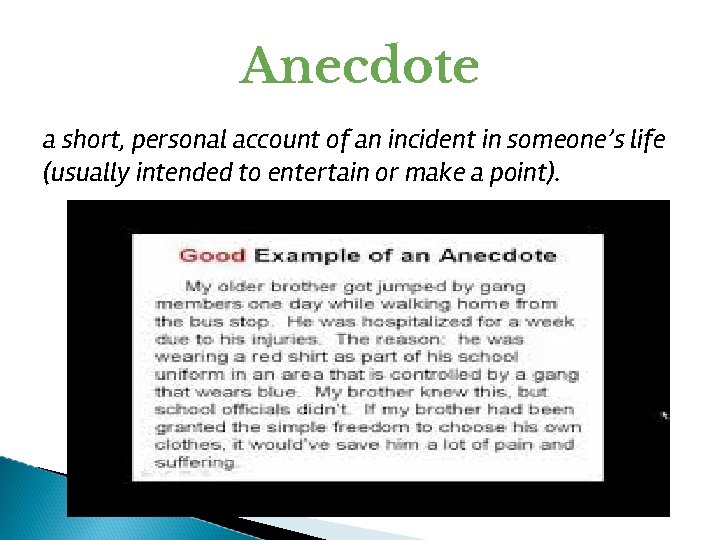
Anecdote a short, personal account of an incident in someone’s life (usually intended to entertain or make a point).
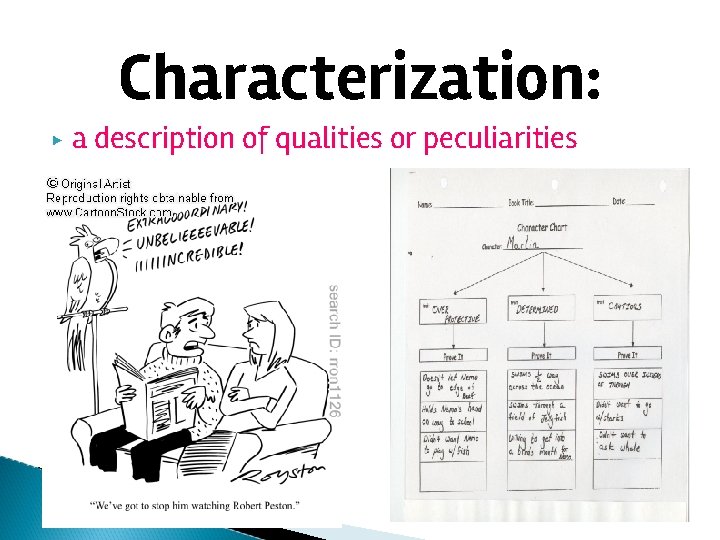
Characterization: ▶ a description of qualities or peculiarities
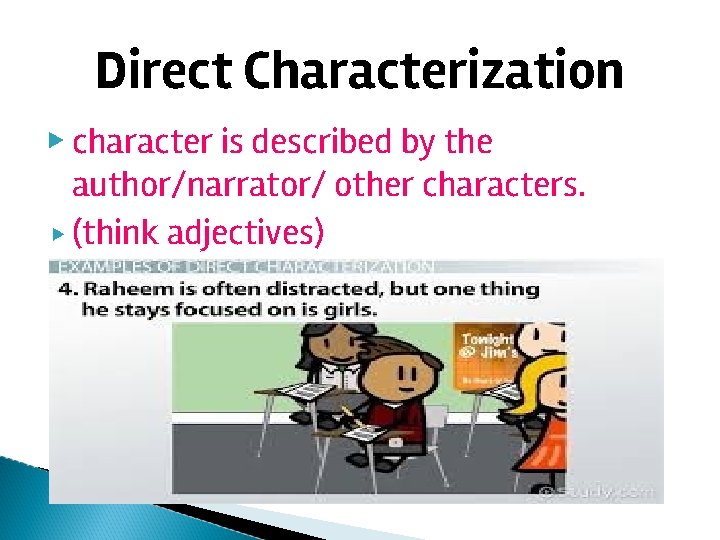
Direct Characterization ▶ character is described by the author/narrator/ other characters. ▶ (think adjectives) ▶C
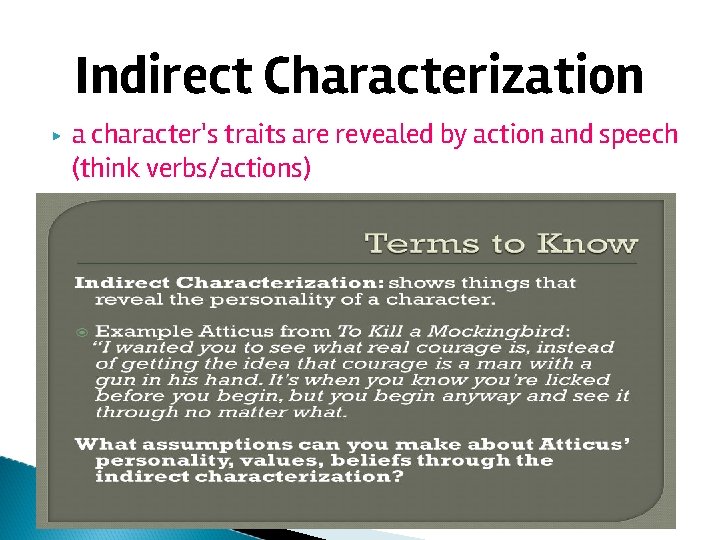
Indirect Characterization ▶ a character's traits are revealed by action and speech (think verbs/actions)
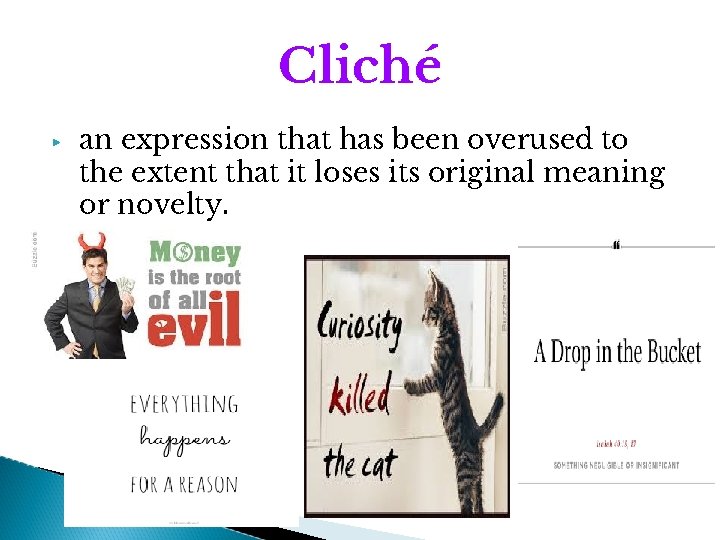
Cliché ▶ an expression that has been overused to the extent that it loses its original meaning or novelty.
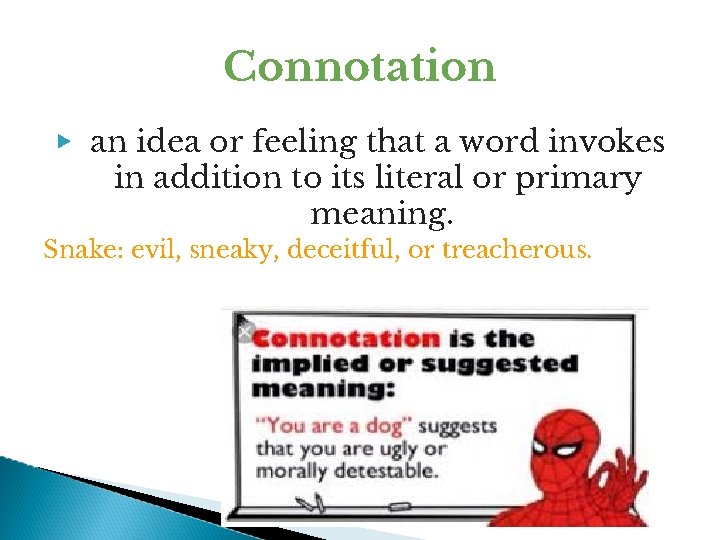
Connotation ▶ an idea or feeling that a word invokes in addition to its literal or primary meaning. Snake: evil, sneaky, deceitful, or treacherous.
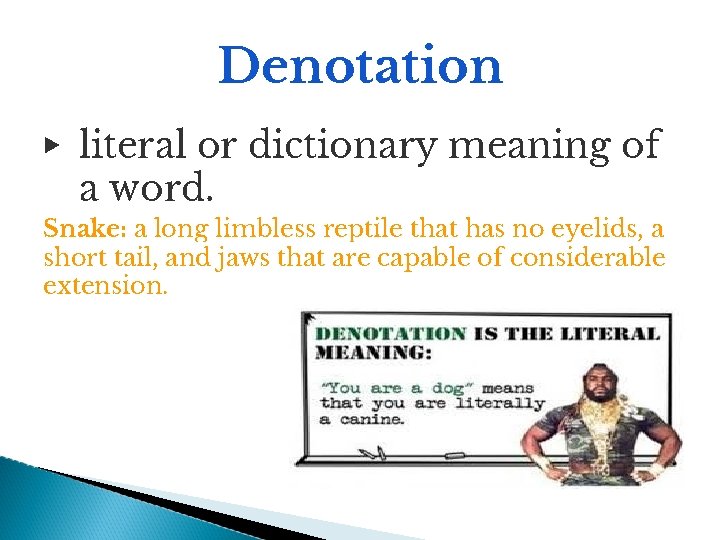
Denotation ▶ literal or dictionary meaning of a word. Snake: a long limbless reptile that has no eyelids, a short tail, and jaws that are capable of considerable extension.
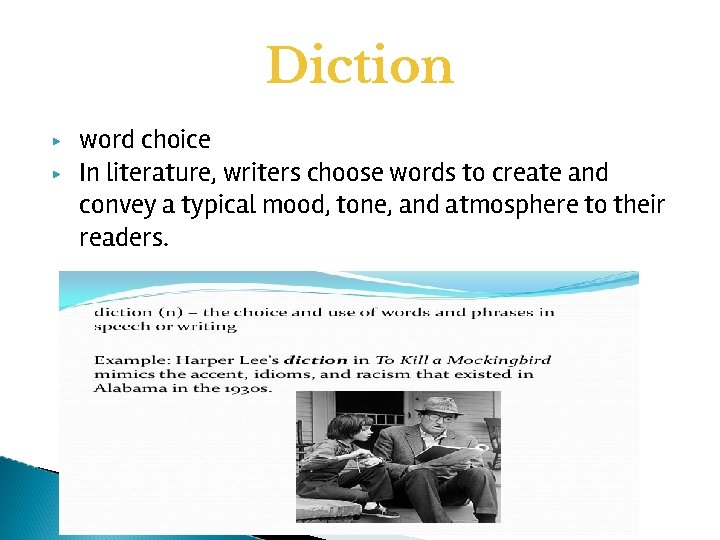
Diction ▶ ▶ word choice In literature, writers choose words to create and convey a typical mood, tone, and atmosphere to their readers.
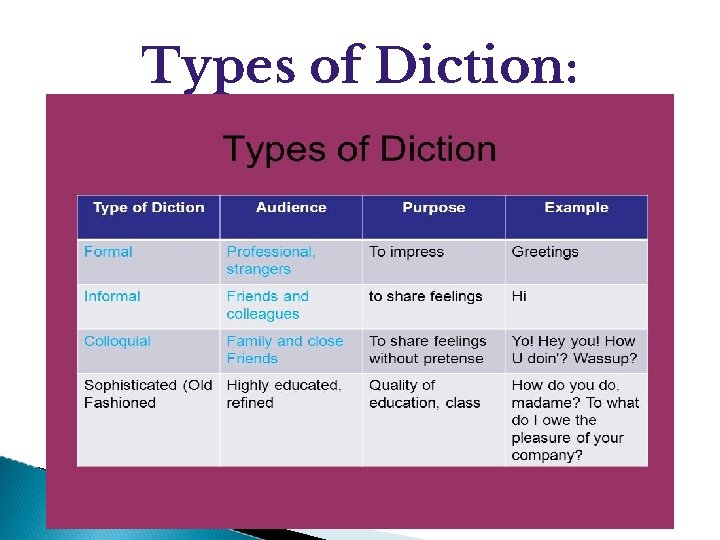
Types of Diction:
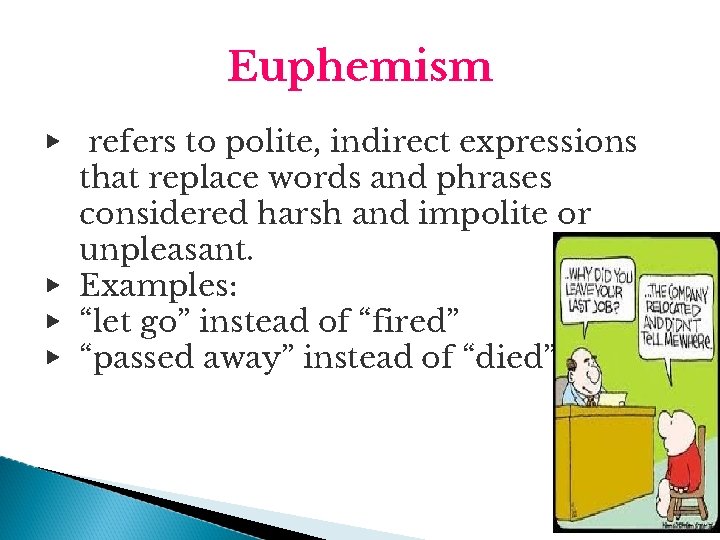
Euphemism ▶ refers to polite, indirect expressions that replace words and phrases considered harsh and impolite or unpleasant. ▶ Examples: ▶ “let go” instead of “fired” ▶ “passed away” instead of “died”
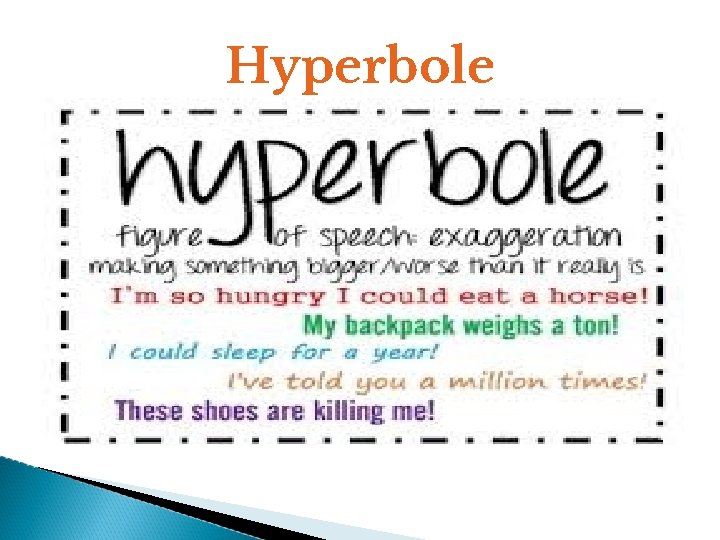
Hyperbole
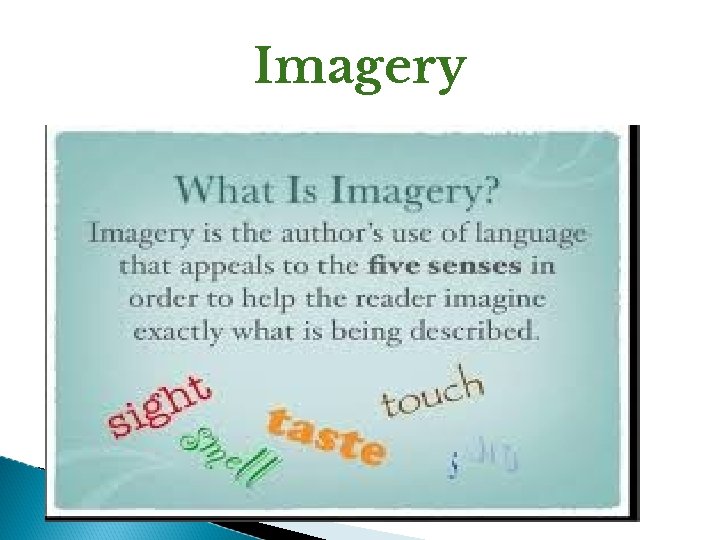
Imagery
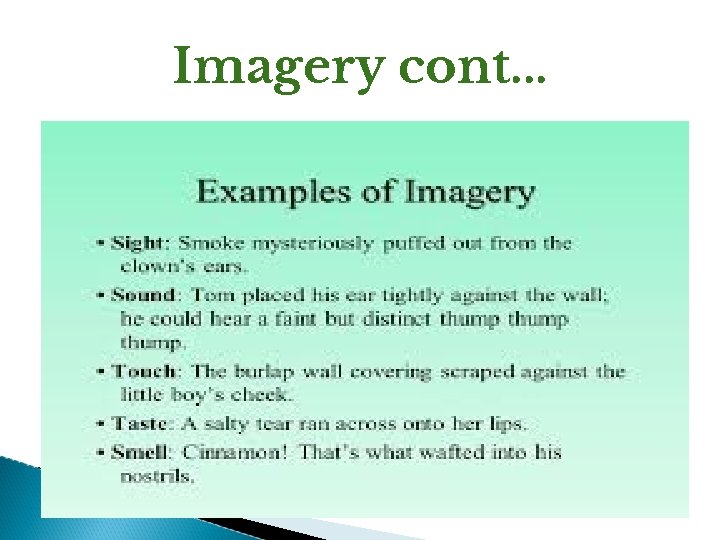
Imagery cont. . .
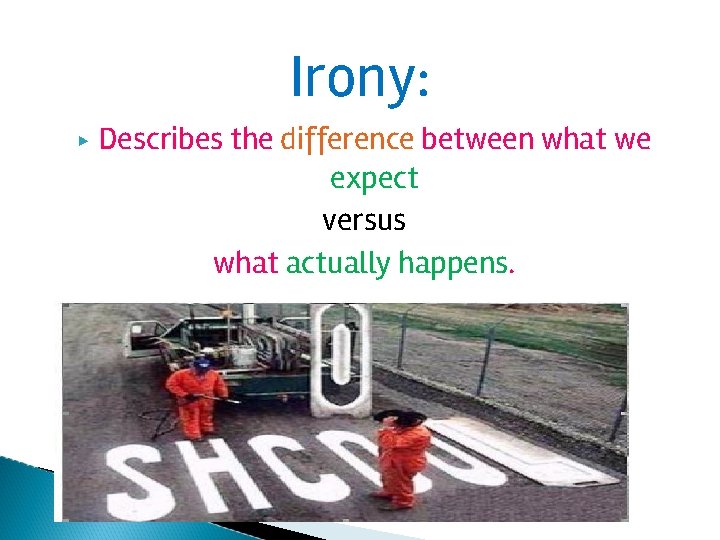
Irony: ▶ Describes the difference between what we expect versus what actually happens.
Three types: ▶ 1. Situational Irony ▶ 2. Dramatic Irony ▶ 3. Verbal Irony
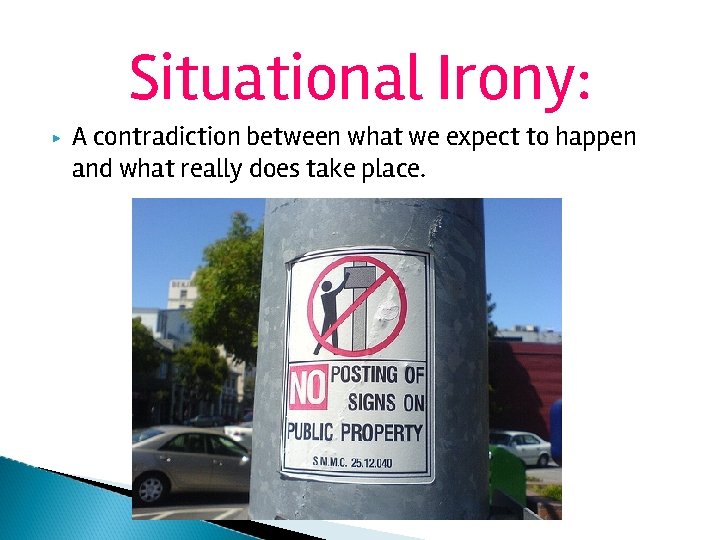
Situational Irony: ▶ A contradiction between what we expect to happen and what really does take place.
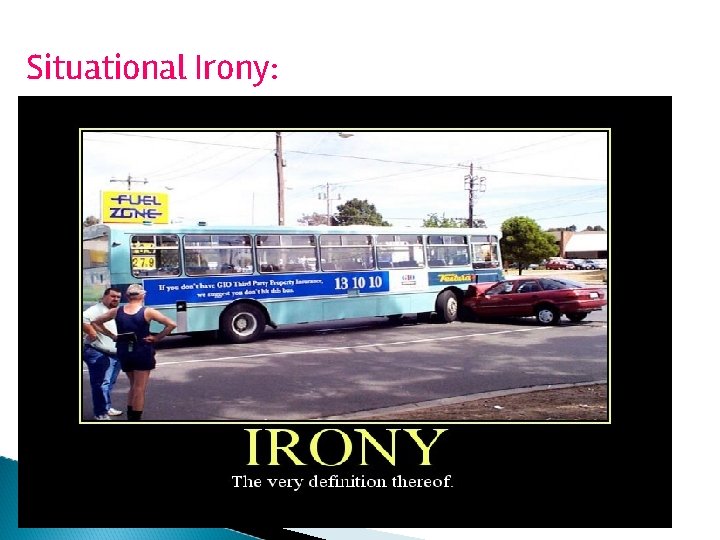
Situational Irony:
Situational Irony cont. . . ▶ A marriage counselor filed for divorce ▶ A teacher failed a test ▶ An anti-technology website ▶ A fire station burns down
Dramatic Irony: ▶ Occurs when the audience or the reader knows something important that a character in a play or story does not know.
Dramatic Irony cont…. ▶ ▶ ▶ In Star Wars, the audience know that Darth Vader is Luke’s father, but Luke does not know until Episode V. In horror movies, the audience is aware that there is a killer in the house, but the character does not and they proceed to enter. In Toy Story, human characters are not aware that the toys speak and move while the audience is aware.
Verbal Irony: ▶ A writer/speaker says one thing but really means something completely different. Example: If you call a clumsy basketball player the new Michael Jordan, you are using verbal irony.
Verbal Irony cont. . . Other examples: ▶ A man looked out of the window to see the storm intensify. He turned to his friend and said “wonderful weather we’re having!” ▶ Exclaiming “oh great” after failing an exam ▶ As pleasant as a tooth canal (also a simile)
Other types of irony:
Contradiction: a proposition, statement, or phrase that asserts or implies both the truth and falsity of something Examples: “The restaurant opens at five o'clock and it serves dinner between four and nine. ” • Contradictory Quotes: A silent man is a wise one / A man without words is a man without thoughts. Actions speak louder than words The pen is mightier than the sword. • • •
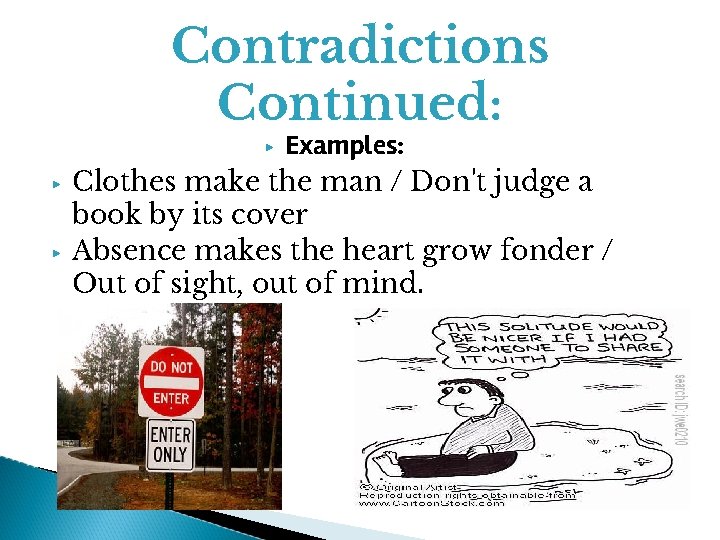
Contradictions Continued: Examples: Clothes make the man / Don't judge a book by its cover Absence makes the heart grow fonder / Out of sight, out of mind. ▶ ▶ ▶
Satire the use of humor, irony, exaggeration, or ridicule to expose and criticize people's stupidity or vices, particularly in the context of contemporary politics and other topical issues. “Weekend Update” from Saturday Night Live The Daily Show The movie Scary Movie
Satire continued. . . #Hashtag https: //www. youtube. com/watch? v=57 dza. Maou. XA&list=PLb. BD Pi 7 Ri. Slwl. Jpt 46 Y 05 j. Cl 5 I 7 EMIZiq Parkour https: //www. youtube. com/watch? v=0 Kvw 2 BPKjz 0&index=4&lis t=PLb. BDPi 7 Ri. Slwl. Jpt 46 Y 05 j. Cl 5 I 7 EMIZiq&t=0 s Key & Peele Teaching Center https: //www. youtube. com/watch? v=dk. Hq. PFbxm. OU Teenage Affluenza https: //www. youtube. com/watch? v=KFZz 6 ICzpj. I
Metaphor ▶ ▶ comparison between two things that are unrelated, but which share some common characteristics. Implicit comparison uses “is” or “are” to make comparison.
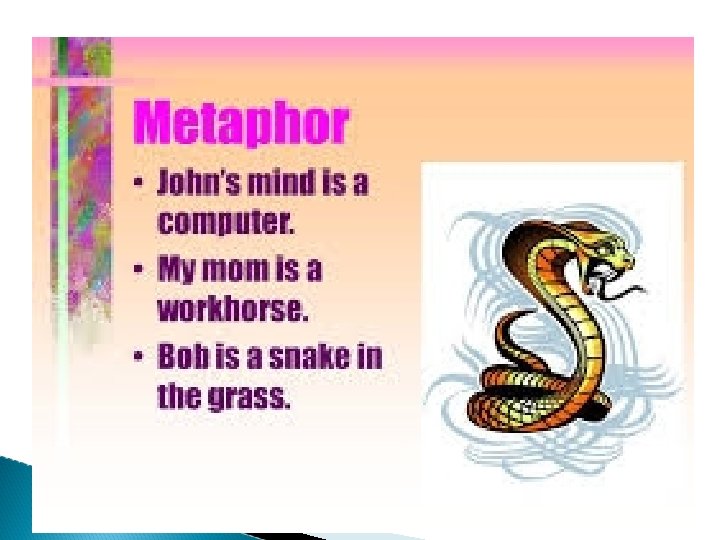
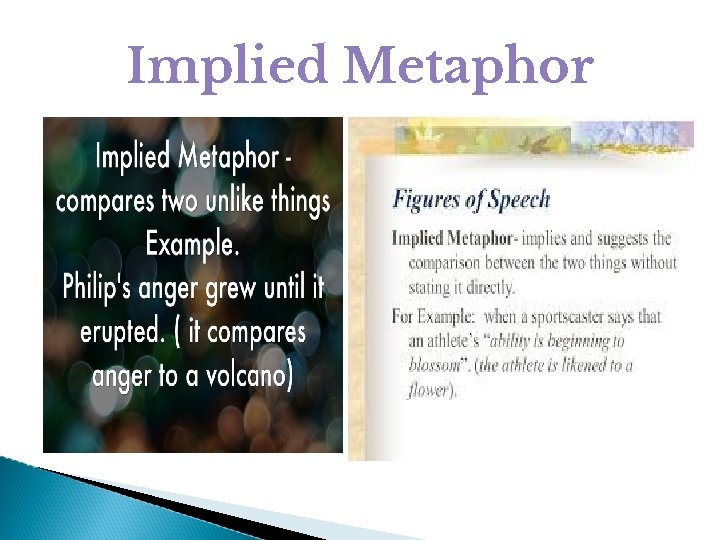
Implied Metaphor
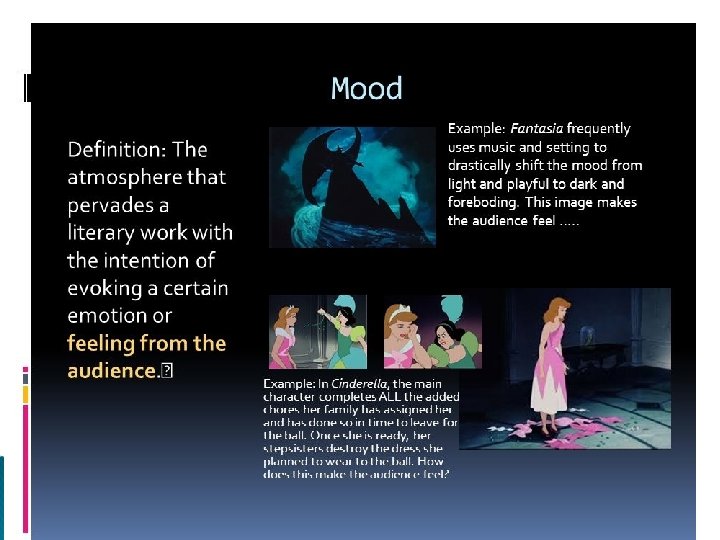
Mood evokes certain feelings/creates an atmosphere
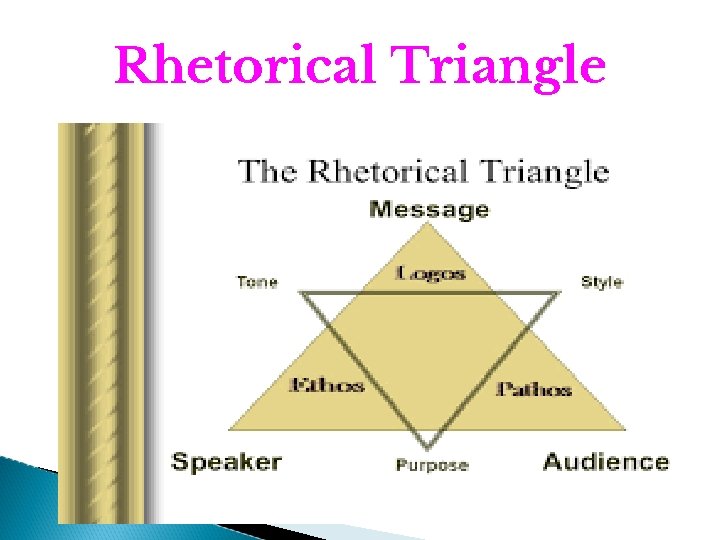
Rhetorical Triangle
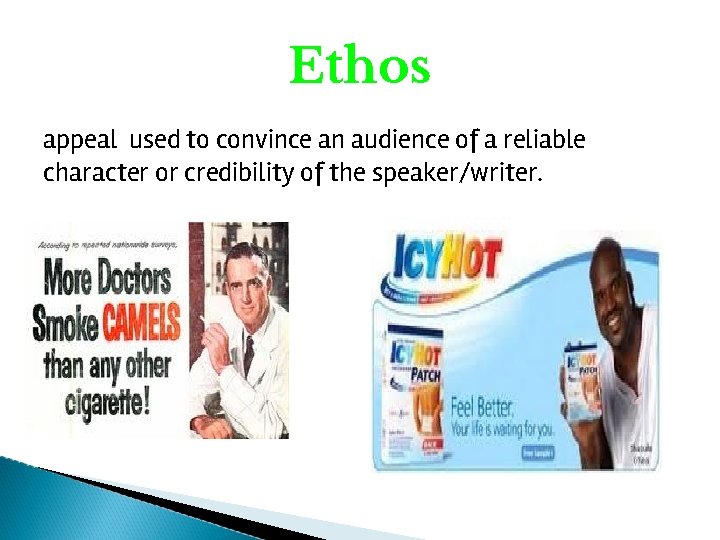
Ethos appeal used to convince an audience of a reliable character or credibility of the speaker/writer.
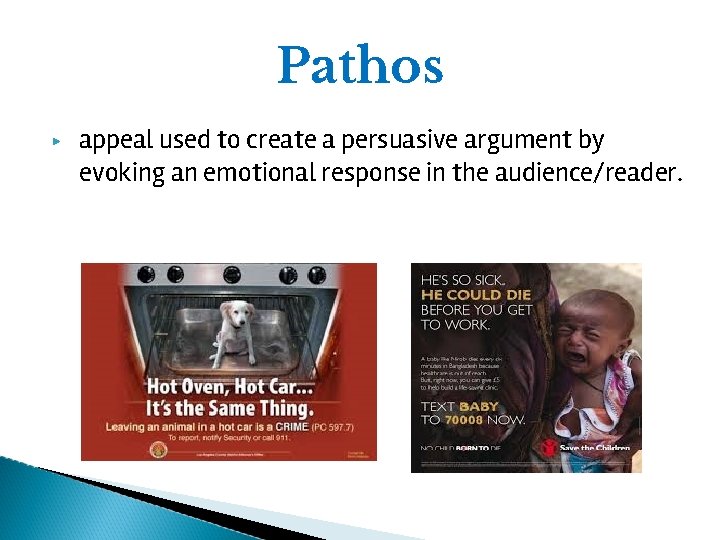
Pathos ▶ appeal used to create a persuasive argument by evoking an emotional response in the audience/reader.
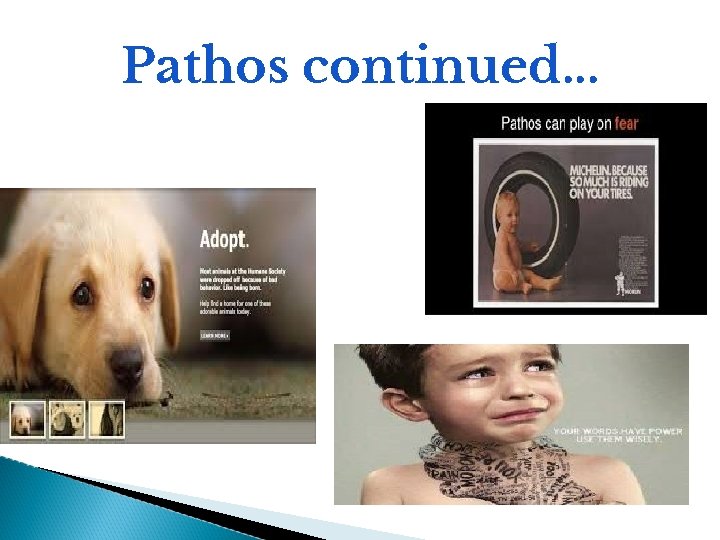
Pathos continued. . .
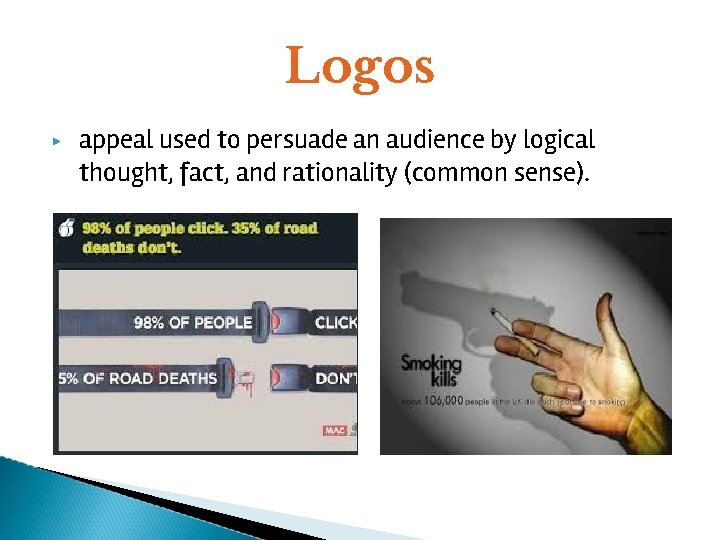
Logos ▶ appeal used to persuade an audience by logical thought, fact, and rationality (common sense).
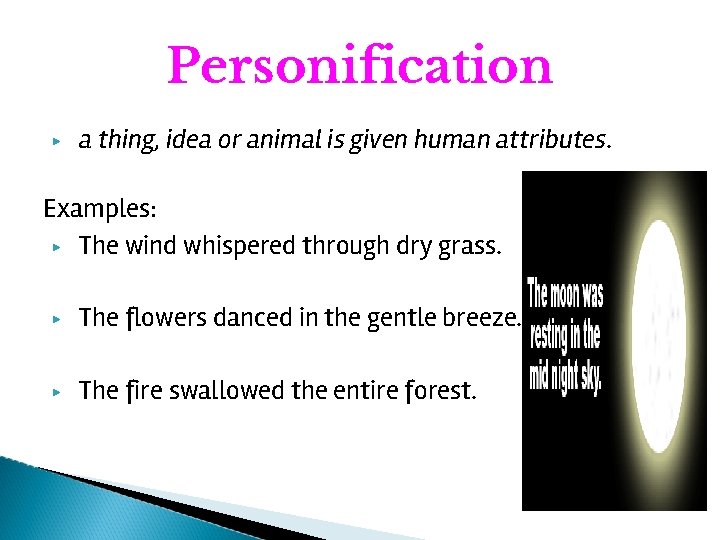
Personification ▶ a thing, idea or animal is given human attributes. Examples: ▶ The wind whispered through dry grass. ▶ The flowers danced in the gentle breeze. ▶ The fire swallowed the entire forest.
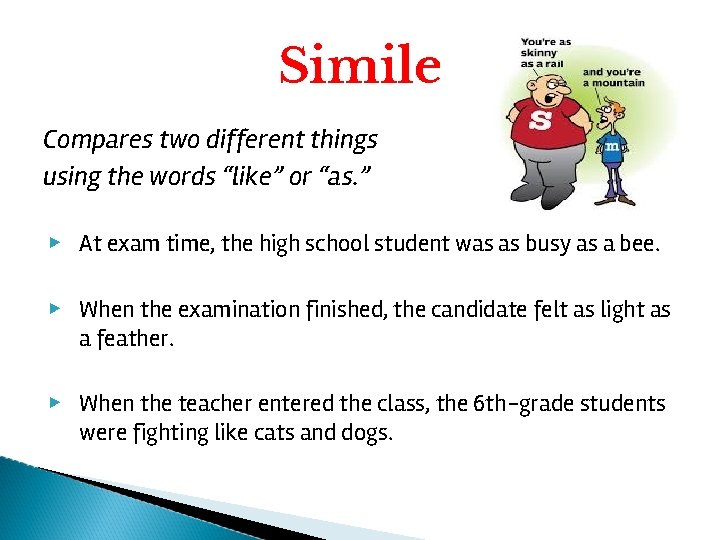
Simile Compares two different things using the words “like” or “as. ” ▶ At exam time, the high school student was as busy as a bee. ▶ When the examination finished, the candidate felt as light as a feather. ▶ When the teacher entered the class, the 6 th-grade students were fighting like cats and dogs.
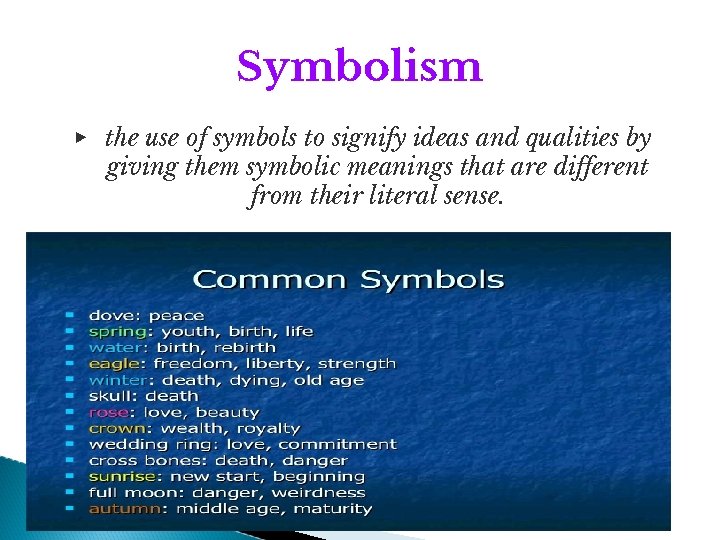
Symbolism ▶ the use of symbols to signify ideas and qualities by giving them symbolic meanings that are different from their literal sense.
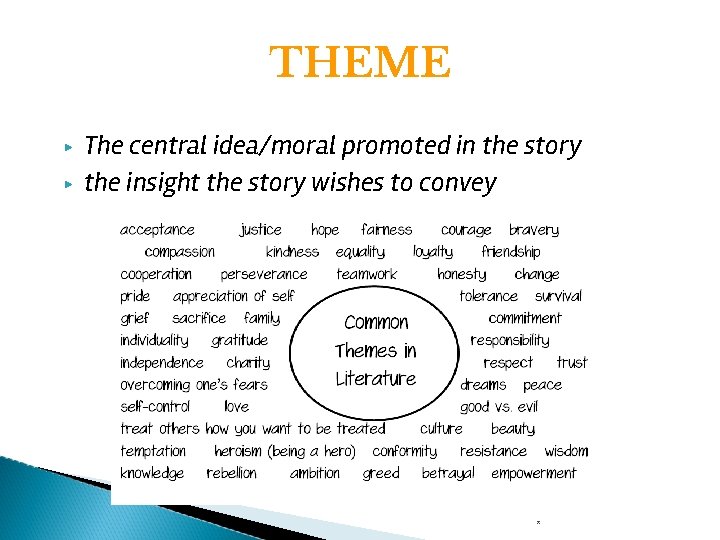
THEME ▶ ▶ The central idea/moral promoted in the story the insight the story wishes to convey * 51
TONE Attitude the writer takes toward a subject, a character, or the audience. ▶ To illustrate the difference, two different novelists might write stories about capitalism. ▶
Tone continued… ▶ ▶ Author #1: creates a tale in which an impoverished but hard-working young man pulls himself out of the slums when he applies himself to his education, and he becomes a wealthy, contented middle-class citizen who leaves his past behind him, never looking back at that awful human cesspool from which he rose.
Tone Continued… Author #2: Creates a tale in which a dirty street-rat skulks his way out of the slums by abandoning his family and going off to college, and he greedily hoards his money in a gated community and ignores the suffering of his former "equals, " whom he leaves behind in his selfish desire to get ahead. ▶
KEEP IN MIND: ▶ ▶ ▶ Both author #1 and author #2 basically present the same plotline. First author's writing creates a tale of optimism and hope Second author shapes the same tale into a story of bitterness and cynicism.
Tone Continued… ▶ The difference is in their respective tones--the way they convey their attitudes about particular characters and subject-matter.
Teaching tone with movies ▶ Frozen: ▶ https: //www. youtube. com/watch? v=9 e. D 2 Updhbw. A&list=PLBj. Iq. Rvy. Njs 8 sc. ZZ 1 uk. Azly. H 4 m. Rve. AYS- ▶ Original: https: //www. youtube. com/watch? v=Tb. Qm 5 do. F_Uc ▶ Mrs. Doubtfire: ▶ https: //www. youtube. com/watch? v=U 71 P 5 FKFqfg&list=PLBj. Iq. Rvy. Njs 8 sc. ZZ 1 uk. Azly. H 4 m. Rve. AYS-&index=6 ▶ Original: https: //www. youtube. com/watch? v=Rz. Zsd. L-EGwg ▶ Harry Potter and Half Blood Prince: ▶ https: //www. youtube. com/watch? v=c_ubmj. E 21 SY&list=PLBj. Iq. Rvy. Njs 8 sc. ZZ 1 uk. Azly. H 4 m. Rve. AYS-&index=13 ▶ Original: https: //www. youtube. com/watch? v=jp. CPv. HJ 6 p 90&index=14&list=PLBj. Iq. Rvy. Njs 8 sc. ZZ 1 uk. Azly. H 4 m. Rve. AYS- ▶ Mary Poppins ▶ https: //www. youtube. com/watch? v=2 T 5_0 AGd. Fic&index=2&list=PLw. RF 5 b. RIjr. Mx. Ou. A_2 Wp 2 lm. Obj. Qot 3 XHfo ▶ Original: https: //www. youtube. com/watch? v=n. Of. H 7 u. Eoj. Kk
Continued… ▶ ▶ ▶ ▶ Forrest Gump: https: //www. youtube. com/watch? v=1 Gi. Yx 1 r 4200&list=PLw. RF 5 b. RIjr. Mx. Ou. A_2 Wp 2 lm. Obj. Qot 3 XHfo&index= 7 The Shining: https: //www. youtube. com/watch? v=Kmk. VWu. P_s. O 0&index=11&list=PLw. RF 5 b. RIjr. Mx. Ou. A_2 Wp 2 lm. Obj. Qot 3 XHfo Home Alone: https: //www. youtube. com/watch? v=kckad. RU 3 q_g&index=13&list=PLw. RF 5 b. RIjr. Mx. Ou. A_2 Wp 2 lm. Obj. Qot 3 X Hfo Titanic: https: //www. youtube. com/watch? v=oxw. TS 2 hin. BA&index=17&list=PLw. RF 5 b. RIjr. Mx. Ou. A_2 Wp 2 lm. Obj. Qot 3 X Hfo
The Importance of Correct Punctuation ▶ Dear John: I want a man who knows what love is all about. You are generous, kind, thoughtful. People who are not like you admit to being useless and inferior. You have ruined me for other men. I yearn for you. I have no feelings whatsoever when we're apart. I can be forever happy--will you let me be yours? Gloria
▶ Dear John: I want a man who knows what love is. All about you are generous, kind, thoughtful people, who are not like you. Admit to being useless and inferior. You have ruined me. For other men, I yearn. For you, I have no feelings whatsoever. When we're apart, I can be forever happy. Will you let me be? Yours, Gloria

- Slides: 61