
English Home Learning Booklet Transactional Writing Letters and
English Home Learning Booklet Transactional Writing: Letters and Emails Name: ______
Key Words Look up the definitions of the following key words and write down. Key Word Fiction Non-Fiction Transactional Writing Formal Informal Slang Definition
Introduction Transactional writings are non-fiction texts. These are texts which communicate information between different groups of people We are going to look at examples of transactional writing this term and have a go at writing them. How many types of non-fiction transactional texts can you think of? Use Google to help Transactional Writing

PAF Non-fiction texts are written for different reasons. Each text will have a specific purpose, audience and form. Purpose: Why the text is written. Persuade, Inform, Explain, Argue, Entertain etc. Audience: Who the text is written for. Adults, Children, Elderly people etc. Form: How the text is written. Letter, Email, Article, Instructions, Newspaper etc. Task: For each text, complete the table. Core: State what the text is about. Emerging: State the PAF for each text. Secure: Say how you know. Mastered: Refer to evidence. Text 1: Newspaper
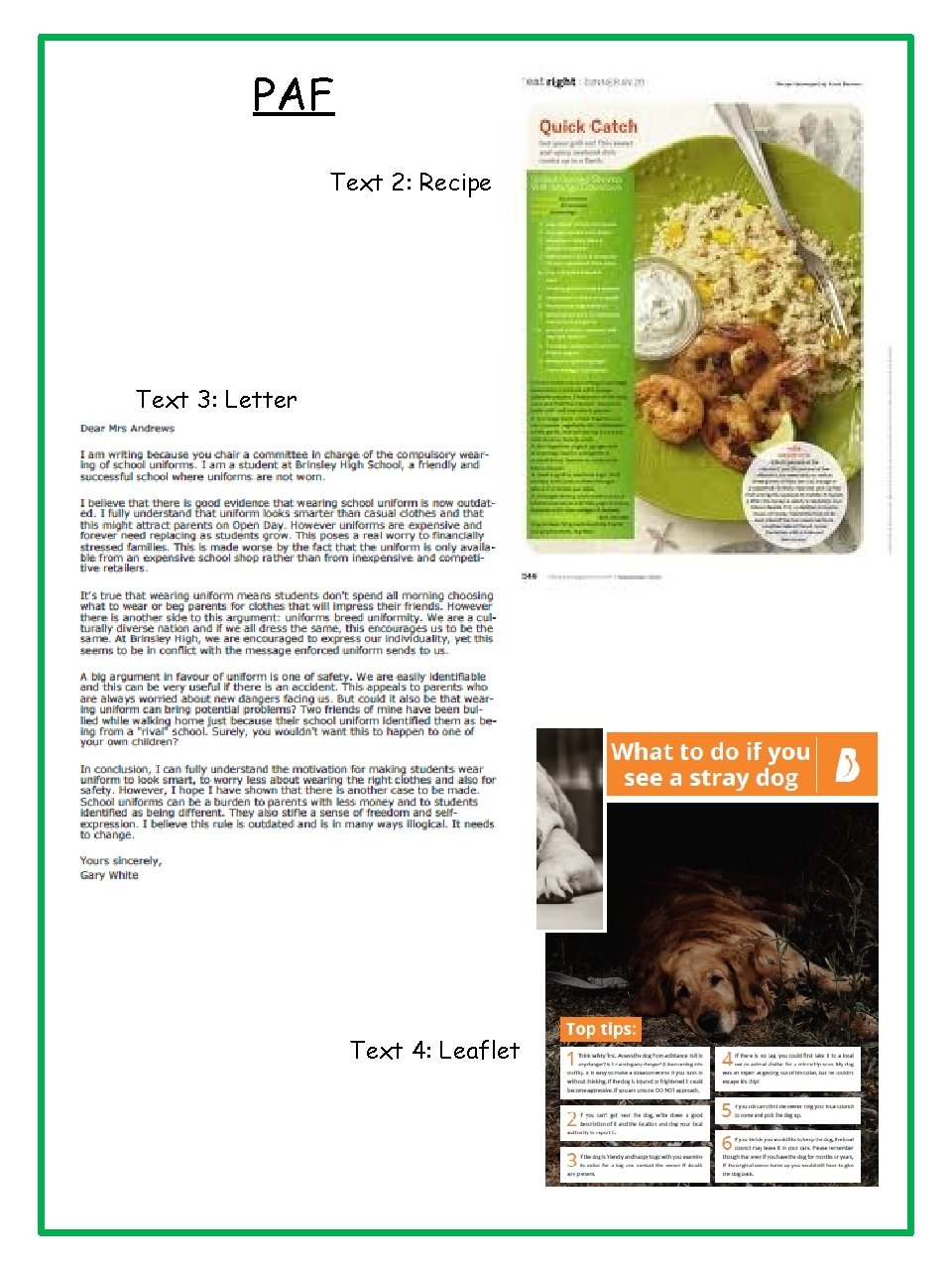
PAF Text 2: Recipe Text 3: Letter Text 4: Leaflet
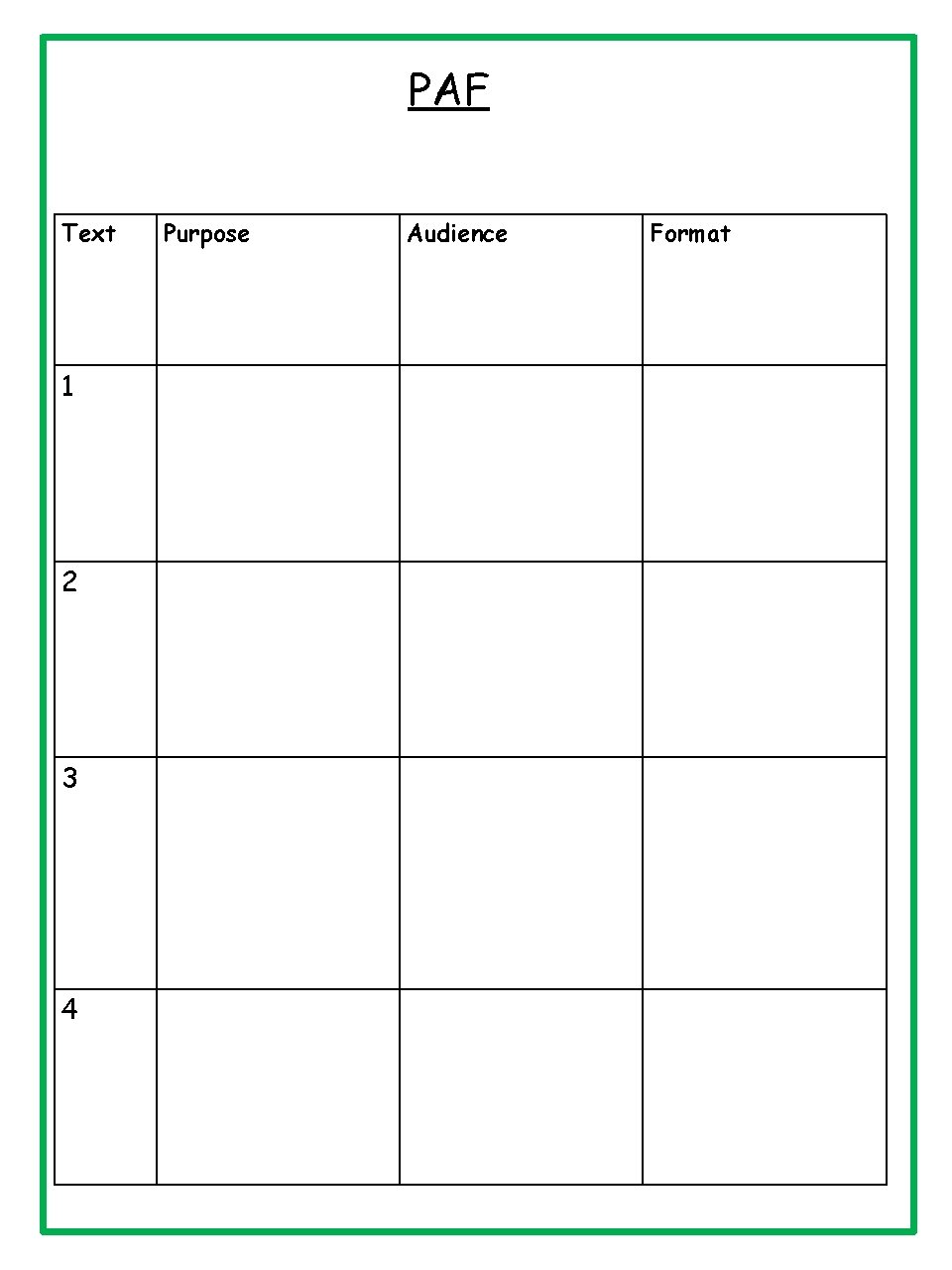
PAF Text 1 2 3 4 Purpose Audience Format
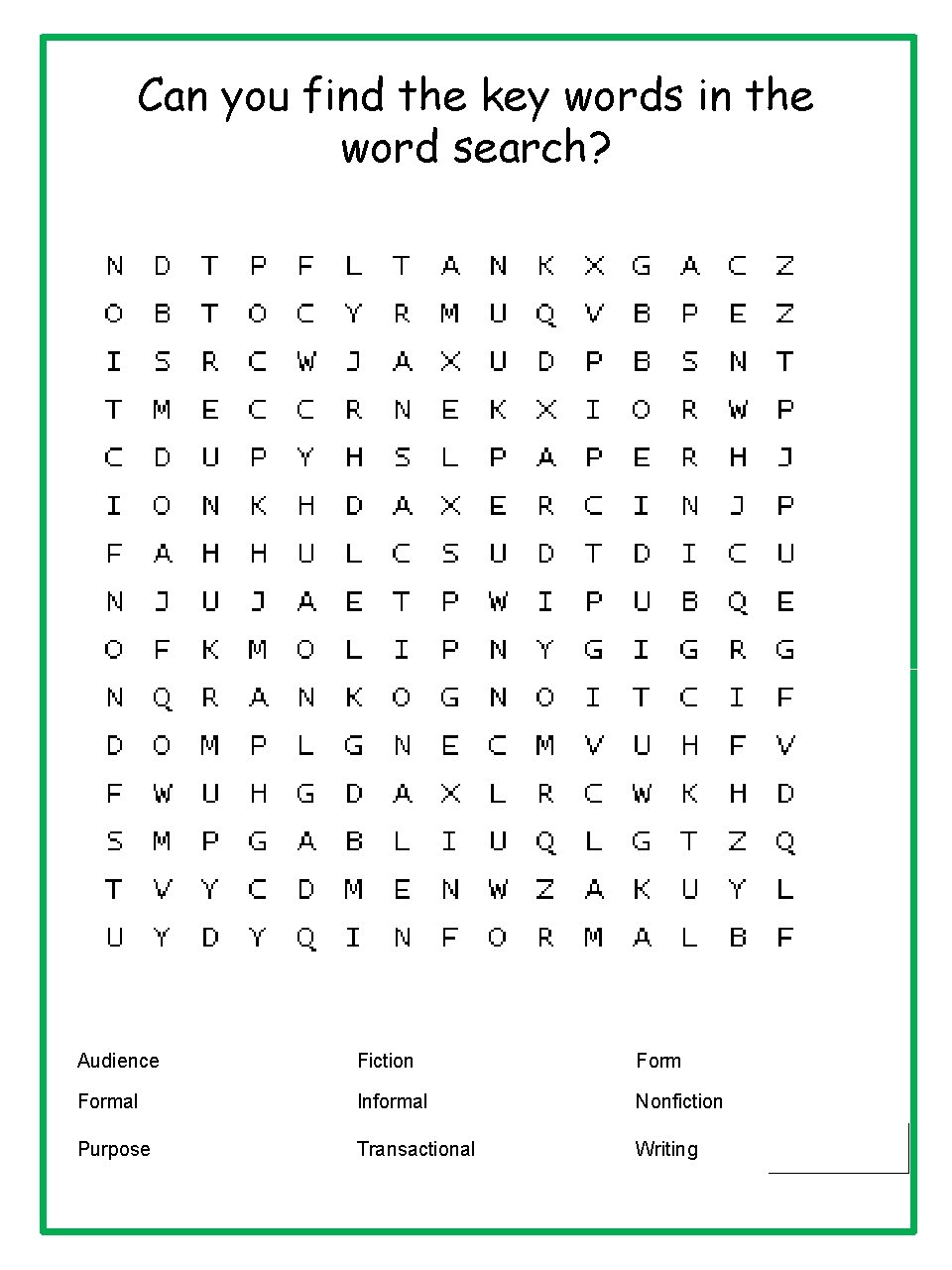
Can you find the key words in the word search? Audience Fiction Formal Informal Nonfiction Purpose Transactional Writing
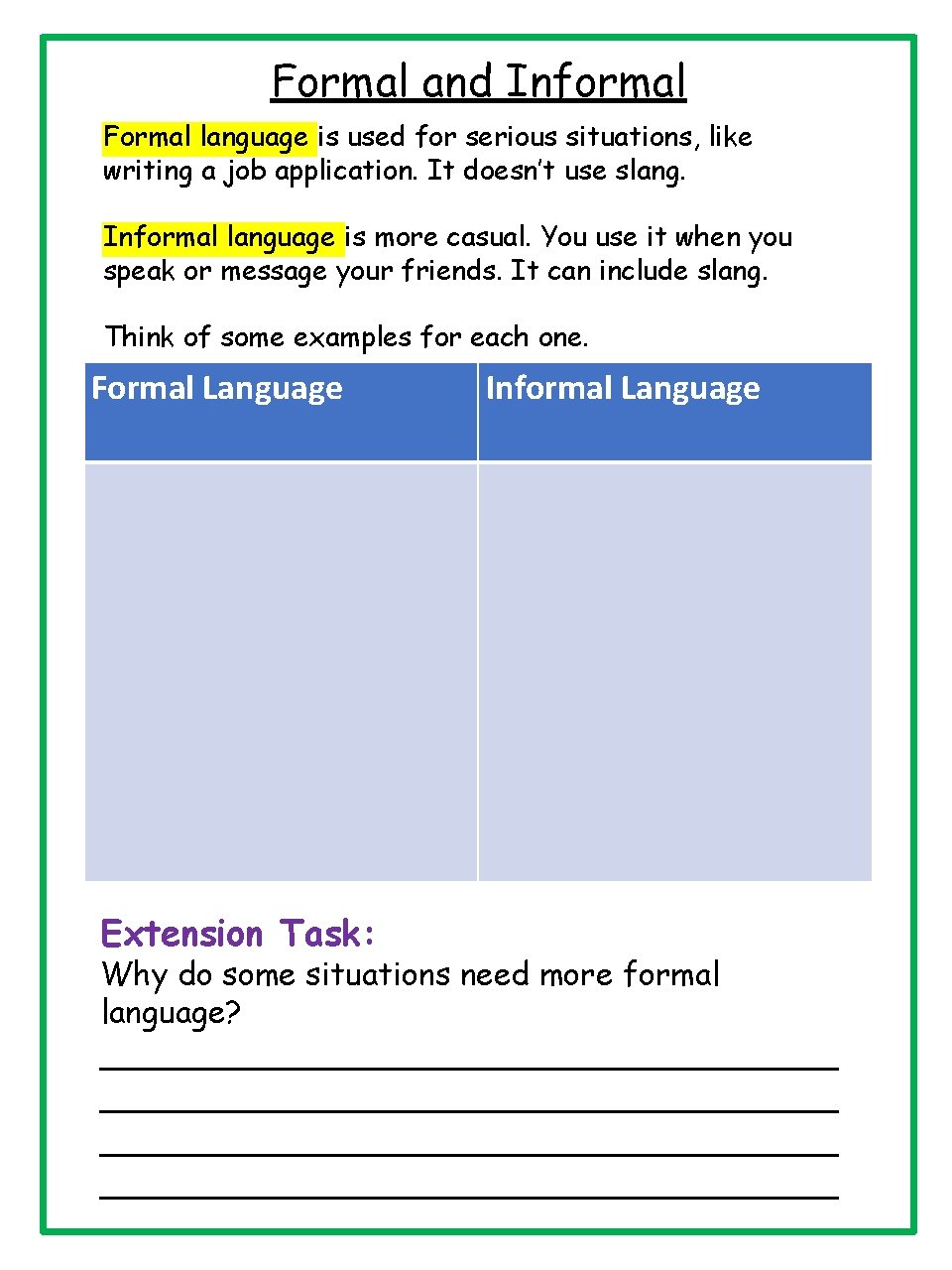
Formal and Informal Formal language is used for serious situations, like writing a job application. It doesn’t use slang. Informal language is more casual. You use it when you speak or message your friends. It can include slang. Think of some examples for each one. Formal Language Informal Language Extension Task: Why do some situations need more formal language? _________________________________
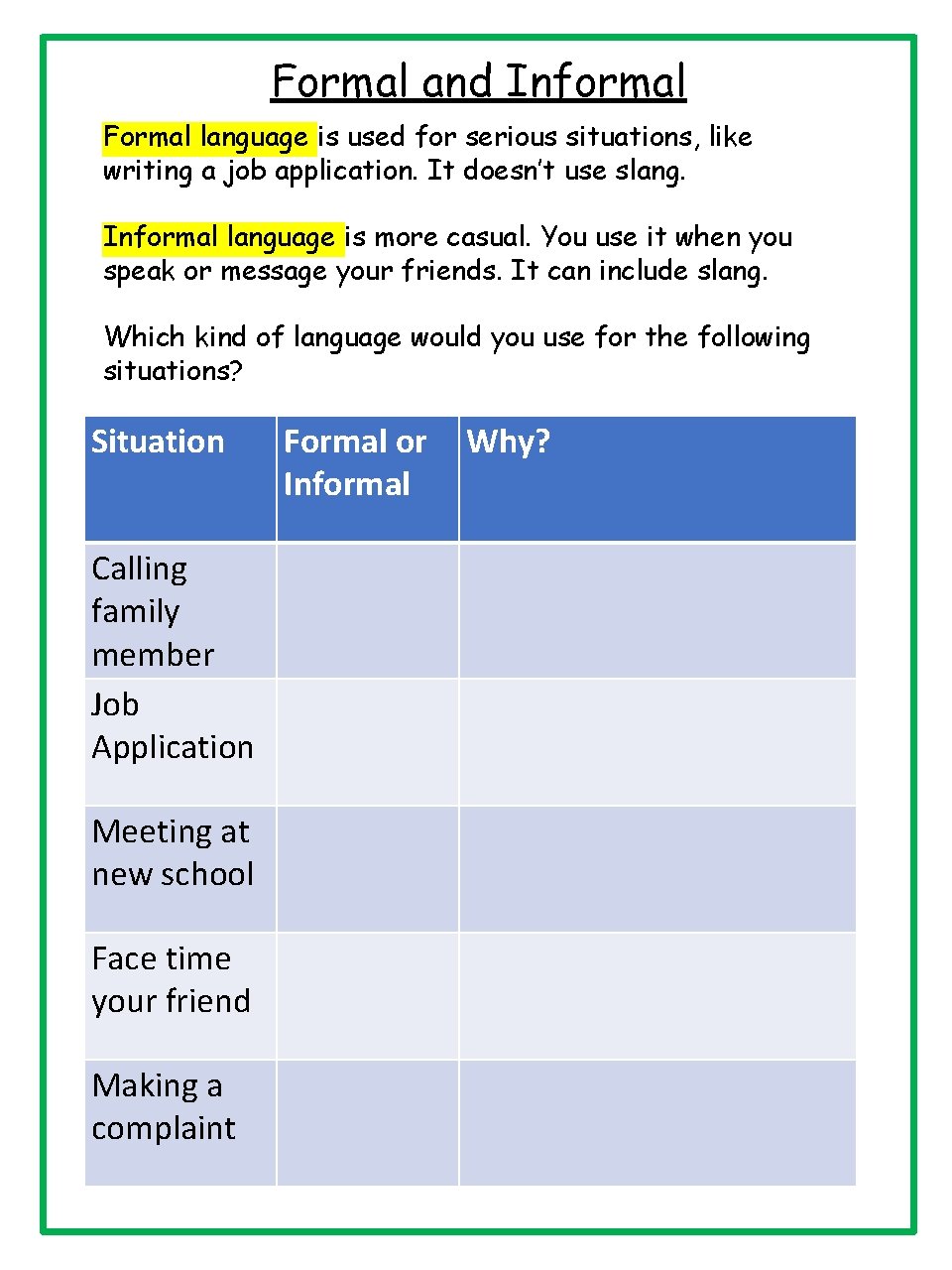
Formal and Informal Formal language is used for serious situations, like writing a job application. It doesn’t use slang. Informal language is more casual. You use it when you speak or message your friends. It can include slang. Which kind of language would you use for the following situations? Situation Calling family member Job Application Meeting at new school Face time your friend Making a complaint Formal or Informal Why?
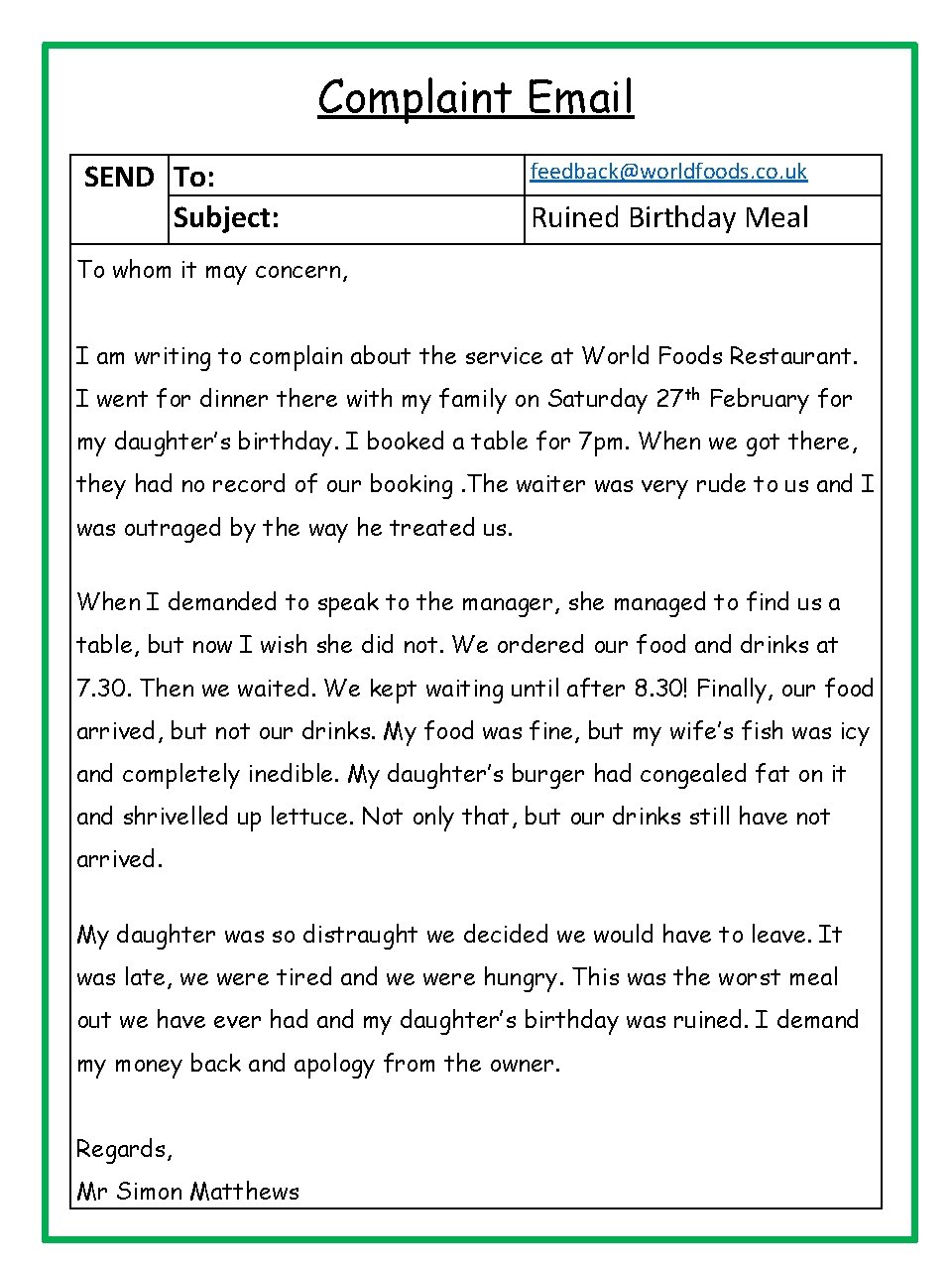
Complaint Email SEND To: Subject: feedback@worldfoods. co. uk Ruined Birthday Meal To whom it may concern, I am writing to complain about the service at World Foods Restaurant. I went for dinner there with my family on Saturday 27 th February for my daughter’s birthday. I booked a table for 7 pm. When we got there, they had no record of our booking. The waiter was very rude to us and I was outraged by the way he treated us. When I demanded to speak to the manager, she managed to find us a table, but now I wish she did not. We ordered our food and drinks at 7. 30. Then we waited. We kept waiting until after 8. 30! Finally, our food arrived, but not our drinks. My food was fine, but my wife’s fish was icy and completely inedible. My daughter’s burger had congealed fat on it and shrivelled up lettuce. Not only that, but our drinks still have not arrived. My daughter was so distraught we decided we would have to leave. It was late, we were tired and we were hungry. This was the worst meal out we have ever had and my daughter’s birthday was ruined. I demand my money back and apology from the owner. Regards, Mr Simon Matthews
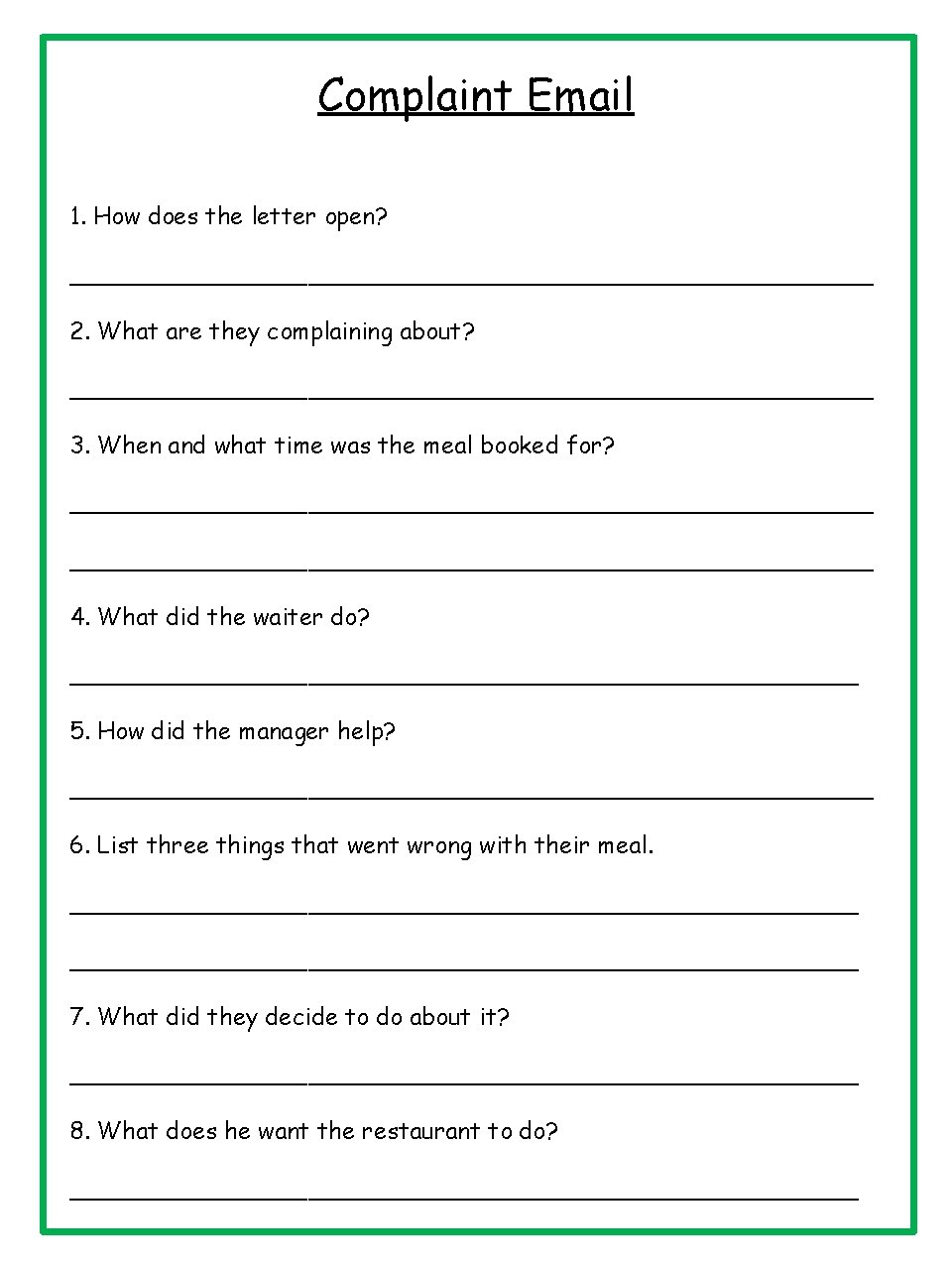
Complaint Email 1. How does the letter open? ___________________________ 2. What are they complaining about? ___________________________ 3. When and what time was the meal booked for? ______________________________________________________ 4. What did the waiter do? ___________________________ 5. How did the manager help? ___________________________ 6. List three things that went wrong with their meal. _____________________________________________________ 7. What did they decide to do about it? ___________________________ 8. What does he want the restaurant to do? ___________________________
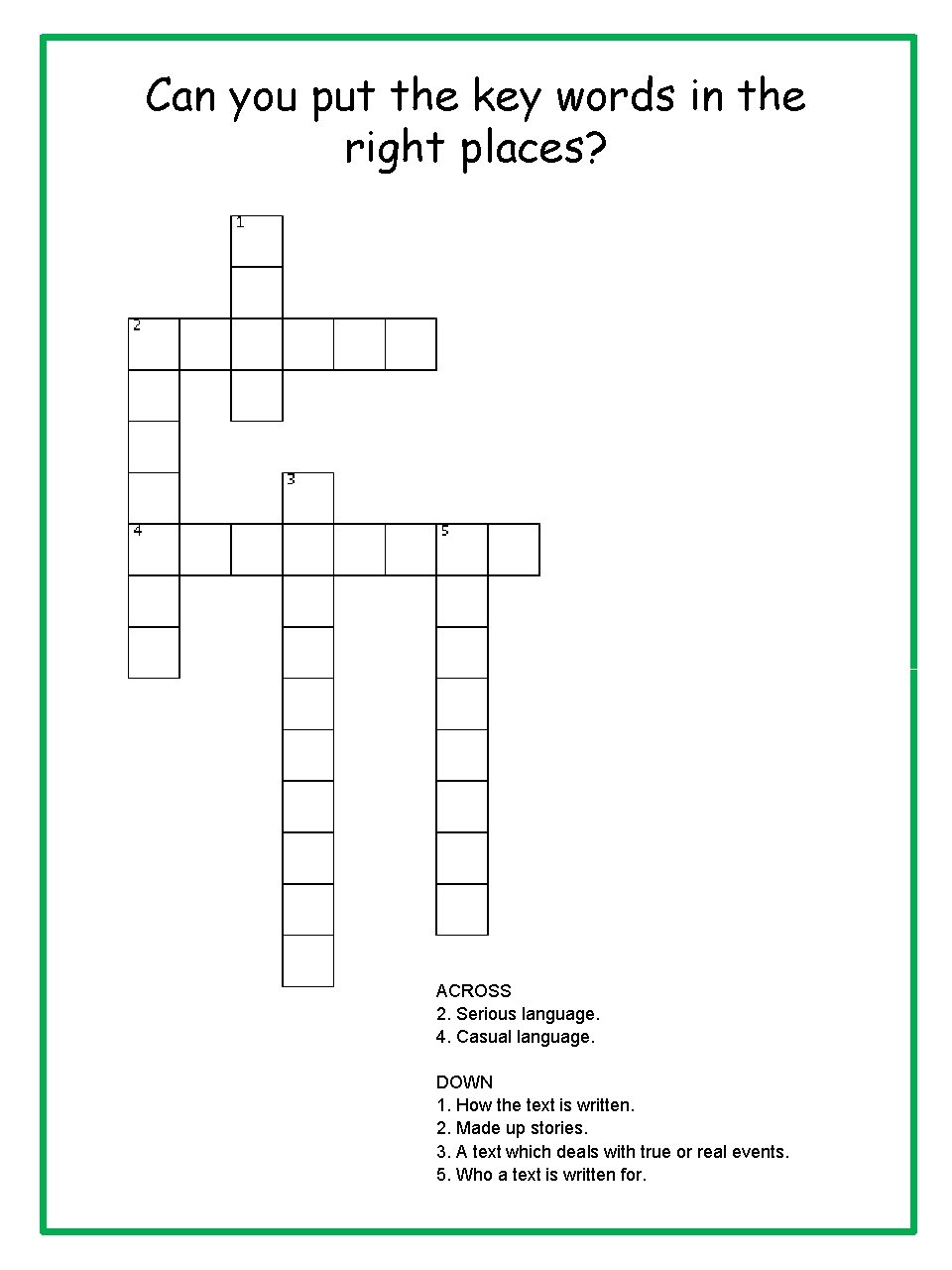
Can you put the key words in the right places? ACROSS 2. Serious language. 4. Casual language. DOWN 1. How the text is written. 2. Made up stories. 3. A text which deals with true or real events. 5. Who a text is written for.
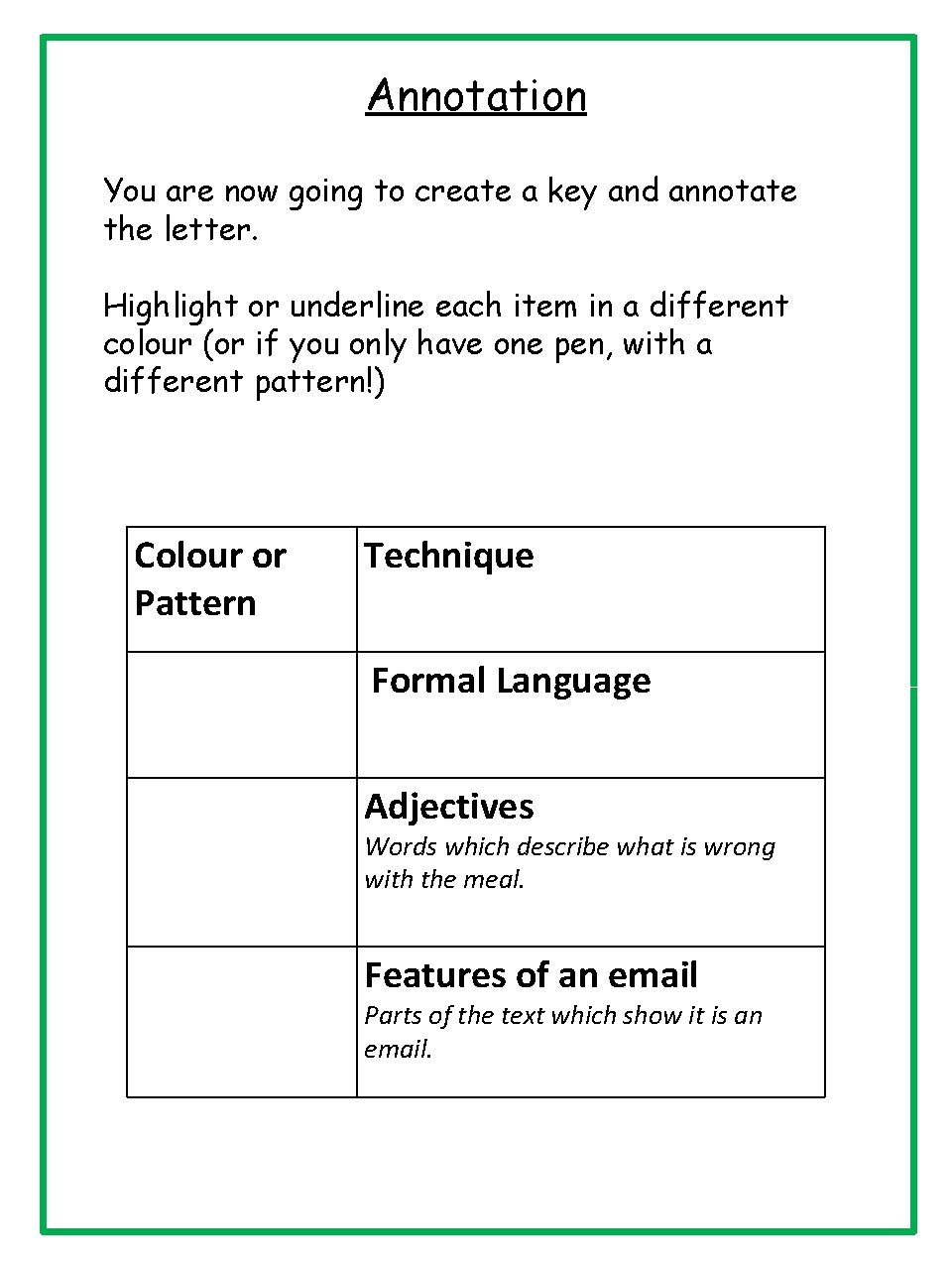
Annotation You are now going to create a key and annotate the letter. Highlight or underline each item in a different colour (or if you only have one pen, with a different pattern!) Colour or Pattern Technique Formal Language Adjectives Words which describe what is wrong with the meal. Features of an email Parts of the text which show it is an email.
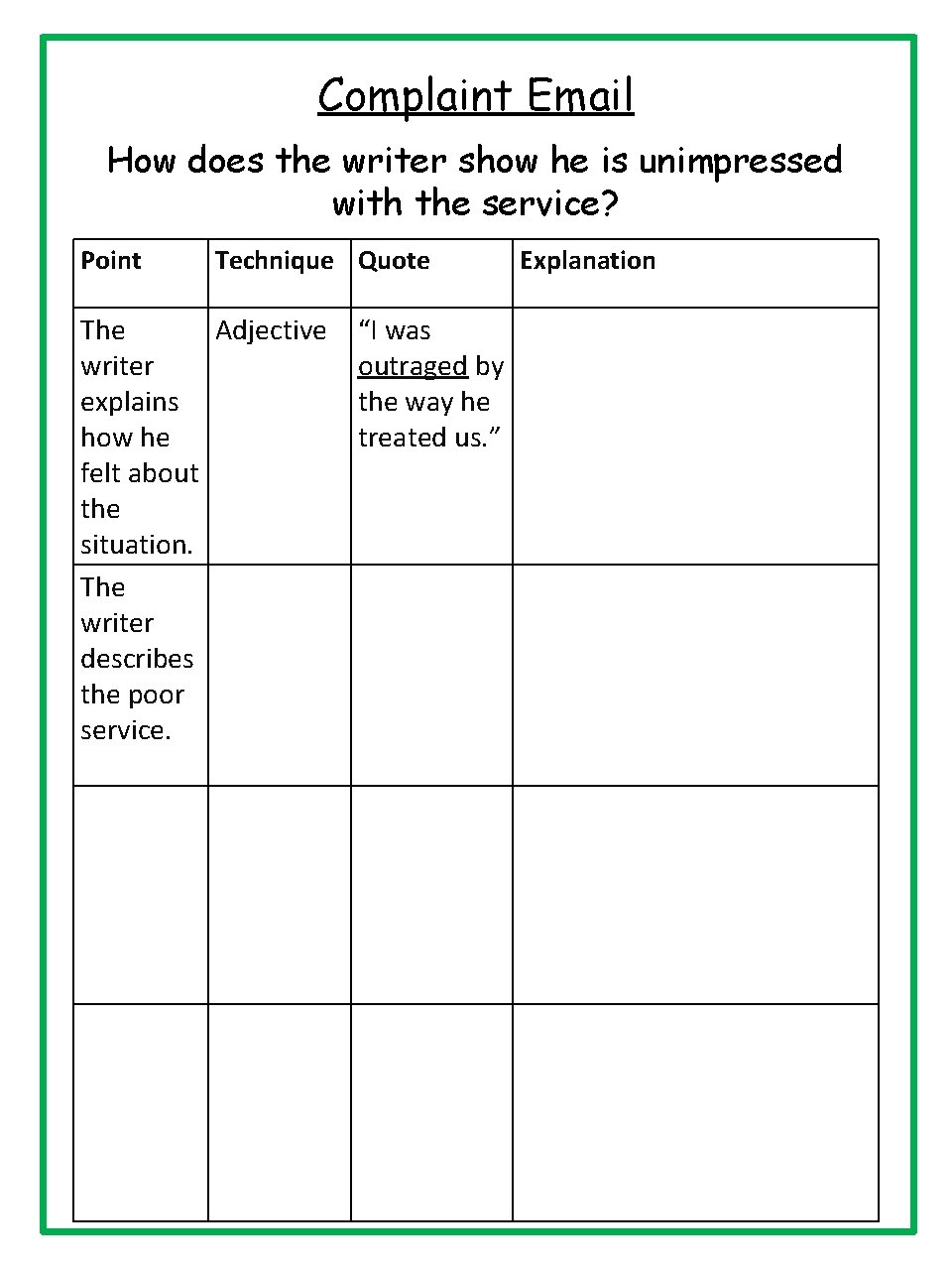
Complaint Email How does the writer show he is unimpressed with the service? Point Technique Quote The Adjective writer explains how he felt about the situation. The writer describes the poor service. “I was outraged by the way he treated us. ” Explanation
Self Assessment Well done! You completed the first week on transactional writing List three things you have learnt. _________________________________________ What went well this week? My best piece of work is… _____________ because… _________________________
- Slides: 15