
ENGLISH FOR PUBLIC ADMINISTRATION III INTRODUCTION Lecturer Prof
ENGLISH FOR PUBLIC ADMINISTRATION III INTRODUCTION
Lecturer Prof. dr. sc. Lelija Sočanac Office hours: Tuesday, 16. 00 – 17. 00 h, Gundulićeva 10, Office 5 E-mail: lelijasocanac@gmail. com
Textbook: Sočanac, L. ; Javornik-Čubrić, M; English for Public Administration. Zagreb: Narodne novine, 2018.
Additional teaching materials Foreign Language Department’s web page: Ppt presentations Additional materials
General Dictionaries Bujas, Željko, Veliki hrvatsko-engleski rječnik. - Zagreb: Nakladni zavod Globus, 1999 Bujas, Željko, Veliki englesko-hrvatski rječnik. - Zagreb : Nakladni zavod Globus, Advanced Learner’s Dictionaries (Collins Cobuild, Oxford, Longman)
Online dictionaries www. eudict. com glosbe. com
English-Croatian Law Dictionaries Gačić, M. Englesko-hrvatski rječnik prava i međunarodnih poslovnih odnosa = English-Croatian Dictionary of Law and International and Business Relations. Zagreb: Školska knjiga, 2010.
English Law Dictionaries Black's Law Dictionary / ed. Bryan A. Garner. Thomson West, 2004. Collin, P. H. , Dictionary of Law. - London : Bloomsbury, 2004 Osborn’s Concise Law Dictionary. - Sweet and Maxwell, 2001 Oxford Dictionary of Law / ed. Martin, E. A. ; Law, J. . Oxford University Press, 2006.
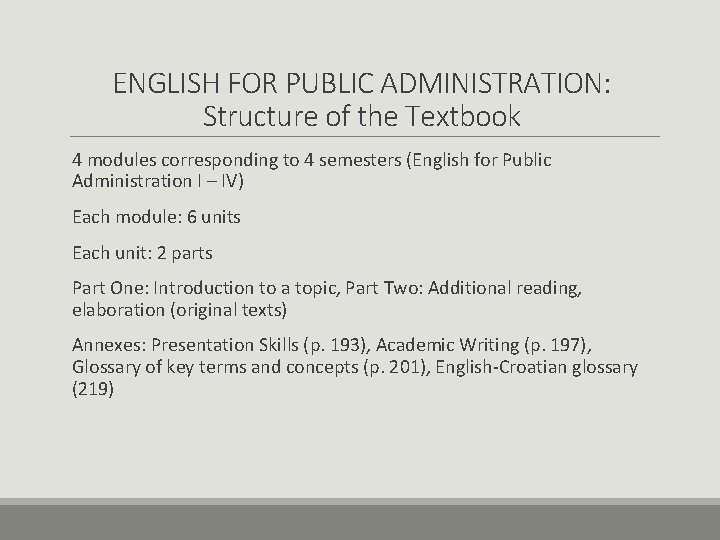
ENGLISH FOR PUBLIC ADMINISTRATION: Structure of the Textbook 4 modules corresponding to 4 semesters (English for Public Administration I – IV) Each module: 6 units Each unit: 2 parts Part One: Introduction to a topic, Part Two: Additional reading, elaboration (original texts) Annexes: Presentation Skills (p. 193), Academic Writing (p. 197), Glossary of key terms and concepts (p. 201), English-Croatian glossary (219)
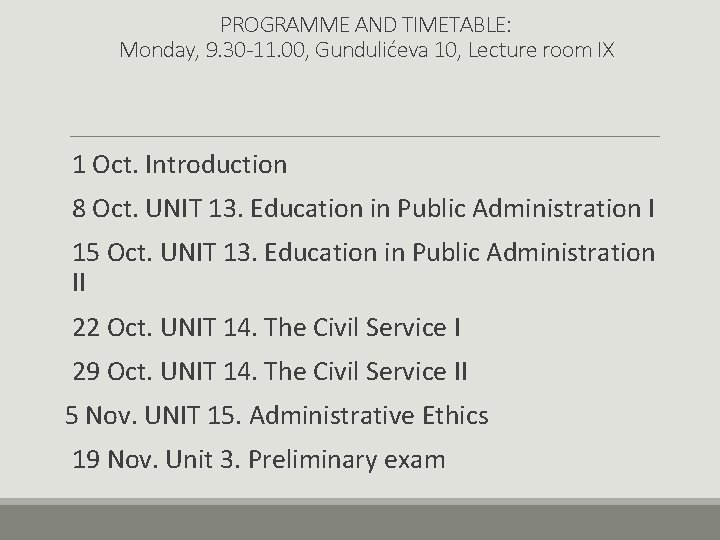
PROGRAMME AND TIMETABLE: Monday, 9. 30 -11. 00, Gundulićeva 10, Lecture room IX 1 Oct. Introduction 8 Oct. UNIT 13. Education in Public Administration I 15 Oct. UNIT 13. Education in Public Administration II 22 Oct. UNIT 14. The Civil Service I 29 Oct. UNIT 14. The Civil Service II 5 Nov. UNIT 15. Administrative Ethics 19 Nov. Unit 3. Preliminary exam
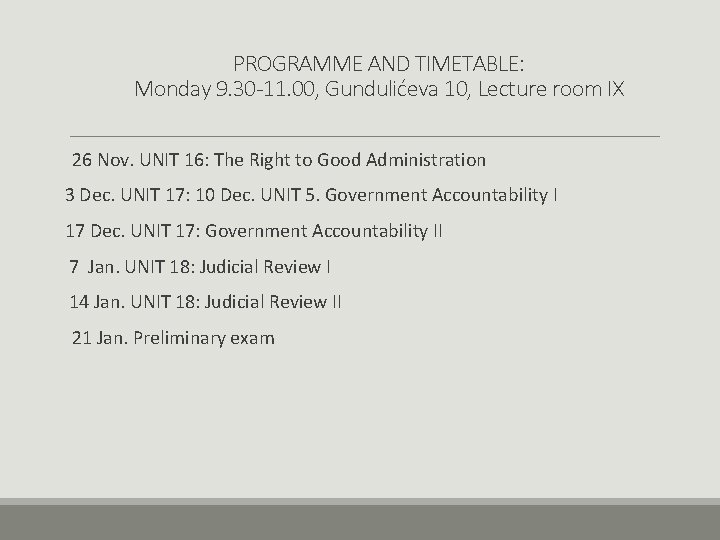
PROGRAMME AND TIMETABLE: Monday 9. 30 -11. 00, Gundulićeva 10, Lecture room IX 26 Nov. UNIT 16: The Right to Good Administration 3 Dec. UNIT 17: 10 Dec. UNIT 5. Government Accountability I 17 Dec. UNIT 17: Government Accountability II 7 Jan. UNIT 18: Judicial Review I 14 Jan. UNIT 18: Judicial Review II 21 Jan. Preliminary exam
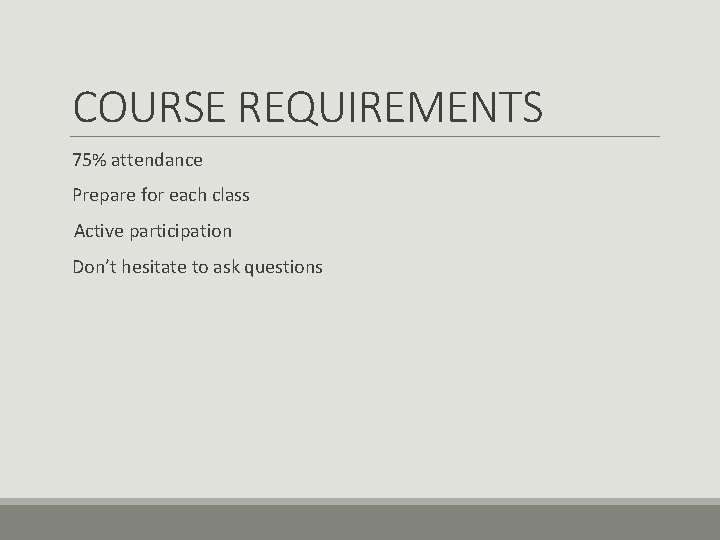
COURSE REQUIREMENTS 75% attendance Prepare for each class Active participation Don’t hesitate to ask questions
Assessment 75% attendance entitles you to take preliminary exams If you pass the preliminary exams, you don’t have to take the written exam at the end of the semester (if you also take a preliminary oral exam, you don’t have to take it at the end of the semester) If you give a good presentation on a selected topic, you don’t have to take the oral exam
Assessment 1. Two preliminary written tests (3 units each) + preliminary oral exam /or presentation (I keep your grades) OR 2. End semester exam: written + oral (6 units: Unit 13 -18)
Exam Knowledge of course contents Focus on legal terms Comprehension Application of what you’ve learned Critical thinking
PREPARING YOUR SEMINAR PAPER 1. Choose a topic 2. Research: collect as much material as you can 3. Organize your materials 4. Structure your paper: ◦ 1. Introduction ◦ 2. Elaboration ◦ 3. Conclusion ◦ References
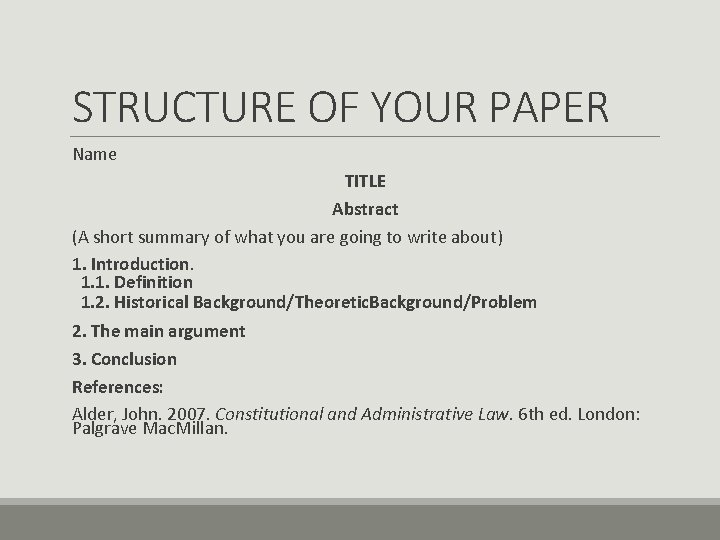
STRUCTURE OF YOUR PAPER Name TITLE Abstract (A short summary of what you are going to write about) 1. Introduction. 1. 1. Definition 1. 2. Historical Background/Theoretic. Background/Problem 2. The main argument 3. Conclusion References: Alder, John. 2007. Constitutional and Administrative Law. 6 th ed. London: Palgrave Mac. Millan.
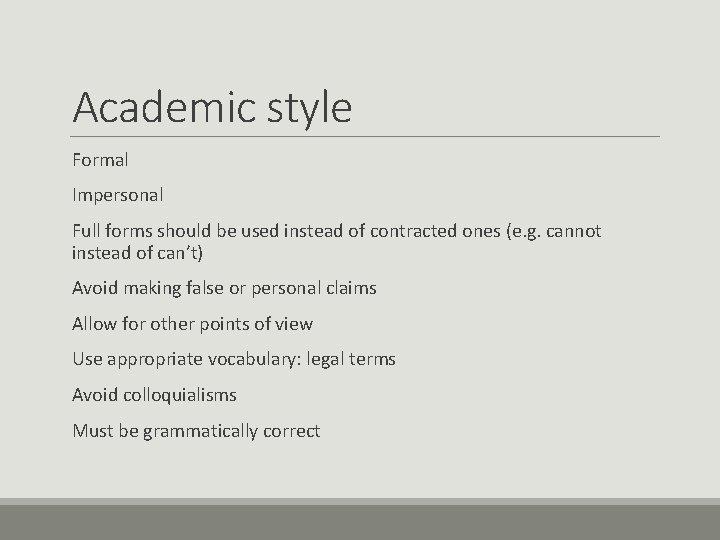
Academic style Formal Impersonal Full forms should be used instead of contracted ones (e. g. cannot instead of can’t) Avoid making false or personal claims Allow for other points of view Use appropriate vocabulary: legal terms Avoid colloquialisms Must be grammatically correct
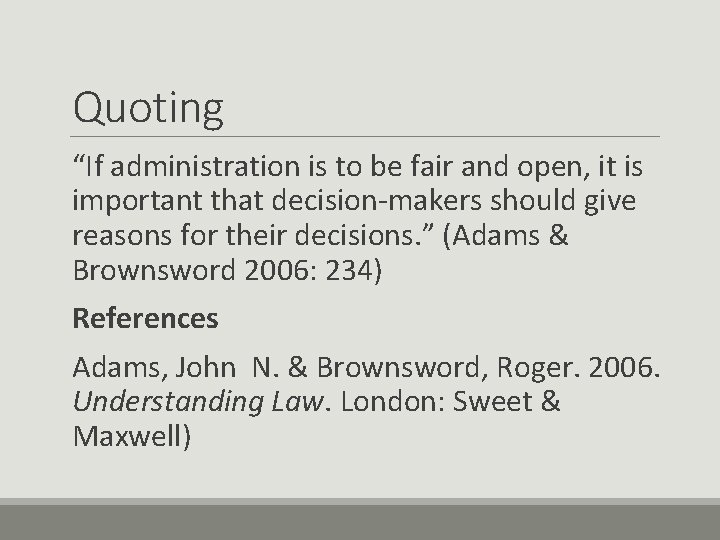
Quoting “If administration is to be fair and open, it is important that decision-makers should give reasons for their decisions. ” (Adams & Brownsword 2006: 234) References Adams, John N. & Brownsword, Roger. 2006. Understanding Law. London: Sweet & Maxwell)
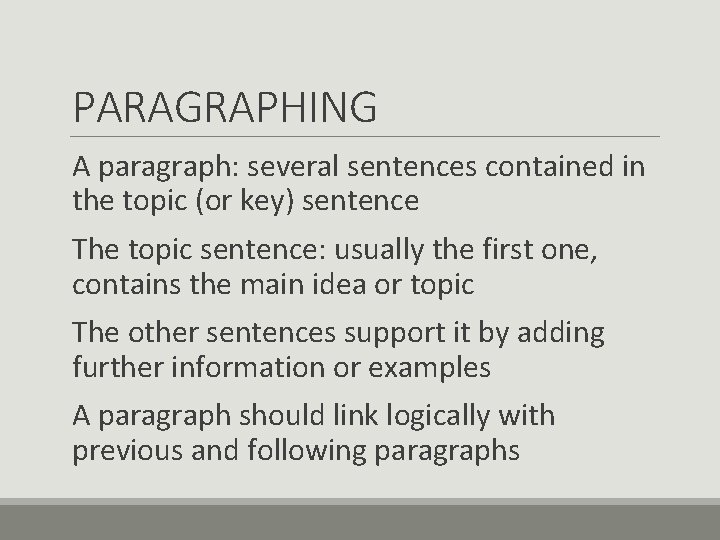
PARAGRAPHING A paragraph: several sentences contained in the topic (or key) sentence The topic sentence: usually the first one, contains the main idea or topic The other sentences support it by adding further information or examples A paragraph should link logically with previous and following paragraphs
Paragraphing: Exercise A) It is mainly formal, impersonal and objective. B) In most of these the writer is expected to include references to other writing or research. C) Academic writing is a particular kind of writing that can be recognised by its style. D) These include essays, research reports and articles, case studies, surveys, dissertations, theses, and examination papers. E) Other distinctive features will depend upon the specific types of academic writing.
Referencing Name of the author year Title Place of publication Publisher Pages used
Revising and editing You should always read the text again to see if it is written clearly Check the organization of the paper Check grammar and spelling Revise
PAPERS: P-O-W-E-R Produce (something worth saying) Organize Write Edit Revise
PRESENTATION 1. Choose your topic; Think of your audience 2. Research: Collect your materials 3. Organize your presentation
STRUCTURE: BEGINNING 1. Establish contact: Greet the audience, introduce yourself (Good morning/afternoon/evening. My name is. . . I’m going to speak to you today about. . . ) 2. Make an impact – say something that will make the audience want to listen to you 3. Give a preview of the argument you are going to present
MIDDLE 1. Divide speech into a few manageable points (‘I’m going to make a couple of points today. Briefly, these are. . . ’ 2. Place them in a logical order 3. Demonstrate how each point contributes to the main theme of the presentation
END 1. Indicate that you have reached the end of your presentation (And finally. . . ; In conclusion. . . ) 2. Summarise the key points of your presentation (‘By way of summary. . . ’) 3. End with a clear statement (‘The most important effect of all this is. . . ’)
STRUCTURE: SUMMARY 1) Beginning: start by saying what you are going to talk about (“Tell them what you’re going to tell them”) 2) Middle: most important points with good illustrative examples (“Tell them”) 3) End: sum up (“Tell them again what you’ve told them”) 4) Invite questions
Points to remember 1. Use simple and clear language 2. Check and practise the pronunciation of difficult words 3. Pay attention to your intonation 4. If possible, do not read (notes, keywords) 5. Use visual aids, or write on the blackboard 6. Do not forget about your TIMING!!! (15 min. )
CHECKLIST: Preparation Consider your audience: 1. What are they interested in? 2. What do they need to know? 3. What is the best way of presenting it?
Power Point 1. Check the equipment 2. DO NOT put too much text on a slide (no more than 6 lines) 3. Text large enough for everyone to see 4. Be careful about background colours and pictures
General tips 1. Project your voice so that everyone can hear you 2. Maintain eye contact with your audience 3. Use visual aids to illustrate your points 4. Use simple and clear language 5. Eliminate anything not essential to the points you are making
Team presentations 1. Choose who will lead the presentation 2. Divide your topics 3. Rehearse how each person will hand over to the next 4. Identify what each person will be doing while another is speaking
PRESENTATIONS: KISS Keep It Short and Simple
A few quotations… Writing is the hardest way of earning a living, with the posible exception of wrestling alligators. (Olin Miller) It usually takes me more than three weeks to prepare a good spontaneus speech. (Mark Twain)
STUDENT-MENTORS If your English is good enough, you can help your colleagues on a regular basis (1 session a week) If you have problems with your English, contact a student mentor at the beginning of the academic year (web page)
Tempus reading room TMT 3 (basement) Opening hours: Monday – Friday 10. 0014. 00 h

Assignment Write a short essay about the education for public administration. What’s your opinion about it? What do you like? What do you dislike? What would you like to change?
- Slides: 39