
English Encounters C Nouns can be 1 Count
English Encounters C

Nouns can be 1. Count Nouns 2. Mass Nouns
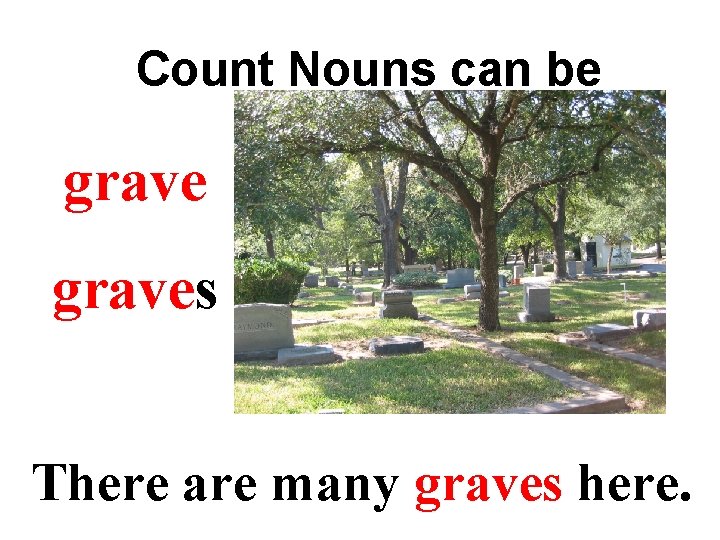
Count Nouns can be counted. graves There are many graves here.
Rule 1: Count Nouns usually form the plural by adding s. Examples: boys, stores, computers
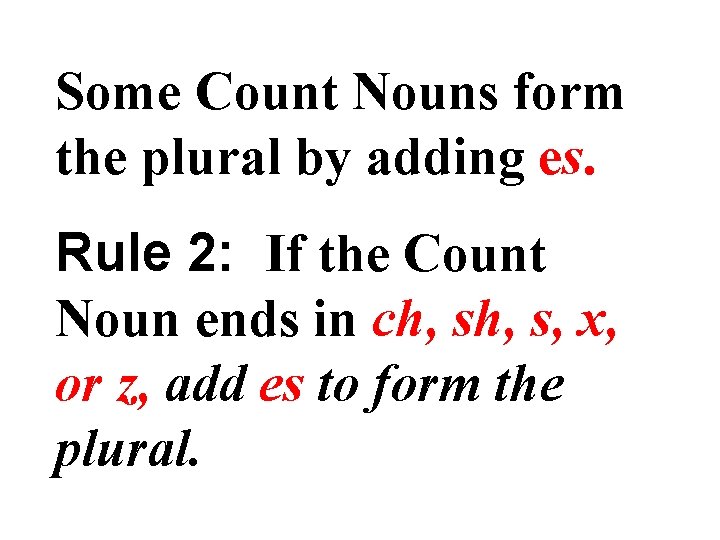
Some Count Nouns form the plural by adding es. Rule 2: If the Count Noun ends in ch, s, x, or z, add es to form the plural.
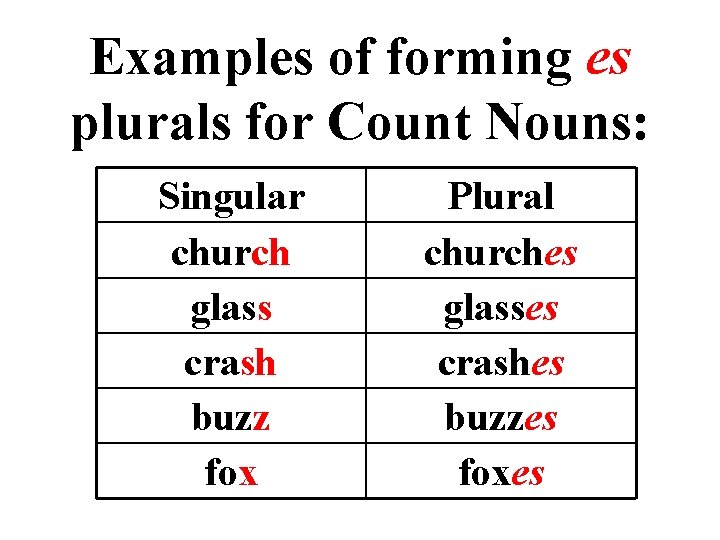
Examples of forming es plurals for Count Nouns: Singular church glass crash buzz fox Plural churches glasses crashes buzzes foxes
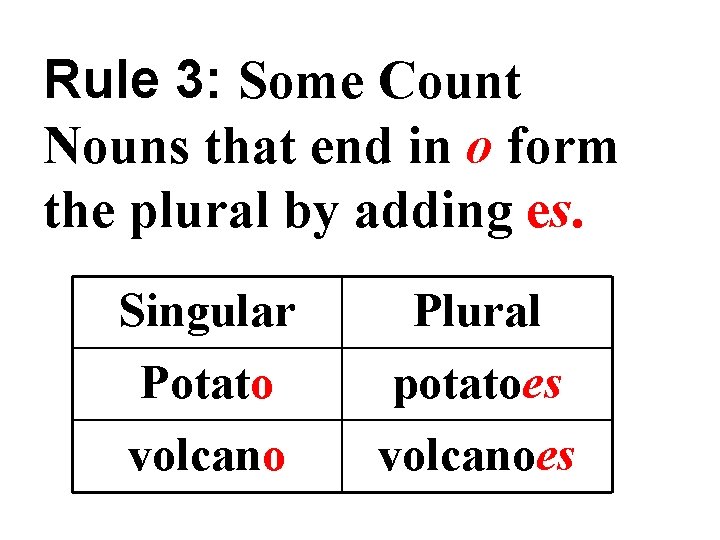
Rule 3: Some Count Nouns that end in o form the plural by adding es. Singular Potato Plural potatoes volcanoes
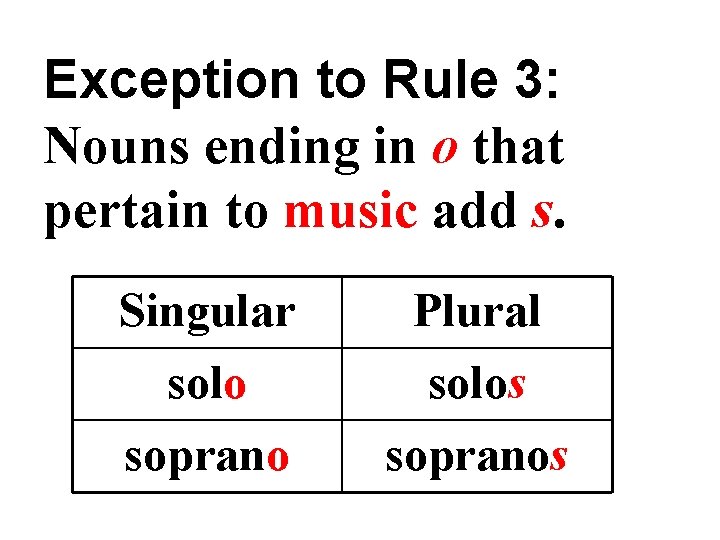
Exception to Rule 3: Nouns ending in o that pertain to music add s. Singular solo Plural solos sopranos
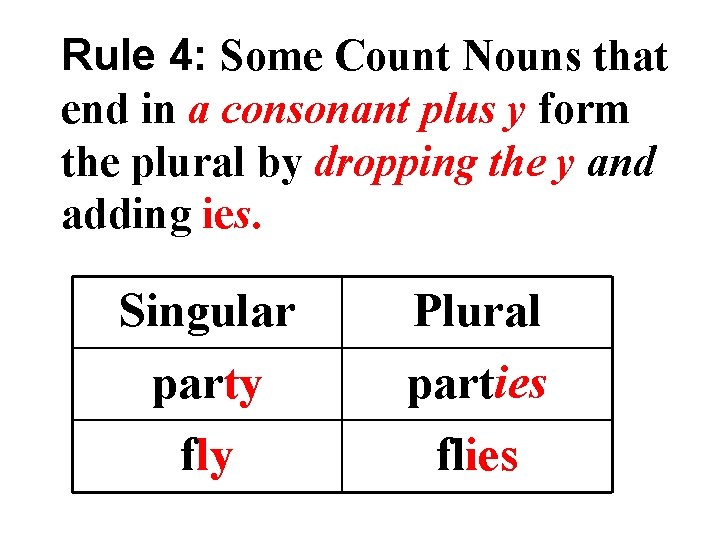
Rule 4: Some Count Nouns that end in a consonant plus y form the plural by dropping the y and adding ies. Singular party Plural parties fly flies
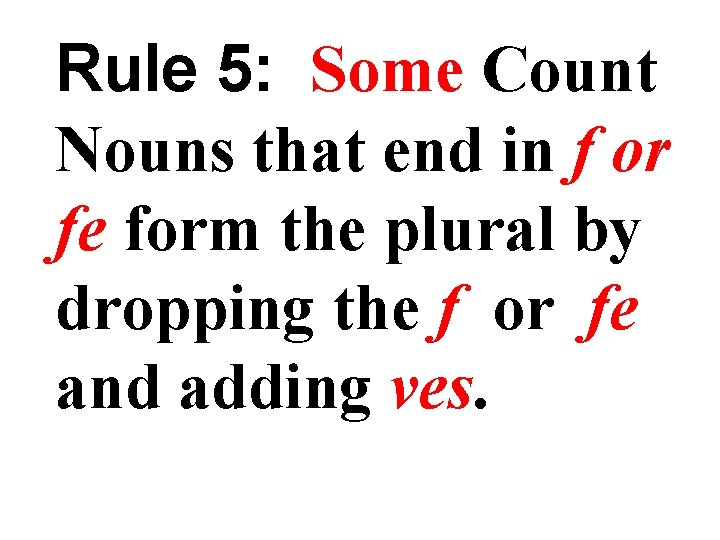
Rule 5: Some Count Nouns that end in f or fe form the plural by dropping the f or fe and adding ves.
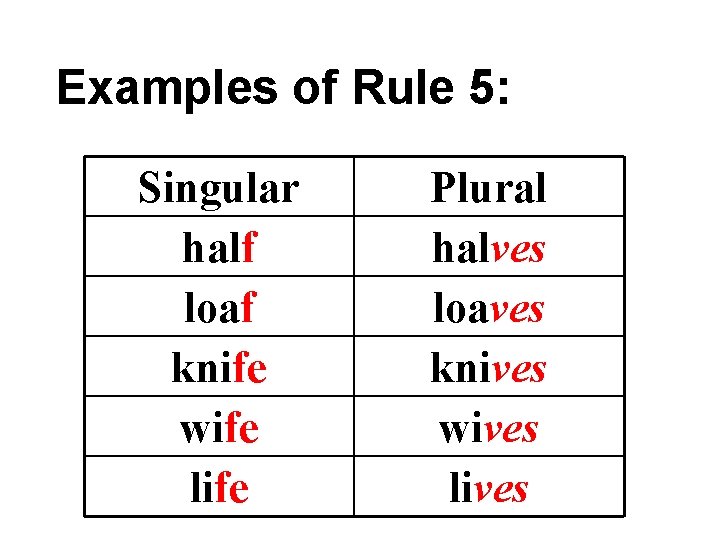
Examples of Rule 5: Singular half loaf knife wife life Plural halves loaves knives wives lives
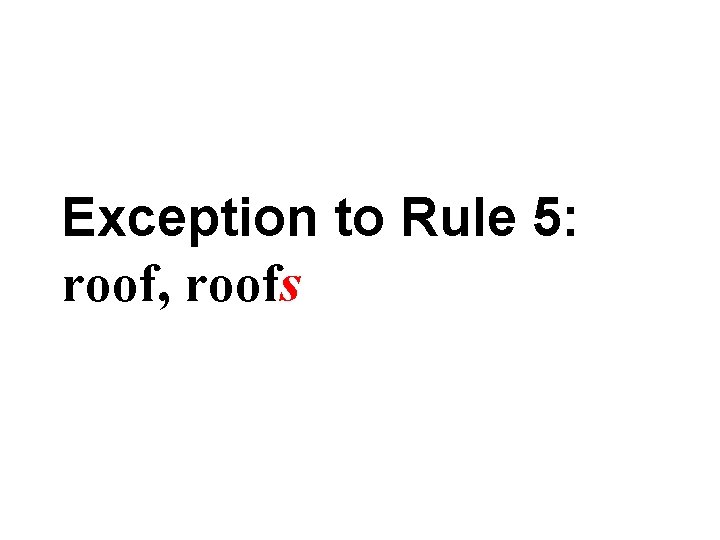
Exception to Rule 5: roof, roofs
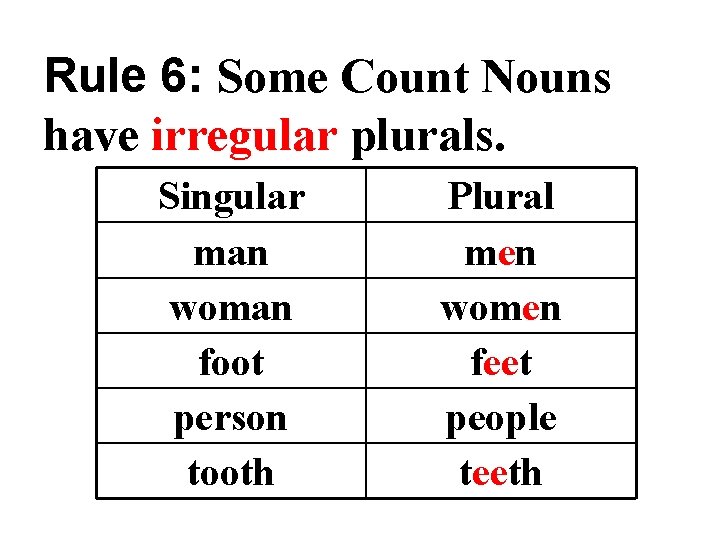
Rule 6: Some Count Nouns have irregular plurals. Singular man woman foot person tooth Plural men women feet people teeth
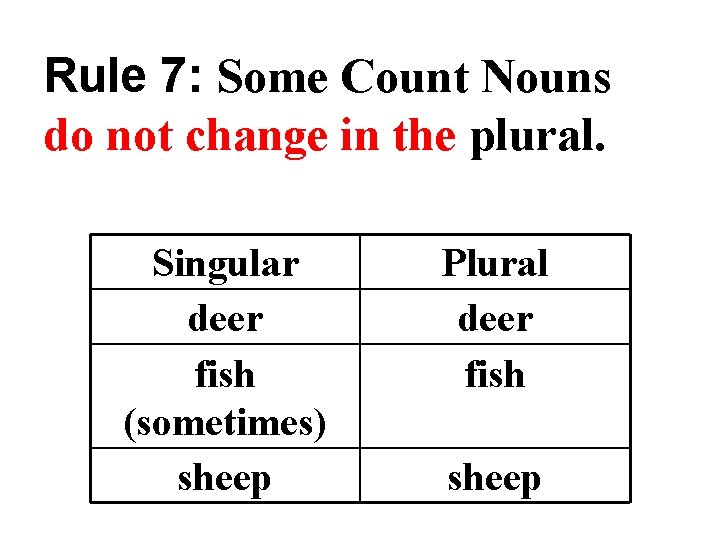
Rule 7: Some Count Nouns do not change in the plural. Singular deer fish (sometimes) sheep Plural deer fish sheep

Mass Nouns cannot be counted. Examples: 1. Materials: cotton, silk 2. Metals: gold, silver 3. Food: bread, butter, rice 4. Qualities: honesty, adolescence
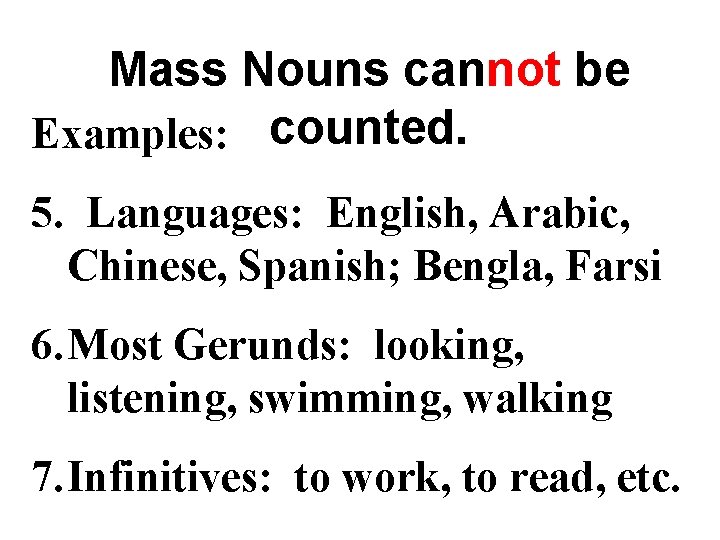
Mass Nouns cannot be Examples: counted. 5. Languages: English, Arabic, Chinese, Spanish; Bengla, Farsi 6. Most Gerunds: looking, listening, swimming, walking 7. Infinitives: to work, to read, etc.
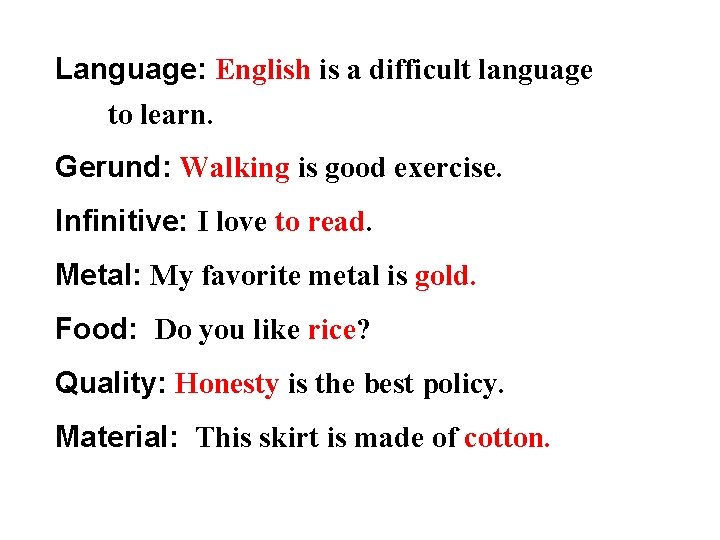
Language: English is a difficult language to learn. Gerund: Walking is good exercise. Infinitive: I love to read. Metal: My favorite metal is gold. Food: Do you like rice? Quality: Honesty is the best policy. Material: This skirt is made of cotton.
To measure mass nouns use of after a measurement: Examples: a pound of rice an ounce of honesty a bag of gold thirty minutes of walking
Nouns and Pronouns have cases. Case refers to the relationship of nouns and pronouns to other words in the sentence.

There are three noun and pronoun cases: 1. Subjective Case 2. Objective Case 3. Possessive Case
Examples of Noun Cases: Subjective Case: The student works at a grocery store.
Examples of Noun Cases: Objective Case: Kroger hired the student.
Examples of Noun Cases: Possessive Case: Singular The student’s first job was at Kroger.
Examples of Noun Cases: Possessive Case: Plural: If the plural ends in s, add an apostrophe (’). Example: The students’ grades were good.
Examples of Noun Cases: Possessive Case: Plural: If the plural does not end in s, add an apostrophe s. The children’s toys are here. We saw seven different deer’s tracks.

- Slides: 27